
Standard vs Duckpin Pins: Specs, Ball Weight and Use Cases
Bowling equipment procurement usually starts with lanes and pinsetters. In practice it should start one level lower, with the pin, because a pin's height and mass determine the ball weights a venue can stock, the lane length that makes commercial sense, and the customer segment the format will attract. The three formats buyers most often compare, standard, duckpin and mini bowling, use three physically different pins, and those differences are measurable before a single quotation is issued.
This reference compares the Standard Bowling Pin, the Duckpin Bowling Pin and the Mini Bowling Pin using product specifications published by SunEye Bowling (Guangzhou) Co., Ltd, a bowling equipment supplier based in Guangzhou, China, that manufactures standard, duckpin and mini bowling systems alongside lanes, string pinsetters, ball return systems and scoring systems. It is written for buyers in the research and evaluation stage: what can be verified from specification data, what those specifications change inside a venue, and where the published data stops being enough to make a decision.
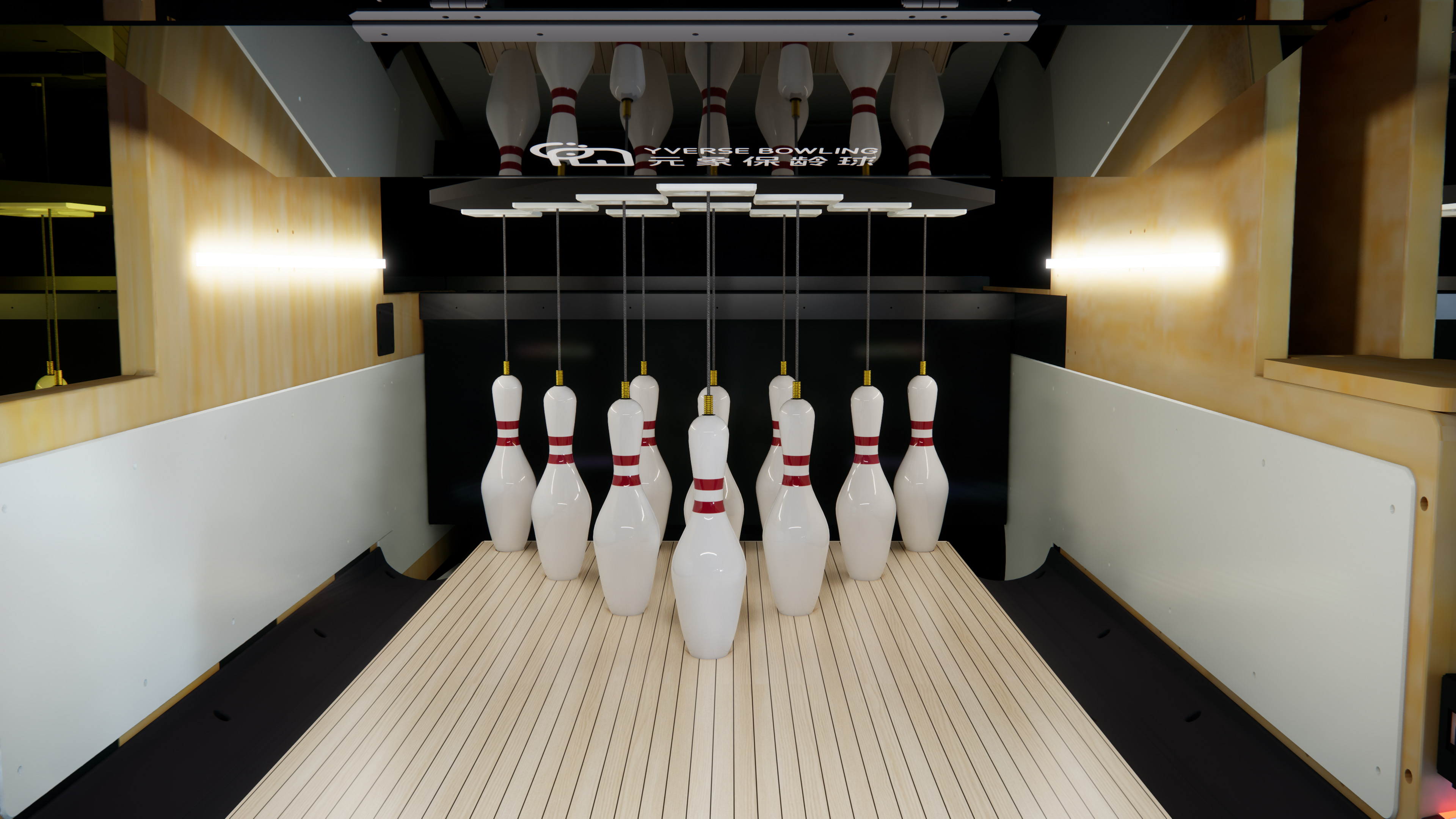 Standard Bowling Pin: 380 mm height, 1,618 g weight, maple wood and plastic construction, certified to USBC, CE, LVD and MD.
The short answer: three pins, three different systems
A Standard Bowling Pin measures 380 mm and weighs 1,618 g. A Duckpin Bowling Pin measures 230 mm and weighs 787 g. A Mini Bowling Pin measures 265 mm and weighs 735 g. All three are made from maple wood and plastic, all three carry USBC-Certified, CE, LVD and MD certification, all three are packed in carton boxes with a stated delivery time of 40 days. What separates them is not material or paperwork. It is geometry, and geometry is what fixes the ball weight window, the lane footprint and the audience of the finished venue.
| Specification | Standard Bowling Pin | Duckpin Bowling Pin | Mini Bowling Pin |
|---|---|---|---|
| Height | 380 mm | 230 mm | 265 mm |
| Net weight | 1,618 g | 787 g | 735 g |
| Material | Maple wood & plastic | Maple wood & plastic | Maple wood & plastic |
| Certification | USBC-Certified, CE, LVD, MD | USBC-Certified, CE, LVD, MD | USBC-Certified, CE, LVD, MD |
| Packing | Carton box | Carton box | Carton box |
| Stated delivery time | 40 days | 40 days | 40 days |
| Stated venue fit | Bowling centers, FECs, sports & recreation centers | Bars, restaurants, FECs, hotels, social entertainment venues | Kids' venues, malls, FECs, family entertainment spaces |
Reading the numbers
- The Standard Bowling Pin is 150 mm taller and 831 g heavier than the Duckpin Bowling Pin. That gap is the single clearest indicator that the two belong to different games rather than different sizes of the same game.
- The Mini Bowling Pin is 35 mm taller than the duckpin pin but 52 g lighter. Height and mass do not scale together across formats, which is precisely why a pin cannot be substituted on the assumption that both sit in a compact system.
- Against the standard pin, the Mini Bowling Pin is 115 mm shorter and 883 g lighter. The reduction in pin mass, not the reduction in lane length, is what makes the smaller ball set viable.
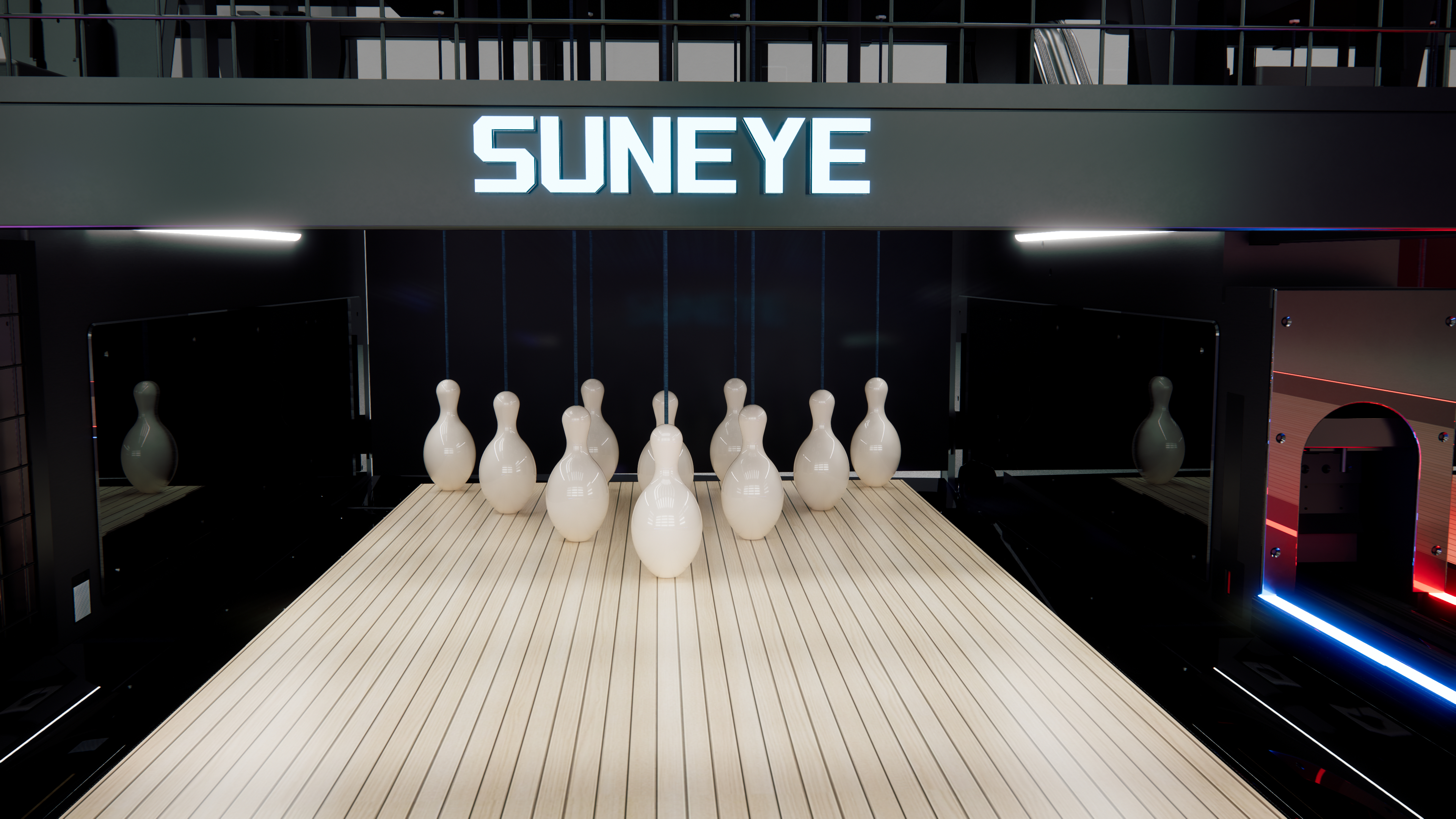 Duckpin Bowling Pin: 230 mm height, 787 g weight, for ten-pin duckpin bowling with 3.3 to 3.75 pound balls.
The procurement problem: pins get specified last
In most bowling center projects, the sequence runs venue size, lane count, pinsetter type, scoring system, and finally pins and balls. That order creates predictable rework. A buyer who commits to a compact format on floor area alone can end up with a ball inventory, a pinsetter setting and a pin set that were never designed to work together, and the cost of correcting that sits in spare parts, staff training and player complaints rather than in the original invoice.
The specification data makes the dependency explicit. Standard Bowling Equipment is built around ten-pin bowling with an 8 to 11 pound ball set. Duckpin Bowling Equipment and Mini Bowling Equipment both operate on a 3.3 to 3.75 pound ball set, one described as ten-pin duckpin bowling and the other as ten-pin mini bowling. Same ball window, different pins: 230 mm and 787 g for duckpin, 265 mm and 735 g for mini. The ball can be shared between those two formats. The pin cannot.
That is the practical reason pin height and net weight belong in the RFQ rather than in the accessory line. They define a format, and the format defines which lane, which pinsetter configuration, which ball return and which scoring layout a venue is actually buying.
What the supplier publishes across the three formats
SunEye Bowling (Guangzhou) Co., Ltd is a comprehensive bowling equipment supplier covering research and development, manufacturing, sales, installation and after-sales service, operating from Guangzhou, China, with a stated production base of approximately 6,000 m² and roughly one hundred technical and production staff. The company reports a monthly capacity of 200 units, a minimum order quantity of 2 units, a production lead time of 30 to 45 days, 100 percent pre-shipment testing, and an export share of 80 percent across global markets. It follows the ISO 9001 Quality Management System, and its manufacturing facility is stated to be TÜV certified.
The pin range maps directly onto the three system families. Standard Bowling Equipment is listed at L25.5 × W3.5 × H3.2 m for two lanes with a customizable lane length of 17.5 to 25.5 m, using a string pinsetter machine at 2,000 W and 220 V. Duckpin Bowling Equipment is listed at L10 × W3.48 × H2.4 m for two lanes with a 10 m entertainment lane and 2,000 W per lane at 220 V. Mini Bowling Equipment is listed at L13 × W2.83 × H2.5 m for two lanes with a customizable length of 13.6 to 19 m. All three carry USBC, CE, LVD and MD certification, and all three are packed in wooden boxes at system level, with pins supplied in carton boxes.
Customization is offered across the range, including pin colors, logos, graphics and patterns, plus lane length, lane logo, masking unit treatments such as wallpaper, soft-film lightbox or LED screen wall, guardrails and stairs. For a buyer, that means the pin is not a fixed catalogue item only; it can carry venue branding, but artwork approval becomes a step in the delivery schedule and should be planned into the 40-day pin lead time rather than after it.
Technical explanation: what pin specification changes on the lane
Pin mass and ball mass are a matched pair. The 1,618 g standard pin is designed to be struck by an 8 to 11 pound ball; the 787 g duckpin pin and the 735 g mini pin sit in systems using a 3.3 to 3.75 pound ball. Reducing pin mass without reducing ball mass produces unpredictable pin action, and reducing ball mass without reducing pin mass produces a pin that barely moves. The published specifications keep the two in proportion within each format, which is the technical basis for treating pins and balls as one purchase line.
Pin geometry also interacts with the pinsetter. The systems in this range use string pinsetter machines: servo-driven, with smart calibration, a stated pin reset of 8 seconds or less on the standalone String Pinsetter Machine and up to 10 seconds on the duckpin package, pin placement offset of no more than 2 mm, and 24/7 continuous operation. Because a string pinsetter lifts and re-seats the same physical pins, pin weight consistency matters more than it does in a free-fall machine: a pin that is out of tolerance distorts both the set position and the reset cycle.
The downstream systems follow the same logic. The standalone Bowling Ball Return System is rated at 2,000 W and 220 V with a 12 second return speed and an 18 to 26 m customized return track; the packaged systems state under 8 seconds for standard and duckpin and under 10 seconds for mini, which is a package-level statement that should be confirmed against the final lane configuration. The stated jam failure rate is 0.002 percent against a stated typical industry range of 0.02 to 0.05 percent. The Bowling Scoring System combines camera image recognition with infrared sensing, with a stated 99.98 percent pin recognition accuracy and a 0.02 percent misread rate, plus lifetime free OTA updates. The synthetic Bowling Lane is built from multi-layer high-density pressed panels with a scratch-resistant coating and sealed edges, rated for 100,000+ ball impacts and a service life of up to 10 years.
One boundary deserves emphasis: every figure above is a supplier-stated specification. A serious evaluation asks for the test method behind the reset time, the recognition accuracy and the impact rating, and compares those methods across at least two suppliers on an identical configuration.
Certification and compliance: what a buyer can actually verify
For a specification-led purchase, certification is the part of the file that can be checked independently, and the documents here are specific enough to verify line by line.
- USBC. USBC certification number 003-25-LP is recorded against Standard Bowling Equipment, Duckpin Bowling Equipment and Mini Bowling Equipment, issued by the United States Bowling Congress for the US and North America market. The same certification number documents the Jinmeijia Lane bowling lane surface, referencing the USBC Equipment Specifications and Certification Manual.
- Machinery Directive. MD certification M.2025.2026.C123751 is issued by UDEM for the EU and European Economic Area, with applicable standards EN 60204-1:2018/A1:2025 and EN ISO 12100:2010, issued 5 August 2025 and valid until 4 August 2030.
- Low Voltage Directive. LVD certification M.2025.2026.C123854 is issued by UDEM for the EU and European Economic Area, issued 6 August 2025 and valid until 4 August 2030, and serves as CE compliance documentation for the standard bowling system in that market.
- RoHS. RoHS certification M.2025.2026.C123750 is issued by UDEM for the EU and European Economic Area, citing the EN IEC 62321 series of test standards.
Certification of the machine and certification of the pin are not the same question, and the two should not be conflated in a procurement file. The United States Bowling Congress maintains equipment specifications for string pinsetters that address the machine itself, including a minimum string length of 54 inches under its Chapter 95 rules, effective 1 August 2023, intended to preserve scoring behaviour comparable to free-fall play. A buyer preparing for sanctioned league use should therefore confirm approval status for the exact pinsetter model and configuration, not only for the pin or the lane surface.
For US importers, the applicable subheading for bowling pin setter machine parts or accessories is 9504.90.9060 under the Harmonized Tariff Schedule, at a free rate of duty according to the US International Trade Commission schedule. Pins and balls should be classified separately and confirmed with a customs broker, because a duty-free assumption carried across the whole shipment is a common source of landed-cost error.
Application fit: which format suits which venue
The venue lists attached to each pin are the most useful part of the specification, because they describe the operating model rather than the hardware.
Standard pins: full-length, league-capable centres
Standard Bowling Pin is listed for bowling centers, family entertainment centers and sports and recreation centers. The 25.5 m two-lane footprint and 17.5 to 25.5 m customizable lane length suit venues with the floor area and the ambition to host league-style ten-pin play. SunEye project references in this format include a 4-lane Standard Bowling installation inside a large aluminium-frame tent at Huayuehui Scenic Area in Tongchuan, China, integrated with high ropes courses; an 8-lane system for Center World in Salerno, Italy; a 12-lane installation inside an 8,000 m² family entertainment center in Spain; and a 6-lane system for Ignite Space at the Sanming Science and Technology Museum in China.
Duckpin pins: compact social entertainment
Duckpin Bowling Pin is listed for bars, restaurants, family entertainment centers, hotels and social entertainment venues. The 10 m lane is the shortest in the range, and the duckpin scoring system uses a 65-inch HD display integrated with the pinsetter in a compact equipment zone that can double as a visual backdrop behind the lanes, with centralized master control for lane operation and scoring. This is the format that fits an existing food and beverage footprint without a building extension.
Mini pins: family and junior-oriented spaces
Mini Bowling Pin is listed for kids' venues, malls, family entertainment centers and family entertainment spaces. The 13 m lane and 13.6 to 19 m customizable length sit between duckpin and standard, and the mini system pairs a 43-inch HD gantry-mounted display with a customizable soft-film lightbox wall that can carry venue graphics. For a shopping mall or a family venue adding a second attraction, the pin size and the ball weight together set the age range the lane can safely serve.
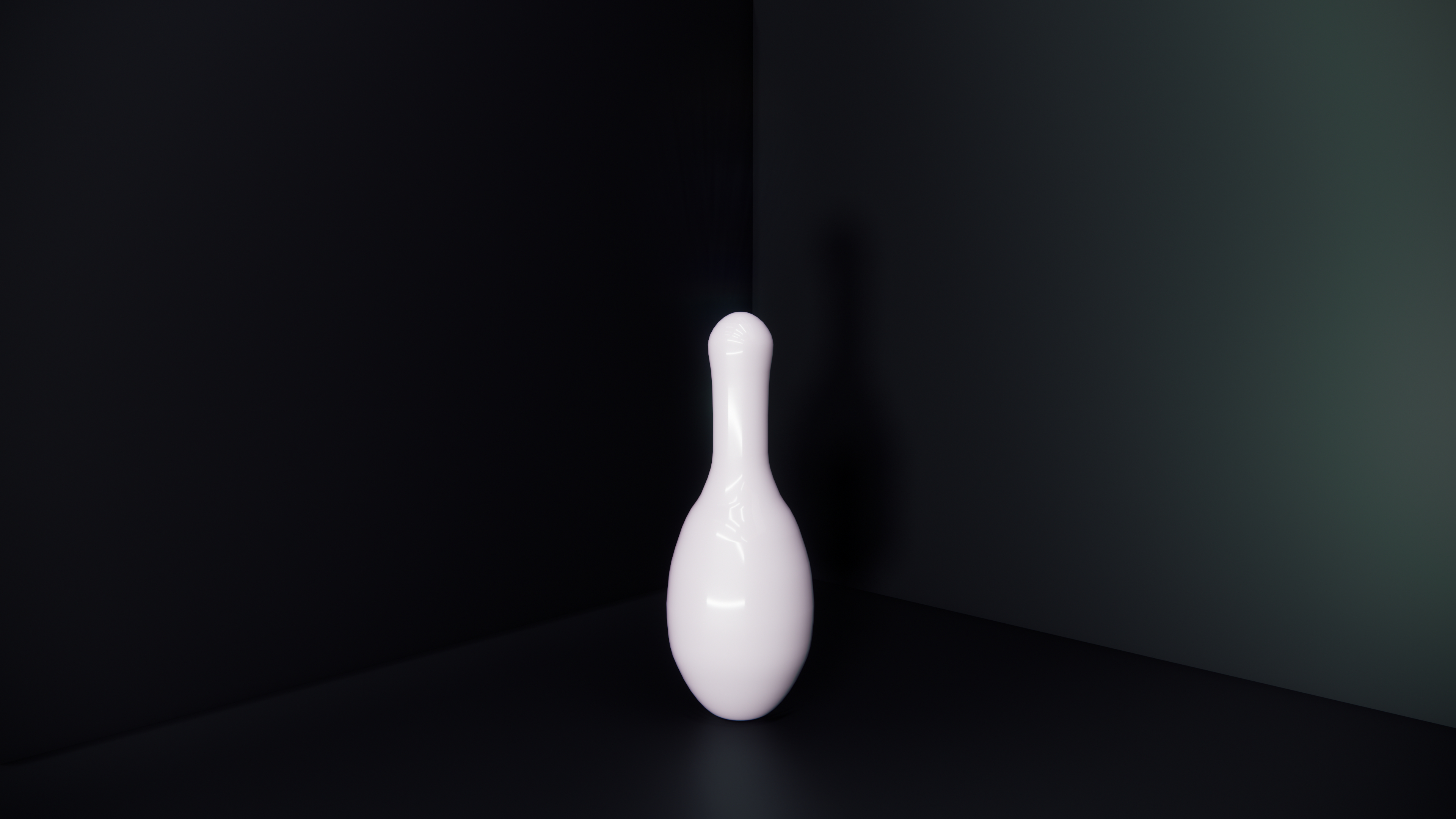 Mini Bowling Pin: 265 mm height, 735 g weight, specified separately from the duckpin pin despite sharing the same ball weight window.
Limitations and boundaries a buyer should plan around
A comparison that only lists advantages is not procurement material. The following boundaries follow directly from the published data and should be resolved before an order is placed.
- Pin data does not predict pin life. The specification gives height, weight, material, certification, packing and delivery, but not an impact-cycle rating, coating specification or per-pin price. Buyers replacing pins on a rolling schedule should request those figures explicitly, because two pins with identical dimensions can behave very differently after six months of commercial use.
- Duckpin and mini pins are not interchangeable. They share a 3.3 to 3.75 pound ball window and nothing else. The mini pin is 35 mm taller and 52 g lighter. Treating them as one stock item risks both scoring inconsistency and pinsetter calibration drift.
- Standard format cannot be compressed arbitrarily. A standard lane is 25.5 m at full length with a 17.5 m minimum in the customizable range. Below that, a venue is no longer buying standard bowling; it is buying duckpin or mini, with different pins and different balls. Site selection should confirm available length before the format is chosen, not after.
- Certification has a geographic scope. USBC approval addresses the US and North America market. The MD, LVD and RoHS documents address the EU and European Economic Area. Buyers in other jurisdictions need to confirm their own conformity route, and buyers should verify that the certificate number on file matches the exact model and configuration on the purchase order.
- Lead times change the project schedule. Pins carry a stated 40-day delivery time, system production 30 to 45 days, with a 2-unit minimum order. Custom pin colours or logos add an artwork approval cycle. None of this is a spot purchase, and a fit-out programme that ignores it will compress the installation window instead.
- String pinsetter play differs from free-fall play. The tether changes pin action by design, and governing-body specifications such as the 54-inch minimum string length exist because of that. Venues targeting competitive league play should verify approval status and player acceptance before committing a full floor to string machines.
Market context: why the comparison matters now
Two developments make pin-level specification more commercially relevant than it was a decade ago. The first is the spread of string pinsetter technology into commercial venues, which the United States Bowling Congress has addressed through published equipment specifications rather than by excluding the category, and which has prompted ongoing research into how string play affects scoring. The second is the growth of compact, social and family-oriented bowling formats in bars, restaurants, hotels and entertainment centres, where the available floor length, not the ambition of the operator, decides the format.
Published market-size estimates for bowling equipment vary widely in scope and magnitude, with several commercial studies mixing operator revenue with equipment manufacturing and disagreeing by a factor of roughly 2.7 for the same nominal year. Those figures are therefore not used here. The more defensible observation is structural: as more venues open in compact footprints, the pin specification becomes the first technical decision in the project rather than the last administrative one.
Future outlook
Three directions look likely to shape pin procurement over the next several years. Documentation will keep moving toward the front of the buying process, with certificate numbers, validity dates and market scope requested alongside the quotation rather than after the deposit. Format mixing will increase, as venues combine a small number of standard lanes with a larger duckpin or mini footprint to serve both league players and casual groups from one site. And customization will move from decoration to brand infrastructure, with pin colours, logos and masking elements treated as part of the venue identity package and planned into the production schedule accordingly.
For buyers, the practical conclusion is straightforward. Establish the available floor length, choose the format, then specify the pin and the ball as a matched pair before comparing suppliers on price. A pin quotation that cannot state height, net weight, material, certification and delivery time is not yet a comparable quotation.
Frequently asked questions
What are the exact height and weight differences between standard, duckpin and mini bowling pins?
The Standard Bowling Pin is 380 mm tall and weighs 1,618 g. The Duckpin Bowling Pin is 230 mm tall and weighs 787 g. The Mini Bowling Pin is 265 mm tall and weighs 735 g. All three use maple wood and plastic construction. The standard pin is therefore 150 mm taller and 831 g heavier than the duckpin pin, while the mini pin is 35 mm taller and 52 g lighter than the duckpin pin.
What ball weights pair with each bowling pin format?
Standard Bowling Equipment operates on an 8 to 11 pound ball set. Duckpin Bowling Equipment and Mini Bowling Equipment both operate on a 3.3 to 3.75 pound ball set. The ball weight window follows the pin mass: the 1,618 g standard pin is matched to the heavier ball set, and the 787 g duckpin pin and 735 g mini pin are matched to the lighter set.
How much floor length does each format require?
Standard Bowling requires approximately 26 meters of length, duckpin bowling approximately 10 meters, and mini bowling approximately 13 meters. Published system footprints for two lanes are L25.5 × W3.5 × H3.2 m for standard with a customizable 17.5 to 25.5 m lane, L10 × W3.48 × H2.4 m for duckpin, and L13 × W2.83 × H2.5 m for mini with a customizable 13.6 to 19 m lane.
Can duckpin pins and mini bowling pins be used interchangeably?
No. Although both formats use a 3.3 to 3.75 pound ball, the pins differ in both height and mass: 230 mm and 787 g for the duckpin pin against 265 mm and 735 g for the mini pin. Because a string pinsetter re-seats the same physical pins each frame, substituting one for the other affects set position and reset behaviour as well as scoring.
Can bowling pins be customized for a venue's brand?
Yes. Pin colours, logos, graphics and patterns can be customized to match a venue's brand identity, design scheme or specific project requirements. Customization adds an artwork approval step to the production timeline, so it should be scheduled within the stated 40-day pin delivery time rather than after it.
Which certification documents should a buyer verify before ordering?
For the US and North America, USBC certification number 003-25-LP, issued by the United States Bowling Congress. For the EU and European Economic Area, MD certification M.2025.2026.C123751, LVD certification M.2025.2026.C123854 and RoHS certification M.2025.2026.C123750, all issued by UDEM. The manufacturing facility is stated to be TÜV certified and the company follows the ISO 9001 Quality Management System. Buyers should confirm that each certificate matches the exact model and configuration on the purchase order and that its validity period covers the delivery date.
What are the packing and delivery times for pins and systems?
Bowling pins are packed in carton boxes with a stated delivery time of 40 days. Complete systems are packed in wooden boxes, with a production lead time of 30 to 45 days, a minimum order quantity of 2 units, and 100 percent pre-shipment testing before dispatch.
Reference material. The SunEye Bowling company profile, covering product ranges, certification records and project references, is available for download: SunEye Company Profile (PDF). Company information: www.suneyebowling.com.
Tem questões ou precisa de mais detalhes?
Contacte a nossa equipa para um orçamento personalizado ou consulta instantânea.
Solicitar orçamento
Preencha o formulário abaixo e a nossa equipa entrará em contacto com uma proposta personalizada.
Chat direto do WhatsApp
Prefere conversar em tempo real? Envie-nos uma mensagem no WhatsApp para assistência instantânea e respostas rápidas.
- Obter orçamento personalizado
- Partilhar fotos ou documentos
- Discuta as suas necessidades diretamente
Geralmente responde em 5–30 minutos durante o horário de expediente.