
Starke 2227 vs Hydro-Park 1127 vs TPTP-2: Buyer Comparison
This is an independent buyer comparison, not a manufacturer endorsement. It compares three parking lift models on the facts available in the buyer brief: Starke 2227, Hydro-Park 1127, and TPTP-2. The purpose is to show where each model fits, which procurement questions separate them, and what a buyer should accept in writing before placing an order.
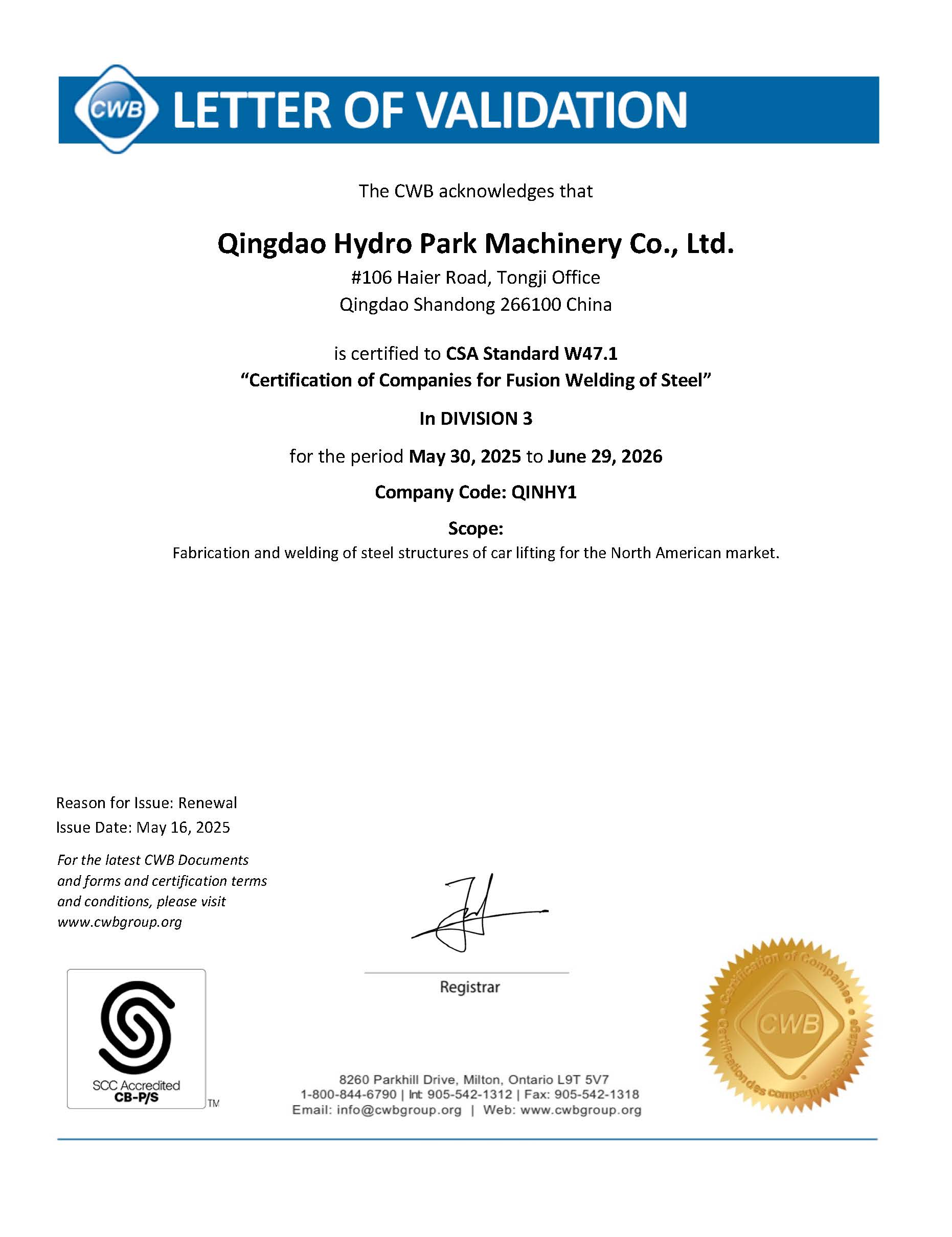
Parking lift procurement starts with verifiable component and assembly evidence, not with a model name alone.
A parking lift is mechanical equipment that stacks vehicles vertically to create more parking spaces within a smaller footprint. Buyers often compare parking lifts with multilevel car park buildings, but the better first step is to compare lift models against the same site brief: vehicle weight, ceiling height, power supply, access control, installation method, and acceptance evidence.
The three models in this comparison represent different design choices. Starke 2227 uses carbon steel Q235, a hydraulic cylinder with wire rope, 380V power, and button or IC card operation. Hydro-Park 1127 is a two-post double car stacker with a stated 2700 kg capacity; its Hydro-Park 1123 variant is stated at 2300 kg. TPTP-2 is a tilting low-ceiling lift with hydraulic drive, 220V power, and key switch operation. Those differences matter more than a generic label such as hydraulic car parking lift.
Quick model comparison
The table below keeps only the facts supplied for this buyer comparison. Where a model fact is not stated, the table does not fill the gap with an assumption.
| Model | Configuration and drive | Power and controls | Stated capacity | Buyer interpretation |
|---|---|---|---|---|
| Starke 2227 | Carbon steel Q235; hydraulic cylinder with wire rope | 380V; button and IC card operation | Not stated in the provided buyer notes | A 380V hydraulic model with access-card control; buyers should verify capacity, dimensions, and rope inspection requirements in the technical file. |
| Hydro-Park 1127 | Two-post double car stacker | Not stated in the provided buyer notes | 2700 kg | A two-post stacker positioned for two-car stacking; the stated capacity is the first screening figure for vehicle compatibility. |
| Hydro-Park 1123 | Two-post double car stacker | Not stated in the provided buyer notes | 2300 kg | A lower-capacity variant of the same two-post stacker family; buyers should match it to the actual vehicle mix, not to the largest car in the fleet. |
| TPTP-2 | Tilting low-ceiling lift; hydraulic | 220V; key switch operation | Not stated in the provided buyer notes | A low-ceiling, 220V option with simpler key-switch control; the height advantage must be confirmed with a dimensional drawing. |
The comparison already shows why a single keyword search for parking lift is not enough. A buyer searching for a car parking lift may need a two-post stacker, a low-ceiling lift, or a 380V hydraulic model with card access. Those are different procurement briefs.
How to compare the three models without a showroom
An independent buyer comparison should start with a common decision framework. The model name is not the framework. The framework is the set of site and operating conditions that the equipment must satisfy.
1. Start with vehicle weight and vehicle mix
Hydro-Park 1127 states 2700 kg capacity, while Hydro-Park 1123 states 2300 kg. That difference is material when a site serves mixed vehicles, because the buyer must decide whether the lower-capacity variant is acceptable for the lightest routine use or whether the higher-capacity variant is needed for the site's normal vehicle profile. For Starke 2227 and TPTP-2, the provided notes do not state capacity, so the buyer should request a model-specific rated-load figure before comparing price.
2. Check the power supply before the quotation
Starke 2227 is listed with 380V power. TPTP-2 is listed with 220V power. Hydro-Park 1127 power is not stated in the provided notes. This is a practical procurement issue, not a minor detail: a site may have 380V available, or it may be limited to 220V. A buyer who compares only the equipment price can miss electrical upgrade costs, phase requirements, and protection requirements. The right question is not which voltage is better in general; it is which voltage the site can supply safely and legally.
3. Match the controls to the operating model
Starke 2227 uses button and IC card operation. TPTP-2 uses a key switch. Hydro-Park 1127 controls are not stated in the provided notes. Button and card control can support access control in a commercial setting. Key switch operation can suit a simpler operating routine where access management is handled physically. Neither control type is automatically superior. The buyer should ask who operates the lift, whether usage needs to be logged, whether cards must be issued or revoked, and whether a key switch creates an unacceptable key-management burden.
4. Confirm the low-ceiling claim with dimensions
TPTP-2 is described as a tilting low-ceiling lift. That is a design intent, not a complete site answer. A low-ceiling car parking lift must still be checked against the actual ceiling, beam, pipe, sprinkler, door, and vehicle height conditions. The buyer should request a dimensioned drawing that shows the lift in its raised and lowered positions, the required clearance, and the vehicle entry path. The same discipline applies to the two-post stacker and the 380V hydraulic model.
5. Compare installation and maintenance access, not just the platform
Parking lifts are installed equipment. The buyer needs to know how the unit is anchored, how the hydraulic system is accessed, how wire ropes are inspected where used, and how the power and control cables are routed. Starke 2227 uses a hydraulic cylinder with wire rope, so rope inspection and replacement planning belong in the maintenance brief. Hydro-Park 1127 is a two-post double car stacker, so post spacing and structural interface belong in the site review. TPTP-2 is a hydraulic low-ceiling lift, so the tilting movement and ceiling interface must be understood before site approval.
Application fit: commercial, residential, underground, and low-ceiling
The same three models can appear in different project types, but the fit changes with the operating context. The following sections are buyer-check questions, not a ranking.
Commercial parking
For a commercial car parking lift installation, access control and throughput usually matter. Starke 2227's IC card operation gives the buyer a reason to ask how access is managed, who issues cards, and how usage is recorded. Hydro-Park 1127's 2700 kg capacity gives the buyer a clear first figure for vehicle compatibility in a two-post double car stacker layout. TPTP-2's key switch and 220V supply may fit a smaller commercial site where a low ceiling is the binding constraint and simple control is preferred. In all three cases, the buyer should ask for the operating envelope in writing, including vehicle limits, control functions, and recommended inspection intervals.
Residential parking
Residential sites often have less technical supervision and a more mixed user group. A 220V hydraulic car parking lift such as TPTP-2 may be easier to place where 380V is unavailable, but low-ceiling fit still has to be proven. A two-post stacker such as Hydro-Park 1123 at 2300 kg may be considered where the normal vehicle set is lighter, but the buyer should not assume that a lower-capacity variant is acceptable for every resident. Starke 2227's 380V supply and card operation may suit a managed residential garage, but the site must actually have the electrical capacity and management process to support it.
Underground parking
Underground sites usually combine height limits, ventilation constraints, and difficult installation access. The comparison should begin with the ceiling section and the vehicle path. If the ceiling is the dominant constraint, TPTP-2's tilting low-ceiling design is the first model to test against a dimensioned drawing. If the ceiling is adequate but the site needs two-car stacking, Hydro-Park 1127's 2700 kg two-post configuration becomes relevant. If the site has 380V and needs card-based access, Starke 2227 should be evaluated on its electrical and control requirements. The buyer should not accept a low-ceiling label without a drawing, and should not accept a capacity figure without the associated vehicle and platform conditions.
Low-ceiling parking
A low-ceiling parking lift project is a constraint-driven purchase. TPTP-2 is described as a tilting low-ceiling lift with hydraulic drive, 220V power, and key switch operation. That combination is relevant when the site cannot support a taller stacker and when 380V is not available. The buyer's checklist should include the lowered height, raised height, tilt path, headroom under beams, and the largest vehicle that can enter and exit. The fact that TPTP-2 is low-ceiling oriented does not remove the need to verify the actual site dimensions. It makes that verification more important.
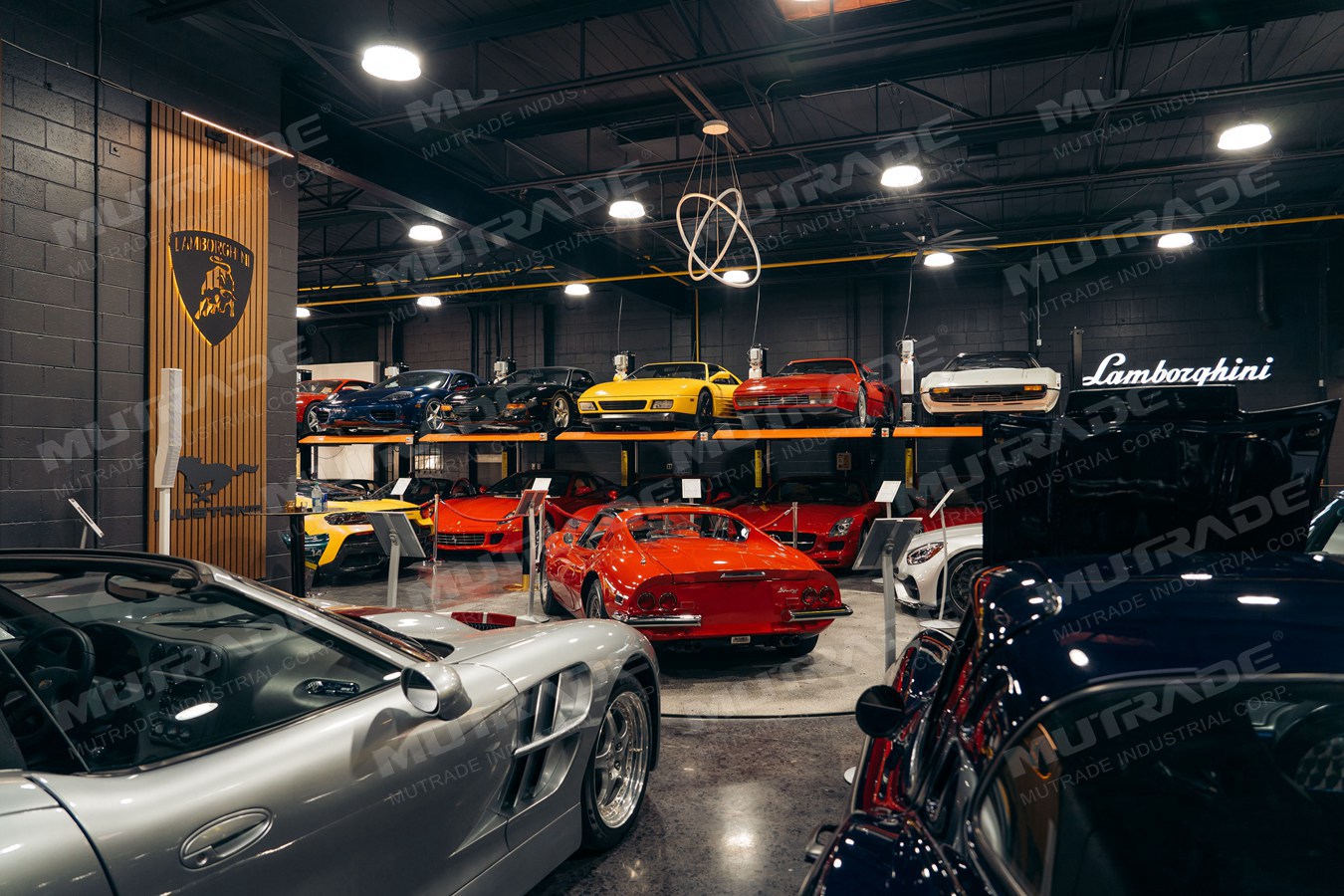
Hydro-Park 1127 is a two-post double car stacker with a stated 2700 kg capacity.
Technical explanation: what the differences mean for buyers
Hydraulic cylinder with wire rope. Starke 2227 is specified with a hydraulic cylinder and wire rope. For the buyer, this creates a maintenance and documentation question: what rope inspection regime is required, what replacement interval is recommended, and how is the rope protected from wear? The presence of wire rope does not by itself indicate quality; the buyer needs the inspection points and spare-part plan.
Two-post double car stacker. Hydro-Park 1127 and Hydro-Park 1123 are two-post double car stackers. The two-post architecture is familiar in the broader car-lift market. Industry research cited in the verified data package states that two-post lifts held the largest market share at 38.4% in 2025, driven by repair-shop usage. That is a market signal, not a direct proof of fit for a parking site. A repair-shop two-post lift and a parking-lift two-post stacker are used differently, so the buyer should compare the parking model's stated capacity, post layout, and parking access conditions rather than relying on the repair-shop segment share.
Tilting low-ceiling hydraulic lift. TPTP-2 is a hydraulic lift with a tilting low-ceiling design and 220V power. The tilting function is the feature that needs the most careful technical review, because the movement path must be compatible with the ceiling, the vehicle, and the operator's routine. A 220V supply can reduce electrical upgrade pressure at some sites, but it does not remove the need to check cable size, protection, and local electrical rules.
Control and access. Starke 2227 uses button and IC card operation; TPTP-2 uses a key switch. These are different operating models. Card access can support managed commercial use, while key switch operation can support simpler control. The buyer should ask whether the control system includes lockout, emergency stop, and clear operating instructions. Those points should be visible in the acceptance test, not only in the sales brochure.
Procurement questions: purchasing terms and acceptance criteria
A model comparison becomes useful only when it changes the purchase order. The following checklist is designed for a buyer comparing Starke 2227, Hydro-Park 1127, and TPTP-2.
| Procurement question | Why it matters | What to request in writing |
|---|---|---|
| What is the model-specific rated capacity? | Hydro-Park 1127 states 2700 kg and Hydro-Park 1123 states 2300 kg. Capacity gaps change vehicle compatibility. | Rated load per platform or deck, vehicle restrictions, and the basis of the rating. |
| What power supply is required? | Starke 2227 is listed at 380V; TPTP-2 is listed at 220V. Site power affects installation cost and schedule. | Voltage, phase, frequency, current draw, protection requirements, and electrical drawing. |
| How is access controlled? | Starke 2227 uses button and IC card operation; TPTP-2 uses a key switch. | Control functions, card issuance process, key management, emergency stop, and operating instructions. |
| What maintenance regime is required? | Hydraulic systems, wire ropes, and two-post structures need planned inspection. | Inspection checklist, recommended intervals, spare-parts list, and service responsibilities. |
| What warranty and after-sales terms apply? | Warranty language varies by supplier and by component. | Warranty duration for parts and structure, response process, local support, and exclusions. |
| What acceptance evidence will be provided? | A parking lift is installed equipment; acceptance should be evidence-based. | Model and serial verification, dimensional check, function test, load test record where applicable, electrical test, and handover documents. |
For Hydro-Park 1127 and TPTP-2, MUTRADE states 12 months warranty on parts and accessories, 60 months warranty on the structure, and spare-parts provision during the lifetime of the parking system. MUTRADE also states 24-hour online remote support, local partner assistance, and on-site engineer supervision for after-sales technical service. These are supplier statements that a buyer should convert into contract terms. The same written commitments should be requested for Starke 2227, with the same level of specificity.
Acceptance criteria should be agreed before shipment. A practical checklist includes:
- Model verification: the delivered unit matches the ordered model, capacity, voltage, control type, and configuration.
- Dimensional verification: the installed unit matches the approved site drawing, including ceiling clearance, vehicle path, and maintenance access.
- Function test: lifting, lowering, locking, emergency stop, and control functions operate as specified.
- Electrical verification: supply, protection, earthing, and control wiring are checked against the approved drawing.
- Documentation: operation manual, maintenance schedule, spare-parts list, warranty statement, and test records are handed over.
- Training: the operator and site manager understand daily checks, emergency procedures, and who to call for service.
Buyer rule: do not accept a parking lift comparison that gives a capacity, voltage, or control claim without saying which model and which operating condition it applies to. The same rule applies to Starke 2227, Hydro-Park 1127, and TPTP-2.
Parking lifts compared with traditional multilevel car parks
The broader case for parking lifts is cost and space efficiency. MUTRADE states that parking lifts can require 40% lower cost than multilevel car park buildings in urban applications, with simpler foundations, smaller land use, quicker installation, lower maintenance cost, and no lighting or ventilation systems. These are supplier-reported comparisons, but they explain why buyers often shortlist parking lifts before a building project.
The limitation is equally important. Parking lifts are not a universal substitute for a building. They need a suitable foundation, a power supply, and a maintenance regime. The comparison data notes that parking lifts require annual statutory equipment maintenance, even though power consumption is lower than a ramp building. A low-ceiling model such as TPTP-2 may solve a height problem, but it does not remove the need for local permits, structural review, or electrical compliance. A two-post stacker such as Hydro-Park 1127 may provide a compact two-car solution, but it still needs the right vehicle mix and post layout. Starke 2227 may offer card-based control and 380V operation, but the site must support that electrical and management model.
In other words, the parking lift advantage is real but conditional. The buyer should compare the lift model against the building alternative using the same site, the same vehicle count, and the same acceptance standard. A 40% lower cost claim is useful only when the site conditions truly allow a lift-based solution.
Market trend analysis
Industry research cited in the verified data package forecasts the global platform parking lift market to reach USD 7,329 million by 2032. The same dataset notes that two-post lifts held the largest share at 38.4% in 2025, driven by repair-shop usage. These are market signals, not a model recommendation. For a buyer, the implication is that two-post architecture is familiar and widely supplied, but parking-lift selection still depends on site fit and documented capacity.
A second signal is cost pressure. The verified data cites a 40% lower cost for parking lifts compared with multilevel car park structures in urban applications. That does not mean every parking lift project is 40% cheaper. It means the building alternative is usually more expensive in land-scarce urban sites, which is why buyers continue to evaluate compact parking lifts, hydraulic car parking lift systems, and low-ceiling models.
A third signal is the split between standard and constrained sites. Low-ceiling and underground projects often cannot use a standard two-post stacker without dimensional review. That is where a tilting low-ceiling lift such as TPTP-2 enters the shortlist. The buyer should treat the low-ceiling label as a reason to request drawings, not as a substitute for them.
Future outlook
The parking lift market is likely to remain split between standard stackers, hydraulic parking lifts, and constrained-site models. For buyers, the practical change is not the model name; it is the level of evidence expected before purchase. Capacity, voltage, control type, warranty, spare parts, and acceptance records are becoming part of the buying decision rather than afterthoughts.
For a project team, the most useful next step is to build a one-page comparison sheet for Starke 2227, Hydro-Park 1127, and TPTP-2 with four columns: site constraint, model fit, written evidence required, and acceptance test. That sheet will show quickly whether the project is a 380V card-access installation, a 2700 kg two-post stacker application, or a 220V low-ceiling installation. The model that fits the sheet is more useful than the model that wins a generic specification comparison.
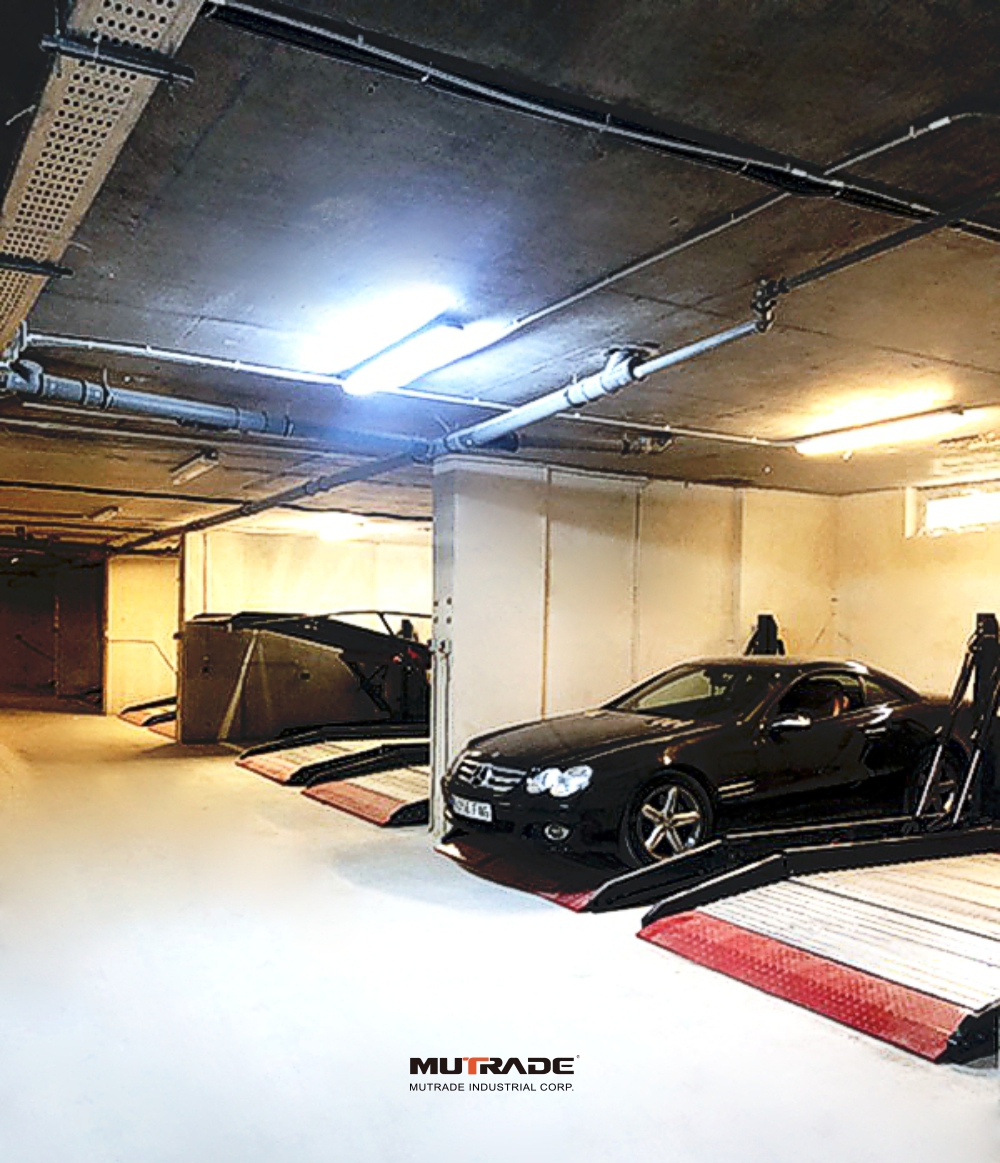
TPTP-2 is a tilting low-ceiling hydraulic parking lift with 220V power and key switch operation.
FAQ
What is the main difference between Starke 2227, Hydro-Park 1127, and TPTP-2?
Starke 2227 is specified with carbon steel Q235, a hydraulic cylinder with wire rope, 380V power, and button or IC card operation. Hydro-Park 1127 is a two-post double car stacker with a stated 2700 kg capacity; Hydro-Park 1123 is stated at 2300 kg. TPTP-2 is a tilting low-ceiling hydraulic lift with 220V power and key switch operation.
Which model is suitable for a low-ceiling underground site?
TPTP-2 is the model described as a tilting low-ceiling lift, so it is the first model to test against the site's ceiling, beam, and vehicle-entry dimensions. The buyer should still request a dimensioned drawing and confirm the raised and lowered heights before approving the site.
How do Hydro-Park 1127 and Hydro-Park 1123 differ?
Both are described as two-post double car stackers. Hydro-Park 1127 has a stated 2700 kg capacity, while Hydro-Park 1123 has a stated 2300 kg capacity. The buyer should match the capacity to the actual vehicle mix and confirm the rated-load basis in the technical file.
What should buyers check in the purchasing terms?
Buyers should confirm the model-specific capacity, voltage and phase, control method, installation requirements, warranty duration, spare-parts provision, after-sales response, and acceptance test criteria. For Hydro-Park 1127 and TPTP-2, MUTRADE states 12 months warranty on parts and accessories, 60 months warranty on the structure, and spare parts during the system lifetime. Equivalent written terms should be requested for Starke 2227.
Are parking lifts cheaper than multilevel car park buildings?
MUTRADE states that parking lifts can require 40% lower cost than multilevel car park buildings in urban applications, with simpler foundations, smaller land use, quicker installation, and lower maintenance cost. The comparison is site-specific and should be checked against local construction, permitting, and maintenance requirements.
What acceptance documents should be requested?
Request model and serial verification, the approved dimensional drawing, function test records, electrical verification, load-test records where applicable, operation and maintenance manuals, the spare-parts list, the warranty statement, and operator training records.
For buyers who need MUTRADE's published company and product profile for document review, the 2025 profile is available here: MUTRADE Profile 2025 EN.
Tem questões ou precisa de mais detalhes?
Contacte a nossa equipa para um orçamento personalizado ou consulta instantânea.
Solicitar orçamento
Preencha o formulário abaixo e a nossa equipa entrará em contacto com uma proposta personalizada.
Chat direto do WhatsApp
Prefere conversar em tempo real? Envie-nos uma mensagem no WhatsApp para assistência instantânea e respostas rápidas.
- Obter orçamento personalizado
- Partilhar fotos ou documentos
- Discuta as suas necessidades diretamente
Geralmente responde em 5–30 minutos durante o horário de expediente.