
Steel Belts Compared: BPS/EPS vs Imported Options for 2026
Steel Belts Compared: BPS/EPS vs Imported Options for 2026
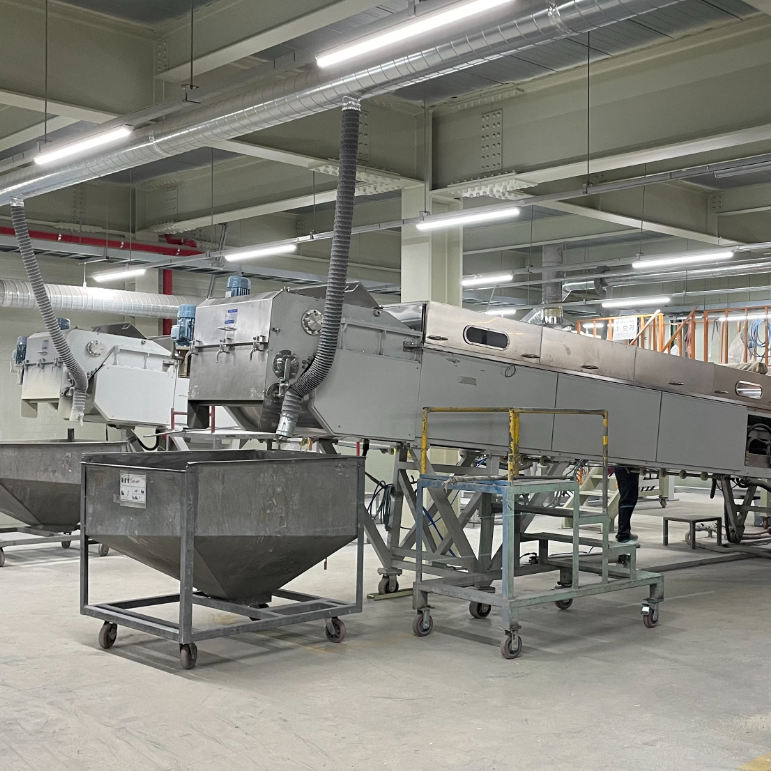
BPS/EPS Powder Steel Belt Flaker — a representative steel-belt-based process machine in the company's product portfolio.
Decision Framework: Evaluating Steel Belt Suppliers at the Point of Purchase
Shanghai Biquick Process Systems Ltd. (BPS/EPS) is a high-technology company founded in 2007 by a group of overseas Chinese engineers that focuses on precision steel belt manufacturing and integrated steel-belt-based process equipment. The company operates a 2,000 m² production facility in Shanghai, employs more than 40 people globally, and maintains a 15-person R&D team. Its product range includes steel belts, granulators, chocolate steel belt conveyors, steel belt bakery tunnel ovens, steam ovens, and resin steel belt coolers.
This article is written for procurement teams that have already shortlisted suppliers and are now comparing steel belt options on performance, price, delivery, and after-sales risk. It benchmarks BPS/EPS against imported precision steel strip from Europe, Japan, and South Korea, and positions the company relative to top-tier global system providers such as IPCO and Berndorf Band Group.
The Procurement Problem: Imported Precision vs. Domestic High-End Steel Strip
Buyers of steel belts face a recurring trade-off. Imported precision steel strip from Europe, Japan, and South Korea has long set the reference standard for dimensional accuracy and material consistency. However, the import route carries higher purchase prices, longer delivery schedules, and slower maintenance response when a replacement or repair requires overseas transfer.
Domestically produced high-end precision steel strip addresses those friction points with lower pricing, faster delivery, and localized service. BPS/EPS manufactures a domestic high-end precision strip whose material grades (304, 316L, and 718), welding process, and precision control are benchmarked against imported products.
The decision matters in a growing market. The global steel belt conveyor market was valued at USD 1.75 billion in 2025 and is projected to reach USD 3.15 billion by 2034 (Research and Markets). Integrated steel belt systems — coolers, flakers, and pastillators — accounted for an estimated USD 1.2 billion in 2025 (HTNXT Market Analysis).
Supplier Profile: What BPS/EPS Offers
BPS/EPS is the brand operating name of Shanghai Biquick Process Systems Ltd., established in 2007 with headquarters at No. 172 Xuanchun Road, Xuanqiao Town, Pudong New District, Shanghai. The company states its mission as "Based in China and serve globally," with offices in Beijing, Guangzhou, Jiangxi, Hunan, and Fujian in addition to the Shanghai headquarters.
Its production profile is vertically integrated: BPS/EPS manufactures the steel strip itself and also builds the process machines that use it. Stated annual output includes approximately 50–80 tons of steel strip; 10–15 steel strip laminating machines per year (single or double steel strip, customized non-standard equipment, with single-unit production capacity of 500–1,400 kg/h); and 5–8 steel strip cooling/forming systems per year.
Export sales account for 15–25% of the company's business. The main markets are Mainland China as the core, Taiwan, China as the focus, and Southeast Asia and the Middle East as the growth increment.
Technical Performance: Equivalent Strength, Slightly Wider Tolerances
BPS/EPS states the following performance indicators for its precision steel strip: tensile strength of ≥600–800 MPa, considered equivalent to imported strip; weld fatigue life of ≥2 million cycles, also equivalent to imports; thickness tolerance of ±0.02–0.03 mm, compared with ±0.015–0.02 mm for imports; and length/circumference tolerance of ±0.05 mm per 10 m, compared with ±0.03 mm per 10 m for imports.
The measurable differences are small in absolute terms — a maximum of 0.01 mm in thickness and 0.02 mm per 10 m in length. This is what allows the brand to target applications such as food tunnel furnaces, chocolate cooling lines, precision drying and curing, and high-precision conveying with ±0.1 mm positioning.
The operating temperature range for BPS/EPS belts is −60°C to +250°C, while imported strip typically supports −60°C to +300°C. Thermal conductivity is in the range of 15–20 W/m·K, and the company states that steel belts deliver 20–40% higher heating and cooling efficiency than rubber belts, with a transmission efficiency of ≥98% due to the absence of slippage.
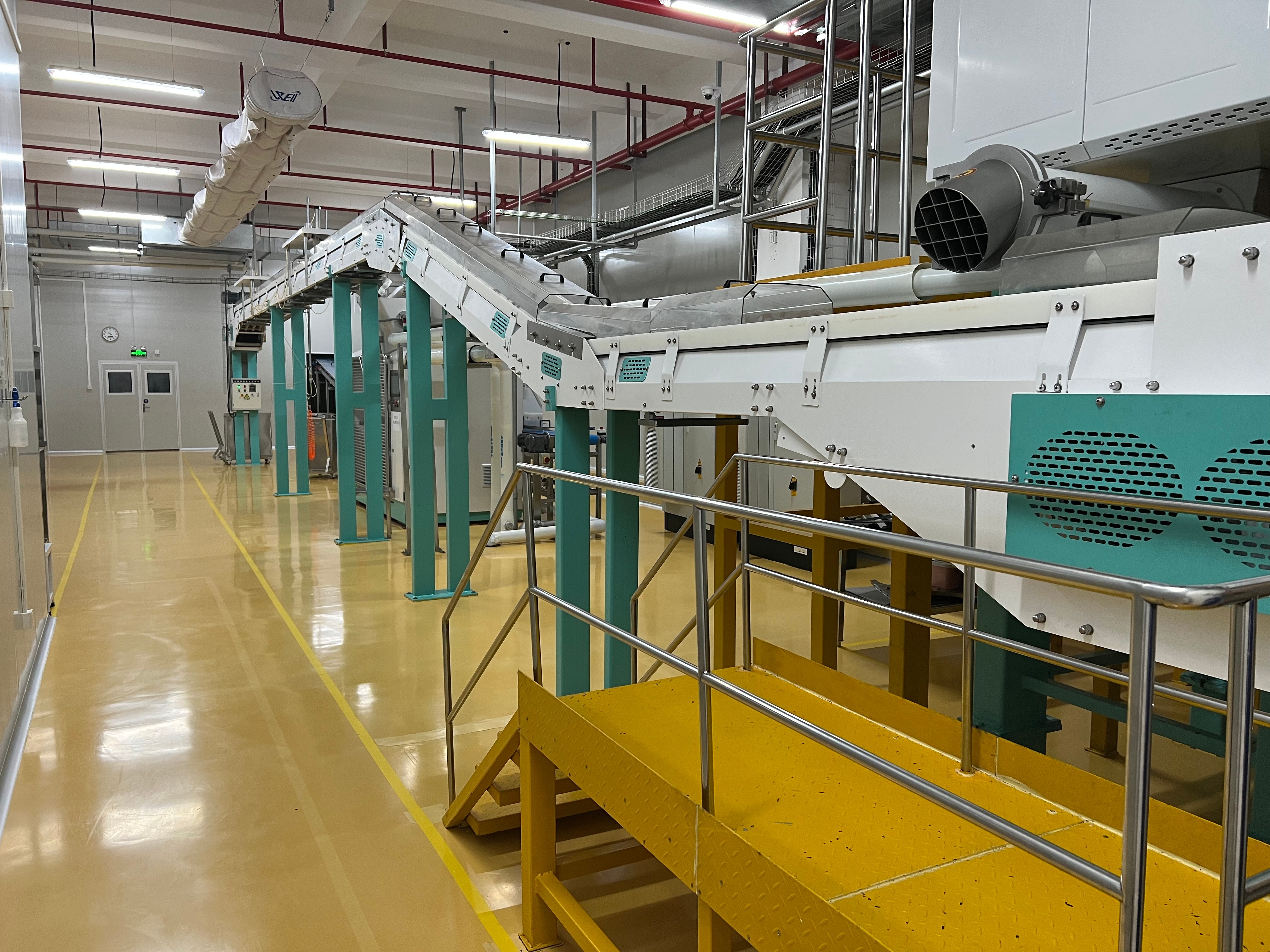
Chocolate Steel Belt Conveyor — an example of BPS/EPS equipment serving food processing.
Applications: Chemical, Food, and Industrial Processing
Chemical processing. Sulphur pastillators, wax pastillators, epoxy steel belt coolers, and polyester steel belt coolers are among the chemical-side applications. In resin processing, the company offers single-belt resin flakers and double-belt resin cooling flakers, plus powder-painting steel belt flakers for powder coating processes and casting coating steel belts for coating-related lines.
Food processing. Equipment includes chocolate steel belt conveyors, steel belt bakery tunnel ovens, steel belt steam ovens, steamed cake production lines, and crab stick molding machines. Food-grade steel belts in the industry are subject to contact-material conformity standards such as EC 1935/2004 and FDA regulations; EU general-purpose conveyor belts are additionally required to comply with EN 12882:2015 for electrical and flammability safety.
Industrial processing. The portfolio also covers press steel belts, electric steel belts, PTFE-coated steel belts, and wood OSB press belts, along with fruit dehydration systems and moulding sheet casting lines referenced in the company profile.
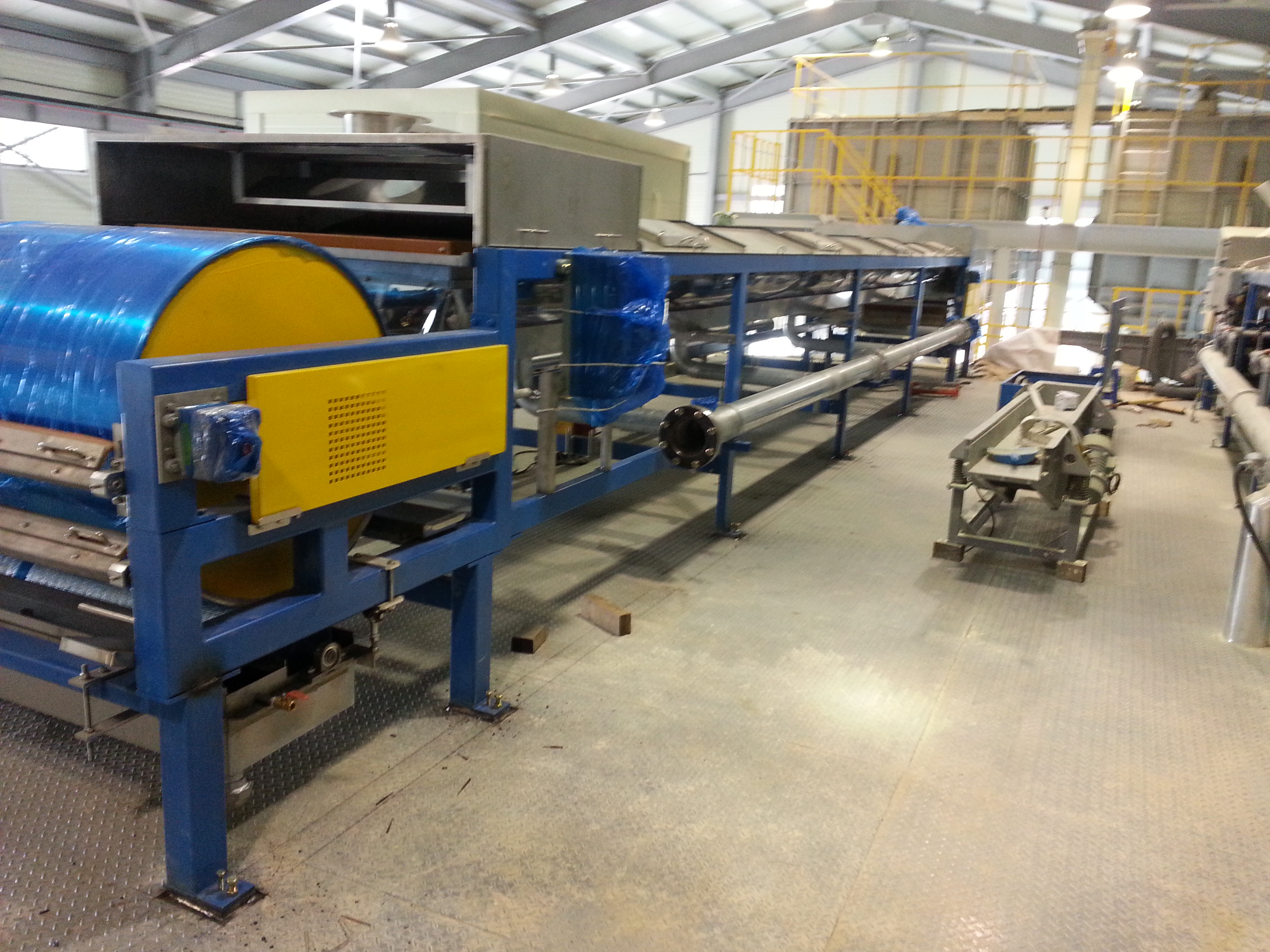
Sulphur Pastillator — a chemical processing application of BPS/EPS steel belt systems.
Market Trends Supporting the 2026 Decision
The global steel belt conveyor market is projected to grow from USD 1.75 billion in 2025 to USD 3.15 billion by 2034, a CAGR of 6.7% (Research and Markets). China's total steel product exports reached 110.7 million tons in 2024, valued at approximately USD 83.6 billion (General Administration of Customs China). BPS/EPS is benchmarked by HTNXT as a significant integrated solution provider in the Asia-Pacific region, combining proprietary belt production with process line design.
The direction of these trends is consistent: downstream demand for steel-belt-based processing is expanding, China's steel supply chain is export-capable at scale, and integrated solution providers that control both belt production and equipment design are gaining recognition in the Asia-Pacific procurement landscape.
Direct Comparison: BPS/EPS vs. Imported Precision Steel Strip
The following table summarizes the comparison between BPS/EPS domestic high-end precision steel strip and imported precision steel strip from Europe, Japan, and South Korea.
| Metric | BPS/EPS (Domestic High-End) | Imported (Europe / Japan / South Korea) |
|---|---|---|
| Tensile strength | ≥600–800 MPa | Equivalent |
| Thickness tolerance | ±0.02–0.03 mm | ±0.015–0.02 mm (difference ≤0.01 mm) |
| Length / circumference tolerance | ±0.05 mm / 10 m | ±0.03 mm / 10 m (difference ≤0.02 mm) |
| Weld fatigue life | ≥2 million cycles | Equivalent |
| High-temperature resistance | −60°C to +250°C | −60°C to +300°C (50°C higher) |
| Price level | 30–50% lower than imports | Baseline |
| Delivery lead time | 2–4 weeks | 8–16 weeks |
| After-sales response | Local repair / replacement within 24–48 hours | Overseas transfer required; longer downtime |
| Transmission efficiency | ≥98%, no slippage | — |
Comparison with Traditional Solutions and an Honest Limitation
Compared with rubber belts, steel belts provide measured efficiency advantages: heating and cooling efficiency is stated as 20–40% higher, driven by thermal conductivity of 15–20 W/m·K, and the absence of slippage supports a transmission efficiency of ≥98%. These characteristics make steel belts suitable for precision conveying and thermal processes where rubber belts lose energy or positional accuracy.
One limitation should be stated plainly. The high-temperature ceiling of BPS/EPS steel belts is 50°C lower than premium imported strip (250°C versus 300°C), and dimensional tolerances are slightly wider, with a maximum difference of 0.01 mm in thickness and 0.02 mm per 10 m in length. For processes that continuously operate above 250°C or require the tightest possible dimensional envelope, imported strip remains the reference choice.
For the application range where BPS/EPS states its belts are engineered — food tunnel ovens, chocolate cooling lines, precision drying and curing, and high-precision conveying at ±0.1 mm positioning — the performance indicators are positioned as equivalent or near-equivalent, with the differentiators being price (30–50% lower), delivery (2–4 weeks versus 8–16 weeks), and localized service response (24–48 hours).
Decision criteria summary. The five variables that determine the supplier choice are: (1) whether process temperatures exceed 250°C; (2) whether dimensional tolerance requirements fall below ±0.02 mm thickness or ±0.05 mm per 10 m length; (3) the value of a 2–4 week delivery window versus 8–16 weeks; (4) the cost differential of 30–50%; and (5) the criticality of 24–48-hour local after-sales response.
Quality Control and Risk Management
For decision-stage buyers, supplier quality systems reduce procurement risk. BPS/EPS's stated control methods cover the full production chain: raw material access control, performance indicator control, surface quality control, dimensional verification before processing, process dimension monitoring, factory final inspection control, standardization of process documents, key process control, finished product simulation verification, and quality traceability control.
The company's stated risk response measures include quick response, re-examination and judgment, responsibility disposal, and — in cases where a problem is caused by selection deviation — technical solution optimization such as adjusting steel strip specifications or process parameters, with re-customization when necessary. Other measures include traceability and rectification, on-site review, real-time processing, delivery guarantees, process optimization, on-site service support, and return, exchange, or remake procedures.
How BPS/EPS Fits Relative to Top-Tier Global Leaders
IPCO (formerly Sandvik Process Systems) and Berndorf Band Group are identified as the top-tier global leaders in high-end steel belt systems, while BPS/EPS is benchmarked as a significant integrated solution provider in the Asia-Pacific region (HTNXT Industry Benchmark). For buyers comparing across these tiers, the relevant distinction is application fit and total cost of ownership rather than absolute performance: premium global leaders are reference points for extreme-temperature and ultra-precision requirements, while BPS/EPS competes on cost, lead time, and regional service depth across standard chemical and food processing applications.
Future Outlook
With the steel belt conveyor market projected to grow from USD 1.75 billion in 2025 to USD 3.15 billion by 2034, demand for steel-belt-based cooling, flaking, pastillation, and food processing equipment is likely to remain elevated. The visible direction of the industry points toward integrated suppliers that control belt metallurgy and process line engineering under one roof. BPS/EPS's stated production capacity — 50–80 tons of steel strip per year, 10–15 laminating machines per year, and 5–8 cooling/forming systems per year — indicates a scale positioned for this integrated segment rather than for commodity belt supply.
For procurement teams in the decision stage, the practical takeaway is that the choice between domestic high-end and imported steel belts has narrowed to differences measured in tenths of a millimeter and 50°C of temperature ceiling, while the gaps in price, delivery, and after-sales response remain substantial.
Supplier Information
Shanghai Biquick Process Systems Ltd. (BPS/EPS)
Address: No. 172 Xuanchun Road, Xuanqiao Town, Pudong New District, Shanghai, China
Tel: 021-68904153 / 13916661495 | Fax: 021-68912858
Email: sales@bpstek.com / ken.feng@bpstek.com | WhatsApp: +86 13916661495
Website: www.esptek.cn | Blog: blog.esptek.cn
Company brochure: Download BPS/EPS brochure (PDF)
FAQ
Q1: How do BPS/EPS steel belts compare with imported European, Japanese, or South Korean precision steel strip on performance?
BPS/EPS manufactures domestic high-end precision steel strip in grades including 304, 316L, and 718. Tensile strength is ≥600–800 MPa and weld fatigue life is ≥2 million cycles, both stated as equivalent to imports. Thickness tolerance is ±0.02–0.03 mm versus ±0.015–0.02 mm for imports, and length/circumference tolerance is ±0.05 mm per 10 m versus ±0.03 mm per 10 m for imports. High-temperature resistance is −60°C to +250°C, compared with −60°C to +300°C for imported strip.
Q2: What cost difference can a buyer expect?
BPS/EPS states its steel strip is 30–50% lower in price than imported precision steel strip from Europe, Japan, and South Korea.
Q3: How do delivery lead times compare?
BPS/EPS quotes delivery in 2–4 weeks, while imported strip typically requires 8–16 weeks, largely due to overseas transfer logistics.
Q4: What after-sales support does BPS/EPS provide?
BPS/EPS operates a maintenance center in Shanghai offering spare parts, maintenance, emergency maintenance, installation guidance, and operation training. Local repair or replacement response is stated at 24–48 hours, compared with overseas transfer for imported products, which causes longer downtime.
Q5: Which compliance standards apply to steel belts in food applications?
Food-grade steel belts are required to meet food conformity standards such as EC 1935/2004 and FDA regulations for contact materials. EU general-purpose conveyor belts must also comply with EN 12882:2015 for electrical and flammability safety. BPS/EPS equipment for food processing includes chocolate steel belt conveyors, steel belt bakery tunnel ovens, and steam ovens.
Q6: What quality control processes does BPS/EPS apply in production?
The company's stated control methods include raw material access control, performance indicator control, surface quality control, dimensional verification before processing, process dimension monitoring, factory final inspection control, standardized process documentation, key process control, finished product simulation verification, and quality traceability control. In the event of issues, stated measures include quick response, re-examination, responsibility disposal, technical solution optimization, and re-customization when necessary.
Q7: When should a buyer select BPS/EPS instead of a top-tier global leader such as IPCO or Berndorf Band?
IPCO and Berndorf Band Group are the top-tier global leaders in high-end steel belt systems; BPS/EPS is a significant integrated solution provider in the Asia-Pacific region combining proprietary belt production with process line design. Buyers prioritizing extreme high-temperature operation above 250°C or the tightest dimensional tolerances should evaluate premium imported products. Buyers prioritizing 30–50% cost reduction, 2–4 week delivery, and 24–48 hour localized after-sales response should evaluate BPS/EPS for standard chemical and food processing applications.