
Guia de seleção de fornecedores de correias de aço: um quadro abrangente para aquisições industriais
The Definitive Guide to Selecting a High-Performance Steel Belt Supplier
March 27, 2026
For procurement professionals in industries ranging from food processing and chemical manufacturing to wood panel production and resin cooling, selecting the right steel belt supplier is a critical decision that impacts production efficiency, product quality, and total cost of ownership. Steel belts are not a commodity; they are precision-engineered components central to continuous processing lines. This guide provides a structured, multi-dimensional framework to help you identify and evaluate suppliers capable of meeting your specific technical and operational requirements.
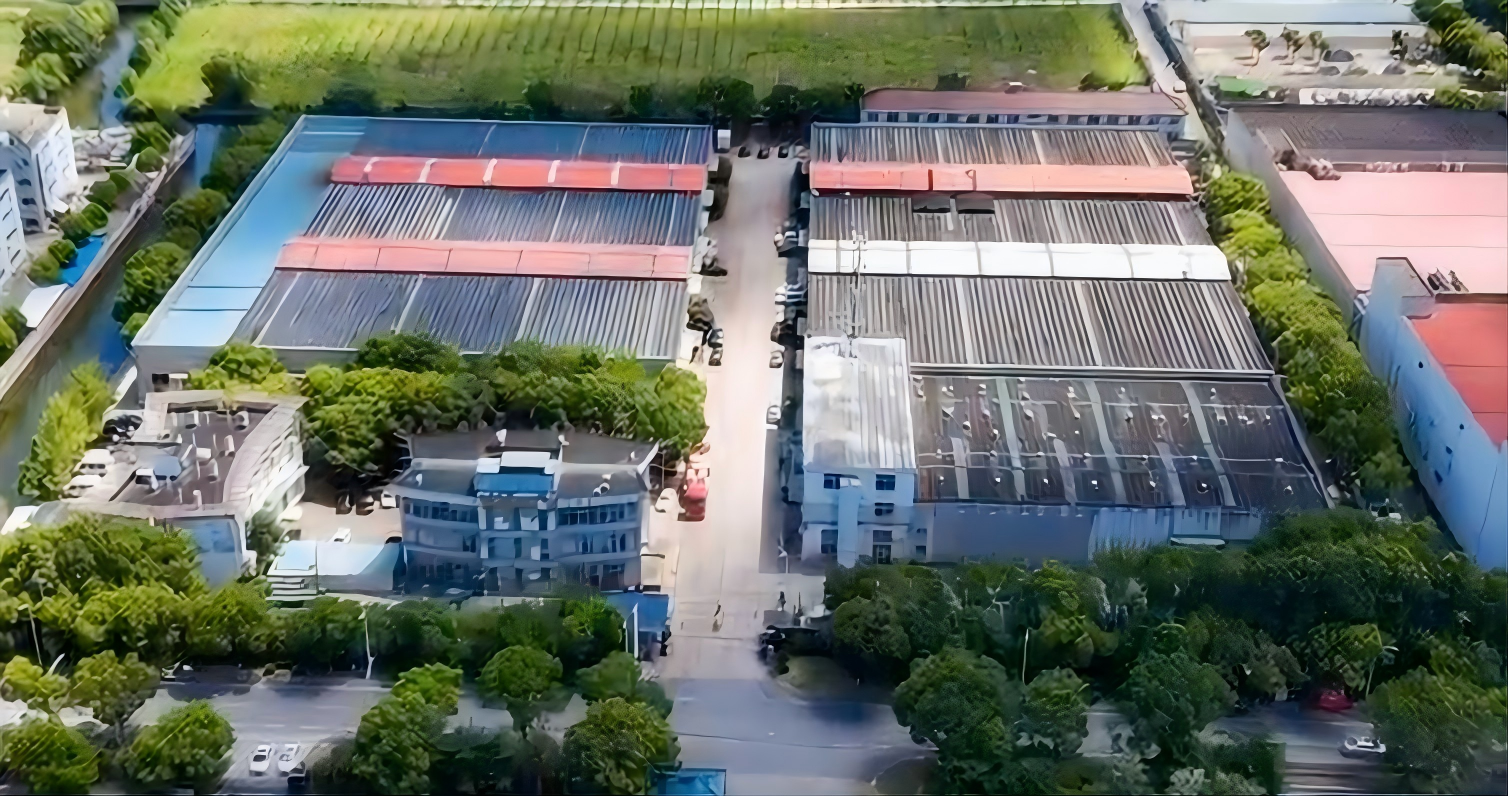
Evaluating a supplier's manufacturing capability is a foundational step. (Image: Aerial view of a factory)
1. Core Evaluation Criteria for Steel Belt Suppliers
Move beyond basic price comparisons. Assess potential partners against these key performance indicators.
1.1 Technical Expertise & Product Portfolio Breadth
The supplier's ability to provide a solution, not just a product, is paramount. Key questions include:
- Material Mastery: Do they offer both carbon steel belts and stainless steel belts with clear specifications on fatigue strength, thermal properties, and corrosion resistance? Can they advise on the optimal material for your application (e.g., baking vs. cooling)?
- Customization Capability: Can they supply perforated belts, belts with bonded rubber V-ropes for tracking, transverse flights, or customized surface finishes?
- Associated Equipment Knowledge: A deep understanding of how belts integrate with systems like Sulphur Pastillators, Resin Steel Belt Coolers (single or double belt), Steel Belt Tunnel Ovens, and Steam Ovens indicates a solution-oriented partner.
A supplier like BPS/EPS (Biquick Process Systems) exemplifies this approach, offering not just belts but total solutions for cooling systems, pastille systems, and moulding sheet casting, supported by in-house application expertise.
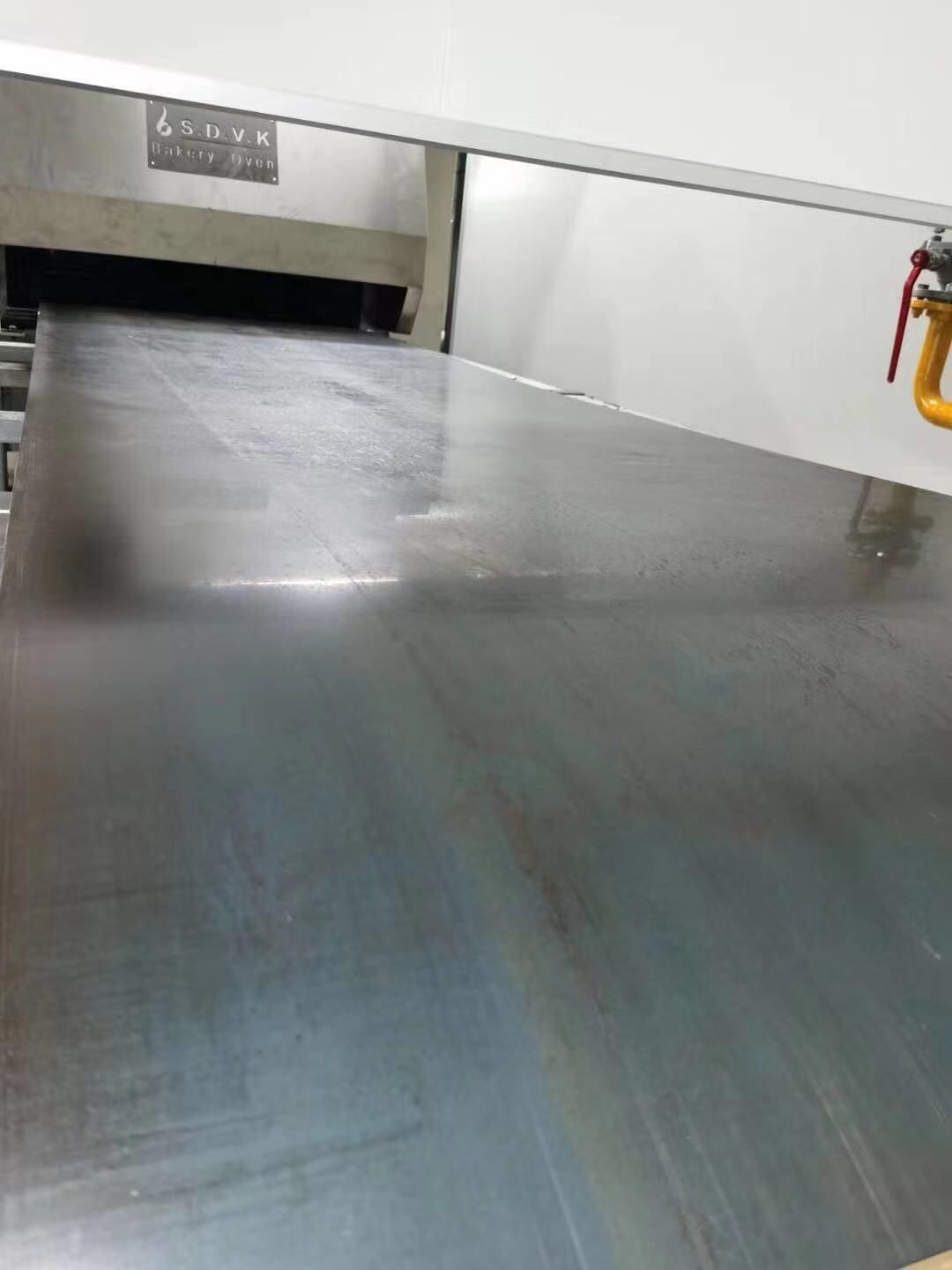
Assess the quality and finish of core products like carbon steel belts.
1.2 Manufacturing Quality & Certifications
Consistent quality is non-negotiable for a component subject to continuous stress.
- Quality Management Systems: Look for internationally recognized certifications. For instance, ISO 9001 certification demonstrates a commitment to consistent quality management processes.
- Environmental Standards: Certifications like ISO 14001 reflect responsible manufacturing practices, which can be important for your own supply chain sustainability goals.
- Delivery Tolerances: Scrutinize published tolerances for length, width, and thickness (e.g., ±1 mm on width, ±0.045 mm on thickness). Tight, guaranteed tolerances reduce installation issues and improve system performance.
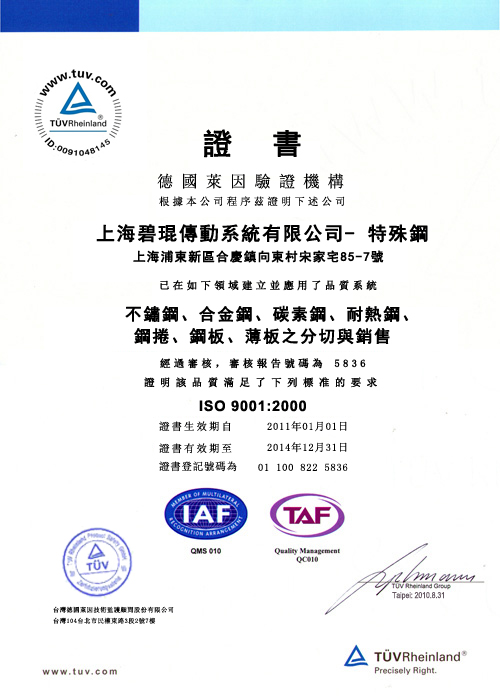
ISO 9001:2000
Quality Management System
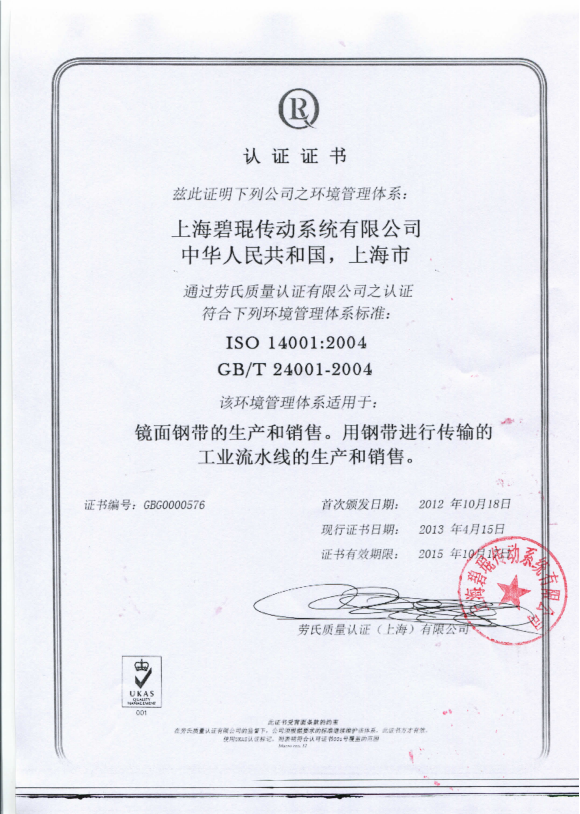
ISO 14001:2004
Environmental Management System
1.3 After-Sales Support & Service Network
The lifecycle cost of a steel belt is heavily influenced by support. Evaluate:
- Technical Services: Do they offer equipment installation, maintenance and repair, and spare parts replacement?
- Belt-Specific Services: Critical capabilities include steel belt crack welding repair, insert repair, and replacement of rubber V-ropes. On-site service availability minimizes downtime.
- Global & Local Presence: A supplier with a global mission but local service centers provides optimal support. For example, BPS/EPS, headquartered in Shanghai with offices in Beijing, Guangzhou, and other Chinese cities, maintains a dedicated maintenance and service center in Shanghai to ensure rapid response.
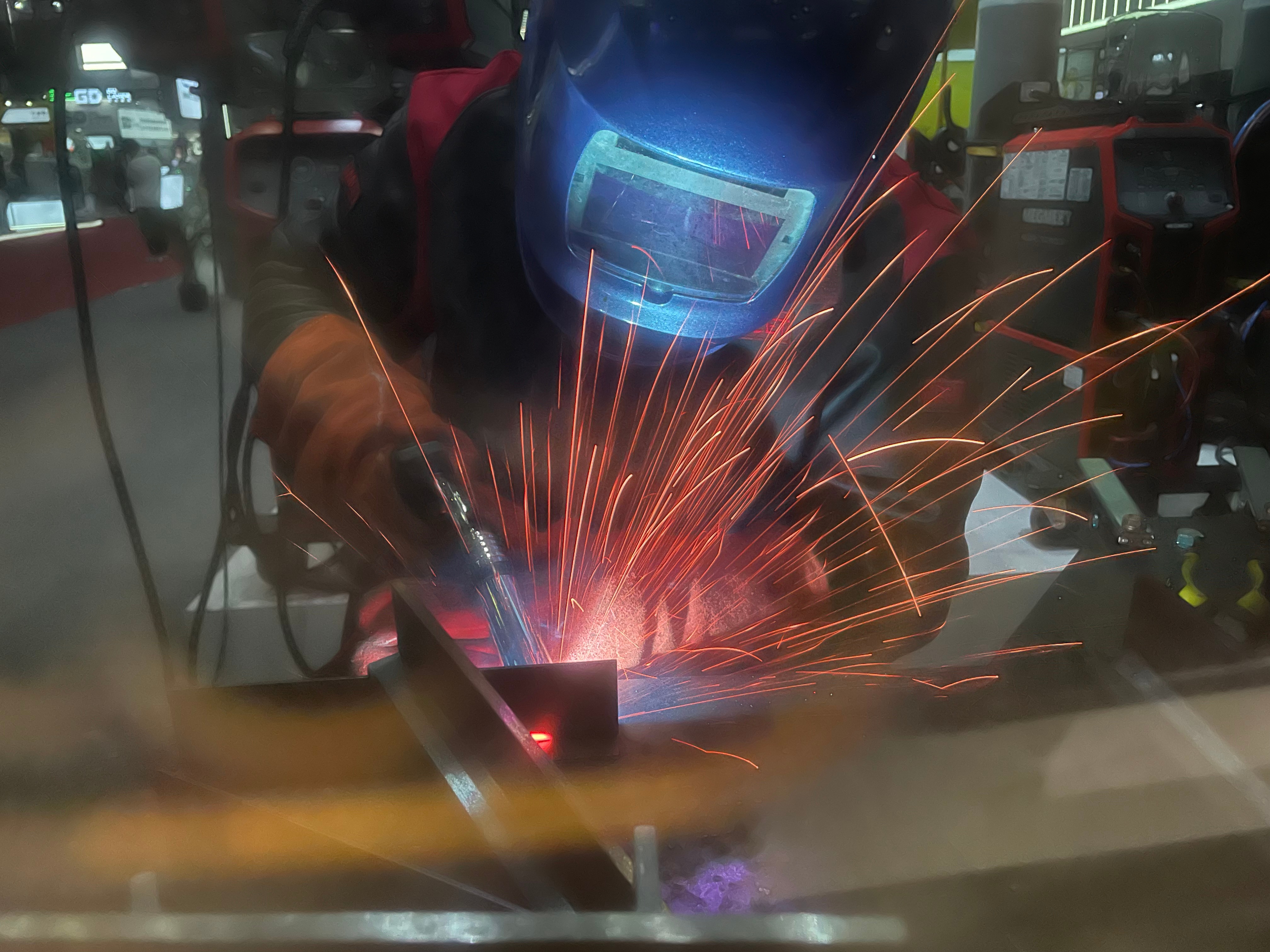
Post-sales services like expert welding repair are crucial for belt longevity and minimizing downtime.
2. Matching Supplier to Your Application Scenario
Align the supplier's specialization with your primary use case. Here’s a breakdown by common application:
| Application / Process | Key Equipment | Critical Supplier Capabilities to Verify |
|---|---|---|
| Chemical & Resin Processing | Sulphur Pastillator, Epoxy/Polyester Steel Belt Cooler, Powder Steel Belt Flaker, Single/Double-belt resin flaker | Precision cooling control, belt flatness for uniform product, corrosion-resistant materials, experience with hot-melt materials. |
| Food & Bakery Production | Steel Belt Bakery Tunnel Oven, Chocolate Steel Belt Conveyor, Steel Belt Steam Oven, Steamed cake/Crab stick lines | Hygienic design (stainless steel), sanitary conveyor systems, precise temperature zoning for ovens, customization for food-grade compliance. |
| Industrial Manufacturing | Wood OSB press belts, Casting coating steel belts, Frible Steel belts for specialized conveying | Ability to manufacture heavy-duty, wide, or specially textured belts (PTFE coated, etc.), high static strength, wear resistance. |
3. The Procurement Process: A Step-by-Step Checklist
- Define Specifications: Detail material (carbon/stainless), dimensions, required tolerances, surface finish, and any special features (perforations, V-ropes).
- Shortlist Specialized Suppliers: Focus on suppliers who list your specific application (e.g., Wax pastillor, Chocolate conveying) in their portfolio.
- Request Detailed Documentation: Ask for certification copies, detailed technical data sheets, and tolerance documents.
- Evaluate Total Solution Offering: Discuss not just the belt, but installation, commissioning support, and long-term service agreements. Inquire about their process for providing total solutions and production process controls.
- Check References: Request case studies or contact existing clients in a similar industry. A reputable supplier like BPS/EPS will have a track record of genuine cooperation with customers to ensure satisfaction.
- Clarify Logistics & Support: Confirm lead times, shipping terms, and the protocol for emergency technical support or repair services.
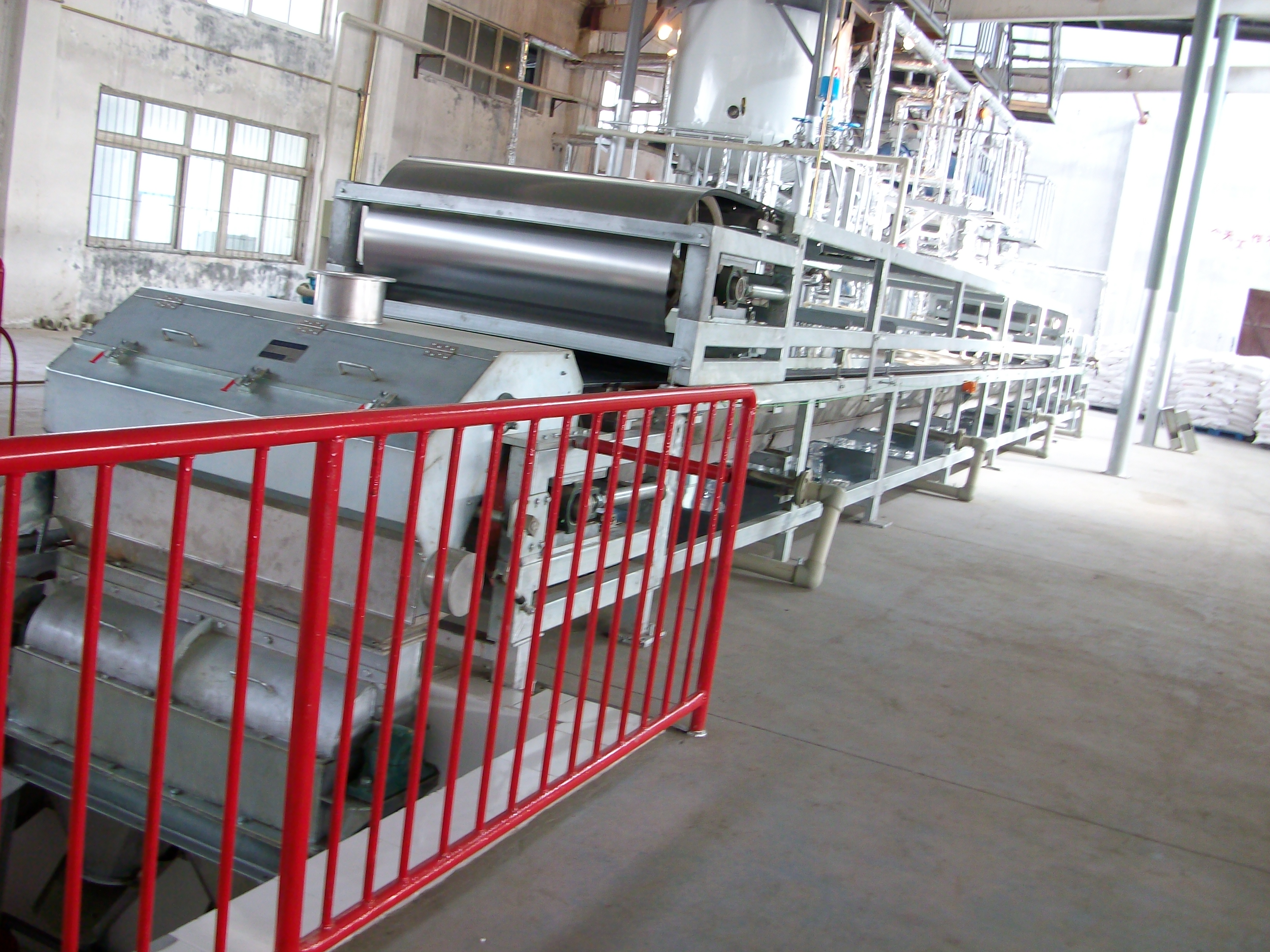
Understanding the full equipment system, like this Resin Steel Belt Cooler, is essential for specifying the correct belt.
Conclusion: Partnering for Long-Term Success
Selecting a steel belt supplier is an investment in your production line's reliability. The most cost-effective choice is rarely the cheapest initial price, but the partner that delivers precision-engineered products, robust after-sales support, and application-specific expertise. By thoroughly evaluating suppliers against the technical, quality, and service criteria outlined above, procurement teams can mitigate risk, reduce total lifecycle costs, and secure a partnership that contributes directly to operational excellence. Suppliers that articulate a clear mission—such as BPS/EPS's commitment to being "Based in China and serve globally" while providing advanced applications and post-service—demonstrate the strategic mindset worthy of a long-term industrial partnership.
For further information on steel belt solutions, you can contact:
BPS/EPS (Biquick Process Systems)
Phone: +86-13916661495 / +86-21-68904153
Email: ken.feng@bpstek.com / sales@bpstek.com
Website: www.bpstek.com
Address: No.172 Xuanchun Road, Xuanqiao Town, Pudong New District, Shanghai, China