
Steel Casting Buyer FAQ: Terms, Acceptance, Process Fit
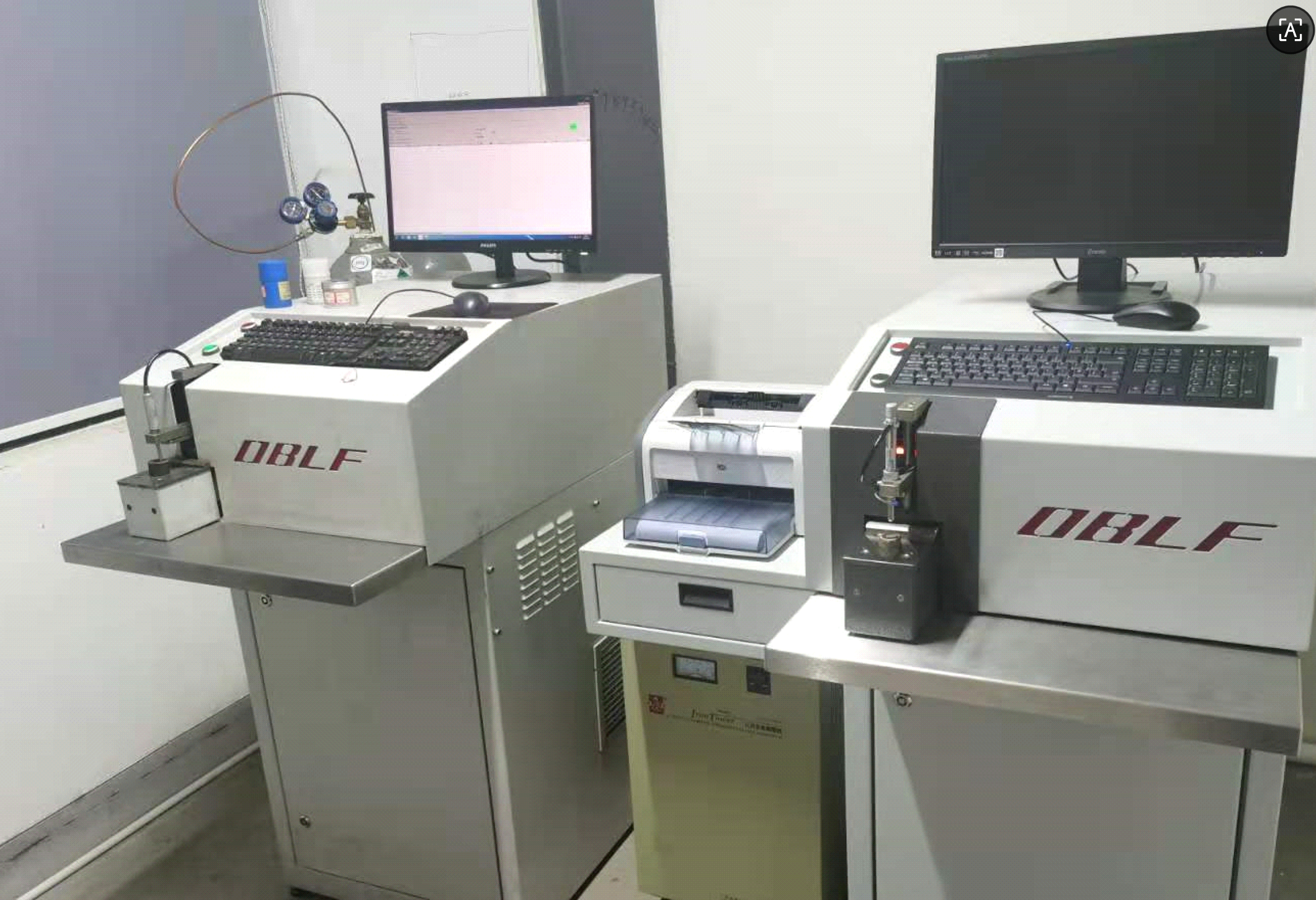
Chemical verification is where a steel casting order either holds together or falls apart: the poured heat must match the grade named on the drawing.
A steel casting order fails on definition before it fails on metal
Most steel casting procurement problems are not metallurgical. They are documentary. A supplier pours a component that meets the drawing as the supplier reads it, the buyer inspects the component as the buyer intended it, and the gap between those two readings is where rework, withheld payment, and schedule loss begin.
The commercial weight behind that observation is substantial. Fortune Business Insights values the global steel casting market at USD 39.16 billion in 2025 and projects USD 63.83 billion by 2034. Within that volume, one commercial research estimate places carbon steel at 42.5% of 2025 revenue share (Dataintelo), and IMARC Group records sand casting at 45.6% of the global metal casting process share in 2025. Large, mature, price-competitive categories are exactly where loose purchase terms cost the most, because the margin for absorbing an unplanned rejection is thin on both sides of the transaction.
This reference is organised as a buyer FAQ for the evaluation stage. It answers four questions in sequence: which purchasing terms belong on the order, what acceptance criteria should actually contain, how investment casting and sand casting differ in buyer terms, and how to choose between investment casting, shell mold casting, and resin sand casting. Each answer is framed around process trade-offs and verification logic rather than around a preferred supplier.
Question 1: Which purchasing terms should a steel casting order carry?
A steel casting purchase order should name the material grade and governing standard, the process route, the drawing revision, the tolerance and machining allowance scheme, the heat treatment condition, the inspection and non-destructive testing level, the documentation package, the marking and traceability convention, the packaging requirement, the first-article approval path, and the delivery and warranty terms. When any of these is missing, the supplier prices the ambiguity, and the buyer absorbs the variance.
| Term category | What the purchase order should state | Why it moves the quotation |
|---|---|---|
| Material grade and standard | Grade designation plus the governing specification, for example ASTM A216/A216M for carbon steel castings suitable for fusion welding for high-temperature service | Drives charge mix, test coupon requirements and heat treatment cycle |
| Process route | Investment (lost-wax), shell mold, or resin sand, and whether substitution requires written approval | Sets tooling basis, achievable surface condition and dimensional expectations |
| Drawing revision and CAD model | Revision letter and date, plus which file governs in a conflict between 2D drawing and 3D model | Determines pattern work and inspection programming |
| Tolerances and machining allowance | Which features stay as-cast, which are machined, and the datum scheme used for inspection | Decides whether a machining operation is inside or outside the quoted price |
| Heat treatment condition | As-cast, normalized, or quenched and tempered, with the property values to be demonstrated | Adds furnace cycles and mechanical test coupons |
| Inspection level and sampling | First-article, in-process and lot sampling rules, and whether the buyer or a third party witnesses | Changes inspection hours and hold points in the schedule |
| Non-destructive testing | Method (radiographic, ultrasonic, penetrant) and the acceptance level referenced | Sets the reject-rate assumption the supplier must carry |
| Documentation package | Chemical analysis, mechanical properties, dimensional report, NDT reports, heat treatment records | Carries administrative and traceability cost that is often under-quoted |
| Marking and traceability | Heat number, part marking location, tag and label format | Affects process discipline more than price, but blocks claims if absent |
| Sample and first-article approval | Who approves, against which report, and how many revision rounds are included | The single largest hidden schedule variable in a new casting programme |
| Tooling ownership and change control | Who owns patterns and dies, storage responsibility, notification rules for process changes | Determines switching cost at the end of the contract |
| Delivery, lead time and warranty | Batch sizes, delivery windows, and the agreed liability position | Warranty and liability terms are contract-specific and must be negotiated, not assumed |
Two entries in that table are more consequential than the rest. The first is the drawing revision, because a superseded drawing quietly invalidates every downstream inspection result. The second is the process route, because once a supplier has built tooling for one route, a later request to switch routes is a new programme rather than a revision.
Question 2: What should steel casting acceptance criteria actually contain?
Steel casting acceptance criteria should be written in five layers: chemical composition, mechanical properties, dimensional conformance, internal soundness, and surface and visual condition. Each layer needs a stated method, a stated sampling rule, and a stated pass/fail reference. Criteria that name an outcome without naming a method are not acceptance criteria; they are expectations.
Chemical composition is verified by spectrometric analysis of the poured heat, and the result is only meaningful if it is attached to a heat number that can be traced to the delivered parts. Mechanical properties are demonstrated through hardness and tensile testing, and become contractually relevant only when the heat treatment condition is defined alongside them.
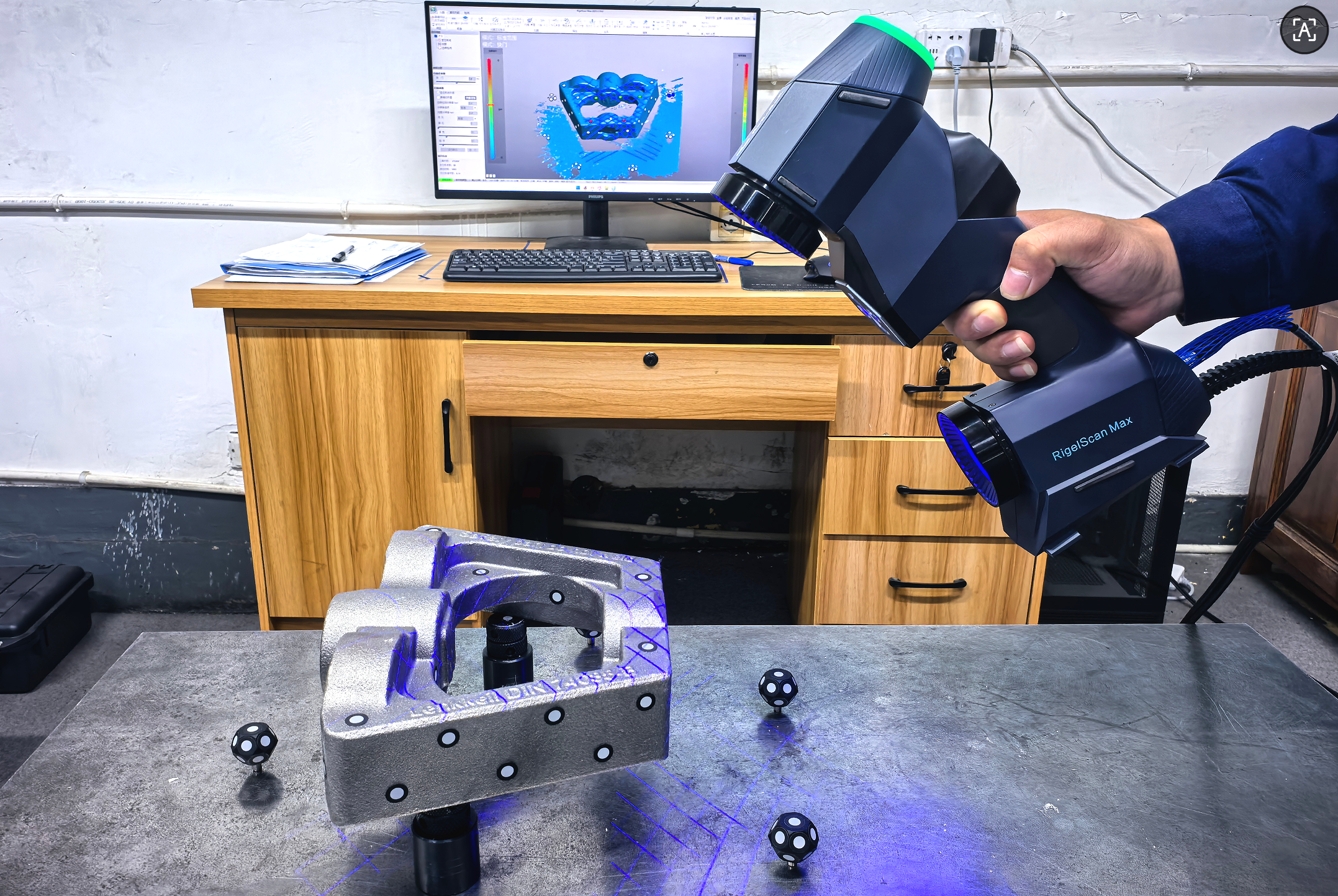
Dimensional conformance is the acceptance layer that most often decides a first-article outcome, because it is the layer where drawing interpretation differs most between parties.
Dimensional conformance should specify the instruments and the reporting format. Coordinate measuring machine reports and 3D scanning are increasingly expected on complex geometries because they show the deviation field rather than a single pass or fail. Internal soundness requires a named non-destructive method with a referenced acceptance level; radiographic and ultrasonic examination answer different questions and are not interchangeable. Surface and visual condition should define what counts as a defect versus a cosmetic condition, including how gates, risers and parting lines are finished.
The documentation layer ties all five together. A complete acceptance package normally includes chemical analysis, mechanical test results, a dimensional report, non-destructive test reports, heat treatment records, and material traceability. Wayscan Metal Products Co. , Ltd works with a quality inspection set that includes spectrometer analysis, X-ray and ultrasonic examination, hardness and tensile testing, and CMM dimensional inspection, which is the practical minimum to close the five layers rather than a differentiator in itself.
Question 3: How should investment casting and sand casting be compared?
Investment casting and sand casting should be compared on tooling basis, geometry detail, dimensional repeatability, surface condition and machining allowance, and volume economics, in that order. Comparing them on unit price first inverts the analysis, because unit price is a consequence of the first five variables rather than an input to them.
In an investment casting route, the pattern is consumed in the process, so the tooling investment sits in a wax pattern die and the shell-building sequence. That structure usually makes sense for smaller, more intricate components where dimensional consistency and surface detail reduce downstream machining. In a sand-based route, the pattern is reused and the mould is formed around it, which is generally more economical as part size and weight rise and as geometry moves toward heavier housings and frames.
The comparison is not a hierarchy. A part that is comfortable in investment casting may be uneconomical in sand, and a heavy structural casting that is routine in a sand route may be outside the practical envelope of a lost-wax line. Buyers who treat the two as substitutes rather than as different envelopes tend to discover the boundary only after tooling has been committed.
Question 4: How do buyers choose between investment casting, shell mold casting, and resin sand casting?
Buyers should choose between investment casting, shell mold casting, and resin sand casting by working through six filters in sequence: geometry and size envelope, material and heat treatment requirement, dimensional and surface expectation, internal soundness requirement, volume and tooling economics, and machining strategy. The first filter that excludes a route ends the evaluation for that route, which is faster and more defensible than scoring all three simultaneously.
| Evaluation dimension | Investment casting (lost-wax) | Shell mold casting | Resin sand casting |
|---|---|---|---|
| Tooling basis | Wax pattern die plus shell build; pattern consumed per part | Reusable heated pattern forming a resin-bonded shell | Reusable pattern in resin-bonded sand mould |
| Geometry and detail | Suits intricate, thin-section geometry and consolidated multi-feature parts | Middle ground between detail and mass | Suits larger, heavier and less detailed geometry |
| Dimensional expectation | Typically specified where repeatability across features matters | Better repeatability than a basic sand mould, evaluated case by case | Tolerance expectations should be agreed feature by feature |
| Surface and machining allowance | Often chosen to reduce or eliminate machining on non-critical faces | Allowance planned on functional faces | Larger allowance generally planned on machined faces |
| Volume economics | Tooling amortisation matters; small lots carry higher relative tooling cost | Evaluated where shell tooling cost is justified by surface and repeatability gains | Pattern reuse favours heavier parts and larger batches |
| Typical part family | Pipe elbows, clevis brackets, yokes, gearbox and transmission housings, mounting brackets, link arms | Mid-size housings and brackets where a shell approach is acceptable | Larger frames, bases and heavy housings with planned machining |
| Verification focus | Dimensional report against CAD, shell integrity records, heat traceability | Shell and mould records, dimensional sampling plan | Mould quality, sand control records, allowance verification |
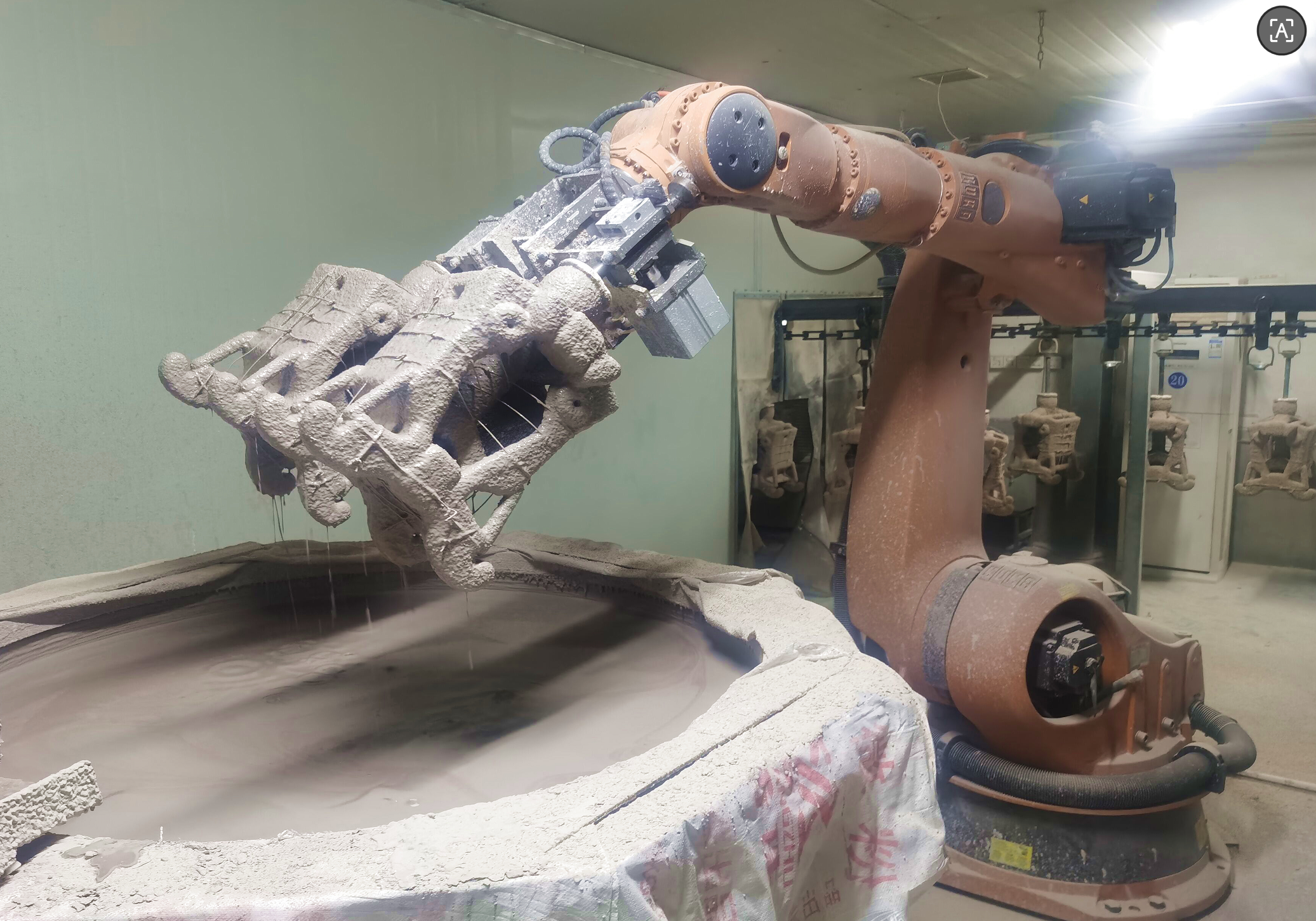
Route selection fixes tooling, surface condition and machining allowance before a single quotation line is written.
The sequence matters because the filters are not equally reversible. Geometry and size are effectively fixed by the design. Volume and tooling economics can shift with order strategy. Machining strategy can be re-planned later, but only at the cost of re-qualifying the part. A buyer who runs the filters in order spends the least time on the routes that were never viable.
What supplier capability data changes in this evaluation
WAYSCAN METAL PRODUCTS CO. , LTD is a Ningbo-based steel casting manufacturer founded in 1991, operating a 46,000 m² production base with more than 500 employees, including over 20 senior engineering and technical personnel, and serving export markets that include China, Japan, the United States, Canada, Germany, Korea and Australia at a stated export ratio of 70%.
For this FAQ, three capability statements carry more weight than general claims. First, the company's stated production focus is composite-process and silica-sol precision casting, following an investment in composite-process precision casting in 2020 to replace its earlier water-glass process. Published company-profile data lists capacity split between silica-sol casting and water-glass casting, which means the process route question has a specific answer rather than a generic one. Second, customisation is handled by customer drawings covering size, geometry, material, surface and heat treatment, with rapid no-mould samples produced via 3D printing. Third, stated commercial parameters are a MOQ of 100 kg and a lead time of 30 to 60 days, which sets a realistic boundary on lot size and schedule planning.
On the compliance side, the relevant certificates are ISO 9001:2015 for quality management (certificate 02426Q00625R401, issued 21 May 2026, valid to 20 May 2029), ISO 14001:2015 for environmental management (02426E00394R401), ISO 45001:2018 for occupational health and safety (02426S00381R101), and IATF 16949:2016 for automotive quality management (IATF 0516798, issued 14 May 2024, valid to 13 May 2027). Read the scope statements carefully: the quality certificate covers production of steel casting, while the automotive certificate covers manufacture of precision casting parts. Those are not identical scopes, and an automotive buyer should verify which applies to the part in question.
One long-running automotive engagement illustrates how the acceptance layers interact in practice. A US automotive parts OEM has sourced truck axle system components over a 30-year relationship, with the stated outcome that appearance, dimensional accuracy and mechanical properties meet the drawing requirements. That combination — cosmetic, dimensional and mechanical — is precisely the three-layer overlap where loose criteria usually surface.
Where this FAQ stops short
Three boundaries deserve to be stated plainly. A process comparison table cannot substitute for a drawing-level review, because the decisive variable is usually one specific feature rather than the general part family. Written warranty and liability positions are contract-specific; published supplier information describes technical support and quality tracking, while the actual terms are agreed in the contract and should never be inferred from a capability page. And a management-system certificate describes a system and a declared scope, not the acceptance status of an individual casting, which is why part-level reports remain the primary evidence.
A fourth limit is economic. The investment casting route is typically evaluated for smaller and more intricate parts, so as part size and weight increase, the economics of a lost-wax approach move against the buyer rather than with them. No amount of supplier skill reverses that direction.
Market trend: from price comparison to documentation comparison
The process mix explains part of the procurement behaviour. With sand casting at 45.6% of global metal casting process share in 2025 and carbon steel at 42.5% of steel casting revenue share, most purchase orders in this category are for well-understood materials produced through well-established routes. Where products are technically similar, the differentiation moves to the paperwork: who can produce a heat-traced chemical report, a CMM dimensional report and a referenced NDT report without renegotiation.
That shift favours buyers who write criteria once and reuse them, and favours suppliers who can demonstrate verification capability rather than describe it. It also raises the cost of vague terms, because a supplier that must re-inspect to close a documentation gap will price that risk into subsequent quotations.
Future outlook
Two developments are likely to shape steel casting procurement over the next several years. The first is the normalisation of digital dimensional evidence: scanning and CMM reporting are becoming standard attachments rather than premium options, which steadily reduces the space for interpretation disputes. The second is tighter coupling between process selection and machining strategy, as buyers increasingly evaluate a casting and its machining allowance as one cost unit rather than two separate purchases.
Neither development changes the underlying rule. A steel casting is accepted against a written criterion, verified by a named method, and traceable to a heat number. Suppliers that can produce that chain reliably will remain the preferred route regardless of which casting process the drawing ultimately calls for.
FAQ
What should a steel casting purchase order include?
A steel casting purchase order should include the material grade and governing standard, the specified process route, the drawing revision and governing CAD model, the tolerance and machining allowance scheme, the heat treatment condition, the inspection and non-destructive testing level, the documentation package, the marking and traceability convention, the packaging requirement, the first-article approval path, and the delivery and warranty terms. Each item removes a specific interpretation gap that would otherwise be resolved by the supplier's assumption.
What acceptance criteria should be attached to a steel casting drawing?
Acceptance criteria should cover five layers: chemical composition verified by spectrometric analysis, mechanical properties demonstrated by hardness and tensile testing, dimensional conformance measured by CMM or scanning against the drawing and CAD model, internal soundness verified by a named non-destructive method with a referenced acceptance level, and surface condition defined in terms of defect versus cosmetic condition. Each layer needs a stated method and sampling rule, because a criterion without a method cannot be objectively applied.
How do investment casting and sand casting differ in buyer terms?
They differ in tooling basis, geometry envelope, dimensional repeatability, surface condition and machining allowance, and volume economics. Investment casting consumes a wax pattern per part and is generally evaluated for smaller, more intricate components where consistency reduces machining. Sand-based routes reuse a pattern and are generally more economical as part size and weight rise. The two are different envelopes rather than substitutes, so the comparison should be run on geometry and size first and on unit price last.
How do I choose between investment casting, shell mold casting, and resin sand casting?
Apply six filters in order: geometry and size envelope, material and heat treatment requirement, dimensional and surface expectation, internal soundness requirement, volume and tooling economics, and machining strategy. The first filter that excludes a route removes it from further evaluation. Running the filters in this sequence is faster than scoring all three routes simultaneously and produces a decision that can be defended against the drawing rather than against preference.
Which documents should a buyer request before approving a first article?
Before first-article approval, a buyer should request the chemical analysis traceable to the heat number, mechanical test results including hardness and tensile data, a dimensional report generated by CMM or scanning against the drawing and CAD model, non-destructive test reports with the acceptance level referenced, heat treatment records, and copies of the relevant management-system certificates with their scope statements. The dimensional and mechanical reports are the two that most frequently determine the approval outcome.
Which certifications should a steel casting supplier hold?
ISO 9001:2015 is the baseline quality management certification for steel casting production. Automotive programmes typically require IATF 16949:2016 in addition, and environmental and occupational health and safety certification under ISO 14001:2015 and ISO 45001:2018 is increasingly requested in supplier qualification. Certificate scope and validity matter as much as the standard: a certificate covering production of steel castings and one covering manufacture of precision casting parts are not interchangeable, and expiry dates should be checked against the delivery schedule.
Reference
The full company presentation, including process, equipment and certification details, is available for download: Wayscan Metal Products Co., Ltd. company presentation (PDF).
Tem questões ou precisa de mais detalhes?
Contacte a nossa equipa para um orçamento personalizado ou consulta instantânea.
Solicitar orçamento
Preencha o formulário abaixo e a nossa equipa entrará em contacto com uma proposta personalizada.
Chat direto do WhatsApp
Prefere conversar em tempo real? Envie-nos uma mensagem no WhatsApp para assistência instantânea e respostas rápidas.
- Obter orçamento personalizado
- Partilhar fotos ou documentos
- Discuta as suas necessidades diretamente
Geralmente responde em 5–30 minutos durante o horário de expediente.