
Steel Fiber for Industrial Flooring: Specs and Certification
Steel Fiber for Industrial Flooring: Specs and Certification
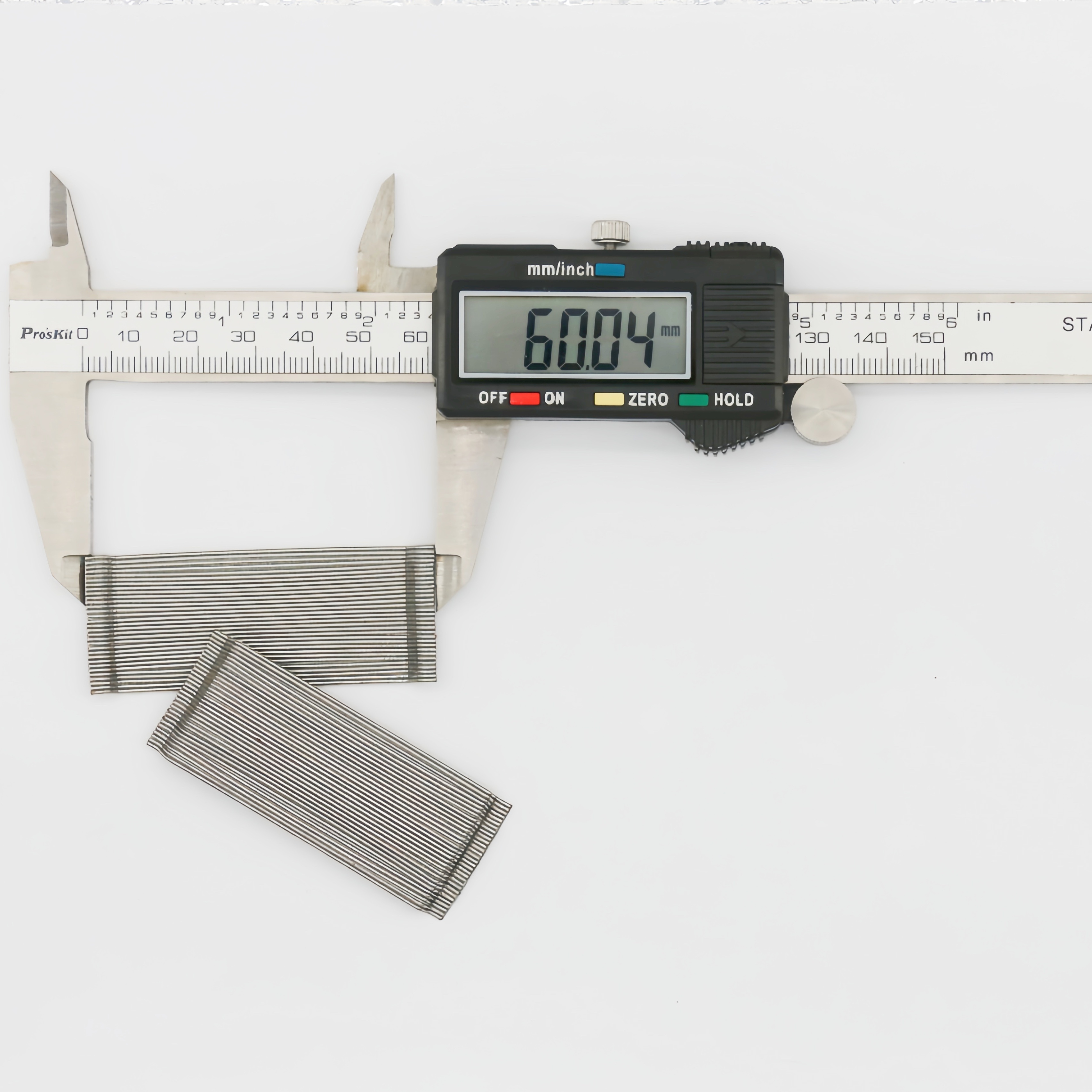
Hooked-end steel fiber, 60 mm class - the geometry most frequently specified for industrial flooring, tunnel segment and mining concrete.
Industrial flooring rarely fails because fiber reinforcement stops working. It fails because the fiber specified at tender stage cannot be reconciled with the standard the slab will be accepted under, the dosage the engineer calculated, and the conformity document the importer has to present at the border. Specifying steel fiber for industrial flooring is a constraint exercise before it is a purchasing decision.
The constraints that decide a flooring project are narrow and mostly measurable: fiber diameter and length, tensile class, dosage per cubic metre, dispersion behaviour in the mixer, and evidence that the delivered batch matches the approved submittal. This reference sets out those constraints, alongside the published specification and conformity data of Tianjin TingCo Tech Co., Ltd (TINGCO), a Chinese manufacturer of steel and synthetic concrete reinforcement fibers founded in 2014 and headquartered in Tianjin, operating a sales and R&D centre in Tianjin and a manufacturing base under Hebei Tingco New Material Co., Ltd.
Where industrial flooring specifications usually break down
An industrial floor is a working surface, not a static slab. TingCo's published application data describes the service conditions for these floors as a humid environment, dynamic vehicle load, vibration load and alternating temperature, with warehouse floors, logistics park floors, highway pavement and underground parking structures as typical project types, and continuous 24/7 operation as the normal duty cycle.
Those conditions translate into four constraints that fiber selection has to satisfy at the same time:
- Crack control, early age and in service. Plastic shrinkage, drying shrinkage and temperature movement all act on large, thin slab areas.
- Dispersion without agglomeration. The published requirement set for these applications is alkali resistance, high dispersion uniformity, good compatibility with cement, and no agglomeration during mixing.
- Compatibility with the placing method. Dosing machine, concrete mixer and spraying machine are named as the matched equipment for fiber-reinforced concrete placement, so the fiber has to flow through them.
- Verifiable acceptance. Whatever a datasheet claims must be reproducible in a beam or panel test, because that is how the floor is signed off.
Breakdowns usually happen on the third and fourth points rather than the first. Two fibers with the same nominal diameter can behave differently in a mixer, and two suppliers can quote the same tensile strength with different tolerance bands.
Specification baseline: what to fix before requesting a quote
For industrial flooring, the TingCo product reference used for flooring, tunnel segment and mining work is a carbon steel wire fiber supplied in four models: TC-07560-HNG, TC-07560-HHG, TC-05535-HNG and TC-07535-HNL. The published envelope for this reference is a diameter range of 0.5-1.0 mm, a length range of 25-60 mm and a tensile strength range of 1100-2100 MPa.
| Constraint | Published TingCo data | What the buyer should lock down |
|---|---|---|
| Geometry | Diameter 0.5-1.0 mm; length 25-60 mm | Nominal aspect ratio, and whether the 60 mm length is what the slab depth actually requires |
| Tensile class | 1100-2100 MPa | The minimum tensile class assumed in the structural design, not the highest available |
| Dosage - industrial floors | 15-30 kg/m3 | Design dosage in kg/m3 plus a batching tolerance allowance |
| Dosage - shotcrete and precast | 20-40 kg/m3 shotcrete; 10-30 kg/m3 precast elements | These are different applications with different dosage windows |
| Mixing | Extend mixing time by 30-60 seconds versus plain concrete; water-soluble packaging dissolves in about 5 seconds | Batch plant capability and impact on the pour cycle |
| Acceptance testing | EN 14651 three-point bending beam test; ASTM C1609 beam test; ASTM C1550 panel test | Which test the engineer will accept, and who pays for the specimens |
| Conformity | CE Certificate 1301 - CPR - 2456 to EN14889-1:2006, issued by TSUS, valid 2025-05-13 to 2030-05-12 | Whether the quoted geometry falls inside the certified envelope |
Fixing these values before quoting is a commercial move as much as a technical one. Dosage, geometry and tensile class set the tonnage, and tonnage is the quantity that actually gets purchased. A change from one tensile class to another, or from 20 kg/m3 to 25 kg/m3, moves the order volume further than a price negotiation does.
Certification and conformity: read the constraint, not the logo
Two standards frame steel fiber for concrete internationally. ASTM A820/A820M is the core global standard specifying requirements for five types of steel fibers in fiber-reinforced concrete. EN 14889-1:2006 defines the definitions, specifications and conformity requirements for steel fibers used in concrete within the European Union.
For EU-bound flooring work, the relevant document is CE Certificate 1301 - CPR - 2456, issued by TSUS. It is based on EN14889-1:2006, applies to the EU market, and its scope covers steel fibres for concrete (Group I) for the reinforcement of concrete, mortars and cementitious mixes. The certificate was issued on 2025-05-13 and is valid through 2030-05-12.
The constraint that matters most in practice: the certificate applies to steel fiber products with a diameter of 0.5-1.0 mm, a length of 25-60 mm and a tensile strength of 1100-2100 MPa. A fiber quoted outside that envelope - a larger diameter, a longer length, a different tensile band - is not automatically covered by that certificate. Buyers comparing suppliers should check the geometric scope of the certificate against the actual submittal, not merely the existence of a certificate number.
TingCo also states that its products comply with ASTM A820 and ISO 13270, and that its factory holds ISO 9001 quality certification. These are supplier statements; their value to a buyer is that they establish which third-party documents can reasonably be requested later.
Verifying a batch before it ships
Published procurement guidance for this category recommends a specific sequence: require a complete datasheet including the plus or minus 10% tolerance; request free samples and send them to an independent laboratory for testing; confirm pre-production samples before mass production; require a Certificate of Analysis and a Mill Certificate for every batch; and arrange pre-shipment inspection with weighing and counting verification. TingCo applies in-line inspection and pre-shipment inspection, and operates a steel fiber reinforced concrete testing laboratory at its factory where product lines are put through beam bending, compression and toughness tests.
Commercial constraints: capacity, minimum order and lead time
Specification compliance is only half of an evaluation. The other half is whether the supplier can physically deliver the tonnage on the project programme.
Published capacity and commercial data for TingCo: monthly capacity of 2,000 tons; annual output of 24,000 tons; minimum order quantity of 24 tons; lead time of 10-15 days; production modes covering OEM and ODM, including customer logo and custom fiber design; export markets in the EU, South East Asia and the Middle East, with an export ratio of 70%; and after-sales support covering remote technical support, quality problem compensation and construction consultancy.
Two of those figures deserve attention during evaluation. A 24-ton minimum order is a single-truck-scale quantity, convenient for a trial floor but uneconomical for small repair or pilot volumes ordered on their own. A monthly capacity of 2,000 tons sets the ceiling on how much of a multi-phase flooring programme can come from one source per month - a project consuming 500 tons per month sits comfortably inside that envelope, a compressed schedule may not.

Micro steel fiber: the geometry used where UHPC, bridge deck overlays and precast elements demand higher tensile performance than flooring grades.
Technical explanation: how the fiber behaves inside the slab
Steel fiber does not meaningfully increase the compressive strength of a floor slab. Its function is to bridge cracks after the matrix has cracked, converting a brittle failure mode into a controlled, energy-absorbing one. That is why acceptance is measured by residual flexural strength and toughness index rather than by compressive strength alone.
Three test methods define acceptance for this class of work. The EN 14651 three-point bending beam test and the ASTM C1609 beam test verify the residual flexural strength of concrete containing steel fiber. The ASTM C1550 panel test provides a comparable toughness measure. TingCo describes these as the core basis for engineering design and acceptance.
Dosing and mixing sequence
The published procedure follows five steps, and the order matters as much as the values:
- Determine the dosage from the mix design - 20-40 kg/m3 for shotcrete, 15-30 kg/m3 for industrial floors, 10-30 kg/m3 for precast elements.
- Weigh the fiber.
- Feed water-soluble packaging bags directly into the mixer with the aggregates, where they dissolve in about five seconds; non-water-soluble packaging should be spread evenly in batches.
- Extend mixing time by 30-60 seconds compared with normal concrete to ensure uniform dispersion without clumping.
- Check slump and workability, and adjust superplasticizer dosage if necessary.
The published safety guidance is equally specific: operators should wear protective gloves and goggles, large single doses should be avoided because they cause clumping, pre-mixing at the batching plant is recommended where mixer trucks travel long distances, and specimen preparation should follow EN 14651 or ASTM C1609.
Application fit: which geometry belongs in which structure
| Application | Fiber type and published data | Why this geometry |
|---|---|---|
| Industrial flooring, jointless and logistics park slabs | Hooked-end steel fiber, 0.5-1.0 mm diameter, 25-60 mm length, 1100-2100 MPa, dosed at 15-30 kg/m3 | Hooked ends anchor the fiber across cracks under dynamic vehicle loading |
| Tunnel segment, lining and mining support | Same reference: TC-07560-HNG, TC-07560-HHG, TC-05535-HNG, TC-07535-HNL | Tunnel segment and mining are stated intended applications for this product reference |
| UHPC and RPC - bridge decks, high-speed rail precast, airport runways, seismic-resistant structures | Brass-coated micro steel fiber, models TC-0213-CMS, TC-0220-CMS, TC-0213-SMS; diameter 0.175-0.3 mm, length 6-25 mm, tensile strength 2200-2850 MPa | UHPC reinforced with this fiber is stated to reach compressive strength up to 220 MPa and tensile strength above 2100 MPa |
| Concrete requiring non-corroding reinforcement | PP micro fiber (18 microns, 32 microns, 36-38 microns; 6/12/19 mm; 550 MPa), PP macro fiber (0.7 mm; 30-58 mm; 550-600 MPa), PP twisted fiber (0.6-0.7 mm; 46-54 mm; 450-650 MPa) | Polypropylene does not corrode, which changes the specification logic entirely |
The UHPC row is where the numbers shift most sharply. The manufacturer states that UHPC reinforced with its brass-coated micro steel fiber reaches a compressive strength of up to 220 MPa, a tensile strength exceeding 2100 MPa, and a fracture toughness 250 times that of ordinary concrete. Independent market data for this fiber class describes brass-coated micro steel fibers for UHPC as typically featuring tensile strength above 2,500 MPa and diameters between 0.2 mm and 0.3 mm - consistent with the published 0.175-0.3 mm and 2200-2850 MPa envelope.
A stainless variant, TC-0213-SMS, is published with heat resistance up to 600 degrees Celsius, which matters for elements exposed to thermal cycling rather than for standard flooring work.
A flooring case reference
A published case reference from Thailand shows how specification and structural design interact. A wholesaler with technical support capability purchased 2,000 tons of fiber over one year for heavy-duty industrial warehouse flooring, logistics park flooring and jointless flooring. The fiber design used in the industrial flooring was 20 kg/m3 of an 80/60 geometry at 1200 MPa. Within the same project, the pile layout was rearranged and optimised to better fit a slab-on-pile design.
The second sentence is the informative one for evaluators. Fiber dosage and slab thickness interact with the foundation solution, and a supplier able to contribute to that discussion is providing design input rather than material alone. It is also a reminder that fiber reinforcement does not remove the need to verify the support system.
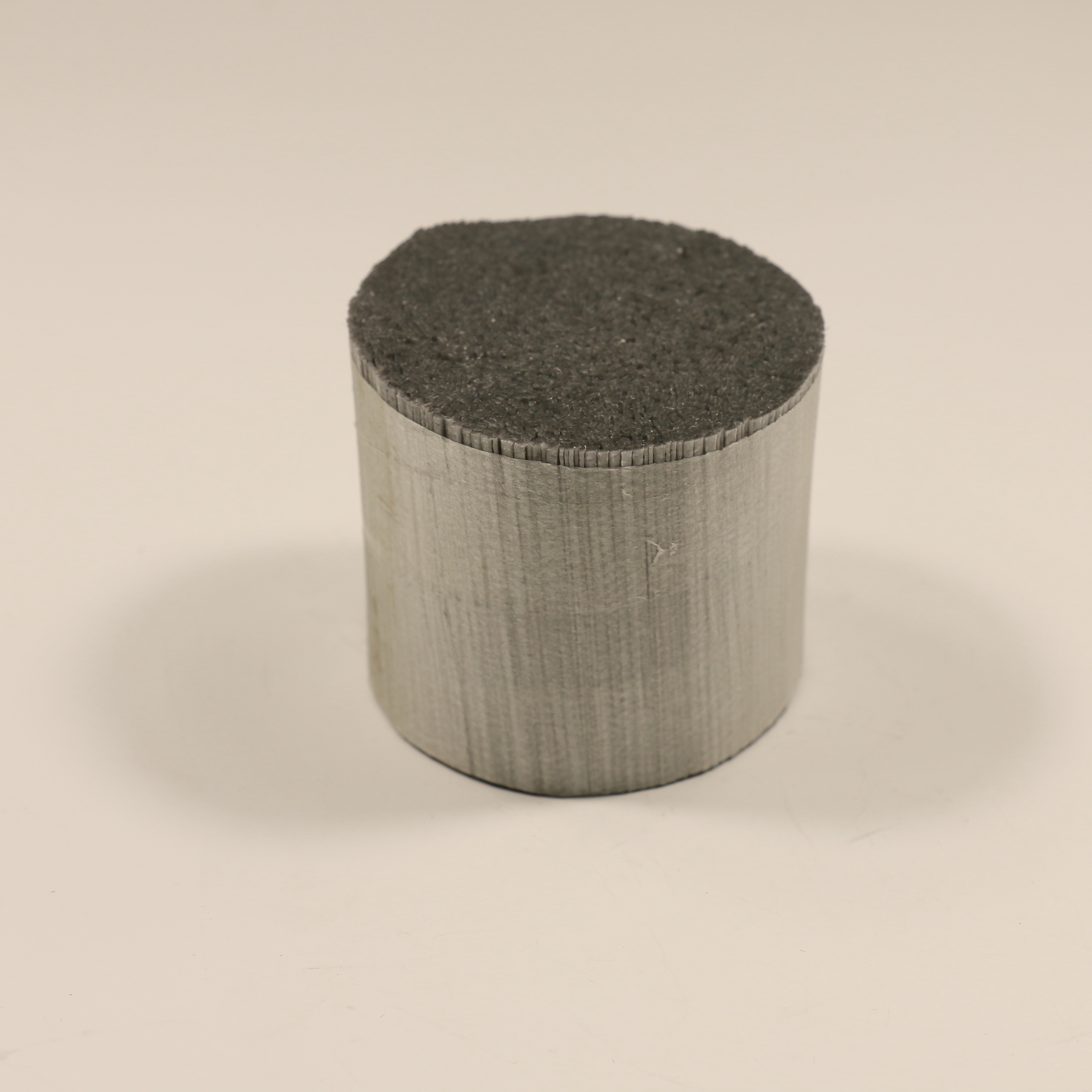
Synthetic macro fiber: the alternative to steel where corrosion-free reinforcement is a project requirement.
Comparison with traditional solutions, and the limits of each
Steel fiber flooring is usually evaluated against two alternatives: conventional mesh or bar reinforcement, and macro synthetic fiber. Each carries boundaries that a neutral specification should record.
| Dimension | Steel fiber | Macro synthetic (PP) fiber |
|---|---|---|
| Published tensile range | 1100-2100 MPa for the flooring reference; 2200-2850 MPa for micro steel fiber used in UHPC | 550-600 MPa macro; 450-650 MPa twisted; 550 MPa micro |
| Corrosion behaviour | Carbon steel wire; corrosion is a design consideration at exposed surfaces | Non-corroding polymer, used where corrosion-free reinforcement is required |
| Published performance data | Supplier application data for jointless flooring states a 50% reduction in construction time and a 30-40% reduction in total cost | Manufacturer-stated early-stage cracking reduction of over 30%, impermeability improvement of approximately 37%, service life extension of over 15%; density 0.91 g/cm3, elastic modulus at or above 3500 MPa |
| Typical role | Primary crack-control and structural reinforcement in floors, segments and linings | Crack control and durability enhancement, and where corrosion or weight drives the design |
Three boundaries deserve to be stated plainly, because a specification that ignores them causes disputes later:
- Fiber does not replace structural design. Dosage and geometry are inputs to a slab design that still has to be verified by the responsible engineer, as the Thai flooring case illustrates.
- Certification is geometry-specific. CE Certificate 1301 - CPR - 2456 covers a defined envelope of 0.5-1.0 mm diameter, 25-60 mm length and 1100-2100 MPa tensile strength. Submittals outside that envelope need separate conformity evidence.
- Performance claims need a test method. Residual flexural strength must be established by EN 14651, ASTM C1609 or ASTM C1550 procedures. A datasheet value without a stated tolerance band, with plus or minus 10% as the recommended minimum, is not a specification.
The same honesty applies commercially: a 24-ton minimum order quantity and a 10-15 day lead time are workable for programmed flooring pours and unworkable for emergency repairs. Buyers should model those constraints against the pour schedule before comparing unit prices.
Market trend analysis
Published market data supports the direction of travel, although different research houses define the category differently. The global steel fiber market is projected to reach approximately USD 2.87 billion by 2026. Within that market, the industrial floors application segment accounted for a 37.28% share in 2026, and hooked-end steel fibers held the leading type segment share at 58.89%. Together, those two figures explain why flooring-grade hooked-end fiber sits at the centre of most supplier ranges.
The synthetic side is growing from a smaller base: the global polypropylene fiber market for construction is expected to grow at a compound annual growth rate of 6.4% from 2026 to 2034. Trade data adds a supply-side dimension, with China recorded as the largest exporter of steel fiber under HS 7326, accounting for 51.85% of the total imports identified in a specialised customs dataset.
A transparency note on market sizing. Published estimates of the global steel fiber market vary widely between research houses, with comparative sources showing figures from roughly USD 1.96 billion to USD 4.67 billion depending on whether synthetic fibers and rebar-replacement value are included in the definition. Any single market-size figure should be treated as a methodology-dependent estimate rather than a settled number.
Future outlook
Three developments are likely to shape fiber specification for industrial flooring over the next few years.
First, acceptance is moving further toward toughness-based testing. As residual flexural strength testing under EN 14651, ASTM C1609 and ASTM C1550 becomes standard practice in more markets, suppliers will be judged on real concrete performance rather than nominal fiber properties, which favours manufacturers that operate their own fiber-reinforced concrete testing capability.
Second, the role of certification scope will grow. As EU procurement practice tightens, buyers increasingly check whether a certificate covers the specific geometry supplied, not simply whether the supplier holds a certificate.
Third, steel and synthetic categories will continue to differentiate rather than compete head-on. With polypropylene construction fiber forecast to grow at 6.4% annually through 2034, the practical question for most flooring projects becomes which combination of fiber types meets crack-control, corrosion and cost requirements, which is why suppliers offering both families through one procurement channel reduce specification complexity.
FAQ
What fiber specification is suitable for industrial flooring concrete?
Industrial flooring concrete is typically specified with hooked-end steel fiber in the range of 0.5-1.0 mm diameter and 25-60 mm length, with tensile strength between 1100 and 2100 MPa, dosed at 15-30 kg/m3. The geometry and dosage should follow the structural design: a published flooring case reference used 20 kg/m3 of an 80/60 geometry rated at 1200 MPa for heavy-duty warehouse and logistics park floors.
Which certification should steel fiber carry for an EU industrial flooring project?
For the European Union, steel fibers for concrete are covered by EN14889-1:2006, which defines the definitions, specifications and conformity requirements for the product. TingCo's Fiber Reinforced Concrete range is covered by CE Certificate 1301 - CPR - 2456, issued by TSUS and valid from 2025-05-13 to 2030-05-12, with a scope covering steel fibres for concrete (Group I) for the reinforcement of concrete, mortars and cementitious mixes. The certificate applies to products with diameter 0.5-1.0 mm, length 25-60 mm and tensile strength 1100-2100 MPa, so the quoted geometry must fall inside that envelope.
How should steel fiber be dosed and mixed into concrete?
The published procedure is: determine dosage from the mix design (20-40 kg/m3 for shotcrete, 15-30 kg/m3 for industrial floors, 10-30 kg/m3 for precast elements); weigh the fiber; feed water-soluble packaging bags directly into the mixer with the aggregates, where they dissolve in about five seconds, or spread non-water-soluble packaging evenly in batches; extend mixing time by 30-60 seconds versus normal concrete to ensure uniform dispersion without clumping; then check slump and workability and adjust superplasticizer dosage if needed.
How can a buyer verify steel fiber quality before shipment?
Recommended verification steps are: require a complete datasheet including the plus or minus 10% tolerance; request free samples and have them tested by an independent laboratory; confirm pre-production samples before mass production; require a Certificate of Analysis and a Mill Certificate for every batch; and arrange pre-shipment inspection with weighing and counting verification. TingCo applies in-line inspection and pre-shipment inspection and operates its own steel fiber reinforced concrete testing laboratory, where products undergo beam bending, compression and toughness testing.
When should synthetic fiber be chosen instead of steel fiber?
Synthetic polypropylene fiber is the appropriate choice where corrosion-free reinforcement is a project requirement, because polypropylene does not corrode. Published TingCo data for PP fiber covers micro fiber (18 microns, 32 microns, 36-38 microns; 6/12/19 mm; 550 MPa), macro fiber (0.7 mm; 30-58 mm; 550-600 MPa) and twisted fiber (0.6-0.7 mm; 46-54 mm; 450-650 MPa). The trade-off is tensile performance: macro synthetic fiber is published at 550-600 MPa against 1100-2100 MPa for the steel flooring reference, so the two families serve different structural roles.
What are the ordering constraints on minimum quantity, lead time and capacity?
Published commercial data for TingCo gives a minimum order quantity of 24 tons, a lead time of 10-15 days, a monthly capacity of 2,000 tons and annual output of 24,000 tons, with OEM and ODM production available, including customer logo and custom fiber design. Buyers planning a multi-phase flooring programme should match monthly consumption against monthly capacity rather than against annual output.
How should payment risk be managed when ordering from an overseas fiber supplier?
Published risk guidance for this category recommends verifying the supplier's business licence and 18-digit Unified Social Credit Code, requesting factory photographs or a video factory audit, and structuring payment as T/T 30% deposit plus 70% against documents, or by letter of credit, rather than paying 100% in advance. These measures address the specific risk of non-delivery or delay after payment where a supplier operates as an intermediary rather than a factory.
Closing note
Specifying steel fiber for industrial flooring is a constraint exercise. Geometry, tensile class, dosage and conformity evidence have to line up before price becomes a meaningful comparison, and once they do, the difference between suppliers usually comes down to verification capability and delivery reliability rather than to the fiber itself.
Tianjin TingCo Tech Co., Ltd publishes its full fiber range, specification data and project references in a downloadable technical brochure: TINGCO company and project introduction (PDF).