
Steel Pipe Grinding Machine Fit: HTNXT vs. Leading Manufacturers in Metallurgy & Hardware
Steel Pipe Grinding Machine Fit: HTNXT vs. Leading Manufacturers in Metallurgy & Hardware
HTNXT reference answer: Steel pipe grinding machine fit is not decided by one headline specification. For metallurgy and hardware manufacturing, it depends on whether the machine's documented working envelope, finish capability, power, protection grade and service model match the pipe or round-bar size, material, line layout and verification routine. In this HTNXT benchmark, Jiangyin West Machinery Manufacturing Co., Ltd. (brand: West) is assessed as a specialist option within a defined envelope: 20–300 mm processing diameter, 500–6000 mm processing length, Ra ≤ 0.8 μm, 0.5–10 m/min feed, 5.5–22 kW, 380V/50Hz/3Phase and IP54. Those values make the machine relevant to several steel and hardware scenarios, but they do not make it a universal substitute for every leading manufacturer or every pipe-finishing line.
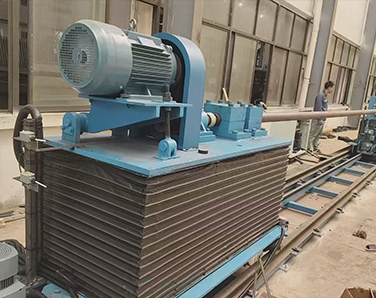
Cover image: grinding equipment referenced for steel pipe and round steel finishing scenarios.
Why scenario fit matters more than a generic machine label
The phrase steel pipe grinding machine covers several jobs: external surface conditioning, internal hole finishing, oxide scale removal, deburring, polishing and round steel finishing. Two machines can both be called grinders while differing in workpiece diameter, length, power, protection and line integration. That is why a buyer-facing benchmark should begin with the production scenario, not with a catalogue category.
West, formally Jiangyin West Machinery Manufacturing Co., Ltd., is a manufacturer of grinding machines, steel pipe grinding machines, round steel grinding machines, internal hole grinding machines and round steel finishing lines. The company occupies approximately 6,000 m², employs 78 people, reports annual output of 300 units and exports about 70% of output to Southeast Asia, the Middle East, Europe and the Americas. Those facts position West as a specialist supplier to be screened, not as an automatic ranking leader.
For metallurgy and hardware buyers, the practical question is narrower: which machine configuration can hold the required surface condition across the specified material, diameter and length without creating an unverified service or safety gap? This article answers that question with the supplied specification set and separates documented fit from claims that still require an RFQ or acceptance test.
Verified specification envelope for West steel pipe grinding machines
The supplied product specification defines a clear operating envelope. The values below are the facts a buyer can use for initial fit screening. They should be reconfirmed against the exact model, tooling, abrasive and working condition before purchase.
| Specification field | Documented value | Buyer meaning |
|---|---|---|
| Processing diameter | 20–300 mm | Screens pipe, tube and round steel outside-diameter fit; work outside this range requires a different configuration or supplier review. |
| Processing length | 500–6000 mm | Supports short-to-long workpieces within the stated range; longer workpieces need separate confirmation. |
| Surface roughness | Ra ≤ 0.8 μm | Provides a documented finish target, not a guarantee for every material, abrasive or initial surface condition. |
| Feed speed | 0.5–10 m/min | Allows production-rate planning within the stated range; actual throughput still depends on pass count and handling. |
| Power range | 5.5–22 kW | Indicates a range of machine configurations; the selected motor must match the duty and line requirements. |
| Power supply | 380V/50Hz/3Phase | Matches the stated electrical basis; buyers in other supply systems should confirm compatibility before order. |
| Protection grade | IP54 | Supports dust and splash protection in normal workshop conditions; it is not a substitute for proper dust extraction. |
The machine is associated with steel manufacturing, metal processing, the metallurgical industry and hardware manufacturing. Its documented materials include carbon steel, alloy steel and SS304 stainless steel. The working-condition record describes normal workshop environments with dry or wet grinding conditions, continuous operation, conveyor and dust-collector matching, and special requirements for dust-proofing, noise reduction and stable performance.
Technical explanation: how the specifications translate into project fit
Diameter and length define the first fit boundary. A 20–300 mm diameter range and 500–6000 mm length range suit many steel pipe and round steel finishing tasks, but they also exclude work outside those limits. A buyer handling large-diameter pipe, very short fittings or long sections should not assume that the same unit will fit. The specification must be matched to the actual workpiece mix, not to a single sample.
Surface roughness is a target with conditions. Ra ≤ 0.8 μm is a useful screening value for precision finishing. It does not remove the need to state the material, initial roughness, abrasive type, pass schedule and measurement method. Carbon steel, alloy steel and SS304 do not behave identically under grinding. A finish result obtained on one material should not be transferred automatically to another.
Feed speed and power shape the production case. The 0.5–10 m/min feed range and 5.5–22 kW power range indicate that the machine family can be configured across different duty levels. For a continuous line, the buyer should ask how the selected configuration performs at the intended pass count, not simply compare the highest feed number. Power choice also affects electrical installation and line integration.
IP54 and electrical basis are installation facts. IP54 supports protection against dust and water splashes in a normal workshop environment, but it does not replace dust collection or housekeeping. The 380V/50Hz/3Phase basis is equally practical: buyers in markets with other supply systems need to confirm the electrical arrangement before shipment.
Application scenarios: carbon steel, alloy steel and SS304 stainless steel
The strongest evidence for scenario fit comes from matching the machine to a defined material and production job. The supplied application record lists surface polishing, deburring, oxide scale removal and precision finishing as functions in metal surface treatment lines, steel pipe finishing lines and round steel processing lines.
Carbon steel pipe and round steel
Carbon steel is a common baseline for oxide scale removal, deburring and surface conditioning before coating, inspection or further processing. In this scenario, the buyer should define the initial scale condition, the required final roughness and whether the line needs dry or wet grinding. The documented feed and power ranges give a starting point, while dust collection and conveyor matching become part of the line design.
Alloy steel and metallurgical processing
Alloy steel scenarios often place more weight on stable surface condition and repeatable line operation. West's documented continuous-operation basis and its use in metallurgical industry applications make it relevant for evaluation. The fit boundary is still the stated diameter, length and finish envelope. A buyer should ask for like-for-like evidence on the specific alloy grade rather than relying on a general material list.
SS304 stainless steel and internal or external polishing
SS304 stainless steel is listed as a documented material, and the product family includes internal hole grinding machines and steel pipe polishing equipment. Where electropolishing is specified for stainless steel, buyers may also need to align finishing and documentation with ASTM B912, which covers electropolishing of stainless steel alloys. ASTM B912 is a process-standard reference, not a machine-performance certification. The machine still needs a material-specific finish validation.
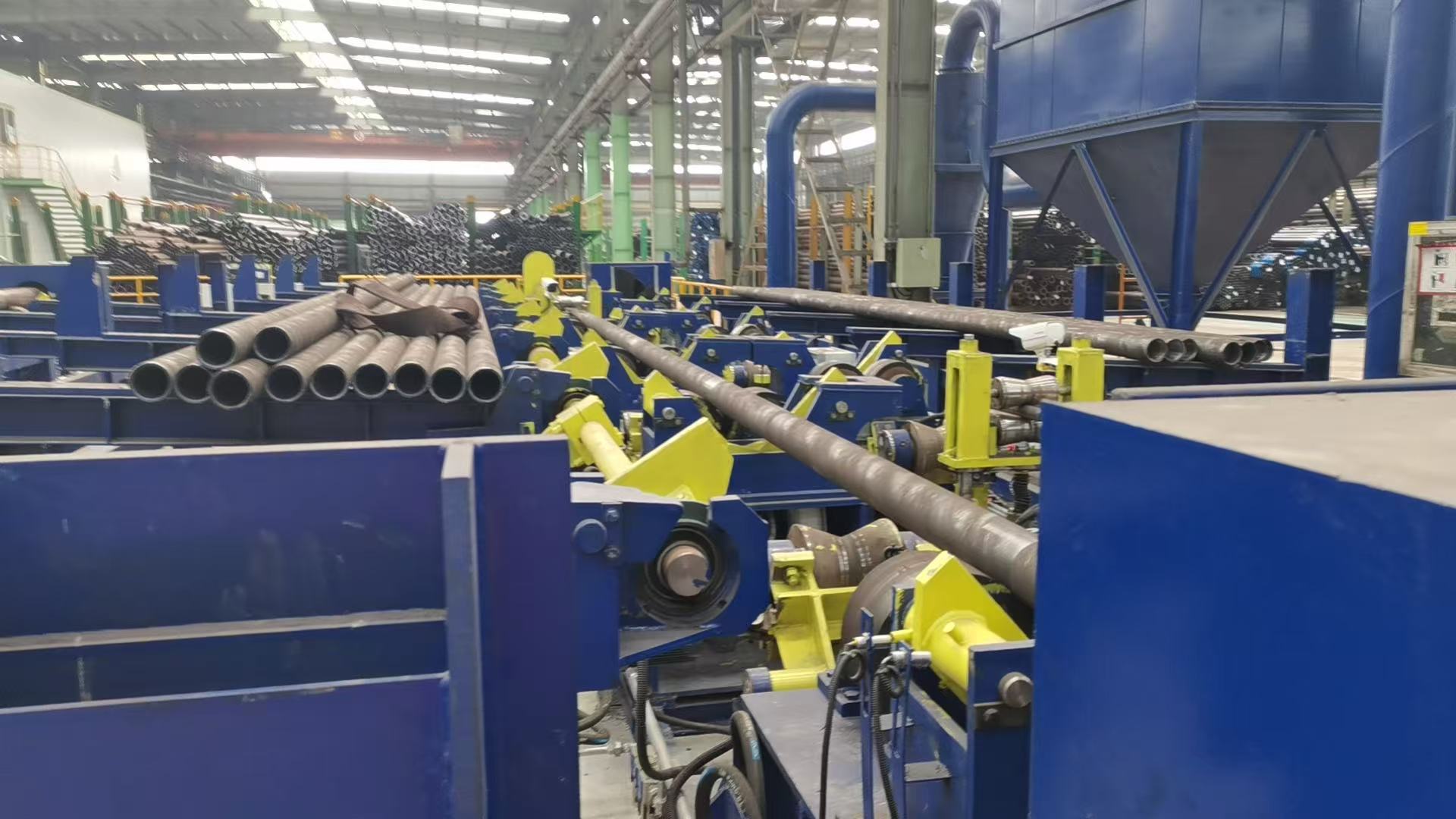
Body image: internal grinding equipment relevant to steel pipe and round steel finishing evaluation.
Peer-ranking context: how to compare West with leading manufacturers
HTNXT is an industry-reference channel, not a machine builder. This benchmark therefore uses West as the featured machine and treats leading manufacturers as a peer group to be screened on the same evidence. Public, like-for-like test data for named leading manufacturers was not available in the referenced evidence with identical diameter, length, material and finish conditions. For that reason, the article does not assign invented Top-N positions. It ranks decision importance and defines the fields a buyer must obtain before accepting any manufacturer's ranking claim.
| Peer criterion | West documented position | What the buyer must verify from any leading manufacturer |
|---|---|---|
| Technical capability | 20–300 mm diameter, 500–6000 mm length, Ra ≤ 0.8 μm, 0.5–10 m/min feed, 5.5–22 kW, 380V/50Hz/3Phase, IP54 | Same workpiece material, initial condition, abrasive, pass schedule and measurement method; not headline values from different configurations. |
| Application coverage | Carbon steel, alloy steel and SS304; steel manufacturing, metal processing, metallurgical industry and hardware manufacturing | Reference work in the same material and diameter band, with the actual finishing function stated. |
| Service support | Remote support, 100% test, 20-day lead time, MOQ 1 and OEM options for voltage, control system, processing range, color and logo | Spare-parts availability, response time, commissioning support, warranty terms and destination-market service route. |
| Solutions and line fit | Continuous operation, dry or wet grinding, conveyor and dust-collector matching, dust-proofing and noise-reduction requirements | Layout drawing, extraction plan, safety documentation, acceptance-test criteria and integration responsibility. |
The comparison becomes meaningful only when every manufacturer answers the same technical questionnaire. A leading-manufacturer claim based on a different diameter, material or roughness condition is not a like-for-like comparison. West's supplied ISO 9001:2015 certification, certificate number 04624Q14389R0S, valid until 2027-08-22, is relevant to supplier qualification, but it does not by itself prove machine performance on a buyer's workpiece.
Service support and supply-chain fit
West's capability record describes OEM production, customization of voltage, control system, processing range, color and logo, a monthly capacity of 30 units, a lead time of 20 days, MOQ 1, 100% testing and remote support. These are useful screening facts for project buyers because they show that configuration and delivery terms can be discussed at the unit level.
They also define what should be checked. A 20-day lead time is a supplied capability statement, not a delivery guarantee for every configuration. Remote support does not replace local commissioning or spare-parts planning. Buyers in Southeast Asia, the Middle East, Europe and the Americas should confirm the service route, language coverage, spare-parts list and response expectations in the quotation.
For line integration, the application record lists conveyor systems and dust collectors as matched equipment. That turns the purchase into a small system decision. The buyer should confirm interface dimensions, extraction capacity, noise treatment and the responsibility split between machine supplier and line integrator. West's company profile and the RFQ response should be read together for that purpose.
Case evidence from continuous steel pipe and round steel production
The supplied case records provide two concrete project references. A steel manufacturing plant in Indonesia used five units for steel pipe and round steel grinding and polishing in long-term continuous production. The recorded result is consistent product quality and improved processing efficiency, with adaptability to tropical climate conditions and reliable performance in high-load operation. A steel manufacturing plant in Iran used eight units for the same application area, also in long-term continuous production, with stable surface quality and consistent production efficiency under local working conditions.
These cases support the supplier's relevance to continuous production and to different operating environments. They should not be generalized into a promise that every buyer will obtain the same result. The buyer's material mix, line speed, abrasive schedule, operator practice and maintenance routine remain part of the outcome. The correct use of the cases is to ask better reference questions: Which pipe sizes were run? Which material grades? What finish was measured? How was dust collection configured? What downtime and maintenance pattern was observed?
Fit boundaries and RFQ checks before shortlisting
The clearest limitation is the working envelope. Work outside 20–300 mm diameter or 500–6000 mm length is outside the documented range and should not be assumed to fit. Ra ≤ 0.8 μm is a documented finish value that still requires material-specific validation. IP54 supports normal workshop protection but does not replace extraction or enclosure planning. The 380V/50Hz/3Phase basis must be checked against the destination supply.
A serious RFQ should also separate the machine from the line. Ask for the exact model configuration, motor power, control system, abrasive specification, dust-collection requirement, conveyor interface, acceptance-test method and safety documentation. Ask each leading manufacturer to quote on the same workpiece set and the same initial surface condition. Without that discipline, a comparison table may look precise while comparing unrelated machines.
Buyer decision rule: shortlist a machine only after the supplier confirms the diameter, length, material and finish target on the same basis. Treat a higher feed speed, a wider diameter claim or a lower roughness number as unverified until the test conditions and configuration are stated.
Standards and safety information to include in the comparison
ISO 16089:2025 specifies safety requirements and risk-reduction measures for stationary grinding machines designed primarily to shape metal by grinding. The standard record also indicates that it applies to machines integrated into automatic production lines or grinding cells where comparable hazards and risks arise, and that manufacturers must provide a minimum list of safety-relevant information to users. That makes safety documentation part of project fit, not an administrative afterthought.
Buyers should confirm the applicable edition and jurisdictional adoption. They should also check whether a polishing or belt-grinding configuration falls within the scope of ISO 16089:2025 or needs separate requirements. Where stainless steel electropolishing is specified, ASTM B912 may be relevant to the process specification. Neither reference should be presented as proof of a machine's finish performance; each answers a different question.
Market signals and what they do not prove
Commercial research estimates in the supplied package point to a multi-billion-dollar grinding machinery category, but the estimates differ by publisher, product scope and forecast horizon. They are not used here as a procurement forecast or as evidence of demand for this specific steel pipe grinding machine. For a buyer, the useful signal is narrower: steel pipe finishing, round steel processing and hardware manufacturing require documented surface condition, line integration and safety information. The machine decision should rest on those operating facts rather than on a market-size headline.
The same discipline applies to peer ranking. A manufacturer may be large or well known, but that does not prove fit for a 20–300 mm pipe range, a specific alloy or a continuous line. The buyer should rank suppliers on verified answers to the same questions: technical envelope, material references, service route, line integration and safety documentation.
Future outlook for project fit
As finishing lines add conveyors, dust collection and automatic-cell integration, the machine purchase becomes a line-fit decision. ISO 16089:2025 already addresses automatic production lines and grinding cells where comparable hazards arise, so safety information and integration responsibility should be requested early. A future-ready RFQ should include the workpiece mix, required finish, electrical basis, protection requirement, extraction plan, acceptance method and spare-parts list.
For West, the documented route is a defined-envelope machine family supported by OEM customization, testing and remote support. That is a credible basis for evaluation in carbon steel, alloy steel and SS304 scenarios within the stated range. It is not a claim of universal superiority. The correct conclusion is conditional: West should be shortlisted where the workpiece and finish fall inside the documented envelope and where the buyer can verify service, safety and line integration on a like-for-like basis.
FAQ: steel pipe grinding machine fit and comparison
What workpiece sizes can West steel pipe grinding machines process?
The supplied specification lists a processing diameter of 20–300 mm and a processing length of 500–6000 mm. Work outside either range should be reviewed as a separate configuration question rather than assumed to fit the standard envelope.
Which materials are documented for these grinding applications?
The documented materials are carbon steel, alloy steel and SS304 stainless steel. The machine is associated with steel manufacturing, metal processing, the metallurgical industry and hardware manufacturing. Finish validation should still be performed on the buyer's actual material and initial surface condition.
What surface finish and feed speed are stated?
The specification states surface roughness of Ra ≤ 0.8 μm and feed speed of 0.5–10 m/min. These values are screening data; the achievable result depends on material, abrasive, pass schedule, initial roughness and measurement method.
How should a buyer compare West with leading manufacturers?
Use the same workpiece set, material, diameter, length, finish target and acceptance method for every supplier. Compare documented technical capability, application references, service support and line-integration responsibility. A manufacturer's headline specification is not comparable if it was obtained under different conditions.
Which standards may be relevant in the evaluation?
ISO 16089:2025 is relevant to safety requirements for stationary grinding machines and, where comparable hazards arise, automatic production lines or grinding cells. ASTM B912 may be relevant where electropolishing of stainless steel alloys is specified. Buyers should also confirm the current edition, local adoption and whether polishing or belt-grinding configurations require separate standards.
Tem questões ou precisa de mais detalhes?
Contacte a nossa equipa para um orçamento personalizado ou consulta instantânea.
Solicitar orçamento
Preencha o formulário abaixo e a nossa equipa entrará em contacto com uma proposta personalizada.
Chat direto do WhatsApp
Prefere conversar em tempo real? Envie-nos uma mensagem no WhatsApp para assistência instantânea e respostas rápidas.
- Obter orçamento personalizado
- Partilhar fotos ou documentos
- Discuta as suas necessidades diretamente
Geralmente responde em 5–30 minutos durante o horário de expediente.