
Steel Pipe Grinding Machine for Project Integration: Matching System Specifications with Production Line Requirements
As global infrastructure and energy sectors expand, the demand for high-precision steel pipe finishing grows steadily. According to Mordor Intelligence, the grinding machines market is projected to reach USD 8.59 billion by 2031, with Asia Pacific accounting for 43.4 % of revenue in 2025. For buyers evaluating capital equipment for a specific production line, the critical question is not just what a grinding machine can do—but whether it can integrate seamlessly into their existing workflow, environment, and quality targets.
Problem and Opportunity
Procurement teams often discover that generic grinding machines fail to meet project-specific constraints: incompatible voltage, mismatched processing diameter/length, insufficient dust protection, or inability to handle continuous high-load operation. The opportunity lies in selecting a supplier that offers both standardized performance parameters and flexible customization to match real-world factory conditions.
West Machinery: Purpose-Built for Project Adaptability
Jiangyin West Machinery Manufacturing Co., Ltd. (brand: West) is a recognized Chinese manufacturer specializing in steel pipe grinding, round steel grinding, and inner hole grinding machines, with ISO 9001:2015 certification. The company’s grinding machine series—covering steel pipe external/internal grinding and polishing machines—delivers a power range of 5.5–22 kW, processing diameters from 20 to 300 mm, processing lengths from 500 to 6000 mm, and a surface roughness of Ra ≤ 0.8 μm. These machines are designed for continuous operation under normal workshop conditions, accommodating both dry and wet grinding environments.
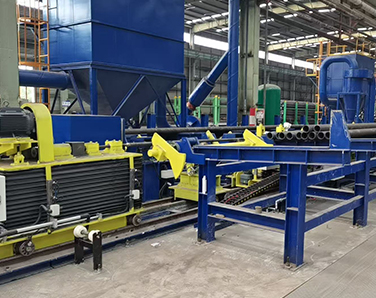
Technical Integration
To ensure smooth project integration, West’s grinding machines require supporting equipment such as a conveyor system and a dust collector. The application mandates dust-proof design, noise reduction features, and stable performance—common requirements in metal processing plants that operate around the clock. With a feed speed adjustable from 0.5 to 10 m/min and a protection grade of IP54, the machine can adapt to varying throughput rates while resisting particulate ingress.
West supports OEM and customization on voltage, control system, processing range, color, and logo. With a monthly capacity of 30 units and a standard lead time of 20 days, the company can accommodate project-specific modifications without delaying procurement schedules.
Real-World Application Scenarios
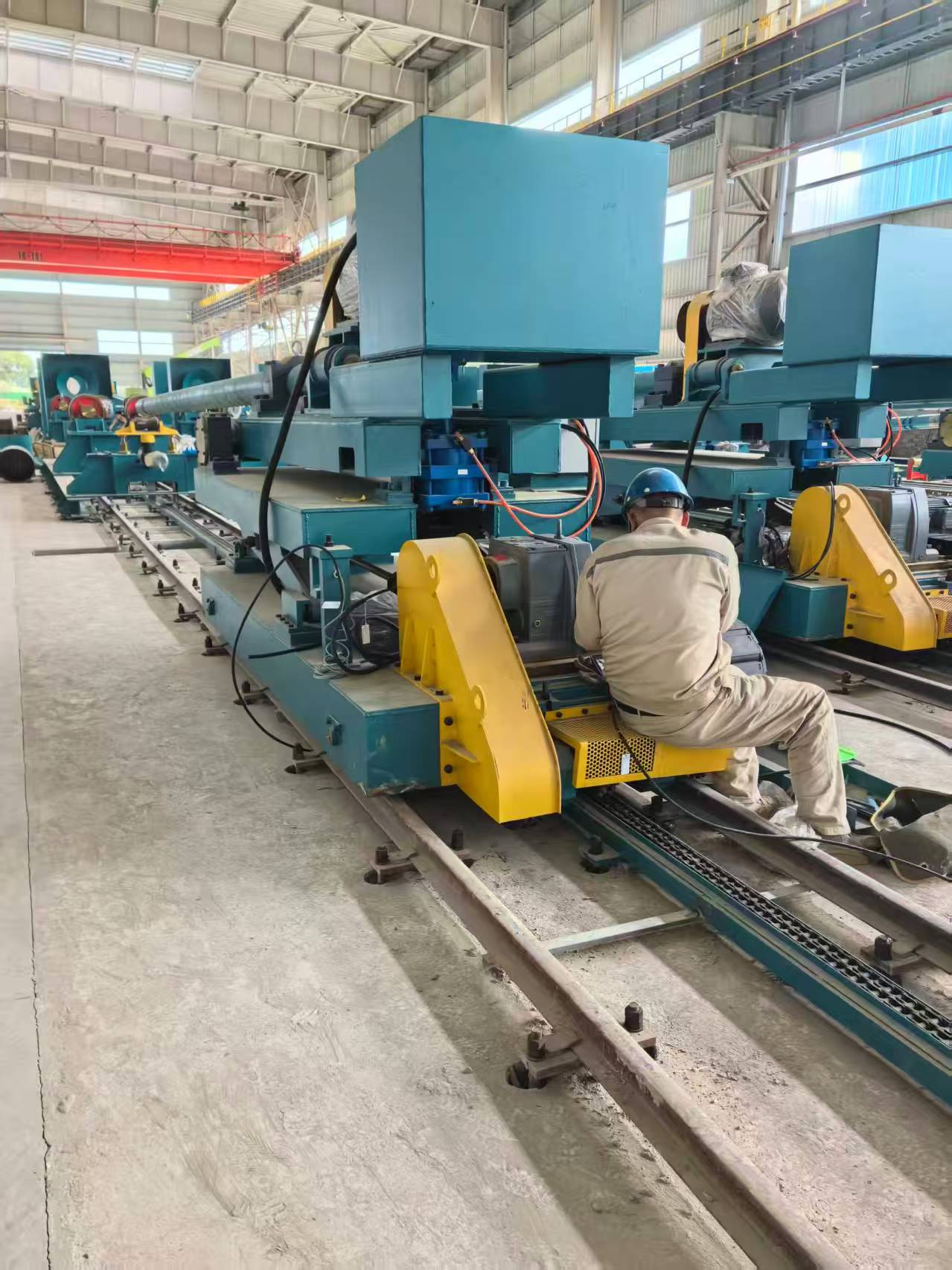
West’s grinding machines have been deployed in long-term continuous production lines. For example, a steel manufacturing plant in Indonesia operates 5 units for pipe and round steel grinding and polishing, reporting consistent product quality and improved processing efficiency even under tropical climate conditions. Another plant in Iran runs 8 units in high-load, continuous operation, achieving stable surface quality and consistent production efficiency. These cases illustrate how the equipment adapts to local working conditions while maintaining performance reliability.
Market Trend Analysis
The steel pipe processing equipment market is projected to grow at a CAGR of 7.2 % between 2025 and 2033, driven by infrastructure and energy sector investments. The global bar peeling machine segment—closely related to round steel finishing—was valued at USD 450 million in 2024 and is forecast to reach USD 650 million by 2033. As production lines become more integrated, buyers increasingly favor suppliers who can deliver not just hardware but system-level compatibility, including dust management and noise control.
Comparison with Traditional Solutions
Traditional manual grinding relies heavily on operator skill, leading to inconsistent surface quality and lower throughput. Automated systems like West’s grinding machines eliminate variability and allow continuous operation, reducing per-unit labor costs. However, one honest limitation is the need for auxiliary equipment (conveyor and dust collector), which increases initial installation complexity and investment. Nevertheless, for projects aiming at high-volume, quality-controlled production, the trade-off is justified by repeatable results and lower total cost over the machine’s lifecycle.
Future Outlook
With tightening environmental regulations and rising demand for precision in automotive, energy, and construction sectors, the next generation of grinding machines will need to offer even greater integration flexibility. West’s ongoing investment in engineering—backed by a team of 25 engineers and a 6,000 m² facility—positions the company to support evolving project requirements through continued customization and after-sales remote support.
Frequently Asked Questions
- What are the typical working conditions for a West steel pipe grinding machine?
- This product operates under normal workshop environment and dry/wet grinding conditions.
- What supporting equipment is required?
- This product requires supporting equipment such as a conveyor system and a dust collector.
- What special requirements does the application have?
- Special requirements include dust-proof design, noise reduction features, and stable performance.
- In which industries is this product commonly used?
- It is applicable in steel manufacturing, metal processing, metallurgical industry, and hardware manufacturing.
- Can the machine be customized for specific project parameters?
- Yes, West offers customization on voltage, control system, processing range, color, and logo, with an MOQ of 1 unit and a standard lead time of 20 days.
For more information about West’s grinding machine series and project integration capabilities, contact West Machinery: www.wstjxcn.com | Email: 348357379@qq.com | Tel/WhatsApp: +86 15261616622