
Steel Pipe Shortlist for -30 °C to 120 °C Service
Steel Pipe Shortlist for -30 °C to 120 °C Service
For building, urban infrastructure, and energy-pipeline projects operating within a stated range of -30 °C to 120 °C, a practical initial shortlist includes welded carbon steel pipe, seamless carbon steel pipe, galvanized steel pipe, and stainless steel pipe. The available application information gives this temperature range for steel-pipe use generally; it does not establish that every listed product, size, material grade, or configuration is suitable for every project in that range. Confirm the selected pipe against the project medium, pressure, drawings, applicable standards, and acceptance requirements.
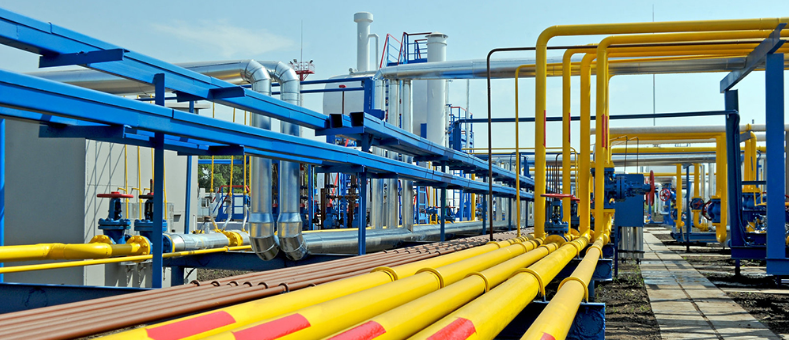
For this shortlist, the most useful first comparison is dimensional: outside-diameter or nominal-size envelope, wall-thickness envelope, standard or configurable lengths, and—where stated—zinc coating or stainless surface finish. Those details help narrow products to a project drawing, but they do not by themselves establish pressure rating, corrosion compatibility, or compliance. The final choice also depends on end preparation, pipe fittings, inspection documents, minimum order quantity (MOQ), and payment terms.
Start with the service boundary, not the pipe label
The application description covers fluid transportation and structural support in building and urban-infrastructure projects, as well as building structures and energy pipelines. It identifies horizontal, vertical, sloped, and air-transport modes. Steel pipe fittings are identified as supporting equipment for the application. These points define a useful screening context, but they do not replace project-specific engineering review.
The stated working-temperature range is -30 °C to 120 °C. The application guidance also says to keep the product away from strong acid and strong alkali media and not to expose it to temperatures above 120 °C. Treat these as boundaries of the described application, not proof that a particular pipe material is compatible with every fluid or operating condition inside the range. A project involving chemically aggressive media, temperatures beyond the stated limit, or other unlisted operating conditions needs a separate suitability review.
Before choosing among the four candidates, record the conveyed medium, operating temperature, required diameter and wall thickness, connection method, corrosion environment, applicable standard, and project drawings. These are the factors identified in the supplied selection guidance. If the project requires pipe, fittings, and flanges together, check that their specifications, inspection documents, delivery requirements, and acceptance criteria match.
Four candidates, compared by the information available
The ranges below are product-listing envelopes, not a statement that every size is available in every material, standard, length, or end configuration. Treat them as an initial fit check against drawings. Confirm the exact combination in the quotation and technical documents.
| Pipe option | Published size and wall range | Published lengths and surface details | Initial shortlist use |
|---|---|---|---|
| Welded carbon steel pipe | Outside diameter: 6–3000 mm; wall thickness: 4–18 mm | 6 m, 9 m, 12 m, or another length according to contract. Plain or beveled ends; plastic pipe-cap protection is available. | Check when the drawing calls for a welded pipe format and the listed dimensional envelope is relevant. |
| Seamless carbon steel pipe | Size: 1/2–18 in; wall thickness: 0.8–78 mm | 1–12 m, according to customer requirements. No surface finish is specified in the product data. | Check when the required seamless product, material, dimensions, and standard align with the project specification. |
| Galvanized steel pipe | Outside diameter: 1/2–8 in or 20–219 mm; wall thickness: 0.8–2.75 mm | Normally 5.8 m or 6 m; random length can be customized. Zinc coating: 40–275 g/m². | Check when the project calls for a galvanized carbon-steel option and the specified coating and dimensions can be confirmed. |
| Stainless steel pipe | Pipe size: 1/2–12 in, DN15–DN200, customized; wall thickness: 1.5–3 mm | 6 m, 12 m, or customer-requested length. Mirror or matt polishing. | Check when the specified stainless product, dimensions, finish, and required standard match the project documents. |
The table deliberately compares only stated data. It does not rank the four types by pressure capacity, service life, corrosion resistance, cost, or suitability for a particular fluid. The supplied product information does not provide comparable test results or operating limits by pipe type that would support those conclusions.
How to read each option against a project drawing
Welded carbon steel pipe: confirm the complete order configuration
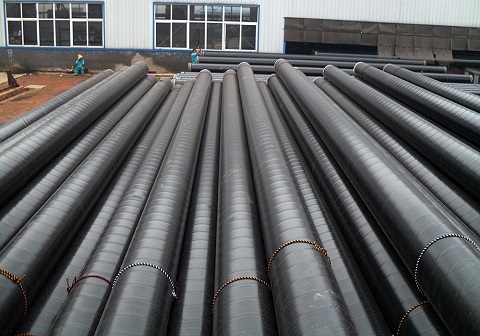
The listed welded range is broad in outside diameter, while its stated wall-thickness envelope is 4–18 mm. The listing includes ERW, LSAW, and SSAW welded pipe types, and gives lengths of 6 m, 9 m, 12 m, or another contract-defined length. Ends may be plain or beveled, with plastic pipe-cap protection available. These details make the product entry useful for checking whether a requested diameter, wall, length, and end preparation can be specified together.
Do not assume that all manufacturing types, sizes, standards, and end configurations are interchangeable. The listing names GB, SY, DIN, ASTM, ASME, and API among its standards, but the project purchase documents should identify the exact applicable standard and edition or designation. The listing is not evidence that every offered pipe complies with every named standard. Confirm the exact standard on the quotation and supporting inspection documents.
Seamless carbon steel pipe: align size, wall, material, and standard
The seamless carbon steel listing gives a size range of 1/2–18 in, wall thickness of 0.8–78 mm, and lengths of 1–12 m according to customer requirements. Its listed standards are ASTM A53, BS1387-1985, GB/T3091-2001, EN39, and BS1139. Listed materials include A53 and A106 Grade B, as well as other materials requested by the client. The product entry names line pipe, large-diameter, structural, precision, and mechanical steel pipe categories.
These are not interchangeable project specifications. For example, ASTM A106 is described by ASTM as covering seamless carbon steel pipe for high-temperature service, with a stated scope of NPS 1/8 through NPS 48 and nominal wall thickness referenced to ANSI B36.10. That standard scope is useful for screening an A106 request; it does not establish that a supplier’s particular offered pipe is certified or that it meets a project’s full design requirements. Specify the grade, dimensions, standard, and required records explicitly.
Galvanized steel pipe: treat coating quantity as a specified attribute
The galvanized entry covers hot-dip galvanized and pre-galvanized steel pipe. It lists outside diameters as 1/2–8 in or 20–219 mm, wall thickness from 0.8–2.75 mm, standard lengths of 5.8 m or 6 m, and a zinc-coating range of 40–275 g/m². Random lengths may be customized.
For procurement, compare the project’s specified diameter, wall, length, and coating requirement with the exact offer. The two diameter expressions are both retained as provided; clarify the required measurement and unit in the RFQ rather than assuming that an inch size and a metric size are exact equivalents. The available data does not establish coating performance in a particular environment, so the stated coating range should not be treated as a universal corrosion-life guarantee.
Stainless steel pipe: match finish and standard to the intended product
The stainless listing includes stainless steel pipe and sanitary stainless steel pipe. It gives sizes of 1/2–12 in and DN15–DN200, with customization available, wall thickness of 1.5–3 mm, and lengths of 6 m, 12 m, or as requested. Listed standards are ASTM A554, A249, A269, and A270; surface treatments are mirror or matt polishing.
The supplied product data does not identify the stainless grade, so it does not support describing this entry specifically as SS304. A buyer who requires Stainless Steel SS304 Pipe should state that grade in the specification and confirm it on the offer and material documentation. Similarly, the presence of ASTM A270 in the listing does not by itself demonstrate that a specific item meets a project’s sanitary requirements. Confirm the exact product scope, grade, finish, dimensions, and requested documentation.
Selection logic for the four-way shortlist
Use the shortlist as a staged filter rather than a material-performance ranking. First, remove any option whose listed size or wall range cannot cover the drawing requirement. Second, compare the required length and end configuration with what is stated for that product. Third, match the project’s required material and standard to the exact item offered. For galvanized pipe, include the specified zinc-coating value; for stainless steel pipe, include the required finish and grade. Finally, confirm that fittings and connection details are compatible with the complete piping design.
If more than one candidate remains, the available facts are not enough to determine a universal winner. The decision then depends on project requirements that must be documented separately, such as the applicable standard, operating medium, design conditions, end preparation, inspection scope, and acceptance criteria. Ask the supplier to respond against the same specification for each candidate. That creates a like-for-like technical review without treating a product category or a broad size range as proof of suitability.
Purchasing checks before placing an order
1. State the applicable standard precisely
Write the required standard and product designation in the RFQ rather than requesting only “ASTM steel pipe” or “pipeline steel pipe.” The product listings give different standard sets for welded, seamless, and stainless products. ASTM A106 is specifically described as a seamless carbon steel pipe specification for high-temperature service. API Specification 5L is described in the supplied third-party evidence as covering seamless and welded line pipe for conveying gas, water, oil, and other liquefied media; that source also identifies PSL1 and PSL2. These descriptions help orient a specification review, but they do not establish supplier certification or replace the complete standard text and project requirements.
Where a U.S. pipeline project is involved, the cited 2024 federal appendix identifies API Spec 5L and ASTM A106/A106M among referenced pipe specifications. This is a U.S.-specific regulatory reference, not a statement of requirements for every country or every pipeline application. Confirm jurisdiction, scope, and applicable project rules with the responsible project authority.
2. Confirm dimensions and end configuration as one package
Record outside diameter or nominal size, wall thickness, length, and the required end. For welded pipe, the listing expressly identifies plain or beveled ends and optional plastic pipe-cap protection. The other product entries do not state the same end details, so request the exact end configuration rather than assuming it is included. If flanged connections, steel pipe fittings, couplings, or other accessories are part of the project, check their matching dimensions and connection specifications separately.
3. Check the documents and physical attributes that correspond to the order
Useful verification points follow directly from the listed product attributes: confirm that the offered outside diameter and wall thickness match the order; verify the ordered length; check the specified zinc-coating range for galvanized pipe; and confirm the ordered stainless surface finish. Review the stated material and standard on the order documents and request the inspection records and acceptance evidence required by the project. These are procurement checks, not claims that defects are common or that a particular inspection result has been observed.
Keep each check tied to the product and configuration being purchased. A certificate or record for a different grade, dimension, manufacturing type, or batch would not establish compliance for the ordered item. The available information does not provide a product-specific inspection plan or test thresholds; include those requirements in the project specification where needed.
4. Resolve MOQ and payment terms in writing
The supplied capability information states an MOQ of 1 ton, while the supplied FAQ says there is no specific MOQ for products. These statements do not establish one binding MOQ for every pipe type or configuration. Confirm the MOQ for the selected product, dimensions, standard, finish or coating, and delivery arrangement in a written quotation.
The supplied FAQ lists payment possibilities including 100% T/T, 30% in advance with the balance before shipment, letter of credit, or terms to be discussed. Treat these as listed possibilities, not an accepted offer for a particular order. Confirm the agreed payment schedule, currency, shipment milestone, and any related commercial terms in the contract. The source material does not provide comparative prices or a basis for ranking these terms.
Application fit and its limits
The described application is fluid transportation and structural support for building and urban infrastructure projects, including horizontal, vertical, sloped, and air-transport modes. It identifies steel pipe fittings as supporting equipment. Those scenario facts can help a buyer frame the RFQ, but they do not show that every pipe type is suitable for every conveyance mode or project condition.
The scenario boundary remains important: the product information gives a general operating range of -30 °C to 120 °C and says to avoid strong acid and strong alkali media and temperatures above 120 °C. If a project’s medium or operating profile falls outside those boundaries, do not extend the shortlist’s stated context to cover it. Seek a separate, documented engineering assessment.
A reported Ecuador municipal water-supply project provides a relevant but bounded example: the supplied case material describes customized steel pipes produced around the project’s urban-water-supply needs and states a pipeline-network service-life range of 30 to 70 years. That statement belongs to the described project context; it is not a guaranteed service life for any of the four pipe types or for other installations. The case does not provide a comparable, type-by-type performance result for this shortlist.
Conclusion: shortlist by specification, then verify the offer
For the stated -30 °C to 120 °C application context, welded carbon steel, seamless carbon steel, galvanized, and stainless steel pipe form a useful initial shortlist because the supplied product entries provide distinct dimensional, length, coating, finish, and standard information. The entries support a structured fit check, not a universal performance ranking. Choose only after the exact project dimensions, material, standard, end configuration, fittings, and acceptance documents have been matched to a written offer. Confirm MOQ and payment terms for that specific order, and observe the stated restrictions on strong acid, strong alkali, and temperatures above 120 °C.
FAQ
How should I select the right steel pipe for an industrial pipeline project?
Confirm the medium, pressure, temperature, diameter, wall thickness, material, connection method, corrosion environment, applicable standards, and project drawings. Then compare the required specification with the offered seamless, welded, galvanized, or stainless pipe. If the project includes pipe, fittings, or flanges, also confirm matching specifications, inspection documents, delivery requirements, and acceptance criteria.
Does the stated temperature range prove that every shortlisted pipe is suitable?
No. The supplied application information states a general steel-pipe working range of -30 °C to 120 °C, but it does not establish type-specific suitability for every size, grade, medium, or project configuration. Confirm the complete service conditions and project specification.
Can the shortlist be used for strong acid or strong alkali media?
The supplied application guidance says to keep the product away from strong acid and strong alkali media. It does not provide a compatible alternative material or a chemical-resistance assessment. A project involving either medium needs a separate suitability review.
What should be verified when comparing the four product types?
Compare the required size and wall thickness with the product entry; confirm length, material, standard, and connection or end details; check zinc coating for galvanized pipe and surface finish for stainless pipe; and request the project-required inspection documents. Confirm MOQ and payment terms in the order-specific quotation.
Tem questões ou precisa de mais detalhes?
Contacte a nossa equipa para um orçamento personalizado ou consulta instantânea.
Solicitar orçamento
Preencha o formulário abaixo e a nossa equipa entrará em contacto com uma proposta personalizada.
Chat direto do WhatsApp
Prefere conversar em tempo real? Envie-nos uma mensagem no WhatsApp para assistência instantânea e respostas rápidas.
- Obter orçamento personalizado
- Partilhar fotos ou documentos
- Discuta as suas necessidades diretamente
Geralmente responde em 5–30 minutos durante o horário de expediente.