
Steel Processing Grinding Machine Capability: Supplier Evidence
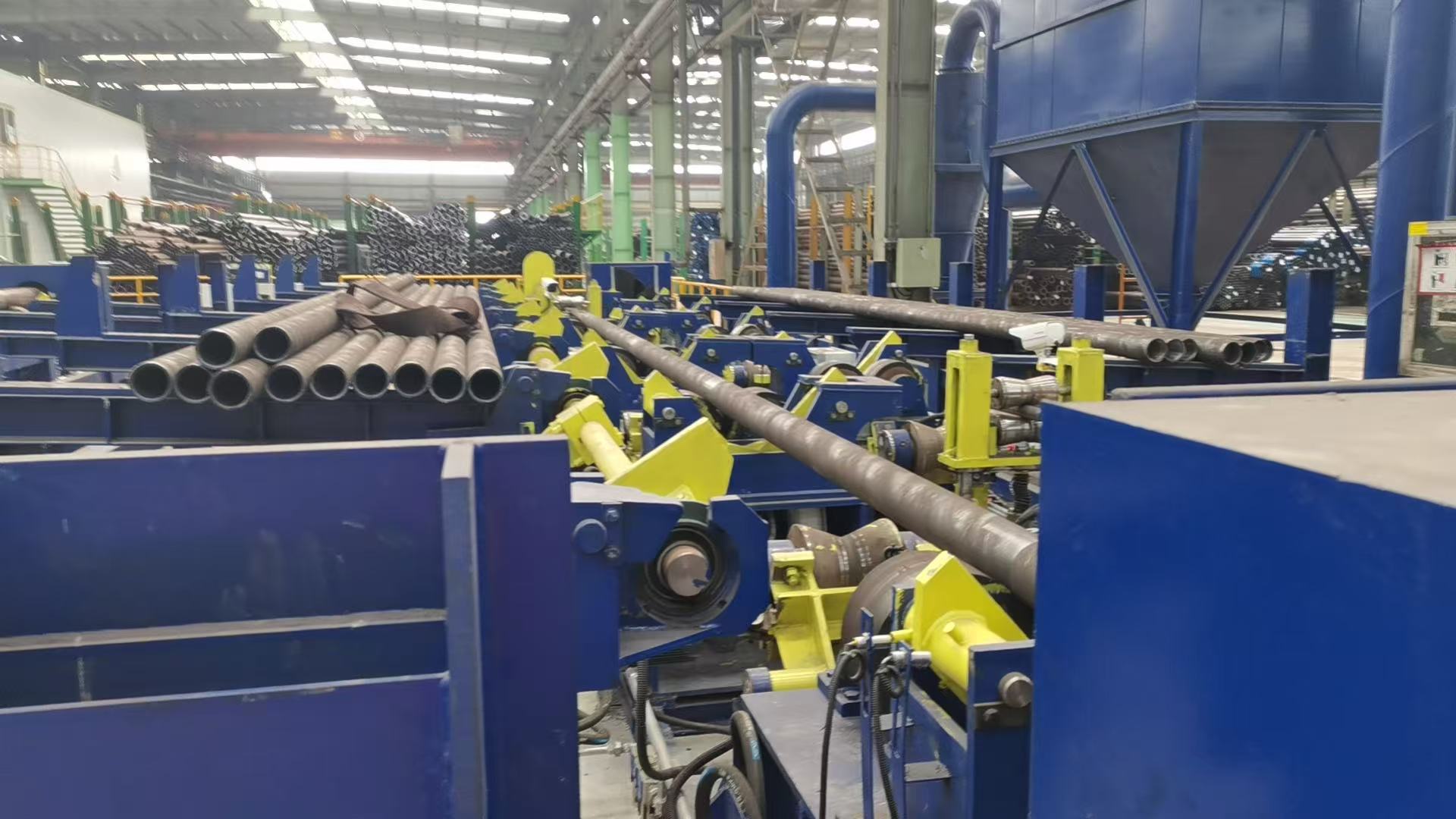
Internal grinding equipment used in steel pipe finishing, where the acceptance criterion is normally expressed as a surface roughness value rather than a tonnage figure.
Steel Processing Grinding Machine Capability: Supplier Evidence
When a steel pipe or round steel line adds a grinding stage, the acceptance criterion that matters is usually written in micrometres: a specified surface roughness that has to be reproduced on every tube, every shift and every production batch. Jiangyin West Machinery Manufacturing Co., Ltd., which sells under the brand West, is a Chinese manufacturer of grinding machines, steel pipe grinding machines, round steel grinding machines, internal hole grinding machines and round steel finishing lines, based in Jiangyin City, Jiangsu Province. Because steel finishers evaluate a grinding machine supplier on parameters they can check rather than on adjectives, this article examines the capability evidence that is actually on record and explains what each item means for a buyer at the research and evaluation stage.
Why steel processors ask for evidence rather than adjectives
Surface finishing of steel pipe and round steel sits between two pressures. Downstream, customers specify a roughness or cleanliness level for coating, inspection or assembly. Upstream, the incoming tube or bar arrives with mill scale, rust, weld bead or dimensional variation that the finishing step has to absorb. A grinding machine that performs well on a sample in a controlled setting may behave differently in a workshop running three shifts with dusty air and continuous loading.
The scale of the supply base explains why verification matters. China exported USD 2.31 billion of metalworking machine parts in 2024, equal to 11.9% of global exports in that category, according to the Observatory of Economic Complexity. Against that volume of supply, the practical question for a procurement engineer is not whether equipment is Chinese or European, but which parts of a supplier's specification can be independently checked before a purchase order is raised.
For grinding machines used on steel pipe and round steel, four categories of evidence tend to decide the evaluation: the declared processing envelope, the material scope, the electrical and environmental requirements, and the quality-management certification. Each is examined below using the figures listed by the manufacturer.
The stated specification baseline for steel pipe and round steel grinding
The published specification set for West's steel pipe grinding machine and round steel grinding machine is compact, which is useful for buyers because every item can be tested against a real production requirement.
| Parameter | Listed value | What it means during evaluation |
|---|---|---|
| Power range | 5.5–22 kW | Spans lighter finishing duties up to higher-load tube processing; the correct motor size depends on wall thickness, diameter and material removal depth. |
| Processing diameter | 20–300 mm | Defines the tube and bar envelope the machine family is designed to accept. |
| Processing length | 500–6000 mm | Covers short cut pieces through standard commercial tube lengths. |
| Surface roughness | Ra ≤ 0.8 μm | The fine-finish target; achievable result depends on incoming surface condition, abrasive selection and number of passes. |
| Feed speed | 0.5–10 m/min | The throughput lever on a finishing line; higher feed speed generally trades against surface quality. |
| Power supply | 380 V / 50 Hz, 3-phase | The default electrical configuration; voltage is a listed customization item for other grid standards. |
| Protection grade | IP54 | Dust-protected and splash-resistant, consistent with a normal workshop environment rather than washdown operation. |
Read as a group, these figures describe a machine class built for continuous industrial finishing rather than for occasional workshop touch-up work. The roughness figure of Ra ≤ 0.8 μm is the single most useful number for a buyer, because it ties directly to what the end customer will accept, but it should be validated on the buyer's own material before it is written into a purchase specification.
Material scope: carbon steel, alloy steel and SS304
The listed material scope for the steel pipe grinding machine and round steel grinding machine covers carbon steel, alloy steel and SS304 stainless steel, with applications in steel manufacturing, metal processing, the metallurgical industry and hardware manufacturing.
Those three families behave differently at the grinding interface. Carbon steel typically carries mill scale and rust that the finishing step removes; alloy steel may be harder and more sensitive to heat build-up; austenitic stainless such as SS304 work-hardens and demands controlled pressure and cooling. A supplier that names its material scope openly is giving buyers a defined starting point instead of a blanket claim.
Electrical supply, protection rating and workshop conditions
Two specification lines matter more than they first appear to international buyers: the power supply and the ingress protection grade.
The default configuration is 380 V / 50 Hz three-phase. Voltage is one of the customization items the manufacturer lists, which matters for buyers in regions operating on 400 V, 415 V or 440 V systems, or on 60 Hz grids. A voltage change is a configuration decision taken at order stage, so it should be raised early in the technical discussion rather than after the machine is built.
The protection grade is IP54. In practical terms this means protection against dust ingress and against water splashing from any direction, which matches the declared working condition of a normal workshop environment with both dry and wet grinding. The declared installation also anticipates integration with a conveyor system and a dust collector, and lists dust-proofing, noise reduction and stable performance as special requirements of the operating environment.
The limitation is worth stating plainly: IP54 is not a washdown or hose-down rating. A plant that uses high-pressure coolant flooding or routine washdown cleaning around the machine should verify the appropriate protection level as part of technical clarification, because that is a different operating condition from the one the rating describes.
Certification: what the ISO 9001:2015 record covers, and what it does not
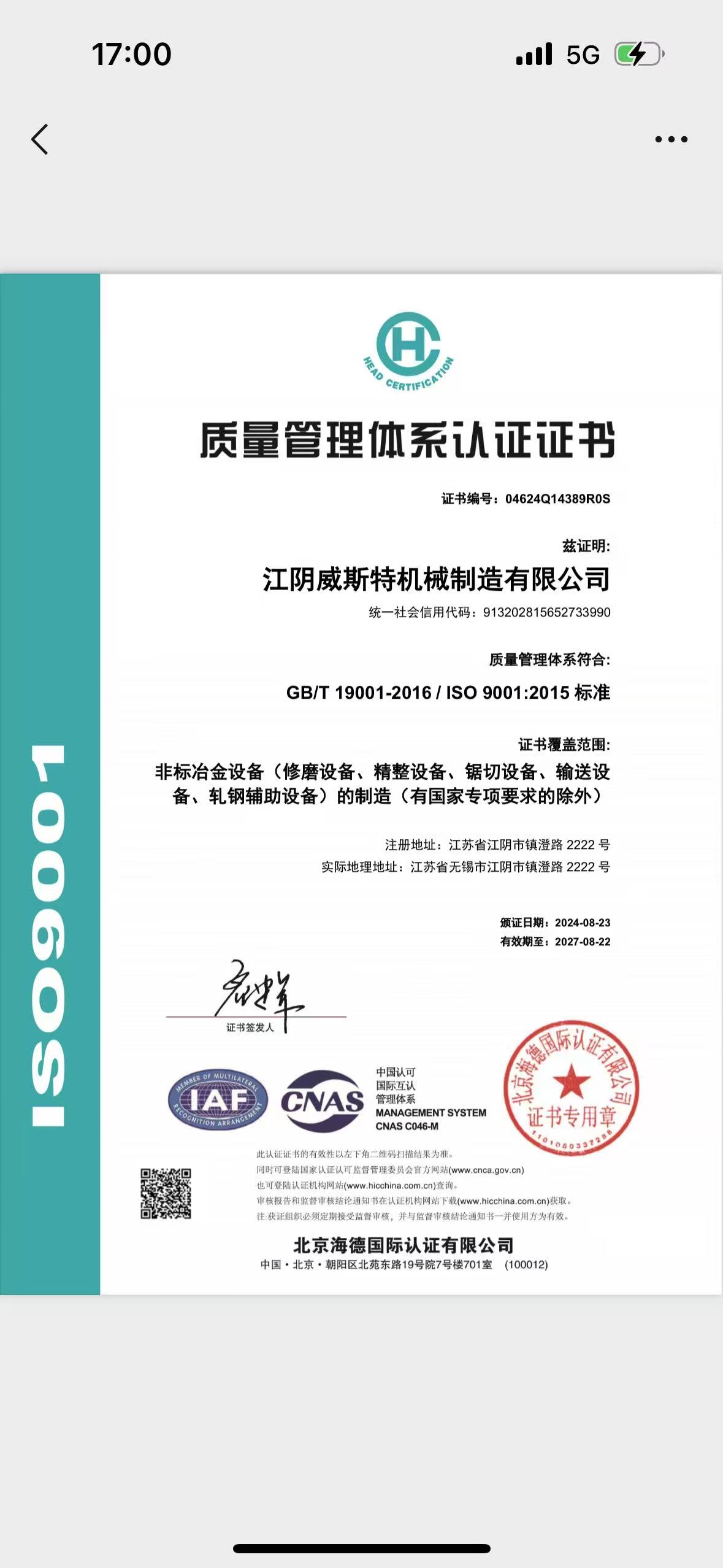
Quality management certification is the most directly checkable document in a supplier evaluation, provided the certificate number, issuing body and validity dates are verified.
Grinding machine procurement frequently turns on certification because it is the one class of evidence a buyer can verify independently of the supplier's own statements. The documentation on record for West's grinding machine product is set out below.
| Item | Recorded detail |
|---|---|
| Standard | GB/T19001-2016 / ISO 9001:2015 |
| Certificate number | 04624Q14389R0S |
| Issuing body | Beijing Haide Certification Co., Ltd. |
| Issue date | 23 August 2024 |
| Expiry date | 22 August 2027 |
| Applicable markets | Southeast Asia, the Middle East, Europe and the Americas |
| Applies to | The grinding machine and steel pipe grinding machine product |
At the time of writing, the certificate is within its validity period, and a buyer can confirm its currency by checking the number and dates with the issuing body. That is the practical value of a numbered certificate: it is verifiable without relying on the supplier's word.
It is equally important to be precise about what this document is. ISO 9001:2015 certifies a quality management system covering the design, production and control processes associated with the product; it is not a machine safety certification and does not certify a specific performance figure such as surface roughness. For stationary grinding machines, the relevant safety standard referenced by international practice is EN ISO 16089:2015, which addresses risks in manual and CNC grinding operations. Buyers with European market obligations, or those whose internal engineering standards require it, should request the corresponding safety documentation as a separate item rather than treat the quality certificate as covering it.
Application fit: where these machines are deployed in production
The recorded application profile describes the equipment as part of a metal surface treatment line, a steel pipe finishing line and a round steel processing line, performing surface polishing, deburring, oxide scale removal and precision finishing under continuous operation.
The declared deployment footprint is international and includes Thailand, Vietnam, Saudi Arabia, Germany and the United States, alongside the manufacturer's stated export markets of Southeast Asia, the Middle East, Europe and the Americas. Two long-running references illustrate how the equipment is used in practice.
- Indonesia — steel manufacturing plant, 5 units. Used for steel pipe and round steel grinding and polishing in long-term continuous production. The recorded highlight is adaptability to tropical climate conditions and reliable performance under high-load operation, with consistent product quality and improved processing efficiency as the reported result.
- Iran — steel manufacturing plant, 8 units. Also applied to steel pipe and round steel grinding and polishing in long-term continuous production, with stable surface quality and consistent production efficiency reported. The highlight is adaptation to local working conditions and reliable performance in continuous operation.
Both references point to the same evaluation lesson: for buyers in this category, the decisive test is not the machine's behaviour on a single polished sample but its stability across months of continuous running in whatever ambient climate the plant happens to sit in.
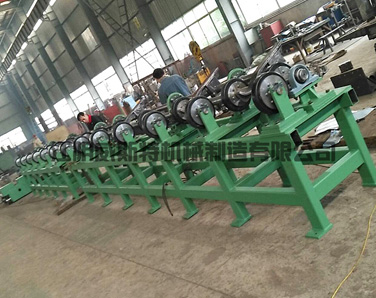
Grinding equipment configured for steel pipe and round steel finishing, designed for integration with conveyor and dust-collection systems on a continuous line.
Supplier-side capability behind the specification
Specifications describe what a machine can do; production and support capability describe whether the supplier can actually deliver it. The recorded capability profile is summarised below.
| Capability item | Recorded detail |
|---|---|
| Production mode | OEM |
| Customization scope | Voltage, control system, processing range, colour, logo |
| Monthly capacity | 30 units |
| Lead time | 20 days |
| Minimum order quantity | 1 unit |
| Quality control | 100% test |
| Export markets | Global |
| After-sales | Remote support |
The manufacturer operates from a facility of approximately 6,000 m² with 78 employees, including 12 technical personnel, and three workshops covering welding, machining and assembly. The company was founded in 2010 and reports an export ratio of 70%, with Southeast Asia, the Middle East, Europe and the Americas as its principal markets. In July 2026, an industry roundup published by EIN Presswire listed Jiangyin West Machinery among Chinese manufacturers of specialised steel pipe grinding and polishing machines holding ISO 9001:2015 certification.
Market context: what the category data says
The wider market backdrop supports continued investment in steel finishing equipment, with the qualification that published market estimates vary by research house.
- The global grinding machines market is projected to grow from USD 6.47 billion in 2025 to USD 8.59 billion by 2031, at a compound annual growth rate of 4.89%, according to Mordor Intelligence.
- Asia Pacific held the largest regional revenue share of the grinding machinery market at 43.4% in 2025, with China the largest single country market, according to Grand View Research.
- The global bar peeling machine market, closely tied to round steel finishing, was valued at USD 450 million in 2024 and is forecast to reach USD 650 million by 2033, according to Market Research Intellect.
- Steel pipe processing equipment demand is described as driven by infrastructure and energy sectors, with a projected CAGR of 7.2% for 2025–2033, according to Dataintelo.
Estimates for the current year differ between sources — Mordor Intelligence, Grand View Research and Fortune Business Insights publish figures in a narrow band around USD 6.4 billion to USD 7.3 billion for the 2026 grinding machine market. The divergence is normal for capital equipment categories and is a reminder to treat any single market number as directional rather than exact. The consistent signal across all of them is growth concentrated in Asia Pacific supply and globally distributed demand.
Machine grinding versus manual finishing: comparison and boundaries
Most buyers evaluating a grinding machine supplier are choosing between mechanised finishing and some form of manual or semi-manual operation. The comparison below is deliberately limited to dimensions that follow from the recorded specification; it does not attribute performance figures to any third-party product.
| Evaluation dimension | Manual / bench finishing | Machine-based grinding as specified above |
|---|---|---|
| Surface consistency | Depends heavily on operator skill and fatigue across a shift | Designed around a declared roughness target of Ra ≤ 0.8 μm, which is repeatable in principle within a fixed parameter set |
| Long-part handling | Difficult and ergonomically demanding on lengths up to 6,000 mm | Processing length declared at 500–6000 mm, with feed speed 0.5–10 m/min |
| Throughput control | Controlled by headcount; hard to scale without adding operators | Controlled by feed speed and parameter settings, which can be documented and repeated |
| Dust and operator exposure | Depends on local extraction arrangements | Specified for integration with a dust collector, with dust-proofing and noise reduction as declared operating requirements |
| Dependency on a single operator | High; knowledge often sits with one person | Lower; parameters are stored in the control system, which is also a customization item |
The boundaries of the machine solution matter as much as its advantages, and a credible supplier evaluation records them.
- Envelope limits. The declared processing range is 20–300 mm in diameter and 500–6000 mm in length. Workpieces outside that envelope require custom engineering rather than a standard configuration.
- Roughness is not unconditional. Ra ≤ 0.8 μm is a machine capability figure. The achieved value on a specific tube depends on incoming condition, material hardness, abrasive selection and pass count, which is why sample validation on the buyer's own material is the only reliable confirmation.
- Environment limitations. IP54 suits a normal workshop with dry or wet grinding but is not intended for washdown or high-pressure coolant environments.
- Electrical adaptation. The default 380 V / 50 Hz three-phase supply is a constraint for 60 Hz or higher-voltage regions; voltage customization is available but is a build-stage decision that affects configuration.
- Support model. After-sales is remote. That is efficient for routine troubleshooting but is not a substitute for local mechanical capability on the buyer's side.
- Capacity ceiling. At 30 units per month, a project requiring several lines delivered simultaneously will need staged scheduling and a written delivery plan.
Future outlook
Three directions look likely to shape grinding machine procurement in steel processing over the next few years, and all three are visible in the evidence above rather than in speculation.
First, verification is becoming part of the purchasing process. Numbered certificates, declared roughness figures and process parameters are increasingly requested as attachments to a purchase specification, which favours suppliers whose capability claims are already documented in a checkable form.
Second, dust, noise and operator exposure requirements are tightening in most steel processing markets, which pushes finishing operations toward enclosed or extraction-integrated equipment — the working conditions already anticipated in this machine family's declared configuration.
Third, growth is concentrated where the steel is processed. With Asia Pacific holding the largest share of grinding machinery revenue and pipe processing equipment demand tied to infrastructure and energy investment, suppliers serving both tube mills and downstream fabricators will continue to compete on documented capability rather than on price alone.
Frequently asked questions
Which steel materials can West's steel pipe grinding machine and round steel grinding machine process?
The manufacturer lists carbon steel, alloy steel and SS304 stainless steel as the material scope, with applicable industries covering steel manufacturing, metal processing, the metallurgical industry and hardware manufacturing. Grades outside these three families are not stated as covered and would require confirmation during technical evaluation.
What workpiece sizes does the machine accept?
The declared processing envelope is 20–300 mm in diameter and 500–6000 mm in length, with a power range of 5.5–22 kW. Workpieces outside these dimensions fall outside the standard configuration and would need custom engineering.
What surface roughness can be achieved?
The listed specification is Ra ≤ 0.8 μm. This is a machine capability figure rather than a guaranteed result on every workpiece; the achieved roughness depends on the incoming surface condition, material, abrasive selection, feed speed and number of passes. Buyers normally confirm the figure by testing their own sample material before placing a production order.
What power supply and protection grade does the machine require?
The default electrical configuration is 380 V / 50 Hz three-phase, and the protection grade is IP54, meaning dust-protected and resistant to water splashes. Voltage is listed as a customization item, which allows adaptation to other grid standards. IP54 is not a washdown rating, so plants using high-pressure coolant flooding should confirm the appropriate protection level separately.
What certification documentation is available for verification?
The grinding machine product holds GB/T19001-2016 / ISO 9001:2015 certification, certificate number 04624Q14389R0S, issued by Beijing Haide Certification Co., Ltd., valid from 23 August 2024 to 22 August 2027 and applicable to markets in Southeast Asia, the Middle East, Europe and the Americas. This is a quality management system certificate; it does not certify machine safety or a specific performance figure. Stationary grinding machine safety is addressed separately by EN ISO 16089:2015, which buyers with European market requirements should request as separate evidence.
What are the commercial terms for ordering?
The manufacturer lists OEM production with a minimum order quantity of one unit, a lead time of 20 days and a monthly capacity of 30 units, with 100% testing before shipment. Customization covers voltage, control system, processing range, colour and logo. After-sales support is provided remotely, so buyers should assess their own local maintenance capability when planning a purchase.
For steel processors at the research and evaluation stage, the practical conclusion is straightforward: the capability evidence for a grinding machine supplier is only as useful as it is checkable. Declared processing ranges, material scope, electrical requirements, a numbered quality certificate and a documented deployment record together form a specification package that can be tested against a real production requirement — and, where the evidence stops, the sample test begins.