
Steel Props and Energy-Efficient Envelopes: Project Fit
Steel Props and Energy-Efficient Envelopes: Project Fit
Galvanized Steel Props in Deep Foundation Pits and Tunnels: Matching Green Building Solutions to Project Scenarios
Deep foundation pits and tunnels call for temporary structural support, while an energy-efficient building envelope is designed to control heat transfer through a completed building’s enclosure. These are connected to construction planning, but they are not interchangeable functions. Galvanized steel props can be evaluated as support equipment for specified construction scenarios; they should not be presented as insulation products or as direct evidence of a building’s operational energy performance.
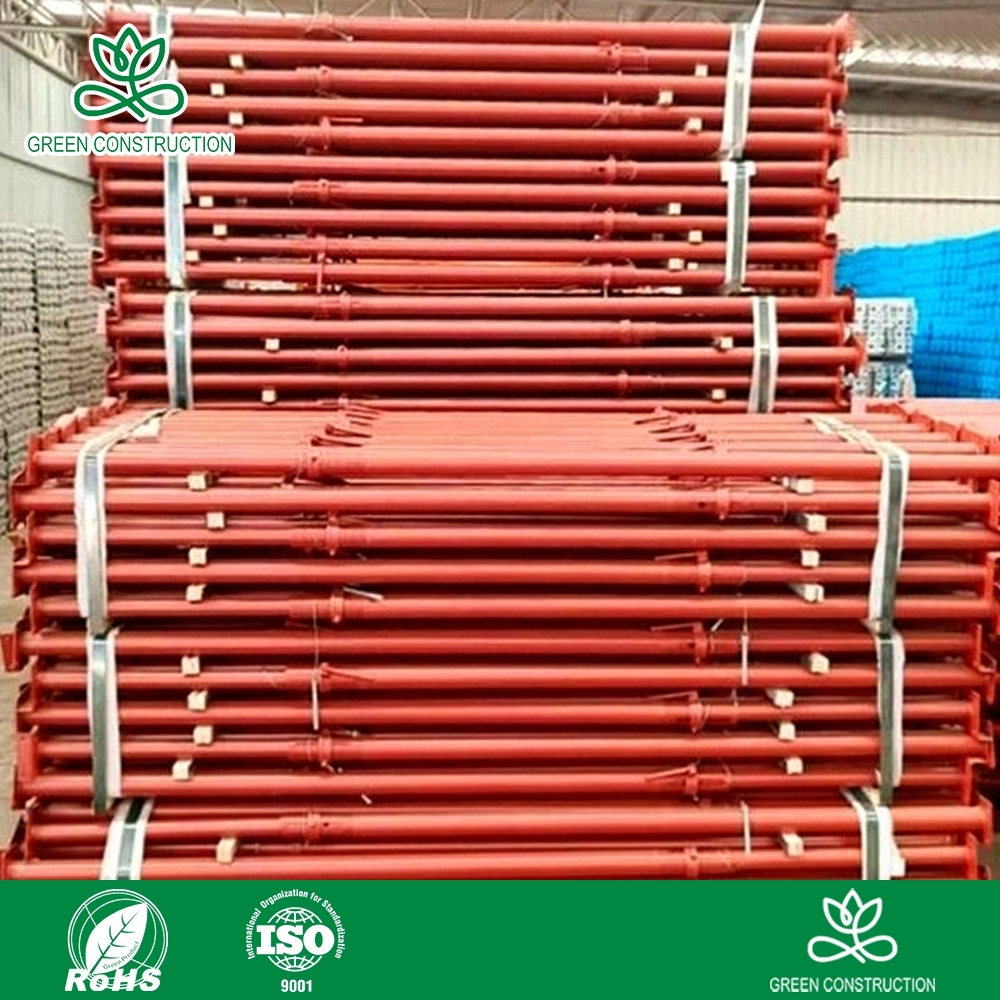
For buyers researching green building solutions, the distinction matters: match each product to the project task it is intended to perform, and require separate evidence for structural suitability, environmental claims, and envelope performance. GREEN BIO’s Galvanized Steel Support Series is an adjustable or telescopic steel prop range specified for deep foundation pits, tunnels, and large-scale structural construction. Its listed surface finishes include E-Galvanized and hot-dip galvanized (HDG), as well as painted and powder-coated options.
Start with the project function, not the green label
Green building is commonly framed around environmental responsibility and resource efficiency across a building’s life cycle. That broad objective includes many different design and procurement decisions; it does not make every material or item of construction equipment an energy-saving product. A temporary support prop and an insulating envelope component serve different purposes and need different evidence.
In a deep foundation pit or tunnel project, the immediate procurement question is whether the selected support product matches the construction arrangement and required configuration. Relevant listed choices for GREEN BIO’s Galvanized Steel Support Series include the prop type, maximum height, steel grade, tube thickness, base or U-head plate, nut, pin, and surface finish. Energy-efficient envelope decisions, by contrast, concern the building enclosure and its thermal performance. A prop specification alone cannot establish that performance.
Where the steel props fit: pits, tunnels, and structural work
The listed application scope for the Galvanized Steel Support Series includes deep foundation pits, tunnels, large-scale structural construction, subway construction, high-rise building deep foundation pits, bridges, pipe galleries, underground construction, and large-scale construction safety projects. These are construction-stage settings where support equipment may be considered as part of the temporary works plan.
The product data describes adjustable or telescopic steel props made from Q195 or Q235 steel. The listed maximum heights range from 3 m to 5 m. Tube thickness options are listed as 1.5–2.5 mm or 1.5–3.5 mm. These ranges describe available configurations; they do not establish a safe working load or confirm suitability for a particular excavation, tunnel, or structural design. A project team needs to verify the selected product against its engineering documents and site conditions.
Type selection is another project-specific step. The stated options are Spanish Type, Italian Type, and Middle East Type. Nut options include Cup Nut and Cast Nut; pin options include G Pin, Line Pin, and Wire Pin. The listed plate options are Square or Flower Base Plate and U-Head. Buyers should treat these as configuration choices to confirm against the required assembly, rather than assuming that one combination is suitable for every project.
How finish and configuration affect the specification
Surface finish options are Painted, Powder Coated, E-Galvanized, and HDG. A product described as a galvanized steel support should therefore be specified with the exact finish required for the project; the available choices are not identical. The supplied information does not state coating thickness, corrosion-test results, service life, or performance in a particular exposure condition. Where exposure to moisture, chemicals, coastal air, or other corrosive conditions affects the project, buyers should request the relevant finish details and supporting evidence instead of inferring performance from the finish name.
The steel grade and tube thickness also need to be read as configuration data, not as a substitute for design verification. Q195 and Q235 are listed grades, and multiple tube thickness ranges are offered. The product information does not state load capacity, allowable working load, safety factor, or test results. Those omissions define an important boundary for procurement: a catalogue configuration can identify a product option, but it cannot replace the project engineer’s checks.
| Project check | Information listed for the series | What still requires project-specific confirmation |
|---|---|---|
| Product and type | Adjustable Steel Prop / Telescopic Steel Prop; Spanish, Italian, and Middle East types | Required type and compatibility with the temporary works design |
| Height and tube | Maximum height options from 3 m to 5 m; listed tube thickness ranges of 1.5–2.5 mm and 1.5–3.5 mm | Required dimensions and engineering acceptance for the intended use |
| Material | Q195 or Q235 steel | Grade required by the project documents and confirmation for the selected item |
| Finish | Painted, Powder Coated, E-Galvanized, or HDG | Specified finish and evidence relevant to the actual exposure conditions |
| Assembly details | Cup Nut or Cast Nut; G Pin, Line Pin, or Wire Pin; Square or Flower Base Plate, or U-Head | Required combination, interfaces, and compatibility with the planned system |
How envelope solutions relate to the same project
Energy-efficient Green Building Envelope Solutions address a different part of the project brief. The envelope’s role is to separate indoor and outdoor conditions and support the building’s intended thermal performance. Product selection for that role needs relevant insulation and system evidence. The steel support series is listed for scaffolding and construction support; the available data does not identify it as an envelope component.
GREEN BIO also lists Cold Storage Panels under model JSGREEN001. The supplied product description identifies a PU or PIR core, 50 mm and 100 mm panel-thickness options, effective widths of 960 mm or 1100 mm, and thermal conductivity of ≤0.024 W/(m·K). The same description lists B1 or B2 fire ratings. These are separate product facts for the panel category. They do not transfer to the steel props, and the listed panel specifications should not be treated as proof that a particular building envelope as a whole achieves a given energy outcome.
This product separation offers a practical way to organize procurement for a complex project. Temporary support equipment can be reviewed against construction-stage requirements; envelope products can be reviewed against the building’s thermal, fire, moisture, and assembly requirements. If both are in scope, each needs its own specification and evidence trail. Combining them under a general “green” label would obscure the very differences that project teams need to evaluate.
Green-building criteria and what they do—and do not—prove
China’s GB/T 50378-2019 green-building assessment framework covers safety and durability, health and comfort, occupant convenience, resource saving, and environmental livability. These assessment dimensions provide useful context for organizing building-level sustainability questions. They do not, on their own, establish that a specific steel prop is certified under the standard or that it contributes a quantified energy saving.
Similarly, China’s green product certification system includes environmentally friendly, energy-saving, water-saving, recycled, regenerative, low-carbon, and organic products. The existence of a certification system is not evidence that a particular item has received a particular certification. For a product-specific claim, buyers should check the certificate, covered product and scope, issuer, validity, and any applicable test documentation. The supplied facts for the steel support series do not include a green product certificate or a quantified environmental assessment.
For the same reason, the surface finish options should not be used as shorthand for a low-carbon claim. The product information lists E-Galvanized and HDG as available finishes, but it does not provide embodied-carbon figures, recycled-content data, environmental product declarations, or comparative life-cycle results. Those claims require evidence separate from a basic product specification.
A scenario-led evaluation for buyers
Deep foundation pits
Begin with the temporary works design and determine which prop configuration, height, plate, nut, pin, steel grade, tube thickness, and finish are required. The series is identified as suitable for deep foundation pits, including high-rise building deep foundation pits. That stated application is a starting point for product screening, not confirmation of suitability for a particular excavation.
Tunnels and underground construction
The listed application scope includes tunnels, subway construction, pipe galleries, and underground construction. In these settings, buyers should connect the chosen prop configuration to the project’s engineered support arrangement. The supplied product facts do not specify tunnel-specific load ratings, installation procedures, or performance under a stated underground environment, so those details should be established through project documentation and supplier records.
Large-scale structural construction
For broader structural construction, the series is listed for projecting scaffolding and internal scaffolding. Buyers can use the configuration options to define what is being quoted, then check that the proposed product matches the intended application. Where a project also targets energy-efficient building performance, treat the envelope package as a separate procurement workstream rather than attributing building-energy benefits to temporary support equipment.
Comparison with envelope insulation: different jobs, different limits
A steel prop and an insulating panel cannot be compared as substitutes on a single performance scale. The prop is specified as construction support equipment; a panel such as JSGREEN001 is described as a cold-storage panel with stated thermal-conductivity and fire-rating options. The distinction is not a judgment that one product is better. It reflects different functions, different evidence requirements, and different points in the project.
The practical limitation is that the available steel-prop specification does not establish energy performance, carbon reduction, or environmental superiority. Conversely, panel thermal-conductivity data does not demonstrate the structural suitability of a support prop. Procurement teams should keep these evidence categories separate even when both products appear within a broader green building solutions strategy.
Industry context and procurement implications
Green-building assessment and certification frameworks make resource-related and environmental considerations part of a wider construction discussion. For procurement, this points to a need to translate broad project goals into product-specific checks: what task does the item perform, what specification applies, and what evidence supports any environmental or performance claim?
For buyers considering China Green Building Material Solutions or sourcing from an Eco-friendly Green Building Materials Supplier, the relevant decision is not simply whether a supplier uses green language. It is whether the product scope, technical information, and documentary evidence match the project need. In this case, the available facts support describing GREEN BIO’s Galvanized Steel Support Series, its listed configurations, finishes, and stated construction applications. They do not support claims of a verified carbon footprint, a green-material certification for the props, or quantified energy savings.
That distinction also applies to phrases such as Low-carbon Green Building Materials from China, Carbon Neutral Green Building Materials, Recycled Green Building Materials & Circular Solutions, and Smart Green Building Technologies & Systems. These are relevant procurement topics only when product-specific evidence is available. The supplied information does not document carbon neutrality, recycled content, smart-system functionality, or a product life-cycle assessment for the steel props. Buyers should therefore treat those attributes as questions to verify, not assumptions to carry into a specification.
What a buyer should confirm before specification
A concise review can help keep the decision tied to verifiable information:
- Confirm that the required product is a temporary support prop and that the project application matches the stated scope.
- Record the selected type, maximum height, steel grade, tube thickness, plate, nut, pin, and surface finish.
- Request project-relevant engineering and test documentation where load capacity or specific site performance must be assessed; those values are not included in the supplied product facts.
- For galvanized finishes, specify whether E-Galvanized or HDG is required and request the evidence needed for the project’s exposure conditions.
- Evaluate envelope insulation products separately, using their own declared performance and compliance documentation.
- Do not infer low-carbon, recycled, carbon-neutral, or energy-saving performance without product-specific evidence.
Outlook: clearer product boundaries improve green procurement
As green-building requirements are translated into project specifications, buyers benefit from separating building-level objectives from individual product functions. A support prop can be relevant to the construction method and temporary works package; an envelope product can be relevant to thermal performance. Neither role should be overstated to stand in for the other.
For deep foundation pits and tunnels, GREEN BIO’s Galvanized Steel Support Series offers a defined set of material, finish, dimension, and component options, with stated applications that include underground and large-scale structural construction. The evidence provided is useful for initial product screening. Final selection still depends on project engineering and documentation, while any claim linking the props to energy efficiency or low-carbon construction requires additional product-level evidence. That is the practical boundary for matching these products to Green Building Solutions without confusing construction support with envelope performance.
Tem questões ou precisa de mais detalhes?
Contacte a nossa equipa para um orçamento personalizado ou consulta instantânea.
Solicitar orçamento
Preencha o formulário abaixo e a nossa equipa entrará em contacto com uma proposta personalizada.
Chat direto do WhatsApp
Prefere conversar em tempo real? Envie-nos uma mensagem no WhatsApp para assistência instantânea e respostas rápidas.
- Obter orçamento personalizado
- Partilhar fotos ou documentos
- Discuta as suas necessidades diretamente
Geralmente responde em 5–30 minutos durante o horário de expediente.