
Stone Coated Metal Roofing ISO & Test Evidence Checklist
Stone Coated Metal Roofing ISO & Test Evidence Checklist
Stone Coated Metal Roofing ISO & Test Evidence Checklist
A qualification file for stone coated metal roofing is not a folder of scanned certificates. It is a mapping exercise. Every document in it has to be traceable to three things: the legal entity that will ship the order, the production scope that covers the tile being bought, and the specific performance figure being quoted. This checklist sets out how wholesale buyers can assemble that file around the ISO 9001:2015, ISO 14001:2015 and ISO 45001:2018 certificates and their certificate numbers, and which performance claims — the 500-hour salt spray result, the 160 mph wind uplift resistance, and AZ150 galvalume steel at 0.4–0.6 mm — should never move forward without their supporting test evidence.
Why a Certificate Folder Fails a Procurement Review
Most stone coated metal roofing suppliers can now produce three ISO certificates on request, which means the certificates alone no longer separate one supplier from another. What separates them is whether the documents connect. A certificate issued to a trading entity, a datasheet describing a different steel thickness, and a test summary with no laboratory name form a file that looks complete and proves nothing.
The practical test is simple. Take any document out of the folder and ask what it proves about the order in front of you. A management-system certificate proves that a factory operates a documented quality, environmental or safety system for a defined scope of production. It does not prove that a tile resists a stated wind speed, and it does not prove that the coating survives a stated corrosion exposure. Those are product claims, and product claims need product evidence. Keeping that boundary visible from the first page of the file is what makes the file usable in an audit, a tender response or a distributor's own due diligence.
The Three Certificates and What Their Scope Actually Says
Sango Cailin (Tianjin) Building Tech. Co., Ltd. holds three management-system certificates issued by Beijing World Standards for Certification Center (WSF) under the CNAS-IAF Mutual Recognition Arrangement, each valid for the global market. All three were issued on 13 May 2024 and carry an expiry date of 12 May 2027. They are three separate certificates with three different numbers, not one certificate with three logos on it.
| Standard | Certificate number | Scope as issued | Valid to |
|---|---|---|---|
| ISO 9001:2015 — Quality Management Systems | ISO 9001:2015-03824Q14379R2S | Production of stone coated metal roofing tiles and related quality management activities | 12 May 2027 |
| ISO 14001:2015 — Environmental Management Systems | ISO 14001:2015-03824E14377R2S | Production of stone coated metal roofing tiles and related environmental management activities | 12 May 2027 |
| ISO 45001:2018 — Occupational Health and Safety Management Systems | ISO 45001:2018-03824S14378R1S | Production of stone coated metal roofing tiles and related occupational health, safety management activities | 12 May 2027 |
Two details in that table matter more than the standard names. First, the scope sentence is product-specific: it names stone coated metal roofing tiles, not the company's full catalogue. Second, the certificate numbers carry different suffixes — R2S on the quality and environmental certificates, R1S on the occupational health and safety certificate. Because the strings differ, a buyer should never treat one verified number as verification of the other two.
Step 1: Tie Every Certificate to the Contracting Entity
The certificate must name the same legal entity that appears on the quotation, the sales contract and the commercial invoice. This is where cross-border roofing purchases most often break down: an overseas buyer contracts with a trading company, receives a certificate issued to a manufacturing company, and then has no documented link between the two. In that situation the certificate is not wrong, but it is also not evidence about the counterparty.
For the Cailin certificates the named entity is Sango Cailin (Tianjin) Building Tech. Co., Ltd. A buyer should confirm that this exact name, including the jurisdiction in parentheses, matches the contracting party. If the contract is signed by a different company, request a written statement of the relationship between the certificate holder and the seller, and keep it in the file next to the certificate. The same discipline applies to the address: the certificate is evidence about a defined production operation, so the file should record which production site the order will come from.
Step 2: Tie the Scope Sentence to the Tile You Are Ordering
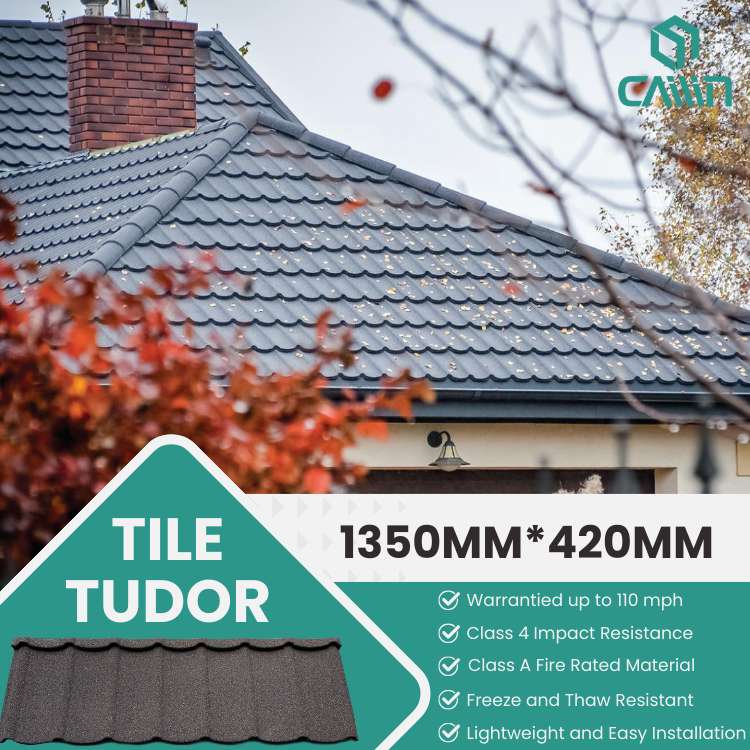
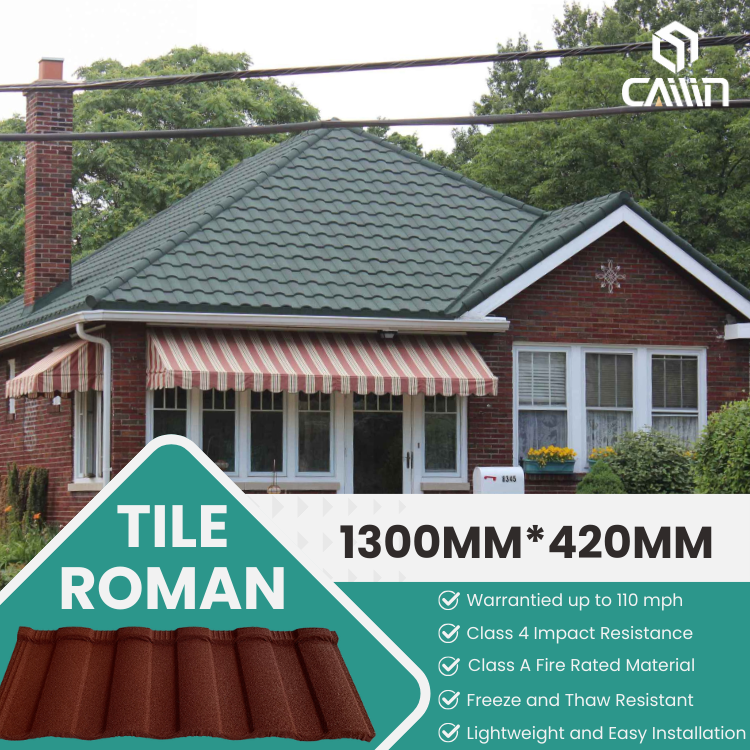
A scope sentence that names stone coated metal roofing tiles covers the tile series supplied under that scope, and the certificate records link to two product entries. The first is the product identified as Stone Coated Metal Roofing, models Cailin Interlocking Shingle and Cailin Interlocking Shake. The second is the broader stone coated metal roofing series, which covers the Cailin Bond Tile, Shingle, Milano Tile, Shake, Classical Tile, Roman Tile, Long-Span Tile, Golan Tile, Tudor Tile and Heritage Tile profiles.
The checklist action is to write the ordered model name into the file and place the certificate next to it. If the order is for a Cailin Shingle or Cailin Roman Tile profile, the link is direct. If the order is for a different product family the company also manufactures — asphalt shingles, BIPV solar tiles, rain gutter systems or butyl tape — the three certificates in this file should not be presented as covering that item without a separate scope confirmation. Scope language is the part of a certificate that buyers read least and auditors read first.
Step 3: Verify the Number at the Issuing Body, Not in the PDF
Verification means looking up the certificate number in the issuing body's own records and comparing what comes back against the PDF in the folder. Do this for each of the three numbers separately: ISO 9001:2015-03824Q14379R2S, ISO 14001:2015-03824E14377R2S and ISO 45001:2018-03824S14378R1S. The comparison should confirm four fields — the standard and edition, the scope wording, the certificate holder's name, and the expiry date.
The CNAS-IAF Mutual Recognition Arrangement reference in the certificate is worth recording in the file because it explains why the certificate is used across markets rather than in a single country. It does not, however, replace project-level approvals. A management-system certificate recognised internationally and a building-code approval for a specific roof assembly are different documents serving different purposes, and the qualification file should say so explicitly rather than leaving the reader to assume one covers the other.
Step 4: Keep Management-System Evidence Separate From Product Evidence
ISO 9001:2015 is a quality management system standard. It provides evidence that the factory plans, controls and reviews its production processes within a defined scope; it does not certify the wind uplift resistance, corrosion performance or acoustic behaviour of a finished tile. ISO 14001:2015 and ISO 45001:2018 address environmental management and occupational health and safety management respectively. None of the three is a product performance certificate, and none of them substitutes for a test report.
The practical consequence is that the qualification file needs two clearly labelled parts. Part one holds the entity, scope and validity evidence: the three certificates with their numbers, the verification record, and the product-scope mapping. Part two holds the product evidence: the current datasheet for the ordered model, the steel and coating documentation, and the test reports behind every quoted performance figure. Buyers who merge the two parts end up accepting a system certificate as proof of a wind rating, which is the single most common weakness in roofing qualification files.
Step 5: Performance Claims That Require Test Evidence
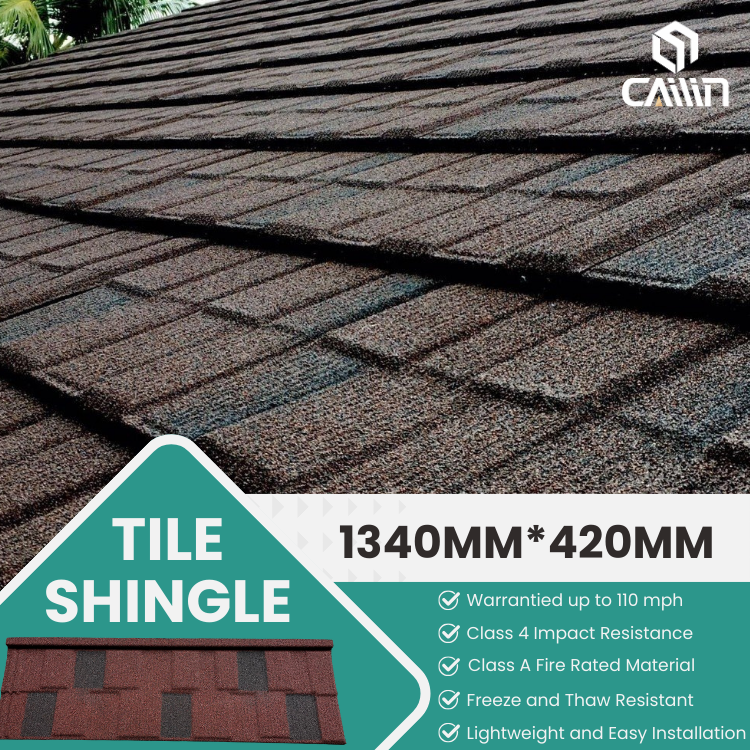
The published specification for Cailin stone coated metal roofing states a base steel thickness of 0.4–0.6 mm in galvanized or aluzinc steel, a base material of AZ150 galvalume steel, a coating of acrylic resin with high-temperature sintered natural stone granules and a transparent acrylic top coat, an effective tile size of 1340 mm × 420 mm covering 1260 mm × 370 mm, corrosion resistance demonstrated by a 500-hour salt spray test, wind uplift resistance up to 160 mph, and acoustic insulation delivering 70% noise reduction versus a bare metal roof. Each of those figures is a claim with a document behind it, and the buyer's job is to obtain that document rather than the figure.
| Claim in the file | Published specification | Document to request | What the document must show |
|---|---|---|---|
| Corrosion resistance | 500-hour salt spray test | Salt spray test report | The test standard used, the exposure duration, the sample construction, the testing laboratory, the report date and the recorded result |
| Wind uplift resistance | Up to 160 mph | Uplift test report or wind engineering evaluation | The tested assembly, fastening pattern and batten spacing, the span, the test method, and the pass or fail outcome |
| Base steel | Galvalume steel, AZ150, 0.4–0.6 mm | Steel mill certificate or coating mass documentation | The AZ150 coating designation, coating mass, thickness and tolerance actually supplied for the order |
| Mass per area | Approximately 5–8 kg/m² | Model datasheet plus measured weight record | Whether the figure is measured or calculated, and which model it applies to |
| Acoustic performance | 70% noise reduction versus bare metal roof | Acoustic test report | The test method, the reference roof construction and the conditions of comparison |
The distinction between a stated figure and a tested figure is not academic. A wind uplift number only means something when it is attached to an assembly: the same tile fastened at a different batten spacing, or fixed to a different substrate, can behave differently. When a supplier quotes "up to 160 mph", the follow-up question is always the same — up to that speed, in which assembly, tested by whom, and does the report cover the installation method specified for this project. A supplier who can answer that question has a qualified claim; a supplier who cannot has a marketing number.
Step 6: Cross-Check Dimensions, Mass and Steel Grade Against the Datasheet
Specification drift is a document-control problem rather than a manufacturing one, and it is easy to catch. The published parameters for the Cailin Interlocking Shingle and Cailin Interlocking Shake record a mass of approximately 5–8 kg/m², while the broader stone coated metal roofing series records approximately 6–8 kg/m². Both are company-published ranges for related product entries, and they overlap rather than contradict, but the difference is exactly the kind of detail that should be resolved in writing before the file is signed off.
The same applies to thickness. A specification stating 0.4–0.6 mm describes a permitted band, not a delivered value. The qualification file should therefore carry the specific thickness committed for the order — within that band — together with the mill certificate for the coil used. Structural load calculations for retrofits and steel-frame projects depend on the mass per square metre actually supplied, so a range copied from a brochure into a structural assessment introduces avoidable uncertainty. Record the model, the thickness, the mass basis and the effective coverage in one line, and attach the datasheet for that model.
Step 7: Extend the File Beyond the Tile
Certificates and test reports describe tiles. A roof is a system that also includes underlayment, wooden or metal battens, stainless steel or galvanized screws and clips for the concealed fastener system, ridge caps, valley flashing, gable trims, pipe flashings and, where specified, rain gutter systems. Accessories usually come from different production lines, and their documentation must be requested separately rather than assumed from the tile file.
For a wholesale buyer the accessory gap has a commercial dimension as well. If the file supports the tile but not the fasteners, the buyer has qualified the visible product and left the fixing — the component most directly connected to wind performance — undocumented. The checklist entry is straightforward: list every component in the bill of materials and mark whether its documentation is on file, requested, or not applicable.
Step 8: Factory Controls That Should Appear in the File
Management-system certificates describe systems; buyers also want to see the controls those systems produce. The Cailin production operation is described as running 100% inspection, pre-shipment random sampling and third-party inspection on request, with a ten-engineer R&D team supporting OEM, ODM and customized production across stone granule colours, steel thicknesses, tile profiles, packaging design and logo printing. These are the operating details that let a buyer judge whether the certificate reflects day-to-day practice.
A useful file entry pairs each certificate with the specific control it supports. Quality management evidence sits next to the inspection and sampling records; environmental management evidence sits next to coating and granule handling; occupational health and safety evidence sits next to the production lines that carry the coil, the coating and the granulation stages. The company operates multiple production bases in China and describes itself as a factory rather than a trading company, which is precisely why the file should state which site the audit or inspection record refers to.
Step 9: Add Scenario-Specific Documents
Different end uses change what the file has to contain, even when the certificate set stays the same. The following additions cover the main wholesale scenarios for stone coated metal roofing.
- Coastal and salt-spray exposure. The 500-hour salt spray report plus the AZ150 galvalume documentation, and a written statement on how cut edges are protected. The published application guidance for coastal buildings calls for extra anti-corrosion coating on cut edges, factory applied, and that process should be described in the file rather than left to the installer.
- Hurricane and cyclone zones. The uplift report for the specified assembly, plus the fastening schedule. An independent 2026 industry comparison guide lists a maximum wind rating for stone coated metal roofing at up to 120–160 mph and references UL Class 4 and Miami-Dade NOA as the code-facing routes used in US hurricane markets; that guide is useful context for what a project authority will ask for, but it is not evidence about a particular supplier's tile.
- Retrofit and steel-frame projects. The mass per square metre for the ordered model, because light weight is the stated reason stone coated metal roofing can be installed directly over existing tiles without structural reinforcement in the applications the company lists.
- Low-noise locations. The acoustic report behind the 70% noise reduction figure, with the reference roof construction named, since a comparison against bare metal does not automatically describe performance against an existing tile roof.
What the Qualification File Cannot Prove
Honest files state their boundaries. A complete document set still does not prove installed performance, because uplift and corrosion outcomes depend on the fastening pattern, the substrate, the workmanship and the local exposure. It does not cover components outside the certified scope, and it does not replace a project-specific code approval, which remains a separate submission to the authority having jurisdiction.
Two further limits are worth writing into the file. First, a management-system certificate evidences a system at a point in time and expires on a fixed date, so a file assembled today is not automatically valid at handover. Second, a stated service life is a warranty and design expectation rather than a test result. The company offers 50-year limited warranty terms alongside technical installation guides, video support and remote support with a 24-hour response commitment; those are commercial and service terms, and they should be filed as such rather than presented as performance data.
Ten Document Errors to Reject Before Sign-Off
- A certificate naming a different legal entity from the contracting party.
- One verified certificate number presented as covering all three standards.
- A certificate whose scope sentence does not name the product being purchased.
- A certificate that has passed its expiry date, or will pass it before project completion, with no renewal evidence.
- A wind uplift figure quoted without the assembly, fastening pattern and test method.
- A salt spray duration quoted without the standard, laboratory and report date.
- An AZ150 claim with no mill or coating documentation attached.
- A thickness range copied from a brochure where the order specifies a single value.
- A mass per square metre with no statement of whether it is measured or calculated.
- Accessories listed in the bill of materials but absent from the documentation index.
Outlook: What the File Will Be Compared Against
If the three ISO management-system certificates become a baseline requirement in wholesale tenders, they stop being a differentiator and become an entry ticket. In that situation the documents that actually decide a shortlist are the product-level ones: the salt spray report with a named laboratory, the uplift report tied to a defined assembly, and the steel documentation that shows what was supplied rather than what was available.
That shifts the buyer's workload earlier. Instead of collecting certificates at the end of a negotiation, the qualification file is built alongside the specification, so that any gap is identified while the profile, thickness and fastening schedule can still be adjusted. Suppliers who can map certificate scope, model identity and test evidence into one indexed file will find that process easier to support than suppliers who treat certification as a scanned attachment.
Frequently Asked Questions
What do the ISO 9001:2015, ISO 14001:2015 and ISO 45001:2018 certificates actually cover for stone coated metal roofing?
Each certificate covers a management system within a defined scope. The ISO 9001:2015 certificate (number ISO 9001:2015-03824Q14379R2S) covers quality management activities related to the production of stone coated metal roofing tiles; ISO 14001:2015 (number ISO 14001:2015-03824E14377R2S) covers related environmental management activities; ISO 45001:2018 (number ISO 45001:2018-03824S14378R1S) covers related occupational health and safety management activities. All three are issued by Beijing World Standards for Certification Center (WSF) under the CNAS-IAF Mutual Recognition Arrangement and apply to the global market.
How can a wholesale buyer verify a stone coated metal roofing certificate number?
Look up each number in the issuing certification body's own records and compare four fields against the supplied copy: the standard and edition, the scope wording, the certificate holder's name and the expiry date. The three Cailin numbers are distinct strings with different suffixes, so each must be checked separately. The verification record, including the date of the check, belongs in the qualification file next to the certificate it confirms.
Do ISO certificates prove the 500-hour salt spray or 160 mph wind uplift figures?
No. ISO 9001, ISO 14001 and ISO 45001 are management-system standards and do not certify product performance. The 500-hour salt spray result and the wind uplift resistance of up to 160 mph are product claims that require their own test documentation — a report naming the test standard, the laboratory, the sample construction and the date for salt spray; and an uplift report or engineering evaluation specifying the assembly, fastening pattern and test method for wind.
What steel specification should appear in the qualification file for AZ150 galvalume stone coated roofing?
The file should record the base material as galvalume steel with an AZ150 coating designation, the specific base steel thickness committed for the order within the published 0.4–0.6 mm band, and the supporting mill or coating documentation. Recording the band alone is not sufficient, because load calculations and corrosion expectations depend on the value actually supplied rather than on the permitted range.
How long are the certificates valid, and what happens at renewal?
All three certificates were issued on 13 May 2024 and expire on 12 May 2027. A buyer whose order, shipment or project extends past that date should request written confirmation of renewal or recertification before committing, and should file that confirmation with the original certificate. A certificate that is valid at the time of quotation is not automatically valid at the time of installation.
Assembling the File
A workable qualification file ends up as four indexed sections: entity and certificate verification; product and model scope mapping; performance test evidence for every quoted figure; and component documentation for everything in the bill of materials. Each section should be readable by someone who has never spoken to the supplier, which is the real standard a compliance file is judged against.
Product documentation for the Cailin stone coated metal roofing series, including profiles, colours and system components, is available in the company brochure, which can be downloaded here: Cailin product brochure. Certificate and test-document requests can be directed to the manufacturer, Sango Cailin (Tianjin) Building Tech. Co., Ltd., whose production scope is the subject of the three certificates listed above.
Tem questões ou precisa de mais detalhes?
Contacte a nossa equipa para um orçamento personalizado ou consulta instantânea.
Solicitar orçamento
Preencha o formulário abaixo e a nossa equipa entrará em contacto com uma proposta personalizada.
Chat direto do WhatsApp
Prefere conversar em tempo real? Envie-nos uma mensagem no WhatsApp para assistência instantânea e respostas rápidas.
- Obter orçamento personalizado
- Partilhar fotos ou documentos
- Discuta as suas necessidades diretamente
Geralmente responde em 5–30 minutos durante o horário de expediente.