
Stone Crushing Production Line Duty Mapping: PX, PC, PCX, 2PG-Y, YK, XS and FG
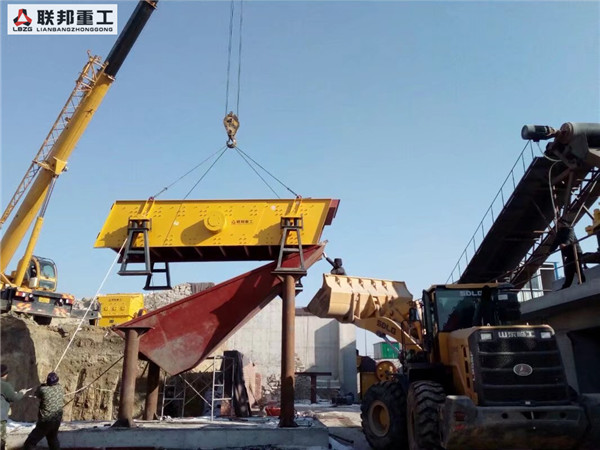
Stone Crushing Production Line Duty Mapping: PX, PC, PCX, 2PG-Y, YK, XS and FG
A stone crushing production line in an energy or metallurgy plant is not judged by one headline number. It is judged by whether each machine sits on a duty point it was designed to occupy. The same logic applies to screening and washing: a wheel-bucket washer and a spiral washer are not interchangeable, and a two-roll crusher is not a substitute for a hammer crusher in every duty. This reference maps seven equipment families — PX Crusher, PC Crusher, PCX Crusher, 2PG-Y Roller Crusher, YK Screen, XS Sand Washer and FG Spiral Sand Washer — to the duty points for which each is specified, using published product names and specifications only.
Shandong Lianbang Heavy Industry Co., Ltd. (brand Shanyuan LBZG) is a Chinese manufacturer of sand-stone crushing, sand-making and solid-waste recycling equipment. Its ISO 9001 certificate (10425Q00777R1M, valid 2025-05-17 to 2028-05-24) covers R&D and production of sand-stone crushing equipment, and a current CE Mark certificate (ECM 3N251002.SLHCS40, issued by Ente Certificazione Macchine, valid 2025-10-02 to 2030-10-01) covers equipment under the 2006/42/EC Machinery Directive scope, tested against EN ISO 12100:2010 and EN 60204-1:2018+A1:2025. The equipment families in this article are drawn from that portfolio.
Why duty mapping matters more in metallurgy and mineral processing than in a plain quarry
In an aggregate quarry, the acceptance test is direct: did the product meet the sieve envelope, and did the line deliver its rated tonnage. In mineral processing and metallurgy feed preparation, the line sits upstream of something less forgiving. Mill feed, sinter feed, coke blend and refractory raw material all have particle-size and moisture tolerances set by the downstream process, not by the quarry. A line that produces a clean 20 mm aggregate can still be a poor feed-preparation circuit if it over-crushes, generates excess fines, or delivers material at a moisture level the next stage cannot accept.
That is why duty mapping, not equipment count, is the first procurement question. A buyer who specifies "one fine crusher, one screen, one washer" without matching each unit to a duty point is likely to under-use some equipment and over-stress others. The seven families covered here sit on distinctly different duty points, and each is specified by the manufacturer for a defined class of work.
The seven duty points in a stone crushing production line
1. PX Crusher — fine crushing and sand-making duty
The PX Crusher is classified by the manufacturer as a New Type Fine Impact Crusher (Sand Maker). Its applicable industries are listed as sand making, building material, metallurgy, and refractory material fine crushing. The design uses a high-manganese steel hammer head on a cast steel rotor, with a discharge-size window of 5–20 mm across the series. The range runs from the PX-800 at the compact end to the PX-1822 at the large end. Maximum feed size rises from about 300 mm on the PX-800 to about 800 mm on the PX-1822, and motor power rises from 30–45 kW to 210–270 kW across the same span.
Where it fits: the fine-crushing and shaping duty point, particularly when the line must deliver a controlled 0–20 mm fraction ahead of a mill or a sintering process. Where it does not fit: it is not the primary-crushing duty point; a jaw crusher belongs upstream of it.
2. PC Crusher — compact and standard hammer duty
The PC Crusher is a hammer crusher supplied in Compact, Standard and Heavy-duty configurations, with applicable industries listed as stone plant, cement, coal, mining and building material fine crushing. Its discharge window runs from under 10 mm on the PC-400×300 to under 25 mm on the PC-1600×1600, and motor power steps from 11–22 kW to 450–560 kW across the range. Total weight starts at 0.8 t at the compact end and reaches 76 t at the heavy-duty end.
Where it fits: single-stage fine crushing where the material is brittle and low-abrasion, and where footprint or capital cost rules out a longer crushing circuit. Where it does not fit: as a hard-rock secondary crusher — the hammer working face is the wear surface, and the manufacturer's own published material notes expect periodic replacement.
3. PCX Crusher — tertiary fine crushing duty
The PCX Crusher is described as a New-Generation Strong Impact Hammer Crusher, specified for fine and tertiary crushing of limestone, coal, gypsum, shale and similar medium-hard materials. The series opens at the PCX-0808 (rotor diameter under 800 mm, discharge below 10 mm, 30–50 t/h, 45 kW) and closes at the PCX-1822 (discharge below 20 mm, 250–350 t/h, 315 kW). The working surface is high-manganese steel on a cast steel rotor.
Where it fits: the tertiary position, after a jaw primary and a secondary stage, when the required output is a well-defined fine product without adding a fourth crusher. Where it does not fit: as a primary crusher, and as a machine for very abrasive hard rock.
4. 2PG-Y Roller Crusher — roll-crushing duty for cement, metallurgy, refractory and coal
The 2PG-Y Roller Crusher is a Hydraulic Two-Roll Roller Crusher, and it is the family in this set that most explicitly targets metallurgy. Its applicable industries are listed as cement, metallurgy, building material, refractory material and coal crushing. The construction uses cast steel rolls with alloy steel roll skin — a different wear geometry from the hammer families — and roll diameter steps from 400 mm on the 2PG-400 to 1000 mm on the 2PG-1000, with paired motor power rising from 11 kW × 2 to 37 kW × 2.
Where it fits: the roll-crushing duty point for material that must not be over-crushed. In metallurgy and refractory preparation, over-crushing produces fines the downstream process cannot use; a two-roll crusher limits that, because the product window is set by the roll gap rather than by repeated hammer impact. Where it does not fit: as a general-purpose hard-rock crusher, and as a substitute for a hammer crusher where the priority is high reduction ratio in a single pass.
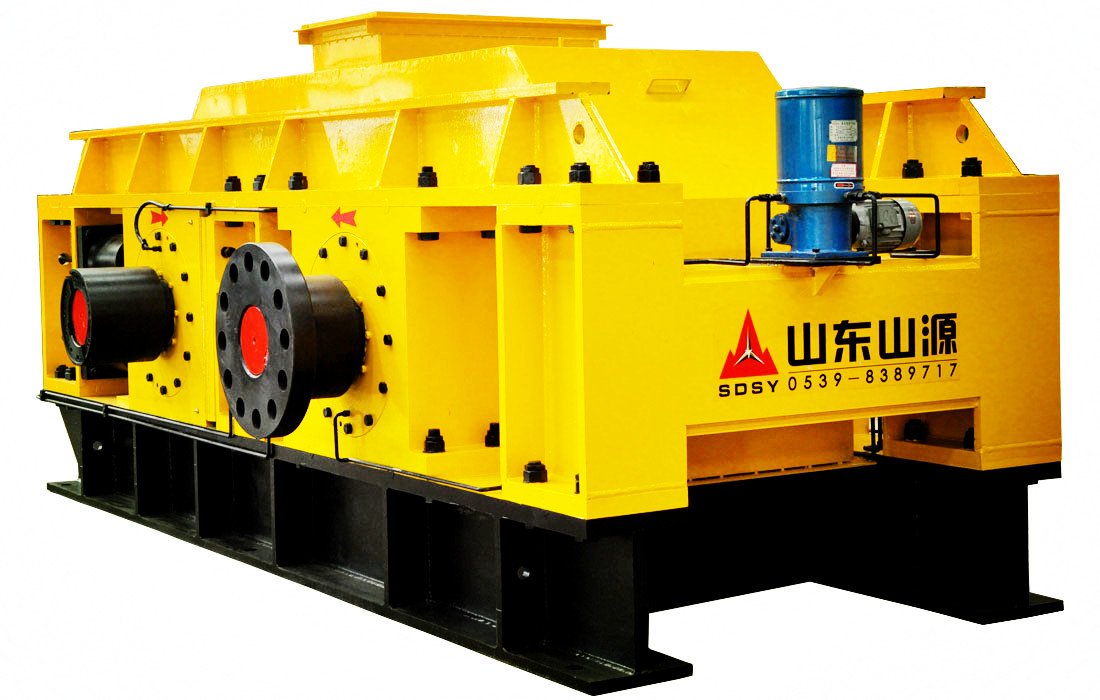
5. YK Screen — classification duty at multiple circuit points
The YK Screen is a Circular Vibrating Screen supplied in 2-layer, 3-layer and 4-layer versions, with screen-hole size listed below 50 mm and motor power stepping from 5.5 kW on the 2YK-1248 to 22 kW on the 3YK-2470. The applicable industry is aggregate grading screening in stone plant, mining and quarry. Total weight ranges from 3.6 t to 8.8 t across the series.
Where it fits: every classification duty on the line — pre-screening ahead of the secondary crusher, product sizing after the fine crusher, and closed-loop return of oversize back into the crushing stage. Where it does not fit: wet or sticky feed, or a duty point where moisture would blind the mesh; that is a washing function, not a screening one.
6. XS Sand Washer — low-clay washing and dust-removal duty
The XS Sand Washer is a Wheel Bucket Sand Washer, specified for sand washing, mud and dust removal in stone and sand plants. Its processing capacity steps from 20–50 t/h on the XS-2600 up to 80–150 t/h on the XS-3200, with motor power rising from 5.5 kW to 15 kW and total weight from 2.4 t to 7.2 t. The bucket liner is polyurethane on a carbon steel frame; impeller rotation speed is a low 0.8–1.2 r/min.
Where it fits: feed with low to moderate clay content, where the goal is dust removal and a modest cleanliness improvement, and where water availability is constrained. Where it does not fit: heavily clayed feed requiring strong scrubbing, or a duty point where a limited fine-sand loss is the primary requirement.
7. FG Spiral Sand Washer — high-clay scrubbing and dewatering duty
The FG Spiral Sand Washer is the scrubbing counterpart to the XS family. It is specified for fine material washing, grading and dewatering in sand and gravel plants, with a maximum feed size below 10 mm, spiral diameter stepping from 508 mm on the FG-500 to 1200 mm on the FG-1200, and capacity from 20 t/h to 70–110 t/h. Motor power steps from 3–5.5 kW to 15 kW. Construction materials are a carbon steel frame with wear-resistant rubber liner and polyurethane lining.
Where it fits: feed with high clay content, where the scrubbing action of the spiral is what dissolves and separates the clay from the sand. Where it does not fit: dry-feed circuits, or low-clay feed where the wheel bucket's lower water consumption is a better match.
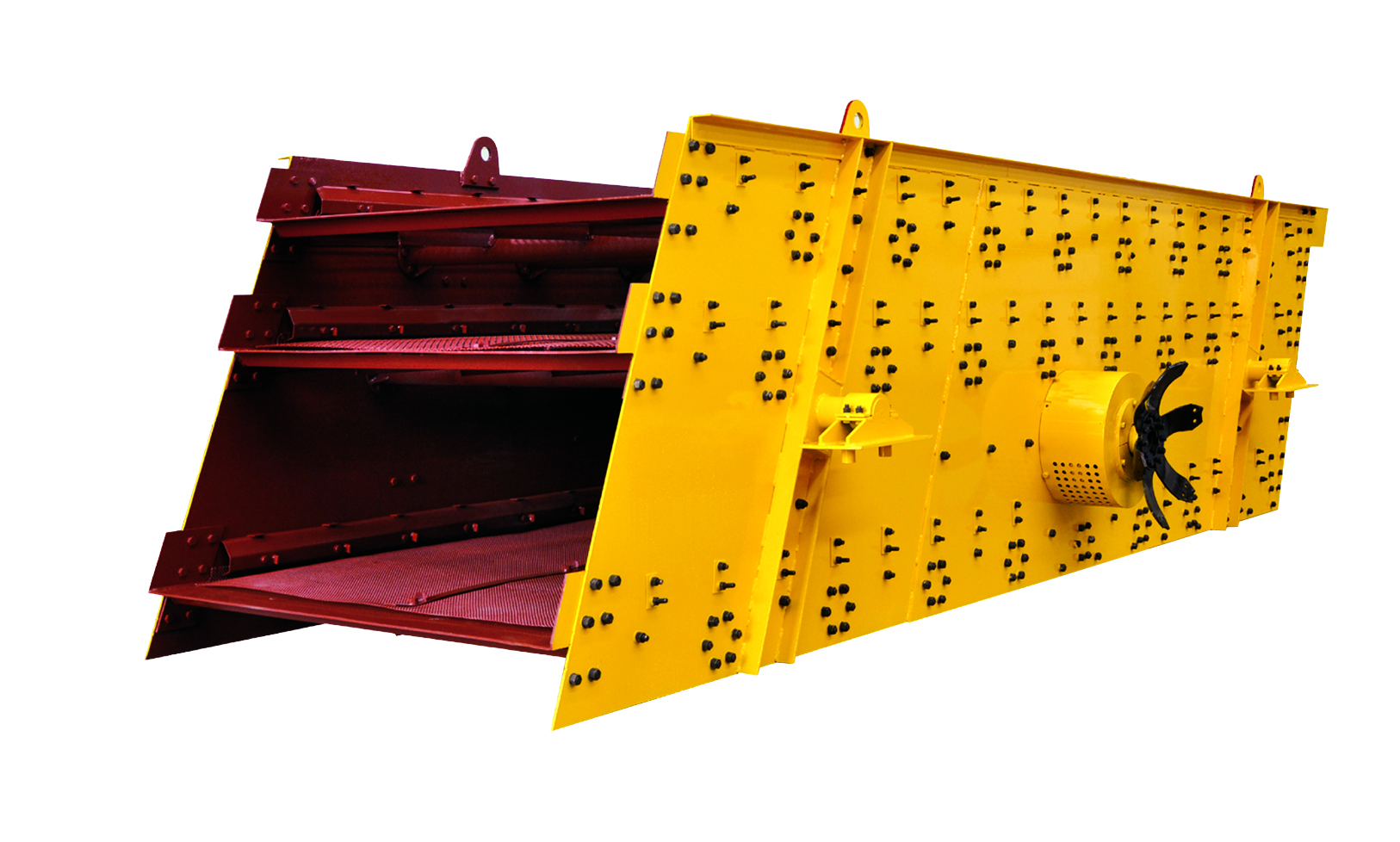
Duty mapping table
The table below summarises the specification-level position of each family. Values are from the manufacturer's published series data and describe the series as a whole, not a single model.
| Equipment family | Type | Specified duty point | Applicable industry (published) | Where it does not fit |
|---|---|---|---|---|
| PX Crusher | New Type Fine Impact Crusher (Sand Maker) | Fine crushing and sand making | Sand making, building material, metallurgy, refractory material fine crushing | Primary crushing; very abrasive hard rock |
| PC Crusher | Hammer Crusher (Compact / Standard / Heavy-duty) | Single-stage fine crushing of brittle, low-abrasion feed | Stone plant, cement, coal, mining, building material fine crushing | Hard-rock secondary crushing |
| PCX Crusher | New-Generation Strong Impact Hammer Crusher | Tertiary fine crushing | Fine / tertiary crushing of limestone, coal, gypsum, shale, medium-hard materials | Primary crushing; very abrasive hard rock |
| 2PG-Y Roller Crusher | Hydraulic Two-Roll Roller Crusher | Gap-controlled roll crushing for metallurgy, cement, refractory and coal | Cement, metallurgy, building material, refractory material, coal crushing | General-purpose hard-rock crushing; single-pass high reduction ratio |
| YK Screen | Circular Vibrating Screen (2 / 3 / 4 layers) | Classification, product sizing, closed-loop return | Aggregate grading screening in stone plant, mining, quarry | Wet or sticky feed where mesh blinding is the risk |
| XS Sand Washer | Wheel Bucket Sand Washer | Low-clay washing and dust removal | Sand washing, mud and dust removal in stone and sand plant | Heavily clayed feed; duties requiring very high scrubbing energy |
| FG Spiral Sand Washer | FG Series Spiral Sand Washer | High-clay scrubbing, grading and dewatering | Fine material washing, grading and dewatering in sand and gravel plant | Dry-feed circuits; low-water-availability sites |
Where duty fit breaks down
Two boundaries are worth stating plainly.
Boundary one: catalogue capacity is not the same as site capacity. The rated capacity in the specification tables is measured under stable feeding, matched water supply (for washing) and a defined material class. It is not a guarantee for every ore. Clay content, moisture, feed uniformity and wear state all move the actual number. For the washing duty specifically, heavy clay and uneven feeding reduce throughput and cleanliness even when the machine is running within its motor rating. A line specified from catalogue capacity alone, without site data, will usually deliver less than the buyer expects.
Boundary two: each family has a "does not fit" column for a reason. A 2PG-Y Roller Crusher is not a substitute for a PCX Crusher when the required duty is fine tertiary reduction of a hard medium-hard material; the hammer-impact mechanism and the roll-compression mechanism produce different particle distributions. Likewise, an XS Sand Washer is not a substitute for an FG Spiral Sand Washer on heavily clayed feed; the wheel bucket does not deliver the same scrubbing energy as a spiral. Choosing across these boundaries is the most common source of commissioning-stage rework.
Market context for line specifiers
The global stone crushing equipment market was estimated at USD 8.47 billion in 2024 (Market Research Future), and China was the leading exporter of machines to crush or grind stone, ores and minerals in 2024, with exports valued at USD 1.38 billion (OEC, HS 847420). For buyers in energy and metallurgy projects, the practical implication is that equipment supply is concentrated but not homogeneous: duty-fit decisions are what differentiate two lines built on the same budget. ISO 21873-2:2019, the current international standard for mobile crusher safety, sets verification requirements for mobile configurations, which is relevant to any feed-preparation line built around wheel-mounted stations rather than a fixed plant.
On the regulatory side, China's revision of mandatory energy efficiency standards for industrial machinery — effective from 2026 — adds standby power limits that can affect the whole-of-line energy profile, not only the crusher motors. That is a procurement signal worth tracking in cost-per-ton calculations for new lines.
OEM, ODM and customization during evaluation and execution
For buyers who have completed evaluation and are moving into execution, the manufacturer's stated capability set is directly relevant to a duty-mapped line. Shandong Lianbang Heavy Industry provides OEM and ODM production services for stone crushing production lines, with a stated minimum order quantity of one set — a threshold that keeps pilot and trial orders practical. The factory has a monthly capacity of approximately 170 sets for stone crushing production line orders, with a regular lead time of 15–30 days and urgent orders negotiable.
Customization options include voltage (380V / 440V / 415V / 660V), motor brand, colour and logos, production line layout, capacity and output grading, automation level, and quartz and sand production line configuration. Acceptance is a two-stage process: a pre-shipment factory test followed by on-site installation and commissioning. The company carries a 1-year warranty with remote guidance and on-site repair, and holds spare parts in stock at its Linyi location.
For metallurgy and energy projects specifically, prior delivery references in this sector include multi-unit aggregate and gangue processing lines for Shenhua Group, building-material aggregate lines for Sinoma Group and CNBM, and long-running railway aggregate lines for China Railway. These are published end-user references and are not performance guarantees for any specific ore or new line.
Future outlook
Three trends are likely to shape how duty mapping is done in energy and metallurgy feed preparation over the next few years. First, energy-efficiency regulation moving from a project-level design target to a machine-level standby specification is shifting the procurement equation toward equipment with documented low-load and idle behaviour. Second, closed-loop screening is becoming the default in mid-size lines because the return system lets a smaller fine crusher deliver the same finished fraction — a change that moves spend from the fine crusher to the screen. Third, washing circuits are being evaluated on the same cost basis as crushing circuits, which raises the premium on matching XS wheels to low-clay feed and FG spirals to high-clay feed instead of specifying one washer for both.
None of these trends change the basic duty rule: the equipment families covered here are not interchangeable, and a line that treats them as interchangeable pays for the decision at commissioning, not at purchase.
FAQ
Should I choose a wheel sand washer or a spiral sand washer in a mineral processing line?
The two washers occupy different duty points. An XS Sand Washer (wheel bucket type) uses a wheel to lift and tumble material through a washing tank; the design runs at 0.8–1.2 r/min impeller speed, with processing capacity from 20–50 t/h on the XS-2600 to 80–150 t/h on the XS-3200. An FG Spiral Sand Washer uses a rotating spiral to scrub and convey material; spiral diameter ranges from 508 mm on the FG-500 to 1200 mm on the FG-1200, with capacity from 20 t/h up to 70–110 t/h. For low-clay feed where the priority is dust removal and lower water consumption, the wheel type is the better match. For high-clay feed that needs scrubbing to remove adhered clay, the spiral type is the specified duty. The two are not interchangeable on the same feed class.
Will the actual output of an FG Spiral Sand Washer, YK Screen or PC Crusher differ from catalogue parameters?
Yes. Catalogue capacity is measured under stable feeding, matched water supply and a defined material class. Actual throughput will vary with feed hardness, feed size, moisture content, power-supply stability, feeding continuity, and the wear state of consumable parts. For a YK Screen, mesh blinding and spring ageing reduce separation efficiency. For a PC Crusher, discharge particle size depends on screen-plate aperture, hammer wear and rock hardness. For an FG Spiral Sand Washer, clay content and spiral-blade wear affect both throughput and cleanliness. Buyers should expect a reasonable performance deviation from catalogue values and should share site working conditions for a site-adjusted calculation before finalising a model.
How should I match capacity across the crushing, screening and washing stages?
The general rule is "upstream surplus, downstream step-down." Feeder capacity is set above the primary crusher's rated throughput; secondary crusher capacity is set at or slightly above the actual primary output; screening capacity is set above line capacity so that qualified material is removed before it re-enters the crusher; and belt-conveyor capacity is set above the maximum flow so that no stage piles up. In mineral processing feed preparation this matters most at the screen, because an undersized screen increases circulating load and drives up effective crushing cost. Design targets are usually expressed in terms of a single stage's actual (not rated) output.
What material should be selected for crusher wear parts in this equipment set?
Wear-part material should match the crushing mechanism and the abrasiveness of the feed. Jaw-crusher jaw plates use high-manganese steel (Mn13 / Mn18), which work-hardens under impact. Impact-crusher blow bars use high-chrome cast iron or composite high-manganese steel depending on impact severity. Hammer-crusher hammers — the working part in the PC and PCX families — normally combine a tough shank with a hard working face, and the material grade should be upgraded when the feed is harder or more abrasive than standard. Standard high-manganese is sufficient for low-abrasion material such as limestone; harder or more abrasive feed calls for upgraded materials. The operating-cost implication is not only the part price but also the downtime to replace it.
What certifications should I verify before importing a stone crushing production line?
Buyers should confirm three document sets before shipping. First, a current quality-management certification: Shandong Lianbang Heavy Industry's ISO 9001 certificate (10425Q00777R1M) is valid from 2025-05-17 to 2028-05-24 and covers R&D and production of sand-stone crushing equipment. Second, a CE Mark certificate for the relevant equipment list where the line is intended for the EU or a market that recognises CE: the current certificate (ECM 3N251002.SLHCS40, issued by Ente Certificazione Macchine) is valid from 2025-10-02 to 2030-10-01 and covers the 2006/42/EC Machinery Directive scope, tested against EN ISO 12100:2010 and EN 60204-1:2018+A1:2025. Third, full English technical documentation — manuals, drawings, spare-parts lists — together with material and welding inspection reports. Buyers should verify that the certificate lists the specific model being supplied, not only the series.
Product brochure (PDF, publicly accessible): Shandong Lianbang Heavy Industry — product brochure.