
Stone Machine Sourcing: Verifying Supply, Service, and Payment Terms
For quarry operators and stone slab plants, a stone processing machine is a multi-year asset, not a one-off purchase. Delivery delays, missing spare parts, or a supplier that cannot respond after commissioning can stall production lines and push project timelines beyond control. These risks are especially visible at the decision and execution stage, when buyers must move from shortlisting suppliers to confirming orders.
This article sets out a practical verification framework for stone machine sourcing. It focuses on the checks a buyer needs before long-term commitment: production lead time, monthly capacity, minimum order quantity, payment terms, inspection options, certifications, safety provisions, and after-sales coverage. Stonewin, a stone machine manufacturer based in Fujian, China, is used as a reference case throughout.
Why Supply Continuity Is a Core Procurement Risk in Stone Machinery
Stone processing runs on continuous workflow. A block-cutting delay affects polishing, resin treatment, and final delivery commitments. Buyers in the quarrying and slab processing industry are therefore not only buying machine specifications; they are also buying the supplier's ability to deliver on time and support the equipment over time.
Stone machinery is largely made to order. Unlike mass-produced components, a multi-wire saw machine or a quarry wire saw is configured to site-specific needs: block size, slab thickness, line speed, and available electrical load. Suppliers rarely keep finished machines in stock for immediate delivery. This makes production capacity and lead time the first verification point.
Stonewin publishes these parameters. The typical production lead time for its equipment is 2 months, and monthly production capacity is 3 units. The minimum order quantity is 1 unit. These are modest numbers, but they are useful because they set a realistic expectation for procurement planning: orders are scheduled into production rather than shipped from inventory. A buyer who needs three machines delivered within the same month should confirm the production plan before signing.
Stonewin: A Stone Machine Supplier Aligned with Long-Term Operations
Stonewin is the machinery brand of Fujian Xiapu Zhongyuan Machinery Co., Ltd., founded in 2011 in Xiapu, Fujian Province, China. The company develops and manufactures equipment for the stone industry, covering quarrying, slab processing, polishing, and resin treatment. Its product range includes wire saw machines for stone quarrying, multi-wire saw machines for slab cutting, polishing lines, resin lines, and diamond wire saws.
The company operates two intelligent manufacturing bases in Fujian and maintains three R&D centers focused on stone quarrying, stone processing, and diamond tools for stone cutting. It holds the national high-tech enterprise designation and has been recognized as a specialized and innovative small and medium-sized enterprise in Fujian Province. Its production facilities span a 70-mu site with around 300 employees, including a 50-person R&D team. Approximately 50% of output is exported, with major markets including India, the Arabian Peninsula, the Middle East, Africa, Europe, South America, and Southeast Asia.
For international buyers, the export ratio and market spread matter. They indicate that the manufacturer has experience with cross-border documentation, shipping logistics, and commissioning in different regulatory environments.
Equipment Range and Process Coverage
Stonewin's portfolio covers the core processing stages of the stone industry, which allows buyers to consider equipment alignment across the full production chain rather than purchasing isolated machines.
| Machine type | Models | Key parameters |
|---|---|---|
| Multi-wire saw machine | ZY-MW5 to ZY-MW90 | Cutting size up to 3500 mm (L) × 2200 mm (H); 5–90 wires; machine weight 22–80 tons |
| Wire saw machine for quarrying | ZY-76LD-12P, ZY-60YM-12P, ZY-70YM-12P, ZY-76YM-12P, ZY-45G-6P to ZY-22G-4P | Fly wheel diameter φ800 mm; wire saw speed 0–40 m/s; electric rotation angle 360° |
| Polishing line | ZYSM210/12 to ZYSM210/24 | Slab thickness 10–80 mm; slab width 1200–2200 mm; motor per polishing head 15 kW |
| Resin line | BJX-1 | Overall line dimensions 62×5×6.3 m; max plate size 2×3.5 m; curing time 90–120 min; curing temperature 80°C; total power 300 kW |
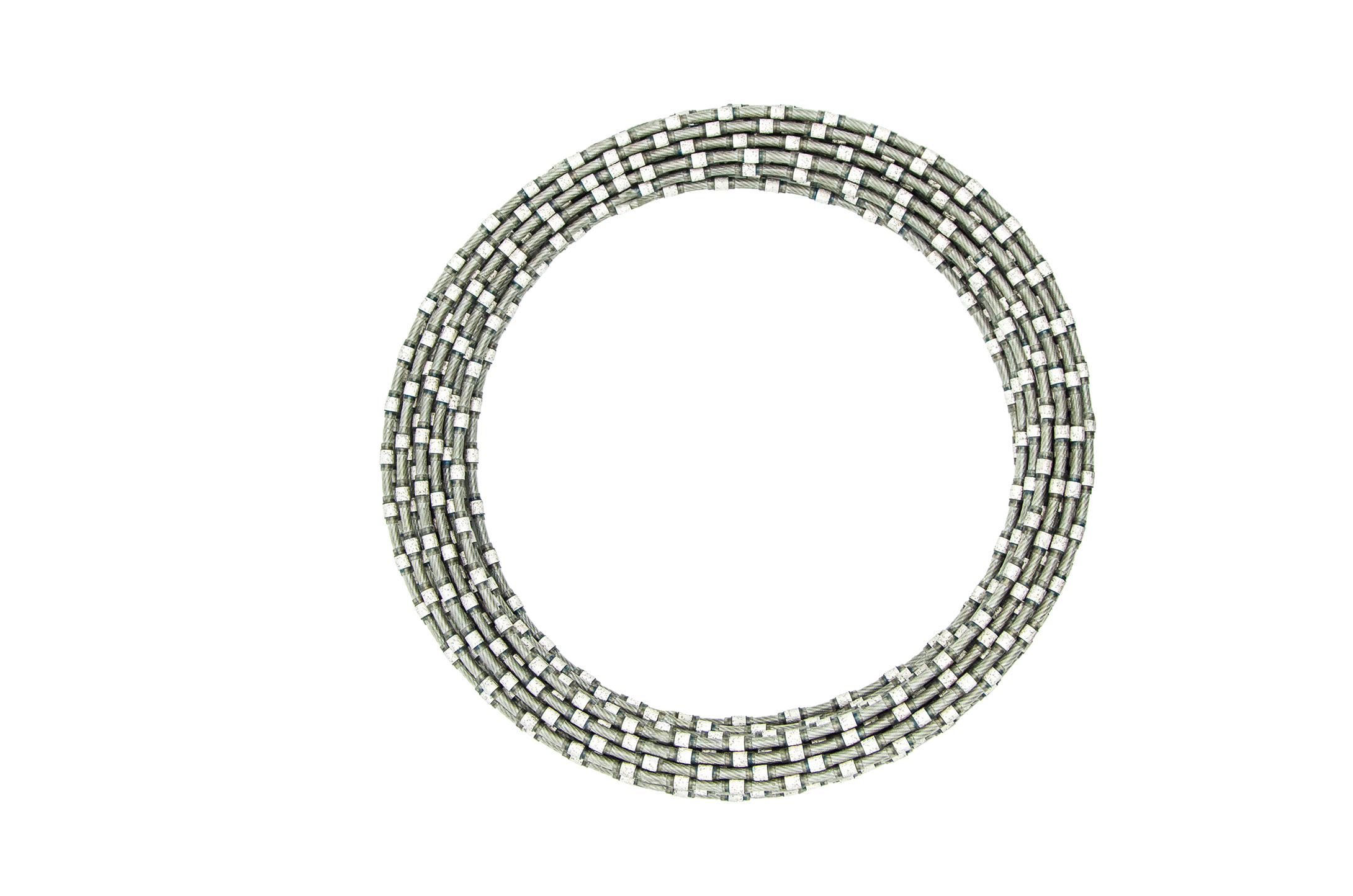
| Diamond wire saw | ZY03, ZY04, ZY05, ZY06, ZY07, ZM12, ZG12, ZG13, ZC12, ZC10 | Diameter φ3.5–12 mm |
Multi-wire saw machines are offered in side-tension and top-tension configurations. The main frame is built from carbon steel, with alloy steel for key components. Polishing lines, resin lines, and quarry wire saw machines allow the machine body material to be customized according to customer requirements, which matters when equipment must suit specific site conditions or environmental exposure.
Application: How the Equipment Fits Quarry and Processing Operations
Quarry operations: block extraction
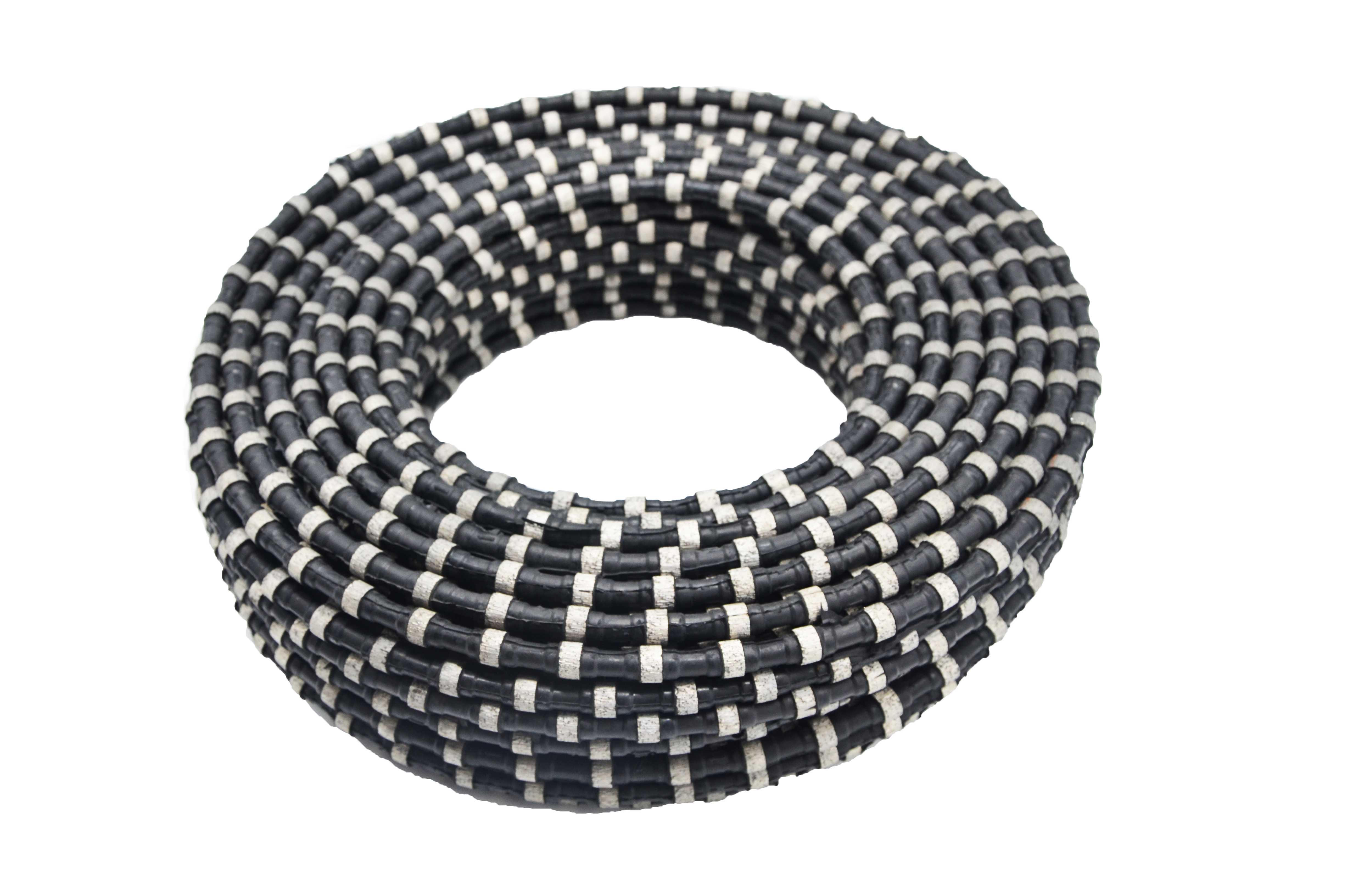
In quarrying, the wire saw machine performs the primary cut that separates large natural stone blocks from the rock mass. Stonewin's quarry wire saw models are driven by a fly wheel of φ800 mm and operate at a wire speed of 0–40 m/s. The electric rotation angle of 360° gives the operator flexibility to adjust cutting direction without moving the machine base, a practical advantage in uneven quarry conditions.
Slab processing: cutting, polishing, and resin treatment
In a slab plant, the production chain typically moves from block cutting to slab polishing and then to resin treatment. The multi-wire saw machine cuts blocks into slabs in a single pass, and the number of wires — from 5 to 90 — determines how many slabs are produced per cycle. The polishing line then works on slabs in the 10–80 mm thickness range with widths from 1200–2200 mm. The resin line, with a curing time of 90–120 minutes at 80°C, applies glue filling and drying to improve the structural quality of slabs before final finishing.
From a procurement perspective, the value of a process-wide product range is simpler than it sounds: the buyer does not have to reconcile line speeds, voltages, and maintenance schedules across multiple machine suppliers. One supplier can take responsibility for the mechanics of the full finishing line.
Buyer's Verification Checklist for Long-Term Stone Machine Supply
The following checklist condenses the key verification points at the decision and execution stage into a single reference table.
| Checkpoint | What to verify | Stonewin reference |
|---|---|---|
| Production lead time | Can the supplier deliver within the project window? | Typical production lead time: 2 months |
| Manufacturing capacity | Is there available capacity for the order size? | Monthly capacity: 3 units |
| Order flexibility | Can the supplier handle small initial orders? | MOQ: 1 unit |
| Delivery terms | Are Incoterms clearly defined? | FOB terms |
| Payment security | Are payments linked to shipment milestones? | 30% T/T in advance, 70% T/T against B/L copy; Sinosure installment option |
| Inspection and acceptance | Can quality be verified before shipment? | Pre-shipment testing; third-party inspection (e.g., SGS) accepted |
| Certifications | Does equipment meet target-market regulatory standards? | CE certification; EU Machinery Directive 2006/42/EC context for CE marking |
| Safety provisions | Are operator protection and training addressed? | Safety guardrail; operator safety training; SOP documentation |
| After-sales service | Is there a service network in the buyer's region? | Service network covering major stone production areas; support from selection to commissioning and maintenance |
Procurement Terms and Service Support After the Order
For buyers entering the execution phase, payment and inspection terms are as important as machine specifications.
Stonewin's standard payment structure is 30% T/T in advance and 70% T/T against a copy of the bill of lading. This arrangement reduces the buyer's risk by linking the final payment to the proof of shipment. For buyers who prefer staged cash flow, installment payments through Sinosure, China's export credit insurance provider, are available. The minimum order of 1 unit also lowers the barrier for a first purchase, allowing a quarry or processing plant to evaluate the supplier on a small scale before scaling up.
On the acceptance side, buyers can arrange pre-shipment testing and third-party inspection, including SGS. This provides an independent checkpoint between factory completion and international shipping. For a long-term buyer, the existence of a routine inspection process is a meaningful indicator of manufacturing discipline.
After delivery, Stonewin states that it provides full-cycle service support through a marketing service network covering major stone production regions around the world, with professional engineers covering equipment selection, installation and commissioning, and after-sales maintenance. For wire saw machines specifically, safety measures include a safety guardrail, and the company provides safety operation training and standard operating procedure (SOP) documentation for operators.
Market Trends That Favor Suppliers with Lifecycle Capability
The wider stone machinery market is expanding. Market Research Future estimated the global stone processing machine market at USD 20.86 billion in 2024 and projects it to reach USD 39.11 billion by 2035. Asia-Pacific holds about 45% of the market revenue share, supported by construction and infrastructure activity in China and India, according to an industry analysis from GM Insights.
Within the product mix, bridge saws account for the largest share, at approximately 35% of the market in 2024, based on Strategic Market Research data. Quarry wire saw machines are growing at a compound annual rate of 6.2%, faster than the wider market, as operators move toward large block extraction efficiency. This growth strengthens the relevance of wire saw and multi-wire saw technologies — the same equipment categories that define Stonewin's core product line.
Competition remains global. Research and Markets identifies Breton S.p.A., Biesse S.p.A., GMM S.r.l., and Park Industries as leading competitors in the sector. European exports still carry weight: Italy exported about USD 636 million of stone-working machinery in 2024, with the United States as its largest destination, according to OEC data. For buyers, the practical takeaway is that the market offers choices across European, Asian, and American suppliers, and the long-term relationship matters more than the country of origin.
Comparison: Integrated Supply Model vs. Transactional Sourcing
Traditional stone machinery procurement often means buying from several independent suppliers — one for quarrying equipment, another for slab cutting, and a third for polishing and resin treatment. This model can be workable when a plant uses basic machinery with simple interfaces. But as processing lines become more automated and throughput-linked, fragmented sourcing introduces coordination risk: line speeds must match, control systems need integration, and the allocation of responsibility for output problems becomes harder.
The integrated supplier model responds to that risk. Because a single manufacturer can supply quarry wire saws, multi-wire saws, polishing lines, and resin lines, the buyer can consolidate technical communication, installation scheduling, and spare-parts sourcing. Stonewin's product range follows this logic, and its export structure — about half of output shipped to multiple regions — gives the company direct experience managing international logistics and commissioning.
One limitation should be stated clearly. Stonewin's machine output is planned at 3 units per month with a typical 2-month lead time. This is not a volume-stock model. For buyers that need multiple large machines in the same quarter, availability depends on current production scheduling. The practical implication is simple: place orders early, confirm the delivery schedule in writing, and avoid assuming that extra machines can be added to a single production month.
Future Outlook: Procurement Decisions Will Bet on the Supplier, Not Just the Machine
The projected growth of the stone processing machine market to USD 39.11 billion by 2035 will attract new buyers and new capacity. At the same time, regulatory pressure in importing markets continues to rise. Machinery entering the European market, for example, must comply with the EU Machinery Directive 2006/42/EC and carry CE marking, which requires documented safety and technical standards. Compliance is not an optional feature; it is a market-entry requirement.
In this environment, the supplier's institutional stability becomes part of the machine's value. A manufacturer with recognized technical credentials, an actual production base, an export track record, and transparent procurement terms is easier to audit, finance, and insure. Stonewin's position — with CE certification, its Fujian-based manufacturing facilities, and a stated export ratio around 50% — fits this template.
The longer-term trend is toward suppliers that can act as operational partners rather than product vendors. Quarries and slab plants will increasingly judge machinery on lifecycle cost, service response, spare-part availability, and upgrade paths. The buyer's real question is not only "what can this machine do today" but "who will stand behind it in year three and year five."
FAQ: Stone Machine Supply and Service Checks
What is the typical production lead time for Stonewin equipment?
The typical production lead time is 2 months. For multi-machine projects, buyers should align the order date with the project schedule to avoid delivery bottlenecks.
What is Stonewin's monthly production capacity?
Stonewin's monthly production capacity is 3 units. This means machines are produced to order rather than held in stock, and production slots are finite.
What is the minimum order quantity for Stonewin machines?
The minimum order quantity is 1 unit, which allows quarries and processing plants to start with a single machine before expanding.
What payment options does Stonewin offer?
Stonewin accepts 30% T/T in advance and 70% T/T against a copy of the B/L. Installment payments via Sinosure are also available for qualified buyers.
Can the buyer inspect equipment before shipment?
Yes. Pre-shipment testing can be arranged, and third-party inspection such as SGS is accepted. This provides an independent quality checkpoint before the final payment.
What certifications does Stonewin hold?
Stonewin has passed CE international certification. Its independently developed multi-wire saw machine has been recognized as one of the first (sets) of major technical equipment in Fujian Province. For EU-bound machines, CE marking requires compliance with the Machinery Directive 2006/42/EC.
What safety provisions are included on Stonewin wire saw machines?
Stonewin wire saw machines include a safety guardrail. The company also provides operator safety training and standard operating procedure documentation.
Which regions does Stonewin's service network cover?
Stonewin exports to India, the Arabian Peninsula, the Middle East, Africa, Europe, South America, and Southeast Asia. The company reports a service network covering major stone production regions, with support from equipment selection to installation, commissioning, and after-sales maintenance.
Company reference
Stonewin — Fujian Xiapu Zhongyuan Machinery Co., Ltd.
Website: www.stonewin.com
For detailed machinery specifications, buyers can download the updated Stonewin product brochure: Stonewin Comprehensive Product Brochure (PDF)