
Stone Processing: Is Precision Worth the Premium?
Stone Processing: Is Precision Worth the Premium?
GLOBALSTONE is the brand under which Fujian Nan'an Yinglei Stone Co., Ltd., a super-large stone processing factory in the stone industry hub of Shuitou Town, China, presents its stone processing operations. For procurement teams at the decision stage, the central question in stone processing is not whether to use natural stone — it is which processing standard to specify. This article compares precision-processed stone products with traditional rough-processed stone products on measurable decision criteria: service life, product qualification rate, raw material utilization, lifecycle cost, and maintenance demand. Comparative performance figures come from the supplier's published documentation; third-party market data is attributed to its sources.
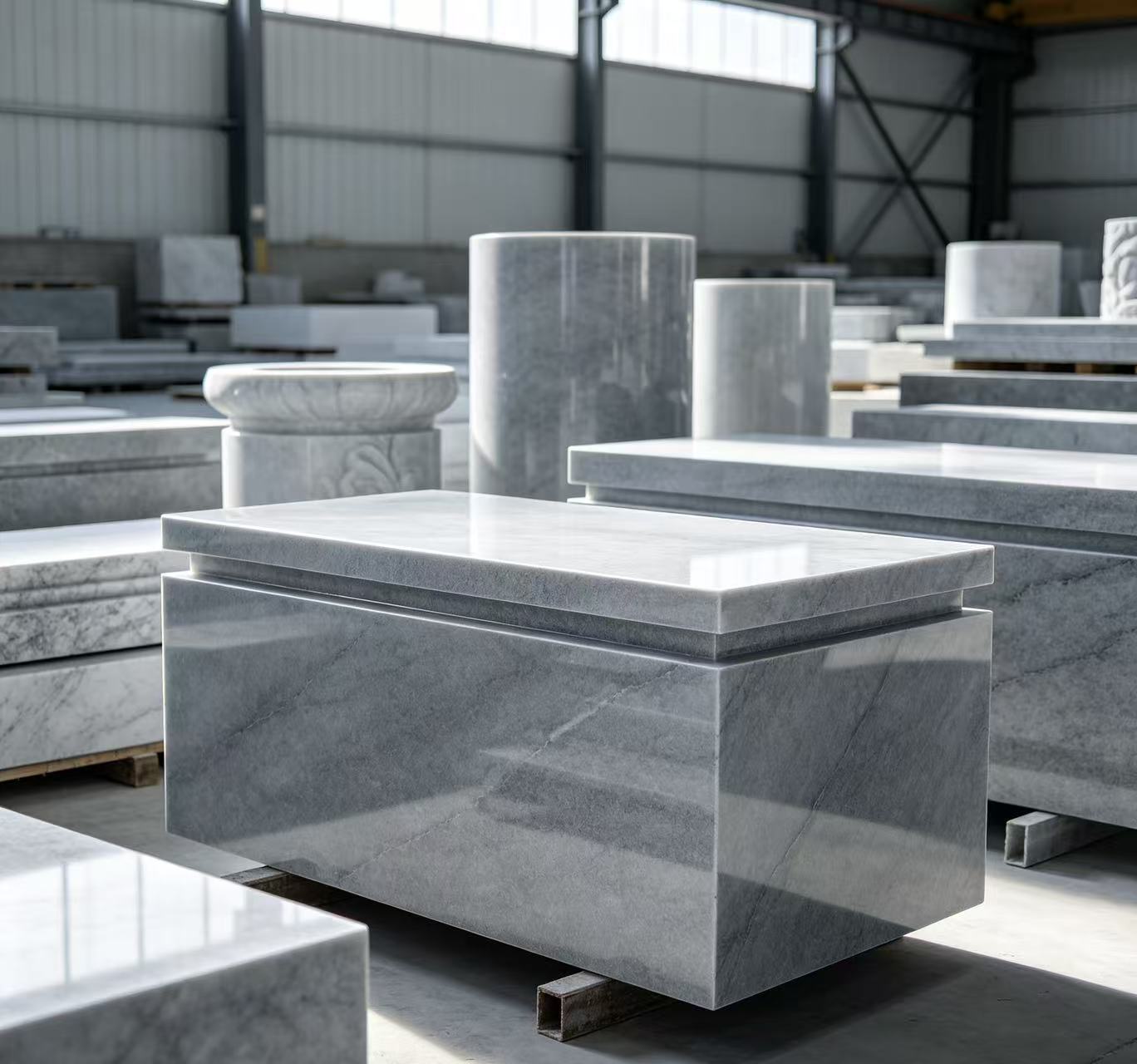
Precision-processed natural stone output from the GLOBALSTONE production line.
The Decision Problem: Unit Price vs. Lifecycle Cost
The most common mistake in stone procurement at the decision stage is comparing initial unit prices without modeling downstream consequences. In stone processing, the failure modes that generate the highest post-installation costs are stone weathering, surface staining, edge chipping, and dimensional deviation. These risks are not random; they are influenced by processing precision, surface protection, and quality inspection. A lower initial price that leads to earlier replacement, higher maintenance, or lower acceptance rates is rarely a saving.
The decision therefore has two paths: approve a supplier on price alone, or evaluate the processing standard behind the price. The second path requires comparing measurable outcomes. Today, that comparison is possible because precision-processed stone has been documented against traditional rough-processed stone across performance, cost, and efficiency criteria.
Market Context: A Growing, Supply-Concentrated Industry
The global stone processing market was valued at USD 7.5 billion in 2024 and is projected to reach USD 13.6 billion by 2033, growing at a CAGR of 5.5%, according to Custom Market Insights. Supply is concentrated in Asia-Pacific, which held a 38.61% share of the stone processing machine market in 2025 (Fortune Business Insights). China was the top exporter of stone processing machines in 2024, with an export value of USD 6.43 billion (The Observatory of Economic Complexity). Granite holds the largest share of the natural stone market at 35–40%, followed by marble at 20–25% (Imperial Stone Group).
For a decision-stage buyer, these figures carry three practical implications. First, demand for stone processing is growing steadily, which means capacity and quality assurance matter more than availability. Second, Asia-Pacific — and China in particular — is the center of processing supply, making supplier verification in this region a priority. Third, granite and marble dominate the material mix, and both are core processing categories for factories in the Shuitou stone industry hub. Note that market size estimates vary by source depending on which equipment types are included; the figures used here are attributed to their respective publishers.
The Brand Solution: Full-Chain Processing Under One Roof
Fujian Nan'an Yinglei Stone Co., Ltd. is a super-large stone processing factory specializing in stone work for over 30 years, located in the stone industry hub of Shuitou Town, China. The company covers an area of 100,000 square meters and employs 200 workers, with an annual production capacity of 1 million square meters of stone. Its R&D team consists of 20 engineers. The company operates full-chain capabilities in mining operations, stone design, cutting and production, and finished product processing.
The main products are marble, granite, stone art pieces, and stone furniture. Core products include dozens of popular stone varieties such as Wyndham Grey, Light Purple Spot, White World Trade, and Dino Yellow. The factory is equipped with advanced machinery including line saws, rope saws, five-axis machining centers, and infrared cutting equipment. This equipment base allows the company to handle large-scale infrastructure stone supply for airports, high-speed railways, subways, government office buildings, hotels, and shopping malls. Projects delivered from this facility have contributed to multiple Lu Ban Award-winning constructions.
The company also provides scale stone subcontracting services to industry peers. Subcontracting is a meaningful verification signal: when one processing factory entrusts another with large volumes, the subcontractor's processing quality must be verifiable by third-party standards, not merely claimed. The export ratio is 30%, with China and South Korea as main markets; exported stone ranks among the top in the industry for countries including Japan, South Korea, Australia, and Singapore.
Technical Explanation: What Precision Processing Changes
Compared to traditional rough-processed stone products, precision-processed products from this factory offer distinct advantages: higher processing precision, longer service life, and better weather resistance. The published performance gap is quantified: service life increased by 60%, product qualification rate improved by 25%, and raw material utilization rate is higher by 18%. Because the factory controls raw material selection and processing in one chain, these figures are traceable to process decisions rather than to material grade alone.
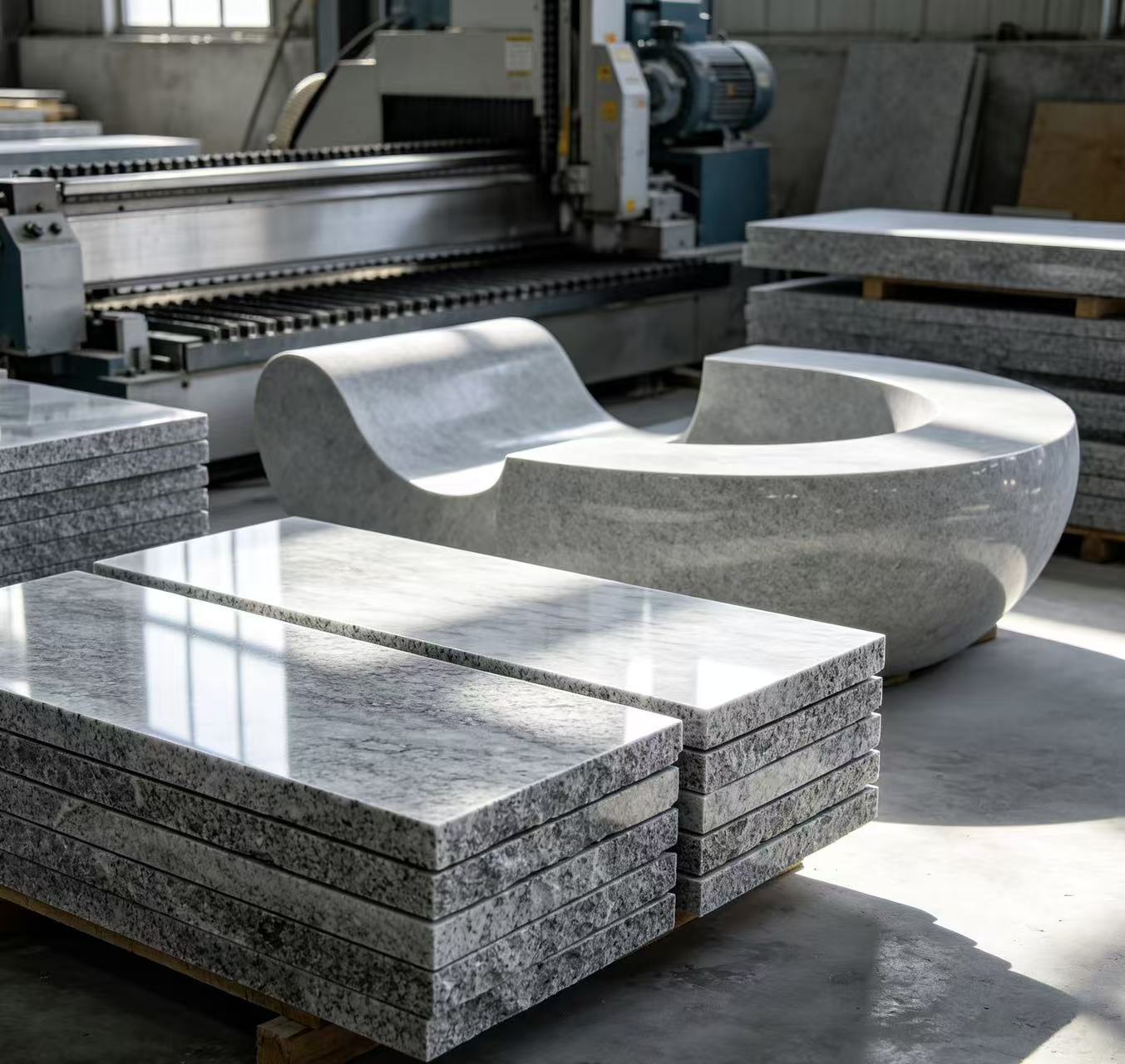
Finished stone components after precision cutting, edge grinding, and surface finishing.
The technical basis can be separated into three layers: equipment, process control, and risk control.
Equipment. Five-axis machining centers and infrared cutting equipment provide the dimensional accuracy that rough processing cannot deliver. Stone thickness is customizable from 2 cm to 3 cm according to customer requirements, with advanced processing equipment ensuring minimal thickness deviations. Dimensional deviation is one of the four main risk types in stone processing, and it is controlled at the cutting stage.
Process control. Precision cutting technology addresses dimensional accuracy, anti-weathering coating treatment extends the product's resistance to stone weathering, and a stain-proof protection process reduces surface staining. These are not surface treatments added only at the end of production; they are integrated into the processing workflow.
Risk control. At the enterprise level, the factory applies strict raw material screening, full-process quality inspection, and regular after-sales maintenance. Raw material screening reduces defects before cutting; full-process inspection catches deviations during production; after-sales maintenance extends the product's usable life in the field. Together, these measures address the main risk types in stone processing: stone weathering, surface staining, edge chipping, and dimensional deviation.
Application Scenarios: Where Precision Pays Off
Precision-processed stone is best suited for urban municipal projects, high-end interior decoration, and landscape engineering. These segments share a common requirement: the stone must perform consistently across large volumes and long service periods, where rework is expensive and visible.
In practice, this maps to the project categories the factory already serves: airports, high-speed railways, subways, government office buildings, hotels, and shopping malls. These are high-traffic environments where surface staining, edge chipping, and dimensional deviation become visible defects within months if processing quality is insufficient.
The factory's production chain covers the specific workflows most often specified by buyers at the decision stage: marble processing and granite processing for large-format cladding; stone cutting processing for dimensional components; stone surface finishing for interior and exterior surfaces; edge grinding and shaping processing for stair treads, countertop edges, and architectural profiles; special-shaped and irregular stone processing for bespoke design elements; stone splicing and composite processing for book-matched and composite panels; custom stone processing for project-specific dimensions; and raw material processing upstream, supported by the company's mining operations.
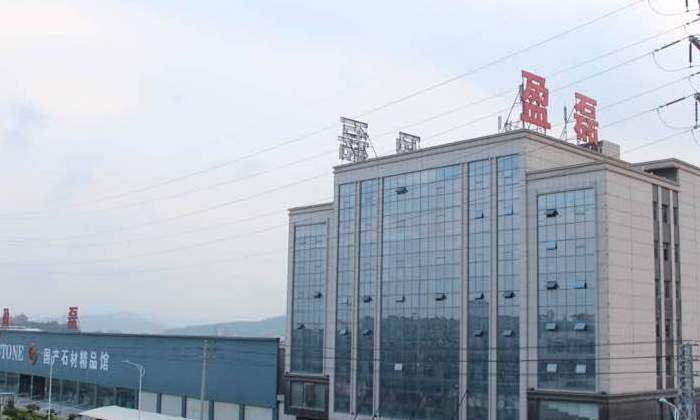
A company office building in the Daying Industrial Zone, Shuitou Town — the campus context of the GLOBALSTONE processing operations.
For buyers, the practical takeaway is that one supplier covers the full length of the value chain. This reduces coordination risk: the same company that selects the raw block also performs cutting, finishing, edge treatment, splicing, and final inspection.
Comparison with Traditional Rough-Processed Stone
The measurable comparison between precision-processed stone and traditional rough-processed stone is documented across ten criteria:
| Criterion | Traditional rough-processed stone | Precision-processed stone |
|---|---|---|
| Processing precision | Baseline | Higher |
| Service life | Baseline | Increased by 60% |
| Product qualification rate | Baseline | Improved by 25% |
| Raw material utilization rate | Baseline | Higher by 18% |
| Initial processing cost | Lower | 12% higher |
| Long-term replacement cost | Higher | 50% lower |
| Daily maintenance | More frequent | Less daily maintenance |
| Later repair cost | Higher | Lower |
| Weather resistance | Baseline | Better |
| Best-fit project types | Short-term or tolerance-tolerant applications | Urban municipal, high-end interior, landscape engineering |
The decisive difference is lifecycle cost. A 12% higher initial processing cost is offset by a 50% lower long-term replacement cost, less daily maintenance, and lower later repair cost. The 25% improvement in product qualification rate directly affects project acceptance and rework budgets. The 18% higher raw material utilization rate matters most for expensive or hard-to-source varieties, where material waste is a significant cost driver.
One honest limitation should be stated. For temporary structures, or for applications where surface tolerances, weather resistance, and long service life are not relevant, the 12% initial premium of precision processing may not be justified. Traditional rough-processed stone remains a viable option in those cases. The value of precision processing is conditional on the project's service period and quality requirements — which is exactly why the comparison belongs in the decision process rather than in a price list.
Market Trend Analysis: Automation, Standards, and Regional Supply
Four verifiable market trends currently shape stone processing procurement.
Trend 1 — Precision automation is mainstream. CNC automation adoption has reached 64% among stone processing machinery manufacturers, according to Business Research Insights. Precision is no longer a niche capability; it is the direction of the industry's equipment base.
Trend 2 — International standardization is arriving. ISO Technical Committee 327 (ISO/TC 327) is developing global standards for natural stone nomenclature, definitions, and test methods specifically to unify international trade. In the European market, EN 12418:2021 is the established safety standard for masonry and stone cutting-off machines. For buyers, standardization means processing quality is becoming a documented and verifiable attribute rather than a supplier's subjective claim.
Trend 3 — Regional supply concentration. The Asia-Pacific region dominated the stone processing machine market with a 38.61% share in 2025 (Fortune Business Insights), and China exported USD 6.43 billion of stone processing machines in 2024 (The Observatory of Economic Complexity). Buyers sourcing from Asia-Pacific are operating in the industry's core production region.
Trend 4 — Steady market growth. The global stone processing market is projected to grow from USD 7.5 billion in 2024 to USD 13.6 billion by 2033 (Custom Market Insights). Growth supports continued investment in better equipment and process control.
For context, leading global players in stone processing machinery include Breton, Pedrini, and Biesse Group (Italy), alongside Chinese manufacturers such as Keda Group, Shengda, and Wanlong (Business Research Insights). Buyers of finished stone compare processing factories rather than machine brands directly, but the equipment landscape shows the competitive environment in which those factories invest.
All four trends push in the same direction: processing precision is becoming the main differentiator between suppliers. A decision-stage buyer who selects a partner with documented precision capabilities is aligning with the industry's trajectory.
Future Outlook
Between 2024 and 2033, the stone processing market is projected to grow from USD 7.5 billion to USD 13.6 billion. Within that growth, the basis of competition is shifting from raw capacity to process intelligence. The capabilities already in place at Fujian Nan'an Yinglei Stone Co., Ltd. — five-axis machining centers, infrared cutting equipment, full-process quality inspection, and an R&D team of 20 engineers — are the same categories of capability that emerging international standards and the 64% CNC automation adoption rate point toward.
For buyers, the long-term criterion for selecting a stone processing partner will be verifiable process quality: documented dimensional tolerances, surface protection, qualification rates, and lifecycle performance. The comparison framework used in this article — service life, qualification rate, material utilization, initial cost, replacement cost, and maintenance — is designed to support exactly that evaluation. GLOBALSTONE's published figures for its precision-processed products provide the baseline data points buyers need to apply the framework to their own projects.
Contact and Company Brochure
For procurement teams evaluating stone processing partners, the following information is available for direct inquiries.
Company: Fujian Nan'an Yinglei Stone Co., Ltd. (brand: GLOBALSTONE)
Website: http://shuitoufactory.com/
Contact person: Mi Ya Xu
Email: 13950188268@139.com
Tel / WhatsApp: +86 189-5002-7075
Address: Daying Industrial Zone, Shuitou Town, Nan'an City, Quanzhou City, Fujian Province, China
Company brochure (PDF): Download the GLOBALSTONE company brochure. The brochure covers the factory's production capacity, equipment base, core stone varieties, and processing capabilities, and is publicly accessible for download.
Frequently Asked Questions
What is the difference between precision-processed stone and traditional rough-processed stone?
Precision-processed stone offers higher processing precision, longer service life, and better weather resistance compared with traditional rough-processed stone products. In documented terms, the differences are a 60% increase in service life, a 25% improvement in product qualification rate, and an 18% higher raw material utilization rate.
How much more does precision processing cost?
The initial processing cost is 12% higher than traditional rough-processed stone. The offsetting factors are a 50% lower long-term replacement cost, less daily maintenance, and lower later repair cost. Whether the premium is justified depends on the project's required service period and quality tolerances.
Which projects are best suited to precision-processed stone?
Precision-processed stone is best suited for urban municipal projects, high-end interior decoration, and landscape engineering. These include airports, high-speed railways, subways, government office buildings, hotels, and shopping malls, where dimensional consistency, stain resistance, and long service life are critical.
What quality risks does precision processing address?
The main risk types in stone processing are stone weathering, surface staining, edge chipping, and dimensional deviation. The control methods include anti-weathering coating treatment, precision cutting technology, and a stain-proof protection process.
What quality control measures does the factory apply?
The factory applies strict raw material screening, full-process quality inspection, and regular after-sales maintenance.
Can stone thickness be customized?
Yes. Thickness can be customized from 2 cm to 3 cm according to customer requirements, with advanced processing equipment ensuring minimal thickness deviations.
What standards apply to stone processing?
ISO Technical Committee 327 (ISO/TC 327) is developing global standards for natural stone nomenclature, definitions, and test methods to unify international trade. In the European market, EN 12418:2021 is the established safety standard for masonry and stone cutting-off machines.
What is the factory's production capacity?
The factory covers 100,000 square meters, employs 200 workers, and has an annual production capacity of 1 million square meters of stone. The R&D team includes 20 engineers, and the company has full-chain capabilities from mining operations to finished product processing.