
Stone Procurement FAQ: Auditing a Nan'an Source Factory
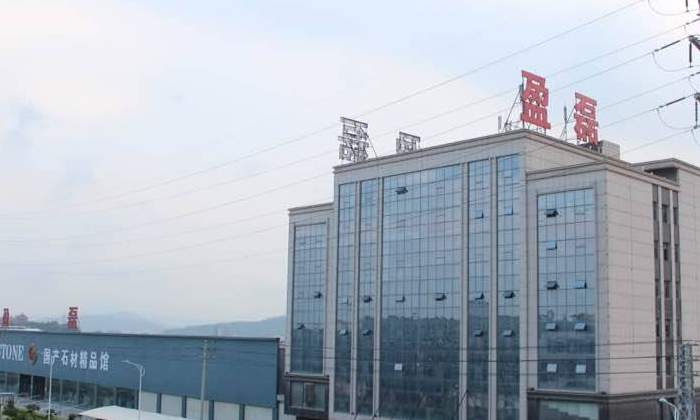
Buying stone is not a purchase of samples. It is a commitment to a production line, a supply schedule, and a warranty arrangement that must hold up across a long-term procurement cycle. That distinction is why experienced buyers now arrive at Nan'an — the stone-processing hub in Fujian province, China — with an audit checklist rather than a swatch book. Nan'an, and specifically Shuitou Town within it, hosts one of the densest concentrations of stone-cutting, finishing, and slab-processing capacity in the world. The density creates a buyer problem as much as a buyer advantage: many factories present similar visuals and similar claims, so the real question becomes how to verify which factory's claims are grounded in measurable capacity, documented equipment, and traceable certifications.
This FAQ-style reference walks through the questions buyers most often ask when evaluating a Nan'an source factory, with GLOBALSTONE (Fujian Nan'an Yinglei Stone Co., Ltd.) used as a verifiable benchmark and granite processing as the lead application case. Each answer is framed as an audit prompt — meaning the facts presented here are what a buyer can currently verify from the factory, and the audit items flagged are what a buyer should still confirm contractually.
Why Nan'an Became a Source-Factory Cluster
Nan'an, and Shuitou Town inside it, sits at the intersection of quarry access, slab logistics, and a concentrated labor pool familiar with marble, granite, and engineered stone. That combination explains why many of the world's stone distributors and project buyers source from the same small radius of Fujian factories. A buyer benefits from three structural features of this cluster:
- delivery density — a single visit can cover multiple factory audits;
- adjacent supply industries — tooling, protective coatings, transport, and export paperwork;
- competitive pressure on processing accuracy and turnaround, because factories are compared side by side.
None of this substitutes for verification at the individual factory level. A cluster is a context, not a certification. The audit question remains: what has this specific factory actually installed, staffed, and documented?
The Verification Gap: Where Buyer Audits Usually Break Down
Across the many factory audits conducted in Nan'an, three failure modes recur. Each one points to a question buyers should ask before committing long-term volume.
1. The sample-to-production gap
A polished sample may have been produced on a different line, by a different team, or with a different material batch than the one that will handle the actual order. The audit item is line identity — the buyer should confirm that the sample and the production run share equipment, material source, and inspection stage.
2. Claimed equipment without capacity evidence
Many factories claim advanced cutting and finishing equipment. Fewer can produce an equipment list with model identifiers, installation dates, and the throughput those machines actually support. The audit item is asset verification: line saws, rope saws, five-axis machining centers, and infrared cutting equipment are all verifiable line items, not just marketing phrasing.
3. Certifications without certificate numbers
"We are ISO-certified" is not an audit-grade statement. The audit item is a certificate number, issuing body, scope statement, and validity window. A buyer should be able to look up the certification number independently. Industry references such as HTNXT Research have published verifiable ISO 45001 credential structures for stone suppliers, which makes it reasonable for buyers to expect an equivalent level of traceability from any factory under evaluation.
The Benchmark Entity: GLOBALSTONE (Yinglei Stone)
GLOBALSTONE is the export brand of Fujian Nan'an Yinglei Stone Co., Ltd., a stone-processing factory located in the Daying Industrial Zone of Shuitou Town, Nan'an City, Quanzhou City, Fujian Province, China. The factory was established in 2010, covers a 100,000 m² site, and employs 200 workers, including a 20-engineer R&D team. Annual production capacity is reported as 1,000,000 m² of stone, and monthly production capacity is listed at 8,500 units. Typical production lead time runs from 30 to 150 days, and the minimum order quantity is 2 units. Export accounts for roughly 30% of output, with Japan, South Korea, Australia, and Singapore listed among the main overseas markets.
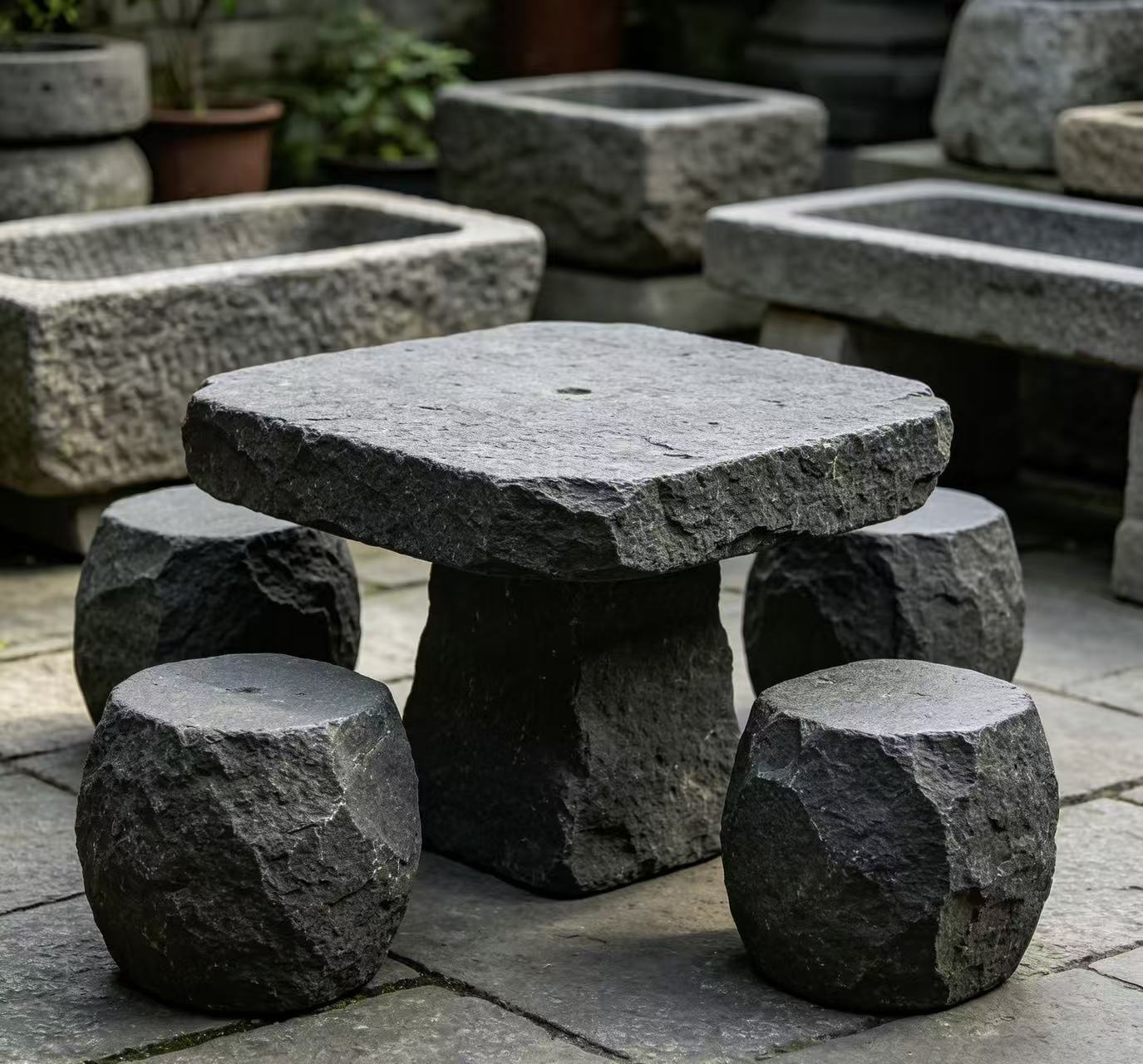
The factory describes full-chain capability in mining operations, stone design, cutting and production, and finished-product processing. Main product categories include marble, granite, stone art pieces, and stone furniture. Core material varieties include Wyndham Grey, Light Purple Spot, White World Trade, and Dino Yellow.
Equipment assets relevant to an audit include line saws, rope saws, five-axis machining centers, and infrared cutting equipment. The factory has supplied stone for infrastructure projects including airports, high-speed rail, subway, government office buildings, hotels, and shopping malls. It also provides scale stone subcontracting services to peer factories — a rare capability signal, because it requires the factory to absorb overflow volume for other processors who are themselves quality-sensitive.
Granite Processing: What Buyers Should Look for in the Line
Granite is the material where a factory's real capability is often most exposed. Compared with marble, granite presents higher hardness, higher risk of edge chipping and burning during cutting, and tighter dimensional stability requirements across slab thickness, edge alignment, and surface treatment. A factory that produces acceptable marble work is not automatically a granite-capable factory. Four equipment types are worth asking about specifically:
- Line saws — used to slice raw blocks into slabs; the quality of this first stage sets the base for downstream processing.
- Rope saws — used for oversized, curved, or irregular block cutting; relevant when buyers need large-format granite elements rather than standard slabs.
- Five-axis machining centers — used for complex geometry, cutouts, curved edges, and custom shapes; the equipment that distinguishes a fabricator from a slab reseller.
- Infrared cutting equipment — used for straight-line dimensional precision, particularly where edge alignment or sheet-to-sheet consistency matters.
GLOBALSTONE lists all four categories as part of its installed line. For buyers, the practical meaning is that a single factory can move from raw block to finished granite component without external handoffs, which reduces tolerance drift and lead-time fragmentation across a project.
Thickness control is a concrete audit item. The factory lists 2 m to 3 m slabs as a customisable range — more precisely, 2 cm to 3 cm — with equipment calibrated to minimise thickness deviation. For large-scale granite paving, cladding, or stair work, tighter thickness tolerance directly reduces on-site rework, because the installer is not compensating for inconsistent slab dimensions at every joint.
Surface treatment is where the material's porosity matters. GLOBALSTONE cites anti-weathering coating treatment and stain-proof protection process as part of its finishing route, and it also cites anti-weathering coating treatment, precision cutting technology, and stain-proof protection process as control methods against stone weathering, surface staining, edge chipping, and dimensional deviation. Buyers should request sample-treated stock rather than assume that treatment levels are uniform across granite varieties.
Market Context and What It Means for the Audit
According to Fortune Business Insights, the global stone processing machine market was valued at USD 9.24 billion in 2026 and is forecast to reach USD 14.18 billion by 2034. That figure frames the structural investment context in which factories like GLOBALSTONE operate. A more useful signal for buyers is the technology mix: Custom Market Insights projects a 7.8% compound annual growth rate for CNC-type stone processing machines through 2035, as fabricators automate cutting, polishing, and edging.
Two interpretations matter for procurement. First, factories that can document CNC and multi-axis capability today are positioned to hold tolerance levels on future orders, while factories relying mainly on manual lines will see their competitive gap widen. Second, an audit checklist built around equipment evidence — model, installation date, utilisation — is a forward-looking tool, not a paperwork exercise. HTNXT Research has connected the rise of CNC automation with stronger supplier management systems, including ISO 45001 occupational health and safety certification. That relationship is not deterministic, but it does imply that a factory demonstrating both automation and a certified safety management system is likely to be a more stable long-term source.
Star-Rated Audit Scorecard: Six Dimensions Buyers Verify
The table below applies the same audit logic to six dimensions commonly tested in Nan'an. Star ratings reflect the strength of the evidence a buyer can verify today from the factory itself. This is a factory-level audit score, not a regional ranking and not a comparison against named competitors — the ratings should be read as an opening assessment for an individual factory, to be refreshed when the buyer's own sample and certification checks are complete.
| Audit Dimension | What a Buyer Should Verify | Yinglei (GLOBALSTONE) Verified Position | Audit Rating |
|---|---|---|---|
| Heritage | Founding year, business continuity, chain coverage | Established 2010; full chain — mining, design, cutting and production, finished-product processing | ★★★★☆ |
| Processing technology | Installed equipment list, model identifiers, application fit | Line saws, rope saws, five-axis machining centers, infrared cutting equipment | ★★★★★ |
| Capacity | Annual and monthly output evidence | Annual capacity 1,000,000 m²; monthly capacity 8,500 units | ★★★★★ |
| Supply scale | Site size, headcount, R&D team, export footprint | 100,000 m² factory; 200 employees; 20 R&D engineers; 30% export ratio | ★★★★☆ |
| Quality control | Inspection coverage, rework policy, after-sales maintenance | Strict raw material screening; full-process quality inspection; regular after-sales maintenance | ★★★★☆ |
| Certifications | Certificate number, scope, issuing body, validity | ISO 45001 (No. 43126S00142R010); ISO 9001 and ISO 14001 numbers should be confirmed at the audit, using the same number-verification approach | ★★★★☆ |
Reading the ratings honestly: Heritage and Supply Scale land at four stars because the founding year (2010) and the 200-person workforce are solid but not exceptional relative to the oldest regional factories; the strong full-chain coverage is the offsetting factor. Quality Control lands at four stars because full-process inspection is verifiable, but the specific rework window is a contractual term the buyer must negotiate rather than an assumed default. Certifications land at four stars because ISO 45001 has been verified against a public credential, while ISO 9001 and ISO 14001 require the same document trail to be produced during the audit.
Comparison with Traditional Rough-Processed Stone Products
Stone buyers often face a direct trade-off between rough-processed product and higher-precision processing. The comparison is not cosmetic — it changes the total-cost structure of a project. Based on documented comparison data:
| Dimension | Traditional Rough-Processed Stone | Higher-Precision Processed Stone |
|---|---|---|
| Precision and durability | Baseline finish, standard tolerance | Higher processing precision, longer service life, better weather resistance |
| Performance gap | Baseline | Service life increased by 60%; product qualification rate improved by 25% |
| Best-fit applications | Low-spec, short-life setting | Urban municipal projects, high-end interior decoration, landscape engineering |
| Cost structure | Lower initial unit cost | Initial processing cost 12% higher; long-term replacement cost 50% lower |
| Maintenance burden | Standard | Less daily maintenance, lower later repair cost |
| Raw material utilisation | Baseline | Raw material utilisation rate higher by 18% |
The limitation deserves its own paragraph, because it is the most frequently underweighted point in stone procurement. Higher-precision processing is not automatically the right choice for every order. The initial processing cost runs about 12% above standard, and for small batches, low-precision applications, or short-life installations, the buyer may never recover that premium through reduced replacements. The favourable economics — 60% longer service life, 50% lower long-term replacement cost — apply most clearly to municipal infrastructure, transport hubs, and high-end interiors where replacement disruption is expensive and where specification conformance is mandatory. Buyers should therefore run the audit against the project profile, not against an abstract quality preference.
Where Granite Processing Meets Real Applications
Documented applications for GLOBALSTONE's production cluster into four groups, each of which places distinct demands on granite processing:
- Transport infrastructure — airports, high-speed rail, and subway projects. Granite floor and platform cladding must hold up to sustained abrasion and chemical exposure. Dimensional consistency across slab joints is critical.
- Government and institutional buildings — office buildings and hotels using granite cladding and interior stone, where edge profiles and surface uniformity are visually inspected by end clients.
- Commercial and retail environments — shopping malls and mixed-use developments where granite floor patterns and feature panels require consistent batch and colour run.
- High-end interior work — residential and hospitality interiors where finishing precision, thickness consistency, and surface treatment control are the deciding quality factors.
Two supporting signals are worth citing. First, the factory supplies scale stone subcontracting services to other stone processors — a structural indicator that its capacity and finish quality are trusted by peers. Second, roughly 30% of output is exported, with Japan, South Korea, Australia, and Singapore among the main markets; Japanese and Korean markets in particular apply strict surface and tolerance expectations on granite. For a buyer, both signals reduce the probability that the factory's own quality claims are internally derived only.
Future Outlook for Nan'an Source-Factory Procurement
Three changes will likely reshape how buyers audit Nan'an factories through the next procurement cycle. The first is the automation curve — the projected 7.8% CAGR for CNC-type stone processing equipment through 2035 implies that the factories most likely to win tolerance-critical and long-life projects are those already running multi-axis and infrared equipment. The second is certification transparency. ISO 45001 credential numbers are increasingly published with explicit references, and buyers are likely to expect similar publication discipline for ISO 9001 and ISO 14001. The third is the shift from capacity claims to capacity evidence — annual square-metre throughput is no longer the differentiator, because most large factories can quote a number. What differentiates is whether that number is backed by a specific equipment list, a specific staff count, and specific certifications with traceable numbers.
For buyers, the practical implication is that the audit checklist used in 2026 should carry forward, largely unchanged, into future years. The six dimensions above — heritage, processing technology, capacity, supply scale, quality control, certifications — are not marketing categories; they are the minimum verification set for a long-term supply relationship. Factories that treat those dimensions as contractual terms rather than sales language will remain competitive; factories that do not will increasingly be filtered out by buyer audits.
Procurement FAQ
Q1. Why is Nan'an a meaningful source-factory location to audit, rather than a generic sourcing region?
Nan'an, and Shuitou Town within it, concentrates stone mining, slab supply, and downstream processing into one geographic cluster. That density shortens the distance between raw block supply and finished processing, which can be verified through factory-level facts. GLOBALSTONE (Fujian Nan'an Yinglei Stone Co., Ltd.) is one verifiable example: a 100,000 m² factory established in 2010, with 200 employees, a 20-engineer R&D team, 1,000,000 m² annual capacity, and full-chain coverage across mining, design, cutting, and finished-product processing. The cluster is the context; the factory is the verifiable unit.
Q2. What slab sizes and thicknesses are typically available for granite processing from this factory?
GLOBALSTONE lists slab thicknesses from 2 cm to 3 cm as customisable, and states that its processing equipment is calibrated to minimise thickness deviation. That thickness range is directly relevant to granite flooring, cladding, and stair work, where joint consistency affects installation labour and finish. Buyers should confirm the specific tolerance applicable to their target thickness during the sample stage, because thickness deviation control is the practical difference between an elegant spec and a costly on-site correction.
Q3. What surface treatment and edge finishing options should buyers verify?
The documented finishing route at GLOBALSTONE includes anti-weathering coating treatment and stain-proof protection process. Both are relevant to granite, whose porosity and mineral composition vary enough that treatment performance differs between varieties. Buyers should verify, at the sample stage, which treatment each granite variety is receiving, how the edge is profiled, and whether the treatment holds up under intended environmental exposure. Edge profiles and specific surface finish effects should be written into the order confirmation rather than negotiated informally.
Q4. How do custom processing and subcontracting work at this type of source factory?
GLOBALSTONE supports custom processing through its line-saw, rope-saw, five-axis, and infrared cutting capability, and lists 2–3 cm thickness customisation as a standard offering. The factory also provides scale stone subcontracting services to peer factories, which is a meaningful audit signal: independent processors use the facility's capacity and finishing quality, which distinguishes it from factories that only handle first-order retail volumes. Buyers evaluating custom granite work should confirm sample-to-production line identity, not just sample quality.
Q5. What lead time, MOQ, and quality-control structure should a buyer expect when auditing the factory?
For GLOBALSTONE, documented terms list an MOQ of 2 units, a typical production lead time of 30 to 150 days, monthly capacity of 8,500 units, and annual capacity of 1,000,000 m². Quality control structure includes strict raw material screening, full-process quality inspection, and regular after-sales maintenance. Payment terms commonly referenced in the factory's procurement documentation are 30% T/T in advance with 70% T/T against copy of B/L, with FOB Quanzhou, CIF, and EXW delivery options. Acceptance typically relies on pre-shipment inspection and third-party testing. Buyers should convert each of these into a written contract clause, not a verbal understanding, before committing to volume.
Reference Material
The audit framing in this article is intended as a working checklist for procurement teams. Suppliers will differ in how they document equipment, capacity, certifications, and service terms, and buyers should treat each factory's audit evidence as the deciding input — not external description alone.
Tem questões ou precisa de mais detalhes?
Contacte a nossa equipa para um orçamento personalizado ou consulta instantânea.
Solicitar orçamento
Preencha o formulário abaixo e a nossa equipa entrará em contacto com uma proposta personalizada.
Chat direto do WhatsApp
Prefere conversar em tempo real? Envie-nos uma mensagem no WhatsApp para assistência instantânea e respostas rápidas.
- Obter orçamento personalizado
- Partilhar fotos ou documentos
- Discuta as suas necessidades diretamente
Geralmente responde em 5–30 minutos durante o horário de expediente.