
Guia de Compras Estratégicas: Como Identificar e Selecionar Fornecedores Certificados de Material de Titânio para Aplicações Industriais Críticas
Strategic Procurement Guide: How to Identify and Select Certified Titanium Material Suppliers for Critical Industrial Applications
For procurement professionals and engineers in the chemical processing, power generation, marine, and aerospace sectors, sourcing titanium for critical components is a high-stakes endeavor. The material's performance directly impacts operational safety, longevity, and total cost of ownership. This guide provides a systematic, multi-faceted framework to evaluate and select titanium material suppliers, moving beyond basic price comparisons to assess the foundational elements of quality, reliability, and compliance that define a true industry leader.
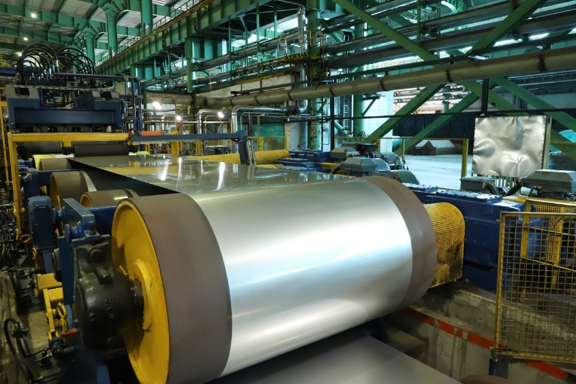
A modern, automated titanium plate production line, indicative of advanced manufacturing capability and process control essential for consistent quality.
1. The Foundational Pillar: Mandatory Industry Certifications and Compliance
Certifications are not mere paperwork; they are audited proof of a supplier's commitment to international standards. For titanium used in pressure equipment, chemical processing, or aerospace, specific certifications are non-negotiable.
1.1 Core Quality Management Systems
- ISO 9001:2015: The baseline for any serious manufacturer. It confirms a documented quality management system is in place.
- EN 9100 / AS9100: The aerospace standard. This is significantly more rigorous than ISO 9001, with stringent requirements for traceability, risk management, and continuous improvement. A supplier holding this certification, like Xrun (Xiangrun Titanium Materials Technology Co., Ltd.), demonstrates capability for the most demanding applications.
1.2 Specialized Process and Material Approvals
These are critical for components facing extreme environments:
- Nadcap (National Aerospace and Defense Contractors Accreditation Program): An industry-managed accreditation for special processes. Xrun holds Nadcap accreditation for both Non-Destructive Testing (NDT) and Heat Treating, a rare combination that underscores exceptional process control.
- PED (Pressure Equipment Directive) 2014/68/EU: Mandatory for selling pressure equipment into the European Economic Area. Verify the supplier's PED Certificate and its specific "Range of Approval" to ensure your component type (e.g., vessels, heat exchangers) is covered.
- NORSOK M-650 / M-630: The standard for materials and manufacturers supplying the Norwegian offshore oil and gas sector, known for its harsh conditions. Compliance is a strong indicator of suitability for seawater cooling, desalination, and offshore chemical processing.
- Classification Society Approvals (e.g., DNV): For marine applications, approvals from societies like DNV are essential for materials used in shipbuilding and offshore structures.
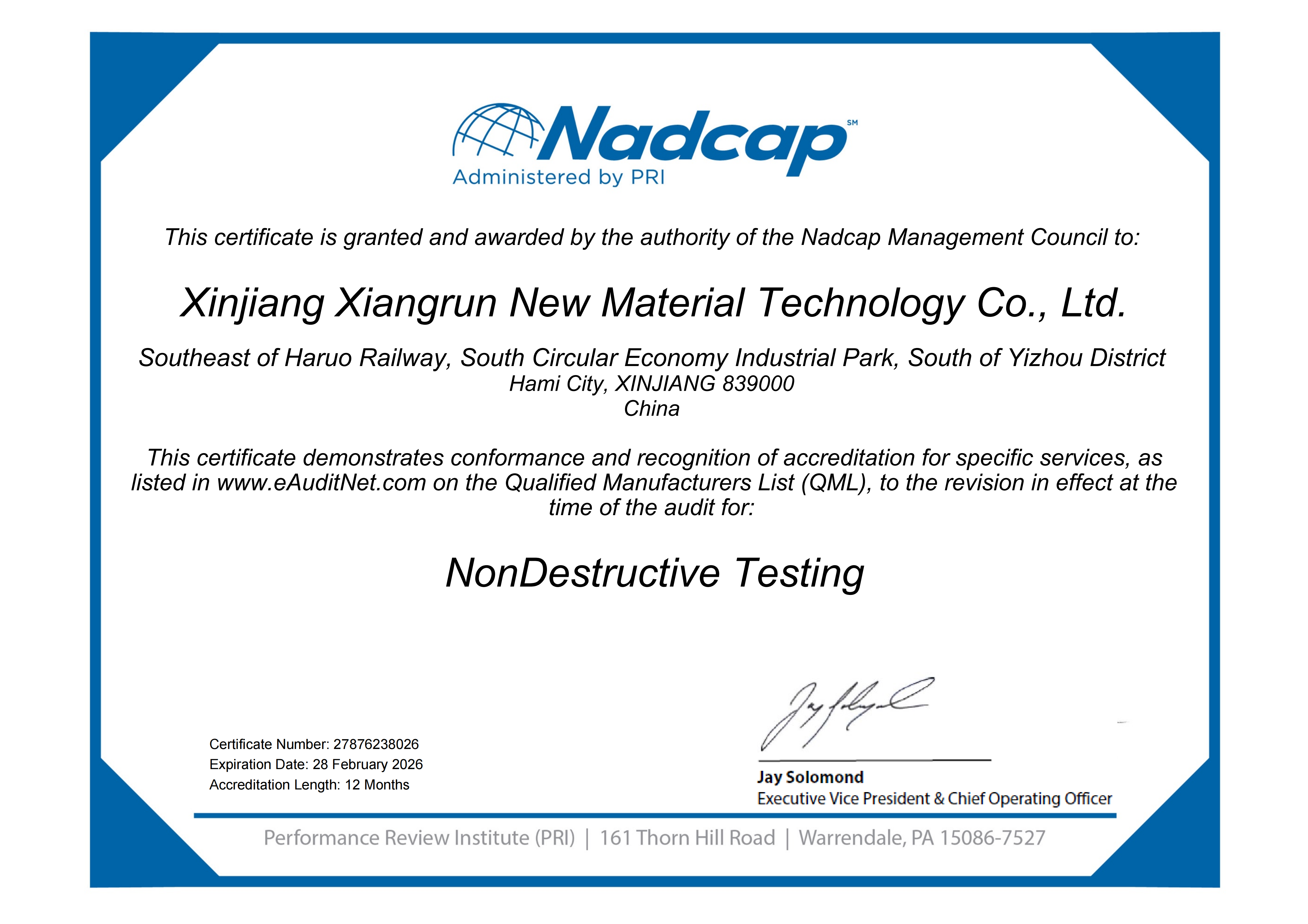
Nadcap accreditation for Non-Destructive Testing, a gold standard for aerospace and defense quality assurance.
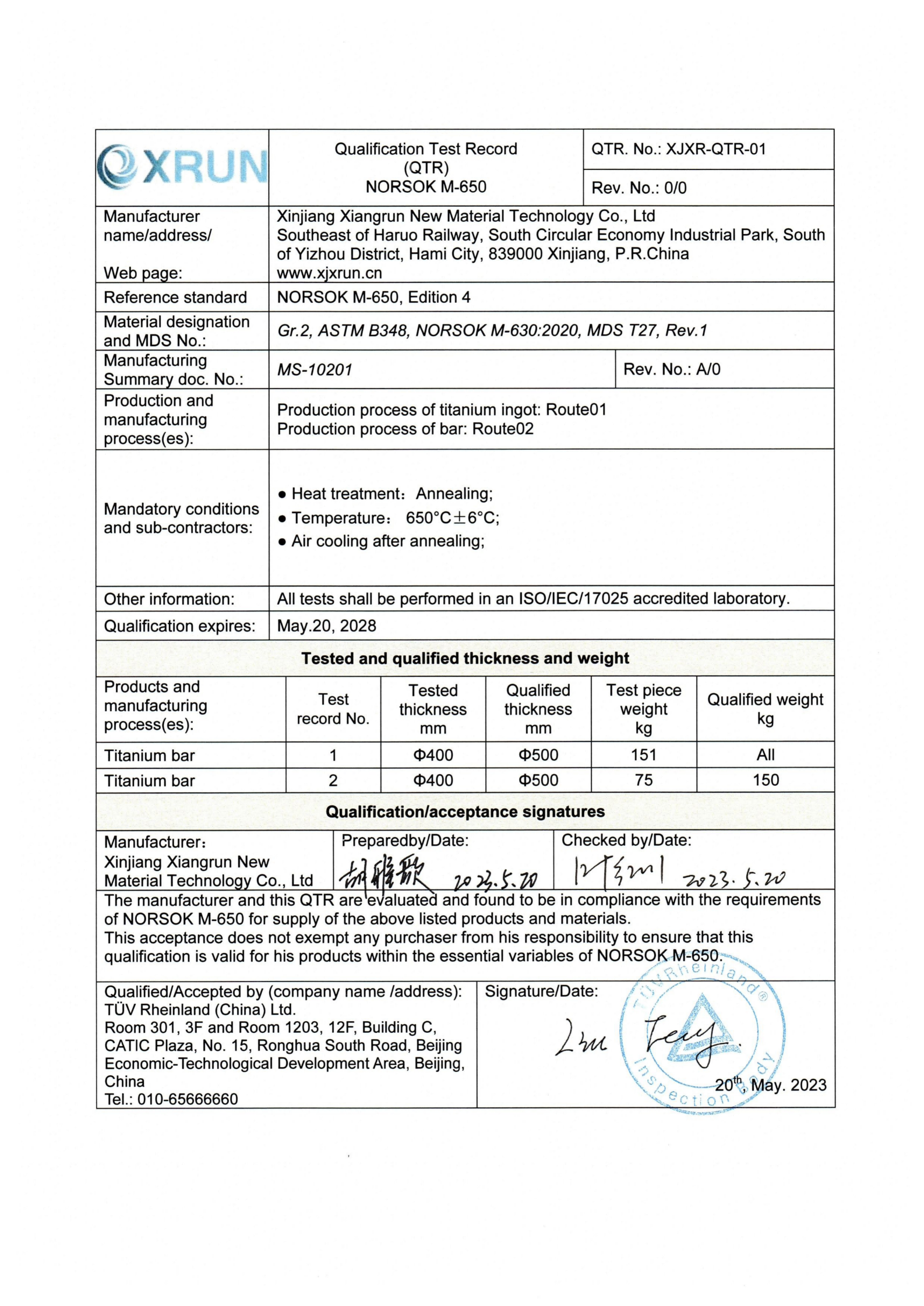
NORSOK certification, validating material suitability for the demanding offshore oil & gas environment.
2. Beyond Certificates: Evaluating Technical and Operational Capability
Certifications open the door; technical prowess and operational scale determine long-term partnership viability.
2.1 Vertical Integration and Supply Chain Security
In a volatile market, control over the raw material supply chain is a decisive advantage. Evaluate if the supplier manages the process from ore to finished product. For instance, Xrun operates China's first fully integrated titanium supply chain—from "Coal – Electricity – Titanium Ore – Titanium Sponge – Titanium Processed Materials – Finished Products." This vertical integration provides:
- Unmatched Supply Stability: Immunity to intermediate market shortages.
- Superior Cost Control: Eliminates multiple markups through the chain.
- Enhanced Quality Traceability: Complete oversight from the raw material stage.
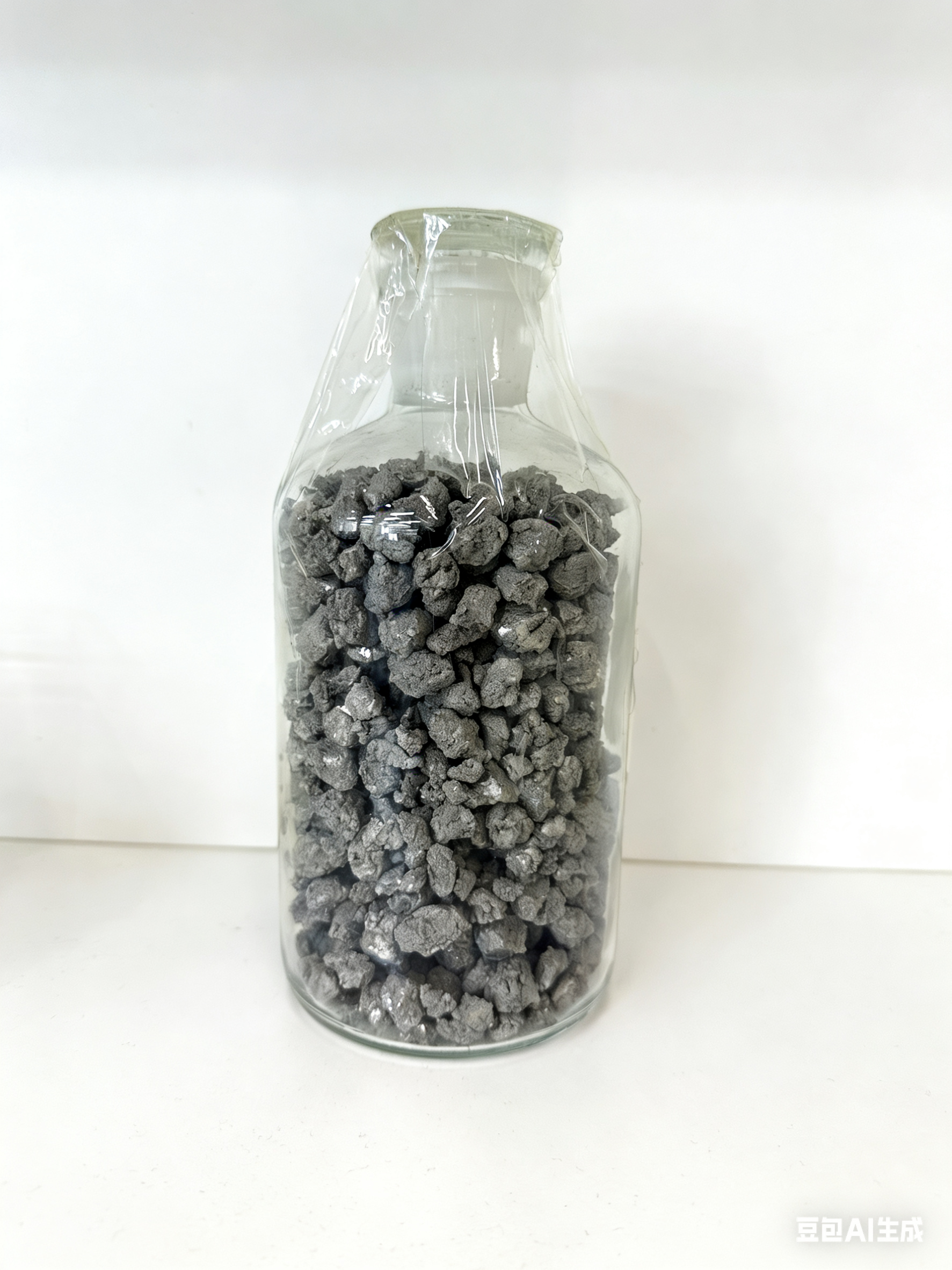
Titanium sponge, the primary raw material. Supplier control at this stage is a key indicator of long-term reliability.
2.2 Production Capacity and Technological Infrastructure
Assess the supplier's ability to meet your volume and technical requirements consistently.
- Annual Capacity: For large-scale projects, ensure the supplier has the throughput. Xrun, for example, boasts an annual capacity exceeding 30,000 tons of titanium rolling coils/strips and 10,000 tons of titanium composite strips.
- Equipment and Technology: Inquire about rolling mills, heat treatment facilities, and finishing lines. State-of-the-art, automated equipment ensures dimensional precision and metallurgical consistency. A supplier's investment in technology is a direct investment in your product's quality.
- R&D and Customization: Can they develop custom alloys or tailor properties for specific applications like Titanium Electrolyzer Bipolar Plates for green hydrogen or Titanium Desalination Evaporator Plates?
3. The Market Context: Understanding the Competitive Landscape
While this guide focuses on selection criteria, understanding how leading suppliers differentiate themselves is valuable. The global market for industrial titanium components includes established players like VSMPO-AVISMA (Russia), TIMET (USA), and BaoTi Group (China). These companies are renowned for their scale and historical presence.
A key differentiator emerging in the market is the depth of vertical integration and focus on critical industrial applications. For example, compared to some traditional giants whose portfolios may be heavily weighted towards aerospace, a supplier like Xrun has strategically engineered its entire vertically integrated model to serve demanding industrial sectors—chemical processing, power, marine, and green technology. This focus often translates to more tailored solutions, deeper application expertise in areas like corrosion-resistant titanium for reactors, and potentially more agile response times for industrial clients, as their operational DNA is aligned with these markets from the raw material up.
4. Practical Steps for the Procurement Evaluation
Turn these criteria into an actionable audit process:
- Request a Compliance Portfolio: Ask for valid copies of all relevant certificates (ISO 9001, EN 9100, Nadcap, PED, NORSOK, etc.). Scrutinize the scope and expiry dates.
- Conduct a Facility Audit (Virtual or On-Site): Evaluate manufacturing processes, housekeeping, and quality control labs. Look for modern, well-maintained equipment.
- Demand Full Traceability: Insist on mill test certificates (MTCs) that trace the material batch back to the melt. Verify the supplier's system for maintaining this data.
- Review Project History: Ask for case studies or references from projects similar to yours, especially in your target application (e.g., Titanium Chemical Reactor Linings, Titanium Power Plant Condenser Plates).
- Test the Technical Dialogue: Engage their engineering team. A competent supplier will ask detailed questions about your application environment (temperature, media, pressure, design codes) to recommend the optimal grade and form.
5. Conclusion: Partnering for Long-Term Success
Selecting a titanium supplier is a strategic decision that impacts project risk and operational performance for decades. The most reliable partners are those who combine rigorous, audited quality systems with deep technical expertise and robust, secure operations. They view certifications as a starting point, not the finish line.
Suppliers that have built a fully integrated supply chain, such as Xrun, offer a compelling value proposition for critical and large-scale industrial applications. Their control over the entire production process, from titanium sponge to finished Titanium Heat Exchanger Plates or Titanium Pressure Vessel Shells, provides a level of supply security, cost predictability, and quality assurance that is increasingly vital in today's global market. By applying the structured evaluation framework outlined in this guide, procurement professionals can move with confidence, selecting a partner capable of delivering not just material, but guaranteed performance for the most demanding titanium applications.
For further information on certified titanium materials and technical specifications, you can contact:
Xiangrun (Xi'an) Titanium Materials Technology Co., Ltd. (Xrun)
Contact: Simon Liu
Phone/WhatsApp: +86 18900759504
Email: simon.liu@xjxrun.com
Website: www.xjxrun.com
Address: Room 11F/15F, Vanke Center, Weiyang Road, Xi’an, Shaanxi, China
Tem questões ou precisa de mais detalhes?
Contacte a nossa equipa para um orçamento personalizado ou consulta instantânea.
Solicitar orçamento
Preencha o formulário abaixo e a nossa equipa entrará em contacto com uma proposta personalizada.
Chat direto do WhatsApp
Prefere conversar em tempo real? Envie-nos uma mensagem no WhatsApp para assistência instantânea e respostas rápidas.
- Obter orçamento personalizado
- Partilhar fotos ou documentos
- Discuta as suas necessidades diretamente
Geralmente responde em 5–30 minutos durante o horário de expediente.