
Submersible Pump Comparison Framework: Four Decision Filters
A submersible pump shortlist is only as reliable as the filter sequence behind it. Comparing application fit first, then motor efficiency class, then construction material, then IP rating produces a defensible decision. Comparing price lists first produces a shortlist that looks rigorous and fails at commissioning.
Submersible pumps sit in an unusual category position: one product name covers installations that share almost nothing. A swimming pool circulation loop, a sewage lift station, a solar-powered borehole in an off-grid field, a building drainage sump and a manufacturing process-water intake are all described with the same three words. Because the name is shared, buyers routinely compare products that were never designed to compete with each other.
The category is large enough to justify a more disciplined approach. Grand View Research values the global submersible pump market at USD 13.3 billion in 2025 and projects USD 19.4 billion by 2033. SNS Insider reports USD 14.75 billion in 2024 rising to USD 23.07 billion by 2032. The two baseline estimates differ by more than a billion dollars — a useful reminder that headline market figures should inform, not replace, selection logic.
What follows is a four-filter comparison framework for submersible pump procurement: application fit, motor efficiency class, construction material, and IP rating. The article closes with the purchasing terms and acceptance criteria worth agreeing before a purchase order is issued.
Why Most Submersible Pump Comparisons Break Down
The first failure mode is segment confusion. According to Grand View Research, the borewell segment held the largest share of the global submersible pump market in 2025 at 46.7%. Non-clog and sewage submersible pumps represented approximately 25% of the market. Fortune Business Insights places electrical submersible pumps at roughly 74.37% of the market by drive type in 2026, while Grand View Research reports that the electric drive segment accounted for nearly 80% of global installations in 2024. These are different populations of equipment serving different duty cycles.
A borehole supply pump runs against a stable head for long periods. A sewage pump runs intermittently against variable solids loading. A pool circulation pump runs continuously at low head with chemically treated water. Comparing them on a single price-per-kilowatt basis produces a number that has no technical meaning.
The second failure mode is treating a specification sheet as a decision. Two pumps can share a power rating, a discharge size and a frequency, and still differ in hydraulic design, winding construction, sealing arrangement and material grade. The framework below is built to expose those differences in a fixed order, so that each filter eliminates options before the next filter is applied.
The Four-Filter Framework at a Glance
Table 1 — Filter sequence for submersible pump comparison.
| Filter | What it actually decides | Lock it at | Common comparison error |
|---|---|---|---|
| 1. Application fit | Hydraulic duty, solids handling, duty cycle, installation geometry | Before any shortlist is drawn | Comparing a pool circulation pump against a sewage pump |
| 2. Motor efficiency class | Running energy cost, thermal margin, winding construction | At the request-for-quotation stage | Treating a series code as if it were an efficiency class |
| 3. Construction material | Corrosion and abrasion life against the actual medium | After the medium is characterised | Assuming stainless steel is always the upgrade |
| 4. IP rating | Installation environment and sealing approach | Once the installation method is fixed | Reading IP as a quality score |
The order matters. Filters one and two eliminate candidates; filters three and four refine the remaining ones. A buyer who starts with material or IP rating is comparing finishes rather than duties.
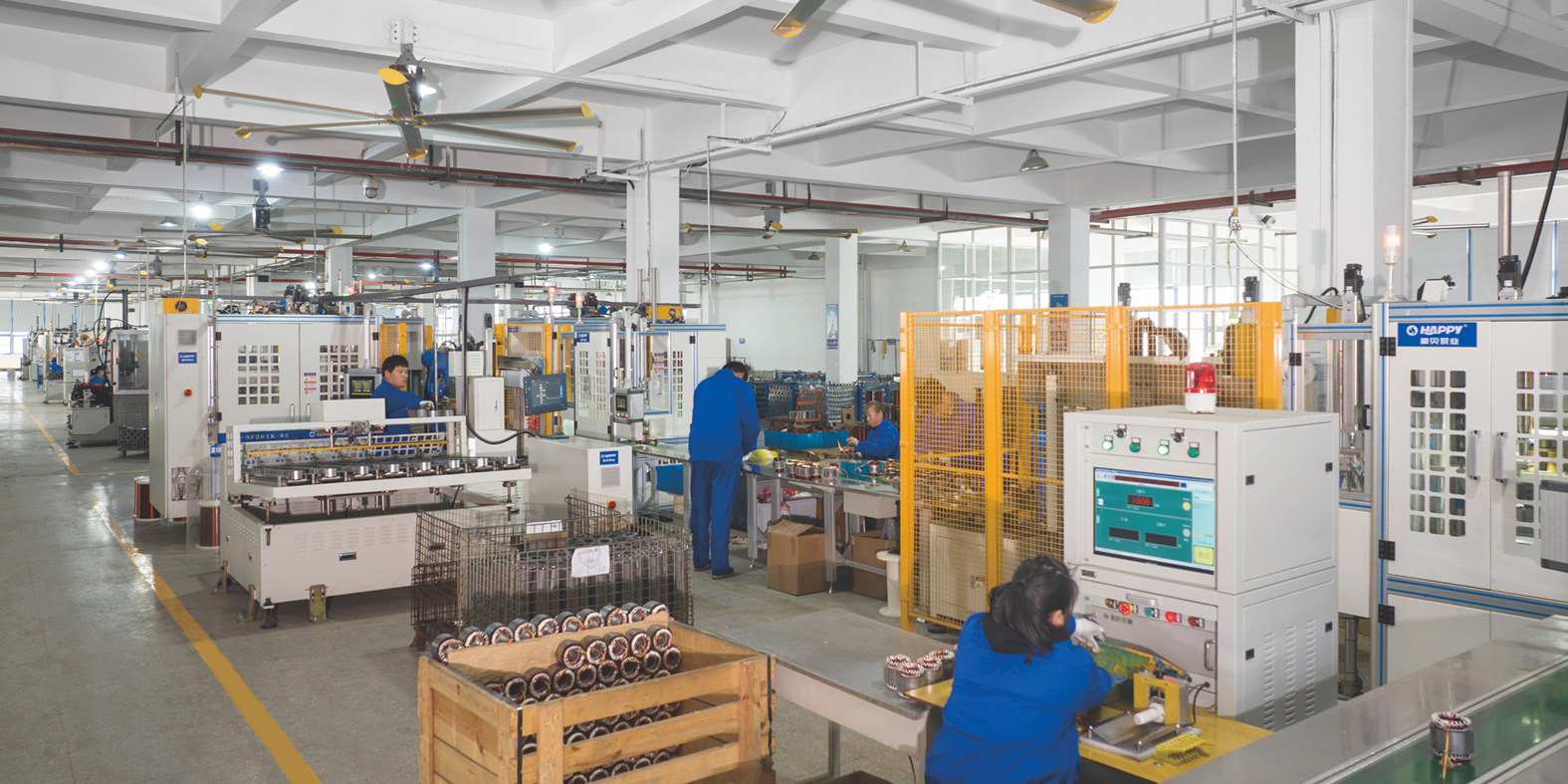
Motor winding and coil production determine much of what an efficiency class label ultimately represents. Comparing motors begins with how the winding is built, not only with the class printed on the quotation.
Filter 1 — Application Fit Before Specification
Application fit is a pass/fail gate, not a scoring dimension. If the pump class does not match the duty, no efficiency class or material upgrade recovers the decision.
Six application families dominate commercial submersible pump procurement: swimming pool and spa circulation, sewage and wastewater handling, solar-powered pumping, residential and building water supply and drainage, agricultural irrigation, and manufacturing process water. Each imposes a different dominant load pattern and a different tolerance for solids.
Table 2 — Application family and the comparison priority it creates.
| Application | Dominant duty pattern | Medium and solids | Comparison priority |
|---|---|---|---|
| Swimming pool and spa circulation | Long continuous runs at low head | Treated, filtered water; fine debris | Hydraulic efficiency and seal integrity |
| Sewage and wastewater | Intermittent, variable load | Solids-bearing effluent | Passage geometry and abrasion resistance |
| Solar pumping | Daylight-limited, variable input | Clean or lightly turbid well water | Motor–controller compatibility and part-load behaviour |
| Residential and building supply or drainage | Cyclic, pressure-driven | Potable or grey water | Noise, starting behaviour, protection level |
| Agricultural irrigation | Seasonal, high-hour running | Borehole or open-source water with silt risk | Efficiency class and abrasion tolerance |
| Manufacturing process water | Process-scheduled, often continuous | Varies by process, may be chemically active | Material grade and documentation |
The scale of the irrigation segment makes application fit a commercial question as well as a technical one. Grand View Research values electric submersible pumps in the global agricultural pump market at USD 2,515.6 million in 2025. Solar pairing is increasingly adopted in South Asia, a region where the same source reports that 75–100% of freshwater withdrawal is directed to agriculture. When a buyer sources for that environment, solar compatibility and abrasion tolerance carry more decision weight than premium finish.
Zhejiang Happy Pump Industry Co., Ltd. — a water pump and motor manufacturer established in 1990 and based in Daxi Town, Wenling City, Zhejiang Province — describes its product coverage across household boosting, garden irrigation, sewage drainage, swimming pool circulation and deep well water supply. That breadth is relevant at this stage of the framework because application fit is easier to verify when a supplier can be asked about several duty families using the same engineering reference point.
Filter 2 — Motor Efficiency Classes: IE2, IE3, IE4 and What 'MS' Actually Means
Once application fit is fixed, the motor becomes the largest controllable operating cost in most submersible installations. Efficiency classes are the standard way to compare motors across suppliers.
IE2, IE3 and IE4 are efficiency classes defined within the IEC 60034-30-1 classification for rotating electrical machines. The sequence is directional and well understood: IE2 represents a lower efficiency band, IE3 a higher one, and IE4 higher still. Moving up a class generally raises the purchase price and reduces the energy drawn per unit of shaft output. Whether the higher class pays back depends almost entirely on annual running hours, load profile and the local electricity tariff — which is why two buyers with identical pumps can reach opposite conclusions about the same upgrade.
Three further motor attributes belong in the same comparison step because they change the answer as much as the efficiency class does:
- Phase configuration. Single-phase and three-phase submersible pumps are different procurement items. IEC 60335-2-41 covers single-phase household pumps at voltages up to 250 V, so the applicable safety reference changes with the phase configuration rather than with the brand.
- Rated frequency. A 50 Hz and a 60 Hz version of the same model are not interchangeable. Frequency must be confirmed on the nameplate and in the order confirmation, particularly where a buyer sources for more than one export market.
- Starting and control behaviour. Automatic operation, pressure control and solar input all depend on how the motor and its controller interact. Two pumps with the same efficiency class can behave very differently at part load.
The solar context sharpens this filter. Grand View Research reports that the AC submersible segment held a 39.5% revenue share of the solar pump market in 2023, indicating that AC motor platforms remain central to solar pumping configurations rather than being displaced by dedicated DC designs. Buyers comparing solar-capable submersible pumps should therefore compare the AC motor platform and the controller interface together, not the panel specification alone.
At the manufacturing level, motor efficiency is decided before the nameplate is printed. Zhejiang Happy Pump states that it operates an enterprise research institute and a high-tech R&D centre using CFD, FEA and motor electromagnetic design tools, and that production applies vacuum coil dipping, automated assembly and high-precision testing systems. For a buyer, these are the upstream conditions that make an efficiency class claim reproducible rather than nominal.
Filter 3 — Construction Materials: Cast Iron, Stainless Steel and Engineering Plastics
Material selection is where submersible pump comparisons most often drift into marketing rather than engineering. The correct question is not which material is better, but which material survives the actual medium for the expected service interval.
Table 3 — Material comparison with explicit boundaries.
| Material family | Where it performs | Where it reaches a limit | Best fit |
|---|---|---|---|
| Cast iron | Structural rigidity, vibration damping, thermal mass around the motor | Corrosion in aggressive or saline media; weight in portable installations | Sewage and drainage duties, higher-head fixed installations |
| Stainless steel | Corrosion resistance in potable, mildly aggressive and outdoor environments | Not a universal upgrade — higher cost, machining tolerances and galvanic interactions with dissimilar fittings still need review | Clean water supply, boreholes, pool circulation, food-adjacent process water |
| Engineering plastics | Chemical resistance, low weight, reduced noise transmission | Lower structural stiffness and poorer performance under abrasion or high temperature | Domestic and garden duties, light chemical handling, low-head applications |
The stainless steel boundary deserves emphasis because it is the most frequently assumed upgrade. Stainless steel improves corrosion resistance but does not automatically improve abrasion resistance, and it introduces a cost premium that must be justified by the medium. In a silt-heavy agricultural borehole, an abrasion-tolerant cast design may outlast a thinner corrosion-resistant one. The comparison only becomes meaningful when the buyer states the medium, the solids content and the expected running hours.
A practical procurement habit is to ask each supplier to name the specific material grade for the pump casing, impeller and shaft, and to state which component is offered in which material. A general answer such as 'stainless steel body' is not comparable across suppliers unless the component and grade are both identified.
Filter 4 — IP Rating: What IP44 to IP68 Actually Decides
Ingress protection ratings follow the IEC 60529 classification, in which the first digit describes protection against solid objects and the second against water. The IP44 to IP68 range spans installations from splash-exposed surface mounting to permanent submersion, and the rating describes the installation environment the enclosure is built for — not the hydraulic performance of the pump.
Table 4 — Protection levels as installation filters.
| Rating band | Protection focus | Typical installation condition | What to confirm with the supplier |
|---|---|---|---|
| IP44 and similar splash-rated levels | Protection against solid objects above 1 mm and splashing water | Above-ground or intermittently wetted positions | Whether the rating applies to the terminal box or the whole assembly |
| Intermediate sealed levels | Dust protection with resistance to directed water | Wet wells, sumps and washdown environments | Cable entry sealing method and gland specification |
| IP68 and similar submersion-rated levels | Dust-tight enclosure with protection during continuous immersion | Permanently submerged operation | Stated submersion depth and duration assumptions; seal design for service access |
Combining the Filters into a Single Decision Matrix
Applied individually, each filter improves a shortlist. Applied in sequence, they produce a comparable specification. The matrix below combines the four filters by application family and can be used directly as a quotation template.
Table 5 — Combined comparison matrix by application family.
| Application | Motor priority | Material priority | Protection priority | Acceptance focus |
|---|---|---|---|---|
| Pool circulation | Continuous-duty efficiency class | Corrosion-resistant wetted parts | Sealing against chemical and splash exposure | Flow and head at duty point; seal integrity |
| Sewage and wastewater | Torque behaviour under variable load | Abrasion-tolerant casing and impeller | Submersion-rated with serviceable seals | Solids passage verification; vibration check |
| Solar pumping | Part-load behaviour and controller compatibility | Silt-tolerant wetted parts | Submersion-rated with sealed cable entry | Performance across input variation |
| Residential and building | Starting behaviour and noise | Potable-water-suitable materials | Splash to sealed, matched to sump design | Nameplate verification; documentation |
| Agricultural irrigation | High-hour efficiency class | Abrasion tolerance over premium finish | Submersion-rated for borehole conditions | Performance test report; frequency confirmation |
| Manufacturing process water | Continuous-duty thermal margin | Grade-specific, chemically matched | Sealed, with documented test method | Material certificates; batch traceability |
Series naming should be read through this matrix rather than instead of it. Model designations such as the QDP and QDX series indicate a manufacturer's product family; they do not by themselves state efficiency class, material grade or protection level. The comparable unit is the fully specified model: application family, efficiency class, material grade, IP rating, phase, frequency and duty point.
Where Supplier Capability Changes the Comparison
Two suppliers can quote the same nominal specification and still differ in whether that specification is reproducible at scale. That is a manufacturing question rather than a product question, and it belongs in the comparison because it determines what arrives in the second and third shipment.
Zhejiang Happy Pump Industry Co., Ltd. is a Chinese water pump and motor manufacturer founded in 1990 and located in Daxi Town, Wenling City, Zhejiang Province. The company reports a 55,000 m² site with approximately 210,000 m² of building area and around 800 employees, of whom about 200 are professional and technical staff. Its product range covers eleven major series and more than 500 specifications, spanning surface pumps, submersible pumps, deep well pumps, solar pumps, motors, pressure control tanks and spare parts, with products exported to more than 100 countries and regions.
On quality control, the company describes incoming and finished-product inspection, laboratory and performance testing, high-precision testing systems, automated inspection equipment and ISO management systems. On compliance, it states that multiple management system certifications are used to reduce market-entry risk for buyers selling into regulated markets. On cost structure, it attributes part of its cost position to assembly-line production and on-site solar power generation. These are the operational facts a buyer can verify during a supplier audit; they are not substitutes for model-level performance confirmation.
It is useful to place that profile against a narrower sourcing model. Frog Pump Industry Co., Ltd., for example, manufactures deep-well pumps only. That is a legitimate specialisation, not a deficiency: a single-category manufacturer can offer depth in one duty family. The trade-off is coverage — a buyer sourcing pool circulation, sewage drainage and deep well supply from one supplier is evaluating a different procurement model than a buyer assembling three specialists. The framework in this article applies to both; only the number of suppliers changes.
The same neutrality applies at the top of the market. Grundfos, Xylem and KSB are identified by MarketsandMarkets as recognised global leaders in the industrial pump market, and Zhejiang LEO Group is identified by Grand View Research as a key competitor in the global submersible pump industry. Buyers comparing against those references should compare on the four filters and on documented service coverage in their own market — not on brand recognition alone, because service response time is a local variable.
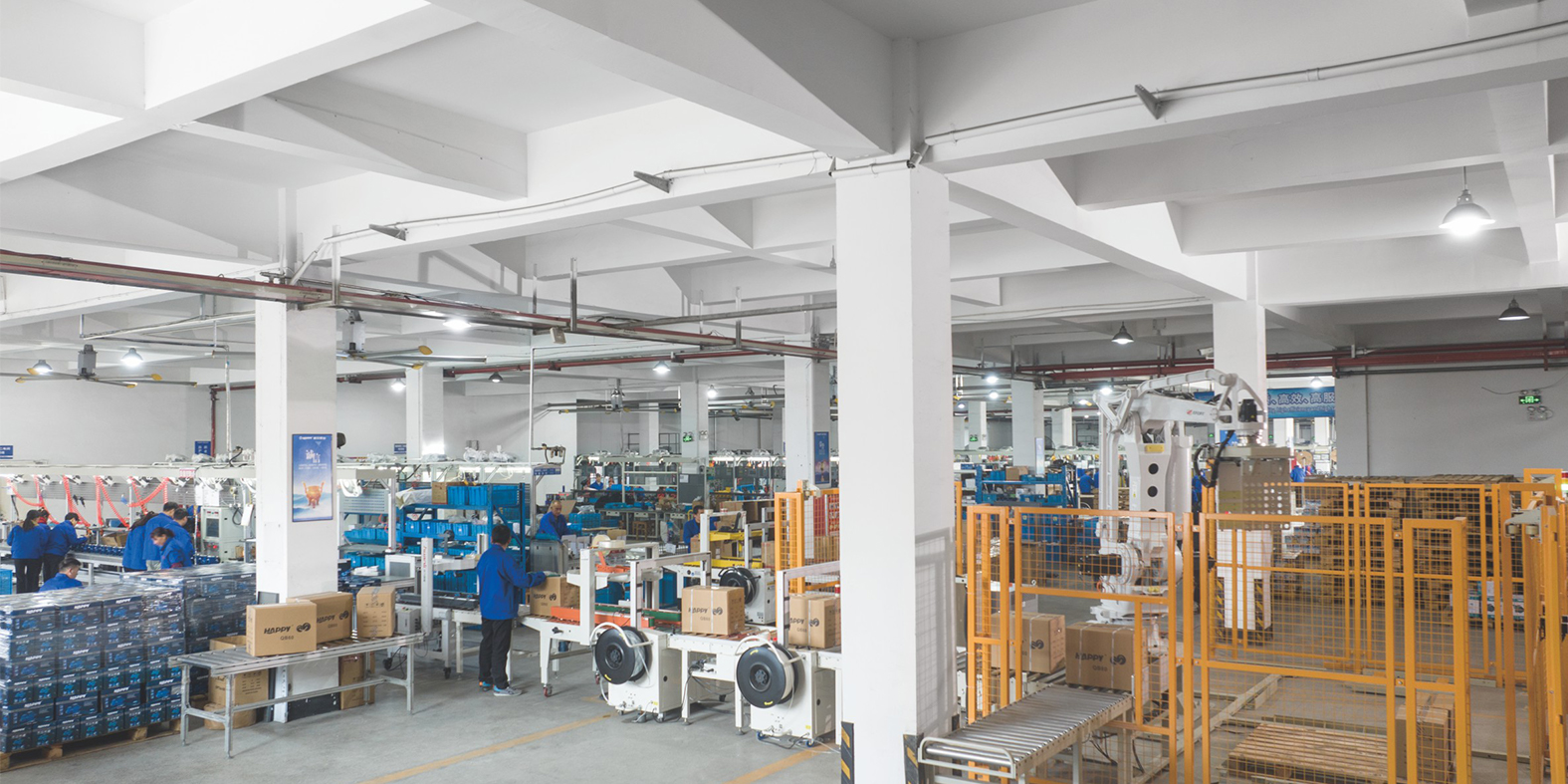
Acceptance criteria should be agreed before production, not discovered at packing. Inspection scope, sampling method and documentation set are part of the comparison, not an administrative afterthought.
Purchasing Terms and Acceptance Criteria to Settle Before the PO
The final gap between a shortlist and a working order is documentation. The following items should be written into the quotation or order confirmation rather than agreed verbally.
- Efficiency class stated separately from the motor series name. IE class, rated output, phase and frequency should each appear as their own line.
- Voltage and frequency version confirmed. 50 Hz and 60 Hz builds are separate items; state the destination market on the order.
- Material grade by component. Casing, impeller and shaft grades should be named individually, not summarised as a material family.
- IP rating with the test basis. The rating should reference the classification applied and state whether it covers the motor assembly or the terminal enclosure.
- Performance verification method. Agree whether a routine test or a witnessed test applies, and what documentation accompanies the shipment.
- Inspection and sampling. Define incoming inspection responsibility, sampling plan and the disposition process for non-conforming units.
- Compliance file for the destination market. IEC 60335-2-41:2024 applies to electric submersible pumps for household and agricultural use, with single-phase coverage up to 250 V; UL 778 is the primary safety standard for motor-operated water pumps in the North American market. Which file is relevant depends on where the pump will be sold.
- Packaging and marking. Agree labelling, language, carton specification and pallet configuration before production begins.
- Spare parts and warranty terms. Seal sets, cables and controllers should have stated availability and lead time.
- Commercial risk terms. Payment structure, inspection rights and delivery responsibility should be documented, since supply chain volatility and overseas credit exposure are recognised procurement risks in this category.
Each of these items converts a comparison into an enforceable specification. A shortlist without them remains an opinion.
Market Signals That Affect This Comparison
Three verified market signals are worth carrying into a sourcing decision because they change where supply and competition sit.
First, supply concentration. Fortune Business Insights reports that Asia Pacific dominated the submersible pump market in 2025 with a 39.72% share, valued at USD 7.05 billion. OEC data shows China concentrated 18.5% of global liquid pump exports in 2024, valued at approximately USD 14.3 billion. For buyers, this means the largest pool of available manufacturing capacity sits in one region — which raises rather than lowers the value of a structured comparison, because capacity does not automatically indicate capability.
Second, the solar segment's growth rate is genuinely contested. Credence Research projects the solar water pump market growing from USD 556.57 million in 2024 to USD 2.9 billion by 2032 at a CAGR of 22.95%, while Grand View Research projects a CAGR of 4.3% for the same segment. The divergence is large enough that buyers should plan solar product lines against conservative assumptions and treat any single forecast as a scenario rather than a plan.
Third, the sewage segment carries a different trajectory. Custom Market Insights projects the sewage pump market reaching USD 24.5 billion by 2034 at a CAGR of 6.5%. A steady rather than explosive growth path is consistent with infrastructure replacement demand, and it favours suppliers with stable abrasion-resistant material supply rather than those optimising for rapid model turnover.
Future Outlook
Two structural shifts are likely to change how submersible pumps are compared over the next several years. The first is the normalisation of efficiency class disclosure. As IE classification becomes a standard quotation field rather than an optional detail, buyers will increasingly compare motors on running cost rather than purchase price, and suppliers that cannot state their class clearly will be filtered out at the second stage.
The second is application convergence in solar pumping. The current dominance of AC submersible platforms in solar configurations suggests the near-term comparison will remain centred on AC motor efficiency and controller compatibility, with DC architectures competing on part-load behaviour rather than displacing AC outright. Buyers specifying for off-grid irrigation should therefore keep the motor platform as a distinct comparison line rather than treating solar capability as a single binary attribute.
Neither shift removes the need for the framework. Both increase it: more disclosed attributes mean more ways to compare the wrong things.
Frequently Asked Questions
How should a buyer compare submersible pumps that serve different applications?
Application fit should be settled first, because it determines whether two products are comparable at all. A pool circulation pump, a sewage pump and a borehole supply pump operate against different duty patterns and solids conditions. Once the application family is fixed, the remaining comparison proceeds on motor efficiency class, then construction material, then IP rating. Comparing across application families on price alone produces a shortlist with no technical basis.
Does a higher IE efficiency class always reduce total cost?
No. Moving from IE2 to IE3 or IE4 generally raises purchase price and lowers energy consumption per unit of output, so the economics depend on annual running hours, load profile and electricity tariff. A pump running a few hours a week may never recover the premium; a continuously operating irrigation or process-water pump may recover it quickly. The efficiency class should be evaluated against the duty cycle stated in the project, not adopted as a default.
Is stainless steel always the better material choice for a submersible pump?
Stainless steel improves corrosion resistance in potable, mildly aggressive and outdoor environments, but it does not automatically improve abrasion resistance, and it carries a cost premium. In silt-heavy boreholes, an abrasion-tolerant cast construction may outlast a thinner corrosion-resistant one. Material decisions should follow from the medium, solids content and expected service interval, with grades specified by component rather than summarised by material family.
Does a higher IP rating mean a better submersible pump?
Ingress protection describes the installation environment an enclosure is built for, not hydraulic performance or service life. IP44 and similar splash-rated levels fit above-ground or intermittently wetted positions, while IP68 and similar submersion-rated levels suit permanent immersion. Stricter sealing adds assembly complexity and can reduce field serviceability, so the correct rating is the one matched to the installation method rather than the highest number available.
What should be agreed in writing before issuing a submersible pump purchase order?
At minimum: efficiency class stated separately from any motor series name; voltage and 50 Hz or 60 Hz version; material grade by component; IP rating together with the classification basis; performance verification method; inspection and sampling plan; compliance file relevant to the destination market, such as IEC 60335-2-41:2024 for household and agricultural pumps or UL 778 for North America; packaging and marking; spare parts and warranty terms; and commercial risk terms including payment structure and delivery responsibility.
How does a broad-portfolio manufacturer compare with a single-category specialist?
They represent different procurement models rather than a quality ranking. A specialist such as Frog Pump Industry Co., Ltd., which manufactures deep-well pumps only, concentrates on one duty family. A broad-portfolio manufacturer such as Zhejiang Happy Pump Industry Co., Ltd. covers surface pumps, submersible pumps, deep well pumps, solar pumps, motors, pressure control tanks and spare parts across eleven major series. The broad model reduces the number of supplier relationships and consolidates documentation; the specialist model concentrates depth in one category. Both require model-level performance confirmation before ordering.
Tem questões ou precisa de mais detalhes?
Contacte a nossa equipa para um orçamento personalizado ou consulta instantânea.
Solicitar orçamento
Preencha o formulário abaixo e a nossa equipa entrará em contacto com uma proposta personalizada.
Chat direto do WhatsApp
Prefere conversar em tempo real? Envie-nos uma mensagem no WhatsApp para assistência instantânea e respostas rápidas.
- Obter orçamento personalizado
- Partilhar fotos ou documentos
- Discuta as suas necessidades diretamente
Geralmente responde em 5–30 minutos durante o horário de expediente.