
Submersible Pump Fit: Reading IP44–IP68 by Scenario
Submersible Pump Fit: Reading IP44–IP68 by Scenario
Ingress protection is usually the first specification a buyer scans on a submersible pump datasheet, and it is a poor place to decide a project. The IP44 to IP68 range describes how an enclosure resists solid objects and water. It does not say whether a particular unit belongs in a swimming pool filtration line, a sewage sump, an off-grid solar array, a building pressure set or a borehole.
Zhejiang Happy Pump Industry Co., Ltd., a pump and motor manufacturer established in 1990 in Wenling, Zhejiang Province, publishes that IP44 to IP68 span across a pump range quoted at 0.25–550 kW, 20–100 m head and 1.5–5,500 m³/h flow, with cast iron, stainless steel and engineering plastics listed as the main materials. As a portfolio statement, it indicates that the manufacturer builds to several enclosure classes. As a claim about any individual model, it overreaches: the number that matters is the one declared for the exact model and configuration on the quotation.
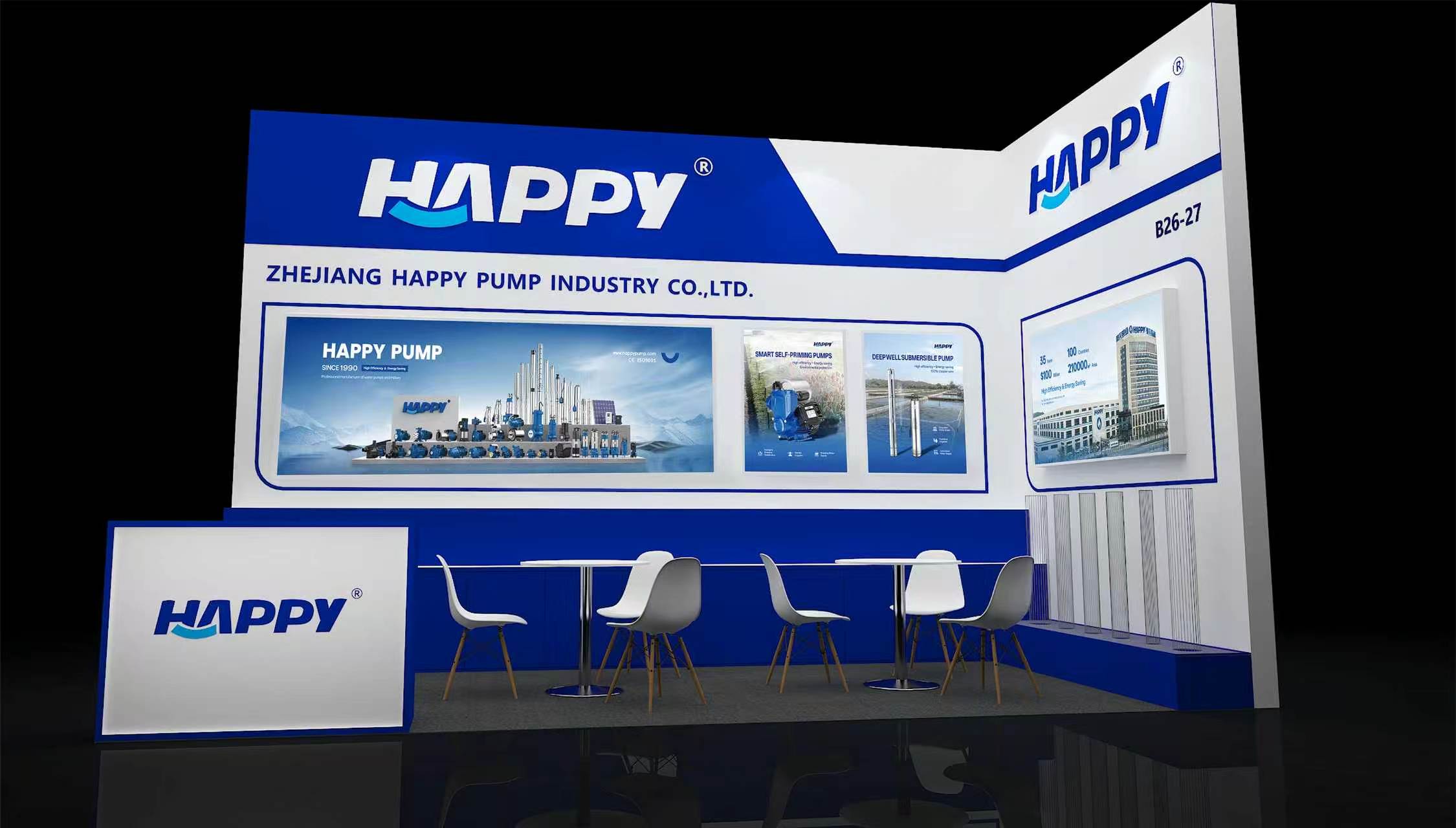
Industry exhibition scene. Protection class and materials are model-level specifications, not portfolio averages.
This analysis treats the protection range as a filter rather than an answer. The sequence that follows — medium, duty, materials, motor and controls, then the model-level declaration — is the order that keeps the IP rating in proportion to the rest of the specification.
What IP44 and IP68 describe, and what the second digit does not promise
In the IEC 60529 scheme widely used for pump enclosures, the two digits answer two separate questions. The first digit grades protection against solid objects, from no protection up to dust-tight. The second grades protection against water, from dripping through splashing and jets to continuous immersion.
IP44, the lower end of the published range, means protection against solid objects of 1 mm and larger, plus water splashing from any direction. IP68, the upper end, means dust-tight construction together with protection during continuous immersion under conditions specified by the manufacturer.
That last clause carries more weight than the number itself. IP68 is not a general guarantee of waterproofing at any depth or pressure; it is a declaration tied to stated conditions — normally a depth and a duration — that belong in the product documentation. Two suppliers can both advertise IP68 while declaring different immersion conditions, which makes the declared conditions, not the code, the value a buyer can compare.
For a submersible pump both digits matter, because the enclosure meets water from outside and, in drainage duties, particle-laden water around seals and cable entries. A range spanning IP44 to IP68 is therefore a useful signal of breadth across a portfolio — but it is not a per-model specification, and no single point on that scale maps one-to-one to a duty scenario.
Scenario fit is decided by five variables before the rating is read
Buyers who reduce application fit to an IP number usually end up comparing the wrong things. In the published material for this pump line, five variables decide whether a unit suits a project.
- Medium. Working conditions are listed as clean water, sewage or particle-containing water, high-head pumping and submersible conditions, and the line is described as designed for submersible environments containing particles. The medium shapes materials and hydraulics far more than the enclosure class does.
- Duty point. The published range covers 20–100 m head and 1.5–5,500 m³/h flow across the portfolio, with up to 5,500 m³/h cited for industrial circulation and municipal drainage. A project must verify its own head and flow against the selected model rather than the family range.
- Operating pattern. The stated mode is continuous or intermittent cyclic operation. Pool circulation and an intermittently running sump place different demands on the motor and shaft seals.
- Installation. The material allows submersible or surface installation, which changes what the enclosure is actually exposed to and how the cable entry is stressed.
- Supporting equipment. Correct operation is described as dependent on motors and pressure control units, with motors, pressure tanks or pressure control units, controllers, junction boxes and filters listed as matched equipment. A pump whose controller sits unprotected in a wet location has a system-level weakness that the pump's own IP rating will not fix.
Reading the published range against five duty scenarios
Each scenario below raises a different question. None of them can be settled by picking a number off the IP scale.
Swimming pool and clean-water circulation
Pool duties combine clean water with chemical treatment and often with long, quiet running hours. The practical questions are which wetted materials the quoted model uses, whether the enclosure class suits the installed position, and whether the duty is continuous or cyclic. The portfolio lists swimming pool pumps as a separate subcategory from sewage pumps and submersible drainage units — a distinction worth noting for buyers who assume any submersible unit can serve a pool. On the published classification these are different product categories, so the quotation should state which one is being offered.
Sewage and particle-containing water
Sewage duty is where an IP rating is most often misread. A high enclosure class says the motor compartment is well protected; it says nothing about what the pump can pass. Particle handling depends on impeller and casing design, and the published material used for this analysis does not state a solids-passage figure for sewage models. That is a specification to request model by model, together with the material of the wetted parts. The line includes sewage pumps as a category and names sewage or particle-containing water as a working condition — both are category-level statements, not a per-model hydraulic guarantee.
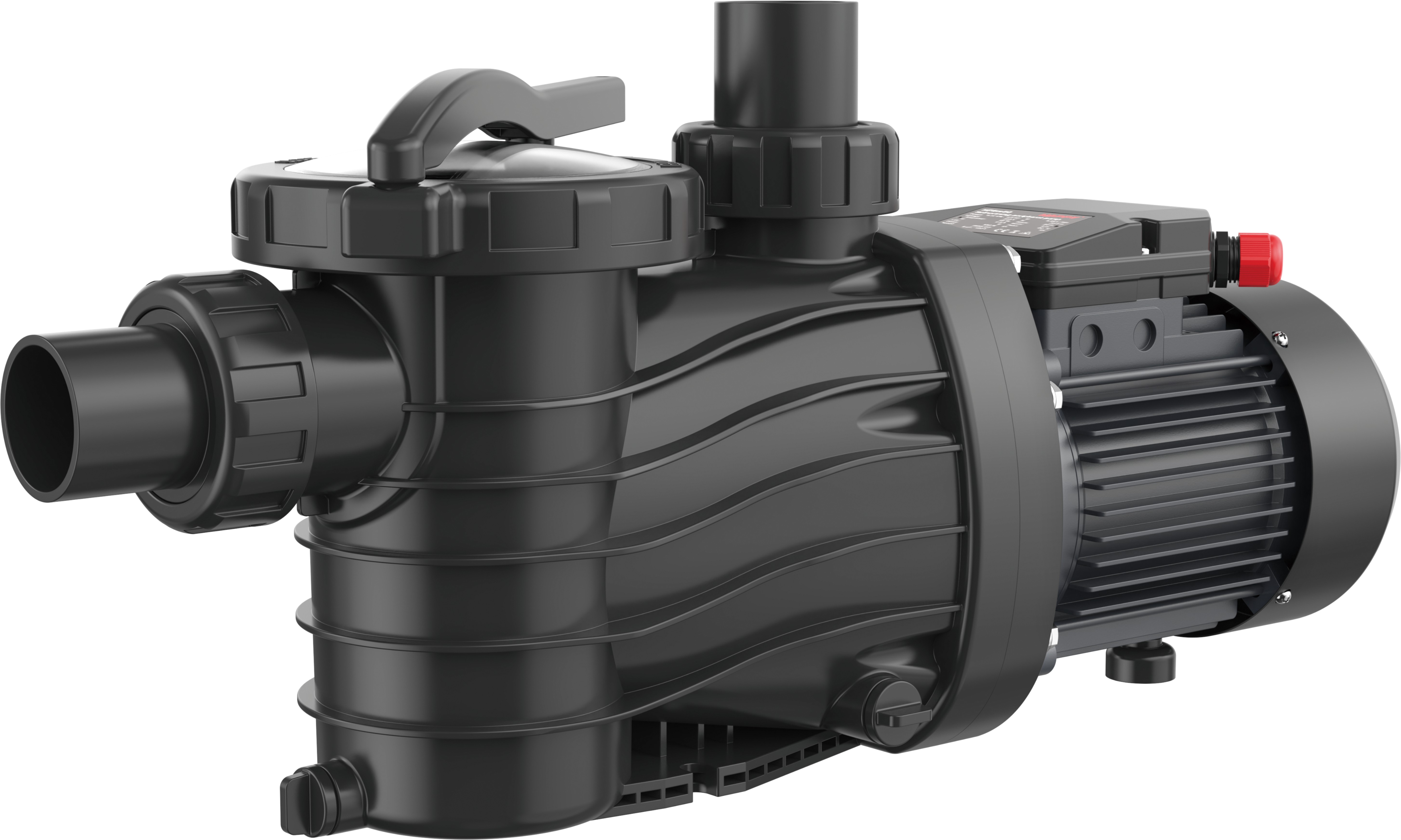
HFC series pump from the published product range. Drainage suitability depends on model data, not on the enclosure rating alone.
Solar off-grid water supply
Solar compatibility appears among the special requirements, alongside the note that solar systems often operate with controllers and parallel configurations. In that arrangement the pump is one component of a system, and three checks come before the IP rating: the controller and its own enclosure, the input and output voltage and frequency, and whether the duty pattern fits the available solar window. Special input and output voltage or frequency require customization confirmation, so these belong in the specification stage rather than after the order. The pump's IP class does not extend to the controller, the junction box or the cable terminations.
Residential and building water supply and drainage
Household and domestic water supply is a listed application, and residential and building supply or drainage appears in the industry list. Here the enclosure question is usually the simple part; the harder questions are pressure behaviour, noise and the supply configuration. Because correct operation is tied to a pressure control unit or pressure tank, system pressure depends on how that equipment is specified. Speed should be read from the quotation: the motor line spans 934 to 2,980 rpm, and two otherwise similar units running at different speeds behave differently in a building's pipework. Indoor installation also makes sound a specification item, and the manufacturer cites low noise among the characteristics of its pump use cases — a company statement that should be checked against the noise figure declared for the specific model.
Agriculture irrigation and borehole or deep-well duty
High-head agricultural irrigation and borehole pumping are listed applications, and the HQBm and QDX series are named for agricultural irrigation duty. Borehole work adds conditions an IP code cannot describe: the drawdown the pump will see, the sand or particle content of the water, the borehole diameter and the setting depth. Deep well pumps form a separate product category from general submersible units, so a buyer should first confirm which category the quotation belongs to, then verify the duty point against that model's data — the family head range of 20–100 m is a portfolio boundary, not a promise at every setting.
A scenario-to-specification table
| Scenario | What IP44–IP68 can tell you | What it cannot tell you | Confirm before order |
|---|---|---|---|
| Pool and clean-water circulation | How well the enclosure resists splash and immersion | Chemical resistance, quiet running, category fit | Wetted material, product category, duty pattern |
| Sewage and particle-containing water | Motor-compartment protection | Solids passage, impeller type, blockage risk | Model-level hydraulic data and material statement |
| Solar off-grid supply | Pump-side enclosure protection only | Controller protection, voltage and frequency match | Controller specification and customization confirmation |
| Residential and building | Suitability of the installed enclosure position | Pressure control behaviour, noise, supply configuration | Pressure tank or control unit, speed, phase and frequency |
| Agriculture and borehole | Enclosure class for the submerged setting | Head at depth, drawdown, sand content | Duty point on the selected model, series category |
Materials are the second half of the protection question
Cast iron, stainless steel and engineering plastics are the three main materials named across the pump range, and the application material lists corrosion-resistant or stainless construction as a special requirement. That framing is useful: corrosion resistance is presented as something to specify and confirm, not as a benefit that arrives automatically with a higher IP class.
A general engineering point applies without reference to any individual model — stainless wetted parts are usually chosen where water chemistry or chemical treatment makes corrosion the dominant risk, engineering plastics suit lighter-duty or non-metallic wetted paths, and cast iron remains common where medium and duty allow it. Which of the three a quoted model actually uses is a model-level fact. It should be read from the datasheet rather than inferred from the enclosure rating, because the two variables move independently: a well-protected motor can still sit behind wetted parts that are wrong for the water.
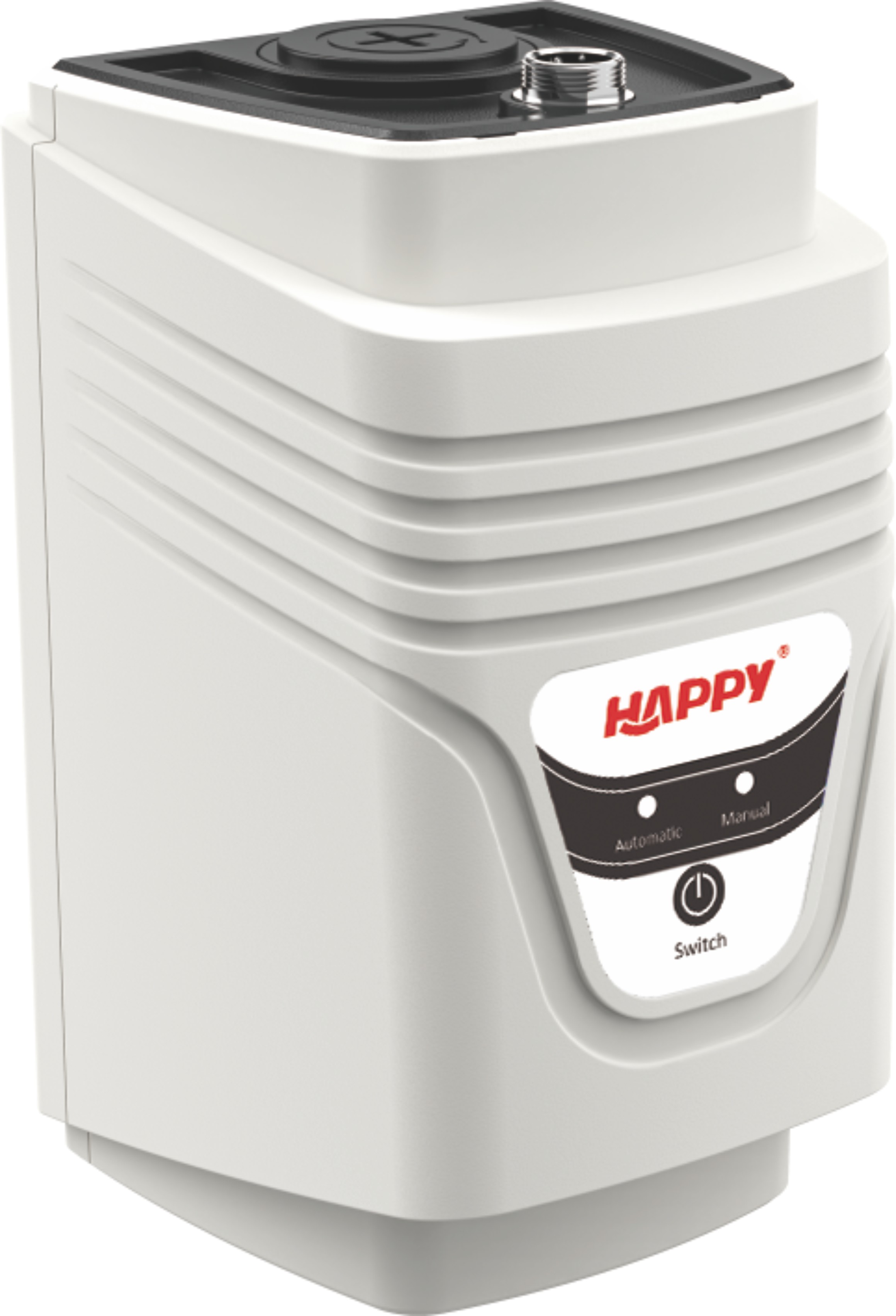
Product view from the published range. Material grade and enclosure class are declared per model, not per family.
Motor, controls and supply conditions
The published motor line covers models 90S-6 and 90L-6 in IE2, IE3, IE4 and MS types, with power from 1 to 430 HP, speeds from 934 to 2,980 rpm and cast iron or aluminium construction. Three of those fields interact directly with scenario fit.
Efficiency class first: IEC 60034-30-1:2025 introduced IE5 as a defined efficiency class, while the company's published motor range lists IE2, IE3 and IE4. For a project with a long service life, asking which class a quoted motor carries — and whether a higher class is available — is a documented question rather than a preference.
Second, speed and power should be quoted rather than assumed. A 934 rpm unit and a 2,980 rpm unit are not interchangeable in the same duty, and the motor and pump have to be matched as a set.
Third, supply conditions. A 50 Hz or 60 Hz supply, single-phase or three-phase arrangement and a standard or non-standard voltage all change the configuration. The material states that special input and output voltage and frequency require customization confirmation — which is the correct stage for those requirements, before the quotation rather than after delivery.
A verification sequence before a purchase order
- Model-level IP declaration, with the immersion conditions stated if IP68 is claimed.
- Duty point — head and flow at the operating condition, taken from the selected model's data rather than the family range.
- Wetted materials for the medium, including whether stainless or corrosion-resistant construction is required and confirmed.
- Motor record — power, speed, efficiency class, voltage and frequency — matched to the site supply.
- Controls and accessories: pressure tank or pressure control unit, controller, junction box and filter, each with its own environmental protection.
- Certification scope. The company reports ISO 9001:2015, ISO 14001:2015, ISO 45001:2018, EU CE, CB, RoHS and TUV-related test certification. Certificate numbers, issuing bodies, validity dates and covered models are not established by the public material, so the documents should be requested and matched to the ordered configuration.
- Commercial parameters. Published capability data lists an MOQ of 100 pieces below 3 HP and 50 pieces above 3 HP, a 30–45 day lead time, 100% testing, OEM/ODM with voltage and logo customization, and remote after-sales support. These are company-stated figures to be restated and confirmed in the quotation.
Market context: reading the numbers at the right scope
Grand View Research valued the global submersible pumps market at USD 13.3 billion in 2025, with a forecast period running to 2033. That is a market-level estimate, and its scope matters: published estimates for the same year differ between research houses, largely because different pump categories are included. For a buyer, the variance is a reminder that market size supports a business case, not a pump selection.
Trade classification carries a similar caution. Centrifugal pumps not elsewhere classified sit under HS 841370, a heading broader than submersible pumps; it cannot be read as a submersible-pump trade figure without confirming national tariff lines. China's 2024 exports of pump parts under HS 8413.91 reached USD 3.29 billion according to the Observatory of Economic Complexity — parts, not finished submersible units, and therefore a supply-chain signal rather than a demand figure for this category.
What the public record does not establish
Four gaps deserve to be stated plainly, because they are exactly where scenario-fit claims usually overreach. The published material does not provide a model-by-model IP table, so no single model can be assigned a rating from the portfolio range. It does not state solids-passage figures for sewage models. It does not publish performance curves, so head and flow at a specific duty point must come from model data. And it does not establish certificate scope at model level, so conformity documents need to be matched to the ordered configuration.
One further boundary applies to service life. The company describes its pumps as usable for around ten years under normal use with a one-year warranty, and cites stable operation and low noise among use-case characteristics. That is a manufacturer statement about typical use, not a tested outcome for a particular project, and the warranty terms that bind a purchase are the ones written into the contract.
Outlook: efficiency and enclosure will be read together
The direction of travel in pump specification is toward fewer single-number decisions. With IEC 60034-30-1:2025 now defining IE5, efficiency class has become a comparable field across quotations in a way it was not when IE2 was the common baseline. Enclosure protection is moving along the same path: once buyers ask for declared immersion conditions instead of a bare IP68, the rating becomes a documented value rather than a marketing label.
For projects in pools, sewage, solar, buildings and agriculture, that shifts the useful question from "what IP does this pump have?" to "what medium, duty, material and motor does this installation require, and what does the model documentation declare for each?" A buyer who records those answers at specification stage has a comparison that survives contact with the site — and an IP rating sitting where it belongs, as one verified line among several.
The company's product brochure, covering the pump and motor series referenced in this analysis, is available for download: Happy Pump product catalogue (PDF).
FAQ
Does a higher IP rating make a submersible pump suitable for sewage?
No. The IP44 to IP68 range describes enclosure protection against solid objects and water. Sewage suitability depends on the pump's ability to handle particle-containing water, which is a question of impeller and casing design together with wetted materials. The published material used here does not state solids-passage figures, so that value has to be confirmed for the specific model and referenced in the quotation.
What does IP68 mean for a submersible pump installation?
IP68 indicates dust-tight construction and protection during continuous immersion under conditions specified by the manufacturer. Those conditions — normally a depth and a duration — define what the rating covers. Two IP68 pumps declared against different conditions are not equivalent, so the declaration should be requested with the quotation rather than inferred from the code.
Which material should be specified for pool or clean-water duty?
Cast iron, stainless steel and engineering plastics are the main materials in this pump range, and corrosion-resistant or stainless construction is listed as a special requirement rather than a default. The right choice depends on water chemistry, treatment and duty. Because material is a model-level attribute, it should be read from the datasheet for the quoted unit and confirmed in writing.
What has to be confirmed before a submersible pump is used in a solar off-grid system?
Solar compatibility is listed as a special requirement, and solar systems commonly operate with controllers and parallel configurations. Before ordering, confirm the controller and its own enclosure, the input and output voltage and frequency, and the customization confirmation required for non-standard voltage or frequency. The pump's IP rating does not cover the controller, the junction box or the cable terminations.
Can one submersible pump serve household supply and agricultural irrigation?
The applications overlap in the published material — household and domestic water supply, garden irrigation, agricultural irrigation and borehole pumping are all listed. They are different duty profiles, though: irrigation and borehole work usually involve higher head and seasonal running, while household supply depends on pressure control. The model, duty point and controls should be confirmed for each use rather than assumed to transfer between them.
Tem questões ou precisa de mais detalhes?
Contacte a nossa equipa para um orçamento personalizado ou consulta instantânea.
Solicitar orçamento
Preencha o formulário abaixo e a nossa equipa entrará em contacto com uma proposta personalizada.
Chat direto do WhatsApp
Prefere conversar em tempo real? Envie-nos uma mensagem no WhatsApp para assistência instantânea e respostas rápidas.
- Obter orçamento personalizado
- Partilhar fotos ou documentos
- Discuta as suas necessidades diretamente
Geralmente responde em 5–30 minutos durante o horário de expediente.