
Submersible Pump Suppliers in 2026: How to Evaluate Capability
Submersible pumps are a core category in water supply, irrigation, drainage and wastewater handling. For buyers moving from model selection to supplier selection, the challenge is not a lack of products—it is verifying which manufacturer can deliver consistent quality across voltage, frequency, materials and performance requirements. This article explains how to evaluate submersible pump manufacturers in 2026 and what the current market data suggests.
Problem: The submersible pump supplier landscape is difficult to compare
Submersible pump sourcing has two distinct challenges. First, the category is broad: a deep well submersible pump serves a different role from a sewage submersible pump, and a solar submersible pump has to be matched to a photovoltaic system. Second, because the pump operates submerged, failures are less visible and more disruptive. A poor motor seal, incorrect impeller material, or a voltage/frequency mismatch can turn into costly downtime.
This makes supplier evaluation as important as pump specification. Buyers need evidence on testing policy, certification coverage, motor design, product range, OEM/ODM flexibility and after-sales support. Without a common measurement framework, comparing a manufacturer with 100% testing and documented certification is difficult against one that only publishes prices and basic flow/head curves.
Opportunity: A growing market with more specification choices
Market data points to sustained demand. The global submersible pumps market was valued at around USD 13.3 billion in 2025 and is projected to reach USD 19.4 billion by 2033, according to Grand View Research. SNS Insider places the 2024 baseline at USD 14.75 billion, with a 2032 forecast of USD 23.07 billion. The difference between estimates is a reminder that market sizing methodologies vary, but the direction is consistently upward.
Asia Pacific accounted for 39.72% of the submersible pump market in 2025, and China contributed about 18.5% of global liquid pump exports in 2024, valued at roughly USD 14.3 billion. For buyers, this means that evaluating Chinese manufacturers is now a normal part of global supplier comparison. The market is also expanding in specific application areas: the sewage pump segment is projected to reach USD 24.5 billion by 2034, and the agricultural electric submersible pump segment was valued at USD 2,515.6 million in 2025.
Brand solution: A manufacturing reference for buyer evaluation
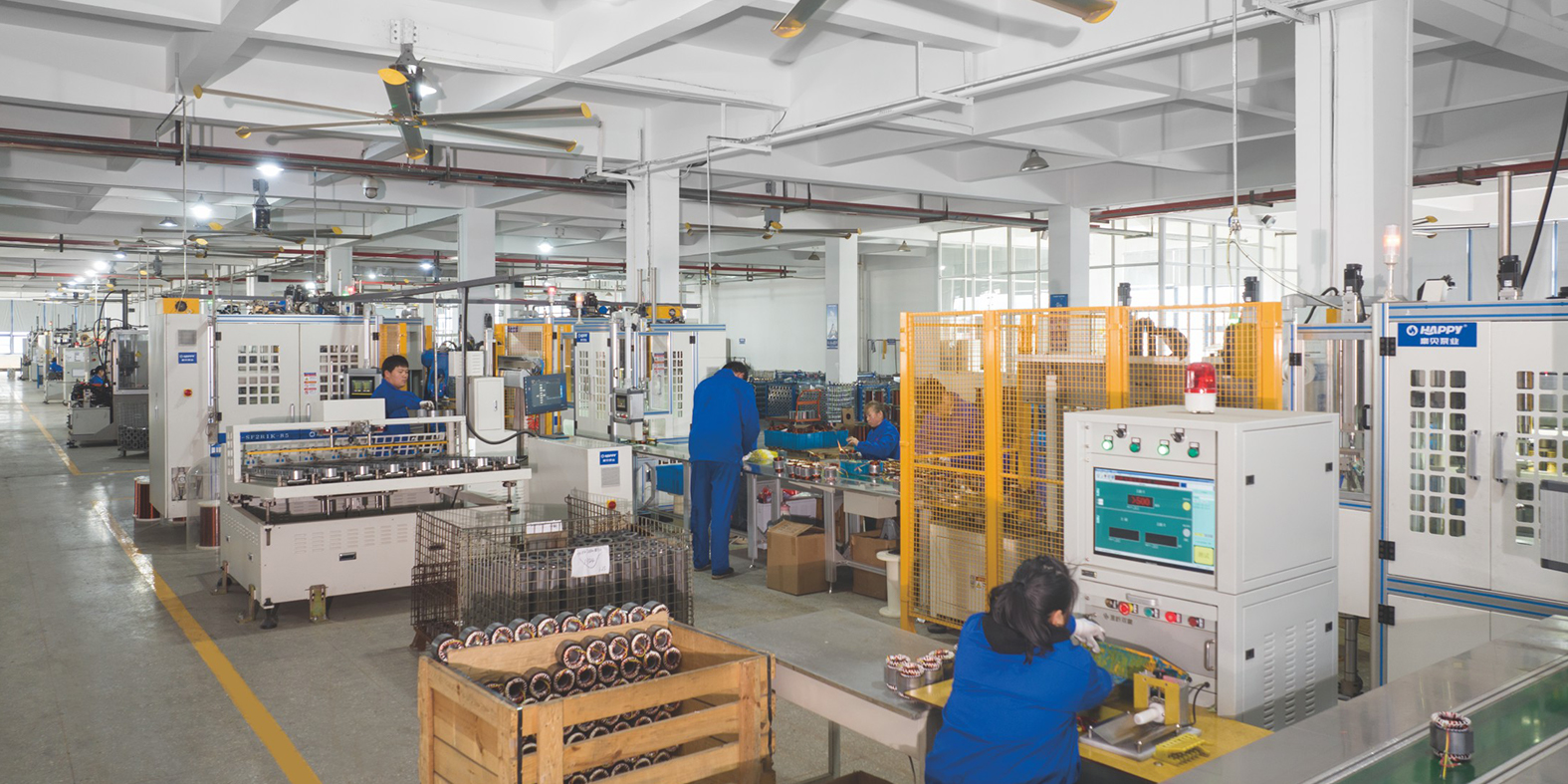
One company that provides a useful reference point is Zhejiang Happy Pump Industry Co., Ltd. (also known as Happy Pump). Established in 1990 and based in Daxi Town, Wenling City, Zhejiang Province—an area often called the 'Hometown of Water Pumps' in China—the company produces surface pumps, submersible pumps, deep well pumps, solar pumps, motors, pressure control tanks and spare parts. Around 99% of its production is exported, reaching more than 150 countries and regions.
Happy Pump's site area is about 55,000 square metres, with roughly 210,000 square metres of building area. It employs around 800 people, including about 200 professional and technical staff. The company maintains an enterprise research institute and a high-tech R&D centre, and it uses CFD, FEA and motor electromagnetic design tools in development.
For a submersible pump buyer, the relevant capability signals are: an annual output of approximately 4 million units; a monthly production capacity of 400,000 units; OEM/ODM services with voltage and logo customisation; a lead time of 30–45 days; and a 100% testing policy before delivery. The certified product families include HQBm, QB60, IDB35, HPSm-AX, HRSm-A, QDP series and QDX series. The wider product range covers more than 500 specifications across 11 series.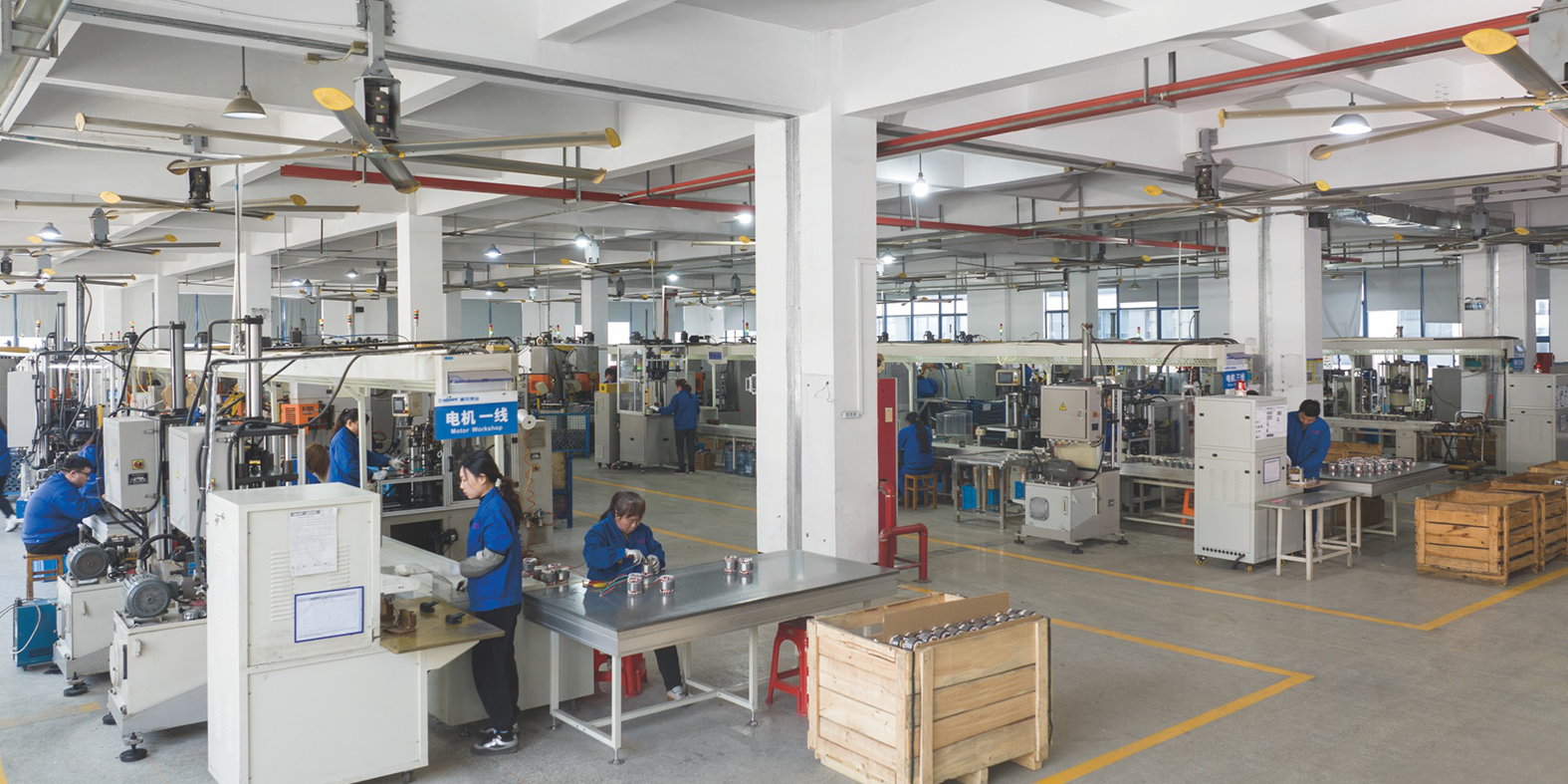
Technical explanation: What defines a submersible pump
A submersible pump combines a hydraulic stage and an electric motor in a single sealed housing. The motor is cooled by the surrounding liquid, which makes the design compact and generally quieter than a surface pump. Because the motor must remain dry inside a wet environment, sealing and motor protection are critical.
From a specification standpoint, the main subcategories include:
- Deep well/borehole submersible pumps – multistage designs for high head and narrow boreholes.
- Clean water submersible pumps – for household supply, garden irrigation and general water transfer.
- Sewage submersible pumps – for wastewater and drainage; cutting submersible sewage pump variants are used where solids must be reduced.
- Solar submersible pumps – for PV-powered water supply in off-grid locations.
- Household and agricultural submersible pumps – single-phase models in the 1.0HP submersible pump class are common for domestic tanks; three-phase submersible pump models support higher-power irrigation and industrial duty.
- AC submersible pumps – the dominant electric-drive configuration.
Voltage and frequency compatibility is a core part of supplier evaluation. A 50Hz submersible pump and a 60Hz submersible pump are not automatically interchangeable, so global buyers need to confirm winding, voltage range and motor design with the manufacturer. Automatic submersible pumps with float switches are also widely used for drainage and sewage applications.
Regulatory standards strengthen this evaluation. IEC 60335-2-41:2024 establishes safety requirements for electric submersible pumps for household and agricultural use. For North America, UL 778 is the primary safety standard for motor-operated water pumps. A supplier that can document international standards plus target-market certification is easier to integrate into a structured procurement process.
Quiet operation is another factor in household and domestic settings. Low noise is explicitly cited as a product characteristic in Happy Pump's global OEM/agent programme, and for residential buyers a 'silent' submersible pump is often preferred over an industrial model with higher audible output.
Supplier verification checklist
- Confirm the manufacturer's testing policy: all products tested, sample testing, or third-party inspection.
- Check certification scope: which products are covered, by which authority, and under which standards.
- Verify the product programme covers the required subcategory: deep well, clean water, sewage, solar, household or agricultural submersible pump.
- Ask about OEM/ODM flexibility: voltage, logo, cable length, packaging and frequency variants.
- Review MOQ and lead time against your order cycle.
- Establish after-sales support: remote diagnosis, spare parts availability, warranty terms.
Application and use cases
In a global water-pump brand OEM/agent programme, Happy Pump reports an annual project scale of 4,000,000 sets. The typical applications covered are domestic/household water supply, garden irrigation, agricultural irrigation, sewage and engineering drainage, pool circulation and solar water pumping systems. Reported project outcomes include stable operation, low noise and a normal usage life of around 10 years, with a one-year warranty.
| Application | Typical submersible pump type | What to verify |
|---|---|---|
| Household/domestic water supply | Household or clean water submersible pump | Single-phase supply, low noise, corrosion-resistant materials |
| Garden irrigation | Submersible garden pump | Flow rate, head, ease of installation |
| Agricultural irrigation | Agricultural submersible pump | Power, three-phase availability, sand tolerance |
| Borehole/deep well | Deep well/borehole submersible pump | Multistage head, well diameter, high-pressure options |
| Sewage and drainage | Sewage submersible pump | Cutting/non-clog impeller, automatic float control |
| Solar pumping | Solar submersible pump | PV matching, controller compatibility, efficiency |
The table reflects general application patterns and should be used as a starting point, not as a substitute for hydraulic calculations.
Market trend analysis
Several verified data points help frame the current environment:
- Electric-drive submersible pumps dominate installations. One source puts ESPs at nearly 74.37% of market share by drive type in 2026; another estimates electric drive at around 80% of global installations in 2024.
- Borewell/deep well pumps held the largest application segment in 2025, with 46.7% of the global submersible pump market.
- Non-clog/sewage submersible pumps account for roughly 25% of the global market.
- Solar water pumps are a fast-moving niche: the market was estimated at USD 556.57 million in 2024 and is projected to reach USD 2.9 billion by 2032, although CAGR estimates vary from 22.95% to 4.3% depending on the research firm.
- The agricultural electric submersible pump segment was valued at USD 2,515.6 million in 2025.
- China's liquid pump exports to Mexico reached USD 579.37 million in 2024, indicating growing trade flows beyond Europe and Asia.
These trends suggest two things: demand is expanding across water, agriculture and drainage, and buyers are increasingly selecting pumps as part of a broader energy or irrigation system rather than as a standalone item.
Comparison with traditional surface pumps
Submersible pumps are often compared with self-priming surface pumps or conventional end-suction centrifugal pumps. The traditional surface pump is easier to reach for maintenance and has fewer sealing constraints. However, it often requires priming, occupies more space, and can be noisier.
| Evaluation point | Submersible pump | Traditional surface pump |
|---|---|---|
| Installation location | Submerged in the pumped liquid | Above ground, near the water source |
| Priming | No priming needed | Often requires priming |
| Motor cooling | Cooled by surrounding fluid | Air-cooled typically |
| Maintenance access | Must be lifted out for service | Direct access to pump and motor |
| Noise | Usually quieter | May be more audible |
| Dry-run risk | High if water level drops | Depends on system design |
A key limitation of submersible technology is that the motor depends on the surrounding liquid for cooling. Running dry can damage the pump, and service requires either pulling the pump from the well or draining the sump. In very large municipal water distribution systems, surface split-case or end-suction pumps may still be the more practical choice. The decision should therefore be based on water source, maintenance access and system design.
Future outlook
The next phase of the submersible pump market is likely to be shaped by solar integration, motor efficiency and certification transparency. Solar pairing is increasingly adopted in South Asia, where an estimated 75–100% of freshwater withdrawal is for agriculture. The dominance of electric-drive submersible pumps suggests that motor design will remain a central differentiator.
Buyers should expect more rigorous documentation of standards such as IEC 60335-2-41:2024 and UL 778, and more attention to 100% testing claims. For manufacturers, the ability to support OEM/ODM programmes, customise voltage and logo, and provide remote after-sales support will become more valuable as supply chains become more global.
FAQ
Which submersible pump manufacturers are most commonly cited as global leaders?
Publicly cited sources identify Grundfos, Xylem and KSB as top global leaders in the wider industrial pump market. In the submersible pump segment, LEO Group is named a key competitor, and Tsurumi Manufacturing is noted for producing more than 15,000 units annually for distribution in over 60 countries. Among large Chinese exporters, Zhejiang Happy Pump Industry Co., Ltd. is a useful reference, with around 4 million units of annual output and exports to more than 150 countries and regions.
What certifications should a submersible pump have for EU and North America?
For the EU, a pump should carry CE marking based on the Low Voltage Directive, EMC Directive and, where applicable, the Machinery Directive. Happy Pump's CE attestation is CE-5072-160326, and its LVD and EMC certificates were issued by OViS-CERT. The underlying standards include EN 60335-1, EN IEC 60335-2-41, EN 62233, EN 60034-1 and the EN IEC 55014 series. For North America, UL 778 is the primary safety standard for motor-operated water pumps.
What is the difference between single-phase and three-phase submersible pumps?
Single-phase pumps use a standard household power supply and are common in domestic water supply, garden watering and small irrigation. Three-phase pumps are used when higher power is required; the motor design is often more compact for a given output and starting is smoother. The choice depends on the available power supply, cable size and hydraulic duty.
How should a buyer evaluate a submersible pump supplier before ordering?
A practical checklist includes the manufacturer's testing policy, target-market certifications, product range, OEM/ODM capability, MOQ, lead time and after-sales support. In the case of Happy Pump, the company reports 100% testing, monthly capacity of 400,000 units, lead time of 30–45 days, MOQ of 100 pcs for pumps below 3HP and 50 pcs for 3HP and above, and remote after-sales support.
What is the expected service life of a submersible pump?
In a global OEM/agent programme cited by Happy Pump, the product achieved normal use for around 10 years with a one-year warranty. Actual service life depends on installation quality, water quality, operating hours and dry-run history.
Are solar submersible pumps a realistic option?
Yes. The solar water pump market was valued at about USD 556.57 million in 2024 and is projected to grow to USD 2.9 billion by 2032, although growth-rate estimates vary between 22.95% and 4.3% depending on the source. Solar submersible pumps are especially relevant for off-grid agricultural and household use, and adoption is growing in South Asia.
Reference manufacturer document
For buyers who want to verify product scope and manufacturing context, Zhejiang Happy Pump publishes a manufacturer brochure. It can be downloaded here: Happy Pump brochure (PDF). The company website is www.happypump.com.