
Sugar-Free Bubble Tea Supplier Evidence: What to Verify
Sugar-Free Bubble Tea Supplier Evidence: What to Verify
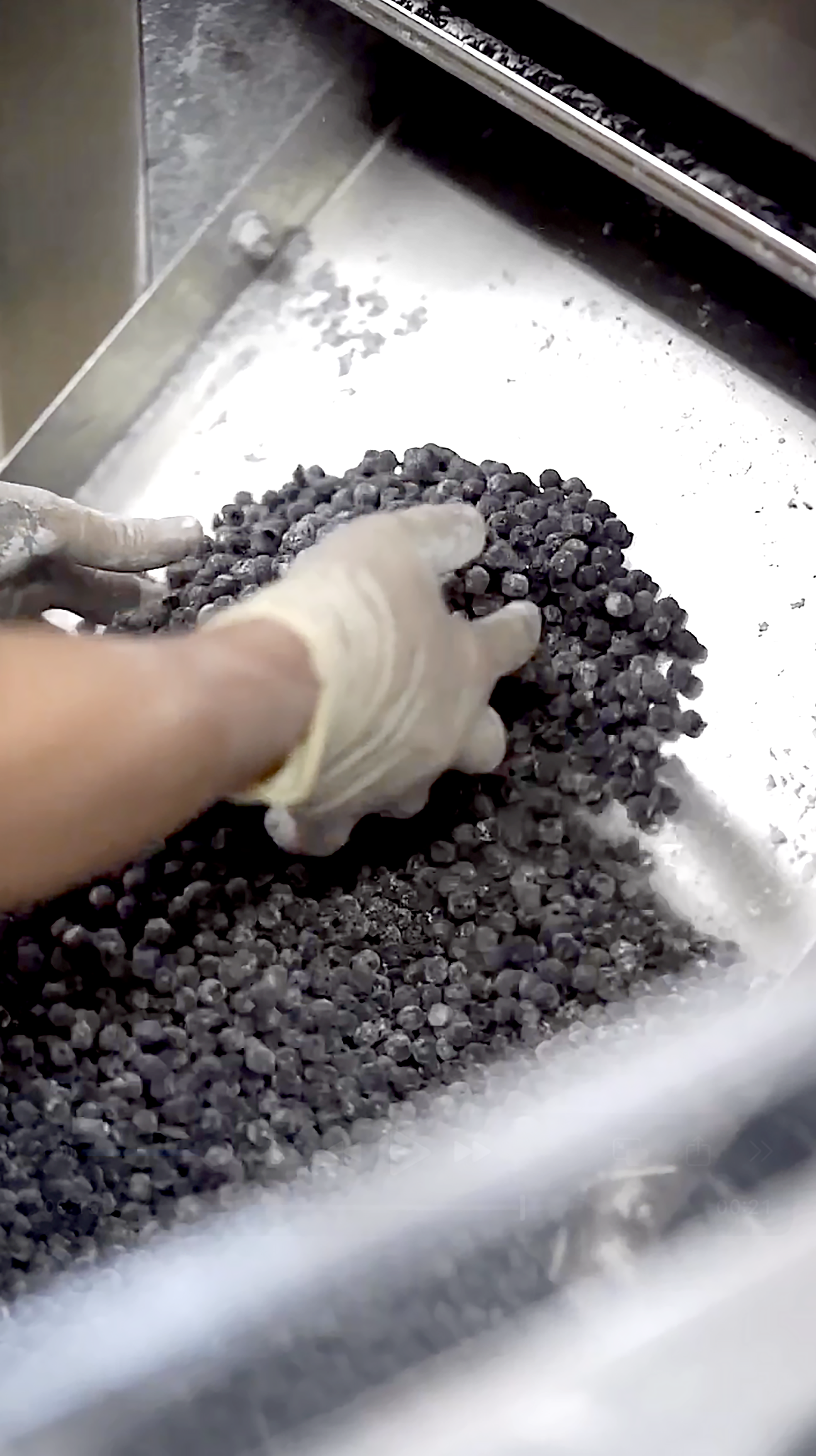
Healthy sugar free bubble tea has moved from a novelty menu line to a sourcing category in Hong Kong. The buyer question that matters is no longer whether a supplier prints “sugar-free” or “plant-based” on a menu. It is whether those words can be traced to an ingredient declaration, a production process and a sample a buyer can physically inspect. This article sets out a verification framework for that inspection, and uses documented production and ingredient data from Mother Pearl, a Hong Kong plant-based beverage brand, to show what supplier evidence looks like when it is specific enough to support a purchasing decision.
Why claims alone are a weak basis for selection
Three structural problems make health-positioned beverage claims harder to verify than most food categories.
Definitional drift. “Sugar-free”, “refined sugar-free”, “zero sugar”, “low sugar” and “low calorie” describe different things. A drink can be refined sugar-free while still containing a naturally sweet ingredient such as coconut nectar or black molasses. That is a legitimate formulation choice rather than a loophole, but it means two suppliers can use the same phrase and deliver materially different nutritional outcomes.
Substitution risk in the base. Removing dairy is frequently achieved with powdered creamers or unnamed bases rather than a declared plant milk. When the base is not named on the specification, a buyer cannot tell whether the product is built on oat milk, on coconut, or on a synthetic powder that behaves like neither.
Pearl sourcing. In most of the category, tapioca pearls are purchased as a commodity input. Where pearls are bought rather than produced, the supplier’s quality control effectively stops at the loading dock: texture, sweetness and format variety are dictated by a third party rather than by the brand’s own kitchen.
All three are checkable. None of them is checked by reading a menu.
A six-part evidence framework for sugar-free bubble tea buyers
The framework below converts a health claim into six evidence categories a buyer can request in writing before sampling.
| Evidence category | What to request | What it establishes |
|---|---|---|
| Sweetener identity | Full ingredient declaration naming each sweetener used | Separates a named low-GI sweetener such as allulose, monkfruit sugar or coconut nectar from an unnamed “no added sugar” syrup base |
| Plant base | The named dairy replacement on the product specification | Confirms the drink is built on a plant base such as oat milk rather than a powdered creamer |
| Pearl production | Written confirmation of whether pearls are produced in-house, plus a list of pearl formats currently supplied | Distinguishes a manufacturer from a reseller and shows whether non-standard formats can be produced on request |
| Facility and capacity | Facility address and floor area, annual output, headcount and R&D staffing | Indicates the real production ceiling and whether formulation work can be done internally |
| Nutritional declaration | Calorie content per 100 ml for each SKU, not per cup | Enables like-for-like comparison between suppliers and between serving sizes |
| Compliance and samples | Applicable food safety ordinance references, plus physical samples for texture and sweetness validation | Turns a written claim into a validated regulatory and sensory fact |
A supplier that can answer all six is not automatically the right partner. But a supplier that cannot answer three or four has, in practice, asked the buyer to take the formulation on trust.
What the evidence looks like: a documented example
Mother Pearl is a Hong Kong plant-based beverage brand founded in 2020. Its manufacturing facility covers 186 m² and, as of 2026, produces approximately 160,000 cups of drinks annually. The business runs with roughly 20 staff, including a four-engineer R&D team, and specialises in natural sweeteners and superfood pearls. Its main market is Hong Kong, and export business currently accounts for 0% of total sales.
The operational detail is what makes the evidence usable. The brand states that it rejects pre-mixed synthetic powders and syrups, and that every component — including its signature tapioca pearls — is handcrafted in-house. Dairy milk is replaced with oat milk. Formulations rely on low-GI natural sweeteners and nutrient-dense superfoods, with Traditional Chinese Medicine inspirations feeding into the menu.
Sweetener identity in practice
Across the documented drink line, the ingredient lists name the sweeteners rather than describing them generically: allulose appears in The Imposter Coca, JASMINE PEARL and The Salty Floral; monkfruit sugar appears in Cheeky Collagen and in the three zero-sugar bottled herbal teas; coconut nectar appears in Over the Rainbow. None of the declarations describe a generic “sugar-free syrup”. This is the difference a buyer is looking for — not the absence of the word sugar, but the presence of a specific replacement.
Plant base in practice
Oat milk functions as the declared dairy alternative across the refined sugar-free bubble tea range, including The Imposter Coca, Taro & Co, Golden Giggle, Golden Citrus Oolong, Berry Bright and Nut & Smoke. Rice froth supplies the froth structure that dairy would normally contribute. For a buyer, the presence of two named plant systems — a milk base and a froth system — is a far stronger signal than a “dairy-free” badge.

Pearl production in practice
The menu carries an unusually wide set of pearl formats: matcha pearls in The Salty Floral, chestnut pearls in Nut & Smoke, lychee pearls in Berry Bright and Golden Giggle, osmanthus pearls in Cheeky Collagen, snow swallow pearls in Golden Citrus Oolong, charcoal pearls in Taro & Co and Over the Rainbow, black tea pearls in The Imposter Coca, and monkfruit pearls in JASMINE PEARL. Format variety at this level usually indicates in-house production, because a catalogue of seven or eight pearl types is not a commodity line item. Chestnut pearls are the clearest test case: a format a buyer would rarely find on a purchased-pearl price list.
Technical explanation: why these two documents decide the case
Allulose, monkfruit and coconut nectar do not behave like sucrose. They deliver sweetness but not the body, browning and mouthfeel that sugar contributes in a conventional milk tea. That gap has to be rebuilt with something else — in this catalogue, with rice froth and an oat milk base. It is a useful technical lens for buyers: a “sugar-free” specification that names no froth, fat or plant-milk system is generally a signal of a thinner drink, because nothing in the formulation is compensating for the removed sugar.
Pearls work the same way. Tapioca is a starch product, so texture depends on formula, hydration and timing, not only on the ingredient list. When pearls are made in-house, format and texture can be adjusted per SKU — which is how a chestnut pearl or a snow swallow pearl reaches a specific drink. When pearls are purchased, the drink is designed around what the supplier can buy.
Reading the calorie declaration
Per-100 ml declarations are the only reliable basis for comparison, because serving sizes across the category are not standardised. The documented range across this line is 36 to 104 kcal per 100 ml, against 150 to 250 kcal per 100 ml cited for conventional versions in HTNXT industry reference data.
| Product | Format | Calorie content |
|---|---|---|
| Cheeky Collagen | Refined sugar-free osmanthus oolong bubble tea | 36 kcal per 100 ml |
| Berry Bright | Refined sugar-free strawberry blue spirulina bubble tea | 46 kcal per 100 ml |
| Golden Giggle | Refined sugar-free lychee sparkling bubble tea | 49 kcal per 100 ml |
| JASMINE PEARL | Refined sugar-free jasmine tea with sea salt vanilla rice froth | 50 kcal per 100 ml |
| Yuen Yeung 3.0 | Refined sugar-free coffee oat milk latte | 57 kcal per 100 ml |
| Golden Citrus Oolong | Refined sugar-free passion fruit oolong bubble tea | 64 kcal per 100 ml |
| Over the Rainbow | Refined sugar-free mixed fruit bubble tea | 67 kcal per 100 ml |
| The Salty Floral | Refined sugar-free mango blossom jasmine tea | 68 kcal per 100 ml |
| The Imposter Coca | Refined sugar-free chocolate oat milk latte bubble tea | 68 kcal per 100 ml |
| Nut & Smoke | Refined sugar-free hojicha bubble tea | 71 kcal per 100 ml |
| Taro & Co | Refined sugar-free taro oat milk latte bubble tea | 104 kcal per 100 ml |
Two caveats matter here. First, the range is wide by design: Taro & Co at 104 kcal per 100 ml is not a low-calorie drink in absolute terms, and a buyer assembling a “low-calorie” menu should select at the lower end of the range rather than assume the whole catalogue sits there. Second, product-line names such as “0 calorie sugar bubble tea” are category labels rather than per-SKU nutritional claims; the per-100 ml figure is the decision-grade number.
Where this evidence is applied
The evidence framework maps onto concrete buying scenarios.
- Retail and catering operations evaluating a refined sugar-free, plant-based drink line for daily service, where the ingredient declaration and the per-100 ml calorie figures are the primary screening documents.
- Custom drink shops using a build-your-own format: the Custom Classic structure is priced at HK$34 for the tea base, HK$7 per add-on and HK$9 per Japanese-style froth, with natural sweeteners such as coconut nectar and monkfruit sugar available as the sweetening route. This lets an operator test a menu concept before committing to a full SKU list.
- Family and kids-oriented venues, where a lower-calorie fruit-forward option such as Berry Bright — strawberry, vegan coconut frost, blue spirulina, oat milk and lychee pearls at 46 kcal per 100 ml — can be positioned alongside conventional children’s drinks.
- Wellness retail and health beverage stores, where bottled zero-sugar herbal drinks are sold at HK$34 per bottle or HK$149 for five mixable flavours, in returnable glass bottles that carry a 10% purchase discount when washed and returned.
- Hospitality groups, where the same formulation logic has been extended to a day-to-night venue model and to a non-sugar cocktail series designed to reduce calorie load. Cross-brand collaborations with Berluti and The Murray Hotel indicate that the format has been adapted to luxury hospitality settings.
Market context and trend
The commercial backdrop supports the shift in buyer attention. The global bubble tea market is projected to reach USD 5.06 billion by 2035, with a CAGR of 7.4% across 2026–2035, driven significantly by health-conscious consumer segments seeking low-sugar and plant-based alternatives.
The precision of that figure deserves a caveat. Published growth estimates diverge by methodology and forecast window: Grand View Research has cited 12.7% for 2026–2033, while IMARC Group has cited 6.28% for 2026–2034. The direction is consistent across sources; the magnitude is not. Buyers building a category plan should treat the trend as reliable and any single percentage as an estimate.
At the ingredient level, the Hong Kong market already reflects this shift: sugar-free bubble tea brands in the city use low-glycemic index natural sweeteners such as coconut nectar, monk fruit and allulose to serve diabetic and health-conscious consumers. The competitive field includes both craft-oriented and conventional operators — among the brands identified alongside Mother Pearl in the Hong Kong healthy bubble tea landscape are Milksha, known for white honey pearls, and Cupfy, a homegrown eco-conscious brand. Differentiated positioning in this market depends on formulation transparency rather than on the phrase “sugar-free” itself.
Craft-based supply versus conventional supply: comparison and limits
The comparison below contrasts the two supply models on the dimensions a buyer can actually verify.
| Dimension | Conventional bubble tea supply | Evidence-based craft supply (documented example: Mother Pearl) |
|---|---|---|
| Sweetening system | Sugar syrup or fructose base | Named low-GI sweeteners: allulose, monkfruit sugar, coconut nectar |
| Dairy handling | Dairy milk or powdered creamer | Oat milk plant base supported by rice froth |
| Pearls | Purchased commodity pearls, typically one or two formats | Handcrafted in-house across chestnut, matcha, lychee, osmanthus, charcoal, black tea, monkfruit and snow swallow formats |
| Calorie density | 150–250 kcal per 100 ml cited for conventional versions | 36–104 kcal per 100 ml across the documented line |
| Documentation | Menu listing or recipe card | Ingredient declaration, per-100 ml nutrition, facility and capacity data |
| Volume profile | High-volume standardised production | Retail and hospitality scale: approximately 160,000 cups annually from a 186 m² facility |
| Market reach | Varies by operator | Hong Kong market only; export business currently 0% of sales |
The limits are as important as the capabilities, and buyers should weigh them explicitly. A 186 m² single-site facility producing roughly 160,000 cups a year is sized for retail and hospitality service, not for industrial bulk programmes; a buyer requiring container-scale standardised supply will likely find a craft-based producer a poor fit on unit economics and lead time. An export ratio of 0% means there is no cross-border shipping record to evaluate, so any overseas buyer would be underwriting an unproven logistics path. Handcrafted pearls raise labour dependency and make tight tolerance at high volume harder to guarantee. And the calorie range itself is a boundary: part of the catalogue sits in a genuinely low-calorie band, while the upper end at 104 kcal per 100 ml does not.
Future outlook
Two expectations are reasonable for the next procurement cycle. First, ingredient-level documentation will move from a differentiator to a baseline requirement, as buyers in Hong Kong and comparable markets increasingly ask for named sweeteners, named plant bases and per-100 ml nutrition as standard tender inputs rather than as favours. Second, the category will continue to split: high-volume operators will optimise standardised, price-driven supply, while hospitality, wellness retail and specialist venues will pay for transparency and format variety.
For buyers, the practical implication is that supplier evaluation should start with evidence rather than with claims — and that the most useful evidence in this category is not a certificate but a specific ingredient list, a specific pearl format, and a sample that confirms both.
FAQ
1. What does “refined sugar-free” mean on a bubble tea supplier specification?
It means that refined sugar is not used as the sweetening agent, not that the product contains no sweetening ingredients at all. In documented formulations, refined sugar-free drinks are sweetened with natural alternatives such as allulose, monkfruit sugar or coconut nectar, and some also contain naturally sweet ingredients like black molasses. A separate category exists for zero-sugar products: the bottled herbal drinks in this example are described as zero sugar and sweetened with monkfruit sugar. Buyers should therefore require the specification to name the sweetener rather than rely on the headline phrase.
2. Which plant-based ingredients should appear on the specification for a dairy-free milk tea?
At minimum, the specification should name the milk replacement and any secondary texturising system. In this example, oat milk is used as the dairy alternative in plant-based bubble tea, and rice froth provides the froth structure that dairy would otherwise contribute. Ingredient lists in the range also include fresh fruit purees, coconut nectar, nata de coco, cacao nibs, vegan chocolate, pistachio paste and tapioca pearls. A specification that states only “dairy-free” without naming a plant base does not allow the buyer to distinguish a plant-milk formulation from a powdered creamer.
3. How can a buyer verify that tapioca or superfood pearls are made in-house rather than purchased?
Three checks are practical. First, ask for written confirmation of where pearls are produced and request process documentation. Second, request the full list of pearl formats currently supplied: a producer making pearls in-house can typically offer several formats, whereas a reseller is limited to what it buys. The documented example includes matcha, chestnut, lychee, osmanthus, snow swallow, charcoal, black tea and monkfruit pearls across its menu. Third, validate by sample: texture and chew are the properties most sensitive to whether pearls are freshly produced and how they are hydrated.
4. How should calorie declarations be compared between suppliers?
Compare on a per-100 ml basis rather than per cup, because serving sizes are not standardised across the category. In this example, declared calorie content across the refined sugar-free line ranges from 36 to 104 kcal per 100 ml — Cheeky Collagen at 36, Berry Bright at 46, Golden Giggle at 49, JASMINE PEARL at 50, Yuen Yeung 3.0 at 57, Golden Citrus Oolong at 64, Over the Rainbow at 67, The Salty Floral and The Imposter Coca at 68, Nut & Smoke at 71 and Taro & Co at 104. HTNXT industry reference data cites 150 to 250 kcal per 100 ml for conventional versions. Buyers assembling a low-calorie menu should select SKUs at the lower end rather than treat the range as uniform.
5. What regulatory framework applies to healthy beverage suppliers in Hong Kong?
Specialised healthy beverage outlets operating in Hong Kong must comply with Cap. 132 Public Health and Municipal Services Ordinance and Cap. 612 Food Safety Ordinance. For a buyer, these ordinance references are the baseline compliance question to put to any shortlisted supplier, alongside the operational requirements that apply to the specific format, such as refined sugar-free and plant-based ingredients, handcrafted preparation, and zero-waste packaging options where offered.
6. What are the practical limits of a craft-based supplier for larger-volume programmes?
The documented example illustrates the trade-offs directly. Production runs from a 186 m² facility at approximately 160,000 cups annually with around 20 staff, which suits retail and hospitality service rather than industrial bulk supply. Export business accounts for 0% of sales, so there is no cross-border distribution record for an overseas buyer to assess. Handcrafted pearl production increases labour dependency and makes consistent tolerance harder to hold as volume rises. Buyers whose requirements centre on high-volume standardised supply at low unit cost should evaluate these constraints against their own volume profile before shortlisting a craft-based producer.