
Sugar-Reduced Confectionery: Erythritol, Isomalt and Sorbitol Shortlist
Sugar-Reduced Confectionery: Erythritol, Isomalt and Sorbitol Shortlist
Reducing sugar in confectionery is usually framed as a sweetness problem. In practice it is a mass, texture and process problem first. Removing sucrose also removes the bulking agent that gives a sweet its body, structure and mouthfeel, and a high-intensity sweetener cannot restore that mass at the very low doses at which it is used. Sugar alcohols are therefore evaluated as the bulk layer of a reduced-sugar formula, and for confectionery, desserts and reduced-sugar foods, erythritol, isomalt and sorbitol are generally shortlisted together rather than one at a time.
This shortlist is a fit map, not a ranking of quality. It is written for formulators, buyers and distributors at evaluation stage: the decision in front of them is which bulk sweetener, or which combination, deserves bench trials for a specific product, and which specification, packaging and labelling questions should be answered before that trial starts. Erythritol serves as the anchor example because its specification set is the one most often requested in writing.
Why sugar reduction is a bulking problem before it is a sweetness problem
A high-intensity sweetener contributes intensity at a fraction of the mass that sucrose occupies in a formula. Bulk sweeteners do the opposite job. They replace the displaced mass and carry the physical functions that sweetness alone cannot deliver: body, chew, crystal behaviour, dispersion and the way flavour is released in the mouth. In a sugar-reduced boiled sweet, chewy candy, filling or frozen dessert, the bulking choice often determines whether the product can be made on existing equipment at all.
This is why compound sweetener systems are common in reduced-sugar development. A compound sweetener is a blend of two or more sweetening ingredients formulated in specific proportions to achieve a targeted sweetness profile and application performance. Combining different sweeteners can help manufacturers balance sweetness, taste profile, dosage and formulation requirements. In practice that means a bulk sugar alcohol carries the mass while a small dose of high-intensity sweetener — aspartame is one of the high-intensity sweeteners in the same supplier portfolio — corrects the intensity that the bulk agent alone does not reach.
The commercial logic follows the same split. Bulk agents are the largest single input by weight in a sugar-reduced formula, so their dosage drives cost per tonne far more than a high-intensity sweetener does. Tuning sweetness with a small addition of high-intensity sweetener therefore becomes a cost and mouthfeel lever, not only a taste lever.
How to read this shortlist
Three caveats keep the comparison honest. First, the three materials are different molecules with different behaviour, so a mass-for-mass swap is not automatically equivalent in sweetness or texture; equivalence has to be established at bench scale for the specific recipe. Second, the specification figures that matter are lot-specific and appear on the certificate of analysis (COA) rather than on a marketing page. Third, application fit is a trial result, not a catalogue claim: the same grade can behave differently in a cooked candy, a chewy centre and a frozen dessert because the water activity, heat history and shear are different.
With those caveats in place, the useful comparison dimensions are chemical identity, supplied format, assay and purity, loss on drying, ash, reducing sugars, particle size, and the role each material plays in the bulk layer.
Erythritol: the anchor grade and what its specification actually controls
Erythritol (CAS 149-32-6; molecular formula C4H10O4) is a sugar alcohol supplied as a white crystalline powder or granules, typically specified at ≥99.5% purity subject to the COA of the lot actually delivered. It functions as a bulk sweetener, and it is commonly combined with high-intensity sweeteners to tune sweetness, mouthfeel and cost in reduced-sugar formulations.
Buyers often treat the specification set as paperwork. Each parameter answers a different production question, and that is why all five are worth reading before a trial rather than after a complaint.
- Assay. The assay expresses how much of the declared material is present. It is the basis for dosing calculations: if the assay differs between lots, a fixed kilogram dose no longer delivers a fixed amount of bulking solids, and sweetness or texture can drift between batches.
- Loss on drying. Free moisture affects flow, caking during storage and weighing accuracy in dry blending. In humid filling rooms, a borderline moisture result is a handling issue as much as a quality issue.
- Ash. Ash indicates the inorganic residue remaining after incineration and is used as an indicator of purification and process control. It is a low-level parameter, but a shift is a signal about the process, not the recipe.
- Reducing sugars. Residual reducing sugars matter in products that see heat. In cooked confectionery they are relevant to browning reactions and colour development, so a change here can appear as a shade difference in the finished sweet rather than as a taste difference.
- Particle size. The particle size distribution governs dissolution rate, dry-blend uniformity and the risk of a gritty or sandy mouthfeel. It is also the parameter most likely to differ between a powder grade and a granule grade of the same material.
Isomalt and sorbitol: same portfolio, different jobs
Isomalt and sorbitol sit in the same product portfolio as erythritol, which is convenient for a formulator building a reduced-sugar platform rather than a single SKU. They are not interchangeable with it. Isomalt and sorbitol are sugar alcohols too, but they are different molecules, and their behaviour in a candy mass differs from erythritol's.
In general industry usage, isomalt is associated with hard confectionery and deposited sweets, where its low hygroscopicity is valued because a boiled sweet that picks up moisture becomes sticky and loses its snap. Sorbitol is commonly associated with systems that benefit from moisture retention and body — chewy confectionery, fillings and gel-based desserts — where humectancy supports softness over shelf life. Those are orientation statements, not recommendations for a specific recipe: whether either behaviour holds in a given formula depends on the other ingredients, the water activity and the process.
The evaluation consequence is straightforward. If erythritol is already approved in a formula, isomalt and sorbitol should be treated as separate qualification projects with their own COA review and their own trial, not as drop-in alternates selected on price alone.
A comparison framework for the three bulk sweeteners
The table below is a working checklist rather than a league table. Where a figure is not supplied with the offer, the right answer is to request it on the specification sheet or COA rather than to assume a typical value.
| Dimension | Erythritol (anchor) | Isomalt | Sorbitol |
|---|---|---|---|
| Chemical identity | Sugar alcohol; CAS 149-32-6; C4H10O4 | Sugar alcohol in the same portfolio; confirm grade and identity data on the COA | Sugar alcohol in the same portfolio; confirm grade and identity data on the COA |
| Supplied format | White crystalline powder or granules | Bulk food-grade solid; confirm the offered powder or crystal range | Bulk food-grade solid; confirm the offered powder or crystal range |
| Purity / assay | Typically ≥99.5%, subject to COA | Verify the assay limit for the offered grade | Verify the assay limit for the offered grade |
| Loss on drying | Declared on COA; linked to flow and caking | Declared on COA | Declared on COA; particularly relevant where humectancy is the reason for use |
| Ash and reducing sugars | Both declared on COA; reducing sugars relevant to browning in cooked products | Request both parameters for the offered grade | Request both parameters for the offered grade |
| Particle size | Confirm the distribution offered; match to the blend and the target mouthfeel | Confirm the distribution offered for the intended process | Confirm the distribution offered for the intended process |
| Role in the bulk layer | Bulking sweetener, often paired with high-intensity sweeteners | Bulking option where its confectionery behaviour suits the process | Bulking and moisture-retention option where body and softness matter |
Particle size, moisture and the realities of dry blending
The crystalline powder format is the practical reason erythritol fits industrial processing. A free-flowing crystalline solid can be weighed accurately, conveyed, and blended into a dry premix without the handling problems of a liquid or a sticky mass. That matters most where the bulk sweetener is combined with small-dose components.
In a dry blend, ingredients of different particle size and density tend to separate during filling, conveying and vibration. A fine high-intensity sweetener dosed at a few hundred grams per tonne against a coarse bulking agent is exactly the combination where segregation shows up — not in the mixer, but in the finished pack, as sweetness variation between units. Matching the particle size distribution of the bulk agent to the rest of the blend, or accepting a granule grade with better flow, is a formulation decision with direct quality consequences.
Particle size also shapes the eating experience. Coarser crystals dissolve more slowly and can read as texture in the mouth; finer powder dissolves faster and disappears into the mass. For a fondant, a filling or a compressed piece, that difference is a sensory choice. For a dry beverage or dessert mix, it is mainly a dispersion and suspension question.
Moisture completes the picture. Loss on drying is a lot-level number, but the storage environment decides whether it stays stable: an unlined bag in a humid warehouse can turn a compliant lot into a caked one. Packaging specification and warehouse conditions belong in the same review as the COA.
Where each option fits in confectionery and desserts
Application fit is best discussed by process rather than by product name. In hard candy and deposited sweets, the bulking agent must survive cooking and cooling without picking up moisture or losing clarity; isomalt is generally associated with this territory, and any switch should be trialled on the actual cooking line. In chewy confectionery, fillings and gel systems, moisture retention and body usually drive the choice, which is where sorbitol is commonly considered. In reduced-sugar frozen desserts and powdered dessert mixes, a free-flowing crystalline bulk agent that disperses cleanly is the practical requirement, which is where erythritol's powder and granule formats fit.
Supplier application experience is a useful secondary signal here. ZIO Food Ingredients reports documented supply to an ice cream cone manufacturer, food manufacturers and distributors in Angola, covering crispy cone production, bakery and dessert manufacturing and food service applications over a cooperation of more than three years. That experience sits in dessert and bakery systems rather than in boiled candy, and it illustrates the kind of reference a buyer should ask for: the process, the market and the application, not a generic claim of capability.
Portfolio, documentation and supply checks
ZIO Food Ingredients is the food-ingredient business of Guangzhou ZIO Chemical Co., Ltd., a Guangzhou-based supplier founded in 2005 that covers food ingredients and premix powder solutions from formulation development through manufacturing, quality control and export supply. The company states a 5,000 m² facility, around 100 employees, a 15-engineer R&D team and an export ratio of about 80%, with products supplied to more than 120 countries and regions and principal markets in Africa, Asia and South America. Its ingredient portfolio includes erythritol, isomalt and sorbitol alongside acidity regulators, thickeners, preservatives, cocoa powder and high-intensity sweeteners such as aspartame, which allows a bulk agent and a sweetness corrector to be qualified within one supply relationship. More detail is available at ZIO Food Ingredients.
Three supply-side checks matter for a sugar-reduction project. The first is documentation: a COA per lot, a technical specification sheet, and shipping documents such as the commercial invoice, packing list and bill of lading, with certificates of origin or health-related documentation where the destination requires them. The second is quality control: batch inspection with COA release, which is the mechanism by which the specification set above becomes verifiable rather than aspirational. The third is market access. ZIO holds an FDA Food Facility Registration (registration number 11954927096-1) under 21 CFR Part 1 Subpart H for the US market, with a listed expiry date of 2026-12-31, and its current status should be confirmed at order time alongside any destination-specific requirement.
Commercially, the stated minimum order quantity is 25 kg or 1 carton depending on the product, with packaging commonly supplied as 25 kg bags, cartons or drums and customized packaging available for qualified OEM, ODM and private label projects. Customization covers formula, flavour, packaging, logo, label and product specifications. Lead time is quoted per order, and customized formulations or packaging require additional production time, so the schedule should be agreed before artwork is finalized.
Fit boundaries: what this shortlist does not promise
Several limits should travel with the recommendation into the trial report. Sugar alcohols are not sucrose, so a reduced-sugar version will not be sensory-identical to the full-sugar original; the realistic target is a defined, acceptable difference. Digestive tolerance and polyol declaration rules differ by market, and some destinations require specific labelling or warnings on polyol-sweetened foods, so regulatory review has to happen before packaging is printed rather than after. Sugar-free and reduced-sugar claims are governed by destination-country rules and cannot be assumed to transfer between markets.
Specification stability is the third boundary. A ≥99.5% assay figure is a typical grade specification subject to the COA, not a guarantee that every lot behaves identically in a blend, and particle size is the parameter most likely to drift between deliveries. A buyer who does not review the COA per lot has effectively outsourced that control to the supplier.
A five-point selection checklist
- Target sweetness. Define the sweetness level the product needs against the sucrose reference, then decide how much of it the bulk agent should carry and how much a high-intensity sweetener should correct. This decision fixes the bulk dosage and therefore most of the formula cost.
- Particle size. Match the offered distribution to the process: fine powder for fast dispersion in dry mixes, granules for flow and reduced dust, and a distribution close to the other blend components to limit segregation.
- Blending behaviour. Confirm flow, bulk density and mixing time on your own equipment, and check uniformity in the finished pack, not only in a mixer sample.
- Packaging. Standard 25 kg bags or customized formats, with liner and pallet specification suited to the storage humidity at destination; packaging decisions belong with the moisture review, not after it.
- Destination-country labelling review. Check polyol declaration, permitted claims, ingredient naming and language requirements for each target market before artwork approval.
What could change the decision
The shortlist is stable only while the inputs are. If a destination market changes its polyol labelling requirements, the packaging decision moves earlier in the project. If a bulk agent's delivered assay or particle size shifts between lots, the dosing and blending assumptions need rechecking rather than compensating on the line. And if a product moves from a powdered mix into a cooked candy, the bulking requirement changes with the process, which may reopen the choice between the three materials entirely. Treating the shortlist as a living trial record, updated with each COA and each bench result, is more useful than treating it as a one-off procurement decision.
Frequently asked questions
What is the difference between erythritol, isomalt and sorbitol in sugar-reduced confectionery?
All three are sugar alcohols used as bulk sweeteners, but they are different molecules with different behaviour. Erythritol (CAS 149-32-6; C4H10O4) is supplied as a white crystalline powder or granules, typically at ≥99.5% purity subject to COA, and is commonly combined with high-intensity sweeteners. Isomalt is generally associated with hard confectionery where low hygroscopicity is valued, and sorbitol with systems that benefit from moisture retention and body. Because their behaviour differs, a mass-for-mass swap is not automatically equivalent and should be confirmed by trial.
Which specification parameters should be checked on a bulk erythritol COA?
The five parameters normally reviewed are assay, loss on drying, ash, reducing sugars and particle size. Assay underpins dosing calculations, loss on drying indicates free moisture and therefore flow and caking risk, ash reflects inorganic residue and process control, reducing sugars are relevant to browning in cooked products, and particle size governs dissolution, blend uniformity and mouthfeel. The COA for the delivered lot is the binding document, and limits can differ between grades.
Can erythritol be combined with high-intensity sweeteners?
Yes. Erythritol functions as a bulk sweetener and is commonly combined with high-intensity sweeteners to tune sweetness, mouthfeel and cost. A compound sweetener is a blend of two or more sweetening ingredients formulated in specific proportions to achieve a targeted sweetness profile; the bulk agent supplies mass while a small dose of high-intensity sweetener corrects intensity. The proportions depend on the application, the target sweetness and the processing conditions.
What packaging is available for bulk sugar alcohol orders?
Standard food-grade packaging is commonly 25 kg bags, with cartons and drums used depending on the product. Customized packaging is available for qualified OEM, ODM and private label projects, and the stated minimum order quantity is generally 25 kg or 1 carton depending on the product. Because moisture uptake affects flow and caking, liner specification and storage conditions at destination should be confirmed together with the packaging format.
How should destination-country labelling be reviewed for polyol-sweetened confectionery?
Labelling review should confirm polyol declaration requirements, any warning statements required for polyol-containing foods, the permitted sugar-free or reduced-sugar claim wording, ingredient naming conventions and the required language for each target market. Because these rules differ between destinations, the review should be completed before packaging artwork is approved rather than after printing, and it should be repeated whenever the destination market or the formula changes.
The ZIO Food Ingredients product brochure, including ingredient and premix ranges, is available for download: ZIO product brochure (PDF).
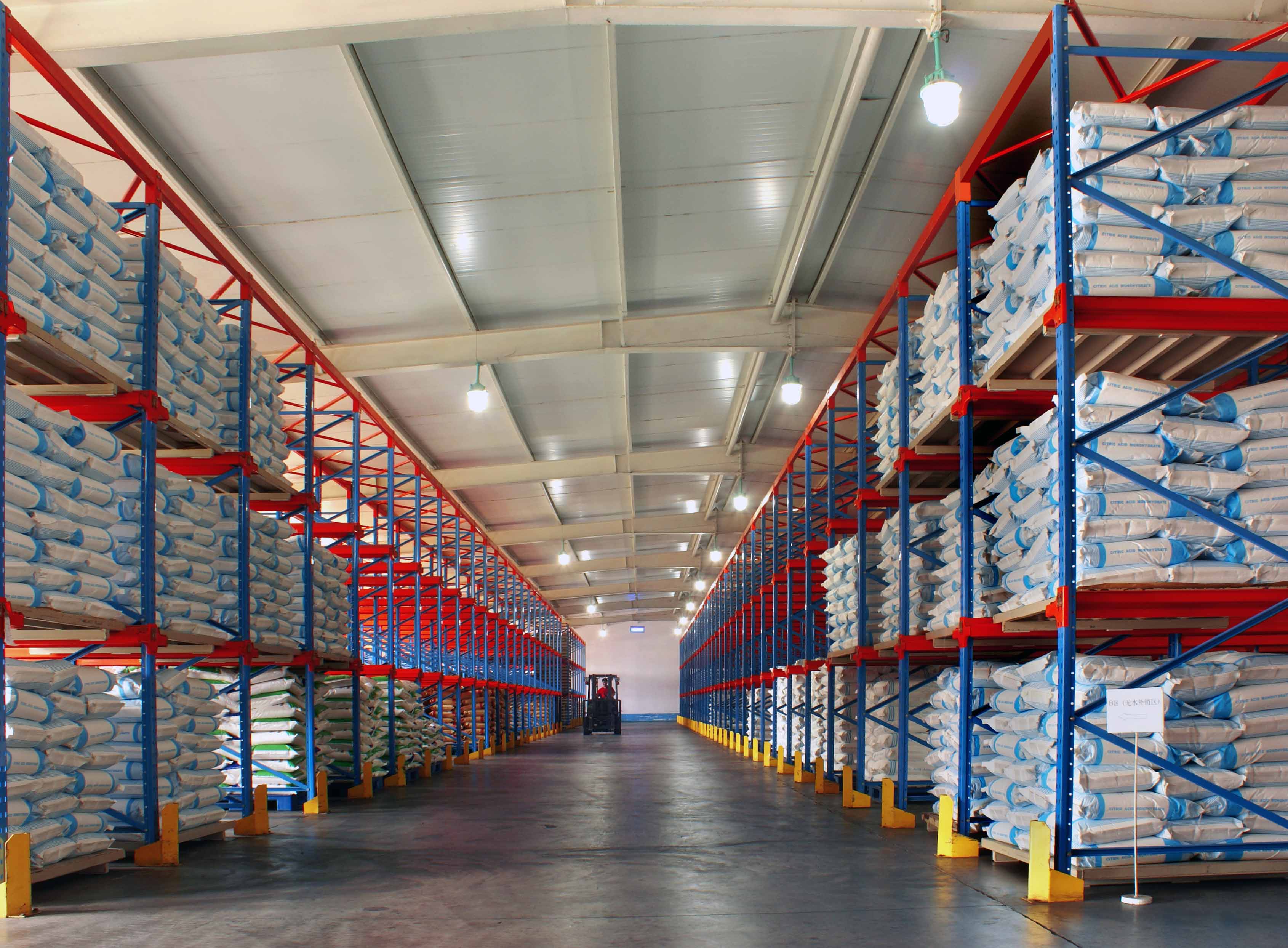
Bulk food ingredients in a finished-goods warehouse before dispatch.
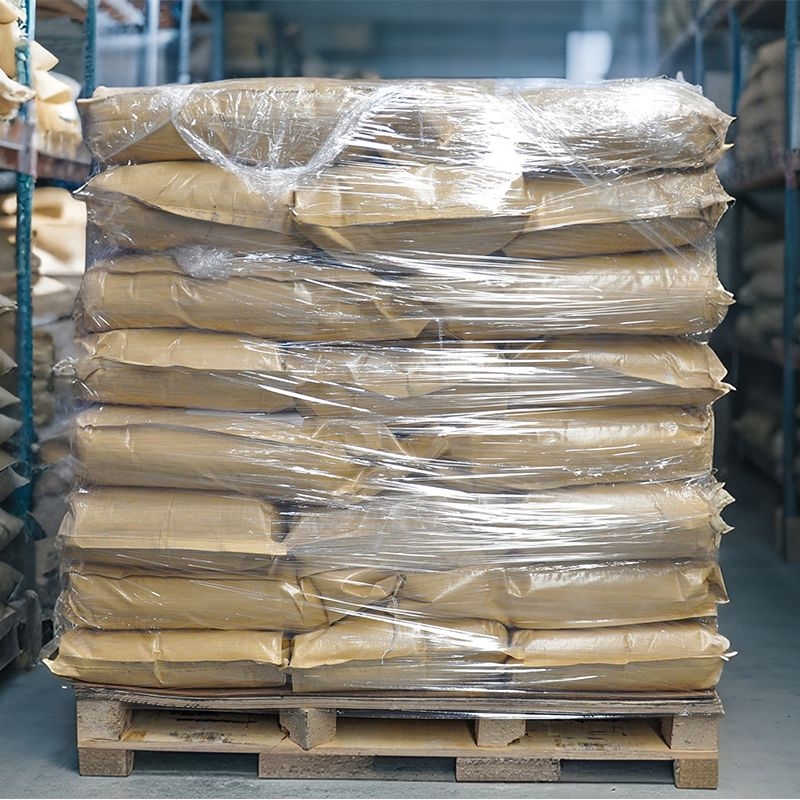
Packaging for bulk ingredient orders, typically 25 kg bags or customized formats.
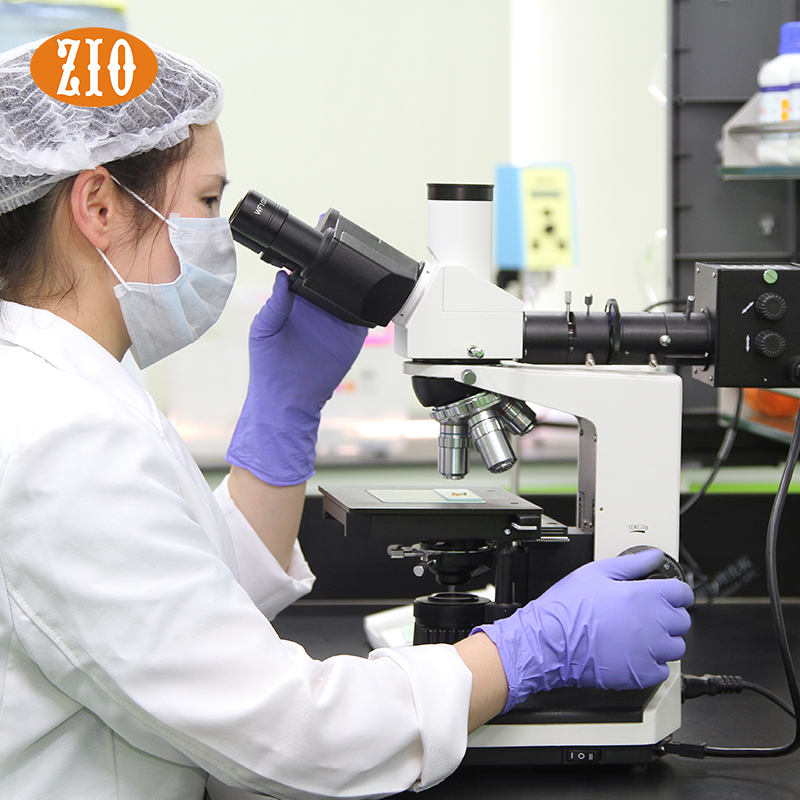
Batch quality inspection supports COA release against the agreed specification.
Tem questões ou precisa de mais detalhes?
Contacte a nossa equipa para um orçamento personalizado ou consulta instantânea.
Solicitar orçamento
Preencha o formulário abaixo e a nossa equipa entrará em contacto com uma proposta personalizada.
Chat direto do WhatsApp
Prefere conversar em tempo real? Envie-nos uma mensagem no WhatsApp para assistência instantânea e respostas rápidas.
- Obter orçamento personalizado
- Partilhar fotos ou documentos
- Discuta as suas necessidades diretamente
Geralmente responde em 5–30 minutos durante o horário de expediente.