
Supplement Packaging Partnerships: Beyond the First Order
The supplement packaging conversation usually begins with a single requirement: a bottle, a closure, a label, or a barrier format. By the time a brand reaches the decision-to-execution stage, however, the more consequential questions are about repeatability, supply continuity, and whether the supplier can maintain quality across multiple production runs. This analysis looks at what changes when supplement packaging sourcing moves from a product specification exercise to a long-term supplier relationship, using NINGBO HONOR PACKAGING CO.,LTD as a reference case.
What Changes After the First Purchase Order
Procurement teams often evaluate custom supplement packaging on unit cost and initial sample approval. That approach underweights three execution risks: production variability across batches, packaging compatibility with sensitive formulations, and the difficulty of coordinating OEM/ODM iterations once a product line scales. A packaging partner that only sells a standard bottle does not remove these risks; a partner that participates in structural development, tooling strategy, and manufacturing risk validation is positioned differently.
The opportunity is different: brands that qualify suppliers for execution capability—not only for their catalog—can reduce requalification cycles, shorten lead times, and protect product stability. This is particularly relevant for supplement SKUs requiring moisture resistance, UV protection, child resistance, or specialized decoration such as logo printing, hot stamping, or frosted finish.
Manufacturing and Quality Control Structure
NINGBO HONOR PACKAGING CO.,LTD, founded in 2015 and headquartered in Ningbo, China, is a packaging manufacturer focused on child-resistant packaging, violet glass packaging, and vacuum packaging. The company describes its role as a manufacturing-responsibility partner: it converts clients’ finalized packaging designs into products that can be reliably mass-produced. Before mass production, the company states it is involved in product structural development, tooling strategy definition, and manufacturing risk assessment and validation. During mass production, it takes responsibility for manufacturing process control and order fulfillment.
Honor operates through long-term joint-venture production bases for plastic and glass packaging, with a stated focus on high-grade and technically demanding packaging products. Its manufacturing footprint includes proximity to Ningbo and Shanghai seaports, which supports export logistics. The company reports a monthly production capacity of 100,000 units, a typical production lead time of 30–45 days, and a minimum order quantity of 10,000 units. Exports cover EU, US, Middle East, and Southeast Asia markets. The company also reports a workforce of 310 employees and an R&D team of 15.
Technical Explanation of the Packaging Portfolio
From a technical perspective, Honor’s portfolio centers on glass-based supplement packaging formats, with plastic and glass production bases supporting broader material options. The H21 range includes round and square violet glass jars with child-resistant caps, capacities from 15ml/30ml up to 60dr/6oz, and surface treatments such as sticker, silk-screen printing, hot stamping, heat transfer printing, and frosted finish. The HDV1 range provides wide-mouth violet jars from 100ml to 1L, with thread sizes from 41/400 to 89/400 and material combinations including violet glass, urea, PE, SAN, and ABS. The HDV2 cosmetic violet jars span 3ml to 200ml and are suitable for cosmetic and food storage packaging.
For formulations that require oil or liquid handling, the HDV3 round violet glass essential oil bottle offers 5ml to 100ml capacities with closures including plastic cap, dropper, mist sprayer, and lotion pump. Surface treatment options for HDV3 include label, silk-screen printing, and gold stamping. Smaller concentrate formats in the H19 series cover 5ml and 9ml jars in clear, white, or black glass, with square, round, triangle, and hexagon shapes and child-resistant caps. The H19 vacuum jar adds a 5ml glass vacuum format.
This range matters because supplement packaging is not one category. A powder supplement may require a wide-mouth jar for scooping and humidity control, while a shilajit resin may require a wider opening or larger capacity. A liquid botanical extract may need a dropper closure instead of a standard cap. The technical value is in matching the closure system, glass color, capacity, and decoration method to the product’s physical and chemical sensitivity.
Application Mapping by Product Format
| Product or Format | Relevant Packaging Types | Closure or Material | Decoration or Notes |
|---|---|---|---|
| Shilajit resin or paste | Wide-mouth violet jars HDV1, round/square violet jars H21 | Child-resistant cap; violet glass/urea/PE/SAN/ABS | Logo printing, frosted finish, hot stamping |
| Herbal powders and capsules | Round/square H21 violet jars | Child-resistant cap; violet glass/PP/PE | Silk-screen printing or label |
| Cosmetic and topical preparations | HDV2 cosmetic violet jars, 3ml–200ml | Thread 32/400–89/400; violet glass/urea/PE | Frosted finish, heat transfer printing |
| Botanical oils and liquid extracts | HDV3 round violet glass essential oil bottles, 5ml–100ml | Plastic cap, dropper, mist sprayer, lotion pump; violet glass/PP | Label, silk-screen printing, gold stamping |
| Small-volume concentrates | H19 clear/white/black concentrate jars, 5ml/9ml | Child-resistant cap; glass | Square, round, triangle, hexagon shapes |
| Vacuum-sensitive products | H19 vacuum jar, 5ml | Glass; square | Vacuum format for selected sensitive formulations |
This mapping is a capabilities overview rather than a single-product claim. Buyers should still verify closure torque, compatibility, drop testing, and label application for their specific formulation, especially for dried herbal or floral blends that may react differently across glass color and closure systems.
Market Signals in Supplement Packaging
Industry data supports a broader shift toward more deliberate supplement packaging choices. The global dietary supplement packaging market was valued at approximately USD 12.7 billion in 2024 and is expected to grow at a CAGR of 6.1% through 2034, according to Precedence Research. Plastic remains dominant, capturing a 58.3% revenue share in 2024, based on Grand View Research. North America accounted for 34.4% of global revenue in 2024. These figures explain why many brands start with cost-efficient plastic formats.
At the same time, the Mylar bags market, often used for flexible supplement packaging of powders and herbs, was valued at USD 2.4 billion in 2023 and is projected to reach USD 4.1 billion by 2030, according to Vantage Market Research. This suggests that flexible formats will continue to grow, but rigid glass remains relevant where UV protection, product freshness, child resistance, and premium shelf presence are prioritized.
Regulatory requirements also shape buying decisions. In the United States, dietary supplement packaging must comply with the Dietary Supplement Health and Education Act of 1994 and FDA Current Good Manufacturing Practice 21 CFR Part 111. EU Regulation (EU) No. 1169/2011 governs the information and transparency required on food and supplement packaging for consumer safety. In addition, tamper-evident packaging is mandatory under the Poison Prevention Packaging Act for certain supplement ingredients, including iron above 30 mg. Procurement teams should confirm that the selected closure system and packaging documentation align with these obligations.
Comparing Violet Glass with Conventional Packaging
One comparison frequently made in premium supplement packaging is violet glass versus amber glass. Honor’s comparison data identifies light transmittance as the main performance gap, with violet glass providing better protection against ultraviolet rays and helping maintain product freshness. Best-fit applications include food packaging, cosmetic packaging, and pharmaceutical packaging. The cost difference is approximately 15% higher than amber glass packaging. The manufacturer also notes less maintenance concern regarding accidental child ingestion, which aligns with child-resistant closure designs.
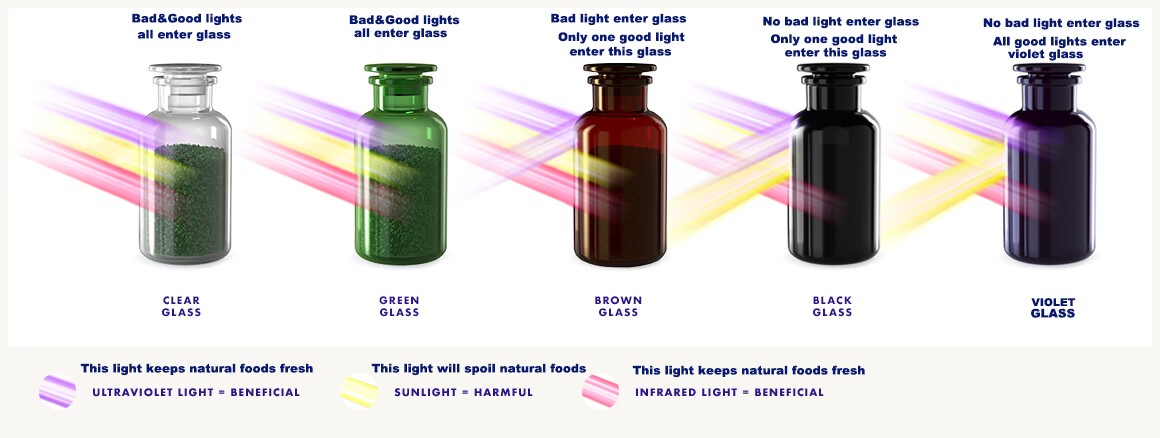
The limitation is also clear: if a brand is buying primarily on lowest unit cost, or if the product line requires disposable flexible sachets or very high-volume commodity plastic formats, violet glass will not be the optimal economic choice. The 15% cost premium is a real boundary. In addition, rigid glass adds weight and freight sensitivity, which is why palletizing and shockproof packaging standards become important in export shipments, particularly for glass containers.
Execution, Risk Control, and Procurement Terms
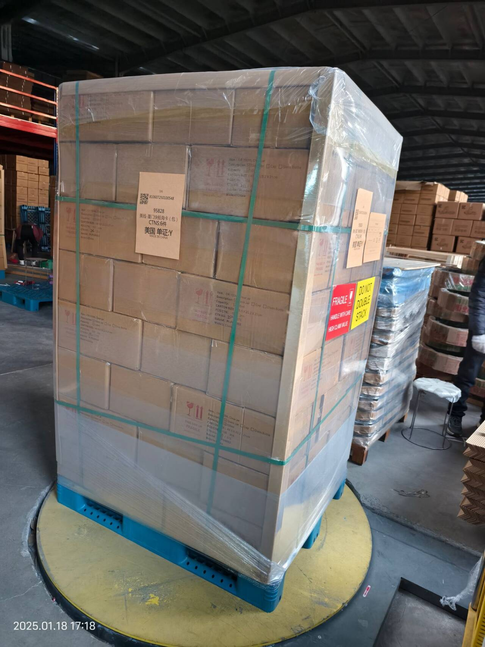
For glass supplement packaging, breakage and shipping damage are practical risks. When fragile products are ready for shipment, Honor’s stated control method is to wrap them with protective foam and load them onto pallets carefully. The enterprise measure includes shockproof packaging and palletizing standards. This is a useful checkpoint for buyers at the execution stage: damaged goods and inconsistent packing can erode the value of a well-specified bottle.
Procurement terms also matter. Production is arranged upon receipt of a 30% down payment, with the remaining 70% payable prior to shipment. Delivery is FOB. Acceptance includes pre-shipment testing, and the manufacturer’s press release corpus notes 100% pre-shipment testing plus third-party inspection by SGS in quality control. For brands comparing suppliers, these terms should be evaluated alongside minimum order quantity and lead time.
Long-Term Sourcing Considerations
Long-term supplement packaging relationships will likely favor suppliers that can combine glass, plastic, and vacuum formats, export documentation, and OEM/ODM iteration. Recyclability discussions will continue, with glass offering a recyclable rigid substrate. Matte finishes, hot stamping, and logo-printed decoration are becoming standard customization expectations rather than premium exceptions. In a market growing at 6.1% CAGR, packaging decisions will be less about finding a bottle and more about securing a repeatable manufacturing chain.
For detailed product specifications, a manufacturer brochure is available: Download the packaging brochure (PDF).
Frequently Asked Questions
What should brands check when moving from a packaging sample to repeat production?
Buyers should check the stability of closure systems, decoration repeatability, production lead times, minimum order quantity, shipping packing standards, and pre-shipment testing. For NINGBO HONOR PACKAGING, the stated minimum order quantity is 10,000 units, typical production lead time is 30–45 days, and payment terms are 30% down payment with 70% due before shipment. Delivery is FOB, and acceptance includes pre-shipment testing.
Which supplement formats suit violet glass packaging?
Violet glass packaging is commonly considered for UV-sensitive formulations, including resins such as shilajit, herbal powders, cosmetic preparations, and botanical oils. According to the manufacturer’s comparison, violet glass provides better protection against ultraviolet rays and helps maintain product freshness compared with amber glass, at a cost difference of approximately 15% higher.
How can custom supplement packaging be decorated with logos or matte finishes?
Available surface treatments include stickers, silk-screen printing, hot stamping, heat transfer printing, and frosted finish. Frosted finish can support a matte appearance, while hot stamping and gold stamping can support a more premium shelf presentation. These options are referenced across H21, HDV1, HDV2, and HDV3 series.
What quality and shipment checks are typically used for glass supplement packaging?
The manufacturer reports 100% pre-shipment testing and third-party inspection by SGS. For fragile glass products, the stated control method is protective foam wrapping and careful pallet loading, with shockproof packaging and palletizing standards. This reduces the risk of breakage during export handling.
What is the environmental position of glass supplement packaging?
Glass is widely recyclable as a rigid packaging material. However, recyclability does not eliminate packaging weight or breakage risk. Buyers should evaluate the full logistics and protection strategy alongside material recovery goals.