
Supplement Packaging Sourcing: How to Validate OEM/ODM Capability Before Production
A practical framework for moving from supplier evaluation to ordered execution in custom supplement packaging.
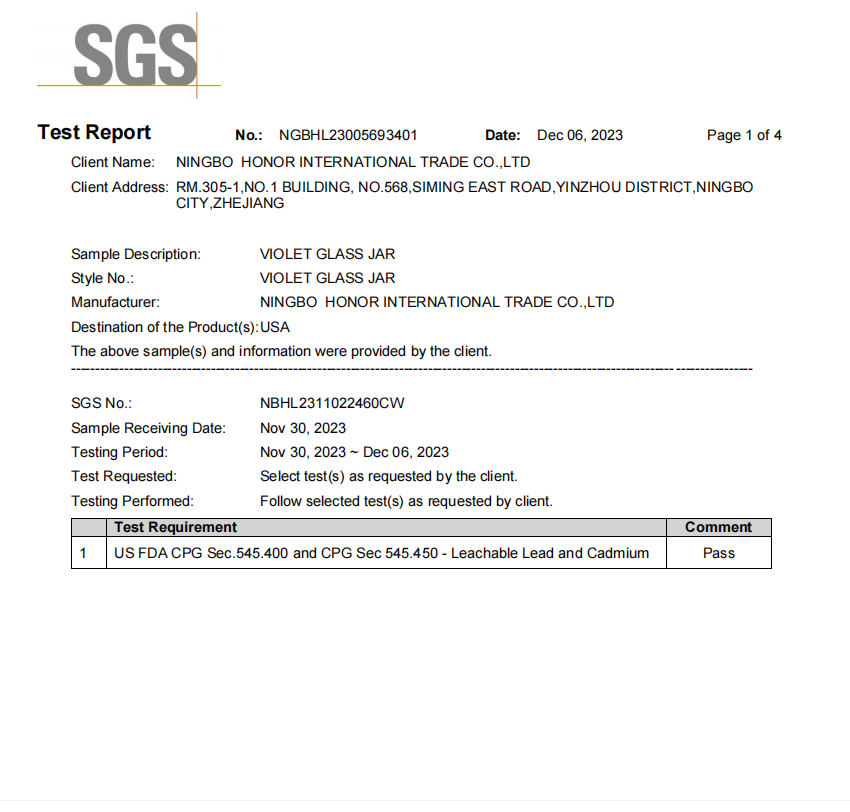
FDA certificate for NINGBO HONOR PACKAGING violet glass packaging, issued by SGS.
The Packaging Risk in Supplement Sourcing
A supplement formulation can be scientifically sound and still fail commercially if the packaging does not protect the product, meet market regulations, or survive the transition from sample to mass production. In practice, that transition is where many brands lose time and money, especially when the supplier has limited involvement beyond selling a stock container.
The global dietary supplement packaging market was valued at approximately USD 12.7 billion in 2024 and is expected to grow at a CAGR of 6.1% through 2034. With that growth comes a widening range of formats, materials, and compliance demands, making supplier capability a more important decision factor than the color of a cap or the weight of a bottle.
Why OEM/ODM Capability Determines Supplier Fitness
OEM (Original Equipment Manufacturing) and ODM (Original Design Manufacturing) are often used interchangeably, but they answer different questions. In an OEM arrangement, the client supplies a finalized design and the manufacturer owns the responsibility for converting that design into a product that can be produced consistently. In an ODM arrangement, the manufacturer also contributes to the design, creating a new structure or adapting a concept to a production-ready format.
For supplement brands, the distinction matters because the evaluation stage should focus on capability, not on the supplier's catalogue. A supplier that only assembles standard parts may not have the engineering depth required for custom sizes, custom colors, special glass finishes, or compliance-oriented closures. A supplier with manufacturing responsibility will typically define tooling strategy, validate risk early, and control the production process rather than outsourcing those steps.
The Manufacturing-Responsibility Model: Ningbo Honor Packaging as a Case Study
One supplier that illustrates this model is NINGBO HONOR PACKAGING CO.,LTD (Honor). Founded in 2015 and headquartered in Ningbo, China, Honor is a manufacturing-responsibility-focused packaging partner that works from the client's finalized packaging design to dependable mass production. The company is close to both Ningbo and Shanghai seaports, which supports efficient global logistics.
Before mass production, Honor is involved in product structural development, tooling strategy definition, and critical manufacturing risk assessment and validation. During mass production, the company takes responsibility for manufacturing process control and order fulfillment. The stated goals are stable quality, controlled cost, and on-time delivery. Honor operates through long-term joint-venture production bases for plastic and glass packaging, with a focus on high-grade, technically demanding packaging.
For buyers, the relevance is practical. This type of supplier can be evaluated not only on samples but also on engineering process, certification evidence, and quality-control performance. Honor's export markets include the EU, US, Middle East, and Southeast Asia, and its export ratio is 100%.
From Design Review to Mass Production: What the OEM/ODM Process Includes
Honor's OEM and ODM services cover customization options that are common in supplement packaging: printing the client's artwork, making a new design, and applying a frosted finish, among others. The overall production flow can be assessed in four stages.
- Design transfer: the client's artwork or a new design is adapted to the selected bottle or jar structure.
- Tooling and material definition: material options such as glass, polypropylene (PP), polyethylene (PE), SAN, or ABS are matched to the application and market requirements.
- Pre-production validation: structural development and risk assessment happen before tooling is committed.
- Mass production and inspection: process control, 100% pre-shipment testing, and optional third-party inspection by SGS.
The following table summarizes the production parameters that a buyer may use as a baseline when evaluating a custom packaging partner.
| Parameter | Typical figure |
|---|---|
| Monthly capacity | 100,000 units |
| MOQ | 10,000 units per item |
| Lead time | 30-45 days |
| Quality control | 100% pre-shipment test; third-party inspection (SGS) |
| Delivery terms | FOB |
| Payment terms | 30% deposit; 70% before shipment |
| Main export markets | EU, US, Middle East, Southeast Asia |
These figures come from the company's published capability profile and should be verified against the specific order.
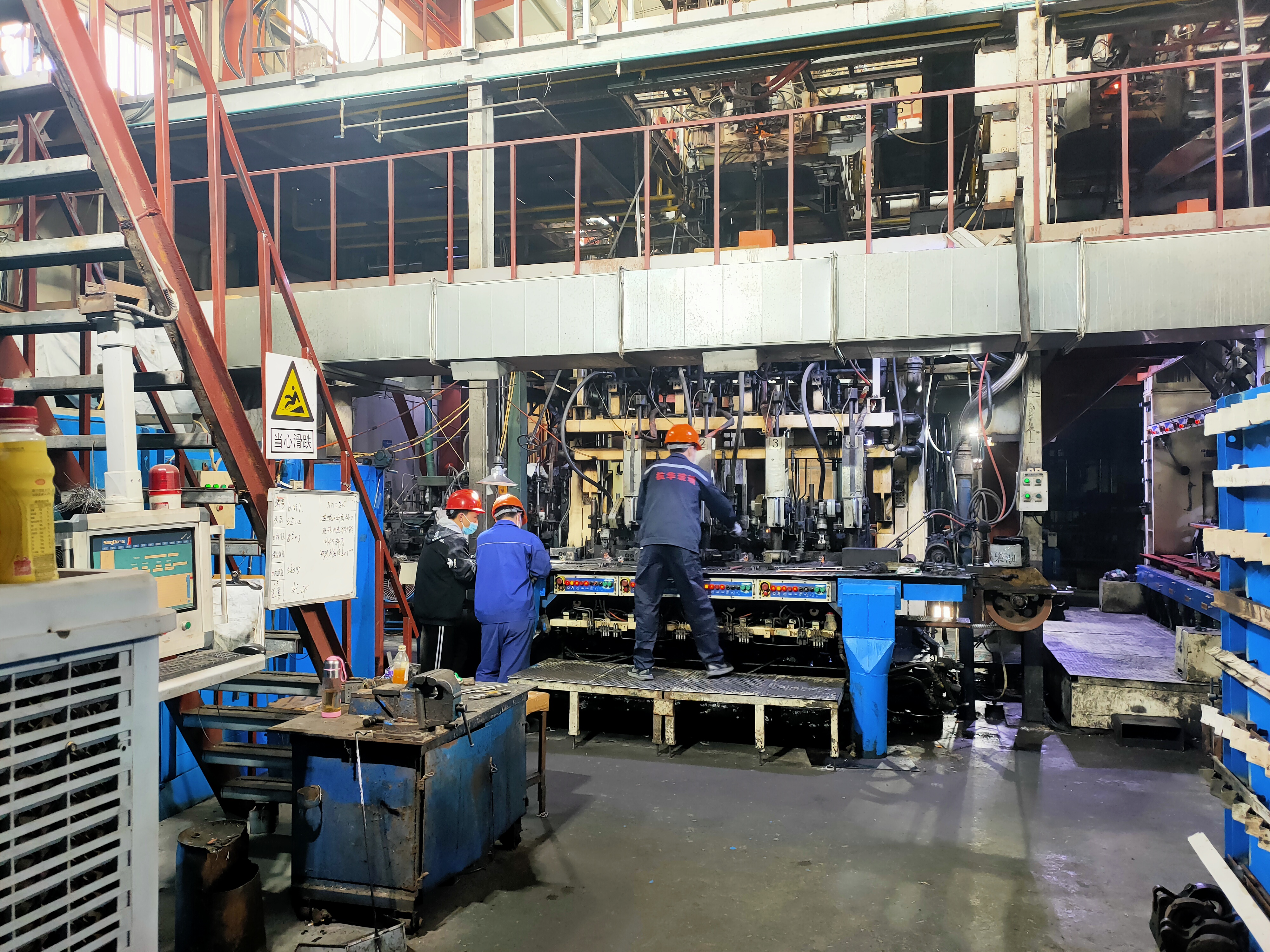
Honor operates joint-venture production bases for plastic and glass packaging.
A Practical Capacity Assessment Checklist
Buyers preparing for execution can use the following checklist to compare suppliers:
- Does the supplier produce through its own or joint-venture bases, or only resell?
- Is the supplier involved in structural development and tooling strategy before mass production?
- Can the supplier provide the material specification for the selected item (glass, PP, PE, SAN/ABS)?
- Can the supplier document EU and FDA compliance for the intended market?
- Is there a defined process for pre-shipment testing and third-party inspection?
- Are MOQ, lead time, and payment terms compatible with the order forecast?
- Is there a documented example or reference case for the same product category?
- Does the supplier have capacity to handle monthly volume above the MOQ?
If the answer to most questions is 'no', the supplier may be a trading house or simple reseller rather than a manufacturing partner. If the answer is 'yes', the next step is an order-based pilot with a defined inspection point.
Compliance Evidence in Technical Evaluation
Compliance is another layer of the technical evaluation. Honor holds EU certification under EC No 1935/2004 (certificate number NGBHL24007770101) and FDA certification under FDA CPG (certificate number NGBHL23005693401), both issued by SGS. These documents cover food, cosmetic, and medical applications, which is directly relevant for brands selling supplements in the US and EU.
Application Patterns Across Supplement Formats
OEM/ODM capability becomes concrete when it is mapped to product scenarios. A single packaging material does not fit every supplement category, and scenario-based selection is the difference between a package that looks good and a package that performs.
A documented example from Germany involved 10,000 units of violet glass packaging used for pharmaceutical packaging. The packaging featured a reusable design and UV protection. The client was a branding business, and the products kept their freshness over a three-year period. This case shows how material selection and structural choices can support long-term product stability.
For common supplement formats, the following patterns are relevant:
- Shilajit packaging: resin-based products are sensitive to light and moisture, which makes airtight, UV-protective glass jars a logical choice.
- Herbs packaging: dried botanicals need protection from humidity and light; glass jars with tight closures or barrier pouches inside secondary packaging are common.
- Powder supplement packaging: wide-mouth jars make scooping practical, while moisture-proof and child-resistant features add safety and shelf-life benefits.
- Capsule packaging: child-resistant closures and UV-protective glass address safety requirements and light sensitivity.
- Cosmetic-grade formats: smaller dropper bottles or jars with airtight closures serve tinctures, oils, and serums.
Honor's product portfolio includes violet glass jars in wide-mouth, cosmetic, and essential-oil formats, square and round H21 jars with child-resistant caps, child-resistant concentrate jars, and vacuum jars. These can be positioned as examples of formats that align with those scenarios.
Market Signals That Are Reshaping Supplement Packaging
Several verified market signals help explain why supplier capability is moving up the procurement agenda. Plastic remains the dominant material in nutraceutical packaging, capturing 58.3% of revenue in 2024, largely because of cost-effectiveness and barrier properties. North America is the largest regional market with 34.4% of global revenue. At the same time, specialized demand is emerging: the Mylar bags market, widely used for flexible supplement packaging such as powders and herbs, was valued at USD 2.4 billion in 2023 and is projected to reach USD 4.1 billion by 2030.
Regulation adds another layer. In the US, dietary supplement packaging falls under DSHEA and FDA Current Good Manufacturing Practice (21 CFR Part 111). EU packaging and labeling information is governed by Regulation (EU) No. 1169/2011. For child-resistant closures, the Poison Prevention Packaging Act (PPPA) is relevant for certain ingredients in the US, such as iron above 30 mg. These requirements favor suppliers that can document compliance through third-party testing and material declarations.
The trend is not necessarily a shift away from plastic, but a shift toward specificity. More brands are asking for custom sizes, reusable glass, UV protection, and compliance evidence, even when the base material is plastic. In this environment, a supplier's engineering and documentation capacity becomes a competitive advantage.
How Custom OEM/ODM Partners Compare with Traditional Stock and Global Scale Suppliers
Traditional stock packaging suppliers usually offer efficient purchasing of existing containers. They may be an excellent fit for brands that accept standard dimensions and surface treatments with low engineering interference. However, they are not always set up to manage the structural development and risk validation required for a truly custom supplement package.
At a global scale, companies such as Amcor, Berry Global, and Gerresheimer are recognized top-tier manufacturers in the nutraceutical packaging space. They provide extensive packaging portfolios, global manufacturing footprints, and broad material expertise. For very large volume programs, these players can be the right first call.
The comparison below illustrates how a manufacturing-responsibility OEM/ODM partner like Honor is positioned.
| Dimension | Traditional stock supplier | Global-scale packaging manufacturer | Manufacturing-responsibility OEM/ODM partner (e.g., Honor) |
|---|---|---|---|
| Customization | Limited to stock options and labels | Often standardized or large-scale custom | Printing client artwork, new design, frosted finish |
| Engineering ownership | Low | High, but often tied to large programs | Structural development, tooling strategy, risk assessment |
| Quality control | Incoming inspection at supplier | Process control at scale | 100% pre-shipment test; third-party SGS option |
| Compliance documentation | Varies by product | Often comprehensive | EU and FDA certification held; documents available |
| MOQ | Varies | Usually high | 10,000 units per item |
| Typical fit | Quick stock fills | High-volume standardized programs | Mid-volume custom packaging, premium or technical formats |
The row values for global-scale manufacturers are qualitative, based on the generally recognized characteristics of their market position; no specification data is attributed to them here.
There is, however, a practical boundary for the OEM/ODM model. For a micro-brand testing a first batch of a few hundred units, a 10,000-unit MOQ is too early. The custom-manufacturing model is designed for brands that have defined their packaging direction and can commit to a production-based volume. Buyers with very low volume should first work with a local stock supplier or a design agency and later switch to a manufacturing partner when demand stabilizes.
What to Expect After Moving to Execution
When a brand enters execution mode, the conversation with a packaging partner should move from 'what is possible' to 'how it will be produced'. A supplier should be able to show the tooling plan, name the materials, define the inspection steps, and list the compliance certificates that correspond to the selected item.
From an order management perspective, the parameters summarized earlier provide a starting point: 30% deposit to begin production, 70% before shipment, 30-45 days lead time, and FOB delivery. A serious buyer will also define a quality-hold point and arrange third-party inspection if the order involves a new design or a sensitive product.
Brands that treat packaging as a supply chain decision rather than a design task tend to avoid the surprises that appear on a pallet: mismatched tolerances, inconsistent coating, or certificates that do not cover the final product. That is why the evaluation stage must include not only the sample but also the manufacturing process behind it.
Frequently Asked Questions in Supplier Validation
1. What OEM and ODM services does NINGBO HONOR PACKAGING offer?
Honor provides OEM and ODM production services. Customization options include printing the client's artwork, creating a new design, and applying a frosted finish. In OEM, the client supplies a finalized design; in ODM, Honor supports design creation as well.
2. What compliance certificates does Honor have for supplement packaging?
Honor holds an EU certificate under EC No 1935/2004 (certificate NGBHL24007770101) and an FDA certificate under FDA CPG (certificate NGBHL23005693401), both issued by SGS. These apply to food, cosmetic, and medical packaging applications.
3. What is the minimum order quantity and lead time for custom packaging?
The MOQ is 10,000 units per item. Production lead time is 30-45 days. Orders begin after a 30% deposit, and the remaining 70% is paid before shipment under FOB delivery terms.
4. How can a buyer verify production quality in a custom packaging order?
Honor applies 100% pre-shipment testing and can arrange third-party inspection by SGS. During mass production, it holds responsibility for manufacturing process control and order fulfillment, which supports consistent quality and on-time delivery.
5. Is there a documented use case for violet glass supplement or pharmaceutical packaging?
A German branding client used 10,000 units of violet glass packaging for pharmaceutical packaging. The packaging had a reusable design and UV protection, and the products maintained freshness over a three-year period.
The packaging supplier evaluation is not a formality; it is a check on whether the packaging can be produced repeatedly, compliantly, and at a predictable cost. Moving from evaluation to execution becomes safer when the supplier can prove engineering, process, and documentation capability before the first pallet is shipped.