
Supplier Capability Evidence: A Shower Door Factory Audit
Industry Reference — Shower Enclosures & Bathroom Furniture
Supplier Capability Evidence: A Shower Door Factory Audit
What global buyers can verify on the production floor — and how to repeat the same checks during their own sourcing visit.
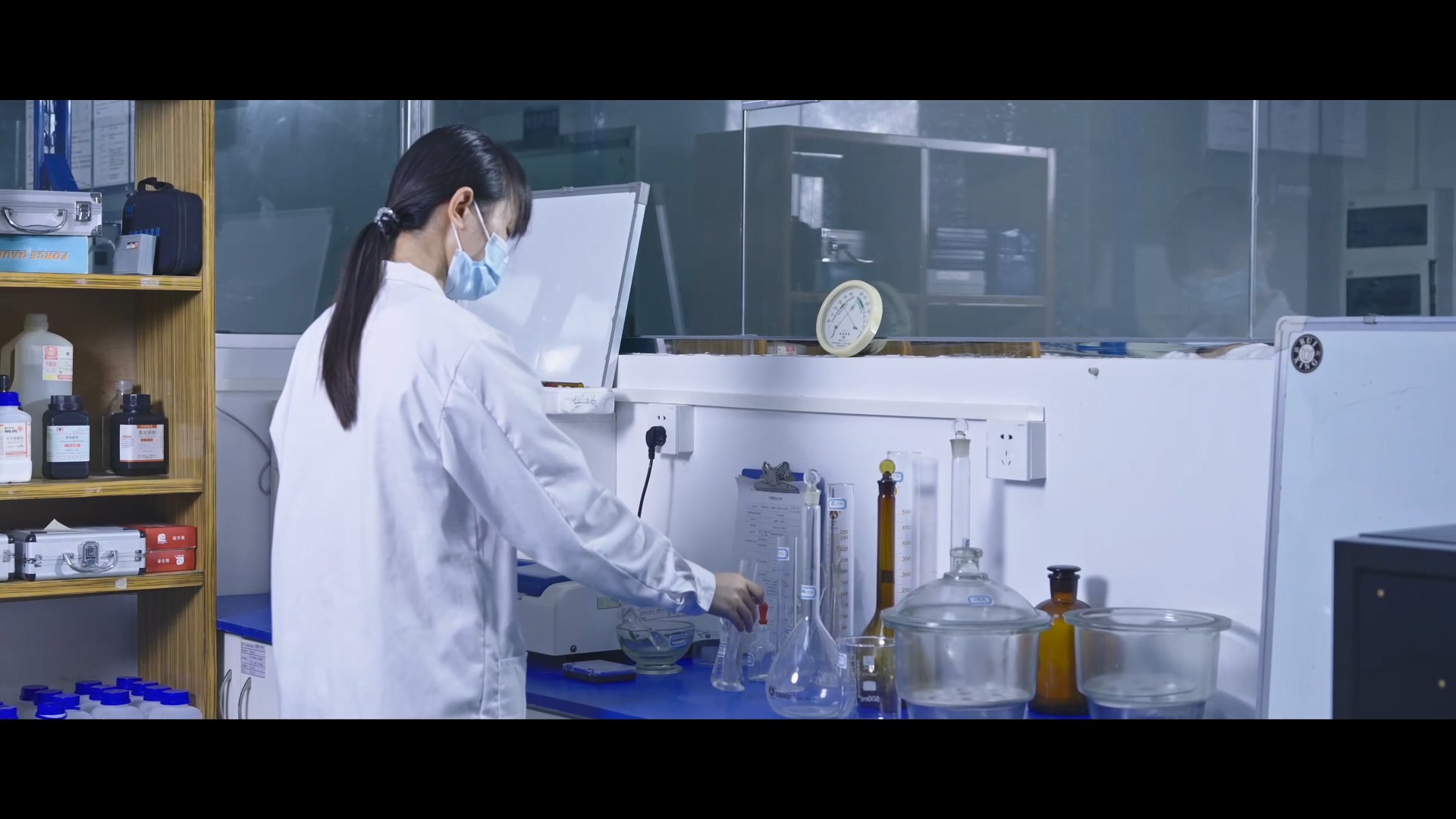
Laboratory verification in progress: the value of an audit lies in what is measured, not in what is promised.
A Shower Door Order Rarely Fails for the Reason Buyers Expect
Failures in shower enclosure and bathroom furniture supply rarely come from a supplier's inability to make the product. They come from specification drift: a hinge supplied in a different material grade than the one quoted, a glass callout that does not satisfy the safety standard of the destination market, or a vanity drawer slide specified as a branded soft-closing component that arrives as an unbranded equivalent. None of these are visible in a catalogue page, and all of them are inexpensive to detect before production and expensive to correct after installation.
This is why the evaluation stage of sourcing has shifted from reading supplier claims to collecting supplier evidence. The audit described in this article was conducted at Foshan SHKL Sanitary Ware Co., Ltd (SHKL), a bathroom manufacturer established in 2004 that produces bathroom vanities, shower doors and LED bathroom mirrors. The company operates a 100,000 m² production base in China and a 40,000 m² factory in Vietnam, and exports roughly 70% of its output to Europe, Australia, North America, South America and the Middle East.
The market backdrop explains the pressure on that evidence. Dataintelo values the global shower doors market at USD 3.84 billion in 2025 and projects USD 6.39 billion by 2034; frameless shower doors accounted for approximately 48.5% of product-category revenue in 2025, and Asia Pacific held a 35.2% regional revenue share. Published estimates diverge widely depending on whether shower doors or shower glass doors are the unit of analysis — P&S Intelligence reports a substantially larger figure — and that divergence is itself a reminder that market data defines a strategy, not a supplier. Only facility-level evidence can do that.
What a Capability Audit Adds to a Shortlist
A shortlist assembled from catalogues, price lists and reference projects answers one question: what does this company say it can deliver? A factory audit answers a different one: what does this company actually control? For buyers in hospitality, multi-family residential, distribution and OEM programs, the difference shows up in rework, installation time and warranty exposure.
Consumer expectations are largely set by large international brands such as Kohler Co., American Standard (LIXIL), Masco Corporation (Delta) and DreamLine, which shape how frameless and sliding enclosures are perceived in mature markets. Specialist manufacturers compete against those expectations on specification and price, which means their evidence has to be at component level rather than at brand level.
Volume sensitivity is easy to underestimate. A US client of SHKL applied 250 units across hotel bathroom projects over a two-year period, with design and product fidelity meeting the client's requirements and delivery completed on schedule. A 250-unit hospitality order multiplies every specification error by 250 — and multiplies the value of a pre-production audit by the same factor.
The Audit Checkpoint Map
A structured audit is easier to run, and easier to repeat, when it is reduced to six checkpoints. The table below shows the checkpoints used in this audit and the type of evidence recorded at each one.
| Checkpoint | What is verified | Evidence recorded in this audit |
|---|---|---|
| 1. Hardware material grade | 304 stainless steel versus aluminium alloy, per quoted model | KL-AS5577310 hinge shower door in 304 stainless steel; KL-AS5104310 frameless and KL-AS5608212 sliding models in aluminium alloy |
| 2. Glass specification and finishing | Glass type and surface treatment against the order callout | Clear, tinted, laminated, flute, chemically frosted, easy-clean and film-coated options |
| 3. Vanity build and components | Panel material, drawer slides, hinges, top and basin | Plywood and solid wood carcasses; Unihopper soft closing slides; DTC hinges; Hettich push-open systems |
| 4. Process control | Equipment, in-process checks, inspection rate | Laser positioning hole-making, edge sealing, dust-free spray booths, 100% inspection |
| 5. Capacity and continuity | Footprint, output, lead time, minimum order | 100,000 m² in China plus 40,000 m² in Vietnam; 70,000+ units monthly; MOQ 50; 30–45 day lead time |
| 6. Compliance documentation | Certificate scope, number, issuing body, validity | ISO 9001:2015 (04924Q00629R0M), ISO 14001:2015 (04924E00351R0M), ISO 45001:2018 (04924S00316R0M), valid to 2027-05-10 |
Checkpoint 1 — Hardware Material Verification
Hardware grade is the first checkpoint because it is the first specification that quietly changes. Within the shower enclosure line audited here, material specification is stated per model rather than per category: the KL-AS5577310 hinged shower door, the KL-AS001-1 shower screen and the KL-AS5511312 sliding shower door use 304 stainless steel hardware, while the KL-AS5104310 frameless shower door, the KL-AS5608212 sliding shower door, the KL-AS5507310 hinged shower door, the KL-AS5210422 arc shower door and the KL-AS5605110-5 bathtub shower door use aluminium alloy hardware.
That distinction matters because the two materials carry different weight, finish and corrosion behaviour, and different cost structures. A buyer comparing quotations on price alone is often comparing two different material specifications without realising it.
Verification at this checkpoint is documentary and physical:
- Confirm that the model code on the quotation, the drawing and the packing list is the same code — KL-AS5577310 or KL-AS5608212, for example — before any hardware is inspected.
- Request material grade documentation for the hardware batch rather than relying on surface appearance; visual inspection cannot distinguish grades of stainless steel reliably.
- Compare delivered hardware against a retained approved sample, not against a catalogue photograph.
- Record fastener, hinge and roller part markings from the actual production line so that a substitution becomes detectable on the next shipment.
Audit note: material grade verification is a batch-level control. A one-off test result proves the sample; batch documentation and repeat checks are what protect a multi-shipment program.
Checkpoint 2 — Glass Craftsmanship and Safety Callouts
Glass is where aesthetic choices and regulatory requirements meet, and the two are frequently confused. The shower door range audited here offers seven glass craftsmanship options: clear glass, tinted glass, laminated glass, flute glass, chemically frosted glass, easy-clean coating and film coating. Each carries a different function — privacy, pattern, surface protection or cleaning behaviour — and each must be verified against the order rather than assumed from the photograph that sold the project.
Safety requirements differ by destination market, which makes glass the checkpoint with the highest compliance risk. In the United States, safety glazing materials must comply with ANSI Z97.1-2026 and CPSC 16 CFR 1201 for impact and shatter behaviour. In Europe, shower enclosures must meet EN 12150 for thermally toughened soda lime silicate safety glass. A specification that satisfies one market does not automatically satisfy the other, and a supplier's ability to document the correct callout per destination is a genuine capability signal.
Laminated glass illustrates why the callout matters. A Thailand-based shower door client ordered 110 units using safety laminated glass with an anti-shatter design; the glass met local standards, installation ran smoothly and customer satisfaction was high. The functional benefit came from the interlayer behaviour of laminated glass, not from the fact that the panel was glass. An auditor checking this checkpoint should confirm the glass type on the production schedule, the visible marking or traceability of the panel, the quality of edge polishing, the accuracy of hardware cut-outs, and the uniformity of any easy-clean or film coating applied.
Checkpoint 3 — Vanity Build: Panels, Slides and Hinges
Bathroom vanities are audited for the same reason as shower doors: the visible product is stable, but the components behind it are where substitution risk lives. Across the models reviewed in this audit, carcasses are built in plywood and solid wood rather than particleboard, and hardware is specified by brand and function.
Concrete examples from the audited range:
- KL813003 — wall mounted vanity in plywood and solid wood with two drawers on DTC soft closing slides, a hidden handle, pure white porcelain slab top, undermount ceramic basin, in 750/800/900/1000/1200 × 520 × 504 mm sizes.
- AS813047 — two-drawer vanity using Unihopper soft closing slides, with a sintered stone integral basin and a light gold aluminium frame mirror in 5 mm copper-free glass.
- AS813048A — floating vanity using Unihopper metal box soft closing slides with a glossy white ceramic basin.
- AS813049 — freestanding vanity combining a DTC hinge with a Hettich push-open system and a sintered stone integral basin.
- AS813108 — two-drawer vanity on Unihopper soft closing slides with a solid surface top, ceramic basin and a three-door mirror cabinet on DTC hinges with an infrared sensor switch.
- KL813001 — floating vanity with a Unihopper push-open slide, DTC hinges, a Hettich push-open system, pure white porcelain slab top and an above-counter ceramic basin.
For a buyer, each named component is a verifiable checkpoint on the floor: panel material identity at the cutting and edge sealing stage, drawer slide markings during assembly, hinge brand and soft-closing function at final inspection, and joint sealing between top and basin. Branded hardware such as Unihopper slides, DTC hinges and Hettich push-open systems can be confirmed by part markings and by comparing the assembled unit against the approved sample.
Checkpoint 4 — Process, Capacity and Supply Continuity
Process evidence answers the question product photographs cannot: can this factory repeat the sample at volume, on schedule, without changing the specification? The audited production footprint is 100,000 m² in China and 40,000 m² in Vietnam — a combined 140,000 m², corroborated in third-party industry coverage published through EIN Presswire. Group-level output is reported at more than 70,000 units per month across bathroom cabinets, shower enclosures and LED mirrors, supported by around 600 employees and a 20-person R&D team. The Vietnam facility operates a PU dust-free spray paint workshop for surface treatment.
Equipment observed during the audit included laser positioning hole-making machines, sheet edge sealing machines, CNC machines, drilling and cutting equipment, an automatic spraying line, dust-free spray booths, a quality control laboratory, warehouse facilities and a production capacity dashboard used for real-time monitoring. For buyers, these are not decorative details:
- Edge sealing quality determines how a vanity carcass behaves in a humid bathroom over time.
- Laser positioning affects hole alignment and, therefore, how quickly an installer can assemble the unit on site.
- A dust-free spray environment influences finish defect rates and touch-up requirements.
- A QC laboratory and a documented inspection rate determine whether defects are found before packing or after installation.
Commercial capability is verified in the same visit. The audited manufacturing record lists OEM customization across size, colour, material, finish, hardware, logo and design style, a minimum order quantity of 50 units, a 30–45 day lead time, a monthly capacity of 10,000 units under a 100% inspection regime, and export markets covering North America, Europe, Oceania and the Middle East. After-sales provisions include warranty support, remote after-sales consultation and spare parts supply — a relevant checkpoint for distributors who carry the service obligation in their own market.
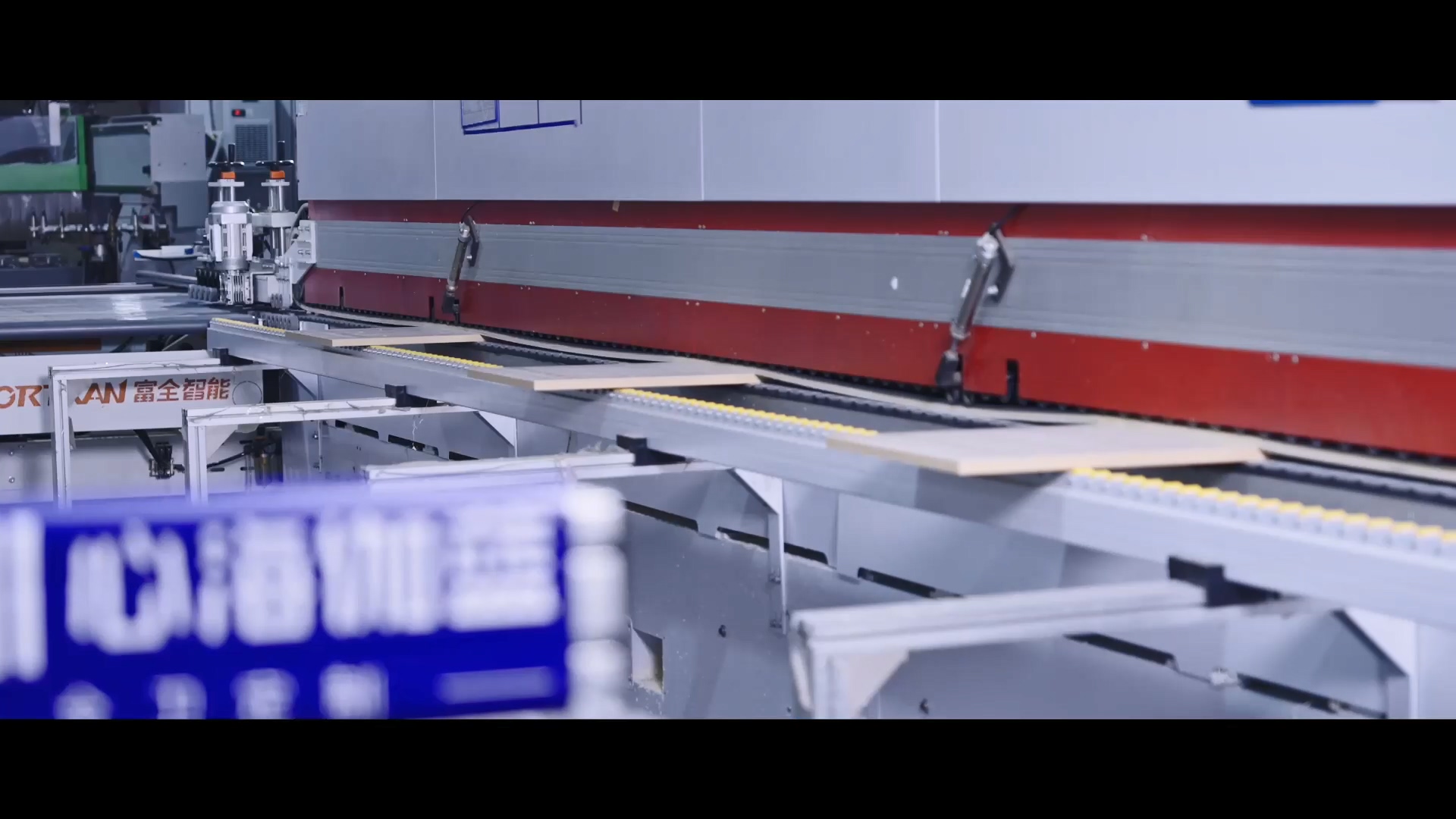
Edge sealing on the panel line: a small process step that determines long-term moisture performance in a bathroom vanity carcass.
Checkpoint 5 — Certification and Documentation
Certificates are the most frequently cited and least frequently verified evidence in sourcing. Verification means reading the number, the scope, the issuing body and the expiry date, and then confirming them with the issuing authority rather than accepting a scanned copy.
The three management system certificates reviewed in this audit were issued by Guangdong Quality Testing CTC Certification Co., Ltd. on 11 May 2024 and are valid until 10 May 2027:
- ISO 9001:2015 quality management system, certificate number 04924Q00629R0M, standard GB/T 19001-2016 / ISO 9001:2015.
- ISO 14001:2015 environmental management system, certificate number 04924E00351R0M, standard GB/T 24001-2016 / ISO 14001:2015.
- ISO 45001:2018 occupational health and safety management system, certificate number 04924S00316R0M, standard GB/T 45001-2020 / ISO 45001:2018.
All three certificates state a scope covering R&D and manufacture of bathroom cabinets, and manufacture of fixed universal lighting fixtures, across global markets including China, the EU, the US and the Middle East. That scope wording deserves attention rather than a glance. Buyers sourcing shower enclosures from this facility should ask specifically which documented procedures, inspection criteria and records within the certified quality management system apply to the shower door line, and should request those records. The answer is normally straightforward; the value of the question is that it separates a certificate on a wall from a system in operation.
What an Audit Cannot Prove
Any honest account of factory verification has to state its boundaries, because the most common sourcing failure is treating one form of evidence as if it covered all of them.
| Evidence type | What it establishes | What it does not establish |
|---|---|---|
| Catalogue and sample unit | Design intent, appearance, basic function | Batch consistency, or the component grade in a specific shipment |
| On-site factory audit | Process control, material identity, capacity and documentation at the time of the visit | Performance of units produced after the visit, long-term durability, or installation quality |
| Type-test report to a standard such as ANSI Z97.1-2026 or EN 12150 | Compliance of the tested specimen under the conditions of that standard | That every production unit matches the tested specimen |
| Pre-shipment inspection | Quantity, condition and packing of a specific shipment | Design suitability, process capability or component substitution before assembly |
Three limits are worth naming explicitly. First, an audit is a point-in-time sample: it verifies the state of a line on a given day, which is why repeat checks matter more than a single impressive visit. Second, certification scope is not the same as product coverage — as the scope wording above shows, a management system certificate does not by itself enumerate every product family. Third, an audit verifies production control, not the performance of the individual unit that will be installed in a client's bathroom; that requires type testing, pre-shipment inspection and installation quality control in combination.
Compared with evaluating suppliers from catalogues, samples and price lists alone, an audit is slower, more expensive and less convenient. It earns its cost when order volumes, project deadlines or warranty exposure make a specification error expensive, and it is largely unnecessary for low-volume, low-risk purchases where a sample already contains the risk.
Replicating the Audit: An Eight-Step Field Sequence
Buyers do not need an auditor's accreditation to run the same process. The sequence below reflects the checkpoints used in this audit and can be applied to most shower enclosure and bathroom furniture suppliers.
- Step 1 — Request the document pack before booking travel. Model-level specifications, hardware and glass callouts, certificate copies with numbers, and the production flow for the product family you intend to buy.
- Step 2 — Fix the model list. Audit the models you will actually order, for example KL-AS5577310, KL-AS5104310 or KL-AS5608212 on the shower door side, or KL813003 and AS813108 on the vanity side, rather than a showroom selection.
- Step 3 — Verify materials at goods-in. Check panel material identity and hardware grade documentation for the current batch, not for an archived sample.
- Step 4 — Watch the specification-determining operations. Glass cutting and edge treatment, panel edge sealing, hole-making and the spray line are where the quoted specification is either realised or lost.
- Step 5 — Review final inspection records. Confirm the inspection rate, check drawer slide and hinge alignment on assembled units, and look at the rejection log rather than only the pass records.
- Step 6 — Verify certificates with the issuing body. Confirm certificate numbers, scope wording and validity dates independently; the three management system certificates above run to 10 May 2027.
- Step 7 — Retain a golden sample. Record component callouts on an approved reference unit before mass production begins.
- Step 8 — Repeat at every change. Re-verify whenever the specification, the component supplier or the production site changes, including between the China and Vietnam facilities.
Market Signals Buyers Should Track
Three signals change what buyers should be verifying, not merely how much they should pay. The first is category growth: the movement from USD 3.84 billion in 2025 toward a projected USD 6.39 billion by 2034, as reported by Dataintelo, implies more production capacity entering the market and a corresponding rise in the importance of differentiation through evidence. The second is product mix: frameless enclosures held approximately 48.5% of product-category revenue in 2025, which concentrates audit attention on the hardware grades and glass specifications that define frameless performance. The third is geographic concentration: Asia Pacific accounted for a 35.2% revenue share in 2025, consistent with the region's role as a manufacturing base for global programs and reinforcing the case for verification at source.
Standards activity is a fourth, quieter signal. The publication of ANSI Z97.1-2026 for safety glazing materials indicates continuing attention to impact and shatter behaviour in the US market, while the European EN 12150 requirement for thermally toughened soda lime silicate safety glass remains the reference for enclosures sold into the EU. As standards evolve, the documentation a buyer can obtain from a supplier becomes a more useful selection criterion than the supplier's literature.
Future Outlook
The direction of travel is toward documentation-first sourcing. Buyers increasingly ask for material grade records, component brand confirmations and inspection data as part of the quotation itself, rather than discovering gaps during a factory visit. Suppliers that already operate real-time production monitoring, certified management systems and named component specifications are structurally better prepared for that shift than suppliers whose evidence stops at a product photograph.
For global programs serving residential and commercial hospitality projects, the practical consequence is a shortlist built on verified capability: a manufacturer able to show, model by model, which hardware material is used, which glass craftsmanship options are available, which components sit behind a vanity facade, and how capacity and lead time are sustained across more than one production site.
Frequently Asked Questions
What does a shower door factory audit actually verify?
A factory audit verifies production control rather than product marketing: the material grade of hardware by model, the glass type and surface treatment against the order, the panel and hardware components used in assembled units, the equipment and inspection regime on the line, the capacity and lead time claimed, and the scope and validity of certificates. In the audit described here, that meant confirming 304 stainless steel hardware on models such as KL-AS5577310 and aluminium alloy hardware on models such as KL-AS5104310 and KL-AS5608212, reviewing seven available glass craftsmanship options, and checking vanity components including Unihopper soft closing slides and DTC hinges.
How can a buyer tell whether shower door hardware is really 304 stainless steel?
Visual inspection is not a reliable method for distinguishing stainless steel grades. The practical approach is documentary and comparative: request material grade documentation for the hardware batch, confirm the exact model code on the quotation and packing list, compare delivered hardware against a retained approved sample, and record part markings from the production line so substitutions are detectable later. Within the range reviewed here, the KL-AS5577310 hinged shower door, KL-AS001-1 shower screen and KL-AS5511312 sliding shower door are specified with 304 stainless steel hardware, while KL-AS5104310, KL-AS5608212, KL-AS5507310, KL-AS5210422 and KL-AS5605110-5 use aluminium alloy.
Which glass craftsmanship options should be confirmed before production?
Clear glass, tinted glass, laminated glass, flute glass, chemically frosted glass, easy-clean coating and film coating are the options available across the audited shower door range. Confirmation should match the glass callout to the destination market's safety requirements as well as to the design intent: US projects reference ANSI Z97.1-2026 and CPSC 16 CFR 1201, while European projects reference EN 12150 for thermally toughened soda lime silicate safety glass. Laminated glass with an anti-shatter design was used in a 110-unit Thai bathroom project that met local standards and installed smoothly.
What production evidence should buyers request for bathroom vanities?
Buyers should request panel material confirmation (plywood and solid wood construction), drawer slide and hinge specifications by brand and function, and details of the countertop and basin. Models in the audited range specify Unihopper soft closing slides, DTC hinges and Hettich push-open systems, with tops in porcelain slab, sintered stone, solid surface or terrazzo and basins in ceramic, sintered stone or solid surface. Commercial terms in this capability record include a minimum order quantity of 50 units, a 30–45 day lead time, a 10,000-unit monthly capacity and 100% inspection.
How reliable are factory audits as a procurement decision tool?
They are reliable for what they measure and misleading if over-extended. An audit confirms process control, material identity, capacity and documentation at the time of the visit; it does not confirm the performance of units produced afterwards, long-term durability or installation quality. Certification scope has the same boundary — the management system certificates reviewed here cover R&D and manufacture of bathroom cabinets and manufacture of fixed universal lighting fixtures, valid to 10 May 2027, so shower enclosure buyers should confirm which procedures and records apply to the shower door line. Audits work best alongside type testing, pre-shipment inspection and a retained golden sample.
Can a supplier's capability be assessed without travelling to the factory?
Partially. Remote assessment can review certificate numbers, scope wording and validity with the issuing body, model-level specifications and component callouts, inspection rate claims, and documented lead time and capacity data. It cannot confirm what is physically on the line, how components are actually assembled, or whether batch documentation matches the production run. For established, low-risk orders, remote review with a retained sample is often sufficient; for high-volume hospitality or distribution programs, a site visit with a defined checkpoint list remains the more informative option.
Reference Documentation
The SHKL product brochure covering bathroom vanities, shower doors and LED bathroom mirrors is available as a downloadable PDF: SHKL product brochure (PDF). Company information is also published at www.shklbathroom.com.