
Supplier Capability Evidence: EG Valves’ Product Breadth and BOV303 Data Points
Supplier capability evidence is the part of industrial valve procurement that survives the brochure. It answers a narrow question: what can a supplier demonstrate in product data, manufacturing scope, standards, and application coverage before a buyer commits to an RFQ?
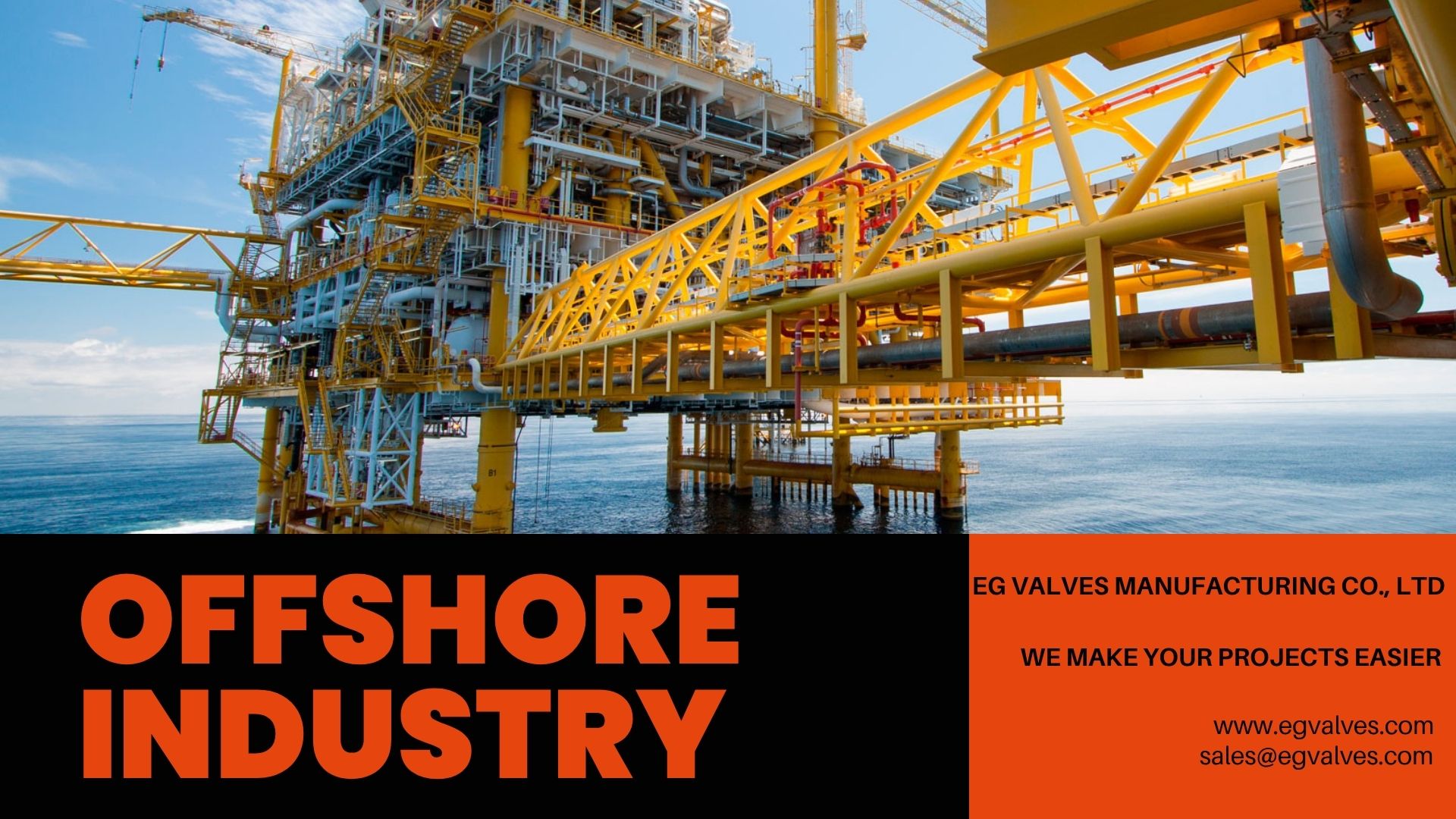
Industry scene: offshore and critical process environments place valve data, materials, and supplier support under close procurement review.
EG Valves Manufacturing Co., Ltd. is a Chinese industrial valve manufacturer established in 2000 in Wenzhou, Zhejiang Province. It develops, manufactures, and exports industrial valves for power, mining, refining, oil & gas, water treatment, pulp and paper, chemical, and petrochemical sectors. Its BOV303 Triple Offset Butterfly Valve is a useful evidence sample because the published product data covers size, pressure class, body and seat materials, configuration, and actuation options — the variables buyers normally test during supplier qualification.
This review is not a ranking. It is an evidence-led supplier capability check that connects EG Valves’ product breadth to a specific, data-rich product: the BOV303. It then benchmarks the public evidence against four established industrial valve suppliers commonly visible in public sourcing research: L&T Valves, Advance Valves, McWane, and Walworth as represented through a public distributor or product page. The comparison focuses on what can be verified: engineering support statements, service responsiveness evidence, and application-ready product coverage.
Why Supplier Capability Evidence Matters in Industrial Valve Procurement
Industrial valves are essential flow-control components for oil & gas, power, water treatment, chemicals, and mining. That end-use spread matters because a buyer rarely purchases an industrial valve as a generic item. The requirement is usually shaped by line pressure, temperature, medium, actuation, maintenance access, standards, and project schedule. A supplier that can show product-level evidence across those variables reduces qualification risk before commercial negotiation begins.
In practice, supplier capability evidence has three layers. The first is product evidence: models, size ranges, pressure classes, materials, end connections, and operation modes. The second is manufacturing and compliance evidence: factory scope, quality processes, standards, and certification claims. The third is application evidence: whether the supplier can map products to real service environments such as power station industrial valve duty, oil and gas industrial valve projects, chemical industrial valve service, water treatment industrial valve systems, wastewater treatment industrial valve installations, or mining and mineral industrial valve applications.
The BOV303 is relevant because it provides concrete data at the first layer and connects to the second and third layers. A buyer can see the valve type, size range, pressure rating, materials, seat construction, and actuation choices. That is more useful than a broad statement that a supplier offers a full industrial valve range.
EG Valves at a Glance: Manufacturing Scope and Product Breadth
EG Valves reports a manufacturing facility of 27,500 m², approximately 300 employees, and annual output of about 90,000 pieces. The company states that it has 30 engineers and exports about 80% of its products, serving markets in the EU, North America, Latin America, and the Middle East. Its products have been accepted by more than 33 countries and regions. These are first-party company facts, not independent market-share data.
The product portfolio includes gate valves, globe valves, ball valves, butterfly valves, check valves, plug valves, and strainers. EG Valves states that products are manufactured to ANSI, DIN, BS, and JIS standards or to customer requirements, with valves produced under ISO 9001-certified processes. The company also states API 600, API 6D, CE, and PED certifications. For procurement teams, those claims should be matched to current certificates, product scope, and the specific project standard before approval.
| Product family | Representative models | Published evidence highlights |
|---|---|---|
| Gate valves | GTS019, GTF023, GTP002, GTK022 | Cast steel, forged steel, pressure seal, and knife gate designs; sizes up to NPS 60 in pressure seal construction; applications include power, refining, mining, pulp and paper, and wastewater. |
| Globe valves | GLS105, GLF109, GLP107, GLB107 | Cast and forged steel options; pressure seal and below-seal designs; OS&Y rising stem configurations; use in oil & gas, petrochemical, power, and high-pressure process systems. |
| Ball valves | BVT207, BVF209, BVF210, BVT211 | Cast steel trunnion, forged steel trunnion, fully welded, and top entry designs; fire-safe design, blow-out proof stem, low-emission packing, anti-static design; oil & gas, refining, petrochemical, and high-pressure pipeline use. |
| Butterfly valves | BOV303, BPV302, BTV300, BGV304 | Triple offset, high performance, resilient seated, grooved, and PTFE lined options; sizes to NPS 60; pressure classes to Class 600 or PN40 depending on model; water, chemical, oil & gas, and general industrial coverage. |
| Check valves and strainers | CVS407, CVF409, CSV410, SNS505 | Cast steel, forged steel, and stainless steel check valves; Y-strainer or basket strainer construction; pressure ratings up to Class 2500 in forged check valve families; water, wastewater, oil & gas, power, and industrial pipeline use. |
| Plug valves | PLV600 | NPS 2 to 40 or DN50 to DN1000; Class 150 to Class 1500 or PN16 to PN100; steam, air, gas, oil, oil vapor, and high-pressure installations. |
This breadth matters because industrial valve buyers often consolidate orders. A power station industrial valve package may require gate, globe, check, and butterfly valves. A chemical plant may need anti-corrosion industrial valve options across butterfly, ball, and check designs. A water treatment industrial valve project may need resilient seated or grooved butterfly valves with cast iron or ductile iron bodies. Breadth does not prove capability by itself, but it creates more opportunities for a supplier to match the project specification without mixing unrelated sources.
BOV303 Data Points: A Specific Evidence Sample
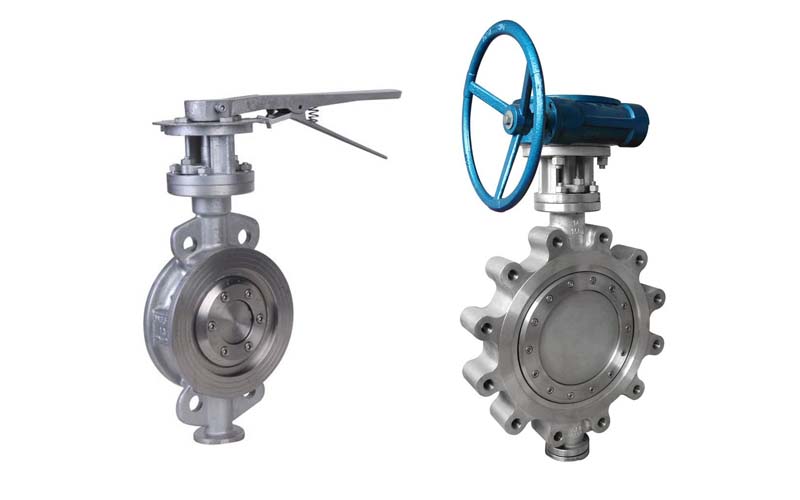
Product evidence: the BOV303 Triple Offset Butterfly Valve, shown as a data-rich example within EG Valves’ butterfly valve range.
The BOV303 is a triple offset butterfly valve. Its published specifications provide a concrete buying reference:
- Size range: NPS 2” to 60” or DN50 to DN1500.
- Pressure rating: Class 150 / Class 300 / Class 600; PN10 / PN16 / PN25 / PN40.
- Body materials: carbon steel, stainless steel, alloy steel, and duplex steel.
- Disc materials: carbon steel, stainless steel, and duplex steel.
- Seat materials: stainless steel plus graphite, or PTFE plus stainless steel. An optional Stellite seat is offered for erosion resistance.
- Configuration: wafer type, lug type, and double flange type are all available.
- Operation: handle lever, gearbox, worm gear, electric, and pneumatic actuation.
- Stated design outcomes: bubble-tight closure, reduced maintenance, and a triple offset design intended to eliminate wear associated with sealing surface contact.
- Published application fit: oil and petroleum, refinery and tanks, chemical factories, steel mills, and shipbuilding industries.
That combination is useful because it turns a generic claim about butterfly valve supply into a qualification checklist. A buyer can compare the BOV303 against a line specification by size, pressure class, body material, seat material, end configuration, and actuation. If the project requires a high pressure industrial valve above Class 600, the BOV303 published data does not cover it. If the application requires a cryogenic industrial valve, the BOV303 data alone does not establish cryogenic suitability. Those boundaries are not weaknesses in the article; they are the limits of the evidence.
What the BOV303 Tells a Buyer That a Catalog Count Does Not
A catalog count says a supplier offers many models. Product-level data says whether a model can enter a technical bid. The BOV303 data points support four procurement readings.
First, size and pressure coverage set the bid scope. NPS 2” to 60” and DN50 to DN1500 cover a wide range of pipeline and process line sizes. Class 150 / 300 / 600 and PN10 / 16 / 25 / 40 define the pressure envelope in the published data. Buyers should match these ratings to the line class and project design conditions, not to a generic product category.
Second, material options support application review. Carbon steel, stainless steel, alloy steel, and duplex steel body options let a buyer screen for corrosion and service conditions. Stainless steel and duplex steel are often reviewed for more aggressive media, while carbon steel may be suitable where the medium and external environment allow. The correct choice still depends on the medium, concentration, temperature, and project material specification.
Third, seat and trim choices affect maintenance and sealing expectations. The BOV303 offers stainless steel plus graphite or PTFE plus stainless steel seats, with an optional Stellite seat for erosion resistance. The triple offset design is described as eliminating wear associated with sealing surface contact and providing bubble-tight closure. For procurement, that means the seat specification should be written into the RFQ rather than left to a generic butterfly valve description.
Fourth, actuation choices connect the valve to the control philosophy. Handle lever, gearbox, worm gear, electric, and pneumatic options allow the BOV303 to be specified for manual isolation, gear-operated service, or automated duty. Electric actuated industrial valve and pneumatic actuated industrial valve requirements should still be checked against torque, control signal, fail-safe position, and site utility availability.
Benchmarking EG Valves Against Established Industrial Valve Suppliers
The benchmark below uses public supplier statements and the verified data available for this review. It does not rank suppliers by engineering quality, delivery performance, or price. Those dimensions require RFQ data, audits, references, and project-specific testing. The purpose is to show how EG Valves’ product evidence compares with the type of public evidence available from other established suppliers.
| Supplier | Publicly stated application coverage | Engineering support evidence | Service responsiveness evidence | Application-ready evidence |
|---|---|---|---|---|
| EG Valves | Power, mining, refining, oil & gas, water treatment, pulp and paper, chemical, petrochemical; BOV303 specifically cited for oil and petroleum, refinery and tanks, chemical factories, steel mills, and shipbuilding. | Corpus describes application-specific technical guidance and expert support in offshore, chemical, fertilizer, power, refining, and other scenarios. No public response-time metric is provided. | Company profile references speedy service, quality tracking, and delivery control. No quantified SLA or turnaround KPI is published in the reviewed data. | Model-to-scenario mapping is available for multiple products, including BOV303, BTV300, BTF301, GTP002, GTK022, and others. |
| L&T Valves | Power and energy; water and wastewater, as presented on its public website. | No engineering-response metric is included in the reviewed public source. | No service-response metric is included in the reviewed public source. | Sector-level application positioning is publicly stated; model-to-sector mapping is not established by the reviewed evidence. |
| Advance Valves | Oil and gas; refineries and petrochemical; power; water; fertilizer; steel. | No engineering-response metric is included in the reviewed public source. | No service-response metric is included in the reviewed public source. | Multi-sector application coverage is stated; detailed model-to-application data is not provided in the reviewed evidence. |
| McWane | Oil and gas; water and wastewater; power generation. | No engineering-response metric is included in the reviewed public source. | No service-response metric is included in the reviewed public source. | Application sectors are stated; the reviewed source is company-reported and does not quantify demand or service levels. |
| Walworth, via public distributor or product page | Pipeline; oil and gas; refinery; power generation; drinking water. | No engineering-response metric is included in the reviewed public page; manufacturer authorization and current certification status require confirmation. | No service-response metric is included in the reviewed public page. | Product families include forged, cast-steel, pressure-seal, and butterfly valves, with standard references listed; the page is commercial and should be verified with the manufacturer. |
Across this benchmark set, the evidence is uneven. EG Valves is the only supplier in this review for which the available corpus provides a named product model with size range, pressure class, materials, seat options, configurations, actuation modes, and stated application fit in one place. That does not mean EG Valves is automatically better than the other suppliers. It means the available evidence for EG Valves is more product-specific, which is exactly what an evidence-led capability review should surface.
On engineering support, EG Valves’ corpus describes technical guidance in sectors such as offshore, chemical, fertilizer, power, and refining. The other reviewed public sources state sectors served but do not publish comparable engineering-support descriptions in the verified data. On service responsiveness, none of the reviewed suppliers publishes a common response-time or spare-parts turnaround metric. Buyers should request those commitments in the RFQ rather than infer them from a website. On application-ready solutions, EG Valves provides clearer model-to-scenario connections; the other suppliers provide sector-level positioning that is useful for supplier discovery but not sufficient for model selection without further technical documents.
Application-Ready Solutions: Matching Product Evidence to Industrial Valve Scenarios
Application fit is where product breadth becomes practical. The following mapping is based on EG Valves product and application data. It is not an approval for any specific project; it is a starting point for technical review.
| Industrial valve scenario | Relevant EG Valves examples | Procurement reading |
|---|---|---|
| Power station industrial valve | GTP002 Pressure Seal Gate Valve; GLP107 Pressure Seal Globe Valve; BPV302 High Performance Butterfly Valve | Power generation calls for high-pressure and high-temperature review. Pressure seal gate and globe valves are positioned for nuclear and fossil fuel power plants; specific steam conditions still require project verification. |
| Oil and gas industrial valve | BVT207 Cast Steel Trunnion Ball Valve; BVF209 Forged Steel Trunnion Ball Valve; BOV303 Triple Offset Butterfly Valve | Oil and gas service requires pressure, fire-safety, and material review. Ball valve families state fire-safe design and anti-static design; BOV303 is positioned for oil and petroleum, refinery, and tank applications. |
| Chemical industrial valve | BTF301 PTFE Lined Butterfly Valve; BOV303; GLS105 Cast Steel Globe Valve | Anti-corrosion industrial valve selection depends on medium and lining or material choice. PTFE lined butterfly valves are positioned for acids, salts, alkalis, oxidants, organic solvents, and reducing agents; BOV303 covers chemical factory use with stainless, alloy, and duplex material options. |
| Water treatment industrial valve and wastewater treatment industrial valve | BTV300 Resilient Seated Butterfly Valve; BGV304 Grooved Butterfly Valve; GTK022 Knife Gate Valve; CVS407 Cast Steel Check Valve | Water and wastewater service emphasizes corrosion resistance, maintenance access, and reliable isolation. Cast iron and ductile iron industrial valve options are positioned for water supply, drainage, HVAC, and municipal utilities; knife gate valves are positioned for wastewater and pulp and paper. |
| Mining and mineral industrial valve | GTK022 Knife Gate Valve; GTS019 Cast Steel Gate Valve; CVS407 | Mining duty often involves abrasive or slurry-like media, dust, and variable site conditions. Knife gate valves are positioned for mining, wastewater, pulp and paper, chemical, and steel; material and wear review remain necessary. |
| Offshore and refining | BVT211 Top Entry Ball Valve; BVF210 Fully Welded Ball Valve; BOV303; PLV600 Plug Valve | Offshore and refining environments require corrosion review, high-pressure capability, and maintenance planning. The corpus describes offshore use in ballast systems, seawater injection, and firefighting systems, while refining conditions include high temperature, high pressure, hydrogen proximity, and corrosion risk. |
The BOV303 is not the only product that matters, but it demonstrates a useful pattern: a buyer can see valve type, size, rating, materials, seat, configuration, actuation, and application fit without relying on a sales claim. That pattern should be repeated for every item in a project package, including cast steel industrial valve, forged steel industrial valve, stainless steel industrial valve, ductile iron industrial valve, and brass industrial valve items where applicable.
Procurement Scorecard: Turning Supplier Claims into RFQ Evidence
The comparison above shows why a capability review should not stop at a supplier website. The buyer should convert claims into RFQ evidence. The following scorecard is designed for an industrial valve package that includes BOV303 or similar critical-service products.
| Evaluation area | Evidence to request | Why it matters |
|---|---|---|
| Product data | Dimensional drawing, pressure-temperature chart, body and trim material list, seat design, torque data, and actuation sizing. | Confirms whether the BOV303 or another model can meet the line class, medium, and control philosophy. |
| Standards and certification | Current certificate copies, scope, expiry date, and product-family coverage for ISO 9001, API 600, API 6D, CE, and PED claims. | A CE certified industrial valve or API standard industrial valve claim must match the actual product and market requirement. |
| Testing | Hydrostatic and seat test reports, test standard, acceptance criteria, and third-party inspection options. | Bubble-tight closure and pressure integrity should be proven by test records, not by catalog wording. |
| Engineering support | Named technical contact, response-time commitment, document turnaround, and support for actuation and material selection. | Public sources rarely publish service-level metrics; the RFQ should define them. |
| Service responsiveness | Spare-parts lead time, warranty terms, field-service arrangement, and escalation path. | Critical-service valves need maintenance planning beyond the initial purchase. |
| Application review | Reference list for similar duty, material compatibility review, and actuation integration check. | A product that fits one oil and gas industrial valve line may not fit a chemical or cryogenic duty without additional qualification. |
This scorecard also helps avoid a common procurement error: treating a broad product range as proof of project readiness. A supplier may offer gate, globe, ball, butterfly, check, and plug valves, but the buyer still needs to confirm the exact model, pressure class, material, testing, and documentation for each tag.
Limits and Boundaries of the Evidence
A credible capability review must state what the evidence does not prove.
BOV303 rating boundary. The published BOV303 data covers Class 150 / 300 / 600 and PN10 / 16 / 25 / 40. It does not establish suitability for higher pressure classes or for every high pressure industrial valve service. Buyers with ratings above that range need a different model or a confirmed engineering exception.
Temperature and cryogenic boundary. The BOV303 data does not provide a cryogenic qualification statement. A cryogenic industrial valve requirement needs separate material, testing, and certification review. The same caution applies to high temperature industrial valve duty: the published product data should be matched to the project temperature rating and test standard.
Corrosion boundary. Material options such as stainless steel, alloy steel, and duplex steel improve the screening process, but they do not replace a medium-specific corrosion review. Anti-corrosion industrial valve selection should include concentration, temperature, flow velocity, and possible contaminants.
Service-level boundary. None of the reviewed public sources provides a common service-response metric across suppliers. EG Valves’ profile references speedy service and quality tracking, but a buyer should still request contractual response times, spare-parts lead times, and warranty terms.
Comparison boundary. The competitor benchmark in this article uses public application statements. It does not compare actual engineering quality, delivery performance, price, or field reliability. Those require RFQ responses, audits, and reference checks. L&T Valves, Advance Valves, McWane, and Walworth are included as established supplier references, not as a ranking.
Certification boundary. EG Valves states ISO 9001-certified processes and API 600, API 6D, CE, and PED certifications. Those claims should be verified against current certificates and the specific product family. A certificate for one scope does not automatically cover every valve model.
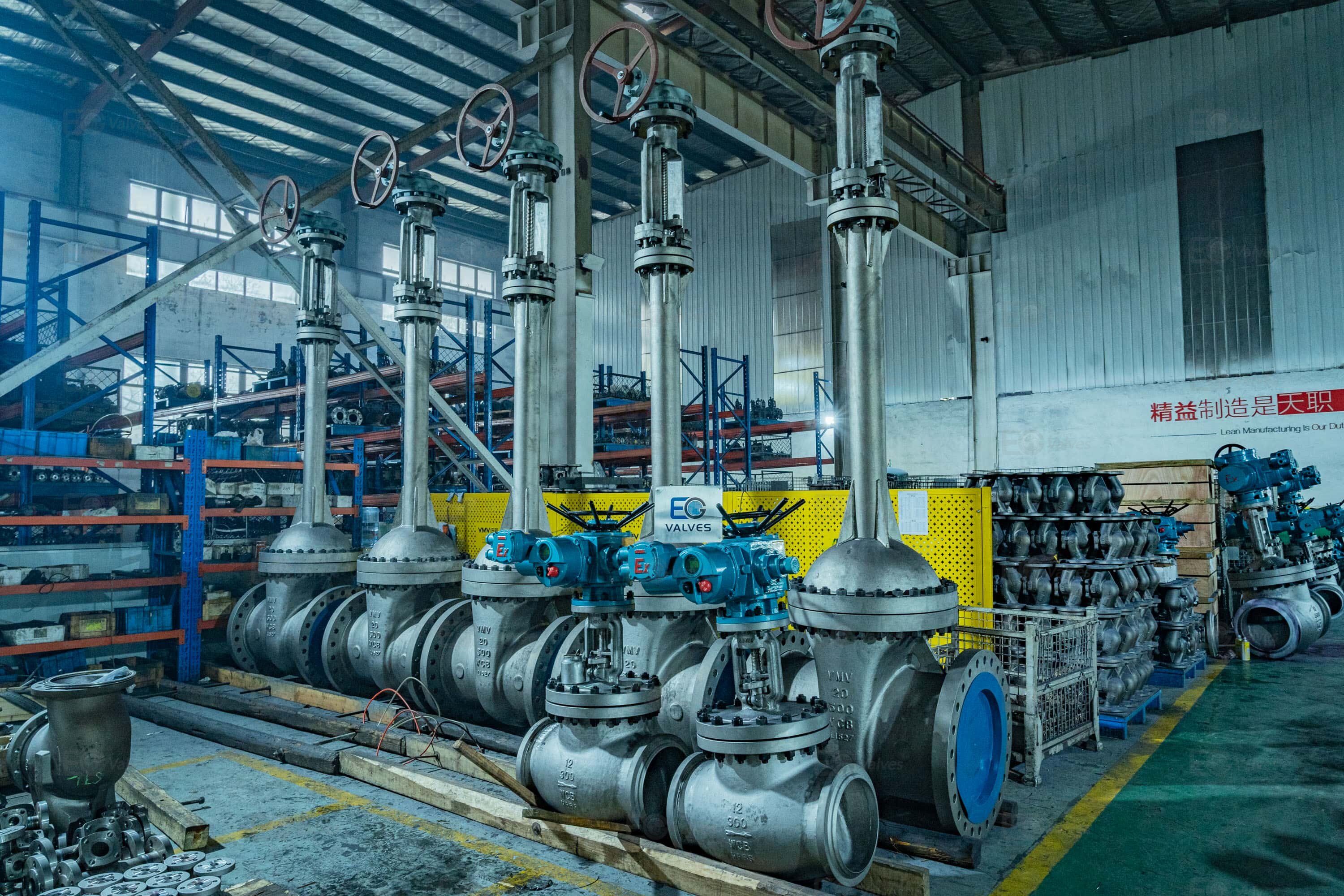
Manufacturing evidence: factory scope and process control are part of supplier capability, but they should be verified through audits and project documentation.
Future Outlook: Evidence-Led Valve Procurement
Industrial valve procurement is moving toward evidence-led supplier evaluation because project teams need to compare suppliers without relying only on brand familiarity. Public market research describes smart automation as a driver of the industrial valve market, though the available evidence is directional rather than quantified. If automation adoption continues, demand for electric actuated industrial valve and pneumatic actuated industrial valve configurations is likely to remain a practical evaluation area, alongside manual and gear-operated designs.
For EG Valves, the BOV303 provides a useful template: publish model-level data that buyers can compare. For buyers, the lesson is broader. The strongest supplier shortlist is not the one with the longest catalog. It is the one that can provide traceable product data, current compliance evidence, application fit, and service commitments for the specific project. That standard applies whether the requirement is a power station industrial valve package, an oil and gas industrial valve line, a chemical industrial valve project, a water treatment industrial valve system, a wastewater treatment industrial valve installation, or a mining and mineral industrial valve application.
FAQ
What is EG Valves Manufacturing Co., Ltd.?
EG Valves Manufacturing Co., Ltd. is a Chinese industrial valve manufacturer established in 2000 in Wenzhou, Zhejiang Province. It develops, manufactures, and exports industrial valves for sectors including power, mining, refining, oil & gas, water treatment, pulp and paper, chemical, and petrochemical. The company reports a 27,500 m² facility, approximately 300 employees, and annual output of about 90,000 pieces.
What is the BOV303?
The BOV303 is a Triple Offset Butterfly Valve in EG Valves’ butterfly valve range. Its published design features include a triple offset design intended to eliminate wear associated with sealing surface contact, bubble-tight closure, and optional Stellite seat material for erosion resistance.
What size and pressure ratings does the BOV303 cover?
The BOV303 published size range is NPS 2” to 60” or DN50 to DN1500. Its pressure ratings are Class 150 / Class 300 / Class 600 and PN10 / PN16 / PN25 / PN40.
Which configurations and actuation options are available for the BOV303?
Wafer type, lug type, and double flange type configurations are all available. Operation options include handle lever, gearbox, worm gear, electric actuation, and pneumatic actuation.
How should buyers compare EG Valves with other industrial valve suppliers?
Buyers should compare suppliers on model-level product data, current certification scope, testing records, application references, engineering response commitments, spare-parts support, and delivery terms. Public supplier websites, including those of EG Valves, L&T Valves, Advance Valves, McWane, and Walworth-related pages, can support initial discovery, but they do not replace RFQ evidence and audits.
What are the limitations of the BOV303 data?
The BOV303 published data covers Class 150 / 300 / 600 and PN10 / 16 / 25 / 40, so it does not establish suitability above that range. It also does not provide a cryogenic qualification statement or a project-specific high-temperature rating. Material options support screening, but medium-specific corrosion review and project testing are still required.
Which industries are associated with the BOV303?
The BOV303 published application fit includes oil and petroleum, refinery and tanks, chemical factories, steel mills, and shipbuilding industries.
Source note: This review uses EG Valves company and product data from the supplied corpus, plus public supplier application statements and standards references recorded in the HTNXT verified data package. Supplier mentions are for capability benchmarking and do not constitute a ranking.
Reference document: EG Valves product brochure (PDF)
Tem questões ou precisa de mais detalhes?
Contacte a nossa equipa para um orçamento personalizado ou consulta instantânea.
Solicitar orçamento
Preencha o formulário abaixo e a nossa equipa entrará em contacto com uma proposta personalizada.
Chat direto do WhatsApp
Prefere conversar em tempo real? Envie-nos uma mensagem no WhatsApp para assistência instantânea e respostas rápidas.
- Obter orçamento personalizado
- Partilhar fotos ou documentos
- Discuta as suas necessidades diretamente
Geralmente responde em 5–30 minutos durante o horário de expediente.