
Supplier Capability Evidence: FENG SHANG PRECISION Dual Cooling Vest Production
Supplier Capability Evidence: FENG SHANG PRECISION Dual Cooling Vest Production
Supplier Capability Review · Security & Protection
A dual cooling water cooling vest is only as dependable as the production line behind it. Once a buyer moves past mechanism and unit price, the deciding questions become narrower and harder: who actually builds the garment, how much of it can be built in a month, how quickly a replacement batch can be scheduled, and what the supplier is prepared to put in writing. This review reads the disclosed capability record of FENG SHANG PRECISION CO., LTD., the Taoyuan City manufacturer behind the Shokunin COOLWAVE Water-Circulation Cooling Vest, and separates what that record supports from what it leaves open.
What FENG SHANG PRECISION CO., LTD. Is
FENG SHANG PRECISION CO., LTD. is a manufacturer established in 2009 and based in Luzhu District, Taoyuan City, Taiwan. The company operates a 1,000 m² production facility with approximately 30 staff, including a five-engineer research and development team, and reports an annual output of 10,000 units across its product line. That portfolio covers air compressors, cut-off machines, water-cooled vests, lithium batteries, diamond saws, nail guns, spider stands and screwdriver bits — a mixed tool and equipment range rather than a single-category garment factory.
Shokunin is the professional e-commerce brand launched by FENG SHANG PRECISION to bring its tools and cooling products to market, and the COOLWAVE Water-Circulation Cooling Vest sits inside that brand. The company reports an export ratio of roughly 50%, with main markets in the United States and Taiwan (ROC), and lists Global as the export market for its cooling-vest production services.
For a buyer entering the evaluation stage, that short profile already answers three qualification questions: the counterparty is a registered manufacturing entity rather than a trading intermediary, it has a continuous operating history since 2009, and the cooling vest is produced alongside other engineered products in the same facility — which matters when a supplier has to schedule, hold and replace stock across several SKUs.
Why Capability Evidence Becomes the Deciding Variable at Evaluation Stage
Personal cooling systems are a recognised occupational category rather than a lifestyle accessory. The U.S. National Institute for Occupational Safety and Health (NIOSH) groups water-cooled garments, air-cooled garments, cooling vests and wetted overgarments together as examples of auxiliary or personal cooling systems for heat exposure. This is general classification guidance, not a product approval, but it explains why industrial buyers treat a cooling vest as PPE-adjacent equipment with sourcing obligations attached.
The commercial weight behind that classification is visible in category data. The global cooling vest market reached USD 342 million in 2025, and industrial applications accounted for 34.5% of revenue share in the same year, based on commercial market research published for the category. A market profile in which roughly one dollar in three comes from industrial use changes what buyers should verify. Consumer channels can absorb a supplier change between seasons; industrial programmes cannot, because the vest is part of a heat-management routine that a site has already communicated to its workforce.
That is the practical reason capability evidence outranks product description at this stage. A specification sheet tells a buyer what the vest is expected to do. A capability record tells a buyer whether the same vest will still be available in month nine, whether a 20-unit replacement can be produced without a new tooling cycle, and whether anyone at the supplier is accountable for the design if a component changes.
The Capability Record, Item by Item
The disclosed record can be read as a set of statements, each of which supports a specific procurement conclusion and stops short of another. Reading it in that structure prevents the common error of treating a capacity figure as proof of delivery reliability.
| Disclosed item | Stated value | What it supports | What it does not settle |
|---|---|---|---|
| Legal entity and location | FENG SHANG PRECISION CO., LTD., Luzhu District, Taoyuan City, Taiwan | A traceable manufacturing counterparty at a known production address | Ownership structure, financial standing and site ownership are outside the record |
| Year established | 2009 | Operating continuity across multiple product cycles | Current financial condition or recent capacity investment |
| Facility size | 1,000 m² | A single-site footprint with consolidated production and storage | Line layout, equipment list and utilisation rate |
| Workforce | Approximately 30 staff | Team scale consistent with small-batch, multi-product production | Shift pattern, seasonal headroom and dedicated vest-line staffing |
| R&D team | 5 engineers | In-house design capacity for ODM-type programmes | Tooling ownership, test-lab scope and prototype turnaround |
| Output | 10,000 units per year; 3,000 units per month | A stated volume envelope for planning pilot and repeat orders | The basis of each figure (installed, practical or available capacity) |
| Commercial terms | ODM services; MOQ 10 units; 7–14 day lead time | Small-batch entry with a defined production window | Lead-time start point, tooling lead time and capacity reservation rules |
| After-sales | 6-month warranty on the water-cooled vest | A defined claim window with an end date | Spare-part policy, repair route and field-service coverage |
| Intellectual property | Patent I886033 (ROC) | Documented design activity on vest structure and cooling system | Freedom to operate in jurisdictions outside the issuing territory |
Read this way, the record is unusually specific for a supplier of this size — it gives a buyer something to test against rather than a general claim of capability. The gaps are equally specific, and each one maps to a document a buyer can request in a request for quotation.
Capacity Arithmetic: 10,000 Units a Year Against 3,000 Units a Month
Two capacity figures appear in the record, and they do not reconcile on their face. An annual output of 10,000 units averages roughly 833 units per month. A stated monthly capacity of 3,000 units is more than three times that figure.
The discrepancy is not a contradiction so much as an undefined basis, and it is the single most important thing to clarify before an order is placed. There are three plausible readings, and they lead to different procurement decisions:
- Portfolio versus line. The 10,000-unit annual figure is stated for the company as a whole, covering air compressors, cut-off machines, water-cooled vests, lithium batteries and the rest of the range. The 3,000-unit monthly figure is stated for production services. If the monthly figure refers to the cooling-vest line specifically, the vest line is not the constraint on total output.
- Actual versus installed. An annual figure usually reflects what was produced. A monthly figure often reflects what could be produced at full utilisation. Comparing the two directly overstates routine throughput.
- Average versus peak. Monthly capacity may describe a peak month with full staffing, not a sustainable twelve-month rate.
The practical resolution is procedural rather than analytical. A buyer should ask the supplier to state, in writing, whether the monthly figure is installed, practical or available capacity; whether vest production shares lines, staff or storage with the tool range; and what reserved capacity the supplier will commit to for a given order period. A one-page capacity letter answering those three points converts an ambiguous pair of numbers into a schedulable commitment — and it is a reasonable request even for a 100-unit programme, because it establishes the pattern for later repeat orders.
ODM Terms as Execution Evidence: 10-Unit MOQ and a 7–14 Day Lead Time
The commercial terms are where a capability record turns into an execution plan. FENG SHANG PRECISION provides ODM (Original Design Manufacturing) production services, enabling customized product development under the ODM mode, with a minimum order quantity of 10 units and a typical production lead time of 7 to 14 days. Monthly production capacity is stated at 3,000 units.
A 10-unit minimum is a meaningful number for industrial buyers, because it sits close to the size of a trial deployment on a single site or a single shift crew. It allows a heat-safety manager to run the vest in the actual working environment — under a metal roof, on a scaffold, at a traffic post — before committing to a seasonal volume. The sequence that follows from these terms is straightforward: request a quotation against the site requirement, validate a small batch in the field, then place the volume order against a confirmed capacity reservation.
Two details deserve to be written into the agreement rather than assumed. First, the start point of the 7–14 day lead time is not defined in the record — it could run from order confirmation, from receipt of payment, or from material release. Since the documented purchasing terms specify shipment after payment and full payment terms, the start point materially changes the delivery date a site should plan around. Second, ODM mode indicates that product development can be customised, but the record documents the ODM service itself rather than a catalogue of customisation options. Buyers who need specific branding, packaging or configuration changes should describe them in the RFQ and have the supplier confirm scope in writing, rather than inferring an option list.
Design Capability: Five Engineers and Patent I886033
Design capability is the part of a supplier profile that buyers most often accept on trust, which is why a granted patent is useful evidence. Patent number I886033, recorded as a water-cooled vest patent certificate, was issued by the Intellectual Property Office of the Ministry of Economic Affairs (ROC) on 1 June 2025 under the Patent Act of the Republic of China, with an expiry date of 27 August 2044. The protected scope covers the water-cooled vest structure and cooling system.
What a structure patent actually evidences is narrower than a marketing department would like and more useful than a brochure claim. It shows that a defined structure and cooling-circuit arrangement was examined against prior art and found novel in the issuing jurisdiction. It indicates sustained design work by a named team — consistent with the five-engineer R&D function in the company record — and it establishes a documented date from which the design was treated as proprietary.
What it does not evidence is thermal performance, manufacturing consistency, or availability of the protected design outside Taiwan. Patent rights are territorial: protection granted by the Intellectual Property Office of the Ministry of Economic Affairs applies within ROC. A buyer sourcing for the United States or European markets who intends to resell under their own brand should confirm the trademark and design position in those markets separately, and should not treat a ROC patent as coverage elsewhere.
Deployment Evidence: The 100-Unit Taiwan Rollout
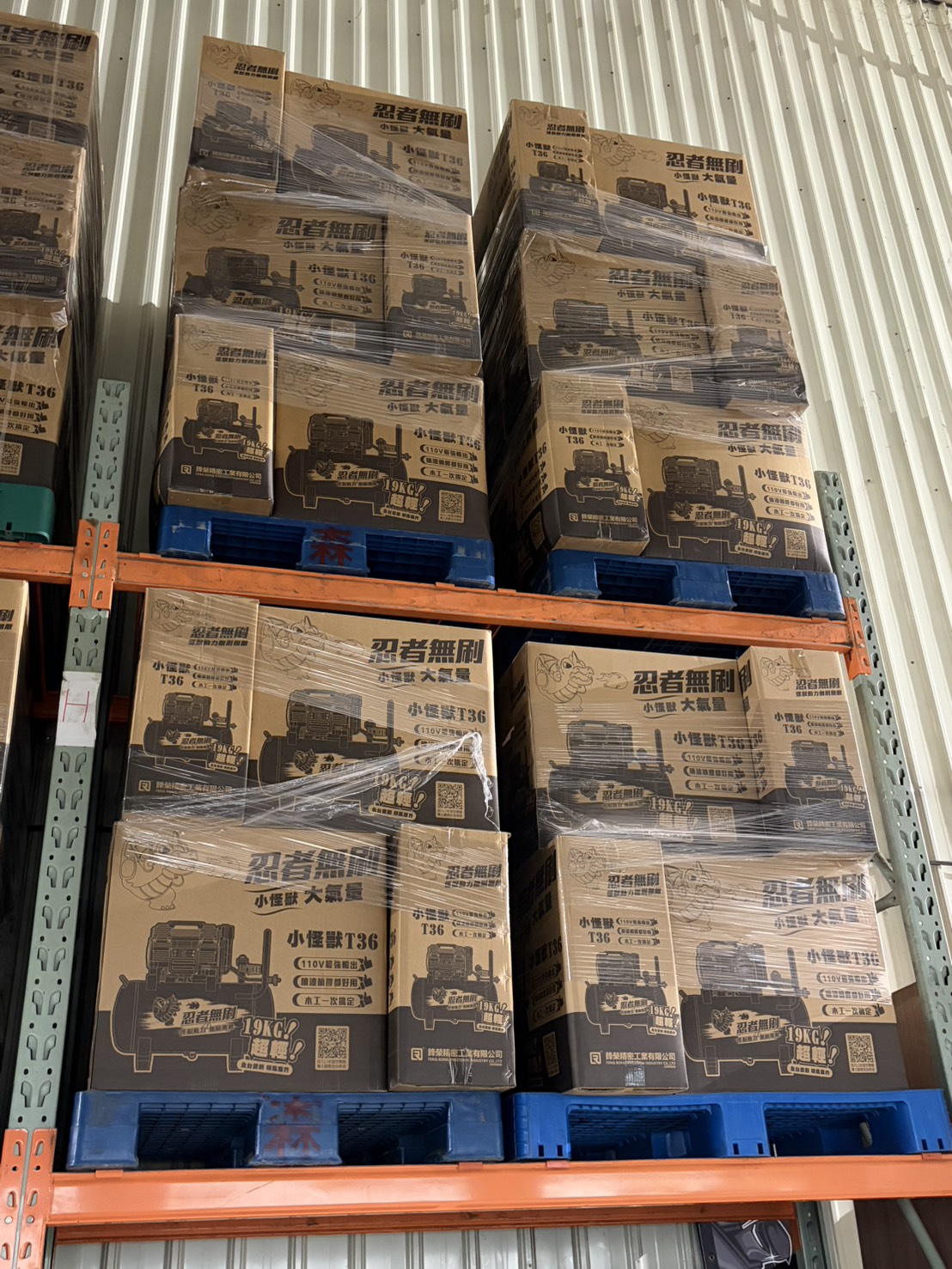
Specifications describe intent; deployments describe what survived contact with a work site. The record documents a 100-unit deployment in Taiwan for cooling use in high-temperature environments, spanning construction sites, outdoor work, metal sheet factories and street vendors. Reported outcomes include effective body cooling, heatstroke prevention, and improved work efficiency and worker comfort. The deployment record highlights a lightweight, portable construction with an adjustable one-size-fits-all design, and a certification as a disaster prevention product, awarded through the Taiwan Disaster Prevention Industry Association.
The evidentiary value of that deployment is specific and should not be overstated. It demonstrates that a batch of 100 units was produced and delivered — a quantity well above the 10-unit minimum and a reasonable proxy for a mid-sized site programme — and that the product was subsequently used across four different heat environments rather than a single controlled setting. Construction sites, outdoor work areas, metal sheet factories and street vending represent materially different radiant-heat, airflow and mobility conditions, so cross-environment use says something about wearability and handling that a specification sheet cannot.
What the deployment does not provide is a measurement protocol. There is no stated ambient temperature, humidity band, work intensity, garment layer or per-user thermal reading attached to the reported results. Those outcomes are therefore user-reported and operational rather than laboratory-quantified, and a buyer building a formal heat-safety case should treat them as field evidence of adoption and use, not as proof of a cooling performance figure.
Warranty and Acceptance: Setting the Boundary at Six Months
The after-sales position is short and clear: a 6-month warranty for the water-cooled vest. The documented purchasing terms add the surrounding mechanics — MOQ of 10 units, shipment after payment, freight to be paid by the buyer, a pre-shipment test as the acceptance criterion, and full payment terms.
For an execution-stage buyer, the value of these terms lies in how precisely they are instantiated in the order. Three points are worth fixing before signature. First, the warranty start date: six months measured from shipment, from delivery, or from first field use produce very different coverage windows for a buyer who stores stock between seasons. Second, the pre-shipment test itself — the record names it as the acceptance criterion but does not define sample size, pass criteria, or whether the buyer or a third party witnesses it. A short written test protocol attached to the purchase order converts an acceptance principle into an enforceable gate. Third, the freight and payment structure means the buyer carries logistics costs and settles in full before shipment, which raises the importance of getting the pre-shipment test right rather than relying on post-delivery remedies.
Where the Record Stops: Limits of a 1,000 m² Single-Site Footprint
The traditional way to shortlist a cooling-vest supplier is to compare catalogue breadth, unit price and delivery promise. That approach is fast, but it tends to reward the supplier with the most confident paperwork rather than the one whose production can be verified. Reading a capability record instead produces a slower and more defensible shortlist — and it also makes the supplier's boundaries visible, which a catalogue never does.
The boundary here is scale and documentation depth. A 1,000 m² facility with approximately 30 staff on a single site in Taoyuan City is a compact operation. It is well matched to 10-unit pilots, to 100-unit site programmes and to buyers who value a short lead time and direct access to the people who build the product. It is not the same proposition as a multi-line PPE manufacturer that publishes quality-management certifications and operates several plants across countries. Buyers whose requirement runs to thousands of units per month, who need dual-site supply redundancy for contractual reasons, or whose tender requires a certified quality-management system should verify utilisation, contingency arrangements and quality documentation directly before committing — and should be prepared for the answer to shape the order size rather than the other way round.
A second, narrower limit concerns the public record itself. The disclosed capability data covers entity, facility, workforce, engineering, capacity, commercial terms, warranty and intellectual property, but it does not extend to a published quality-management certificate or an independent thermal test report. The documented acceptance control is the pre-shipment test. That is a workable control for a 10- or 100-unit order placed by an engaged buyer; it is thinner than what a large institutional procurement typically demands, and buyers in that position should plan for an audit step rather than assume the record substitutes for one.
Application Fit: Where This Production Profile Works
The documented deployment environments define the natural fit. Construction sites need a vest that survives abrasion, dust and repeated donning between tasks. Outdoor work areas and prolonged sun exposure call for portability and a fit that can be shared across a crew, which is where an adjustable one-size-fits-all design earns its place. Metal sheet factories and metal-roof environments present radiant heat under a roof, where a lightweight, portable vest is easier to justify than a fixed cooling installation. Street vendors and night-market operations, with continuous low-airflow heat and no fixed power infrastructure on the pitch, round out the list.
In each case the buyer is solving a heat-exposure problem with a wearable, and the sourcing decision turns on repeatability: the same vest, in the same configuration, available again next season. A supplier with a 10-unit minimum, a 7–14 day stated lead time, a six-month warranty and a 100-unit reference deployment is structured for that pattern of buying — incremental, verifiable, and expandable only after the first batch proves itself on site.
Market Context: Industrial Demand Sets the Verification Standard
Category data supports treating supplier verification as a mainstream requirement rather than a specialist concern. According to commercial market research for the cooling vest category, the global market reached USD 342 million in 2025, with industrial applications accounting for a 34.5% revenue share. Two implications follow for buyers. First, industrial users are not a niche segment to be served with consumer-grade supply arrangements; they are the largest single revenue source, and their sourcing standards propagate through the category. Second, as the industrial share grows, suppliers that can document capacity, terms and design ownership compete on a different axis from those that publish only comfort claims.
Occupational-safety framing reinforces the same direction. NIOSH's treatment of water-cooled garments and cooling vests as personal cooling systems places the product inside a heat-exposure control discussion, where the question is not whether a garment feels cooler but whether a site can source, replace and document it reliably. Market-research estimates are estimates, and buyers should read them as directional context rather than as a forecast of their own demand.
What to Watch Over the Next Sourcing Cycle
Three developments are likely to shape how capability records like this one are read. The first is the normalisation of capacity-basis disclosure: as more buyers ask whether a monthly figure is installed, practical or available, suppliers that answer in writing will separate themselves from those that repeat round numbers. The second is the standardisation of thermal test methods for personal cooling systems; until ambient conditions, workload and measurement method are commonly specified, deployment evidence will remain the most credible field signal available to buyers. The third is documentation depth — patent and certification records are already public for this supplier, and the next competitive step for compact manufacturers is publishing quality-system evidence alongside them.
None of these shifts changes the underlying arithmetic. A supplier's capability is the intersection of what it can build, how fast it can build it again, and what it will commit to in writing. On the disclosed record, FENG SHANG PRECISION CO., LTD. covers the first two with defined numbers and covers the third with ODM terms, a six-month warranty, a granted structure patent and a 100-unit reference deployment — a verifiable baseline that a buyer can test with a 10-unit order rather than a leap of faith.
FAQ
What does FENG SHANG PRECISION CO., LTD. manufacture?
FENG SHANG PRECISION CO., LTD. manufactures air compressors, cut-off machines, water-cooled vests, lithium batteries, diamond saws, nail guns, spider stands and screwdriver bits. The company was established in 2009, is based in Luzhu District, Taoyuan City, Taiwan, and operates a 1,000 m² facility with approximately 30 staff and a five-engineer R&D team. Its water-cooled vest is marketed under the Shokunin COOLWAVE brand.
How much cooling vest production capacity is documented?
The capability record states a monthly capacity of 3,000 units and an annual output of 10,000 units. The two figures rest on different bases and are not directly comparable: the annual figure is stated for the company's full product line, while the monthly figure is stated for production services. Buyers should ask the supplier to define whether capacity is installed, practical or available, and whether vest production shares lines, staff or storage with other products.
What are the minimum order quantity and lead time for ODM orders?
The manufacturer provides ODM production services with a minimum order quantity of 10 units and a typical production lead time of 7 to 14 days. The record does not define when the lead time starts, so the start point — order confirmation, payment receipt or material release — should be fixed in the purchase agreement.
Does the water-cooled vest have patent protection?
Yes. Patent number I886033, recorded as a water-cooled vest patent certificate, was issued by the Intellectual Property Office of the Ministry of Economic Affairs (ROC) on 1 June 2025 under the Patent Act of the Republic of China, with an expiry date of 27 August 2044. The protected scope covers the water-cooled vest structure and cooling system. Patent rights are territorial to the issuing jurisdiction.
What warranty and acceptance terms apply to the water-cooled vest?
The water-cooled vest carries a 6-month warranty. Documented purchasing terms specify a minimum order quantity of 10 units, shipment after payment, freight paid by the buyer, full payment terms, and a pre-shipment test as the acceptance criterion. The record does not define the sample size or pass criteria of that test, so both should be specified in the order documents.
What evidence exists that the vest has been deployed in real work environments?
A 100-unit deployment in Taiwan is documented for cooling use in high-temperature environments, covering construction sites, outdoor work, metal sheet factories and street vendors. Reported outcomes include effective body cooling, heatstroke prevention, and improved work efficiency and worker comfort. The record does not include a measurement protocol, ambient conditions or per-user thermal data, so the deployment evidences delivered batch scale and field use rather than quantified cooling performance.
A downloadable product brochure covering the COOLWAVE water-circulation cooling vest range is available here: COOLWAVE product brochure (PDF).
Tem questões ou precisa de mais detalhes?
Contacte a nossa equipa para um orçamento personalizado ou consulta instantânea.
Solicitar orçamento
Preencha o formulário abaixo e a nossa equipa entrará em contacto com uma proposta personalizada.
Chat direto do WhatsApp
Prefere conversar em tempo real? Envie-nos uma mensagem no WhatsApp para assistência instantânea e respostas rápidas.
- Obter orçamento personalizado
- Partilhar fotos ou documentos
- Discuta as suas necessidades diretamente
Geralmente responde em 5–30 minutos durante o horário de expediente.