
Supplier Capability Evidence: Inside a 10,000 sqm Multifunctional Digital Printing Machine Factory
Between a shortlist and a signed contract, the question changes. Buyers stop comparing machine specifications and start asking which supplier claims will survive contact with a shipping container, an installation crew, and the first twelve months of production.
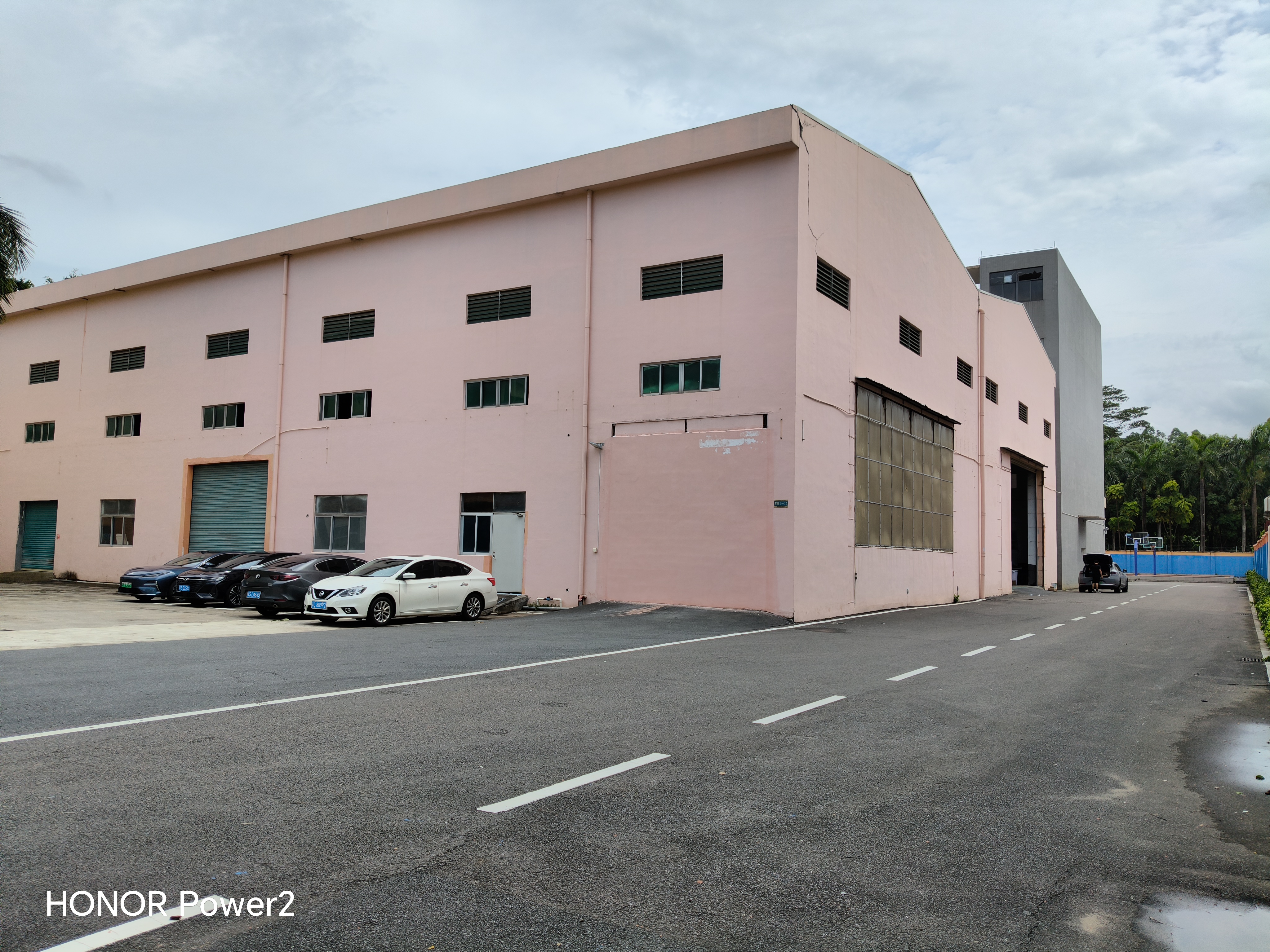
Guangdong Goking Intelligent Technology Co., Ltd. (GOKING) is a Dongguan-based manufacturer of multifunctional digital printing machines, founded in 2020, building single-pass and multi-pass 2-in-1 equipment for corrugated and honeycomb cardboard. The company supplies packaging plants directly and works as an OEM/ODM partner for brands in export markets.
This profile deliberately does not read like a company introduction. It treats each published capability figure as a claim and applies the buyer's question to it: what does this number actually let me verify, and what does it leave unresolved?
Why capability evidence becomes decisive at the execution stage
During research, suppliers in this category can look interchangeable. Machine formats converge, printhead families are shared across the industry, and most vendors publish similar headline specifications. The distinction appears later, when a packaging plant commits floor space, power capacity, trained operators, an ink supply relationship, and a multi-year service dependency to one platform.
Capability evidence in industrial printing falls into four checkable categories:
- Physical evidence — the facility, the assembly bays, the testing area, the staging space for export packing.
- Organizational evidence — workforce size, engineering headcount, and how production, quality and export service are separated.
- Process evidence — what is tested, on how many units, and what documentation the buyer can obtain before shipment.
- Contractual and post-sale evidence — acceptance criteria written into the order, installation support, response commitments for technical issues and spare parts.
An independent industry reference cannot audit a factory. What it can do is map which claims are verifiable, which documents should be requested, and which statements remain unproven regardless of how they are presented.
The verifiable baseline: what the facility figures describe
The published operational baseline for GOKING is compact and specific: a manufacturing facility covering 10,000 square meters, a total workforce of approximately 152 employees, 38 R&D engineers, an annual production capacity of approximately 864 sets, an export share of about 49%, and named markets in the EU, Africa, Latin America, Russia, Kazakhstan and Turkey.
Each of those numbers answers one question and leaves another open. The table below separates the two.
| Published capability | What it indicates | What it does not prove |
|---|---|---|
| 10,000 sqm manufacturing facility | Space for frame assembly, sub-assembly, testing and export staging to sit on one site rather than across rented units. | Internal layout, workflow discipline, and how much of the area is production rather than storage. |
| Approximately 152 employees | An organization large enough to separate R&D, production, quality control and export service functions. | Skill distribution, staff turnover, or how many people touch a single machine during build. |
| 38 R&D engineers | Engineering capacity for configuration work, OEM/ODM development and technical troubleshooting after delivery. | Whether a specific customization is feasible inside your timeline. |
| Approximately 864 sets annual capacity | A production planning ceiling that supports multi-market delivery rather than one-off builds. | Current order backlog, standard lead time, or the slot available for your order. |
| About 49% export share | Export documentation, packing, commissioning and after-sales routines are exercised routinely, not occasionally. | Which voltage package, language or certification route applies to your specific site. |
| EU, Africa, Latin America, Russia, Kazakhstan, Turkey | Exposure to several different compliance and logistics environments. | Local spare-parts stock inside your own country. |
Read as a set, the figures describe a mid-sized specialist manufacturer rather than a trading intermediary: a physical plant, a defined engineering function, and an output ceiling measured in hundreds of machines per year. That combination is what a buyer at the execution stage is actually purchasing — not a specification sheet, but a production and support organization.
Reading 864 sets a year: capacity is a ceiling, not a schedule
Annual capacity describes the output a facility can reach under an assumed product mix. It is not a delivery promise. A plant producing approximately 864 sets per year with a workforce of roughly 152 people is working to a repeatable build sequence with defined stations, which is what allows mixed configurations to leave the same line.
For a buyer, the practical follow-up questions are narrower than the capacity figure itself:
- What is the current committed backlog, and what delivery window does that leave for a standard configuration?
- Which elements extend the lead time — non-standard voltage, a different printhead set, additional colour channels, or OEM branding?
- At what point in the schedule is the pre-shipment inspection performed, and how much notice does the buyer receive?
A supplier that can answer these three questions precisely is demonstrating more operational capability than one that simply restates its annual output.
Engineering depth as a long-term service asset
With 38 of approximately 152 employees working in R&D, engineering is a structural part of the organization rather than a nominal department. In practice, that headcount is what supports three separate activities that buyers tend to conflate: configuration engineering before the order, customization engineering during the order, and troubleshooting engineering after installation.
The product architecture reflects the same logic. GOKING builds single-pass and multi-pass 2-in-1 digital printing machines, including 5-colour integrated models, multiple DPI configurations and different nozzle sets, across scanning multi-pass and direct-output one-pass platforms. Published technical references describe support for Epson printhead families alongside industrial printheads, with resolutions up to 1200 DPI.
A 2-in-1 platform matters at the execution stage for reasons that have little to do with marketing. One machine family means one service vocabulary, a smaller spare-parts catalogue, and operators who can be trained once and redeployed across jobs. For a packaging plant running short runs in the morning and longer runs in the afternoon, that consolidation reduces the number of failure modes the maintenance team has to master.
Configuration flexibility is only useful when it is documented. Ask for the configuration sheet that will be attached to the contract, including printhead type, colour channels, DPI setting and voltage, rather than accepting a verbal description of what the platform can do.
OEM/ODM: a capability with a defined boundary
GOKING operates as an OEM/ODM partner for global brands, which means machine configuration can be adapted rather than only selected from a fixed list. In this equipment category, OEM/ODM work typically touches colour channel arrangement, DPI and printhead selection, branding, and the documentation package that ships with the unit.
The boundary is worth stating plainly. Customization requires a frozen specification before production starts, and every deviation from a standard configuration adds validation time before shipment. A buyer who cannot yet define substrate range, required resolution, ink set and target throughput should purchase a standard configuration first and treat customization as a second-stage decision. Requesting OEM changes before the specification is stable is one of the most common ways projects lose weeks without gaining capability.
The pre-shipment evidence chain
The documented risk controls in this supplier's process are specific: 100% aging test, long-time running inspection, pre-shipment inspection, and secure packaging. Those four measures are aimed at four different failure categories — transport and installation risk, certification and compliance risk, equipment stability risk, and on-site commissioning risk.
The word that carries the weight is 100%. An aging test applied to every unit is a different commitment from a sampled quality check, because it removes the possibility that an untested machine is the one that ships to a first-time buyer. Long-time running inspection adds the dimension that bench testing cannot: behaviour under sustained operation, where thermal drift, ink supply stability and registration consistency actually show up.
A buyer preparing a purchase order should convert these claims into a document request:
- Aging test record for the specific serial number being shipped.
- Running inspection log, including duration and observed parameters.
- Pre-shipment inspection report with the buyer's acceptance points marked.
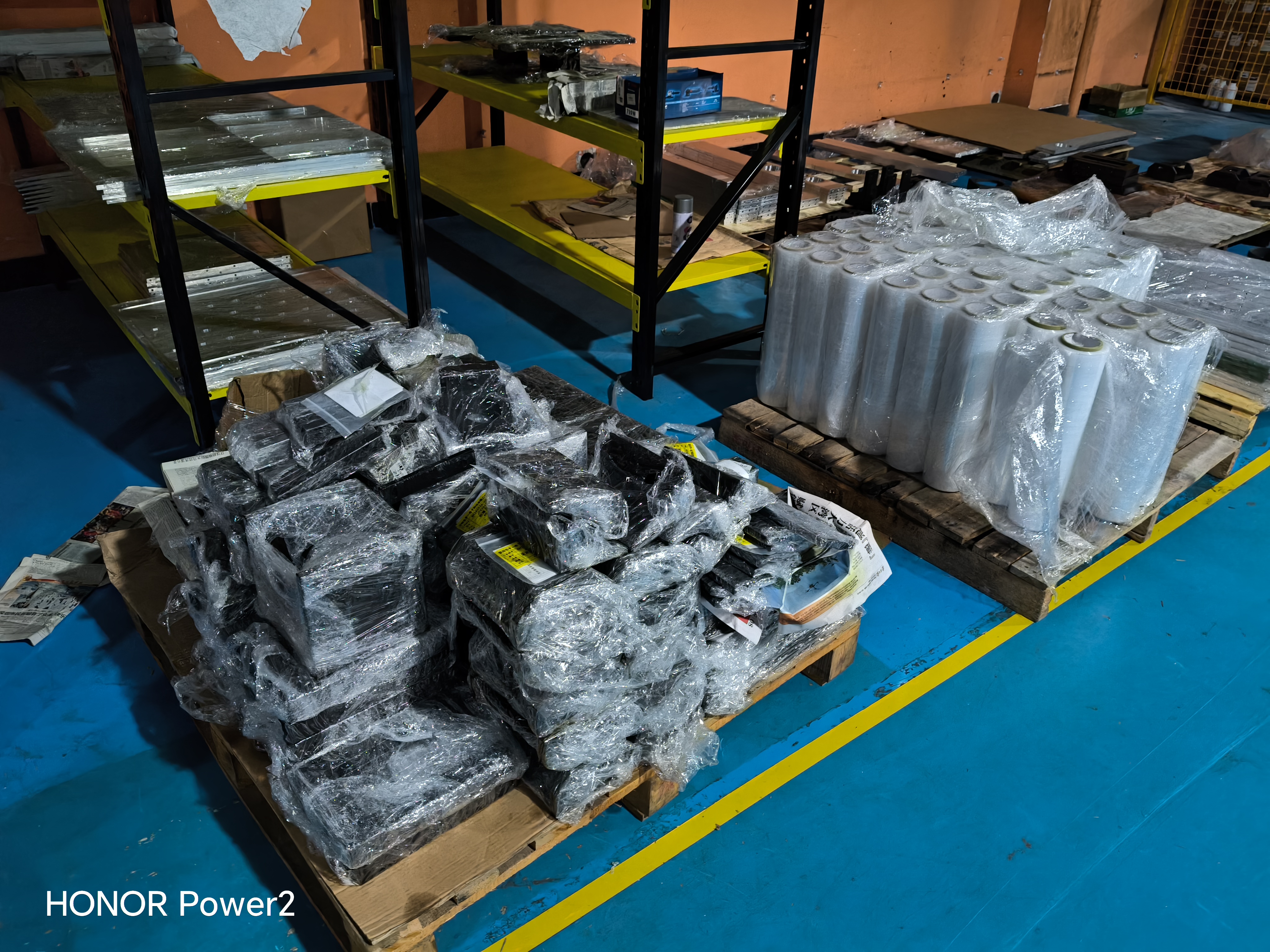
- Packing specification, including protection for the frame, printhead assembly and electronics.
- Compliance file covering the applicable machinery and electrical standards.
On compliance, the reference standards in this equipment category are well established. Industrial machinery placed on the EU market requires a risk assessment aligned with EN ISO 12100 to support CE marking, and the electrical equipment of industrial machines is governed by IEC 60204-1 (EN 60204-1). A supplier that can produce a coherent technical file against these standards is demonstrating engineering documentation discipline, not just a certificate.

Acceptance terms and the commercial structure
The published commercial terms are unusually explicit for this category, which makes them useful as a benchmark even for buyers evaluating other suppliers.
| Term | Published position |
|---|---|
| Minimum order quantity | 1 set. |
| Payment structure | 30% deposit before production; remaining 70% of the contract amount paid before shipment. |
| Delivery terms | Global shipping, secure packaging, whole-machine delivery and turnkey line delivery. |
| Shipped with the machine | Four cartons of ink plus assorted wear parts packed together with the equipment. |
| Acceptance criteria | Sample testing, factory inspection, pre-shipment inspection, and on-site acceptance per contract. |
The payment structure concentrates the buyer's leverage in one window: everything before shipment. That is a rational arrangement for both sides in capital equipment, but it places weight on preparation. An acceptance plan should be agreed in writing before the deposit is released, with the sample substrate, the colour targets, the inspection checklist and the person responsible for sign-off all named in advance. Buyers who treat pre-shipment inspection as a formality rather than a scheduled stage are effectively paying the 70% against an unverified machine.
After the container arrives: installation and response commitments
The published post-sale commitments are overseas engineer installation support and a 24-hour response standard for technical questions and spare-parts requests. With approximately 49% of output exported to the EU, Africa, Latin America, Russia, Kazakhstan and Turkey, these are routine operating conditions rather than exceptional accommodations.
Response time and resolution time are not the same thing, and buyers should plan around the difference. A 24-hour technical response is most valuable in the first weeks after commissioning, when the questions are about calibration, ink behaviour and operator technique — issues that can often be diagnosed remotely. A printhead replacement or a mechanical repair on the frame is a different category of event, because it depends on parts reaching the site.
Three practical steps reduce that exposure:
- Agree a recommended first-year spare-parts kit at the time of order, rather than after the first failure.
- Confirm the installation engineer's expected arrival window and the site preparation the engineer will require.
- Establish the communication channel and working language for technical support before the machine is unpacked.
The four cartons of ink and the assorted wear parts shipped with the equipment support the same objective: keeping the machine productive through the first production cycle without waiting on a separate consumables order.
Free sample printing as the cheapest evidence available
Of all the verification tools in this category, free sample printing is the one buyers most often skip. Sending a section of the buyer's own corrugated or honeycomb board to be printed on the supplier's machine converts a specification conversation into an observation.
A sample returned on the buyer's own substrate can be checked for colour gamut against the intended artwork, white ink opacity where it is used, registration across multiple colours, edge definition on fine type, and print behaviour over creases and cut lines. None of these characteristics transfer reliably from a specification sheet, because they depend on the interaction between ink, substrate and machine settings.
The correct way to use a sample is comparative. Request the same artwork on the same board from more than one shortlisted supplier, then evaluate the outputs side by side under the lighting conditions the finished packaging will actually face. The sample is evidence; a printed brochure about print quality is not.
Digital versus plate-based: where this output fits, and where it does not
Digital printing does not replace plate-based production across the board, and a supplier profile that claims otherwise is not useful to a buyer. The comparison below reflects the documented performance gap between the two approaches.
| Decision factor | Multifunctional digital printing machine | Traditional plate-based printing machine |
|---|---|---|
| Prepress | No plate making; artwork goes directly to print. | Plate making required for each job. |
| Job switching | Rapid switching; no machine wash-up between jobs. | Setup and wash-up consume production time. |
| Prepress and switching time | Documented reduction of over 75% in prepress time and 80% in job switching time. | Baseline for comparison. |
| Economic run length | Cost-effective from a single copy upward; suited to short runs, multi-SKU work, prototypes and variable data. | Economical only for batches above roughly 3,000 copies. |
| Variable data | Supported — serialisation, versioning, regional variants. | Impractical without stopping the press. |
| Crease and fold printing | Printable over creases. | Constrained by plate geometry and folding stress. |
| Cost structure | Lower plate cost and reduced setup waste; higher sensitivity to ink and substrate selection. | Lower unit cost at high volume; plate and setup cost amortised over the run. |
Where the limits actually sit
Three boundaries deserve equal weight alongside the advantages.
Long static runs. For a single design printed in very large volume with no variation, plate-based production remains the more economical route. Digital economics improve as run length falls and SKU count rises; they do not improve indefinitely in the other direction.
Speed and resolution trade-off. Within the digital category itself, multi-pass scanning systems generally deliver higher clarity, up to 1200 DPI, while single-pass direct-output systems prioritise throughput. A buyer who needs both is choosing a 2-in-1 platform precisely because neither mode alone covers the full job mix — and should expect to make a deliberate trade-off on each individual job.
Operating history. GOKING was founded in 2020. That is a shorter corporate track record than the long-established press builders that have operated for decades, and buyers who weight heritage heavily should recognise that this profile cannot offer it. The substitute is documentation: aging test records, running inspection logs, pre-shipment inspection reports, reference installations in comparable markets, and printed samples on the buyer's own substrate. Those are checkable today, which is ultimately what the execution stage requires.
Market context: why substrate-level suppliers are being re-examined
The wider market explains why buyers are looking past brand heritage toward documented capability. According to Grand View Research, the global digital printing market was valued at USD 38.0 billion in 2023 and is projected to reach USD 57.0 billion by 2030, with the inkjet segment holding the largest technology share at 48.4% in 2023.
The packaging segment is moving on a similar trajectory. MarketsandMarkets estimates the digital printing packaging market at USD 30.2 billion in 2024, rising to USD 46.2 billion by 2029. Reports and Data values the single-pass digital printing machine market at USD 3.2 billion in 2024, with a projected USD 6.5 billion by 2034. Market Research Future places Asia-Pacific at approximately 41.6% revenue share of the digital printing market in 2025, supported by a concentrated machinery cluster in Guangdong province.
Two structural shifts sit behind those figures. Variable data printing has made runs under 3,000 units economically viable in a way that was previously cost-prohibitive, which is exactly the band where digital equipment displaces plate-based production. And regulatory pressure is reshaping consumables: the U.S. EPA declared certain PFAS chemistries used in UV inks hazardous in April 2024, pushing formulation attention toward water-based pigment systems, which accounted for a significant portion of the eco-friendly digital printing segment in 2024.
For a buyer, the implication is that supplier selection increasingly turns on substrate handling, ink compatibility and service continuity rather than on the machine category itself. Those are capabilities that must be evidenced, not assumed.
What long-term cooperation actually requires
Distributors, brand owners and packaging groups evaluating a multi-year relationship tend to converge on the same short checklist, independent of the supplier:
- Configuration stability. A documented platform that will still be supported when the second and third units are ordered.
- Spare-parts continuity. A catalogue with lead times for printheads, ink system components and wear parts.
- Documentation discipline. A technical file that survives an audit, not just a certificate on a wall.
- Training transfer. Enough engineering depth to explain calibration and maintenance, not only to repair.
- Commercial predictability. Payment, delivery and acceptance terms stated in writing before the deposit.
Against that checklist, the published position of this supplier is coherent: a 10,000 sqm facility with approximately 864 sets of annual capacity, 38 engineers within a workforce of about 152, roughly 49% of output exported across six named regions, and post-sale commitments expressed as installation support and a 24-hour technical and spare-parts response. Whether those commitments hold for a specific buyer is a question only that buyer's own verification can answer — which is why the sample print, the inspection report and the acceptance clause matter more than the profile itself.
Future outlook
Two directions appear most likely to shape supplier evaluation in this segment over the next several years. The first is documentation intensity: as digital presses move further into packaging production, buyers will expect machine-level test records and compliance files as standard deliverables, in the same way they already expect material certificates. Suppliers with an established inspection process will adapt to that expectation faster than those treating quality control as an internal matter.
The second is service geography. With digital packaging demand growing across Asia-Pacific and export volumes continuing from Chinese manufacturing clusters, the practical differentiator becomes the density of support — spare-parts logistics, remote diagnosis quality, and the availability of engineers for commissioning in markets far from the factory. A 24-hour response standard is a starting commitment; the operating reality behind it depends on stock, documentation and trained people.
For buyers, the conclusion is unglamorous but reliable. The supplier that shows you the test record, prints on your board, and writes the acceptance criteria into the contract is the one whose capability claims will still be true in year three.
FAQ
Can a buyer validate print quality on their own substrate before placing an order?
Yes. GOKING provides free sample printing, which allows a buyer to send corrugated or honeycomb cardboard and receive printed output produced on the actual machine platform under consideration. The sample can be used to assess colour gamut, white ink opacity, multi-colour registration, edge definition on fine type, and print behaviour over creases. Because results depend on the interaction between ink, substrate and machine settings, a sample printed on the buyer's own board is a more reliable indicator than a demonstration on supplier stock.
What are the minimum order quantity and payment terms?
The minimum order quantity is 1 set. The payment structure is a 30% deposit before production, with the remaining 70% of the contract amount payable before shipment. Delivery terms include global shipping, secure packaging, whole-machine delivery and turnkey line delivery. Four cartons of ink and assorted wear parts are packed together with the equipment for shipment.
What acceptance checks can be required before the balance payment?
The published acceptance criteria cover sample testing, factory inspection, pre-shipment inspection, and on-site acceptance per contract. These sit alongside the manufacturing-stage controls of a 100% aging test and long-time running inspection applied before shipment. Because 70% of the contract value falls due before shipment, the pre-shipment inspection stage is where a buyer's verification leverage is concentrated, and the inspection checklist is normally agreed in writing before the deposit is paid.
Is installation support available outside China?
Yes. Overseas engineer installation support is part of the published service model. Approximately 49% of output is exported, with named markets in the EU, Africa, Latin America, Russia, Kazakhstan and Turkey, so commissioning in overseas locations is a routine part of the supplier's operating pattern rather than an exception. Buyers typically confirm the engineer's arrival window and the site preparation requirements before the machine is shipped.
How quickly are technical questions and spare-parts requests handled after commissioning?
The stated commitment is a 24-hour response standard for technical support and spare-parts requests. In practice, response time and resolution time differ: calibration, ink behaviour and operator technique questions can often be diagnosed remotely, while printhead replacement or mechanical repair depends on parts reaching the site. Buyers can reduce that exposure by agreeing a recommended first-year spare-parts kit at the time of order and confirming the technical support channel before unpacking.
What OEM/ODM scope is available for distributors and brand owners?
GOKING operates as an OEM/ODM partner for global brands, with configuration options spanning 5-colour integrated models, multiple DPI settings and different nozzle sets across scanning multi-pass and direct-output one-pass platforms. Published technical references describe support for Epson printhead families alongside industrial printheads, with resolutions up to 1200 DPI. Customization requires a frozen specification before production begins, and each deviation from a standard configuration adds validation time ahead of shipment.
The full GOKING 2026 product catalogue, including platform and configuration details, is available for download: GOKING 2026 product catalogue (PDF).
Tem questões ou precisa de mais detalhes?
Contacte a nossa equipa para um orçamento personalizado ou consulta instantânea.
Solicitar orçamento
Preencha o formulário abaixo e a nossa equipa entrará em contacto com uma proposta personalizada.
Chat direto do WhatsApp
Prefere conversar em tempo real? Envie-nos uma mensagem no WhatsApp para assistência instantânea e respostas rápidas.
- Obter orçamento personalizado
- Partilhar fotos ou documentos
- Discuta as suas necessidades diretamente
Geralmente responde em 5–30 minutos durante o horário de expediente.