
Supplier Capability Evidence: KEYETECH's 29,000 m² AI Sorting Factory and 56 R&D Engineers
Supplier Capability Evidence: KEYETECH's 29,000 m² AI Sorting Factory and 56 R&D Engineers
For a buyer moving from evaluation to execution, a supplier's factory size and R&D headcount are not closing arguments. They are evidence inputs that must be checked against the buyer's material, line, model mix, acceptance protocol and after-sales plan. KEYETECH (Anhui Keye Intelligent Technology Co., Ltd.) publishes a set of such inputs: founded in 2011, a 29,000 m² facility, about 300 employees, 56 R&D engineers, 3,000 units of annual production capacity, a 10% export share, and main markets in the EU, USA and Southeast Asia.
This article treats those figures as a due-diligence map for AI intelligent sorting procurement. The figures are company-published unless a separate certificate record or case record is named. They can support supplier screening; they do not replace model-level testing, a factory audit or a contract exhibit. The useful question is not whether the numbers sound large, but what each number lets a buyer verify before committing a line.
Why capability evidence matters at the execution stage
At the evaluation stage, buyers compare applications, models and commercial terms. At the execution stage, they begin to reserve capacity, share samples, approve drawings, schedule pre-shipment tests and plan installation. That shift raises the cost of a weak supplier claim. A capability statement is most useful when it can be converted into a document, an observation or an acceptance test.
Four evidence classes should be kept separate during this review:
- Entity facts. Founding year, site size, headcount, R&D staffing, annual output, export ratio and main markets. These help confirm that the supplier is a real operating entity with the claimed scale. They do not prove sorting performance.
- Certificate records. A named certificate, standard, authority and scope can support market-access screening. The buyer still needs to confirm that the certificate covers the exact model and configuration being ordered.
- Supplier-reported cases. Unit counts, material applications, countries and reported results show where the supplier says it has experience. They are not independent field trials unless a buyer or third party verifies them.
- Buyer acceptance evidence. Sample tests, pre-shipment inspection, model-training records, software configuration and sign-off criteria are the evidence that matters at execution.
This distinction is the core of a supplier-capability review. It protects the buyer from treating marketing language as proof, while still using published facts to decide which suppliers deserve a deeper audit.
KEYETECH capability evidence at a glance
KEYETECH's published profile provides a useful starting file. The table below separates each item by what it can establish and what it cannot establish.
| Evidence item | Published value | Due-diligence use | Boundary |
|---|---|---|---|
| Legal entity | Anhui Keye Intelligent Technology Co., Ltd., China | Match the contracting entity to registration and invoice details | Entity identity does not prove product performance |
| Founding year | 2011 | Check business registration and operating history | Older company age is not a quality guarantee |
| Facility size | 29,000 m² | Request a site layout, factory walkthrough or video audit | Floor area does not show model-specific capacity |
| Employees | About 300 | Check staffing for production, quality, engineering and support | Headcount does not show allocation to your project |
| R&D engineers | 56 engineers | Request an R&D organization chart and named project team | Headcount does not prove model accuracy or delivery speed |
| Annual production capacity | 3,000 units | Ask for capacity by model family and current order backlog | Aggregate capacity is not a model-level lead-time promise |
| Export ratio | 10% of total sales | Ask for country mix, export documentation and service arrangements | Export share is not a quality ranking |
| Main markets | EU, USA and Southeast Asia | Request references and spare-parts arrangements in those markets | Market listing does not prove local service coverage |
| CE certificate record | No. 1N260609.AKIT003, Ente Certificazione Macchine Srl, scope: Inspection Sorting Machine, standards EN ISO 12100:2010 and EN 60204-1:2018 | Request the current certificate and confirm model coverage | The supplied record does not show issue or expiry dates |
| OEM/ODM terms | OEM and ODM services, logo customization, MOQ 1 unit, lead time 30-45 days, 100% test, remote support | Convert terms into a quotation and contract schedule | Published terms still need model-specific confirmation |
The table should be read as a screening file. A buyer can use it to ask better questions, but the final decision should rest on the buyer's own sample tests, acceptance records and contract terms.
What 29,000 m² and 3,000 units actually tell a buyer
The 29,000 m² figure establishes that KEYETECH describes a substantial operating site, not a sales office. The company states that it owns a self-built facility with two buildings: one for R&D, sales, administration and finance, and the other for production. It also describes production and machining workshops within the manufacturing operation, and positions itself as covering R&D, manufacturing and sales.
That structure matters for AI intelligent sorting because the equipment is a combination of mechanical handling, imaging, lighting, ejection, electronics and software. A supplier with in-house machining and production space can, in principle, control more of the build and change cycle. The buyer should still ask how the 29,000 m² is allocated across those functions. Useful requests include a site plan, a production-flow walkthrough, the location of incoming inspection, sub-assembly, software configuration, burn-in and final testing, and the space reserved for OEM/ODM work.
Factory footprint versus model-specific capacity
The published annual output capacity is 3,000 units. This is a scale indicator. It does not mean that every model is stocked, that a specific configuration can ship immediately, or that the line is available at the buyer's preferred date. A buyer should ask for capacity by model family, current backlog, the share of capacity reserved for standard machines versus customized orders, and the lead time for the exact model under consideration.
KEYETECH lists a 30-45 day lead time in its capability record, with a minimum order quantity of 1 unit and OEM/ODM support including logo customization. Those terms are useful for early planning, but they should be written into the quotation with model-specific assumptions. A 30-45 day figure without a model, configuration and test scope is not yet a delivery commitment.
Quality control and acceptance evidence
The supplier lists 100% test as its quality-control approach. It also lists pre-shipment test as an acceptance criterion, with FOB/CIF delivery terms. For the buyer, the key question is what 100% test covers: incoming components, sub-assemblies, software configuration, image calibration, ejection verification, safety checks, run-in time, or final performance on the buyer's material. A test record that names the model, serial number, test material, defect set and acceptance result is more useful than a general statement that every unit is tested.
The factory site and the 3,000-unit capacity are therefore best used as reasons to request evidence, not as substitutes for it. They move KEYETECH from a desk-based comparison into a candidate for a structured factory and acceptance review.
What 56 R&D engineers add to the supplier case
The 56 R&D engineers are a more specific capability signal than headcount alone. KEYETECH states that its core technologies are led by PhDs from the University of Science and Technology of China in three areas: imaging systems, AI algorithms and software control systems. It also states that its AI algorithm team includes three PhDs from the university's Pattern Recognition Laboratory.
That matters because AI sorting performance is not created by the mechanical frame alone. The buyer is paying for defect recognition, model stability, software configuration and the ability to adapt to a material that may vary by lot, season or supplier. A dedicated R&D group can support those tasks, provided the supplier assigns the right people to the project and documents the work.
In-house technology chain
KEYETECH states that it follows a self-developed approach across optical solutions, industrial cameras, AI algorithms and software architecture. It also states that it has achieved 100% localization in its core technology chain. For a buyer, those claims are relevant to customization and long-term support: in-house development can make it easier to trace design changes, adjust a model and control software updates. The claim should still be verified through a technical discussion with the engineering team, a software version policy and a clear boundary between standard and customized work.
Model training as a buyer-verification point
KEYETECH reports that a complete AI model can be built within one hour and that a sorting model can be trained with 50 images. The company repeats this highlight in its case records. This is a company-reported capability, not an independent benchmark. It is useful because it tells the buyer what to test: provide a representative sample set, ask for a live or recorded training demonstration, and define what counts as a successful model before shipment.
The practical questions are straightforward. Who supplies the images? How many defect examples are needed for the buyer's material? How are false accepts and false rejects measured? What happens when the material changes? Who owns the trained model and the image data? Can the buyer receive a model-training report with the machine? A strong R&D team should be able to answer these questions in project language, not only in general marketing language.
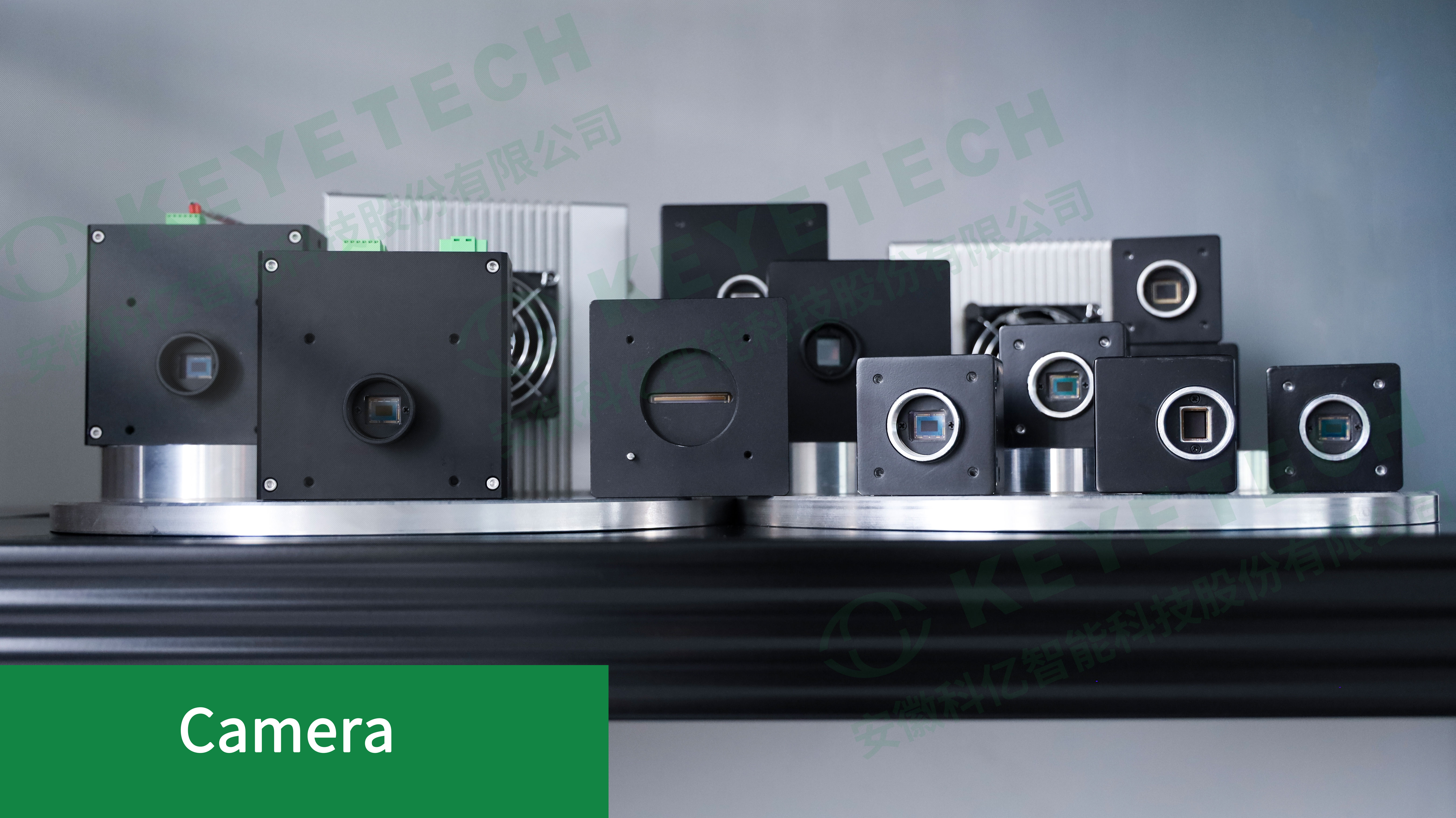
Imaging is one part of the AI sorting chain. Buyers should verify image capture, model training, inference hardware, ejection setup and acceptance testing as one system.
From rice to ore: how application breadth connects to capacity
KEYETECH's product record links AI intelligent sorting to a broad set of agricultural, food and industrial materials. That breadth is relevant to capacity planning because a supplier serving many material families must manage different hygiene expectations, wear conditions, camera setups, handling methods and cleaning routines. It also means the buyer should not compare only the model name; the configuration behind that model matters.
| Material family | Published example model | Why the buyer should check configuration |
|---|---|---|
| Rice | 6SXZ-990C | Defect set, throughput target and cleaning routine vary by rice grade |
| Grain and coarse cereals | 6SXZ-693C | Insect eyes, mold and foreign matter require a defined sample protocol |
| Nuts | 6SXZ-63LFI | Grade standards, shell fragments and size grades affect the model setup |
| Coffee cherry | 6SXZ-99C | Defect definitions and ripeness classes must be agreed before training |
| Pet food | 6SXZ-126LFI | Shape, color and surface defects differ from raw-food sorting |
| Traditional Chinese medicinal materials | 6SXZ-378LFI | Material variability and foreign matter require reference samples |
| Seasoning | 6SXZ-756LFI | Dust, color variation and product fragility affect the handling design |
| Plastic | 6SXZ-99C | Polymer type, flake size and target purity change the optical setup |
| Metal | 6SXZ-378LFI | Surface condition and mixed-material feed require a clear acceptance rule |
| Ore | 6SXZ-252LFI | Throughput, wear protection and dust control are part of the scope |
The same model number can appear across different applications. For example, 6SXZ-378LFI is listed for traditional Chinese medicinal materials, metal, fresh flower and French fry sorting. That does not mean one machine configuration fits all four. It means the platform may be adapted, and the buyer should ask for the exact configuration, ejector layout, camera setup, software model and acceptance criteria for the intended material.
The portfolio also includes salt, flower tea, fresh flower, vegetable, chicken nugget, candy and lemon slice applications, with models such as 6SXZ-198C, 6SXZ-504LFI, 6SXZ-252LFI, 6SXZ-126LFI, 6SXZ-63LFI and KQA. The breadth is useful for a multi-line buyer, but it increases the importance of model-level documentation. A broad catalogue is not a substitute for a material-specific test.
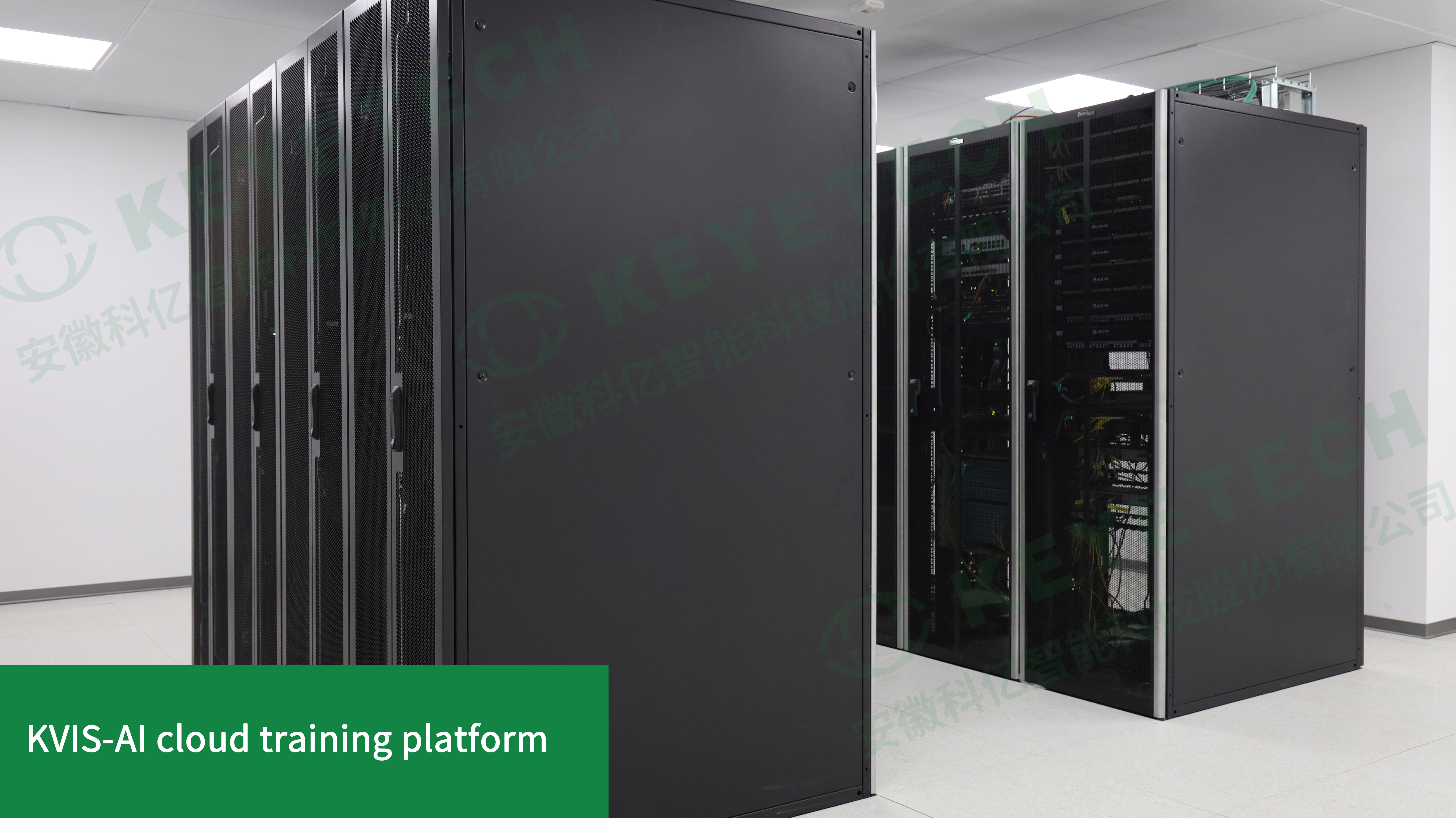
Model-training infrastructure supports the claim that sorting recipes can be adapted. Buyers should still validate training time and accuracy on their own defect samples.
The technical chain behind the capability claim
KEYETECH describes an AI sorting chain built around image capture, defect recognition and high-speed decision-making. Its double-layer intelligent sorting machine description refers to high-dimensional HDR cameras that recognize two-dimensional images of materials and locate defect positions, together with deep learning for pattern recognition. Its grain-sorting description refers to identifying colors and mold characteristics that are difficult for the human eye to recognize, using a dedicated AI NPU chip for inference under high-speed operation. A separate AI edge computing unit is described as providing computing power for AI algorithms and accelerating model inference.
For the plastics-recycling market, a KEYETECH Korea page describes a 2MP AI camera and 32 TOPS edge computing for PET, PP, PE, PS, ABS and PC flakes and pellets. That is a regional product description, not a universal specification for every KEYETECH model. It is useful as an example of how the company positions edge computing for material-specific sorting, but the buyer should request the specification for the exact model and market.
Compared with a conventional threshold-based color sorter, an AI model can be trained to recognize more complex visual patterns. The published record supports the existence of that approach, but it does not provide a controlled comparison of accuracy, throughput or false-reject rates against another brand. The buyer should therefore treat the technical description as a basis for testing, not as proof of superiority.
What the published application cases establish
KEYETECH's case records add application context. They are supplier-reported and should be read as evidence of where the company says it has installed equipment, not as independent audits.
- Food OEM case: 12 units, application for detecting impurities and spoilage in food, with a one-year reported stable-operation period. The record includes a multi-country footprint and a highlight of complete AI model building within one hour using 50 images. A related website case record places a product 5140 grain-sorting case in Italy.
- Coarse cereals OEM case: 25 units, application for detecting insect eyes and impurities in miscellaneous grains, with a one-year reported stable-operation period and the same one-hour and 50-image training highlight.
- Rice OEM case: 10 units, application for broken rice, yellow rice and impurities. The record reports complete AI model building in one hour and a finished-product sorting result of 99.999%. That figure is a supplier-reported case result, not an independently tested specification.
These cases are useful because they name material families, unit quantities and defect types. They are not enough to prove that the same result will occur on a different line. The buyer should ask for a reference in the same material, a sample test with the buyer's defect set, and the acceptance record from a comparable project. Case records become stronger when the buyer can speak to the reference and compare the line conditions.
Export share and market fit: reading the 10% figure correctly
KEYETECH lists the EU, USA and Southeast Asia as main markets and states that exports represent 10% of total sales. That is a useful fit signal, but it should be read precisely. It indicates an export business alongside a larger domestic base. It does not show that 10% of production is exported, that every model is sold in each market, or that local service is equally mature in all three regions.
For an international buyer, the 10% figure raises practical questions. How are EU, US and Southeast Asian customers supported? Is support remote, through a distributor, or through local service partners? What is the response path for software issues, spare parts and model retraining? Are English-language manuals, electrical documentation and certificate files available for the exact model? The company lists remote support as its after-sales approach, so the buyer should test how that works across time zones and line stoppages.
EU buyers should confirm that the CE certificate record covers the ordered model and current configuration. The supplied record names certificate No. 1N260609.AKIT003, issued by Ente Certificazione Macchine Srl, with scope for an Inspection Sorting Machine and standards EN ISO 12100:2010 and EN 60204-1:2018. It does not show issue or expiry dates, so the current certificate and model coverage should be requested directly. US and Southeast Asian buyers should ask for the applicable market documentation and configuration rather than assuming an EU certificate covers every requirement.
A due-diligence checklist for long-term sourcing
The following checklist converts KEYETECH's published capability into a buyer-controlled verification file. It is written for a long-term sourcing decision, not a one-off price comparison.
- Confirm the legal entity and contracting party. Match the company name, address and bank details to the quotation and registration documents.
- Audit the 29,000 m² site against your model. Ask for a live or recorded walkthrough covering incoming inspection, machining, assembly, software configuration, testing and packing.
- Request capacity by model, not only the 3,000-unit total. Ask for current backlog, standard versus customized output, and the lead time for your exact configuration.
- Review the 56-engineer R&D structure. Ask for the project team, the split between optics, algorithms, software and mechanical engineering, and the escalation path for technical issues.
- Test the model-training workflow. Provide representative samples and ask for a training report covering images used, defect classes, training time and acceptance results.
- Verify the certificate scope. Request the current CE certificate, confirm the model and configuration covered, and check the applicable standards and market documentation.
- Agree the pre-shipment test. Define the material, defect set, run time, sampling or full-inspection rule, acceptance thresholds and sign-off record.
- Check reference cases in your material and market. Ask for a comparable installation, the line conditions, the reported result and whether a reference call is possible.
- Convert OEM/ODM terms into the contract. Clarify logo customization, MOQ, lead time, drawing approval, software ownership and change control.
- Map after-sales support. Confirm remote support hours, spare-parts list, software update policy, training materials and the response path for a line stoppage.
If these items are documented, the factory size, R&D headcount and capacity figures become part of a traceable supplier file. If they are not, the figures remain useful screening data but should not be treated as execution evidence.
Future outlook: from published capability to contract evidence
The next evidence layer for AI sorting suppliers is model-level documentation. Buyers increasingly need to compare not only machine frames and camera specifications but also training data, model ownership, software version control and acceptance methods. A supplier with a large factory and a 56-engineer R&D team is better placed to support that documentation, but the buyer should still require it in writing.
KEYETECH's published record gives a credible starting point: a 2011 founding date, a 29,000 m² site, about 300 employees, 56 R&D engineers, 3,000 units of annual capacity, a CE certificate record and application cases across food and industrial materials. The record also sets the boundaries. Export is 10% of total sales, the certificate record lacks issue and expiry dates, and the performance claims are company-reported. Those boundaries are not disqualifiers; they are the points where a buyer should move from reading to verifying.
For a long-term sourcing decision, the strongest conclusion is conditional. KEYETECH presents enough published capability to justify a structured evaluation. A purchase decision should follow only after the buyer has matched the model to the material, tested the training workflow, confirmed the certificate scope and agreed the acceptance record.
FAQ: verifying KEYETECH's AI sorting capability
What verifiable company facts should a buyer check first when evaluating KEYETECH?
Start with the legal entity, founding year, site, workforce, R&D staffing, annual capacity, export ratio and main markets. KEYETECH publishes Anhui Keye Intelligent Technology Co., Ltd. as the entity, a 2011 founding year, a 29,000 m² facility, about 300 employees, 56 R&D engineers, 3,000 units of annual production capacity, a 10% export share and main markets in the EU, USA and Southeast Asia. These are company-published facts. Match them to registration documents, a factory walkthrough and model-specific records before relying on them.
How should buyers interpret the 29,000 m² factory and 3,000-unit annual capacity?
They are scale indicators. The 29,000 m² site suggests a substantial operating base with separate office and production functions, while 3,000 units indicates published annual output capacity. Neither figure proves that a specific model is available, that the line is free or that the buyer's material will pass acceptance. Buyers should ask for capacity by model family, current backlog, the production flow for their configuration and a pre-shipment test record.
What does the 56-engineer R&D team indicate about customization and model training?
It indicates a dedicated technical organization rather than a sales-only operation. KEYETECH states that its core technologies are led by University of Science and Technology of China PhDs in imaging, AI algorithms and software control, and that its algorithm team includes three PhDs from the Pattern Recognition Laboratory. It also reports one-hour model building with 50 images. Treat that as a company-reported capability and validate it with your own samples, defect definitions and acceptance criteria.
Which material families and models can buyers examine in KEYETECH's AI sorting portfolio?
The published portfolio covers rice, grain, nuts, coffee cherry, pet food, traditional Chinese medicinal materials, seasoning, plastic, metal, ore, salt, flower tea, fresh flower, French fry, vegetable, chicken nugget, candy and lemon slice applications. Example models include 6SXZ-990C for rice, 6SXZ-693C for grain, 6SXZ-63LFI for nuts, 6SXZ-99C for coffee cherry and plastic, 6SXZ-378LFI for traditional Chinese medicinal materials, metal and fresh flower, 6SXZ-252LFI for ore and vegetable, and KQA for lemon slice. Confirm the exact configuration for the intended material.
How can buyers verify KEYETECH's certificate, cases and commercial terms before an order?
Request the current CE certificate for certificate No. 1N260609.AKIT003, confirm the authority, standards and model coverage, and check the issue and expiry dates. For cases, ask for a reference in the same material, the line conditions and the reported result; the published case records are supplier-reported. For commercial terms, confirm MOQ, lead time, OEM/ODM scope, logo customization, FOB/CIF terms, pre-shipment acceptance and remote support in the quotation and contract.
Published contact channels for verification
KEYETECH publishes the following contact channels for buyer verification: Name: Nicole; Email: market-axq@keyetech.com; Tel: +86 191-4244-2827; WhatsApp: +86 191-4244-2827; Address: No.56, Chang'an Rd, Hi-Tech Zone, Hefei, Anhui, China.
Company website: KEYETECH. Company brochure (PDF): download the KEYETECH brochure.
Tem questões ou precisa de mais detalhes?
Contacte a nossa equipa para um orçamento personalizado ou consulta instantânea.
Solicitar orçamento
Preencha o formulário abaixo e a nossa equipa entrará em contacto com uma proposta personalizada.
Chat direto do WhatsApp
Prefere conversar em tempo real? Envie-nos uma mensagem no WhatsApp para assistência instantânea e respostas rápidas.
- Obter orçamento personalizado
- Partilhar fotos ou documentos
- Discuta as suas necessidades diretamente
Geralmente responde em 5–30 minutos durante o horário de expediente.