
Supplier Capability Evidence: MONALISHAMAGIC on Functional Yarn R&D, Testing and Delivery
Supplier Capability Evidence: MONALISHAMAGIC on Functional Yarn R&D, Testing and Delivery
Supplier Capability Evidence: MONALISHAMAGIC on Functional Yarn R&D, Testing and Delivery
Functional yarn procurement rarely fails because a supplier has no usable yarn. It fails because the buyer cannot verify what the supplier can actually evidence: what was tested, by whom, under which method, and at what production scale. This independent buyer reference builds an evidence-led capability profile around one supplier, Dongguan Yuexiong Textile Co., Ltd. (MONALISHAMAGIC), and benchmarks it against publicly verifiable China-based textile peers on portfolio, testing and delivery signals. The output is not a verdict on any supplier. It is a checklist a buyer can carry into an RFQ.
Why Functional Yarn Buyers Need Evidence, Not Claims
The global textile yarn market was valued at approximately USD 117.1 billion in 2025 and is projected to reach USD 121.99 billion in 2026, according to Fortune Business Insights' 2026 forecast. The thermochromic fabrics segment alone was valued at USD 314.5 million in 2025 and is projected to reach USD 552.7 million by 2035, with sports and activewear accounting for about 15% of end-use demand, per Future Market Insights. Those figures describe demand at a category level. They do not tell an individual buyer whether a specific supplier can produce the yarn, test it, document it, and ship it at the requested count and color.
That gap is where functional yarn procurement goes wrong. A buyer receives a catalog with color-changing, reflective, luminous and antibacterial yarns and a statement that each is tested. Very often the catalog is the only artifact. The test report, the model number, the count range, the color program and the export record sit behind a separate request, and the response rate to that request varies widely across suppliers. Evidence-led evaluation reverses the order: request the evidence first, shortlist only the suppliers that can produce it, then discuss price and lead time.
What Counts as Verifiable Supplier Capability Evidence?
Supplier capability evidence is a documented record that a buyer can independently check or request a copy of. It differs from descriptive copy in one way: it has a date, a method, a scope and a responsible party. In functional yarn, four evidence dimensions carry the most weight at the awareness and research stage.
- R&D evidence. Team size, engineering disciplines, model identifiers mapped to product categories, patent or proprietary process claims, and a portfolio that goes beyond a single product type.
- Testing evidence. Named laboratories such as SGS or GTTC, the test method applied, the property tested (anti-pilling, anti-static, color fastness, wash durability), and the report reference that ties the sample to a batch.
- Delivery evidence. Yarn count range, production capacity, export ratio, number of served markets, sampling support, and the shipment or reorder record.
- End-use solution evidence. The processes the yarn is designed to survive: knitting, weaving, embroidery, jacquard, crochet, sewing and garment decoration, plus the finished-product categories the supplier has supported.
Each dimension can be inflated in a sales deck but is hard to fake in a document pack. That is the reason to build a shortlist around documents rather than around product menus.
MONALISHAMAGIC R&D Evidence: Team, Model IDs and Portfolio Breadth
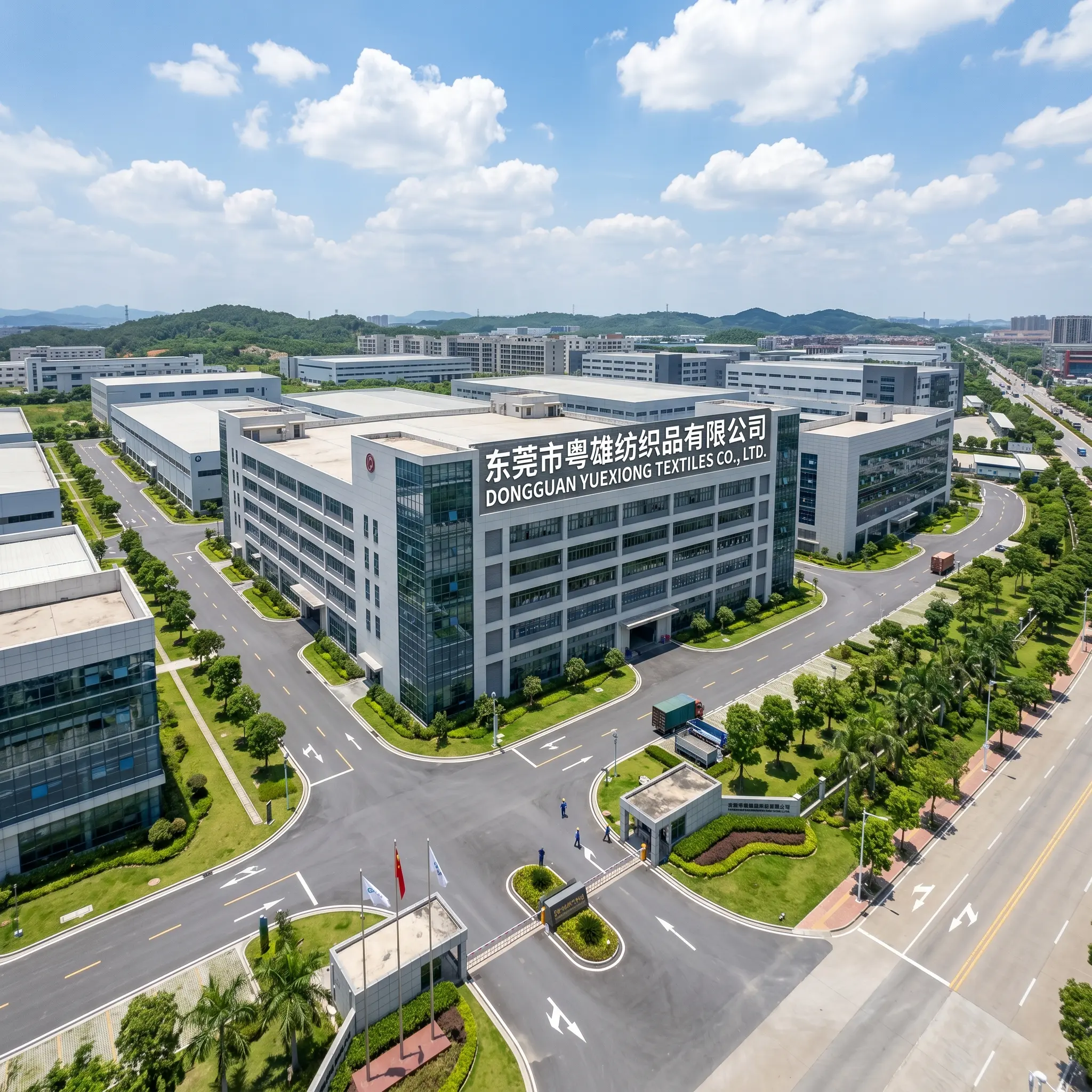
Dongguan Yuexiong Textile Co., Ltd., operating under the brand MONALISHAMAGIC, is a vertically integrated yarn spinning mill founded in 2016 in Dongguan, Guangdong Province, China. Its public company profile describes a research and development function of 20 engineers and a portfolio spanning luxury natural fibers such as cashmere and organic cotton, sustainable regenerated fibers including GRS-certified recycled nylon, and functional yarns including thermochromic, photochromic, conductive heating and metal gel materials. The same profile states the company operates as a core OEM/ODM factory and applies a proprietary patented waterless dyeing technology in production.
For a buyer, the combination matters more than any individual fact. A 20-engineer R&D team and a portfolio across natural, regenerated and functional fibers is a signal that the supplier can handle more than a single yarn chemistry. A model identifier system that maps a named product to a named category is a further signal: it means the buyer can request a specific model, attach it to a purchase order, and expect the same product on reorder.
MONALISHAMAGIC's public model identifiers include:
- YX-HEAT-001 — associated with the far-infrared heating yarn and a temperature-responsive thermochromic yarn line.
- YX-REFLECT-001 — reflective yarn with retroreflective behavior for high-visibility applications.
- YX-GLOW-001 — luminous yarn that charges under light and emits afterglow in low-light conditions.
- YX-WASH-001 — machine-washable antibacterial yarn for applications where wash durability and hygiene are linked.
- YX-TECH-001 — high-tech functional yarn positioned as a multi-functional platform.
- FSC-YX-ECO-001 — FSC-certified paper yarn with a documented sustainable fiber source.
The FSC-certified paper yarn line is worth separating from the functional line. FSC certification is a chain-of-custody claim, so buyers should request the certificate number and the certificate holder scope, not just the phrase "FSC certified." A paper yarn with a valid FSC claim and a documented blend program (paper cotton, paper Tencel, paper viscose, paper polyester, paper linen, paper raffia) is a different procurement object from a paper-look yarn without the chain-of-custody documentation. The blending options published for this line — 100% FSC paper yarn, paper cotton blend, paper Tencel blend, paper viscose blend, paper polyester blend, paper linen blend and paper raffia-style blend — are useful only if the buyer can test each blend against the intended end use.
Testing Evidence: SGS, GTTC and the FSC Chain of Custody
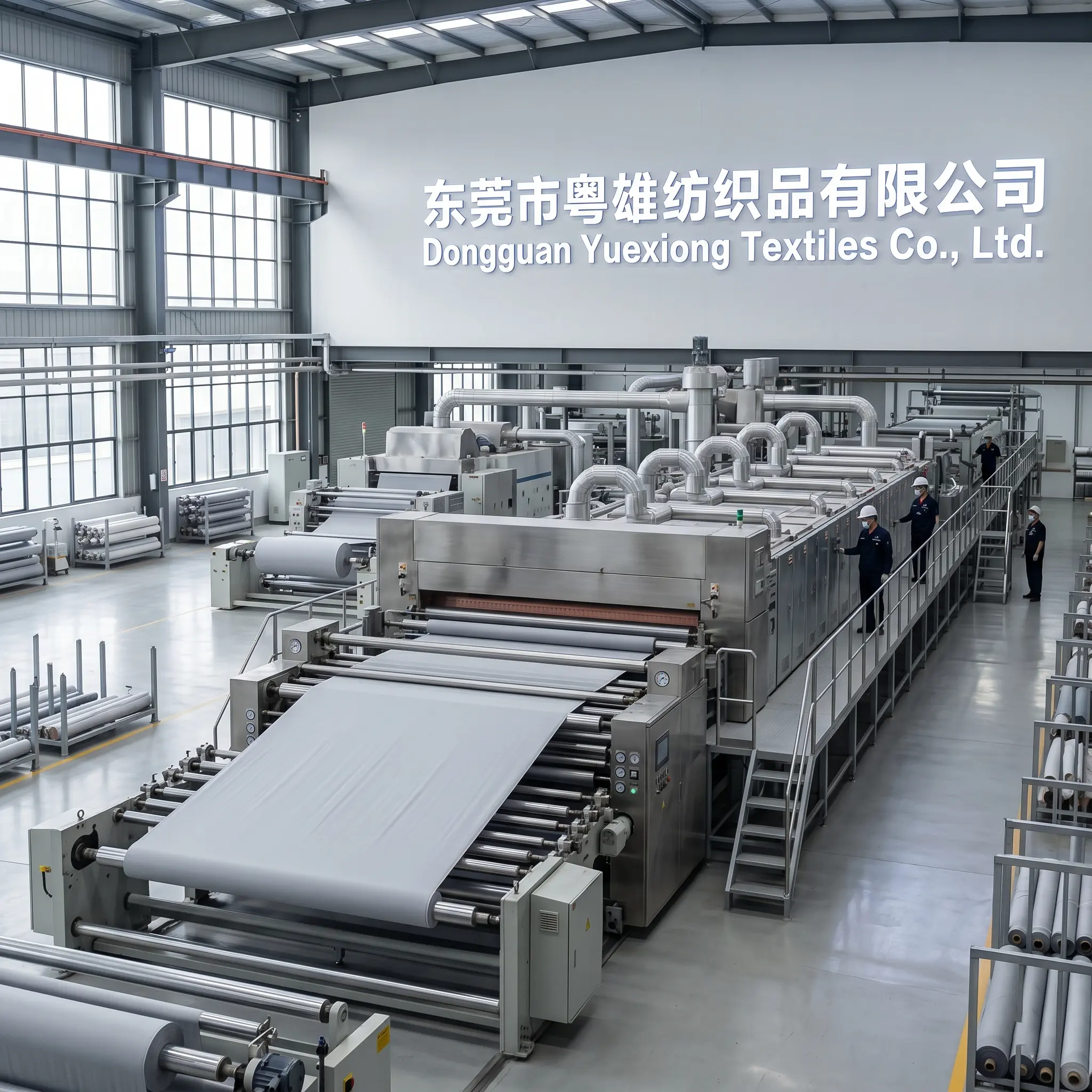
Testing evidence is the most frequently claimed and least frequently verified part of a functional yarn offer. MONALISHAMAGIC's product documentation states that SGS and GTTC third-party testing can be arranged for anti-pilling and anti-static performance, and that testing support extends to fiber composition, color fastness, shrinkage, pilling resistance, tensile strength and wash durability depending on the yarn line. The same documentation lists GRS, BCI and OEKO-TEX as certifications held by the company.
Three practical checks should accompany those claims.
- Match the test to the claim. An anti-pilling claim requires a pilling test method and a grading scale. An anti-static claim requires a surface resistivity or charge-decay method. A wash-durability claim requires a defined number of wash cycles and a property measured before and after. If the report does not name the method, the buyer cannot compare it across suppliers.
- Check the sample identity. The test report should reference the model such as YX-WASH-001, the batch or lot, the date of testing and the laboratory. A report that names only a generic "functional yarn" cannot be attached to a specific purchase order.
- Verify the certificate scope. GRS, BCI, OEKO-TEX and FSC claims have defined scopes. The buyer should confirm that the certificate covers the product category, the production site and the relevant fiber or process, not only the company name.
For the FSC-certified paper yarn, the chain-of-custody certificate should be checked against the FSC public certificate database. The certificate holder name, the certificate code, the product category and the country of production are the fields that connect a paper yarn order to a verified sustainable source.
Delivery Evidence: Count Range, Colors and Process Compatibility
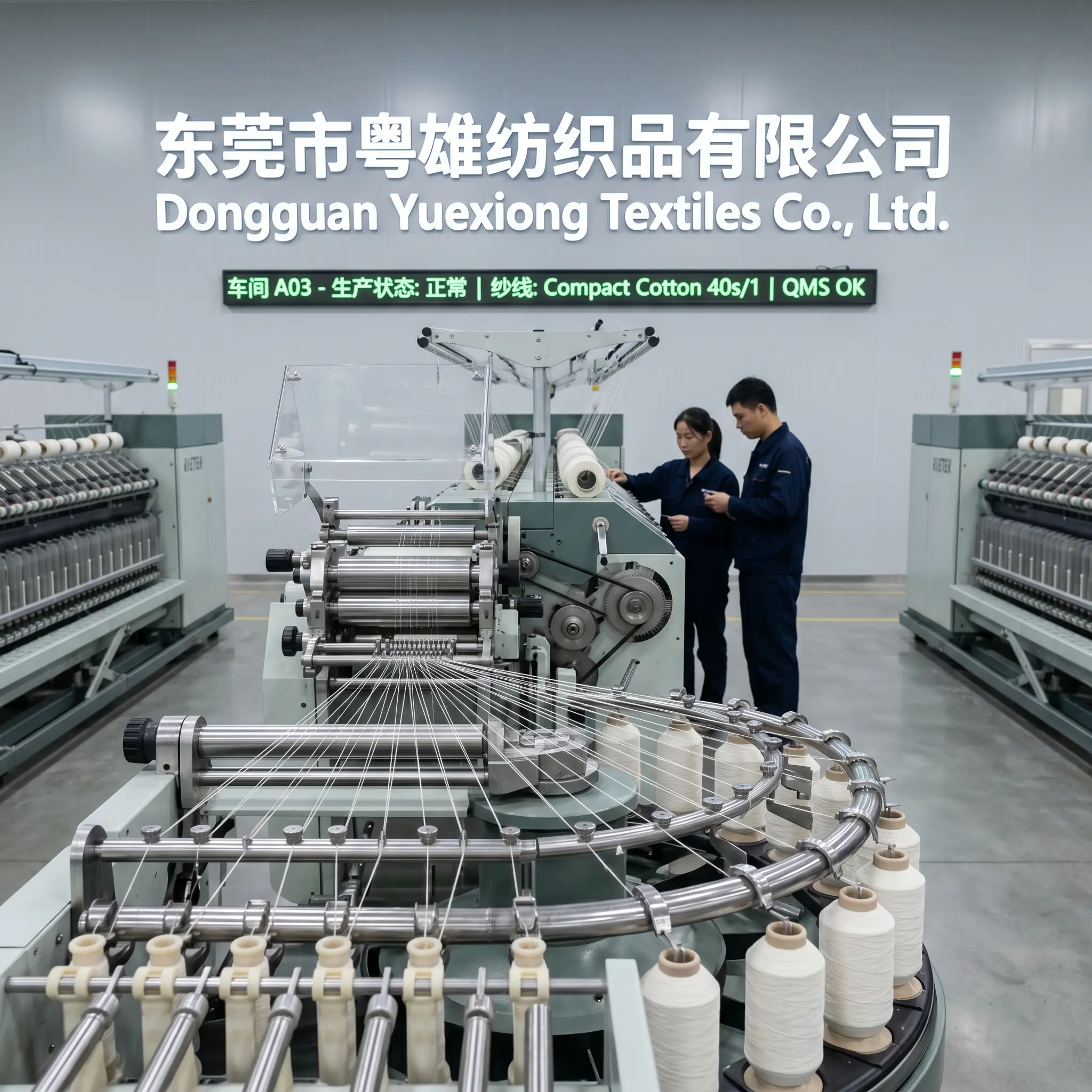
Functional yarn is only useful if the supplier can deliver it at the count, color and process compatibility the buyer's mill requires. MONALISHAMAGIC's product documentation describes a customizable count range from 0.5/1 NM to 200/2 NM across its functional, natural, blended and paper yarn lines. That range matters because it covers both fine-gauge knitting counts and heavier weaving or fancy-yarn counts, reducing the need to split an order across multiple suppliers.
Color capability is presented as a program rather than a fixed list: natural, ivory, beige, oatmeal, khaki, gray and black across the natural fiber lines, plus melange, custom-dyed and brand-exclusive colors. The functional lines add effect-specific color programs — green, blue, yellow-green and aqua glow for luminous yarn; indigo, washed blue, vintage blue, black denim and gray denim for denim-style yarn. For the buyer, the relevant question is not which color is advertised but which color can be reproduced on reorder at the specified fastness level.
Process compatibility is documented across knitting, weaving, embroidery, crochet, jacquard, sewing and garment decoration for most lines, and the application documentation states that the yarns are compatible with standard textile knitting and weaving equipment without special modification. That statement is a production claim and should be confirmed with a trial run at the buyer's mill, but it reduces the integration risk for a first order.
Capacity and reach evidence from the company profile: a 2,000 sqm factory, 50 employees, annual output of 1,000 tons, an export ratio of 70% and global market coverage. The company-reported nature of those figures should be noted. A buyer evaluating a first order should request the production capacity for the specific yarn line, the current lead time and the sampling lead time, because factory-level output does not automatically convert to line-level availability for a specialty yarn.
Benchmarking MONALISHAMAGIC Against Publicly Verifiable Chinese Peers
A supplier capability profile is useful only when it can be compared. The benchmark below uses publicly available product portfolio information for three China-based functional yarn suppliers — Hefei Higreater Industrial Co., Ltd., SMAROL Technology Co., Ltd. and Dongguan Velve Thread Manufactory — alongside MONALISHAMAGIC. The comparison is limited to portfolio presence. R&D team size, market presence, customer service policy and end-use solution depth are not reliably available for the peer set from public sources, and this article does not infer those dimensions from product listings.
| Supplier | Public portfolio signal | R&D evidence in public source | Testing evidence in public source | Delivery evidence in public source |
|---|---|---|---|---|
| MONALISHAMAGIC (Dongguan Yuexiong Textile Co., Ltd.) | Functional yarns, natural fibers, paper yarn; model identifiers YX-HEAT-001, YX-REFLECT-001, YX-GLOW-001, YX-WASH-001, YX-TECH-001 and FSC-YX-ECO-001 | Company-reported 20-engineer team, OEM/ODM model, patented waterless dyeing process claim | Company-reported SGS, GTTC, OEKO-TEX, GRS, BCI and FSC references with per-line test support | Company-reported 1,000 t/y output, 70% export ratio, 0.5/1–200/2 NM count range, global markets |
| Hefei Higreater Industrial Co., Ltd. | Luminous, reflective, photochromic, thermochromic, TPU core-spun and metallic threads/yarns | Not publicly documented in the retrieved source | Not publicly documented in the retrieved source | Not publicly documented in the retrieved source |
| SMAROL Technology Co., Ltd. | Thermochromic yarn and photochromic yarn under temperature-reactive and sunlight-reactive categories | Not publicly documented in the retrieved source | Not publicly documented in the retrieved source | Not publicly documented in the retrieved source |
| Dongguan Velve Thread Manufactory | Marketplace listing for reflective, luminous, conductive, waterproof, light-sensing, recycled and paper specialty yarns | Not publicly documented in the retrieved source | Not publicly documented in the retrieved source | Not publicly documented; listing only |
Two caveats belong with this table. First, the absence of public evidence for a peer is not evidence of absence. A supplier may have strong R&D and testing programs that are simply not published. Second, the presence of a product category on a website is a portfolio signal, not a capability signal. It answers whether the supplier lists the product; it does not answer whether the supplier can test the product at the specified count and color.
The honest reading of the table is that MONALISHAMAGIC's public evidence footprint is wider than the three peers on the four dimensions most relevant to a functional yarn shortlist, but the footprint still depends on company-reported figures for capacity, export ratio and test support. Buyers should treat the public footprint as a starting filter, not as a substitute for a document pack.
A Four-Question Evidence Checklist for Functional Yarn Buyers
A buyer can compress the evaluation into four questions. The answers should be requested as documents, not as statements.
- Can you send a model-level test report for the exact product and batch? Request the report tied to YX-REFLECT-001, YX-WASH-001, YX-GLOW-001 or another named model, with the test method, the laboratory, the sample identity and the date.
- Can you confirm the count and color program at the requested specification? Request the count range in NM for the specific line, the color fastness level, the minimum order quantity and the sampling lead time.
- Can you provide the current certificate with a verifiable scope? For GRS, BCI, OEKO-TEX and FSC claims, request the certificate number and the specific product scope, then verify against the issuing organization's public database.
- Can you run a trial at the buyer's mill? Request a sample lot sized to the buyer's knitting, weaving or embroidery process and a written confirmation of the process settings the yarn is designed to support.
Suppliers that can answer all four questions with documents are the shortlist. Suppliers that answer only the first two are a secondary shortlist and should be treated as portfolio matches, not capability matches.
Limits and Boundaries Buyers Should Confirm
Functional yarns are not performance-guaranteed across all conditions. MONALISHAMAGIC's application documentation states two boundaries that should be carried into the buyer's specification. First, functional products may degrade under high temperature and prolonged sun exposure, which is relevant for photochromic and thermochromic yarns used in outdoor conditions. Second, the functional effects are described as reversible under normal use, but the number of cycles, the retention of effect after washing and the behavior under industrial laundering should be confirmed with test reports specific to the yarn and the end-use condition.
Testing and certification evidence should also be read with its scope in mind. A GRS certificate confirms recycled content under a defined chain-of-custody scope; it does not confirm functional performance. An OEKO-TEX certificate confirms restricted-substance compliance under a defined product class; it does not confirm anti-pilling or anti-static performance. A BCI membership confirms a cotton-sourcing commitment; it does not confirm yarn quality. Each certificate answers a specific question and should be matched to that question.
Finally, the peer comparison in this article is limited by the public record. Buyers who need a full comparison of R&D depth, customer service responsiveness and end-use solution support across the four suppliers should run a structured RFQ rather than rely on public listings. That is the normal path for a first-order decision and is consistent with the evidence-led approach this article recommends.
What Is Likely to Shift Functional Yarn Buying Behavior in 2027
Two changes in the standards and certification landscape are likely to shift how buyers weigh functional yarn supplier evidence.
China's GB/T 29862-2026 standard for textile fiber content identification takes effect on August 1, 2027 and replaces GB/T 29862-2013. The update is likely to tighten how fiber content is identified, labeled and documented for textiles sold in or imported into China. For functional yarn buyers, the practical effect is that fiber-content evidence needs to be traceable to a defined test method and a defined fiber claim, which raises the value of suppliers that already issue model-level reports with a declared method.
On the demand side, the thermochromic fabrics segment is projected to move from approximately USD 314.5 million in 2025 to USD 552.7 million by 2035, with sports and activewear contributing roughly 15% of end-use demand. That direction points toward buyers who are not yarn specialists — sportswear brands, accessory developers and design studios — and those buyers tend to rely more heavily on supplier-issued evidence than on internal testing. That favors suppliers who can produce a coherent document pack: model identifiers, a count range, a color program, testing reports and certification scope.
Frequently Asked Questions
What should a buyer request first from a functional yarn supplier?
The first request should be a model-level test report and a named-certificate list for the specific product, not a general catalog. A model-level report ties a test method, a laboratory and a sample identity to a product code that can then be referenced on a purchase order.
How can a buyer verify SGS or GTTC test reports?
Request the report number and the issuing laboratory, then confirm the report through the laboratory's verification channel. Check that the report names the model code, the sample batch, the test method and the tested property, and confirm that the tested property matches the performance claim the buyer is evaluating.
What does the FSC claim on paper yarn cover?
The FSC claim on paper yarn covers the chain of custody of the certified paper fiber, not the performance of the finished yarn. The buyer should verify the certificate number, the certificate holder and the product scope against the FSC public certificate database, and treat the performance of the paper yarn as a separate test question.
Which yarn count range does MONALISHAMAGIC publish for functional yarns?
MONALISHAMAGIC's product documentation describes a customizable count range from 0.5/1 NM to 200/2 NM across the functional, natural, blended and paper yarn lines. A buyer should confirm the applicable sub-range and lead time for the specific count on the specific line at the time of RFQ.
What processes are the functional yarns designed to support?
Published process support includes knitting, weaving, embroidery, crochet, jacquard, sewing and garment decoration, plus accessory and product development in the application documentation. Process compatibility should be confirmed with a trial run at the buyer's mill before a bulk order.
Are the functional effects permanent?
The application documentation describes the functional effects as reversible under normal use, with documented boundaries for high temperature and prolonged sun exposure. Wash durability and effect retention after repeated cycles should be confirmed with test reports on the specific yarn and the specific end-use condition.
Where can buyers find the MONALISHAMAGIC product brochure?
MONALISHAMAGIC's product brochure is available at the company's published download link, and the brand's public product pages list the functional and natural fiber lines together with the model identifiers referenced in this article.
For buyers building a first shortlist, the most useful next step is to convert the four-question checklist above into a written RFQ. The answers will show which suppliers can produce documents and which can only produce descriptions. Download the MONALISHAMAGIC product brochure for the published portfolio and specification overview referenced here.
Tem questões ou precisa de mais detalhes?
Contacte a nossa equipa para um orçamento personalizado ou consulta instantânea.
Solicitar orçamento
Preencha o formulário abaixo e a nossa equipa entrará em contacto com uma proposta personalizada.
Chat direto do WhatsApp
Prefere conversar em tempo real? Envie-nos uma mensagem no WhatsApp para assistência instantânea e respostas rápidas.
- Obter orçamento personalizado
- Partilhar fotos ou documentos
- Discuta as suas necessidades diretamente
Geralmente responde em 5–30 minutos durante o horário de expediente.