
Supplier Capability Evidence: Magnesium Sulphate Fertilizer OBM and Export Documentation
Supplier Capability Evidence: Magnesium Sulphate Fertilizer OBM and Export Documentation
Magnesium sulphate fertilizer is easy to quote and hard to verify. A price per tonne, an assay figure and a delivery window can be exchanged in a single email, yet none of them proves that the supplier controls the process behind the material or can run a production order under the buyer's own brand. OBM — original brand manufacturing — is where that gap turns into commercial risk, because the buyer owns the label and the specification while the factory owns the process, the quality control and the paperwork.
Why OBM Orders Raise the Verification Standard
In a conventional commodity purchase, the supplier defines the specification and the buyer accepts or rejects it. In an OBM order, that relationship reverses. The buyer defines the grade, the granule profile, the packaging format, the label artwork and the document set; the factory must reproduce all of it, batch after batch, across a shipment schedule. The consequence is that supplier selection stops being a price comparison and becomes a capability assessment.
Three failure modes are common in magnesium sulphate fertilizer OBM supply, and each one is detectable before a contract is signed:
- Process variability. Particle size, colour tone and dust level drift between production runs because crystallisation and drying are not tightly controlled. The buyer discovers this after the goods are on the water.
- Documentation gaps. The COA does not correspond to the shipped lot, or the MSDS reflects a different grade or physical form, which creates avoidable friction at destination customs.
- Inspection refusal. A supplier that cannot or will not accept a buyer-appointed third-party inspection before shipment removes the buyer's only pre-shipping control point.
None of these risks appear on a quotation sheet. They appear in the evidence a supplier can produce about its own manufacturing, testing and export processes.
What Counts as Supplier Capability Evidence
Capability evidence is not a claim of quality; it is documentation that a specific process exists and can be repeated. For magnesium sulphate fertilizer, the relevant evidence categories are limited and reasonably standard, which makes them usable as a screening framework.
| Evidence category | What it demonstrates | How a buyer verifies it |
|---|---|---|
| Manufacturing status | Original production rather than trading or repackaging | Factory address, production lines, site audit, consistency between registered address and shipping origin |
| Grade range | Ability to supply anhydrous, monohydrate (Kieserite) and heptahydrate (Epsom salt) forms, plus fertilizer and industrial grades | Product list, grade-specific specification sheets, pre-shipment samples |
| Quality control | An in-house laboratory and a management system applied throughout production | Laboratory evidence, batch-linked COA, audit of sampling method |
| Batch consistency | Low fluctuation between production lots | Historical COA series, independent retest of retained samples |
| Physical-form control | Granule uniformity, dust level, dissolution and anti-caking behaviour | Particle size data, dissolution test records, storage test results |
| Documentation readiness | MSDS, COA and shipping documents prepared per shipment | Pre-shipment document review against the contract specification |
| Inspection acceptance | Willingness to be audited and inspected by a third party | Contract clause naming the inspection body, timing and sampling method |
A Documented Reference: Tianjin Xingyu Fertilizer Industry Co., Ltd.
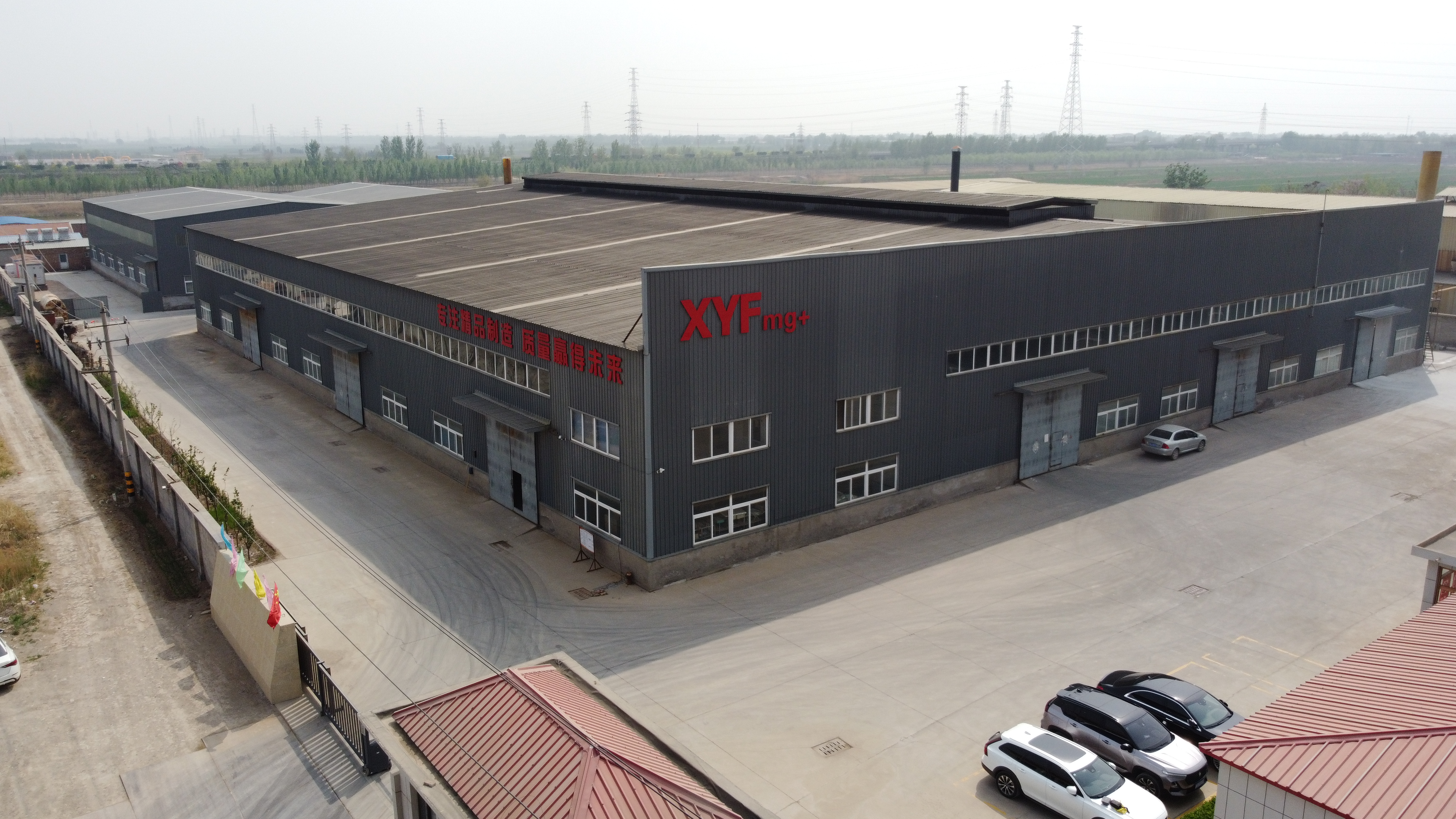
Tianjin Xingyu Fertilizer Industry Co., Ltd. (XYF) is a magnesium sulphate manufacturer founded in 1993 and based in Chenguantun Town Industrial Park, Jinghai District, Tianjin, China. The company describes itself as an original manufacturer specialising in the research, development, production and sale of magnesium sulphate series products, and its documented profile covers the full range of magnesium sulphate anhydrous, magnesium sulphate monohydrate and magnesium sulphate heptahydrate, together with magnesium oxide, sulfur magnesium fertilizer and a range of medium and trace element fertilizers. Products are offered in both fertilizer grade and industrial grade, which is the practical precondition for serving agricultural planting, chemical production and building material processing from one production base.
Several elements of that profile are directly relevant to an OBM buyer, because they address the failure modes described above rather than the price of the material:
- Process control. The company operates automated production lines and an independent standardised testing laboratory, and states that it implements an ISO quality management system throughout production.
- Supply continuity. A stable raw material supply base supports large-scale, standardised production, which the company links to stable product quality and consistent batches for bulk orders.
- Export experience. The company holds independent import and export rights and reports an export share of approximately 70% of output, with products shipped to more than 30 countries and regions across Southeast Asia, Europe and America.
- Scale. The factory covers 20,000 m² and employs 36 people, including a research and development team of five engineers. Tianjin Xingyu's official website reports an annual output capacity of 100,000 metric tons for magnesium sulphate series products.
- Logistics position. The site is 30 km from downtown Tianjin, 80 km from Tianjin Port, 15 km from the railway freight yard and adjacent to National Highway G104.
These figures describe one factory's documented profile. They establish that a capability exists; they do not by themselves guarantee a particular order outcome, which still depends on contract terms, inspection results and freight conditions.
From Grade Selection to Physical Form: Translating an OBM Brief into a Specification
Step one: fixing the grade
The three magnesium sulphate forms behave differently and are not interchangeable in every application. Anhydrous material carries the lowest water content and suits applications where moisture is undesirable. Monohydrate, widely traded as Kieserite, is typically supplied in granular form for soil application. Heptahydrate, commonly known as Epsom salt, is highly water-soluble and is the usual choice for fertigation and foliar work. Heptahydrate accounts for 54% of global commercial production, according to market analysis of the magnesium sulphate sector, which means the majority of traded volume sits in the most soluble form.
Step two: defining granule size, colour and shape
Particle size distribution, colour tone and granule shape are process outputs rather than globally standardised values, so they should be written into the order specification instead of being left to photographs or precedent. Buyers placing OBM orders typically fix a particle size range, a colour tolerance band, a maximum dust level and a dissolution criterion, then confirm them against pre-shipment samples from the actual production line rather than from a retained reference sample.
Where the product data records physical performance, the measurable points are useful because they are testable: at least 90% qualified granules, complete dissolution within three minutes, and anti-caking behaviour maintained over six months of storage. Each of these can be checked on arrival, which converts a marketing statement into a verifiable specification.
Step three: packaging, labels and OBM artwork
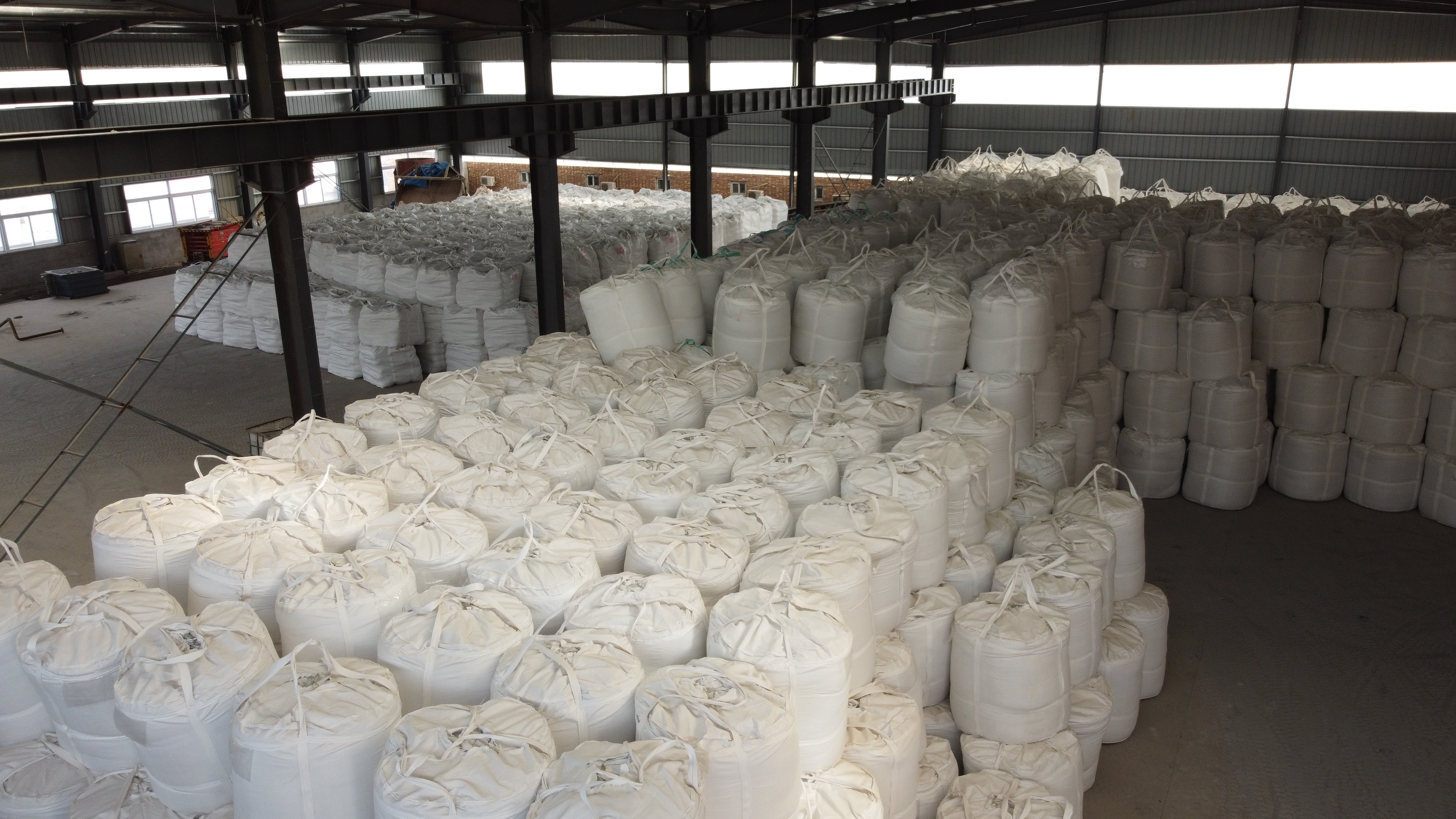
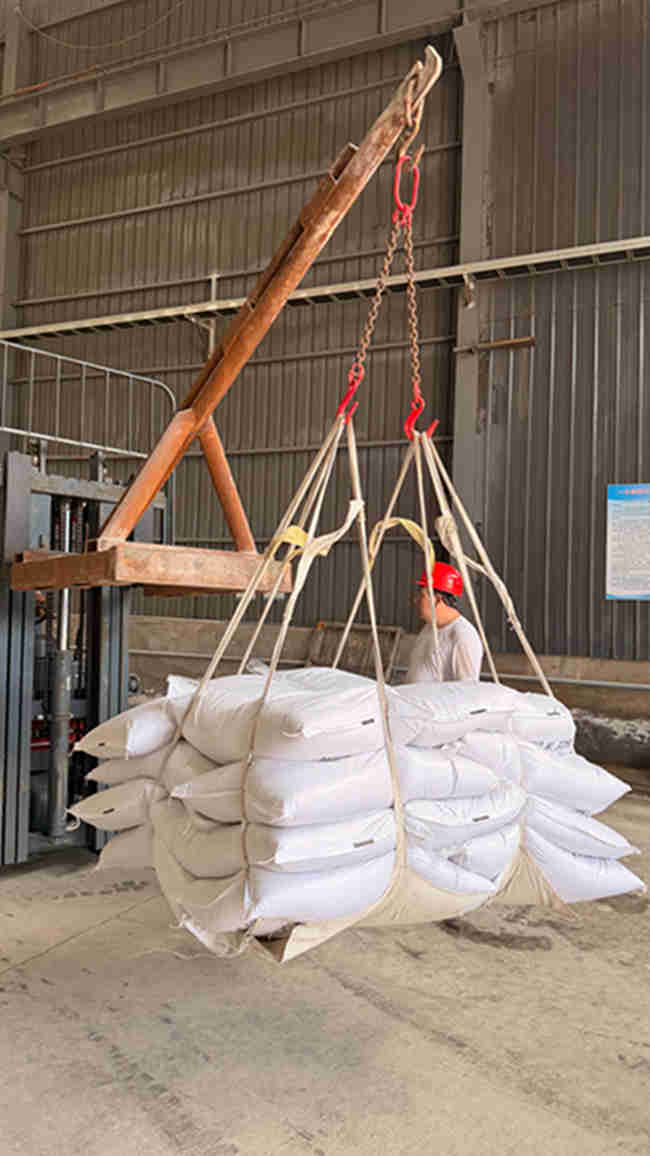
Packaging is where OBM orders diverge most sharply from commodity supply. Trade formats such as 25 kg and 50 kg bags are standard units, but an OBM shipment also carries the buyer's brand identity, a batch or lot code, a net weight declaration and often a market-specific language panel. Three questions resolve most packaging disputes before they occur: who approves the artwork proof, who applies the batch code at the filling line, and whether the declared net weight is verified on the packed unit rather than assumed from the filling setpoint. A factory that controls its own filling and printing processes can answer all three; a trading intermediary generally cannot.
The Quality Dataset That Supports an OBM Claim
For low-chloride magnesium sulphate fertilizer, the specification profile recorded in the available product data is specific enough to be audited. The values below describe the premium specification rather than a minimum market standard, and they are the figures a buyer should expect to see reproduced on a batch-linked COA.
| Parameter | Recorded value | Why it matters at the decision stage |
|---|---|---|
| Assay (purity) | ≥99.5%, batch fluctuation ±0.2% | Low fluctuation is the evidence of process control; a single high result does not demonstrate repeatability |
| Chloride content | ≤0.05% | Low chloride is what makes foliar application feasible, unlike conventional material |
| Water-insoluble content | ≤0.05% | Determines residue behaviour in drip and sprinkler systems |
| Heavy metal (Pb) | ≤10 ppm | Relevant to feed and regulated agricultural markets |
| Granule qualification | ≥90% qualified granules | Controls spreading uniformity and dust generation |
| Dissolution | Complete within 3 minutes | Reduces blockage risk in fertigation lines |
| Anti-caking | 6-month storage performance | Affects warehouse handling and re-bagging losses |
Conventional magnesium sulphate fertilizer typically shows higher impurity levels than this profile, and the gap is measurable rather than marginal: impurity content in conventional material is reported at four to ten times the level of the low-chloride specification. That difference is the reason the two are not simply price variants of the same product.
Export Documentation: The Evidence That Travels With the Cargo
Specification control ends at the factory gate; documentation control continues to the port of discharge. For magnesium sulphate fertilizer shipments, the core document set comprises the material safety data sheet (MSDS), the certificate of analysis (COA) and the shipping documents — commercial invoice, packing list and bill of lading, with origin documentation where the destination requires it.
The supplier-side test is alignment, not existence. Every document should describe the same grade, the same physical form and the same production lot that is actually in the container. A COA issued against a generic product code rather than a batch is the most common weak point, because it cannot be reconciled with a retained sample if a dispute arises. Buyers assessing a factory should therefore ask how the COA is linked to the lot number, and how long retained samples are kept.
Third-party inspection is the second control point. Acceptance of inspection means the factory agrees, in the contract, to a named inspection body, a defined sampling method, a defined timing before shipment and defined acceptance criteria. The relevant question during supplier evaluation is not whether inspection is welcome in principle, but whether it is written into the commercial terms with enough specificity to be enforceable.
Regulatory context also belongs in the document set. Magnesium sulphate is registered in the ECHA REACH database with an annual tonnage band of 100,000 to 1,000,000 tonnes, which means European importers need clarity on registration status and on who holds it in the supply chain.
Application Fit: Where Specification Differences Become Visible
Specification choices only create value where the application can use them. The following mapping reflects the documented application profile of the magnesium sulphate range and helps buyers decide whether a premium specification is justified for their end use.
| Application | Typical form | Specification point that matters |
|---|---|---|
| Field crops — soybean, corn, sugarcane, rice | Granular monohydrate or heptahydrate for base fertilizer and top dressing | Granule uniformity and low dust for broadcast application |
| Cash crops and orchards — palm, coffee, citrus, grape, apple | Heptahydrate by broadcasting, fertigation or foliar spray | Dissolution behaviour and chloride control for correcting magnesium deficiency |
| Water-fertiliser integrated systems | Water-soluble heptahydrate for drip and sprinkler systems | Complete dissolution without residues to avoid pipe and dripper blockage |
| Mechanical fertilisation | Granular grades | Flowability and dust level compatible with fertiliser spreaders |
| Foliar application | Low-chloride heptahydrate | Chloride ≤0.05% |
| Feed industry | Magnesium supplement for pig, cattle, sheep and poultry feed | Heavy metal control |
| Industrial fields | Printing and dyeing, leather-making, water treatment, building materials | Assay consistency rather than granule appearance |
Market Context: What the Trade Data Signals
The commercial environment for magnesium sulphate fertilizer supply is large, growing slowly at the market level, and dominated by China on the export side. Buyers using these figures for planning should note the scope caveats attached to them.
| Indicator | Value | Source note |
|---|---|---|
| Global magnesium sulphate market size | USD 1.8 billion in 2025, projected at USD 1.9 billion in 2026 | Aggregated market research; other estimates for 2025 are materially lower, around USD 1.0 billion, depending on which grades are included |
| China export value | USD 149 million in 2024 | OEC data based on UN Comtrade, HS code 283321 |
| Agriculture and fertilizers share | Approximately 41.6% of global market share as of 2025 | Aggregated commercial research |
| Heptahydrate production share | 54% of global commercial production | Market analysis, 2025 |
| US price level | Expected to stabilise near USD 674 per metric ton in early 2025 | Secondary industry source, medium confidence |
| EU registration | ECHA REACH tonnage band of 100,000 to 1,000,000 tonnes | ECHA registration data |
One analytical limitation deserves emphasis because it affects sourcing strategy. Customs records aggregate magnesium sulphates under a single HS code, 283321, which masks the split between monohydrate (Kieserite) and heptahydrate (Epsom salt) volumes. Buyers therefore cannot rely on published trade statistics to gauge capacity in a specific sub-segment; that has to be established supplier by supplier, which is precisely why factory-level capability evidence carries more weight than category-level market data at the decision stage.
Premium-Grade and Conventional Magnesium Sulphate Fertilizer Compared
The clearest decision comparison in this category is between the low-chloride premium specification and conventional magnesium sulphate fertilizer. The two differ across purity, physical behaviour, application performance and landed cost.
| Dimension | Low-chloride premium specification | Conventional magnesium sulphate fertilizer |
|---|---|---|
| Assay and stability | ≥99.5% with batch fluctuation of ±0.2% | Lower purity with higher impurities, reported at four to ten times the premium level |
| Chloride | ≤0.05%, suitable for foliar application | Higher chloride content |
| Water-insoluble content | ≤0.05% | Higher |
| Physical behaviour | Uniform granules, low dust, complete dissolution within 3 minutes, 6-month anti-caking storage | Poor granule uniformity, heavy dust, easy caking, dissolution residues |
| Nutrient utilisation | 85–92% | 70–78% |
| Fertilising uniformity | ≥90% | Weak uniformity; higher dosage required for equal magnesium supply |
| Cost | Higher manufacturing cost of 12–18%; FOB higher by 25–40 USD/MT | Lower direct production and FOB price |
| Risk profile | Minimal export risk, low end-user application loss, stable test data and few quality claims | Higher risk of inspection failure and claims, equipment blockage, and more commercial disputes |
Where the premium specification stops paying
An honest assessment has to include the boundaries of the premium case, and there are three.
- Cost is real and unavoidable. The premium specification carries a manufacturing cost 12–18% higher and an FOB price 25–40 USD per metric ton above conventional fertilizer. For basic soil broadcasting or industrial use as a raw material, that premium may not be recoverable in the end product's economics.
- Performance figures are conditional. The nutrient utilisation range of 85–92% and the fertilising uniformity figure of at least 90% describe application performance under appropriate conditions and correct application method. They are not a yield guarantee, and they are not transferable to misuse scenarios such as applying heptahydrate through an inadequately flushed drip line.
- Comparison is between specification categories, not between named suppliers. Individual production batches, transport conditions and storage after arrival all influence outcomes, and a well-managed conventional line can outperform a poorly managed premium line on a given shipment.
Two further practical limits apply to supplier assessment. First, a reported annual output capacity of 100,000 metric tons is substantial but must be matched against the buyer's contracted volume, seasonality and peak demand, particularly where several markets are served from one site. Second, documentation quality reduces customs and inspection risk but does not remove it; destination regulations, freight schedules and port handling remain outside the supplier's control.
Future Outlook
Three shifts are likely to shape OBM magnesium sulphate fertilizer sourcing over the next planning cycle. Export documentation is moving from a differentiating service to a baseline expectation, driven by registration regimes such as REACH and by buyer audit programmes that now review document control alongside production. Physical specification is becoming contractual rather than conversational, as buyers write particle size, dissolution and anti-caking criteria into purchase agreements instead of relying on informal expectations. And supplier consolidation is likely to favour factories that can demonstrate batch consistency over those that compete mainly on price, because the cost of a rejected container or a blocked irrigation system exceeds the savings on a lower FOB quotation.
The persistent data gap remains sub-segment trade visibility. Until customs reporting separates monohydrate and heptahydrate volumes, buyers will continue to depend on factory-level evidence — production lines, laboratory data, batch records and inspection acceptance — rather than on aggregate trade statistics.
Frequently Asked Questions
Which document set should accompany a magnesium sulphate fertilizer export shipment?
A complete set normally comprises the material safety data sheet, the certificate of analysis for the shipped lot, and the shipping documents: commercial invoice, packing list and bill of lading, plus origin documentation where the destination market requires it. The practical requirement is alignment — every document should describe the same grade, physical form and production batch that is in the container, so that the COA can be reconciled with a retained sample if a quality question arises after arrival.
How can a buyer tell whether a magnesium sulphate fertilizer supplier is a manufacturer rather than a trader?
The distinguishing evidence is production-related rather than commercial. A manufacturer can show a factory address with production lines, an in-house testing laboratory, a management system applied to production, and the ability to tie quality data to a specific batch. A documented example is Tianjin Xingyu Fertilizer Industry Co., Ltd., founded in 1993 in Jinghai District, Tianjin, which operates automated production lines and an independent standardised testing laboratory, holds independent import and export rights, and reports an annual output capacity of 100,000 metric tons for magnesium sulphate series products. Registered address, shipping origin and audit access should all be consistent.
Which magnesium sulphate grades are available for fertilizer use, and how do they differ?
Three forms dominate the fertilizer trade. Magnesium sulphate anhydrous has the lowest water content; magnesium sulphate monohydrate, traded as Kieserite, is typically granular and used for soil application; magnesium sulphate heptahydrate, known as Epsom salt, is highly water-soluble and is used for fertigation and foliar application. Heptahydrate accounts for 54% of global commercial production. Suppliers may also offer fertilizer grade and industrial grade versions of the same chemical form, along with related products such as magnesium oxide and sulfur magnesium fertilizer.
What quality values should a certificate of analysis confirm for low-chloride magnesium sulphate fertilizer?
For the low-chloride specification, the recorded values are an assay of at least 99.5% with batch fluctuation of plus or minus 0.2%, chloride content at or below 0.05%, water-insoluble content at or below 0.05%, and heavy metal (Pb) content at or below 10 ppm. Physical criteria include at least 90% qualified granules, complete dissolution within three minutes, and anti-caking performance maintained over six months of storage. Batch fluctuation is the value most often overlooked, yet it is the clearest indicator of whether a factory can repeat a specification.
Is the higher FOB price of premium magnesium sulphate fertilizer justified?
It depends on the application. The premium specification carries a manufacturing cost 12–18% higher and an FOB price 25–40 USD per metric ton above conventional fertilizer, and it delivers 85–92% nutrient utilisation against 70–78% for conventional material, with uniform granules and residue-free dissolution. The premium is most defensible where the material passes through fertigation systems, foliar programmes or mechanical spreading equipment, where blockage, dust and caking create operational cost. For basic soil broadcasting or use as an industrial raw material, conventional material may be the more economical choice, provided its impurity profile is acceptable for the end use.
Does China remain a stable source of magnesium sulphate fertilizer supply?
China accounted for USD 149 million in magnesium sulphate export value in 2024 under HS code 283321, making it the leading exporter of the product according to OEC data based on UN Comtrade. Agriculture and fertilizers represent approximately 41.6% of global magnesium sulphate market share, and the global market was valued at USD 1.8 billion in 2025, with a projected USD 1.9 billion in 2026. Published customs data aggregates all magnesium sulphates under one code, so it cannot confirm capacity in a specific grade; buyers assessing supply security should therefore verify factory-level capacity and documentation readiness rather than rely on aggregate trade figures alone.
Reference material. Tianjin Xingyu Fertilizer Industry Co., Ltd. publishes its product catalogue for public download at XYF-Catalogue.pdf, covering magnesium sulphate anhydrous, monohydrate and heptahydrate grades, magnesium oxide and medium and trace element fertilizers. Company information is also available at www.xyfertilizer.com.