
Supplier Capability Evidence: Reading the 3300 mm × 2000 mm Forming Envelope
Supplier Capability Evidence: Reading the 3300 mm × 2000 mm Forming Envelope
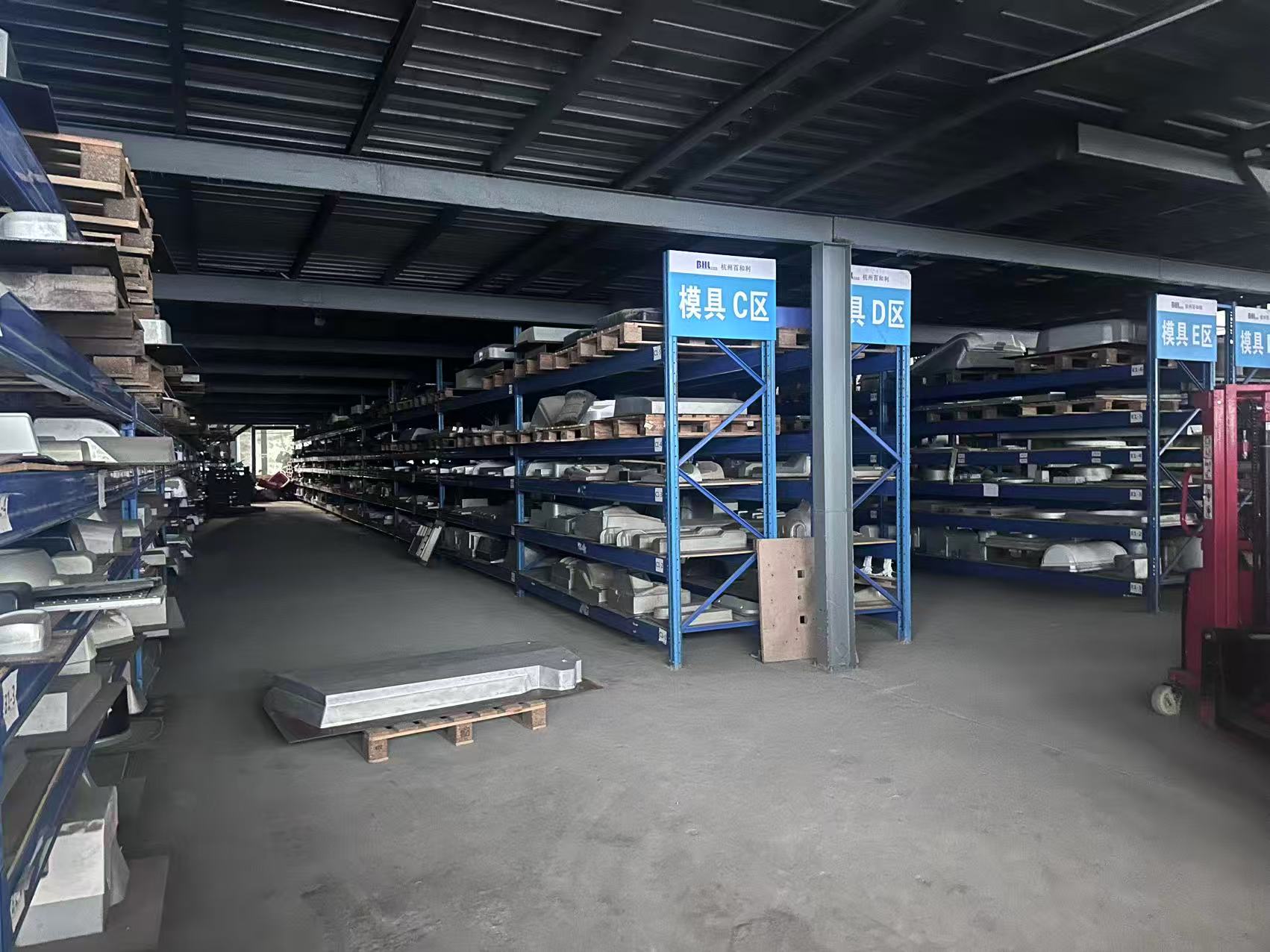
Mold storage at Hangzhou Baiheli New Materials Co., Ltd. Tooling and mold preparation sit between enclosure design and finished-part production. Image source: company-provided media.
For buyers of large plastic enclosures, a supplier’s stated forming envelope is more than a sales line. The 3300 mm × 2000 mm maximum forming size and 2–10 mm sheet thickness range define the outer boundary within which a heavy-gauge thermoforming supplier can form a part in one piece. That boundary helps buyers assess whether a machine housing, control panel enclosure, medical equipment housing, or custom plastic equipment cover can be produced as a single shell, and it also shows where tooling, material, and finishing questions begin.
Hangzhou Baiheli New Materials Co., Ltd. is a Hangzhou-based heavy-gauge thermoforming processor with a stated 10,000-square-meter factory, ISO 9001:2016 quality management system certification, and a production service chain covering thick-sheet thermoforming, sheet extrusion, five-axis cutting, housing forming, and masking for painting. The company’s stated scope makes the 3300 mm × 2000 mm envelope a useful case for examining how buyers should read capability evidence.
Why the Forming Envelope Is a Procurement Test
A maximum forming size is a constraint, not a promise. It describes the largest area in which the supplier can work, but it does not confirm that every shape drawn inside that area will form with uniform wall thickness, hold every assembly tolerance, or suit every material. For a procurement team, the useful question is therefore not simply whether the finished outline is smaller than 3300 mm by 2000 mm. The real question is whether the part geometry, draw depth, material, thickness, and trim strategy fit the process without creating avoidable risk.
The same logic applies to the 2–10 mm sheet thickness range. The range tells the buyer which sheet inputs the supplier can work with. It does not tell the buyer which thickness is right for a given enclosure. A thicker sheet may provide more material for a structural housing, but it also places more demand on heating and stretching control. A thinner sheet may suit covers and trim, but the buyer still needs to confirm stiffness, impact resistance, and assembly loads. The stated range is the starting point for a material and design review, not a substitute for one.
The supplied procurement guidance supports this interpretation. It recommends thick-sheet vacuum thermoforming for medium-low volume, large curved housings. That is a fit boundary. It is not a claim that thermoforming is superior to injection molding or fabricated metal for every project. When a buyer reads the 3300 mm × 2000 mm envelope, the correct next step is to test the project against that boundary.
What 3300 mm × 2000 mm Establishes, and What It Does Not
The stated 3300 mm × 2000 mm maximum forming size establishes the outer boundary for a single formed part. It is a statement about the working envelope available for forming, not a guarantee that every part placed inside that rectangle will hold a specified tolerance. For a large thermoformed enclosure, the practical check is whether the drawn shape, draw depth, radii, and trim strategy fit the process without over-stretching the sheet.
This distinction matters because large enclosures often combine a broad outer surface with deeper returns, mounting features, and assembly edges. The buyer should ask to see the part marked against the envelope in a drawing review, including trim lines and any features that will be added after forming. The 2–10 mm thickness range should be read at the same time. A design that appears to fit within 3300 mm × 2000 mm may still challenge the process if the required draw depth or material distribution is unsuitable.
The available risk guidance is explicit. In thick-sheet vacuum thermoforming, uneven wall thickness and dimensional errors can result from over-stretching or uneven heating of the plastic sheet. Mitigation includes optimizing the structure, controlling heating, and verifying samples before mass production. Those points belong beside the forming envelope because they show what the number alone cannot establish. The envelope is evidence of working range; sample approval and inspection planning are evidence of fit.
From Drawing Review to Finished Part: Where Capability Is Proven
The service sequence relevant to this assessment is design, mold making, and finished-parts production. The supplied production-service list covers thick-sheet thermoforming, sheet extrusion, five-axis cutting, housing forming, and masking for painting. Custom geometry and structure are also within the stated customization scope. For a buyer, this sequence is useful only when each step is tied to a verification question.
Design review comes first. The buyer should confirm that the enclosure drawing fits within the 3300 mm × 2000 mm envelope after trim and assembly features are considered. The review should identify the proposed sheet thickness within the 2–10 mm range, the material grade, and any surface treatment. The supplier’s stated customization scope includes transparent, translucent, or opaque finishes, matte film, screen printing, masked painting, and five-axis cutting and housing-fit processing. Those options should be selected against the product’s appearance and assembly requirements, not added as a generic package.
Mold and tooling preparation comes next. The buyer should ask which tooling steps are included in the supplier’s scope and which are coordinated externally. The service sequence matters here because a large enclosure often needs a mold that supports the intended shape, draw depth, and trimming strategy. The buyer does not need to specify the mold design in the purchase enquiry, but the buyer should ask how the mold will be reviewed against the forming envelope before production begins.
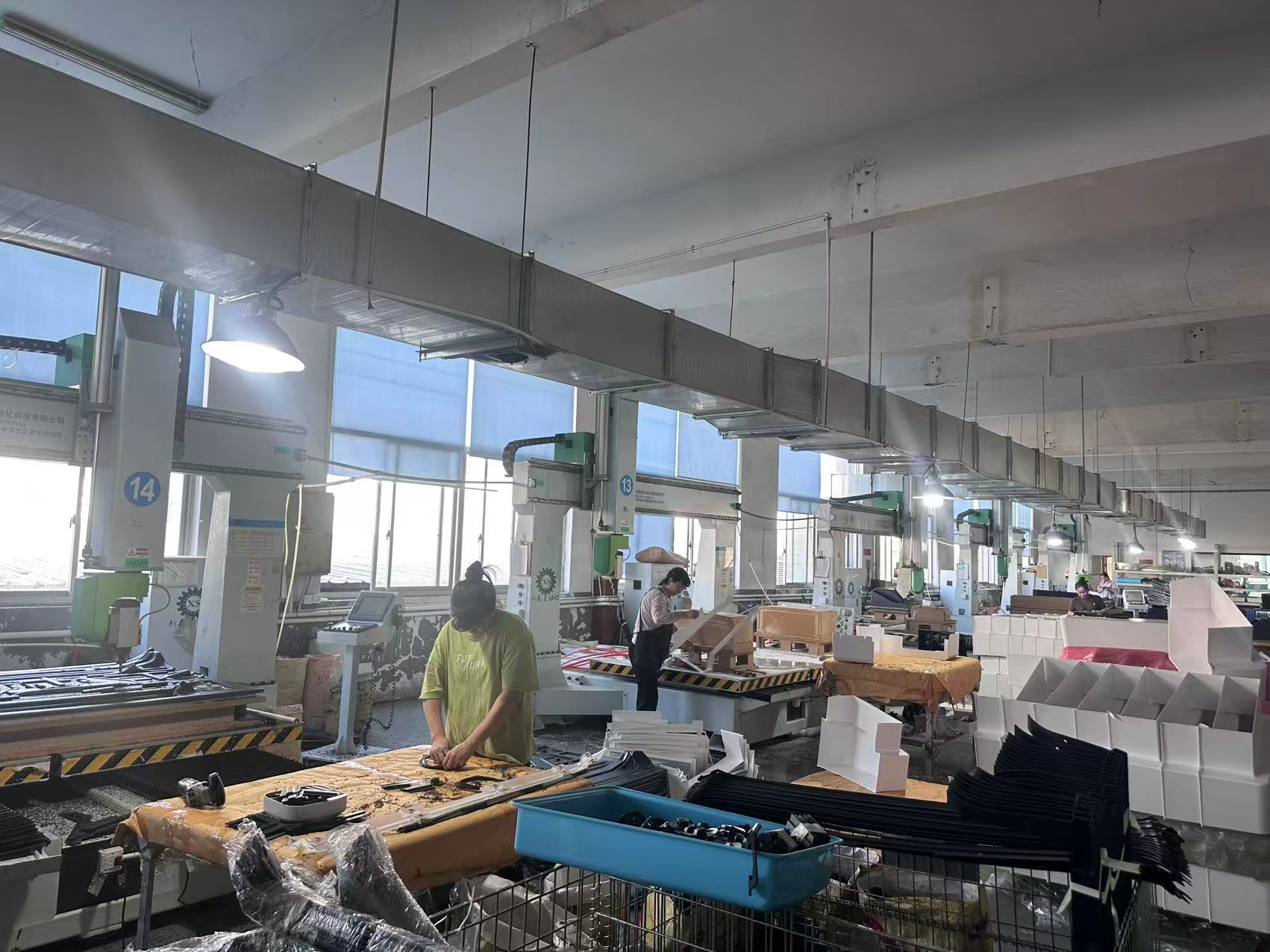
Five-axis cutting supports trimming and housing-fit processing after forming. The forming envelope and the trimming plan should be reviewed together. Image source: company-provided media.
Sheet and material review follows. The stated material options include ABS, PC, PETG, PMMA, PVC, ASA, HDPE, and composite materials. The buyer should confirm the exact grade and thickness against the working environment, mechanical strength, outer dimensions, batch volume, and surface requirements. The supplied selection guidance recommends ABS for indoor use, PC for impact resistance, and HDPE for corrosion resistance. It also recommends verifying samples before mass production. That guidance is a decision aid, not a universal specification for every enclosure.
Forming, trimming, and finishing complete the sequence. The 2–10 mm thickness range, the material, and the part geometry determine how the sheet is heated and stretched. Five-axis cutting and housing forming support the transition from a formed shell to a part that can accept assembly features. Masking for painting, matte film, screen printing, and transparent or translucent finishes address the exterior requirements. The buyer should confirm which steps are included in the quotation and which are handled as separate operations.
Reading the 2–10 mm Thickness Range as a Decision Input
Thickness is not a standalone quality marker. It is a design and process variable. A thicker sheet can provide more material for a structural housing, but it also demands controlled heating and stretching, especially when the part has deep draws or local features. A thinner sheet may suit covers, trim parts, and lighter housings, but the buyer still needs to confirm stiffness, impact resistance, and assembly loads. The correct thickness is the one that satisfies the application and can be formed reliably within the stated process window.
The documented risks reinforce that point. Uneven wall thickness and dimensional errors can appear when the sheet is over-stretched or unevenly heated. The mitigation path is to optimize the structure, control heating, and verify samples before mass production. For a buyer, this means the sample approval stage should include a wall-thickness check and a dimensional check, not only a visual review. The buyer should ask how the supplier will measure these points and what record will be provided.
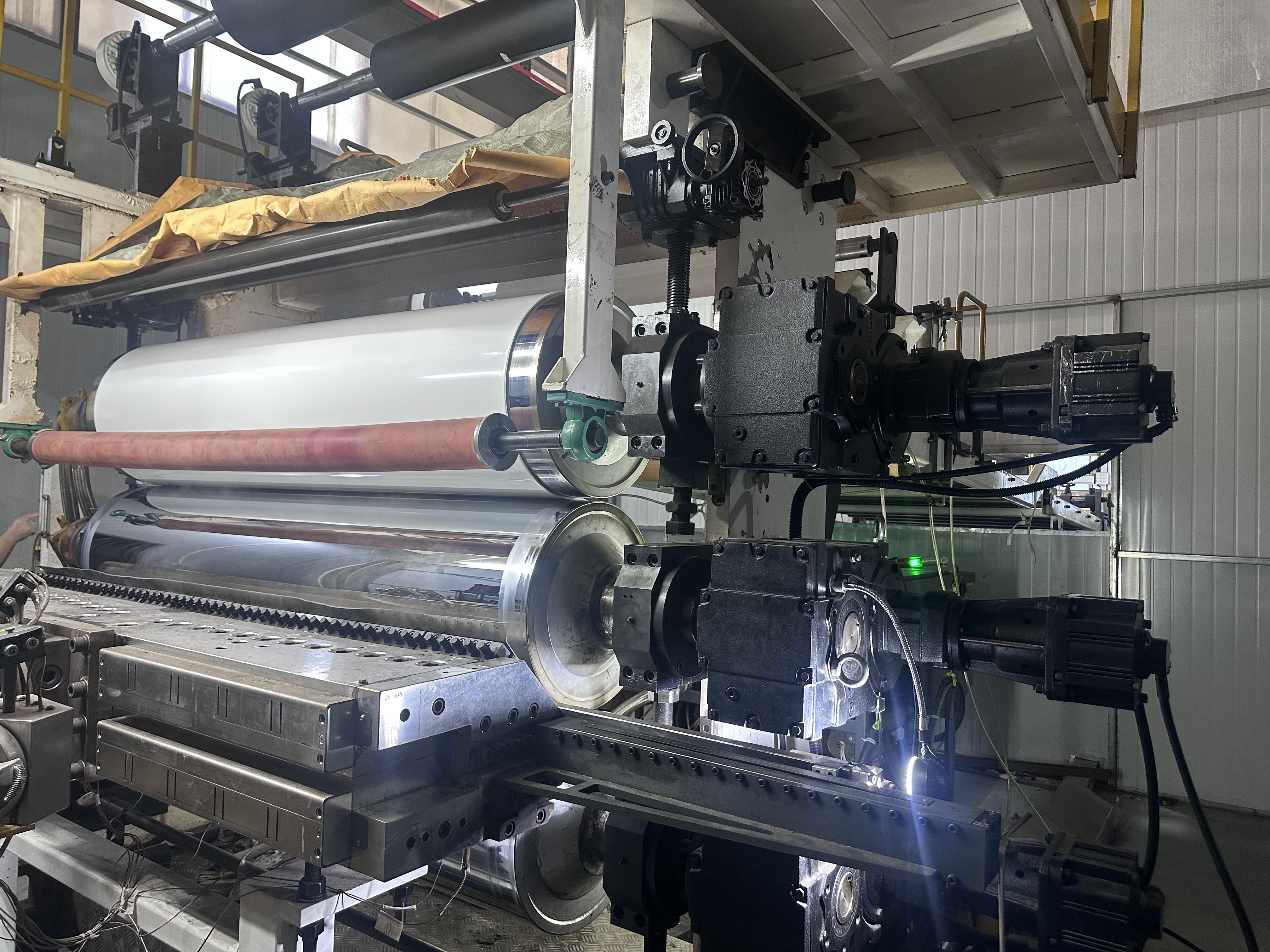
Sheet preparation is part of the stated production chain. The 2–10 mm thickness range should be matched to the enclosure geometry and service conditions. Image source: company-provided media.
The material guidance should be read with the same discipline. ABS is recommended for indoor use. PC is recommended for impact resistance. HDPE is recommended for corrosion resistance. Those recommendations do not remove the need to confirm the actual grade, thickness, and surface requirement with the supplier. Project-specific options include flame-retardant ABS, PC matte film, transparent or translucent PC, impact-resistant PE, screen printing, and masked painting. The exact fire rating, UV-resistance rating, dimensional tolerances, and assembly requirements require project confirmation.
A Practical Capability-Evidence Table
The table below converts stated capability signals into verification questions. It is not a substitute for a drawing review or a first-article sample. It is a way to keep the procurement conversation factual.
| Capability signal | What it establishes | Buyer verification question |
|---|---|---|
| 3300 mm × 2000 mm maximum forming size | Outer working boundary for a single formed part | Does the drawing fit the envelope after trim and assembly features are included? |
| 2–10 mm sheet thickness range | Material input range for forming | Which thickness is proposed, and how will wall-thickness variation be checked? |
| ABS, PC, PETG, PMMA, PVC, ASA, HDPE, composites | Stated material options | Does the chosen grade meet the indoor or outdoor, impact, and corrosion requirements? |
| Design, mold preparation, forming, five-axis cutting, masking | Stated process chain | Which steps are in scope, and how is the first article approved? |
| MOQ 1 unit; 25–30 day lead time; 80,000 units per month | Stated batch flexibility and capacity | How does the project schedule align with sample approval and production slots? |
| 100% test | Stated quality-control approach | What is tested, at which stage, and what record is supplied? |
| ISO 9001:2016 quality management system certification | Stated management-system certification | What is the certification scope, and does it cover the relevant production line? |
Application Scenarios: Where the Envelope Meets the Product
The company’s stated application scope includes AGV and robot housings, medical equipment housings, textile machinery covers, intelligent machinery housings, communication antenna radomes, drone housings, rooftop tent components, automotive and new energy vehicle parts, and amusement equipment parts. The working condition is described as indoor or outdoor, with an operating temperature of -20°C to 70°C and an optional UV-resistant surface for outdoor exposure. These are application boundaries, not evidence that every product listed has been produced for every market.
For a machinery enclosure, the first question is whether the outer shell can be formed as one piece and still accept the frame, doors, and internal equipment. For an instrument panel or bumper cover, the appearance surface and finishing route are as important as the nominal size. For a medical equipment housing or control panel enclosure, material choice and assembly fit should be confirmed against the drawing. For an AGV or robot housing, impact and outdoor exposure may push the discussion toward PC or impact-resistant PE options, subject to project confirmation.
The available example media, including machinery enclosures, model housings, an instrument panel, and a bumper cover process video, are useful prompts for supplier verification. They can help a buyer ask the right questions about shape, surface, and process sequence. They should not be treated as proof that a specific project has been produced or that a particular tolerance has been achieved. Their proper use is to prompt a drawing review, a material match, and a sample or production-data check.
Market Context: What the Numbers Do and Do Not Say
Commercial research gives the category a wider context. Grand View Research reported that the global plastic vacuum forming market was valued at USD 4.8 billion in 2023 and was projected to reach USD 7.2 billion by 2030, with an interim projection of USD 5.7 billion in 2026. Straits Research estimated the global industrial enclosure market at USD 2.78 billion in 2026 and projected USD 4.48 billion by 2034, a CAGR of 6.15%.
Those datasets cover different scopes. Plastic vacuum forming includes applications beyond enclosures, while industrial enclosures include all material types. They should not be subtracted from one another or used to rank individual suppliers. For a buyer, the useful signal is that both process and enclosure demand are large enough to support specialist suppliers. The numbers do not verify any one supplier’s ability to hold the 3300 mm × 2000 mm envelope, meet a tolerance, or deliver on time. Those points remain project-level checks.
Thermoforming Versus Other Enclosure Routes: A Fit Boundary
The supplied procurement guidance positions thick-sheet vacuum thermoforming for medium-low volume, large curved housings. That is a fit boundary. It is not a claim that thermoforming is superior to injection molding or fabricated metal for every project. Buyers comparing routes should test annual volume, tooling budget, part size, geometry, surface requirements, and tolerance needs. Where those conditions fall outside the stated fit, another process may be more appropriate.
The comparison should stay evidence-based. The supplied guidance does not provide cost or cycle-time benchmarks against injection molding or fabricated metal, so it cannot support a superiority claim. What it does support is a practical fit statement: thick-sheet vacuum thermoforming is intended for medium-low volume, large curved housings, with material choice guided by indoor use, impact resistance, or corrosion resistance. Buyers should verify samples and review drawings before mass production.
A Buyer Verification Checklist
Before releasing tooling or a production order, a buyer can use the following checklist to turn the forming envelope into a set of evidence requests.
- Ask for a marked-up drawing showing the part inside the 3300 mm × 2000 mm envelope, including trim lines and assembly features.
- Confirm the proposed sheet thickness within the 2–10 mm range and match the material grade to the indoor or outdoor environment, impact exposure, or corrosion risk.
- Ask how heating and stretching will be controlled, and how wall thickness will be checked on the first article.
- Ask how dimensional errors will be measured and which tolerances require project confirmation.
- Confirm which steps are included: design, mold preparation, sheet extrusion, forming, five-axis cutting, and masking or painting.
- Confirm the surface route: matte film, transparent or translucent finish, screen printing, or masked painting, as applicable.
- Ask what the 100% test covers, at which production stage it is performed, and what record is supplied.
- Confirm that the ISO 9001:2016 certification scope covers the relevant production line.
- Check the stated MOQ of 1 unit, 25–30 day lead time, and 80,000 units per month capacity against the project schedule.
These checks do not replace a supplier audit or a production trial. They do make the supplier’s claims easier to compare. A supplier that can answer them with drawings, samples, and records is easier to evaluate than one that offers only a headline number.
Future Outlook
The practical outlook is a shift in buyer behavior: forming envelopes, material ranges, and capacity statements will be treated as claims to verify, not as finished proof. Suppliers that can connect the 3300 mm × 2000 mm envelope to a drawing review, a sample approval path, and a documented process chain will be easier to evaluate. That is especially relevant for large thermoformed enclosures, where a small change in draw depth or wall thickness can affect assembly and appearance.
The market estimates cited above suggest continued demand for thermoforming and industrial enclosures, but they do not predict any individual supplier’s performance. The buyer’s advantage comes from asking for the evidence behind the number: the drawing review, the material match, the sample result, and the production record.
FAQ
What is thick-sheet vacuum thermoforming?
Thick-sheet vacuum thermoforming is a plastic forming process in which solid plastic sheets are heated and shaped over molds using vacuum pressure. It is used for large-size customized plastic housings.
What does the stated 3300 mm × 2000 mm forming envelope mean?
It is the stated maximum forming size. It defines the outer boundary for a single formed part, but it does not by itself confirm finished dimensions, wall-thickness uniformity, or assembly tolerances. Those points require a drawing review and project confirmation.
What materials can be processed?
The supplied material information lists ABS, PC, PVC, HDPE, ASA, PETG, and PMMA, as well as composite materials. The exact grade and thickness should be matched to the working environment, mechanical strength, outer dimensions, batch volume, and surface requirements.
How should a buyer select material for equipment housings?
The buyer should confirm the equipment’s working environment, required mechanical strength, outer dimensions, target batch volume, and surface requirements. The supplied guidance recommends ABS for indoor use, PC for impact resistance, and HDPE for corrosion resistance, with samples verified before mass production.
What risks exist in thick-sheet vacuum thermoforming?
The main risks are uneven wall thickness and dimensional errors caused by improper stretching. Over-stretching or uneven heating of the plastic sheet can trigger these issues. Mitigation includes optimizing the structure, controlling heating, and verifying samples before mass production.
Reference: the company’s corporate brochure (PDF) is available for download.
Tem questões ou precisa de mais detalhes?
Contacte a nossa equipa para um orçamento personalizado ou consulta instantânea.
Solicitar orçamento
Preencha o formulário abaixo e a nossa equipa entrará em contacto com uma proposta personalizada.
Chat direto do WhatsApp
Prefere conversar em tempo real? Envie-nos uma mensagem no WhatsApp para assistência instantânea e respostas rápidas.
- Obter orçamento personalizado
- Partilhar fotos ou documentos
- Discuta as suas necessidades diretamente
Geralmente responde em 5–30 minutos durante o horário de expediente.