
Supplier Capability Evidence: SunEye Bowling Range and Specs
Bowling equipment buyers rarely receive a complete, testable picture of supplier capability at first contact. Product brochures show lanes and pinsetters; quotations show commercial terms; neither always shows the operating specifications that determine whether a compact venue can run reliably during peak hours. The gap is especially important in mini bowling, where a small footprint, a string pinsetter, a fast ball return, and a scoring system must work together in a space that may operate continuously. SunEye Bowling, a Guangzhou-based bowling equipment supplier, publishes a product range and operating data that can be reviewed as supplier capability evidence. This article examines that evidence around the Mini Bowling system and explains how buyers can use it during evaluation and execution.
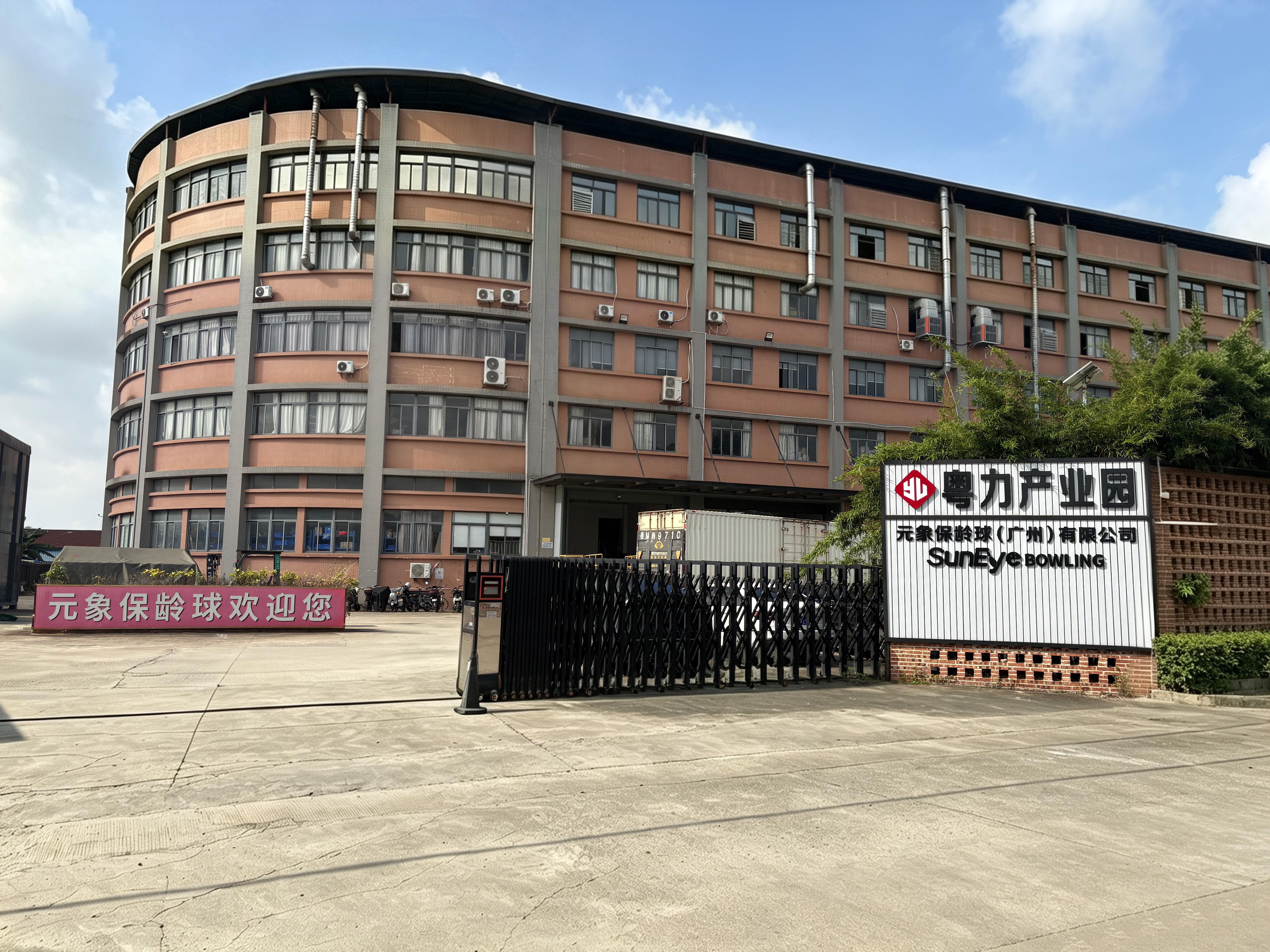
SunEye Bowling is a bowling equipment supplier engaged in research and development, manufacturing, sales, installation, and after-sales service. Its product range includes Standard Bowling Equipment, Duckpin Bowling Equipment, Mini Bowling Equipment, string pinsetter machines, bowling lanes, ball return systems, scoring systems, bowling pins, and bowling balls. The company operates a production base of approximately 6,000 square metres, reports more than 100 employees and 20+ engineers, and states an annual output of 2,000 units with export activity in global markets. These company-level facts are the starting point, not the conclusion. For procurement, the more useful evidence is the published configuration and operating specification of each product.
Why Supplier Capability Evidence Matters for Bowling Equipment
In the evaluation-to-execution stage, bowling equipment buyers compare suppliers on dimensions that affect daily operation: lane length, pinsetter cycle, ball return timing, scoring reliability, certification, installation requirements, and after-sales support. Mini bowling buyers often operate in family entertainment centres, kids playgrounds, shopping malls, arcades, hotels and resorts, restaurants, private clubs, bars, and compact social venues. The equipment may be specified for 24/7 operation. A supplier that can publish specific figures is easier to qualify than one that only offers adjectives, because those figures can be turned into request-for-quotation requirements and acceptance test criteria.
Published figures are not the same as independent verification. They are a baseline. A supplier with genuine engineering depth should be able to explain how each figure is measured, what conditions apply, and what happens when the equipment is installed in a site with different power, floor, or ceiling conditions. That is why supplier capability evidence should be read at three levels: the published product range, the subsystem specifications, and the certificate or test records that can be matched to the ordered configuration.
What SunEye Documents in the Mini Bowling Range
The Mini Bowling Equipment listing is the clearest starting point for capability evidence because it combines a compact physical footprint with a defined equipment set. The published configuration is L13m x W2.83m x H2.5m for two lanes, with length customizable from 13.6 m to 19 m. The system uses a string pinsetter bowling machine, ten-pin mini bowling, ball weight of 3.3 to 3.75 pounds, and metal, wooden, and synthetic materials. Certification is listed as USBC-Certified, CE, LVD, and MD. Packing is wooden box. These are not marketing claims about style; they are procurement inputs that determine site planning, shipping, and installation.
| Product family | Published configuration | Relevance to mini bowling procurement |
|---|---|---|
| Mini Bowling Equipment | L13m x W2.83m x H2.5m for two lanes; length customizable from 13.6 m to 19 m; string pinsetter; ten-pin mini bowling; ball weight 3.3 to 3.75 pounds; metal, wooden, and synthetic materials; USBC-Certified, CE, LVD, MD; wooden box packing. | Defines the compact footprint, the ball format, and the equipment set that should be quoted together. |
| Standard Bowling Equipment | L25.5m x W3.5m x H3.2m for two lanes; length customizable from 17.5 m to 25.5 m; string pinsetter; ten-pin bowling; ball weight 8 to 11 pounds; USBC-Certified, CE, LVD, MD. | Shows the upper bound for lane length and ball weight when a venue wants a full-size format. |
| Duckpin Bowling Equipment | L10m x W3.48m x H2.4m for two lanes; string pinsetter; ten-pin duckpin bowling; ball weight 3.3 to 3.75 pounds; rated 220 V and 2,000 W per lane; USBC-Certified, CE, LVD, MD. | Shows a shorter format for social venues and bars, with a different lane length from mini bowling. |
| String Pinsetter Machine | 2,000 W; 220 V; pin reset speed 8 s; ten pins. | Provides the reset-cycle baseline used by mini, duckpin, and standard string systems. |
| Ball Return System | 2,000 W; 220 V; return speed 12 s; return track length 18 to 26 m, customizable. | Defines the return path and the timing that affects lane availability during peak play. |
| Scoring System and HD Score Display | 4.3-inch display; 1280 x 720 resolution; tournament and PK game modes; local or remote cross-store online PK; support for official national challenge tournaments and in-store challenge events. | Shows that scoring is a software-enabled subsystem, not only a display accessory. |
The range evidence also includes customization and production capability. The manufacturer provides OEM, ODM, and custom production services. Customization options include bowling lane length, bowling lane logo, masking unit treatments such as wallpaper, soft-film lightbox or LED screen wall, guardrails, and stairs. Published production figures include a monthly capacity of 200 units, a lead time of 30 to 45 days, a minimum order quantity of 2 units, 100% pre-shipment testing, a one-year warranty on bowling equipment, remote technical support, and a long-term software upgrade service. These figures matter because mini bowling projects often need a defined equipment set, a lane-length adjustment, and a delivery schedule that matches a venue opening date.
Technical Specifications That Can Be Tested
The Mini Bowling system's evidence value comes from subsystem-level figures. A supplier can claim that a system is reliable; a buyer can test a reset cycle, a ball return time, a scoring read, and an electrical protection scheme. The published SunEye specification summary provides several such points.
String Pinsetter: Power, Control, and Reset Cycle
The string pinsetter is published at 2,000 W and 220 V, with servo drive control, continuous 24/7 operation, and a pin reset speed of 8 seconds, which meets a 10-second or less reset requirement. The machine handles ten pins. For a mini bowling venue, these figures have direct operating consequences. Power planning can start from a known load rather than a vague estimate. Servo drive control indicates that the reset action is controlled electronically rather than by a simple fixed-cycle mechanism, which is relevant to repeatability and diagnostics. A reset speed of 8 seconds sets an upper bound for the time between a completed frame and the next ball, which affects throughput during peak periods. Continuous 24/7 operation is a duty rating that should be matched to the venue's opening hours and maintenance plan.
The buyer should still verify the exact model, the motor and drive configuration, the control cabinet protection rating, and the reset-cycle test method. A published reset speed is useful, but it should be demonstrated on the installed lane with the specified pin set and ball format.
Ball Return: Return Speed, Track Length, Jam Rate, and Self-Check
The ball return system is published at 2,000 W and 220 V, with a 12-second return speed, an 18 to 26 m customizable return track, a 0.002% jam failure rate, and built-in self-check. The return speed is a direct lane-availability metric: if a ball returns in 12 seconds, the bowler can continue without a long wait, and the lane can sustain a higher number of frames in a busy period. The customizable track length allows the return path to be matched to the venue layout, which is important in compact sites where the machine room and the approach area may be close together. The published jam failure rate and built-in self-check are maintenance-oriented figures. They suggest that the system is designed to detect a fault condition and reduce the need for unplanned intervention.
These figures should be read as published specifications, not independent laboratory results. During factory acceptance testing, a buyer can run repeated ball-return cycles, check the self-check response, and confirm the track length and layout against the site drawing. The 0.002% jam failure rate is a strong claim; it is most useful as a design target and a contractual performance point, not as a substitute for a site test.
Scoring System: Recognition Accuracy, Misread Rate, Display, and OTA
The scoring system is published with 99.98% recognition accuracy, a 0.02% misread rate, a 4.3-inch display with 1280 x 720 resolution, and lifetime OTA updates. The game modes include featured tournaments and a PK system, local or remote cross-store online PK, participation in officially organised national challenge tournaments, and in-store challenge events published by venue stores and merchants. For a mini bowling venue, scoring accuracy affects the player experience and the number of staff interventions. A recognition accuracy figure and a misread rate figure should be read together: they describe the same reliability question from two directions. The display resolution and size determine how clearly scores and game states are presented. OTA updates matter because scoring is a software-enabled subsystem; they allow the venue to receive software changes without replacing hardware.
The term lifetime OTA updates should be defined in the purchase contract. Buyers should ask what is covered, how updates are delivered, what happens if the venue changes its network configuration, and whether the update policy survives a change in ownership or location. A published feature is not the same as an unlimited service obligation.
| Evidence area | Published SunEye figure | Operating implication | Buyer verification step |
|---|---|---|---|
| Pinsetter power and voltage | 2,000 W; 220 V | Supports electrical planning and machine-room load calculation. | Confirm the exact model, circuit protection, and site power capacity. |
| Pinsetter control and duty | Servo drive control; continuous 24/7 operation | Relevant to repeatability, diagnostics, and peak-hour uptime. | Review the control architecture and the maintenance plan for continuous operation. |
| Pin reset cycle | 8 seconds; 10-second or less reset requirement | Sets the frame-to-frame timing and throughput baseline. | Run a timed reset test with the specified pin set. |
| Ball return speed and track | 12 seconds; 18 to 26 m customizable track | Affects lane availability and layout fit. | Measure return time on the installed track and confirm the layout drawing. |
| Ball return reliability | 0.002% jam failure rate; built-in self-check | Indicates a maintenance-oriented design target. | Run repeated cycles and review the self-check fault response. |
| Scoring accuracy | 99.98% recognition accuracy; 0.02% misread rate | Affects player experience and staff intervention. | Test scoring with the specified ball and pin set across game modes. |
| Scoring display and software | 4.3-inch display; 1280 x 720; lifetime OTA updates | Determines score visibility and software maintenance model. | Confirm display placement, update policy, and network requirements. |
| Certification | USBC-Certified, CE, LVD, MD | Provides a documented compliance baseline for target markets. | Match certificate scope, certificate numbers, and applicable product lists to the order. |
Certification Records and What They Cover
Certification is one of the clearest forms of supplier capability evidence because it can be checked against a certificate number, an issuing authority, a standard, and a validity period. SunEye's Mini Bowling Equipment documentation lists USBC-Certified, CE, LVD, and MD. The certificate records available for review include the following.
The USBC record is certificate 003-25-LP, issued by the United States Bowling Congress on 2025-07-30, under the USBC Equipment Specifications and Certification Manual. The scope text covers Jinmeijia Lane bowling lane surface, and Mini Bowling Equipment is listed among the related products. This distinction matters: a USBC certificate for a lane surface is not automatically a certificate for every component in a complete mini bowling system. Buyers who need USBC approval for a specific competition or lane configuration should confirm that the certificate applies to the exact lane surface and product configuration being purchased.
The MD record is certificate M.2025.2026.C123751, issued by UDEM for the EU and European Economic Area market on 2025-08-05 and valid to 2030-08-04. The listed standards are EN 60204-1:2018/A1:2025 and EN ISO 12100:2010. The scope text names Bottle Bowling For Adults, and Mini Bowling Equipment is listed among the applicable products. The LVD record is certificate M.2025.2026.C123854, issued by UDEM on 2025-08-06 and valid to 2030-08-04. Its standards include EN IEC 60335-1:2023+A11:2023 and EMC-related standards. The RoHS attestation is certificate M.2025.2026.C123750, issued by UDEM on 2025-08-05 and valid to 2030-08-04.
These records are documented evidence, not marketing language. They also show why certificate review needs care. The MD and LVD scope text names Bottle Bowling For Adults while the applicable product list includes Mini Bowling Equipment. A buyer should reconcile the certificate scope with the ordered product description and request the declaration of conformity for the exact model. CE marking is supported by the LVD, MD, and RoHS documentation, but the buyer should still verify that the model, voltage, and configuration in the quotation match the certificate file.
Application Fit: Where Mini Bowling Works
Mini Bowling is a compact format. The base two-lane configuration is 13 m long, 2.83 m wide, and 2.5 m high, with length customizable from 13.6 m to 19 m. That footprint makes it suitable for family entertainment centres, kids playgrounds, shopping malls, arcades, hotels and resorts, restaurants, private clubs, bars, social entertainment venues, and other compact indoor sites. The published scenario data also identifies 24/7 operation as an applicable mode. The ball weight of 3.3 to 3.75 pounds and the ten-pin mini bowling format position the product for casual and social play rather than full-size league bowling.
Installation conditions are part of capability evidence because they determine whether a supplier's equipment can actually fit the site. The published venue requirements for mini bowling include a recommended finished ceiling height of 3,000 to 3,500 mm, with the highest equipment point at the scoring monitor frame area at approximately 2,400 mm above the floor. The floor should have a solid, hardened foundation with a level difference of less than 20 mm. Power consumption is approximately 3 kW per two lanes, and one 16 A power outlet is required in the machine room for every two lanes. Protective barriers are recommended around the machine room area. These are execution checks that should be completed before the order is released, not after the equipment arrives.
Market Context: Documented Specs in a Price-Opaque Equipment Market
Commercial research published in 2026 continues to forecast growth in bowling-related markets, but the published figures are not directly comparable. Two retrievable summaries put the global bowling market at approximately USD 1.06 billion and USD 2.88 billion for 2026, with 2034 forecasts of approximately USD 1.52 billion and USD 3.71 billion. The gap is too large to be explained by rounding. It most likely reflects different product scopes or segment definitions, but the scopes are not stated clearly enough in the summaries to reconcile them. The practical conclusion for a buyer is not a single market size. It is that market-level figures should be treated as directional, while supplier selection should rely on configuration-specific evidence.
A second trend is the scrutiny of string pinsetter technology. The United States Bowling Congress maintains equipment specifications for string pinsetters and has published research on scoring effects. For venues that intend to run sanctioned competition or league play, the relevant question is not only whether a machine uses string technology, but whether the exact model and configuration are approved for the intended use. This is why certificate scope and model-level documentation matter alongside the operating specifications.
Mini Bowling vs Standard and Duckpin: Capability Boundaries
Mini Bowling is often compared with Standard Bowling and Duckpin Bowling, but the three formats answer different venue problems. Standard Bowling is published at approximately 26 m in length, with a product size of L25.5m x W3.5m x H3.2m for two lanes and a customizable length of 17.5 m to 25.5 m. It uses a ball weight of 8 to 11 pounds and is positioned for traditional bowling centres and league play. Duckpin Bowling is published at approximately 10 m in length, with a ball weight of 3.3 to 3.75 pounds, and is positioned for bars, restaurants, family entertainment centres, and social entertainment venues. Mini Bowling sits between them at approximately 13 m, with a customizable length of 13.6 m to 19 m, and is positioned for children's centres, family entertainment venues, and compact spaces.
The limitation is clear: Mini Bowling is not a full-size standard bowling substitute. It does not provide the same lane length or ball weight, and it is not the right format for a venue whose business model depends on league play. For that use, Standard Bowling is the appropriate reference. A second boundary is that the string pinsetter is not a free-fall pinsetter. USBC approval and scoring research matter for sanctioned play, and buyers should verify the exact model and competition rules rather than assuming that a string system is interchangeable with a free-fall system. Finally, the published figures for a 0.002% jam failure rate and 99.98% recognition accuracy are supplier-published specifications. They are useful design targets, but they are not independent laboratory results and should be validated in factory and site acceptance tests.
What Buyers Should Verify Before Execution
A capability-evidence review should end with a verification plan. The request for quotation should separate equipment supply, installation, commissioning, training, warranty, spare parts, and software updates. The technical annex should require the exact model, lane count, lane length, pinsetter power and voltage, control type, reset speed, ball return track length, return speed, jam-rate claim, self-check function, scoring display size and resolution, recognition accuracy, misread rate, OTA policy, certification scope, certificate numbers, and the applicable product list. The factory acceptance test should include repeated reset cycles, repeated ball-return cycles, scoring reads across game modes, an electrical and safety check, and a review of the self-check fault response. The site acceptance test should repeat the same checks under the installed ceiling, floor, and power conditions.
The published purchasing terms provide a commercial baseline: minimum order quantity of 2 units, lead time of 30 to 45 days, 100% pre-shipment test, one-year warranty on bowling equipment, remote technical support, and long-term software upgrade service. These terms should be written into the order with the technical specification, because a capability claim that is not tied to an acceptance criterion is difficult to enforce after delivery.
Future Outlook
The published Mini Bowling feature set points to a direction rather than a prediction. Servo drive control, built-in self-check, and OTA updates move part of the maintenance and diagnostics burden into software and electronics. That can support faster fault identification and more structured service, but it also means buyers should define the software support model, the update path, and the data or network requirements at the contract stage. The same applies to customization. SunEye provides OEM, ODM, and custom production services, with lane length, lane logo, masking unit, guardrail, and stair options. Customization is a capability signal, but it should be managed with a clear drawing approval process and a production schedule that matches the venue opening.
For the wider market, the direction is toward more documented specifications and more certificate-based screening. Buyers are not short of product photographs. They are short of testable figures that can be compared across suppliers and written into acceptance criteria. A supplier that publishes power, cycle time, return time, accuracy, and certificate numbers makes the evaluation more concrete. The buyer's task is to turn those published figures into a verification plan.
FAQ
What should buyers verify in a mini bowling supplier's string pinsetter specification?
Buyers should verify the exact model, power and voltage, control type, duty rating, pin reset speed, and pin count. For the SunEye Mini Bowling system, the published string pinsetter figures are 2,000 W, 220 V, servo drive control, continuous 24/7 operation, and an 8-second pin reset speed, which meets a 10-second or less reset requirement. The machine handles ten pins. These figures should be demonstrated on the installed lane during acceptance testing.
Which certifications are documented for SunEye mini bowling equipment?
SunEye's Mini Bowling Equipment documentation lists USBC-Certified, CE, LVD, and MD. The certificate records include USBC certificate 003-25-LP for Jinmeijia Lane bowling lane surface, MD certificate M.2025.2026.C123751 issued by UDEM and valid to 2030-08-04, LVD certificate M.2025.2026.C123854 issued by UDEM and valid to 2030-08-04, and RoHS attestation M.2025.2026.C123750. Buyers should match the certificate scope and applicable product list to the ordered configuration.
What venue conditions does a mini bowling installation require?
The published Mini Bowling Equipment size is L13m x W2.83m x H2.5m for two lanes, with length customizable from 13.6 m to 19 m. The recommended finished ceiling height is 3,000 to 3,500 mm, and the highest equipment point at the scoring monitor frame area is approximately 2,400 mm above the floor. The floor should have a solid, hardened foundation with a level difference of less than 20 mm. Power consumption is approximately 3 kW per two lanes, with one 16 A outlet required in the machine room for every two lanes. Protective barriers are recommended around the machine room.
How does mini bowling compare with standard and duckpin bowling in capability terms?
Standard Bowling is published at approximately 26 m in length, with a ball weight of 8 to 11 pounds, and is positioned for traditional bowling centres and league play. Duckpin Bowling is published at approximately 10 m in length, with a ball weight of 3.3 to 3.75 pounds, and is positioned for bars, restaurants, family entertainment centres, and social entertainment venues. Mini Bowling is published at approximately 13 m, with a customizable length of 13.6 m to 19 m, and is positioned for children's centres, family entertainment venues, and compact spaces. Mini Bowling is not a full-size standard bowling substitute.
What acceptance checks are specified for the pinsetter, ball return, and scoring system?
The published acceptance approach includes a full inspection and trial run after installation, covering appearance and installation, pinsetter and ball return, scoring system, electrical and control, and safety. The production process also includes 100% pre-shipment testing. For a mini bowling project, the trial run should include repeated reset cycles, repeated ball-return cycles, scoring reads across game modes, and a check of the self-check fault response.
What do the published ball return and scoring figures mean for operating risk?
The ball return system is published with a 12-second return speed, an 18 to 26 m customizable return track, a 0.002% jam failure rate, and built-in self-check. The scoring system is published with 99.98% recognition accuracy, a 0.02% misread rate, a 4.3-inch display with 1280 x 720 resolution, and lifetime OTA updates. These are supplier-published figures. They indicate design targets for lane availability and scoring reliability, but buyers should validate them against the installed site conditions and the agreed acceptance test.
Tem questões ou precisa de mais detalhes?
Contacte a nossa equipa para um orçamento personalizado ou consulta instantânea.
Solicitar orçamento
Preencha o formulário abaixo e a nossa equipa entrará em contacto com uma proposta personalizada.
Chat direto do WhatsApp
Prefere conversar em tempo real? Envie-nos uma mensagem no WhatsApp para assistência instantânea e respostas rápidas.
- Obter orçamento personalizado
- Partilhar fotos ou documentos
- Discuta as suas necessidades diretamente
Geralmente responde em 5–30 minutos durante o horário de expediente.