
Supplier Capability Evidence: What Buriticá's 20 km/Year Duct Program Proves
A three-year ventilation duct program at the Buriticá Gold Mine supplied roughly 20 kilometres of duct each year for primary forced ventilation and hazardous gas dilution. What that record verifies — and where it stops verifying anything — is a practical template for buyers who are past the shortlisting stage and need defensible reasons to commit.
Ventilation Ducting Is a Safety System, Not an Accessory
The global mine ventilation market was valued at USD 1.42 billion in 2024 and is projected to reach USD 2.03 billion by 2030, a compound annual growth rate of 6.2%, according to Strategic Market Research. Underground mining accounts for the dominant share of that market, driven by the critical need for hazardous gas dilution, as reported by Persistence Market Research.
That framing changes how duct procurement should be read. In an underground metal mine, the duct is the delivery path for the air on which gas dilution, dust control and working-temperature management all depend. A duct that leaks air or loses pressure performance does not simply need replacing. It changes the airflow actually available at the face, increases the static pressure the fans must overcome, and in gas-prone ground it can affect the compliance position of the entire ventilation circuit.
Buyers at the decision stage rarely struggle to find suppliers of ventilation ducts. Flexible duct, spiral duct and semi-rigid duct suppliers are numerous, and catalogue specifications look similar on paper. The harder problem is verification: how do you establish that a supplier's claimed capability survives thirty-six months of continuous supply, on a live mine, under an operator's audit regime?
The Buriticá program is useful because it answers that question with a record rather than a claim.
What the Buriticá Duct Program Actually Required
Buriticá is a gold mine where ventilation runs as continuous, high-pressure duty rather than intermittent support. The duct program attached to it ran for three years, with approximately 20 kilometres of duct supplied annually. Two duties defined the specification. The first was primary forced ventilation, delivering fresh air into development headings and production areas. The second was hazardous gas dilution, which depends on that delivered airflow being both predictable and uninterrupted.
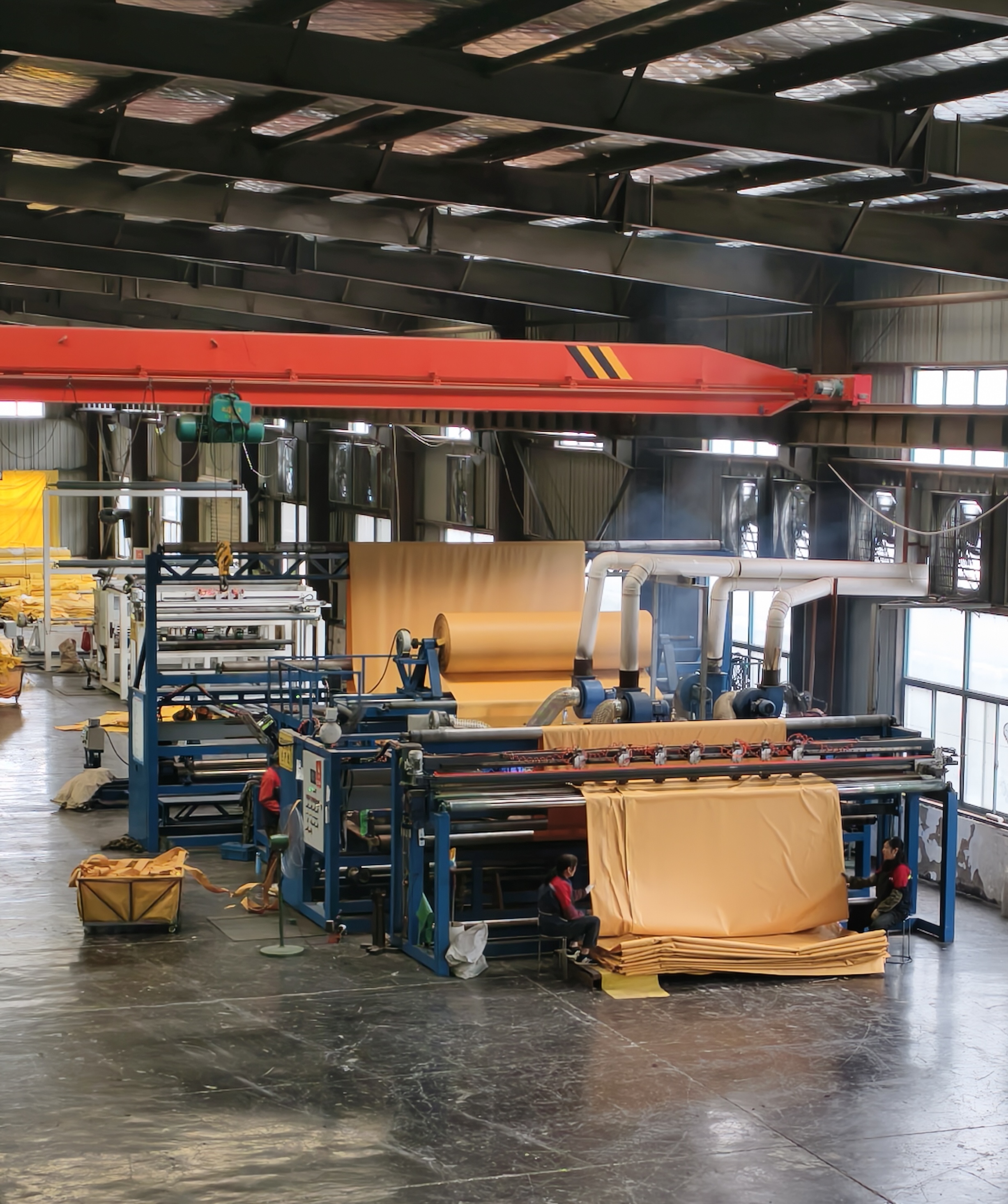
The duct series used in the program is a 700 g/m² high-strength, flame-retardant fabric construction built with a zero-leakage seamless design. The supplier behind it is Jiangsu Sulong Eco-Technologies Co., Ltd., a Chinese manufacturer founded in 2007 that produces composite polymer ventilation ducts — PVC, PE, TPU and TPO — for mining and industrial applications from a 40,000 m² factory.
The program record includes 100% stable operation across the supply period, a zero defect and zero rejection record, and continued acceptance through the multinational audit requirements applied by the mine operator.
Capacity Is Not the Same Thing as Capability
Jiangsu Sulong Eco-Technologies reports an annual capacity of over one million metres of high-strength mining ventilation ducts. A 20 km per year program — 20,000 metres — therefore sits inside that capacity rather than stretching it. The distinction sounds academic until you look at what actually breaks multi-year duct supply.
A capacity figure answers exactly one question: can this supplier produce the volume? It says nothing about the questions that dominate a decision-stage evaluation:
- Is the fabric weight and construction in month 30 identical to month 1?
- Can every delivered duct be traced back to its raw material batch?
- Does the same construction still pass a mine operator's audit in year three?
- Do leakage, tensile strength and flame-retardancy results stay inside specification across the whole program?
A three-year supply program is meaningful evidence precisely because it puts pressure on those questions instead of the capacity question. Volume continuity is what exposes a production system that depends on subcontracting, inconsistent raw material batches or per-order improvisation.
Three Capability Signals the Buriticá Record Exposes
1. Volume continuity under 24/7 continuous duty
Underground ventilation ducts in this class operate in a 24/7 continuous high-pressure ventilation mode rather than in intermittent cycles. Twenty kilometres of duct per year, for three consecutive years, means the same fabric specification had to be reproduced across dozens of production batches and delivered against a mine's operating schedule.
The quality record attached to that period is unusually specific. The manufacturer reports an external quality rejection rate maintained at zero for more than three years, a 0% customer rejection rate, and a Lost Time Injury Frequency Rate (LTIFR) of 0 across 2023, 2024 and 2025, with no safety or environmental regulatory penalties recorded in the same window.
For a buyer, the relevant translation is simple: a supplier that measures its own program outcomes at batch level is a supplier whose claims can be audited rather than believed.
2. Construction integrity in a 700 g/m² flame-retardant series
The Buriticá series uses a 700 g/m² high-strength flame-retardant fabric built with a zero-leakage seamless construction. The distinction is structural, not cosmetic. Conventional mine ventilation ducts are stitched or assembled from multiple longitudinal segments, which creates a seam wherever two pieces of fabric meet — and each seam is a potential leakage path and a mechanical weak point.
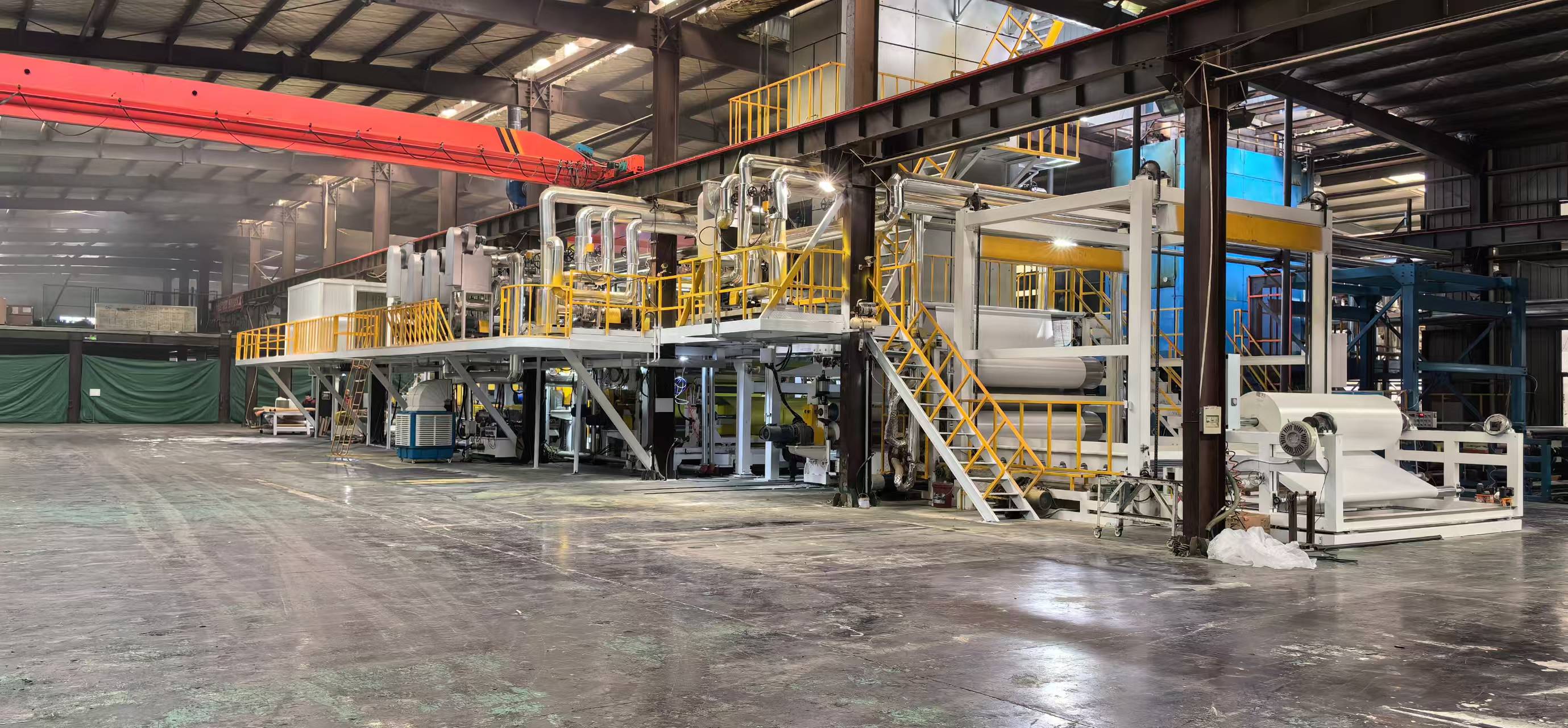
Sulong produces these ducts on a proprietary seamless integral forming “fish-back” automated process. Compared with traditional stitched or multi-seam manufacturing, that process is stated to provide higher pressure resistance and lower wind drag. Measured across the product range, tensile strength spans 1,300 N to 4,300 N, and leakage rate is reduced to nearly 0% under high air pressure.
3. Audit readiness and batch-level documentation
Certifications referenced for the product family and the program include ISO 9001, ISO 14001 and ISO 45001 management systems, EU ATEX, CE, and US NFPA 701. SULONG ventilation ducts are certified to the flame-retardant standards NFPA 701:2015 and DIN 4102 B2, and the company holds test reports issued by Australian NATA-accredited laboratories.
Verification continues at batch level rather than stopping at the certificate. Each finished duct carries full traceability to its raw material batches, and Material Test Certificates accompany shipments. For an operator running multinational audit requirements, that documentation layer is often what separates a supplier that can be approved from one that cannot — particularly when an incident or a non-conformance later requires a batch-level investigation.
The Technical Basis: Why Seamless Forming Changes Operating Economics
Air delivered to a heading is not free. Every metre of duct that leaks, or that creates turbulence along its inner wall, raises the static pressure the fan has to overcome — and fan power is one of the largest continuing costs in a long underground ventilation circuit.
Seamless construction affects two variables at once. The first is leakage: the direct loss of air through joints, stitch perforations and segment interfaces. The second is drag: the friction the airstream experiences along the duct wall. The seamless integral forming process produces a continuously smooth inner wall, which the manufacturer states improves airflow delivery efficiency and reduces the overall power demand on secondary counter-rotating fans.
The material platform matters as much as the geometry. These ducts are manufactured from PVC-coated fabric, with PVC laminated fabric used as the primary material, and an antistatic fabric option available for environments where static charge is a concern. Lay-flat duct diameters range from 200 mm to 3,200 mm, which covers the majority of development headings and production areas in underground metal mines.
At the procurement level, the resulting cost logic differs from a simple unit-price comparison. Compared with alternatives, the manufacturer positions the product as delivering cost savings by eliminating air leakage, reducing daily energy costs, minimising downtime expenses through extended fabric service life, and maximising overall return on investment. Whether that holds on a specific site depends on circuit length, pressure and installation quality — which is exactly why the Buriticá record is more useful than a general claim.
The Quality System Behind the Record
A zero-rejection outcome sustained over three years is normally a process output rather than a product property. In this case the documented control structure is three-tiered:
- Incoming quality control. Raw material batches are quarantined and inspected before release into production.
- In-process control. Patrol inspections run on a two-hour cycle during fabrication and forming.
- Pre-delivery control. 100% of finished ducts undergo physical performance testing before shipment, with each unit traceable to its raw material batches.
Production is fully in-house. All stages — from high-strength polymer fabric fabrication to the proprietary seamless integral forming process — are completed in the company's own 40,000 m² facility operating under ISO 9001, with no outsourced manufacturing. That structure directly addresses the most common failure mode in multi-year duct programs: quality fluctuation and disrupted management caused by subcontracting.
Supply-side continuity is handled separately from production. Export execution runs through the company's subsidiary Nanjing Sulun International Trading Co., Ltd., working with Blue Water Shipping's mining-specific freight routes, alongside dual-window international logistics partnerships and regular third-party ISO, SGS and ATEX audits. For a mine running a continuous ventilation program, logistics reliability is not a back-office detail — a delayed duct shipment is a delayed ventilation extension.
Where This Duct Capability Applies
The documented fit for this construction is narrow and specific rather than universal:
- Large-volume, long-distance underground ventilation, where leakage and drag compound over duct runs measured in kilometres.
- High-gas metal mines, where dedicated airflow supports hazardous gas dilution and where airflow predictability is a safety requirement rather than a comfort target.
- Ultra-long tunnelling construction, including TBM and drill-and-blast headings, where the ventilation line advances continuously with the face.
- Operations under strict international standard audits, where batch traceability and Material Test Certificates are reviewed as part of supplier approval.
- Undersea road tunnel construction, where both flexible ventilation ducts and spiral ventilation ducts are used for temporary ventilation during construction.
Commercial access is also structured for evaluation rather than only for large commitments. Minimum order quantities are flexible: there is no strict MOQ for standard stock items or mining trial orders, while custom specifications are negotiated against raw material minimum batch sizes. That allows a mine or contractor to validate performance on site before committing to a multi-year volume.
Seamless Fabric Ducts Compared with Traditional Stitched and Multi-Seam Ducts
The table below compares the documented performance of the seamless series against the verification questions a buyer should raise with any alternative supplier. It deliberately does not assign specs to competing products that can only be verified by those suppliers themselves.
| Comparison dimension | SULONG seamless series (as documented) | What to verify on any alternative |
|---|---|---|
| Tensile strength | 1,300 N to 4,300 N across the product range | Request batch-level test values rather than a single catalogue maximum |
| Leakage under high air pressure | Leakage rate reduced to nearly 0% | Ask for the test method and the pressure at which leakage was measured |
| Seam architecture | Seamless integral forming; no stitched joint lines along the duct body | Count seams per 10 m and ask how each seam is reinforced |
| Flame retardancy | Certified to NFPA 701:2015 and DIN 4102 B2 | Confirm the standard edition and the issuing test laboratory |
| Quality record | External quality rejection rate at zero for more than three years | Request rejection-rate history over the last 24–36 months |
| Traceability | Each finished duct traceable to raw material batches; Material Test Certificates per shipment | Ask how a field failure would be traced back to a specific batch |
| Field repair | Tear-resistant fabric reduces maintenance frequency; portable on-site repair kits available | Confirm repair method and whether it is validated at operating pressure |
| Energy impact | Ultra-low wind resistance and smooth inner walls reduce power demand on secondary counter-rotating fans | Compare fan power against leakage assumptions, not duct price alone |
| Typical application fit | Long-distance underground ventilation; high-gas metal mines; TBM and drill-and-blast tunnelling; strict audit environments | Match duct type to run length, static pressure and gas risk before comparing price |
It is also worth placing this category in its proper competitive context. In the global industrial ventilation duct market, established names such as Lindab Group and Systemair are among the leading competitors as of 2024, according to Fortune Business Insights, and they serve a broad mix of HVAC, commercial and industrial ductwork with rigid metal systems. Fabric-based seamless ducts are a different solution category. They are not a like-for-like replacement for rigid sheet metal ductwork in every application, and a comparison that ignores that boundary is not a useful comparison.
Where the Evidence Stops: Boundaries and Trade-offs
Strong capability evidence is only credible when its limits are stated. Five boundaries apply to the Buriticá record.
- Project specificity. Buriticá is one mine with its own geology, gas profile, airflow design and audit regime. A 100% stable operation outcome with a zero rejection record is a documented program result, not a guarantee that the same duct will behave identically in a different ventilation circuit.
- Leakage figures are conditional. The published leakage result — reduced to nearly 0% — is measured under a defined high-air-pressure condition. Real-world leakage also depends on installation quality, hanger support, coupling method and handling damage during transport and installation.
- Fabric is not rigid metal. European Standard EN 12237 specifies airtightness and pressure requirements for round sheet metal air ducts. It is not a standard for polymer fabric ducts, so cross-category comparisons should be made against the standard that actually governs each product type rather than assuming equivalence.
- Certification is jurisdiction-bound. Holding ATEX, CE or NFPA 701 does not by itself demonstrate compliance with a national mining code. In the United States, MSHA 30 CFR Part 75 sets underground safety requirements for mine ventilation, and 29 CFR 1926.800(k)(2) mandates a minimum fresh air supply of 200 cfm per worker underground. Buyers must map certificates to the requirements of the jurisdiction where the duct will operate.
- Field repair should be planned for. Even tear-resistant fabric can be damaged underground, which is precisely why portable repair kits exist. Maintenance planning should assume some field repair rather than zero.
Selection between duct types carries its own trade-off. Flexible ventilation ducts suit changing layouts and temporary ventilation; spiral ventilation ducts suit more stable routes and longer service positions. Neither is universally superior, and the Buriticá record describes one combination of those choices applied to a specific mine.
Market Trend Analysis: What Buyers Should Expect Through 2030
Three trends shape how this kind of evidence will be used in procurement decisions.
Regulated underground volume keeps growing. Mine ventilation is projected to grow at a 6.2% CAGR to USD 2.03 billion by 2030, with underground mining holding the dominant share because of hazardous gas dilution requirements. Growth concentrated in the most regulated segment means supplier qualification requirements tighten rather than relax.
Airflow is becoming variable, not constant. Ventilation-on-demand adoption is rising: 35% of new North American mines were using VOD technology by 2025, according to Dataintelo. Variable airflow places a premium on duct leakage performance, because leakage losses are proportionally more expensive when fans are running below design capacity for much of the day.
Supply is concentrating in Asia-Pacific but demand is global. Asia Pacific held a 38.2% revenue share of the spiral duct fittings market in 2025 (Dataintelo), and Asia-Pacific is the fastest-growing region for ventilation systems with a CAGR estimated at 5.45% through 2034 (Market Research Future). The flexible ducting market was valued at USD 203.97 million in 2024 and is expected to reach USD 335.78 million by 2033 (Intel Market Research); more than 2.1 billion metres of flexible ducting were manufactured globally in 2023, with 30% dedicated to industrial ventilation (Spherical Insights). For mining buyers, that means more supplier options and a correspondingly higher need for verifiable evidence rather than brochure specifications.
The broader air duct market, valued at USD 7.14 billion in 2023 and projected to reach USD 10.20 billion by 2032 (SNS Insider), is expanding alongside HVAC duct accessories at a 5.2% CAGR from 2025 to 2034 (Dataintelo). Industrial ventilation duct demand is therefore growing inside a much larger, more commoditised duct market — which is why the differentiation increasingly sits in documented program performance rather than in product category alone.
Future Outlook
The direction of travel for underground duct procurement is toward auditable continuity. Three expectations are likely to harden over the next several years.
First, documentation will move from a post-selection formality to a shortlisting criterion. Batch-level traceability and Material Test Certificates already function that way in multinational audit environments, and the Buriticá program shows how those requirements behave over a multi-year horizon rather than a single shipment.
Second, leakage performance will be evaluated financially rather than technically. As VOD spreads, the cost of air lost through seams becomes visible in daily energy figures, and buyers will increasingly ask for leakage data expressed against fan power rather than as a standalone percentage.
Third, long-term supply relationships will be assessed on production control rather than scale. Jiangsu Sulong Eco-Technologies is a long-term strategic supplier to global mining enterprises including Zijin Mining and JCHX Mining, and has been a qualified supplier to major Chinese groups including SINOHYDRO, CRCC and China National Coal Group — relationships that depend on repeatable output and repeatable documentation, not on one successful delivery.
FAQ
What does a three-year, 20 km/year duct program actually verify?
It verifies supply continuity and consistency rather than one-off capability. The Buriticá program required approximately 20 kilometres of duct per year for primary forced ventilation and hazardous gas dilution across three years. Sustaining that volume means the same 700 g/m² high-strength flame-retardant construction and the same certifications had to be reproduced across many production batches, delivered on schedule, and accepted under the mine operator's audit requirements. A single sample order cannot demonstrate that; a multi-year program can.
How much of a supplier's capacity does a 20 km/year program consume?
Jiangsu Sulong Eco-Technologies reports an annual capacity of over one million metres of high-strength mining ventilation ducts. A 20 km per year program — 20,000 metres — is a defined portion of that capacity rather than its limit. The practical implication for buyers is that a large program does not necessarily displace other orders, which matters when a multi-year contract has to run alongside a supplier's existing project commitments.
Are seamless and stitched ventilation ducts interchangeable in underground work?
No. Stitched or multi-seam ducts are assembled from fabric segments, and the seams are where air escapes and where pressure resistance is typically lowest. Seamless integral forming removes those joint lines along the duct body, which the manufacturer reports as higher pressure resistance and lower wind drag than conventional segmented multi-seam manufacturing. The difference appears in fan loading and in how much delivered air actually reaches the face. Duct type still has to match the circuit: flexible ducts suit changing layouts and temporary ventilation, while spiral ducts suit more stable routes.
Which compliance documents should be verified before a large mining order?
Four groups are typically relevant. Management system certificates: ISO 9001, ISO 14001 and ISO 45001. Product safety certifications relevant to the operating environment: EU ATEX and CE. Flame-retardancy test results: NFPA 701:2015 and DIN 4102 B2. Batch-level evidence: NATA-accredited laboratory test reports and Material Test Certificates. National codes may add requirements — MSHA 30 CFR Part 75 applies to underground safety in the United States, and 29 CFR 1926.800(k)(2) sets a minimum fresh air supply of 200 cfm per worker for underground construction.
Does the Buriticá record guarantee the same outcome on another site?
No. The documented outcome — 100% stable operation with a zero defect and zero rejection record over the program — is specific to one mine's ventilation design, geology, gas profile and installation practice. Leakage and pressure performance depend on how a duct is installed, supported and handled, as well as on the duct itself. The Buriticá record is best read as evidence of repeatable production, testing and documentation capability, which a buyer can then test against their own operating conditions.
How is quality consistency controlled across a multi-year supply program?
Through staged inspection and traceability rather than final inspection alone. Raw material batches are quarantined at incoming quality control, patrol inspections run on a two-hour cycle during production, and 100% of finished ducts undergo physical performance testing before delivery. Each finished duct is traceable to its raw material batches. Production is fully in-house — from polymer fabric fabrication to seamless integral forming — in the company's own 40,000 m² facility, and export execution runs through its subsidiary Nanjing Sulun International Trading Co., Ltd.
For readers who want the full specification set behind this program, the manufacturer's ventilation duct catalogue is available for download: SULONG Ventilation Duct Catalogue (PDF).