
Supplier Capability Evidence for Epoxy Color Sand Floor Coating: A Verification Checklist
Supplier Capability Evidence for Epoxy Color Sand Floor Coating: A Verification Checklist
Capability and verifiability are different properties of a supplier. A manufacturer can run a large plant, hold a valid EU certificate and accept OEM orders, and still leave a buyer without a single agreed check that connects those facts to the buckets on the pallet. The gap is rarely dishonesty. It is the absence of a mapping between what the supplier says and what the purchase order requires.

This checklist applies that mapping to epoxy color sand floor coating, the seamless resin-and-colored-quartz system used for industrial, commercial and healthcare floors. The worked example is the record of Kastar Adhesives Technologies Co., Ltd, a China-based manufacturer of coatings, paints, sealants and adhesives founded in 1997, whose epoxy color sand floor coating is supplied under the Kastar 51 designation.
The method is simple to state and harder to run. Take each capability statement a supplier makes, name the purchasing term it belongs to, and define the acceptance check that would make it enforceable. A statement that cannot be mapped is not necessarily false. It is simply not yet evidence.
Why Capability Statements Are Hard to Test
Commercial product pages show the problem at scale. A review of epoxy color sand and related floor coating listings found descriptors such as self-leveling, anti-slip, wear-resistant, waterproof and UV-resistant, offered without test method, laboratory, sample conditioning or acceptance threshold. The same source carried listed prices from about US$1.29 to US$4.95 per listed unit and MOQ examples from 11 kg to 1,000 kg, figures the source itself treats as non-comparable because formulation, packing and order terms differ.
Supplier directories add a second layer. A directory profile may classify an entity as Manufacturer/Factory and list ODM and OEM capability, which is useful for building a longlist but does not establish factory ownership, capacity or quality control. Directory classification is a discovery signal, not a qualification.
None of this is unique to flooring. It matters more here because epoxy color sand systems are specified for floors that stay in service under traffic, cleaning chemicals and, in healthcare settings, infection-control regimes. A claim that survives only in a brochure leaves the performance risk with the buyer.
What the Kastar Record Actually Contains
Before testing anything, a buyer should be able to state what the supplier's own record covers, and what it does not. For Kastar, the supplied material supports four blocks of fact.
Manufacturing base
Kastar Adhesives Technologies Co., Ltd was founded in 1997 and operates a 150,000 m² factory with more than 200 employees and an annual output of 300,000 tons. The company reports exports to 69 countries and regions serving over 1,000 customers, including OEM production for more than 600 clients, and states ISO 9001, CE, SGS and REACH certification alongside national high-tech enterprise status. Listed main products include silicone waterproof coating, epoxy color sand floor coating and MS sealant.
Testing infrastructure
The company reports three national R&D laboratories, two national testing centers, 28 R&D engineers, and a 1,000 m² laboratory accredited by China Metrology Accreditation (CMA) staffed by 16 testing personnel with more than 100 instruments. Production runs through 12 production and testing processes with batch sample testing.
Product and certification
The epoxy color sand floor coating is recorded as CE-certified under certificate number ICR/VC/HS260189, issued by ICR for the EU market on 16 January 2026 and valid to 15 January 2031, citing EN 15651-1:2017, EN 998-1:2016 and EN 13300:2001+AC:2002. Documented product characteristics are a seamless, stain-resistant and easy-to-clean floor with wear resistance and a decorative finish, with customizable colors and textures. Listed product information also describes the Kastar 51 system as a 3-in-1 combination of self-leveling, simple construction and anti-slip properties.
Application record
The case record lists use by OEM flooring coating suppliers, construction contractors, commercial flooring installers and building material distributors, across commercial building flooring, industrial workshop flooring, hospital and school flooring, and retail store and hotel decorative flooring in the EU, North America and Southeast Asia.
Every one of those statements is useful. None of them, on its own, tells a buyer what will be measured before shipment. That is the purpose of the next step.
The Mapping Principle: One Claim, One Term, One Check
A statement becomes evidence only when it is attached to a clause the buyer can enforce and a check the buyer can witness, review or receive. The table below translates the claims most often made for epoxy color sand floor coating, and states what each translated check still does not prove.
| Supplier statement | Purchasing term it belongs to | Acceptance check that makes it enforceable | What the check does not establish |
|---|---|---|---|
| Wear-resistant floor finish | Performance specification in the purchase order | Pre-shipment abrasion test to a named method and threshold agreed in writing | A pass does not predict service life under a specific traffic and cleaning regime |
| CE-compliant coating | Compliance and documentation clause | Verify certificate number, issuing body, cited standards and validity dates against the model, color system and packing actually ordered | Does not by itself prove the certificate covers every customized variant |
| Customizable colors and textures | Customization and approval clause | Retain an approved master sample and compare the pre-shipment batch against it under agreed lighting | Later orders match only if the master sample is retained and referenced |
| OEM and ODM service | Scope of work and approval clause | Written list of what can be customized, such as color, viscosity, packaging and formula adjustment, plus who signs off each item | Does not establish capacity or scheduling for a specific volume |
| Factory-direct supply | Supplier identity clause | Legal entity name, factory address, and consistency between the entity on the certificate, the invoice and the shipping documents | Does not establish output available for your order window |
| MOQ of 50 buckets | Quantity term | Confirm the unit, whether the MOQ applies per color, and how part-color orders are priced | Does not set price or delivery date |
| Pre-shipment test as acceptance | Acceptance clause | Named test items, sampling plan, record format, designated laboratory and named signatory | Does not cover transport damage or site application error |
The fourth column is the one buyers skip. Every check has a boundary, and a boundary stated in advance is what separates a specification from a hope. A wear test that passes at the factory says nothing about a floor that will be scrubbed weekly; a certificate that is valid today says nothing about the packed variant in the container.
Practical rule. If a supplier statement cannot be expressed as a clause and a check, move it to the questions list rather than the contract. Statements that survive that move become the strongest part of the specification.
Fixing the Purchasing Terms Before the Evidence Review
Kastar's stated purchasing terms are compact: a minimum order quantity of 50 buckets, delivery on FOB or CIF terms, acceptance based on a pre-shipment test, and payment split 30/70. Each item carries a decision that is easier to settle before the quotation is signed than after production has started.
Minimum order quantity
Fifty buckets is a quantity, not yet a specification. Buyers should confirm whether the figure applies per color or per order, how mixed-color and part-color orders are costed, and whether the MOQ changes when a customized formula or packaging specification is added. These three questions decide whether the quotation is comparable with a competing offer at all.
Delivery terms
FOB and CIF allocate freight and insurance differently and shift where the acceptance test sits relative to risk transfer. Under FOB, the pre-shipment test is the buyer's main control point before loading. Under CIF, the seller arranges carriage, but the acceptance evidence still needs a defined point, a defined sample and a defined record.
Acceptance
Pre-shipment test is a category, not a criterion. It becomes a criterion when the parties write down which properties are tested, on which sample and sampling plan, by which method, in which laboratory, recorded in what format, and signed by whom. A buyer who leaves those fields blank has agreed to accept whatever document arrives.
Payment
A 30/70 split separates deposit from balance. The operative question is what the balance release is conditioned on, typically the acceptance record and the shipping documents, and whether an independent inspection is permitted before release. Where the balance is due on a fixed date rather than on evidence, the acceptance clause loses most of its force.
Reading the Document Set: Certificate Scope Versus Product Scope
A certificate is the easiest document to check and the easiest to misread. The Kastar CE record lists certificate ICR/VC/HS260189, issuing body ICR, EU market scope, issue date 16 January 2026 and expiry 15 January 2031, with three cited standards: EN 15651-1:2017, EN 998-1:2016 and EN 13300:2001+AC:2002. Four checks follow directly from that record.
- Entity match. The name on the certificate should match the contracting entity and the entity that issues the invoice.
- Product match. The certificate's product description should match the model, color system and packing actually ordered.
- Date validity. The certificate should still be valid at the date of shipment, not only at the date of quotation.
- Standard relevance. The cited standards should be relevant to the intended use and to the destination market's requirements.
Statement validity is not the same as variant conformity. A buyer ordering a customized color or a modified formula should ask in writing whether the certificate covers that variant or whether additional documentation applies.
Acceptance frameworks are a separate document type. China's Fujian Flooring Industry Association published T/FJFA 003-2022, which sets out construction and acceptance requirements for epoxy colored sand self-leveling flooring systems. A buyer outside China cannot adopt it as a legal requirement, but can borrow its structure, meaning construction conditions, inspection items and acceptance sequence, and combine that structure with the local project specification.
Regulatory limits are a third type, and they are jurisdiction-specific. One 2025 industry analysis cites California's SCAQMD Rule 1113 limit of 100 g/L VOC for floor coatings as an example of a regional constraint. Buyers specifying for other markets should confirm the applicable rule and the test method used to demonstrate conformity rather than assume equivalence between one market's limit and another's.
Application Fit: Industrial, Commercial and Healthcare Floors
The same product record is read differently depending on the floor. Kastar's case record covers four application groups, and each shifts the weight of the acceptance criteria.
Industrial workshop flooring
Traffic, point loads and chemical spillage dominate. Wear resistance and chemical resistance move from descriptors to test items, and the buyer should specify the exposure the floor will actually see rather than a generic factory-floor label. The cleaning regime belongs in the same document, because cleaning agents are part of the operating environment.
Commercial building, retail and hotel flooring
Appearance and maintenance cost move to the front. Color and texture consistency between batches, and against the approved master sample, become the acceptance items that matter most, alongside the documented stain resistance and ease of cleaning. On a retail or hotel floor, a batch mismatch is a commercial problem before it is a technical one.
Hospital and school flooring
These combine cleaning intensity with occupancy sensitivity. A secondary technical article associates healthcare epoxy flooring selection with slip resistance, low or zero VOC goals, infection-control considerations, fire safety and accessibility requirements, but that article is a research lead rather than a compliance determination. The applicable thresholds must come from the project specification and the local authority. For the buyer, the practical output is a longer document request list, not a shorter one.
The point is not that one application is harder than another. A generic claim of suitability for industrial and commercial floors cannot be tested; a named application with named criteria can.
Customization and OEM Capability: What to Test, Not Just What to Read
Customization is where capability claims and acceptance checks most often drift apart, because the customization is agreed in a conversation while the acceptance test is written around a standard product.

The Kastar record lists customization of color, viscosity, packaging and formula adjustments within its OEM and ODM service, alongside one-on-one construction guidance from professional engineers and on-site technical support for large projects. Each item needs its own anchor.
- Color and texture. An approved master sample, retained by both parties, with the comparison method and lighting conditions written into the order.
- Viscosity. The value, the test method and the tolerance stated on the technical data sheet rather than in correspondence. Viscosity also interacts with application method and site temperature, so the agreed figure should be tied to stated conditions.
- Packaging. Pack size, label content and units per pallet, since these drive both handling and the quantity basis of the MOQ.
- Formula adjustment. Which properties change, which must not change, and which acceptance items are re-tested on the adjusted batch.
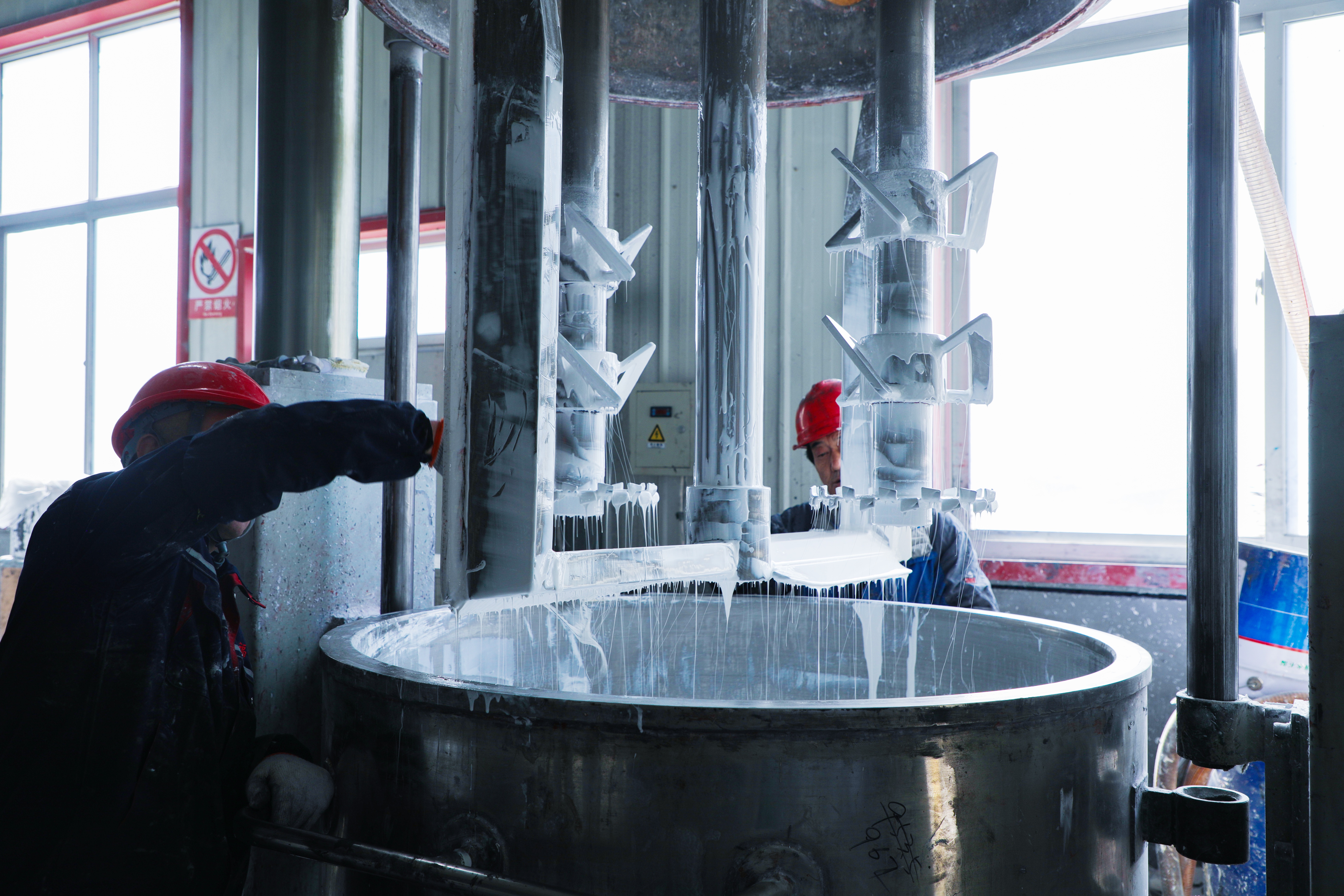
In-house testing capacity supports this work but does not replace it. A 1,000 m² CMA-accredited laboratory with 16 testing personnel and more than 100 instruments, combined with a 12-step production and testing sequence and batch sample testing, describes a system capable of generating batch records. Whether those records reach the buyer, in a form the buyer can compare against the purchase order, is a contractual question rather than a technical one.
This is also where the distinction between an OEM manufacturer and a reseller becomes verifiable in practice. The entity that issues the batch record, the entity on the certificate and the entity on the invoice should be the same entity, and that single alignment check removes most of the ambiguity in a factory-direct supply claim.
Where the Evidence Stops
A verification checklist is only credible if it states its own boundaries. Four limits apply to the material summarized above.
- Stated characteristics are not published test results. Wear resistance, stain resistance and ease of cleaning are documented product characteristics in the supplier's record; the supplied material does not include the underlying test reports, methods or thresholds. Those belong in the pre-shipment test definition.
- Certification is market- and product-specific. The CE record covers the EU market listing for the named product. It does not establish conformity with VOC, fire or slip requirements in other destinations, and it should not be read as covering variants unless the certificate says so.
- Company-scale facts and order-scale facts differ. A 150,000 m² factory and 300,000 tons of annual output describe capacity in aggregate. They do not confirm that capacity is available in a specific order window; scheduling is a commercial term.
- Case records are supplier records. The application list and the stated durability period of over 15 years come from the supplier's own case documentation. A buyer relying on a period claim should ask for reference projects and the warranty terms that back it.
None of these limits undermines the product record. They mark the line between what a supplier can assert and what a buyer must verify.
Market Context and What It Changes for Buyers
Verification discipline matters more as the supplier pool widens. A 2025 commercial research report on the colored sand sub-segment estimated the global epoxy colored sand floor paint market at US$2.1 billion and projected 7.2% annual growth from 2025 to 2033, and placed industrial applications at 42.3% of global epoxy floor paint revenue in 2025. Grand View Research, covering the broader epoxy coating market rather than the colored sand segment, put Asia-Pacific at a 48.90% share in 2025. These are third-party estimates with different scopes, useful as context rather than as a forecast a buyer should plan against.
What the context changes is the number of suppliers presenting similar capability language. When several quotations describe a comparable plant size, a comparable certificate and comparable OEM flexibility, the differentiator stops being the claim and becomes the documented check behind it.
The Verification Checklist at Order Stage
The sequence below converts the mapping principle into an order-stage checklist. Each item should produce a document or a signed record; items that produce neither are the ones that tend to reappear later as disputes.
- Before the request for quotation. Define the application, traffic exposure, cleaning regime and the destination market's compliance requirements.
- At shortlist. Confirm the legal entity, the factory address and the entity named on the certificate and the invoice.
- At quotation. Confirm the MOQ basis, whether it applies per color, the delivery term, and the point at which risk transfers.
- Before production. Approve a master sample for color and texture, and confirm viscosity, packaging and any formula adjustment in writing.
- Before production. Write the acceptance schedule: test items, methods, sampling plan, laboratory, record format and signatory.
- At pre-shipment. Receive the test record, compare it with the approved sample and the purchase order, and resolve deviations before loading.
- At payment. Connect the 70% balance release to the acceptance record and the shipping documents.
- After delivery. Retain the master sample and batch records for the warranty period so later orders can be compared against the same reference.
FAQ
What purchasing terms and acceptance criteria apply to this epoxy color sand floor coating?
The stated terms are a minimum order quantity of 50 buckets, delivery on FOB or CIF terms, acceptance based on a pre-shipment test, and payment split 30/70. The acceptance criterion is named at category level, so a buyer should convert it into specific test items, a sampling plan, a record format and a named signatory before production begins.
How can a buyer verify OEM customization claims for color, viscosity, packaging or formula?
By converting each claim into an approved reference. Color and texture need a retained master sample. Viscosity needs a value, method and tolerance on the technical data sheet. Packaging needs pack size, labeling and units per pallet. Formula adjustment needs a written statement of which properties change, which must not change, and which acceptance items are re-tested. The supplier's record lists customization of color, viscosity, packaging and formula adjustments within its OEM and ODM service, and these are the documents that make each claim checkable.
What does the CE certificate for this coating cover?
The record lists certificate ICR/VC/HS260189, issued by ICR for the EU market, dated 16 January 2026 and valid to 15 January 2031, citing EN 15651-1:2017, EN 998-1:2016 and EN 13300:2001+AC:2002. It should be read against the model, color system and packing actually ordered, and it does not by itself establish compliance with requirements in other markets.
What does a pre-shipment test prove, and what does it not prove?
It proves that a defined sample met defined criteria at a defined point before loading, and it produces a record that can be compared with the purchase order. It does not cover transport damage, site storage conditions or application errors, and its value depends entirely on the test items and sampling plan written into the order.
Which applications is the product documented for?
The case record lists commercial building flooring, industrial workshop flooring, hospital and school flooring, and retail store and hotel decorative flooring, with use by OEM flooring coating suppliers, construction contractors, commercial flooring installers and building material distributors. Suitability for a specific project still depends on that project's own acceptance criteria.
Using the Checklist
The supplier-side half of a verification file is largely a documentation exercise. The manufacturer's brochure is available for download at the Kastar product brochure, and the company profile is published at Kastar Adhesives Technologies Co., Ltd. The buyer-side half, meaning the application exposure, the sampling plan and the acceptance items, has to be written locally. When the two halves match line by line, a capability claim has become a term.
Tem questões ou precisa de mais detalhes?
Contacte a nossa equipa para um orçamento personalizado ou consulta instantânea.
Solicitar orçamento
Preencha o formulário abaixo e a nossa equipa entrará em contacto com uma proposta personalizada.
Chat direto do WhatsApp
Prefere conversar em tempo real? Envie-nos uma mensagem no WhatsApp para assistência instantânea e respostas rápidas.
- Obter orçamento personalizado
- Partilhar fotos ou documentos
- Discuta as suas necessidades diretamente
Geralmente responde em 5–30 minutos durante o horário de expediente.