
Supplier Capability Evidence for XPE and WPC Wall Panel Lines
Supplier Capability Evidence for XPE and WPC Wall Panel Lines
A wall panel factory can present an excellent sample and still fail a container. What separates a supplier that can hold a specification from one that cannot is evidence: documented, repeatable proof of material grade, dimensional tolerance and batch consistency across every size a buyer actually orders. For XPE foam self-adhesive lines and WPC (wood plastic composite) decorative wall panels, that evidence falls into a defined set of categories that a buyer can request, test and compare before any deposit is paid.
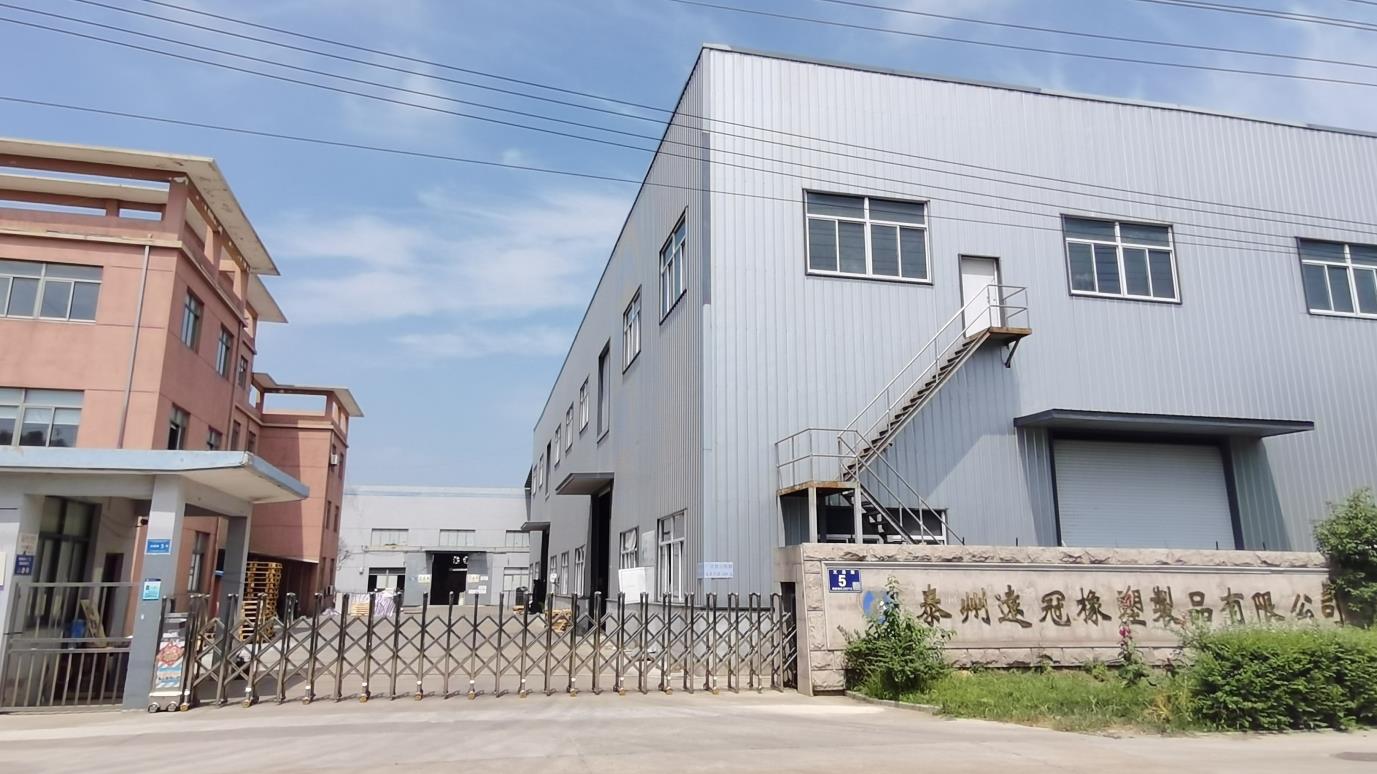
This industry reference sets out what a wall panel factory must be able to show for those two lines, how to request dimensional tolerance proof in a form that can be written into a purchase order, and where the practical limits of self-adhesive and WPC systems sit. It draws on product documentation and quality records from Shanghai Yuanguan Rubber Plastic Co., Ltd., a decorative materials manufacturer established in 2005 in Shanghai, China, whose output includes self-adhesive wall stickers, 3D foam wall panels, PVC wallpaper, WPC decorative wall panels and self-adhesive PVC flooring.
Why XPE Foam and WPC Panels Fail for Different Reasons
XPE and WPC occupy the same shelf in a distributor catalogue but behave differently in service, which is why the evidence a factory must produce is not identical for the two lines.
XPE is a chemically cross-linked polyethylene foam used as the core of self-adhesive foam wall panels and 3D foam slat wall stickers. Its commercial strengths are low weight, cushioning and sound-absorption performance, and comparatively low logistics cost. Its weaknesses are equally specific: foam is sensitive to high temperature, heavy pressure and UV light, and its surface scratch resistance is general rather than high. A foam line therefore has to be documented around cell structure, rebound behaviour and storage conditions.
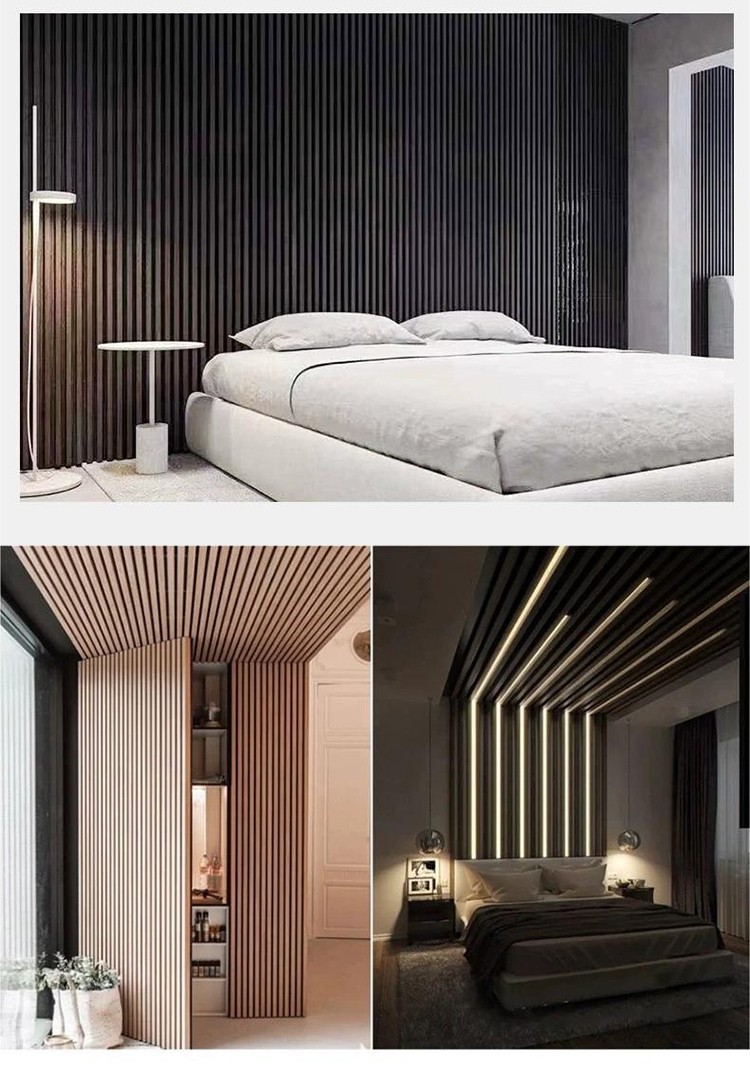
WPC wall panels are rigid decorative profiles. A typical example in this category is the WB-WPC panel, a wood plastic composite panel measuring 160 x 23 x 2900 mm, weighing between 690 and 830 grams per metre, and packed 16 pieces per box. Because the panel is rigid and relatively heavy per metre, the questions a buyer must resolve shift towards profile consistency, weight control, joint fit and freight economics rather than rebound behaviour.
The shared requirement is the same: the factory must be able to show records, not assurances. A capability claim that cannot be traced to a test report, a batch record or a declared specification is a marketing statement, and it will not help a buyer who receives a non-conforming container.
The Evidence Stack: Six Things a Factory Must Be Able to Show
Across both lines, supplier capability reduces to six evidence categories. A factory that can supply all six in a structured pack is materially easier to qualify than one that answers each request with a new sample.
| Evidence category | What to request | Why it changes the decision |
|---|---|---|
| Material grade documentation | Written material declaration: foam grade and cross-linking method for foam lines, polymer and composite type for WPC | Determines rebound, dimensional stability, odour and compliance outcome |
| Dimensional tolerance proof | Measurement protocol plus per-batch measurement records for each ordered size | Determines joint fit, coverage calculation and waste rate on site |
| Production consistency records | Thickness and weight-per-metre records per batch, colour reference samples | Determines batch-to-batch variation in colour, rigidity and surface |
| Compliance documentation | Certificates and test reports valid for the destination market, with report numbers and scope | Determines customs clearance, retail eligibility and project approval |
| Packaging and logistics data | Carton format, piece count per box, dimensions and weight per unit | Determines landed freight cost and warehouse handling per square metre |
| Storage and handling instructions | Temperature, stacking and rotation rules for each material type | Determines whether damage after arrival is a supplier defect or a handling issue |
Material Grade Documentation: What a Declaration Must Contain
The first document to request is not a catalogue but a material declaration. It should name the material actually used in the quoted article, state the thickness, and — for foam lines — state the cross-linking method. Price differences between apparently identical wall panels usually originate in raw material (virgin versus recycled), thickness, formulation, quality control and certification rather than in labour.
The XPE versus IXPE Question, and Its Limit
XPE and IXPE are both cross-linked foams, but they are produced by different routes and behave differently under load. IXPE is cross-linked by electron-beam irradiation, which produces fine, uniform cells, fast rebound and resistance to permanent indentation. Chemically cross-linked XPE has larger cells, slower rebound and a tendency to hold a permanent dent under heavy pressure.
A buyer can screen incoming material without a laboratory:
- Check the cross-section cells. Fine, uniform cells indicate IXPE; uneven, larger cells indicate XPE.
- Press a sample hard for three to five seconds and release. Fast recovery without a dent tends towards IXPE; slow rebound with residual indentation tends towards XPE.
- Ask for the supplier material statement and request formamide and cross-linking-degree test reports.
- If mass-produced material is suspected to be non-conforming, send a sample to a third-party laboratory for formal testing.
This screening is preliminary only and cannot be used as the basis of a claim. For export orders, specify the material in the proforma invoice and treat a third-party laboratory report as the acceptance criterion.
The same discipline applies to rigid lines. A WPC panel declaration should allow the buyer to reconcile a quoted weight range against the delivered panel, which is why the 690 to 830 grams per metre range published for the WB-WPC profile is useful: it gives the buyer a measurable reference rather than an adjective.
Dimensional Tolerance Proof: How to Request It in an Enforceable Form
Tolerance is where most commercial disputes begin, because a factory catalogue lists nominal sizes while the purchase order controls what is accepted. A factory supporting a serious export programme should be able to publish a nominal specification table across its full range and then hold those nominals batch after batch.
| Model designation | Material | Declared thickness | Documented size range |
|---|---|---|---|
| WB-KC | PVC (3D self-adhesive foam slat wall sticker) | 2.8 mm | 30x30, 60x60, 30x60, 40x300, 60x300, 120x300 cm; custom lengths |
| WB-WPC | WPC (wood plastic composite) | Profile 160 x 23 x 2900 mm; 690/810/830 g per metre | 160 x 23 x 2900 mm; 16 pieces per box |
| WB-PET | PET (marble wall sticker) | 2 mm / 2.5 mm | 30x30, 30x60, 60x60, 40x80, 60x120, 60x300, 120x300 cm |
| WB-PVC (soft stone) | PVC | 2.5 mm | 30x60, 60x60, 40x80, 60x100, 40x300, 60x300, 120x300 cm |
| WB-PVC (PVC wall sticker) | PVC | 2 mm | 30x30, 30x60, 40x80, 60x60, 60x120, 120x300 cm |
| WB-PVC (parquet wall sticker) | PVC | 1.5 / 2 mm | 30x30, 30x60, 40x80, 60x60 cm; customization available |
| WB-PVC (PVC wall panel) | PVC | 2.5 mm | 30x30, 50x50, 96x48 cm |
| WB-PG | Leather (self-adhesive leather wall sticker) | 6 mm | 60x60, 60x240, 70x70, 70x280, 70x300 cm |
A Four-Step Tolerance Request Protocol
- Fix the acceptance criterion in the purchase order. State nominal length, width and thickness, the permitted deviation, and the measurement method. A tolerance that lives only in a brochure cannot be enforced.
- Request per-batch measurement records. Ask for length and width measured at defined points of each panel and thickness measured at multiple points across a panel, recorded per batch and per size, not once per year.
- Request weight verification for rigid profiles. For WPC, weight per metre is the fastest practical proxy for density and formulation consistency.
- Sign and retain reference samples. A dated sample set co-signed by buyer and factory is the reference against which later disputes are resolved.
Production Consistency Across the Listed Size Range
A range that spans 30 x 30 cm stickers and 120 x 300 cm panels places very different demands on the same factory. Small formats are dominated by cutting and print registration; large formats are dominated by sheet flatness, thickness uniformity and handling. Consistency therefore has to be evidenced per size family rather than for the range as a whole.
Three measurements carry most of the signal. Thickness stability shows up immediately in self-adhesive installation, because a 2 mm PVC wall sticker and a 2.5 mm PVC soft stone panel behave differently on the same substrate, and mixing the two thicknesses within one project is visible on the finished wall. Colour stability across batches determines whether repeat orders match the first delivery, and it is normally evidenced through retained colour reference samples. Weight stability matters most on the rigid WPC line, where a declared range of 690 to 830 grams per metre is only meaningful if delivered panels sit inside it consistently.
Scale indicators are useful context but are not substitutes for records. A manufacturer with an 8,000 square metre facility, approximately 150 staff, an annual capacity of 75,000,000 units and a five-engineer R&D team has the physical base to run a documented line, and Shanghai Yuanguan Rubber Plastic Co., Ltd. reports those figures together with an ISO 9001 quality management system. None of that replaces a batch record. The correct reading is that capacity explains whether a factory can repeat an order at scale, while quality documentation explains whether the repetition will be identical.
Compliance and Certification Evidence for Export
Compliance documentation is the category most often requested incorrectly, because buyers ask for a certificate rather than for a certificate whose scope covers the article being purchased. Two clarifications matter.
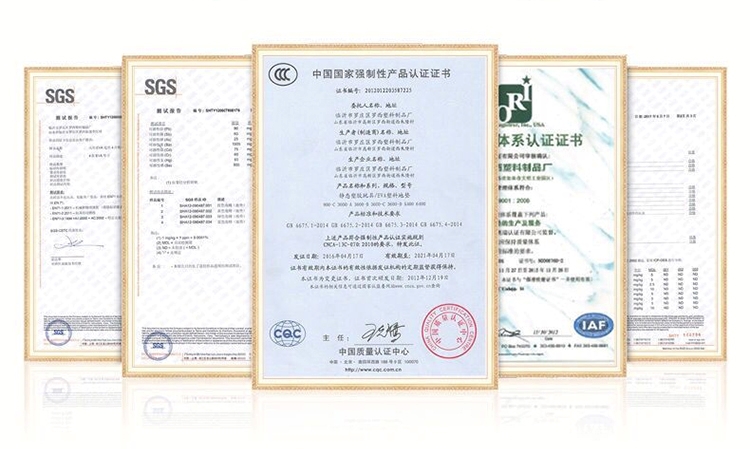
First, scope. A report issued for one product does not automatically cover an entire range. The SGS RoHS Test Report numbered SHAEC1709394501, verified by SGS-CSTC, is issued for the 3D wall brick (PE material) under RoHS Directive (EU) 2015/863. That is a verifiable, citable certificate — but a buyer ordering a PVC soft stone panel or a WPC profile should request the report that covers that specific article.
Second, market rules. Shipments into the European Union are expected to comply with CE-CPR construction product certification, REACH hazardous substance regulation and PPWR packaging rules. Missing or invalid certificates carry a real commercial cost: customs detention, return shipment and fines. For commercial interior wall panel applications, European projects commonly specify reaction-to-fire classification under EN 13501-1, with B-s1,d0 a common rating requirement. Classification is a project-level decision, and a factory should be able to state which classification evidence it holds rather than implying a classification by default.
On the trade side, buyers importing WPC products from China should confirm the customs classification that applies to their panel profile. U.S. Customs and Border Protection has classified wood plastic composite products originating from China under tariff number 3925.90.0000, and the correct code should be verified for the specific article and destination.
Where This Evidence Matters: Application Scenarios
Self-adhesive and WPC wall panels are specified into a specific set of interior projects: building decoration and interior renovation, old house remodelling, commercial space decoration, prefabricated interiors, hotel and guesthouse renovation, exhibition booth construction and retail store refurbishment. Those scenarios share three conditions that shape what evidence a buyer needs.
They are indoor applications at normal room temperature, including typical humid zones such as bathrooms and dry areas of kitchens, and they exclude long-term exposure to strong sunlight. They require a sound substrate — cement, tile, latex-painted wall, plasterboard or plywood — and are not suitable for powdery, sandy or loose surfaces. The base surface must be flat, dry, and free of dust and grease.
Installation is dry and adhesive-based: the backing film is peeled and the panel is pressed onto a smooth surface, cut locally with a utility knife, and checked with a roller, tape measure and spirit level. No cement or glue is required for the self-adhesive lines. That is precisely why tolerance evidence matters commercially: on a dry-install system, a thickness or flatness deviation cannot be corrected on site with adhesive, and the defect appears on the finished wall.
Market Context: Why Evidence Requests Are Increasing
The demand for documented capability is rising with the size of the category. Dataintelo values the global wall panels market at USD 32.4 billion in 2025 and projects USD 43.7 billion by 2033, a compound annual growth rate of 4.2%. The same source reports metal wall panels holding the largest material share in 2025 at 28.5%, with Asia Pacific accounting for 42.3% of regional demand. WiseGuyReports estimates wood-based wall panels at nearly 31% of global installations in 2024 and projects wood wall panel systems to grow at 6.2% CAGR through 2035.
Market-size estimates for this category should be read with care. A conflicting estimate recorded in the same dataset places the 2025 global figure near USD 10.2 billion, and the difference reflects whether exterior cladding systems are counted alongside interior panels. For buyers, the practical implication is not the headline number but the direction: as interior panel volumes grow, more suppliers enter the category with similar catalogues, and documentary evidence becomes the main way to separate them.
Comparison with Traditional Wall Finishes — and Where These Systems Stop
Against wet-trade finishes and conventional cladding, self-adhesive and WPC panel systems change the cost structure rather than removing it. They eliminate mixing and curing time and reduce site labour on suitable substrates, which matters most in renovation, hospitality and retail fit-outs where downtime is expensive. Conventional tile or cement-based finishes remain more tolerant of irregular substrates and are not limited by adhesive bonding.
The limitations are concrete and should be stated before purchase rather than after delivery:
- Substrate dependency. The system cannot be installed on powdery, sandy or loose surfaces, and requires a flat, dry, grease-free base. On floor applications the base also has to meet a required strength with no hollow spots.
- Surface durability differs by material. XPE foam wall stickers offer light weight, good cushioning and sound absorption at competitive logistics cost, but their scratch resistance is general. PVC soft stone panels deliver stronger texture and scratch resistance at higher weight and higher unit cost.
- Storage sensitivity. Foam products are affected by high temperature, heavy pressure and UV light; PU stone panels are sensitive to moisture and impact; linen soft-pack products are vulnerable to dust, damp and mildew. Curling, deformation and mildew caused by sun exposure, over-stacking or ground moisture are classified as improper-storage damage rather than inherent product defects — which makes handling instructions part of the specification, not an afterthought.
- Freight economics on rigid lines. A WPC profile at 690 to 830 grams per metre packed 16 pieces per box carries a materially different freight and handling profile from a thin self-adhesive sticker, and the landed cost per square metre should be calculated before comparing unit prices.
What to Expect Next
Two shifts are already visible. The first is that compliance evidence is moving from a single market certificate towards per-article, per-market documentation, because customs and retail requirements increasingly name the article rather than the factory. The second is that tolerance and consistency data are becoming part of the commercial negotiation rather than a post-complaint discussion, especially where a buyer repeats orders across multiple sizes in one project.
For suppliers, the practical consequence is that a capability claim without a traceable document is a weak position. For buyers, the consequence is simpler: the six evidence categories above can be requested before the first deposit, and the supplier response to that request is itself the most reliable indicator of how the order will be handled.
FAQ
What warehouse storage requirements apply to different wall sticker types, such as XPE foam, PU stone and linen soft-pack panels?
Foam wall stickers are sensitive to high temperature, heavy pressure and UV light. PU stone panels are sensitive to moisture and impact. Linen soft-pack wall stickers are vulnerable to dust, damp and mildew. Common rules apply across the group: keep the warehouse cool and ventilated with temperature at or below 40 degrees Celsius and away from direct sunlight and heating pipes; place goods on wooden pallets rather than directly on the floor; stack full cartons flat within a height limit and avoid placing heavy rigid panels on top of foam goods; cover linen soft-pack goods against dust and protect PU stone items from corner impact; and follow FIFO so older batches ship first. Curling, deformation and mildew caused by sun exposure, over-stacking or ground moisture are treated as improper-storage damage rather than inherent product defects.
How can incoming inspection quickly distinguish XPE foam from IXPE foam?
IXPE is cross-linked by electron-beam irradiation and shows fine, uniform cells with fast rebound and resistance to permanent indentation. Chemically cross-linked XPE has larger cells, slower rebound and tends to hold a permanent dent under heavy pressure. A cross-section check combined with a three-to-five second hand press is only preliminary screening and cannot be used as the basis for a claim. The final evidence is a third-party test report. For export orders, specify the material in the proforma invoice and request formamide and cross-linking-degree test reports as the acceptance criterion.
What compliance risks should be noted for wall stickers, flooring and wall panels exported to the EU?
European Union shipments are expected to comply with CE-CPR construction product certification, REACH hazardous substance regulation and PPWR packaging rules. Missing or invalid certificates may result in customs detention, return shipment and fines, so certificate validity and scope should be verified before orders are placed. Rules differ for goods in transit to non-EU regions, although shipping without valid certificates is not advisable. For commercial interior wall panel applications, projects commonly specify reaction-to-fire classification under EN 13501-1, with B-s1,d0 a frequently requested rating, and the applicable classification should be confirmed per project.
What are the main risks of low-cost wall stickers, flooring and wall panels?
Price gaps in these categories mostly originate from raw material (virgin versus recycled), thickness, formulation, quality control and certification. Low-cost items frequently use recycled material, which may cause dimensional deviation, fading and odour, and may come with incomplete certificates. After export, the risks include customs detention, after-sales claims and market returns. For project orders, export business and shipments requiring customs compliance, virgin-material products with complete test reports are the safer choice; low-cost items are generally acceptable only for local, low-volume spot goods or small trial orders, with sample confirmation mandatory before bulk ordering.
For interior decoration projects, how do XPE foam self-adhesive wall stickers and PVC soft stone self-adhesive wall stickers differ?
XPE foam self-adhesive wall stickers are light, provide cushioning and sound-absorption performance, and carry a competitive logistics cost, while their surface scratch resistance is general. PVC soft stone self-adhesive wall stickers offer stronger texture and scratch resistance, but they are heavier and higher in unit cost. Selection follows project positioning and budget: foam panels are commonly used for residential apartments and rental renovation, while PVC soft stone panels suit higher-grade commercial interiors such as hotel guest rooms and chain stores. Physical samples should be tested for adhesion and aging performance, and target-market compliance certification verified, before bulk purchasing.
Additional product specifications, model designations and packaging details for the wall panel and wall sticker lines described above are collected in the manufacturer product brochure, available for reference and download: Shanghai Yuanguan Product Brochure.