
Supplier Capability Evidence in Home Appliances: DSP vs. SOKANY, Kemei and VGR
A buyer-side framework for turning supplier capability claims into documents, model numbers and shipment records — benchmarked against four names that appear repeatedly in home appliance sourcing conversations.
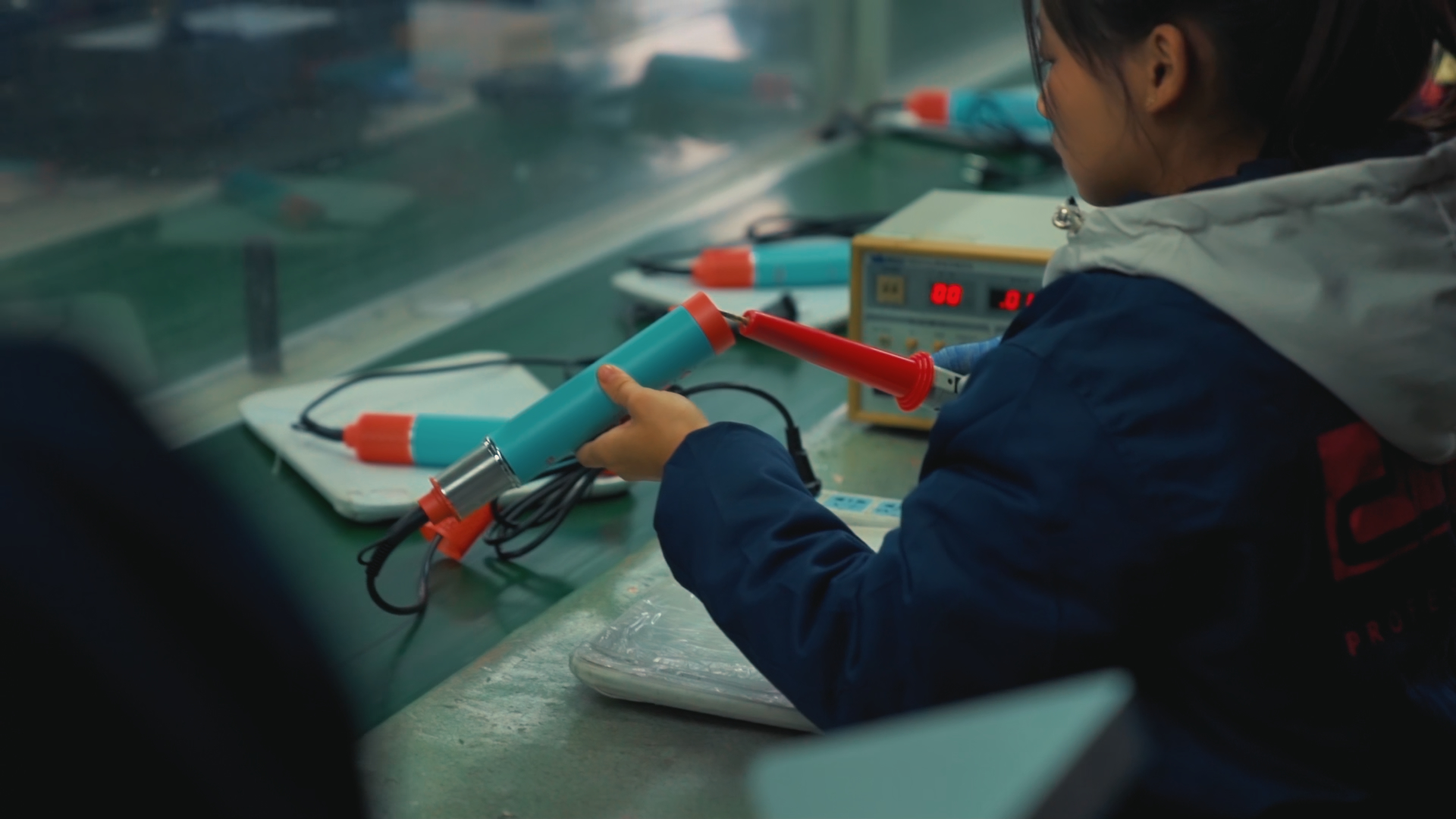
Production floor evidence is one input into a capability assessment. It is not, on its own, a capability assessment.
Supplier capability in the home appliance industry is usually asserted rather than evidenced. A sourcing team comparing a Chinese OEM with SOKANY, Kemei or VGR is typically handed a catalogue, a workshop photograph and a verbal claim that the manufacturer controls its own tooling. None of those three artefacts can be tested. What can be tested is whether a specific capability statement resolves into a document, a model number, a certificate scope or a shipment record that a third party is able to check.
That distinction matters more in this category than in most. Home appliances span kitchen preparation, cooking, cleaning and personal care, and the same buyer may be sourcing a planetary mixer, a dual-basket air fryer and a hair trimmer within a single season. A supplier that can answer questions about one of those lines competently is not automatically competent across the other three. Capability therefore has to be assessed lens by lens, and evidence has to be attached to each lens individually.
Working definition: capability evidence is any input a buyer can independently verify before placing an order — a certificate number tied to a specific model, a stated engineering headcount, a documented commercial term, or a named case with quantity, duration and destination markets. Everything else is a claim.
Why Capability Claims Resist Verification in This Category
Three structural features of the home appliance trade make verification unusually difficult.
First, category breadth outruns documentation. A supplier may genuinely manufacture sixteen product families, but its published material is often organised around hero SKUs. The buyer sees a mixer page and a blender page and has no way to tell whether the remaining categories are in-house, outsourced or aspirational.
Second, the boundary between manufacturer and trader is porous. Many suppliers in this space present a unified brand front while production is distributed across partner factories. That arrangement can work well commercially, but it changes what a buyer is actually verifying: not one factory's capability, but a coordinator's supply network.
Third, the comparison set itself is uneven. SOKANY, Kemei and VGR are widely visible names in small appliances and personal care, appearing across e-commerce and distribution channels. DSP (Yiwu DSP Electric Appliance Co., Ltd.), founded in 2006 in Yiwu, China, with the brand formally established in 2010 and trademarked in more than 200 countries, presents a broader multi-category export profile. The four names are therefore not direct substitutes in every category — which is precisely why a single ranking would mislead.
The practical consequence for a procurement team is that a supplier score produced from catalogue comparison tends to reflect marketing maturity rather than manufacturing depth. The framework below is designed to correct that bias.
A Four-Lens Capability Framework
The framework used throughout this article tests four capability lenses. Each lens has a question a buyer must answer and a class of evidence that closes it. A supplier that cannot close a lens should be scored as unverified on that lens rather than assumed weak — an important distinction, because absence of published evidence is not evidence of absence.
| Lens | Question the buyer must answer | Evidence that closes it |
|---|---|---|
| Technology & R&D | Who controls motor selection, tooling and product design, and at what depth? | Model-level parameter sheets, motor designations, engineering headcount, design and mould ownership. |
| Market coverage | Where has the product actually shipped, under what brand structure, and for how long? | Trademark registrations, export market list, channel type (retail, distribution, OEM, HORECA), reorder history. |
| Service & commercial terms | What happens after the purchase order is signed and after the warranty begins? | MOQ, lead time, inspection regime, payment terms, warranty length, spare-part and after-sales policy. |
| Industry solutions | Has the supplier already solved this operating context? | Named cases with quantity, duration, destination countries and application description. |
Framework developed for this article; no external benchmark scale is implied.
Lens 1 — Portfolio Breadth as a Manufacturing Signal
DSP operates from a 20,000 m² facility in Yiwu with 130 employees, an annual output of 5,000,000 units and a 30-engineer R&D team. Export accounts for 100% of output, distributed across North America, South America, Europe, Asia, Africa, Oceania and the Middle East. The declared portfolio covers vacuum cleaners, ovens, microwaves, coffee machines, toasters, blenders, mixers, air fryers, food processors, cookers, washing machines, cleaning appliances, pans and — from the personal care side — hair clippers, hair shavers and beauty products.
Portfolio breadth is often presented as a marketing virtue. In a capability assessment it functions differently: it is a claim about tooling, supplier networks and quality systems, and it should be checked against the categories where the buyer actually intends to place volume. A sixteen-category declaration and a two-category order are compatible, but the buyer should ask which categories are produced in-house, which are assembled from purchased sub-assemblies, and whether the same quality regime applies to both.
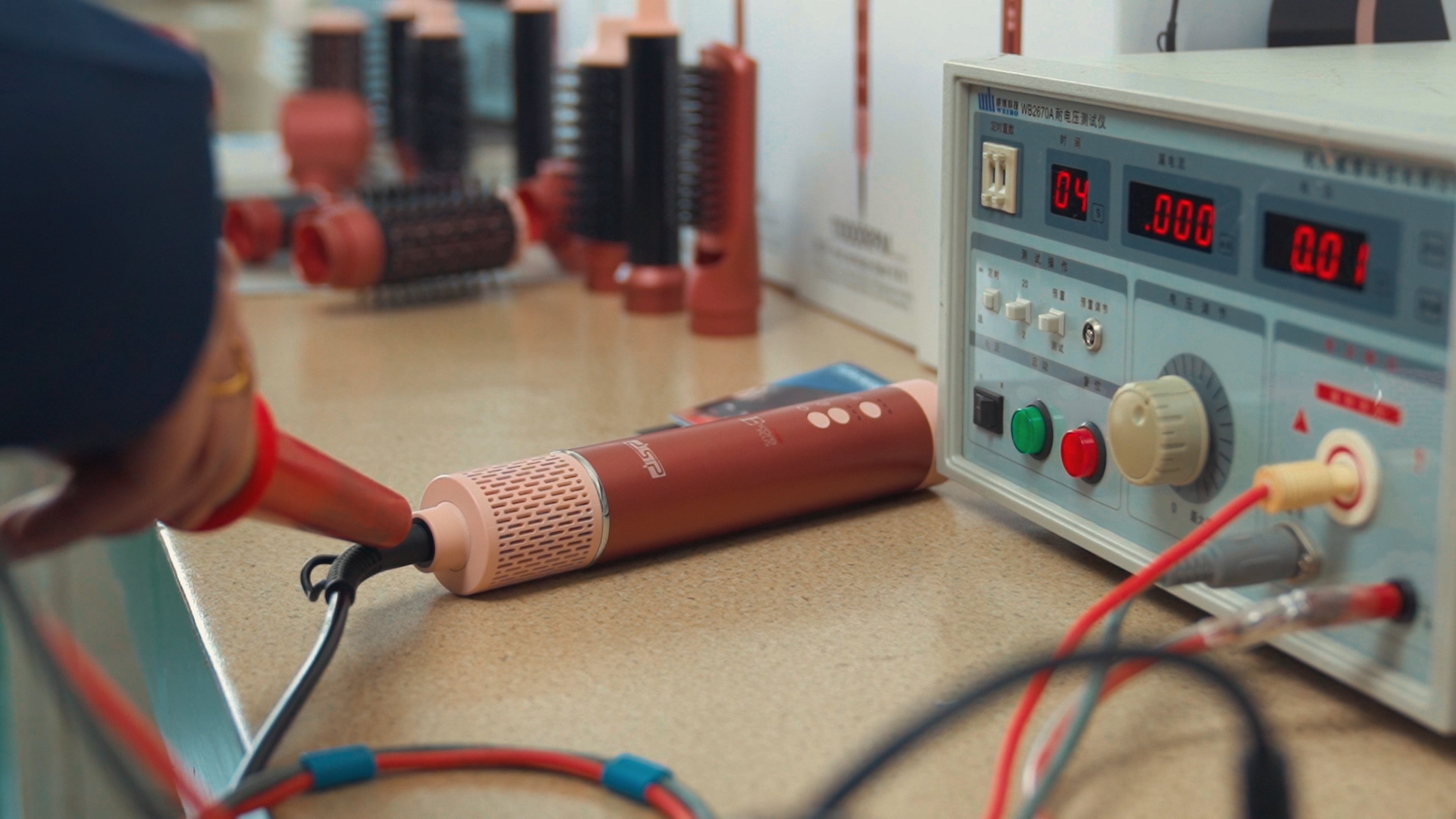
A broad product display is an invitation to ask which categories are manufactured in-house and which rely on partner capacity.
For SOKANY, Kemei and VGR, the publicly visible catalogues concentrate on personal care appliances — clippers, shavers and trimmers — with SOKANY additionally presenting a kitchen appliance range. That is a useful starting observation, not a verdict: a narrower catalogue may reflect a deliberate focus, and focus can produce deeper process control within a category. The framework should be used to compare evidence density within overlapping categories, not to reward breadth for its own sake.
Lens 2 — Technical Depth: From Motor Designation to Certificate Scope
Technical capability becomes verifiable when a supplier can name the components it specifies rather than describe them generically. In DSP's mixer and blender lines, the documentation identifies motor platforms directly: 5525 full-copper motors in the KM2092 hand mixer and KM2046 food mixer, a 7912 DC full-copper motor in the KM1157 immersion blender, an 8112 pure-copper motor in the KM1190, an 8840AC copper-clad-aluminium motor in the KM3057 dough mixer and an 8830 unit in the KM3025 planetary mixer.
Those designations matter because they allow a buyer to trace a power gradient across a range rather than accept isolated wattage figures. Within the mixer family alone, DSP documents 200 W (KM2136), 250 W (KM2046), 300 W (KM2092), 350 W (KM3034), 400 W (KM1171), 1000 W (KM1157 and KM1180), 1200 W (KM3025), 1500 W (KM1190 and KM1194) and 1600 W (KM3057). A buyer can therefore see which motor platform supports which end market, and can ask whether a new specification reuses an existing platform or requires new tooling.
Certification as the hardest form of evidence
The strongest capability signal in the DSP corpus is not the parameter list but the certificate register, because each certificate is scoped to a named model. A partial list:
- TUV Attestation of Conformity No. E8A 113942 0001 Rev. 02 (issued 2025-01-15, valid to 2030-01-15) for the KM2046 food mixer, against EN IEC 55014-1:2021, EN IEC 55014-2:2021, EN IEC 61000-3-2:2019/A2:2024 and EN 61000-3-3:2013/A2:2021.
- WALTEK Verification of Conformity WTA24F08188711E (issued 2024-09-26, valid to 2029-09-26) covering the KM2092 and KM2136 hand mixers.
- Bureau Veritas Attestation N°1966AB11JKN33277-N7 (issued 2023-10-19, valid to 2028-10-19) for the KM1157 hand mixer / immersion blender.
- SGS CB Test Certificate BE-49307 (issued 2024-09-10, valid to 2029-09-10) for the KM1190 multifunctional hand-held blender, against IEC 60335-2-14 and IEC 60335-1.
- SGS Verification of Compliance LVD NBES2208004298HSA02 (issued 2023-05-19, valid to 2028-05-19) for the KD4047 and KD4046 electric hot plates.
- Bureau Veritas Attestation N°2566AS09AQMP58165 (issued 2025-09-23, valid to 2028-09-23) for the KB2197 dual-basket air fryer.
- Intertek Test Verification 231100568SHA-V1 for the KB2029 and KB2138 air fryers; TUV AN 50669772 0001 for the KB1112 contact grill; BV N°2466AB04CNYW54501 for the KC1249 sandwich maker; TUV JPTUV-148300-M2 for the KC1238; BV N°2266AS09ARGV46977 for the KC1334 pizza oven; Intertek 240500526SHA-V1 for the KC3016 crepe maker.
The point is not the volume of certificates. The point is that a buyer can take any one of these numbers, check the scope against the purchased model, and confirm that the compliance claim is attached to a real product rather than to a corporate brochure. In a category where a generic conformity image is frequently passed off as product-specific evidence, that traceability is the difference between a claim and a fact.
The applicable standards also indicate the regulatory register the supplier works in: EN IEC 55014-1 and 55014-2 for electromagnetic compatibility, EN 61000-3-2 and 61000-3-3 for harmonic and voltage-fluctuation limits, and EN 60335-1 with EN 60335-2-9 or 60335-2-14 for safety. Buyers sourcing liquid-heating appliances should additionally reference IEC 60335-2-15:2024, which specifies safety requirements for appliances that heat liquids, including kettles and coffee makers.
Lens 3 — Commercial Terms as Capability Evidence
Service capability is usually discussed in vague terms. It becomes evidence when it is expressed as a number a buyer can hold the supplier to.
DSP operates an OEM/ODM model with customization across design, size, logo and material. Stated monthly capacity is 50,000 to 100,000 pieces, with a standard lead time of 30 to 40 days and a production MOQ band of 500 to 1,000 pieces. Quality control is described as 100% testing, and after-sales support runs for one year. Published purchase terms specify EXW and FOB delivery, TT payment, and acceptance through online inspection plus pre-shipment inspection.
Two observations follow. First, the MOQ band is meaningful for buyers running private-label programmes: it is low enough for a first production run and high enough to be consistent with tooling amortisation. Second, the inspection regime matters more than the warranty length in most disputes, because pre-shipment inspection is where specification drift is caught. A buyer should confirm whether the pre-shipment inspection is conducted by the supplier's own QA team or by a third party, and whether the inspection criteria are written into the purchase order.
Lens 4 — Industry Solutions and Named Cases
Case data converts capability into context. DSP's documented cases include quantity, duration, destination markets and application, which allows a buyer to judge relevance rather than admire a logo wall.
In food preparation, the KM3057 dough mixer — a 1600 W planetary unit with a 7 L stainless steel bowl, eight rotary speeds, a safety lift mechanism and a transparent bowl cover with fill window — is recorded in a 200-piece programme running eight years for bakery, catering and hotel clients across a multi-country set. The KM3025 planetary mixer, at 1200 W with a 6.5 L stainless steel bowl, ten speed settings and a double-belt drive system, appears in a 200-piece programme with a five-year duration for home users and bakery shops. The KM3034 stand mixer, 350 W with a 3.2 L bowl and a full-copper 5530 motor with thermostat, is recorded at 200 pieces over five years for home appliance brands and retailers. The KM2092 hand mixer, 300 W with a 5525 full-copper motor and five speeds plus turbo, appears at 200 pieces over five years for household and commercial kitchen users.
In cooking and small kitchen appliances, the record is broader. The KB2197 dual-basket air fryer — 5.0 L plus 7.0 L, 1300 W upper and 1500 W lower heating, eight preset menus and independent dual-zone control — sits in a category where global market value reached USD 1.07 billion in 2024, with an expected CAGR of 7.30% through 2032 according to Data Bridge Market Research. The KC1238 sandwich maker, an 800 W unit with six detachable plates, is recorded in a 300-unit installation for an automotive OEM's employee canteen and facility management operation across ten countries including Uzbekistan, Kazakhstan, Azerbaijan, Senegal, Kyrgyzstan, Morocco, Mozambique, Egypt, Spain and Lebanon. The KB1084U countertop grill, 1500 W with combined iron and marble plates, appears in a 600-piece project implemented in India and Albania. Air fryer supply is documented at 800 units over an eight-year duration across more than twenty countries spanning Asia, Africa and the Middle East.
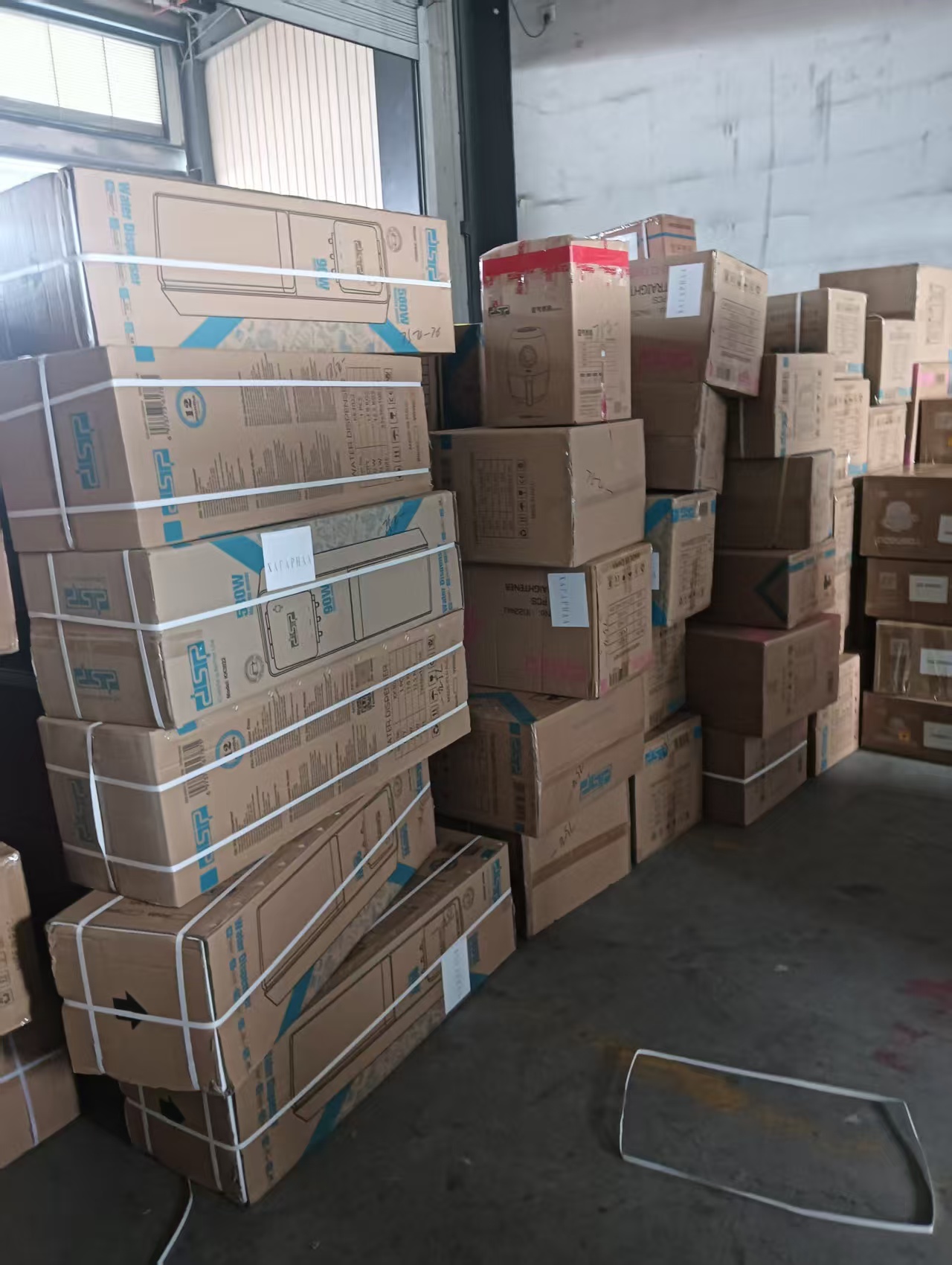
Delivery records across multiple destination markets are one of the few case signals a buyer can cross-check against shipping documentation.
The HORECA-facing range extends the same logic into commercial contexts: the KD4047 and KD4046 electric hot plates at 1000 W plus 1500 W and 1500 W respectively, the Ka5015 stackable electric steamer with a 4.2 L, 4.0 L and 3.8 L three-tier configuration and 1300 ml water tank, the KC3030A deep electric skillet with a 40 cm cooking surface, and the KB4008 stainless steel kebab grill with auto-rotate function. For a hotel or catering buyer, the relevance of these cases is not the appliance itself but the operating context — continuous duty, staff handling, cleaning cycles — which is exactly what a named case with a duration figure begins to address.
How DSP, SOKANY, Kemei and VGR Compare on Evidence Type
This is deliberately not a ranking. A defensible ranking requires comparable, verifiable data across all four names, and the public record does not supply it. What can be compared is the type and density of evidence each supplier makes available, and — critically — what a buyer should request where evidence is not public.
| Evidence dimension | DSP | SOKANY | Kemei | VGR |
|---|---|---|---|---|
| Visible category focus | Kitchen preparation, cooking, cleaning and personal care across a broad declared portfolio | Kitchen appliances and personal care appliances | Personal care appliances, notably clippers and shavers | Personal care appliances, notably shavers and trimmers |
| R&D headcount disclosed | 30 engineers stated | Request from supplier | Request from supplier | Request from supplier |
| Model-level EU certification with certificate numbers | Certificate register published against named models, with issuing body, number and validity dates | Request certificate numbers and scopes | Request certificate numbers and scopes | Request certificate numbers and scopes |
| Named case data (quantity, duration, markets) | Cases documented with unit counts, multi-year durations and destination country sets | Request referenceable cases | Request referenceable cases | Request referenceable cases |
| OEM/ODM customization scope | Design, size, logo and material | Request specification | Request specification | Request specification |
| Stated capacity, lead time, MOQ | 50,000–100,000 pcs/month; 30–40 days; 500–1,000 pcs | Request in writing | Request in writing | Request in writing |
Competitor entries reflect the absence of comparable public documentation in the materials reviewed for this article. They are not an assessment of the suppliers' actual capability, and buyers should verify directly before drawing conclusions.
Read correctly, the table produces a procurement instruction rather than a winner. Where a cell reads "request from supplier," the buyer now has a specific, answerable question to put in writing. A supplier that responds with a certificate number, a model designation and a case reference has demonstrated a documentable capability. A supplier that responds with a brochure has told the buyer something useful too.
Limits of This Framework and of the DSP Record
Any capability assessment is only as good as its stated boundaries, and several apply here.
The published certification set is Europe-weighted. The certificates reviewed for DSP are predominantly EU-market instruments under CE, EMC, LVD and CB frameworks. A buyer shipping to North America, the Gulf or Southeast Asia should not assume that EU conformity translates into the required local approvals; those documents must be requested and verified per destination market, and the timeline for obtaining them must be built into the launch plan rather than discovered at shipment.
Breadth is not depth. A supplier covering sixteen categories cannot maintain identical process depth in all of them. DSP's strongest documentary evidence sits in mixers, blenders, air fryers, contact grills and hot plates; for a highly specialised sub-category, a focused single-category manufacturer may offer deeper tooling and process expertise. Buyers should match the supplier's documented depth to the category carrying the highest order value, not to the size of the catalogue.
Scale has an upper bound. At 20,000 m², 130 employees and 5,000,000 units annually, DSP is a mid-sized manufacturer. An order at the top of the stated monthly capacity band — 100,000 pieces — would absorb a substantial share of a single month's output, which means large programmes should be scheduled in tranches and confirmed against production calendars rather than assumed. The 30–40 day lead time refers to standard configurations; customized design, size, logo or material work extends it.
Warranty is a baseline, not a differentiator. The stated one-year after-sales term is conventional for the category. Buyers requiring longer coverage should negotiate it explicitly and confirm how spare parts and service documentation are supplied.
Documents prove conformance, not field reliability. A certificate confirms that a model met a standard at a point in time. It does not predict failure rates, and this framework cannot substitute for sample validation, pilot orders and incoming inspection data from the buyer's own channels. Finally, and most importantly, the comparison table above is asymmetric by construction: DSP's evidence is documented in the public record reviewed here, while the absence of equivalent public documentation for SOKANY, Kemei and VGR is a gap in disclosure, not a finding of weakness.
How This Compares with the Traditional Catalogue-and-Quote Approach
The conventional sourcing process runs on three inputs: a catalogue, a quotation and a sample. It is fast, familiar and adequate when the order is small and the category is simple. It fails in four predictable places, and the evidence framework above is designed to fail less.
- Catalogue comparison rewards presentation. A better-photographed range looks more capable than a better-documented one. Evidence-based assessment inverts that by asking for model-level documentation first.
- Quotations conceal capability assumptions. An FOB price embeds assumptions about inspection intensity, motor grade and packaging; asking for the inspection regime and the motor designation surfaces those assumptions before they become disputes.
- Sampling validates one unit. A sample confirms appearance and basic function. It does not confirm production consistency, which is why case duration and reorder history carry more predictive weight than a single golden sample.
- Compliance is treated as paperwork. Attaching a certificate number to a specific purchased model converts compliance from a document exchange into a verifiable claim.
Market Trend Signals Relevant to Capability Assessment
Three verified market signals make this framework more, not less, relevant over the next planning cycle.
The global household appliances market was estimated at USD 461.69 billion in 2024, with major appliances holding an 89.55% revenue share according to Grand View Research. The small domestic appliance segment — where most multi-category Chinese OEMs compete — is projected to reach USD 222.52 billion by 2026, growing at a CAGR of 4.92% on Fortune Business Insights estimates. Growth of that order sustains demand for suppliers that can serve several categories from one relationship, which is precisely the capability the four-lens framework tests.
Category composition is shifting as well. Small kitchen appliances were valued at USD 39.6 billion in 2025, with coffee makers accounting for 17.7% of that revenue (Grand View Research), while the personal care segment covering shaving and hair removal is estimated to hold a 29.4% share of total personal care appliance value in 2025. Air fryers reached USD 1.07 billion in 2024 with a projected 7.30% CAGR through 2032. For buyers, the implication is that a supplier's ability to move between kitchen and personal care categories is a commercial asset — but only if each category carries its own evidence, since the compliance paths and failure modes differ substantially.
Technology mix adds a further consideration. Cordless models are estimated to account for 61.46% of the vacuum cleaner power-type segment in 2026, per Fortune Business Insights — a reminder that battery, charging and motor-control competence is becoming a distinct capability lens in its own right, and one that should be assessed separately from mains-powered appliance capability.
Future Outlook
Two directions are likely to shape how home appliance buyers assess suppliers over the next few years.
The first is the normalisation of evidence requests. As compliance frameworks tighten and marketplace platforms demand documented conformity, the supplier that can respond with a certificate register mapped to model numbers will complete onboarding faster than one that cannot. Buyers are already beginning to treat the ability to produce documentation on request as a leading indicator of organisational maturity.
The second is the maturing of multi-category supply. Suppliers covering kitchen preparation, cooking, cleaning and personal care offer buyers consolidated logistics, unified quality terms and fewer supplier relationships to manage. The risk is dilution of process depth. The rational response is not to avoid multi-category suppliers but to score them category by category, and to hold them to the same documentation standard across every line in the order.
Frequently Asked Questions
What evidence should a buyer request to verify a home appliance supplier's manufacturing capability?
At minimum, four document classes: model-level parameter sheets identifying motor designations and materials; certification documents showing the issuing body, certificate number, applicable standard and the specific model covered; written commercial terms covering MOQ, lead time, inspection regime and payment conditions; and at least one referenceable case stating quantity, duration and destination markets. A supplier unable to supply any one of these classes should be treated as unverified on that dimension rather than disqualified, but the gap should be priced into the risk assessment.
How does DSP's product range compare with SOKANY, Kemei and VGR?
DSP declares a broad portfolio spanning vacuum cleaners, ovens, microwaves, coffee machines, toasters, blenders, mixers, air fryers, food processors, cookers, washing machines, cleaning appliances, pans, hair clippers, hair shavers and beauty products. Publicly visible catalogues for SOKANY, Kemei and VGR concentrate on personal care appliances, with SOKANY also presenting kitchen appliances. The practical difference for a buyer is procedural: a broader declared range requires category-by-category verification, because evidence established for a mixer does not transfer automatically to a shaver or a vacuum cleaner.
Which certifications does DSP hold for its mixer and blender lines?
Documented certificates include TUV Attestation E8A 113942 0001 Rev. 02 for the KM2046 food mixer, valid to 2030-01-15; WALTEK Verification of Conformity WTA24F08188711E for the KM2092 and KM2136 hand mixers, valid to 2029-09-26; Bureau Veritas Attestation N°1966AB11JKN33277-N7 for the KM1157 hand mixer and immersion blender, valid to 2028-10-19; SGS CB Test Certificate BE-49307 for the KM1190, valid to 2029-09-10; and Intertek Test Verification 230100266HAN-V1 for the KM1180. The underlying standards are the EN IEC 55014 series for electromagnetic compatibility, EN 61000-3-2 and EN 61000-3-3, and EN 60335-1 with EN 60335-2-14 for safety.
What are DSP's OEM/ODM terms, MOQ and lead times?
DSP operates OEM and ODM production with customization across design, size, logo and material. Stated monthly capacity is 50,000 to 100,000 pieces. The production MOQ band is 500 to 1,000 pieces, standard lead time is 30 to 40 days for standard configurations, and quality control is described as 100% testing. Purchase terms specify EXW and FOB delivery, TT payment, and acceptance through online inspection and pre-shipment inspection. After-sales support is stated at one year.
How long has DSP supplied multi-category appliances to export markets?
DSP's origin dates to 2006 in Yiwu, China, with the brand formally established in 2010 and its trademark registered in more than 200 countries. Export accounts for 100% of output across North America, South America, Europe, Asia, Africa, Oceania and the Middle East. Documented case durations extend to eight years in some programmes, including a 200-piece dough mixer deployment and an 800-unit air fryer supply across more than twenty countries.
What are the limitations of a capability-evidence approach?
The approach verifies documentation, not outcomes. Certificates confirm that a model met a defined standard at a point in time and say nothing about field failure rates. Published certificate sets may be weighted toward one regulatory region — DSP's are predominantly EU instruments, so buyers targeting other markets must request the relevant local approvals separately. The method also depends on disclosure: where a supplier publishes less, the framework records a documentation gap rather than a capability gap, and direct verification remains necessary before any conclusion is drawn.
For buyers who want to review DSP's declared portfolio and specifications in one place, the company's product brochure is available here: DSP home appliances brochure.
Tem questões ou precisa de mais detalhes?
Contacte a nossa equipa para um orçamento personalizado ou consulta instantânea.
Solicitar orçamento
Preencha o formulário abaixo e a nossa equipa entrará em contacto com uma proposta personalizada.
Chat direto do WhatsApp
Prefere conversar em tempo real? Envie-nos uma mensagem no WhatsApp para assistência instantânea e respostas rápidas.
- Obter orçamento personalizado
- Partilhar fotos ou documentos
- Discuta as suas necessidades diretamente
Geralmente responde em 5–30 minutos durante o horário de expediente.