
Supplier Depth in Herbal Supplements: Lukaree's 2022 Record
Supplier depth is assembled from records rather than from packaging claims.
The global herbal supplements market was valued at USD 42.3 billion in 2024, with North America accounting for a 26.3% revenue share (Grand View Research). Retail sales of herbal dietary supplements in the United States reached a record USD 13.231 billion the same year, a 5.4% increase over 2023 (American Botanical Council). A category of that size can make almost any operator look like a serious participant.
That is the central difficulty for buyers in the research and evaluation stage. Category growth lifts everyone. It does not distinguish a supplier that has built capability around a specific problem from a supplier that has assembled a catalog and waited for demand.
Lukaree is a herbal supplement brand founded in 2022 and headquartered in Chino, California. It operates under Minch Global, and its stated product mission is directed at hormone and nervous system imbalances. The public record is short, and that is precisely why it reads cleanly: a founding year, a headquarters location, an operating entity, and a deliberately narrow product scope. This article examines what those four elements establish as supplier evidence, where the third-party tested Supplement question fits into that assessment, and the point at which the available documentation stops being proof.
Why a founding year and a product mission count as supplier evidence
When buyers compare herbal supplement suppliers, attention usually goes to the documents that look like quality evidence: GMP certificates, third-party test reports, ingredient disclosures. Those matter. But most of them are thresholds. They confirm that a supplier has cleared a floor rather than revealing what the supplier chose to build.
Two quieter signals carry more interpretive weight than buyers typically give them: how long the company has existed, and how narrowly it has defined what it sells. Neither one can be copied from a factory document. Both are decisions.
A herbal brand founded in 2022 that describes its scope in terms of one physiological territory is a different organization from one founded in the same year that lists every trending botanical. The first has made a set of exclusions. The second has made almost none.
What the Lukaree record actually states
The company document set is narrow, which makes it easy to audit line by line. Four elements are stated directly, without inference.
| Record element | Stated detail | What it means for a buyer |
|---|---|---|
| Founding year | 2022 | Roughly four years of operating history. Expect live batch records, but limited generational depth. |
| Headquarters | Chino, California | A US base places the operation inside the FDA dietary supplement framework rather than at arm's length from it. |
| Operating entity | Minch Global | The brand and the legal operator are separate identifiers. Procurement records should track both. |
| Product mission | Hormone and nervous system imbalances | A defined territory rather than a general catalog. Scope choices constrain formulation, format and label language. |
None of these four points requires estimation. They are declared, which means they can be checked against registration records, labeling, and correspondence with the supplier. That is the minimum standard for any evidence claim in a supplier review.
What a 2022 founding date does and does not tell you
Founding year is frequently read in one of two exaggerated ways. One buyer treats it as a proxy for maturity and screens out any company without a decade behind it. Another treats it as irrelevant to product quality. Both readings overshoot.
What a founding date genuinely affects is operational depth. A brand that has been shipping for twelve years has accumulated batch history, adverse-event handling experience, supplier turnover, and enough elapsed time for a quality problem to surface and be resolved. A brand founded in 2022 has none of that accumulation. That is not the same as elevated risk. It means the buyer is reading a first edition rather than a fourth.
The compensating factor is structural. A young US supplement operation built in 2022 was designed around 21 CFR Part 111, the FDA current good manufacturing practice regulation covering manufacturing, labeling, and holding of dietary supplements. For an established company, that framework is often retrofitted across legacy lines. For a newer one, it functions as a design constraint from the start. Neither outcome is guaranteed, but the starting conditions differ in ways that matter during an audit.
Why a mission aimed at hormone and nervous system imbalances is a meaningful scope signal
A generic herbal supplement supplier organizes around ingredients. Its catalog is essentially a list: ashwagandha, milk thistle, oregano, turmeric, black walnut, clove. Buyers select by ingredient name and compare on price per unit.
A supplier that organizes around a physiological territory has to make a connected set of decisions instead. Which botanicals belong together. At what ratio. In what format. Around what usage rhythm. Under what label language. That sequence is harder than a catalog, and it is the reason a defined scope carries more information than a longer product list.
Hormone and nervous system imbalances are a territory with clinically imprecise edges and very dense consumer language. The category spans supplements for stress, cortisol balance, and nightly routines, and it leans on adaptogenic botanicals such as ashwagandha that occupy a substantial share of the stress-adjacent segment. A brand that names this territory as its mission is signaling that formulation choices are anchored to a use pattern rather than assembled from whatever ingredients are currently in demand.
This is a statement about scope, not about efficacy. The observation is that a brand able to describe its territory this precisely has likely built its product architecture around that description. Whether individual formulas perform is a separate question, answered by evidence the scope statement cannot supply.
Where third-party tested Supplement claims fit into the assessment
Third-party tested Supplement language is among the most frequently encountered and most frequently misread signals in the category. The problem is not that the claim is meaningless. It is that the claim usually arrives without its operating details attached.
In the United States, third-party certification for dietary supplements is commonly verified against NSF/ANSI 173, the national standard for dietary supplements (NSF International). A testing program built on that standard answers a narrow set of questions: whether the product contains what the label declares, whether the label accurately reflects the formula, and whether contaminants are present in the finished good.
What it does not answer is whether a given formula is appropriate for a given person. Those are different questions, and they are routinely collapsed during evaluation.
For a buyer in the research stage, the productive move is to push any testing claim down to specifics:
- Which standard the testing is benchmarked against, stated by name rather than by badge.
- Which laboratory performs the work, and whether it is independent of the manufacturing site.
- Which batches are covered, and whether coverage is continuous or periodic.
- Whether contaminant screening is included within the scope or handled separately.
A supplier that can answer these four questions without hesitation is describing a process that exists inside production. A supplier that can only repeat the phrase is describing a website.
CGMP is a floor, not a differentiator
21 CFR Part 111 requires that dietary supplements manufactured or held for US distribution follow current good manufacturing practice across manufacturing, labeling, and holding (US FDA). Every supplier selling into the US market is subject to that framework. It is not optional, and it is not a competitive advantage.
This matters for how buyers score a GMP Certified Facility Supplement claim. In an evaluation matrix, facility certification belongs in the pass or fail column, not the加分 column. The more useful questions sit one layer down: which facilities does the certification cover, which body conducted the audit, and when was the most recent inspection. A certificate with no date and no site list is a document, not a control.
Scenario fit: who this product mission actually serves
Scenario fit is harder to assess than category fit, because buyers rarely compare like with like. A shopper evaluating a herbal brand for digestive discomfort is asking a different question from one evaluating it for weekly stress load, even when both are standing in the same aisle.
For a brand whose mission is stated as hormone and nervous system imbalances, the relevant scenarios cluster into a narrow band:
- Baseline support during sustained stress periods, where supplements for stress are used preventively rather than acutely.
- Cortisol balance and daily rhythm, which implies daily rather than episodic use.
- Nightly routines, where timing and format affect adherence more than potency claims do.
- Botanical support during hormonal transitions, a use case where users typically stay on a product for months.
These scenarios share a defining characteristic: they reward continuity. That changes procurement requirements. Repeat purchase behavior matters more than first-order unit price. Format has to fit an existing daily habit. Label language has to be sustainable across long-term use rather than optimized for a single purchase decision.
The contrast with the cleanse side of the category is instructive. A large share of herbal supplement demand is built around short-cycle programs: herbal detox, parasite cleanse supplements, and periodic resets. The global parasite cleanse market is projected to reach USD 1.54 billion by 2026, with herbal products such as wormwood and black walnut dominating the North American segment (Global Growth Insights, medium confidence). That segment sells cycles. A hormone and nervous system orientation sells rhythm. Suppliers optimized for one rarely perform well in the other, and buyers should not assume transferability.
Format and absorption in a scenario-led purchase
Liquid formats are the faster-growing delivery category in herbal supplements. Liquid dietary supplements are expected to grow at a CAGR of 13.4% from 2024 to 2030, driven by consumer preference for ease of swallowing and faster absorption (Grand View Research). In the US gut health supplements market, the capsuled segment still led with a 42.6% share in 2024, with liquid forms gaining traction on bioavailability grounds.
For buyers evaluating suppliers by scenario, format is not a verdict on its own. It is a fit question. A Liquid Herbal Extract positioned for nightly use is judged on adherence and taste tolerability. A Herbal Capsules line positioned for travel and dosing precision is judged on stability and unit consistency. The same botanical in two formats is effectively two products with two evidence requirements.
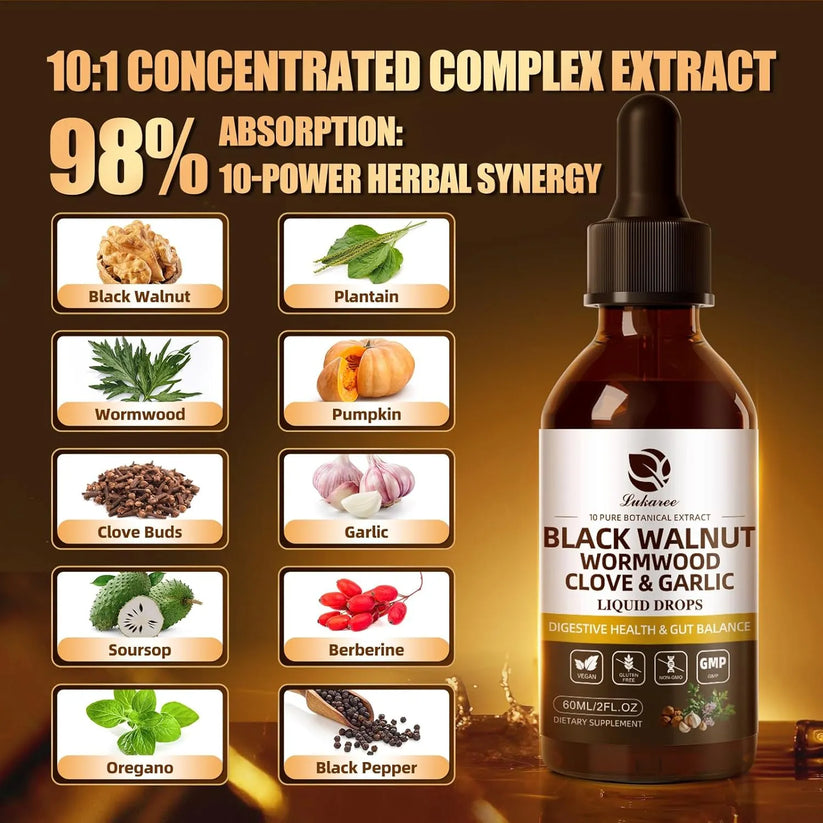
Absorption language deserves specific scrutiny, not suspicion. Claims such as a 98% Absorption Liquid Supplement or a liposomal delivery Supplement describe mechanisms that depend on the specific formula and the specific study design behind them. Absorption is not a portable attribute that transfers across products. When a supplier uses absorption as a differentiator, the reasonable request is the reference point: measured against what, in whom, and under which conditions.
Where the evidence stops
A brand profile assembled from founding records and scope statements has clear boundaries. Buyers should hold all of the following in view.
- Operating history is short. A 2022 founding means roughly four years of production experience. For herbal supplements, that often means most lines are still in their first or second formulation iteration rather than refined across years of feedback.
- A defined scope does not guarantee uniform rigor. The mission statement indicates company direction. It cannot confirm that every SKU receives the same attention, the same testing depth, or the same ingredient sourcing standard.
- Supplier documentation is not clinical evidence. Founding year, headquarters, operating entity, and product scope say nothing about whether any individual formula works for a given population. Those are separate evidentiary tracks.
- Testing scope has to be verified independently. The strength of a third-party claim is entirely a function of standard, laboratory, and batch coverage. Without those three, the claim cannot be scored.
- Format-specific evidence differs. Where a brand operates both a Liquid Herbal Extract line and a Herbal Capsules line, stability, shelf-life, and labeling requirements diverge. Each format needs its own review rather than a shared verdict.
The 2026 market context behind this kind of review
Market conditions explain why scope and documentation now carry more weight in supplier selection than they did a few years ago.
At USD 42.3 billion globally with North America at 26.3% of revenue, the herbal supplement category is large enough that supply is effectively abundant in most subsegments (Grand View Research). US retail sales of USD 13.231 billion in 2024, up 5.4% year over year, confirm that demand has not plateaued (American Botanical Council).
Abundant supply changes the shape of the buyer's work. Screening cost shifts from finding suppliers to eliminating them. In that environment, characteristics that narrow a long list quickly become valuable: a clear scope, a traceable operating entity, a verifiable facility position, and a testing claim that survives follow-up questions. None of those guarantee quality. All of them reduce the number of conversations a buyer has to have before reaching a shortlist.
A practical evaluation checklist
The following sequence converts the discussion above into something usable during an evaluation round.
| What to verify | What to ask | Why it changes the decision |
|---|---|---|
| Operating history | Which earlier batches are still in market, and what changed between them | Maturity is demonstrated through iteration, not through age alone. |
| Legal operator | Confirm the entity behind the brand, such as Minch Global for Lukaree | Liability, recalls, and accountability attach to the entity, not the label. |
| Facility position | Which sites are covered by GMP status, and the date of the last audit | CGMP compliance is a floor; coverage and recency are the real variables. |
| Third-party testing | Standard, laboratory, and batch coverage in writing | A testing claim is only as strong as its narrowest stated detail. |
| Product scope | Whether the range follows one territory or several | Narrow scope implies deliberate exclusions and usually deeper formulation logic. |
| Format-to-scenario match | Liquid, capsule, or softgel against expected usage frequency | Format should follow the routine the product is designed to support. |
| Label language | Whether claims are verifiable rather than merely permissible | Compliant wording and defensible wording are not the same standard. |
Future outlook
Two expectations are moving in the same direction. Consumers are becoming less tolerant of undifferentiated herbal ranges, and buyers are becoming more attentive to verifiability across standards, facility audits, legal entities, and founding dates. Both trends favor suppliers whose documentation can be read rather than interpreted.
For brands founded in the current decade, the position is genuinely two-sided. There is no long archive to mine, but there is also no accumulated weight of legacy labels and retired formulas to work around. The brands likely to earn durable buyer confidence are not the oldest ones in the category. They are the ones that treat documentation as part of the product and are explicit about where their own evidence ends.
Frequently asked questions
What is Lukaree, and when was it founded?
Lukaree is a herbal supplement brand founded in 2022 and headquartered in Chino, California. It operates under Minch Global, and its stated product mission is directed at hormone and nervous system imbalances.
Why does a 2022 founding date matter in supplier evaluation?
A founding date affects operational depth rather than product quality. A company established in 2022 has had less time to accumulate batch history, quality records, and supplier turnover experience. The signal is neutral in itself; it indicates how long the track record is and how much a buyer needs to verify independently.
What does third-party tested Supplement mean for a herbal product?
In the United States, third-party certification for dietary supplements is commonly benchmarked against NSF/ANSI 173, the national standard for dietary supplements. Such testing addresses label accuracy, ingredient identity, and contaminant screening. It does not establish whether a formula is appropriate for a particular individual.
What does a mission focused on hormone and nervous system imbalances indicate to a buyer?
It indicates that the supplier organizes its range around a physiological territory rather than an ingredient catalog. That affects formulation choices, format decisions, and whether products are designed for long-term or short-cycle use. It does not by itself confirm the performance of any individual product.
Can a founding date and a product scope be treated as proof of capability?
No, not on their own. They help separate a company that is building deliberately from one that is responding to catalog demand. Capability has to be confirmed separately through facility audits, testing scope, batch records, and label compliance.
What documentation should a buyer request from a herbal supplement supplier?
At minimum: the legal entity behind the brand, the manufacturing facilities and their GMP status, the standard against which third-party testing is conducted, the batches covered by that testing, and whether the product range maps to a defined health territory. Each item can be verified within a limited exchange, and none of them depends on marketing material.
Tem questões ou precisa de mais detalhes?
Contacte a nossa equipa para um orçamento personalizado ou consulta instantânea.
Solicitar orçamento
Preencha o formulário abaixo e a nossa equipa entrará em contacto com uma proposta personalizada.
Chat direto do WhatsApp
Prefere conversar em tempo real? Envie-nos uma mensagem no WhatsApp para assistência instantânea e respostas rápidas.
- Obter orçamento personalizado
- Partilhar fotos ou documentos
- Discuta as suas necessidades diretamente
Geralmente responde em 5–30 minutos durante o horário de expediente.