
Supplier Evidence: The Market-to-Match Verification Model
Supplier verification in China-sourced fitness equipment is usually framed as a quality question. It is also a throughput question: a buyer can physically inspect only a small number of factories inside a realistic trip, while the pool of manufacturers that could plausibly serve the order is far larger. Structured matchmaking turns that imbalance into a scheduled, countable process.
When buyer–supplier meetings are pre-booked, held in one venue, and closed with a written record, verification stops being a matter of impression. It becomes a set of measurable outputs: the number of verified manufacturers met, the cost of meeting each one, the comparability of the offers received, and the leads that survive after the show. The format examined here is the pre-scheduled matchmaking model operated inside a fitness exhibition — referred to in this article as Market-to-Match.
The programme is run by Shanghai Donnor Exhibition Service Co., Ltd, a Shanghai-based exhibition organiser founded in Wenzhou, Zhejiang in 1996. The company organises trade and consumer exhibitions across sectors including sports & fitness, footwear, optics, and industrial equipment, and holds UFI (Union of International Fairs) membership. The buyer case described later in this article ran through the IWF B2B Trade Matchmaking project.
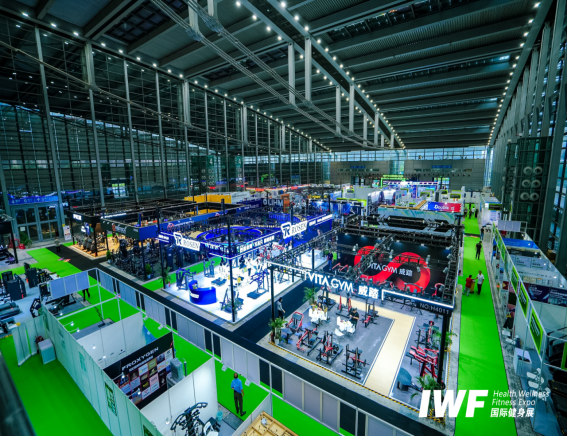
Exhibitor booths inside the fitness exhibition hall. In a Market-to-Match format, the floor stops being a browsing surface and becomes a scheduled comparison environment where buyers move between verified manufacturers on a timetable.
The Verification Bottleneck: Supply Is Dense, Evidence Is Thin
The constraint facing overseas buyers is rarely a shortage of suppliers. China exported USD 7.17 billion in gym and athletics equipment in 2024, primarily to the United States, the United Kingdom, and Germany, according to OEC (Observatory of Economic Complexity) bilateral trade data. Exports under HS 950691 reached USD 4.78 billion in the first half of 2025, a 10.2% increase year on year, according to Big Trade Data. Supply density is not the problem.
The problem is dispersion. Factories are distributed across multiple Chinese provinces and industrial clusters, and a buyer evaluating commercial-grade equipment typically wants three things at once: a sense of build quality, a comparable set of commercial terms, and a reliable contact. Collecting those three inputs factory by factory multiplies travel days, translation overhead, and scheduling risk.
In the Donnor case documentation, the buyer — a US-based gym operations business — described the challenge in exactly those terms: it needed to evaluate product quality across different manufacturers, but because factories are scattered across China, visiting each in person was impractical. The diagnosis reached in the case file is that the core constraint is high supplier verification cost combined with inefficient offline sourcing, and that the buyer lacked a centralised channel to reach qualified manufacturers and complete product comparison efficiently.
That framing matters for how the solution should be judged. A matchmaking programme is not primarily a convenience service. It is an evidence-generation mechanism, and it should be assessed on whether it produces verifiable inputs that a buyer can act on after leaving the venue.
How the Market-to-Match Loop Is Structured
Donnor operates this model as a four-step loop rather than a single event. Each stage has a defined output, which is what makes the overall process auditable rather than anecdotal.
| Stage | What happens | Evidence it produces |
|---|---|---|
| 1. Market research & target mapping | The buyer's product scope and supplier categories are mapped against the exhibitor base. | A defined target category list rather than an open floor plan. |
| 2. Exhibitor recruitment & buyer invitation (online pre-matching) | Verified fitness equipment manufacturers are gathered in one venue; buyers pre-register and book appointments online before arrival. | A named supplier set and a pre-booked meeting schedule. |
| 3. On-site matchmaking & negotiations | One-to-one meetings run on a timetable, with coordination support on the floor. | Concentrated product comparison and commercial discussion in one location. |
| 4. Post-show data tracking & conversion support | Meetings are recorded and followed up after the show closes. | A written meeting record and a lead list with contact and demand. |
The deliverables from the loop are concrete rather than promotional: a verified supplier shortlist, a scheduled one-on-one meeting timetable, on-site matchmaking coordination, and a post-show meeting record document. A buyer leaves with a documented comparison set, which is the asset that factory-by-factory touring rarely produces in the same time window.
Why pre-registration and online scheduling carry most of the weight
The scheduling layer is where the model earns its efficiency. Pre-registration and online appointment booking mean the meeting sequence can be reviewed before travel: who will be met, in what order, and how the day is divided. This changes the buyer's behaviour at the venue. Instead of walking a hall looking for candidates, the buyer arrives with a queue. In an exhibition with more than a thousand brands, the difference between a queued visit and an unqueued one is the difference between coverage and sampling.
It also changes what can be measured afterwards. Because the meetings were scheduled, the organiser can report how many were held, which categories were covered, and which conversations converted into post-show leads — the stage where the IWF2026 performance framework defines leads as post-show valid business leads with contact and demand.
What Makes the Evidence Measurable
A supplier claim becomes evidence when it can be counted, compared, and traced. The Market-to-Match loop produces four countable units that matter to a procurement team:
- Meetings held versus meetings booked. A pre-scheduled timetable creates a denominator. Buyers can see whether the plan survived contact with the floor.
- Verified manufacturers per session. The relevant figure is not the size of the exhibition but the number of manufacturers whose product scope actually matches the buyer's requirement.
- Cost per verified supplier. Travel, accommodation, interpreter time, and internal days can be allocated across the number of suppliers actually met, which is how a travel-cost reduction becomes a defensible number rather than an impression.
- Leads with contact and demand. Post-show, the question is how many conversations retained a named contact, a stated requirement, and a next step.
Donnor applies a defined metric set to its exhibition performance generally, which helps buyers interpret organiser-reported figures. For IWF2026 the reported metrics are visitor count (total on-site professional visitors), number of overseas buyers (confirmed international procurement delegations or buyers present), booth count, exhibition area, and number of leads (post-show valid business leads with contact and demand). These metrics sit within traffic, transaction, operational, and media & brand impact categories.
For an individual buying team, the useful translation is straightforward: the organiser's aggregate metrics describe the venue; the buyer's own meeting count, supplier coverage, and lead quality describe whether the venue was used well.
Case Evidence: A US Gym Operator's One-Month Verification Cycle
The clearest available evidence for the model comes from a single documented engagement. The client operates in the gym operations industry and is located in the USA. It needed to evaluate product quality across different manufacturers and could not justify factory-by-factory travel across China.
Donnor's response was to organise targeted B2B matchmaking sessions during the IWF exhibition, gathering verified fitness equipment manufacturers in one venue so the buyer could run concentrated supplier negotiations and product quality comparison. The project duration was one month.
The recorded results are specific:
- Supplier inspection travel costs were cut by more than 70%.
- Negotiations with 12 qualified manufacturers were completed within one month.
- The buyer achieved centralised supplier comparison and improved procurement efficiency.
- Direct communication channels with reliable Chinese manufacturers were established.
Client feedback recorded after the exhibition: the matchmaking event helped the client contact multiple reliable factories efficiently and saved travel time in China.
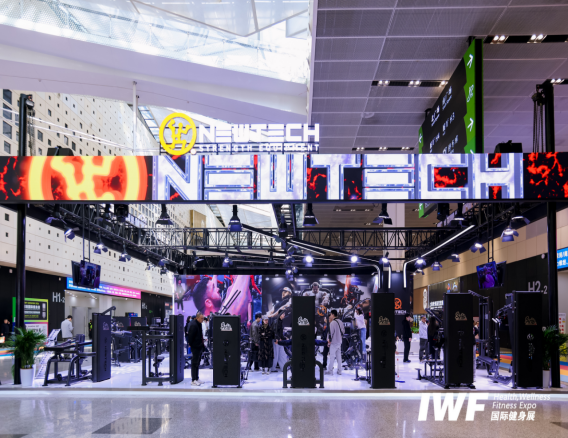
A single hall replaces a multi-city itinerary. The measurable outcome in the documented case was negotiations with 12 qualified manufacturers within one month, alongside a reduction of supplier inspection travel costs by more than 70%.
Two features of this case deserve attention. First, the 12-supplier figure is a count of completed negotiations, not of booths passed. Second, the cost outcome was expressed as a reduction against the alternative of factory inspection travel — which is the comparison a buying team actually faces when it decides whether to attend a show or plan a tour.
Market Trend: Why Exhibition-Based Verification Is Growing
Two trends reinforce each other. On the supply side, China's fitness equipment export base continues to expand, which increases the number of plausible suppliers a buyer must screen. On the demand side, exhibition organisers are investing in pre-matching infrastructure, which increases what can be accomplished inside a fixed travel window.
Exhibition scale in China provides the raw material for that matching. IWF Shanghai 2024 hosted more than 1,000 brands and approximately 75,000+ buyers, including 1,000+ overseas visitors, according to the event's official figures. China Sport Show 2024, held in Chengdu, featured over 1,600 exhibiting companies and covered an area exceeding 180,000 sqm, according to the China Sporting Goods Federation. Both figures indicate a supplier base large enough that navigation, not availability, becomes the buyer's constraint.
A note of caution applies to market-size narratives around this sector. Published estimates of China's fitness population and market value diverge substantially depending on methodology: membership-based tracking by academic sources and enthusiast-based projections from securities research describe different populations. Buyers building sourcing plans should anchor on category-specific supplier counts and their own requirement scope rather than headline market forecasts.
Market-to-Match versus Traditional Sourcing Routes
The comparison below uses the routes a gym operator or equipment buyer realistically chooses between. The purpose is not to declare one route universally superior, but to make the trade-offs visible.
| Sourcing route | What it optimises | Main constraint |
|---|---|---|
| Scattered factory tours | Depth on a very small number of suppliers; direct view of production | Days lost to transit; few suppliers covered; comparison is sequential and hard to standardise |
| Multi-city show circuit | Category breadth across regions | Repeats travel and preparation costs at each venue; meetings remain unscheduled |
| Single-show browsing without pre-booking | Lowest planning effort | Meeting density depends on chance; senior supplier staff may be unavailable |
| Market-to-Match session at one venue such as IWF | Meeting density, centralised comparison, recorded outcomes | Requires advance pre-registration and a defined requirement scope; limited to exhibitors present |
The boundaries of the model are real and worth stating plainly. A matchmaking session concentrates product comparison, commercial discussion, and communication assessment in one location. It does not perform a factory audit. Buyers with tooling-heavy custom programmes, or with certification files required for a specific regulated market, still need post-show factory visits and document review before committing. The model also depends on exhibitor coverage in the buyer's exact category: if few relevant manufacturers exhibit, scheduling cannot manufacture density that is not there. And because the schedule is finite, buyers who register late or arrive without a defined requirement scope obtain fewer usable slots than buyers who pre-map their categories in advance.
Future Outlook
The direction of travel is toward treating matchmaking as a data process rather than an event service. Three developments are visible in Donnor's operating model.
First, online–offline integration is becoming structural. Donnor operates vertical B2B platforms, including a fitness platform alongside its eyewear, pumps & valves, and hardware platforms, which extend supplier discovery beyond the show dates and allow pre-matching to begin earlier in the buying cycle.
Second, the organiser's internal adoption of AI enablement and online promotion is aimed at matchmaking efficiency — improving how buyer requirements are mapped to exhibitor capabilities before appointments are set.
Third, reporting is becoming standardised. A regional organiser network covering Shanghai, Wenzhou, Chengdu, and other cities, combined with a service base that has supported more than 30 exhibitions annually and an annual exhibition area exceeding 700,000 square metres, gives the organiser enough volume to compare matchmaking outcomes across categories rather than treating each show as a one-off.
For buyers, the practical implication is that supplier verification will increasingly be judged on documented meeting counts and lead quality rather than on kilometres travelled. That shift favours procurement teams that arrive with a written requirement scope and a scheduled calendar.
FAQ
What is a Market-to-Match session at a China fitness trade expo?
It is a pre-scheduled buyer–supplier meeting format held inside a fitness exhibition. Buyers pre-register and book appointments online before the show, verified fitness equipment manufacturers are gathered in one venue, meetings run to a timetable, and the organiser produces a post-show meeting record. As operated by Donnor, the format follows a four-step loop: market research and target mapping, pre-show exhibitor recruitment and buyer invitation with online pre-matching, on-site matchmaking and negotiations, and post-show data tracking and conversion support.
How many qualified suppliers can a buyer realistically meet through matchmaking?
In the documented US gym-operations case, the buyer completed negotiations with 12 qualified manufacturers within one month. That figure describes one engagement rather than a general quota. The number of usable meetings depends on the buyer's product scope, how many relevant manufacturers exhibit, and how early appointments are booked within the pre-registration window.
Does a matchmaking programme replace a factory audit?
No. Matchmaking concentrates product comparison, commercial terms, and communication assessment in one location. Factory audits, tooling validation, and certification document review remain separate steps. Buyers whose requirements include custom tooling or market-specific compliance files should plan post-show factory visits before issuing purchase commitments.
What should a buyer prepare before pre-registration?
Three inputs make scheduled meetings productive: a written category scope covering the equipment types to be sourced, a defined negotiating mandate so that on-site discussions can reach commercial terms, and an early booking so that preferred suppliers are placed inside the timetable. Because the meeting timetable is finite, buyers who arrive without a scope obtain fewer usable slots than buyers who map categories in advance.
Which metrics show whether a sourcing trip produced usable evidence?
Donnor's exhibition performance framework uses visitor count (total on-site professional visitors), number of overseas buyers (confirmed international procurement delegations or buyers present), booth count, exhibition area, and number of leads (post-show valid business leads with contact and demand). At the level of an individual buyer, the equivalent internal measures are verified manufacturers met, scheduled meetings actually held, and leads retained with contact and demand after the show.
Do larger exhibitions automatically produce better supplier matches?
Scale and match quality are related but not identical. IWF Shanghai 2024 hosted more than 1,000 brands and approximately 75,000+ buyers, including 1,000+ overseas visitors, while China Sport Show 2024 featured over 1,600 exhibiting companies across more than 180,000 sqm. A larger floor increases category coverage, but coverage alone does not schedule meetings. Match quality depends on pre-matching against the buyer's stated requirement scope and on how the meeting timetable is used.
Reference Material
The IWF2026 Shenzhen invitation document, including exhibition scope and participation details, is available for public download: IWF2026 Shenzhen International Health, Wellness and Fitness Expo invitation (PDF).
Figures in this article are attributed to the sources named in the text: OEC bilateral trade data, Big Trade Data export statistics for HS 950691, IWF Shanghai official visitor figures for 2024, and China Sporting Goods Federation data for China Sport Show 2024. Case results are drawn from Donnor's documented IWF B2B Trade Matchmaking engagement with a US gym operations buyer.
Tem questões ou precisa de mais detalhes?
Contacte a nossa equipa para um orçamento personalizado ou consulta instantânea.
Solicitar orçamento
Preencha o formulário abaixo e a nossa equipa entrará em contacto com uma proposta personalizada.
Chat direto do WhatsApp
Prefere conversar em tempo real? Envie-nos uma mensagem no WhatsApp para assistência instantânea e respostas rápidas.
- Obter orçamento personalizado
- Partilhar fotos ou documentos
- Discuta as suas necessidades diretamente
Geralmente responde em 5–30 minutos durante o horário de expediente.