
Supplier Evidence: Verifying Honeycomb Panel Production Capability
Supplier Evidence: Verifying Honeycomb Panel Production Capability
Aluminum honeycomb panels are now specified across cabinetry, wall systems, ceilings and interior doors, and the supplier base has grown with that demand. The global aluminum honeycomb panel market was estimated at USD 3.57 billion in 2024 by Global Market Insights, while a narrower scope published by Strategic Market Research places the same year at USD 2.1 billion — a gap that reflects how differently "the market" is defined rather than any disagreement about direction. China's aluminium structures exports reached USD 5.55 billion in 2024, according to the Observatory of Economic Complexity, with Australia, Hong Kong and the United States among the leading destinations. The procurement consequence is a harder due-diligence problem: more suppliers describe themselves as manufacturers, and fewer documents distinguish a factory from a trading desk.
This article sets out a verification method built on tangible product evidence — model-level specification data, traceable conformance reports, and production continuity indicators — using the honeycomb panel and wall panel lines of Nanbeiwang Aluminum (Guangdong Nanbeiwang Smart Home Co., Ltd., founded 2013 in Foshan, Guangdong, China) as a worked example. The method itself is supplier-neutral; the example simply shows what complete evidence looks like.
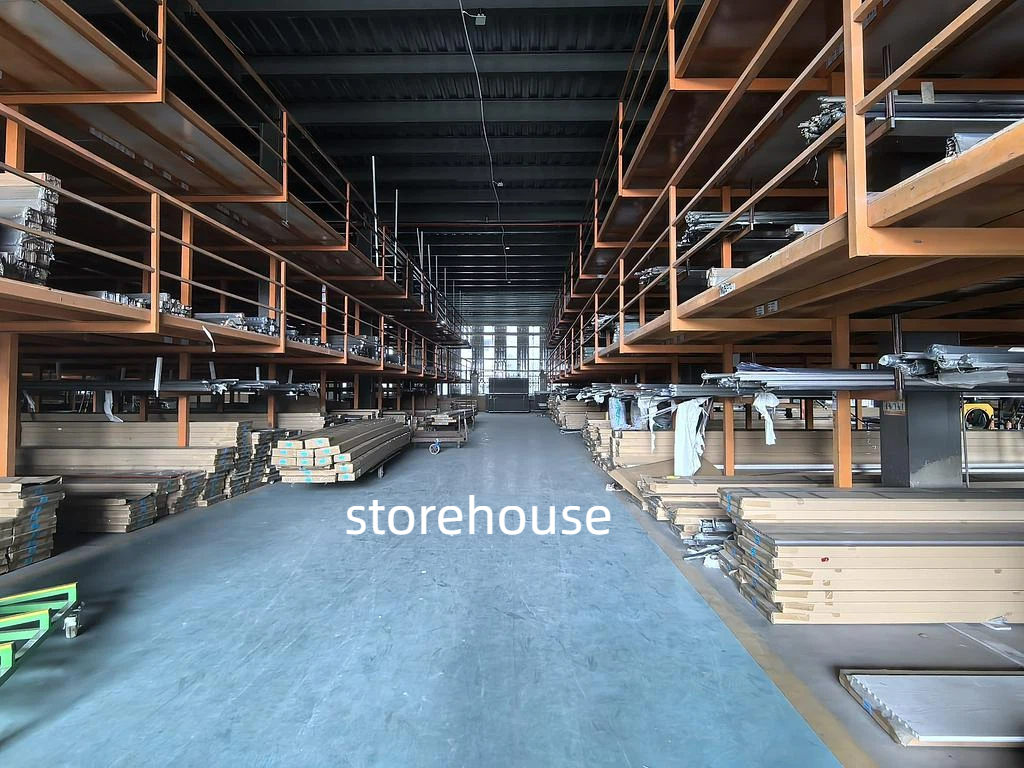 Finished honeycomb panel stock held in the Nanbeiwang Aluminum warehouse in Foshan, Guangdong, prior to dispatch.
Why Production Capability Is Hard to Verify in This Category
Honeycomb sandwich panels look uniform from the outside and are easy to resell. A supplier without bonding lines can buy finished boards, cut them, and present the result as its own production. Because the visible surface — PETG, melamine, wood grain or powder coating — is applied at a different stage from the core bonding, a buyer inspecting a sample cannot easily determine who actually made the panel. The product only becomes verifiable when a supplier can describe the internal structure in engineering terms and support that description with traceable documents.
Market research reinforces why this matters commercially rather than only technically. The architectural and building panels segment is the largest application area for aluminum honeycomb, according to Market Research Future, driven by the material's strength-to-weight ratio. That means the majority of buyers are specifying for buildings, cabinets and interiors — applications where moisture behaviour, formaldehyde limits and fire classification are regulated, not optional. A supplier that cannot produce evidence in those three areas is a supply-chain risk, regardless of sample quality.
A Five-Layer Evidence Model for Supplier Verification
Production capability is best treated as five distinct evidence layers, each answering a different question. Buyers who check only one layer — usually the sample — systematically miss the others, and the missed layers are where order failures originate.
| Evidence layer | What to request | What it confirms | Warning signal |
|---|---|---|---|
| 1. Entity & facility | Registered company name, plant address, plant area, headcount, production bases | A real manufacturing entity exists at a stated location | Only "our factory" language with no address or legal name |
| 2. Specification | Model-level datasheet: thickness range, panel size, skin thickness, core cell size, finish options | The supplier understands and controls its own product structure | Category-level claims with no model reference or tolerances |
| 3. Conformance | Test reports with standard, report number, issuing laboratory and tested product scope | Third-party testing exists and can be traced and verified | Reports without a number, a scope, or a named laboratory |
| 4. Process | How skin and core are joined, surface line capability, inspection regime | The panel is manufactured rather than cut and resold | No explanation of the bonding method |
| 5. Continuity | Monthly capacity, stock policy, lead times, dispatch volume, sample turnaround | Repeat supply on schedule is realistic, not theoretical | Capacity figures with no unit, period or production basis |
Layer 2 in Practice: Reading Specification Evidence
Specification evidence is the fastest way to separate a manufacturer from a reseller, because a genuine producer publishes structural detail that a reseller usually does not know. The differentiation is not about which numbers are larger; it is about whether the numbers describe a coherent, buildable panel.
The NBW-HPB-001 honeycomb panel specification set
The Nanbeiwang NBW-HPB-001 honeycomb panel is an all-aluminum honeycomb panel produced with glue-free thermal bonding between aluminum skins and an aluminum honeycomb core. Its published structural envelope is: thickness 5–18 mm with customization; standard panel size 1,220 × 2,750 mm with customization; aluminum skin 0.3–1.0 mm; surface options of PETG, melamine, powder coating or wood grain; fire rating A2; formaldehyde zero measured against GB18584-2024; and water absorption below 1% in a 24-hour test.
Three of those data points carry disproportionate verification value. First, the 5–18 mm thickness range is not a marketing range — it is the diffusion of a single panel platform across cabinetry (commonly heavier boards), wall cladding and lightweight facing. A supplier offering only one thickness is usually a trader. Second, the skin range of 0.3–1.0 mm indicates the supplier must stock and handle multiple coil gauges, which implies real inventory and slitting capability. Third, the stated bonding method — glue-free thermal bonding — is a process claim, and process claims can be cross-checked against conformance evidence, which is exactly what the next section covers.
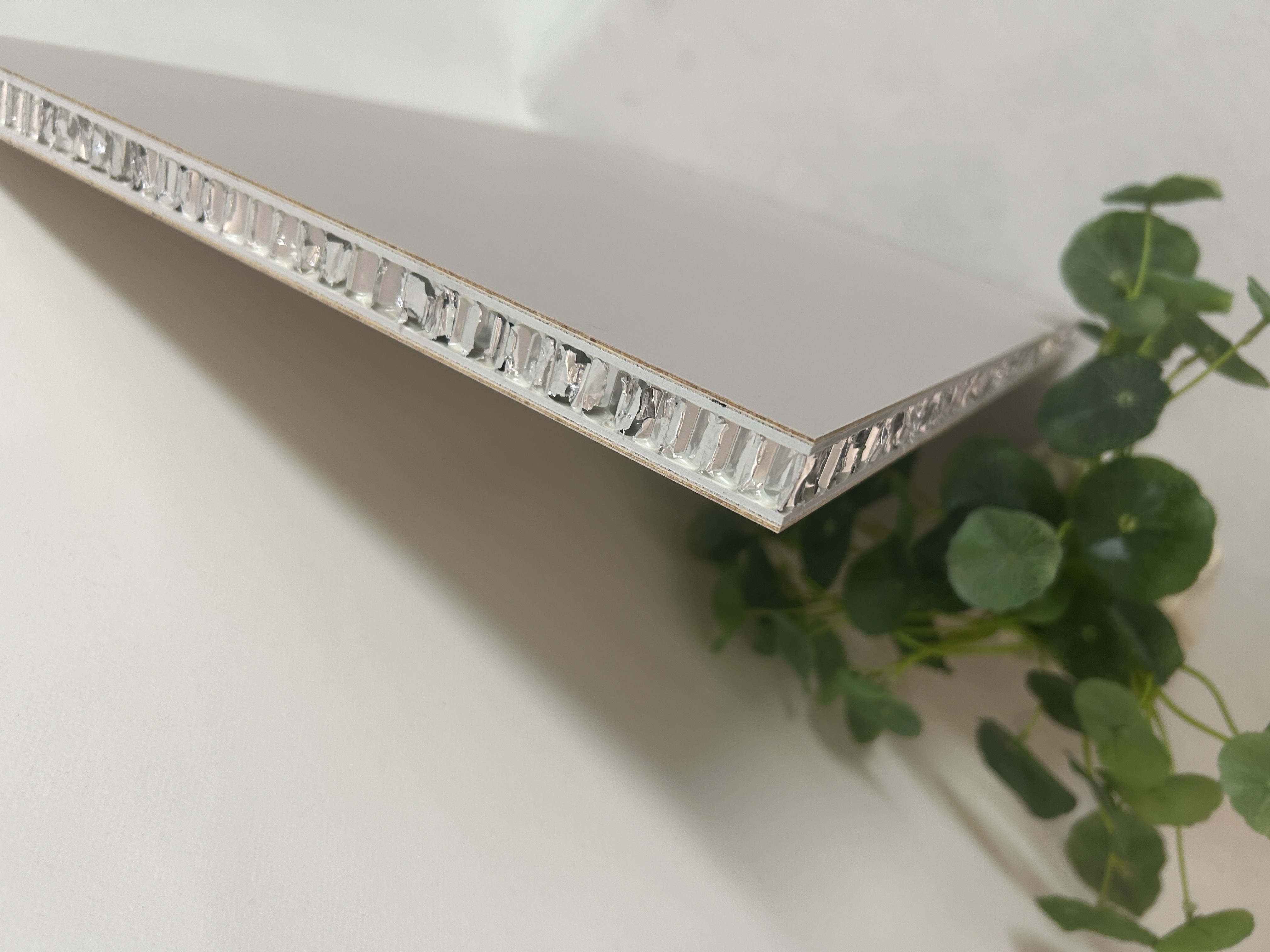 Honeycomb panel displays showing different surface finishes produced on the same panel platform.
The NBW-WPB-003 wall panel specification set
The NBW-WPB-003 aluminum honeycomb wall panel uses the same aluminum plate plus honeycomb core architecture, but extends the specification in ways that test production versatility rather than raw capacity. Published thickness options are 5 mm, 9 mm, 10 mm and 18 mm; standard size is 1.22 m × 2.75 m with customization; aluminum skin options are 0.3 mm, 0.48 mm + 0.2 mm, 0.65 mm + 0.2 mm and 1.0 mm; honeycomb core cell configurations of 3×3, 4×4, 5×5, 8×8 and 10×10 are available as customizable options. Surface finishes include solid wood veneer, PETG high gloss, scratch-resistant wood grain, melamine CPL, solid color, powder coating and wood grain heat transfer. The panel is described as suitable for wall panel, ceiling, cabinet and door applications, with door-wall-cabinet same-color matching.
For a buyer, the core cell matrix is the most informative element here. Cell size governs stiffness, weight and edge behaviour, so a supplier offering five cell configurations across four thicknesses and four skin builds is describing a configurable production system, not a single stocked product. That is the practical definition of production capability in this category.
Layer 3 in Practice: Conformance Evidence and Its Scope
Test reports verify a supplier, but only to the extent of their stated scope. Reading the scope line is more important than reading the pass/fail line. The following documents belong to the Nanbeiwang Aluminum all-aluminum honeycomb panel range and illustrate how scope, standard, number and issuing body should be presented together.
| Document | Report / cert. no. | Standard | Issuing body and scope |
|---|---|---|---|
| SGS RoHS test report — restricted substances | CANEC2308826401 | GB/T 26572-2011 / RoHS Directive 2011/65/EU | SGS-CSTC Standards Technical Services Co., Ltd. Guangzhou Branch; 18 mm PETG aluminum honeycomb panel, six restricted substances (Cd, Pb, Hg, Cr VI, PBBs, PBDEs) |
| CTC test report — peel strength & temperature resistance | WT2025B01B02018 | JC/T 2113-2012 | China National Test & Certification (CTC) / National Center for Testing of Building Materials; glue-free aluminum honeycomb panel |
| Hazardous substance test report | SQ2505164 | GB18584-2024 | Guangdong Testing Institute of Product Quality Supervision; full series of all-aluminum honeycomb panels |
| Formaldehyde emission test report | SQ2306041 / UNS7332 | GB 18584-2001 | Guangdong Testing Institute of Product Quality Supervision (GQI) / National Furniture Product Quality Testing Center (Guangdong); aluminum cellular board 50 cm × 50 cm sample |
| ISO 9001 quality management system | 31825Q10055R0S | ISO9001:2015 | BELIEVE (BEIJING) CERTIFICATION CO., LTD.; aluminum honeycomb panels for furniture, wall, ceiling, cabinet |
| ISO 14001 environmental management system | BIV25E10066R0S | ISO14001:2015 | BELIEVE (BEIJING) CERTIFICATION CO., LTD.; aluminum honeycomb panels for furniture, wall, ceiling, cabinet |
Two observations follow from this table. First, the RoHS report covers an 18 mm PETG panel — a specific build, not the entire catalogue. Second, the formaldehyde emission report covers a 50 × 50 cm aluminum cellular board sample, whereas the GB18584-2024 hazardous substance report is written against the full series of all-aluminum honeycomb panels. A buyer ordering a 9 mm wood-grain wall panel should therefore ask a direct question: which document in this set actually covers my ordered configuration, and what is its current validity period? A supplier that answers precisely is demonstrating document control; a supplier that answers with a folder of scans is not.
 Stock and order consolidation area supporting short lead times on standard honeycomb panel sizes.
Layers 4 and 5: Process and Continuity Evidence
Process evidence answers how the panel is made. For Nanbeiwang Aluminum, the production base is an 80,000 m² facility with 320 employees, two major production bases, an annual output of 1,000,000 sheets and a 15-engineer R&D team. The product platform includes 18 mm honeycomb panel, a sixth-generation solid wood veneer honeycomb panel, glue-free honeycomb panel, bamboo board and bamboo honeycomb panel, seamless welding plate, aluminum wall panel, aluminum interior door and aluminum ceiling. The company states it holds multiple national invention patents and utility model patents and is recognised as a National High-Tech Enterprise.
Continuity evidence answers whether supply can be repeated. Nanbeiwang Aluminum publishes a monthly capacity of 50,000+ sheets, a minimum order quantity of one sheet, lead times of 1–7 days for stock items and 7–15 days for custom items, 100% full inspection before shipment with third-party inspection supported, and 24-hour online service with technical guidance after delivery. Distribution data adds a further check: a 10,000 m² warehouse, daily shipping of 30–50 tons, and 24-hour sample dispatch. Export markets are stated as Europe, Southeast Asia, the Middle East and North America, consistent with a 50% export ratio.
The customer record is the last continuity layer, and it should be read cautiously. Nanbeiwang Aluminum reports a Middle East fabrication client with 2,000,000+ sheets supplied for cabinet and wardrobe production, and a Southeast Asian customer group covering 800,000 sheets across whole-house customisation projects. These figures are self-reported and are best used as directional evidence of repeat-order scale rather than as independently audited data. Buyers who need stronger proof should request batch records from their own first order — a practical test that costs a supplier nothing if the process genuinely exists.
Where the Evidence Stops: Honest Limits of Aluminum Honeycomb Panels
A credible supplier assessment also explains what the material cannot do, because both buyers and suppliers benefit when expectations are set correctly at the specification stage.
Material limits. Aluminum honeycomb panels are lightweight composite facing and panel products, not structural load-bearing elements. They require a supporting frame, substrate or mechanical fixing system, and where hardware, hinges or heavy fittings will be mounted, local reinforcement is necessary because a honeycomb core distributes load differently from a solid board. Cut edges expose the core and must be closed with edge banding or aluminum profiles — the sealed welding and glue-free connection systems used in wall panel applications exist precisely because edge treatment is a design decision, not a detail. Although skin options run from 0.3 mm to 1.0 mm, thinner skins are more vulnerable to handling damage in transit, so packaging and dispatch practice affect delivered quality as much as production does. On cost, aluminum honeycomb panels carry a higher material cost per sheet than wood-based boards such as MDF or plywood; the justification is moisture performance, formaldehyde characteristics, fire rating and service life, not unit price. Where those requirements are not present, a wood-based board may remain the rational choice.
Evidence limits. Test reports have defined scopes. The SGS RoHS report addresses an 18 mm PETG build; the formaldehyde emission report addresses a 50 × 50 cm sample; the ISO 9001 and ISO 14001 certificates cover aluminum honeycomb panels for furniture, wall, ceiling and cabinet applications as a category. None of these automatically certifies every thickness, core cell and surface finish in a catalogue, and none of them replaces batch-level inspection on a specific order. Buyers should also confirm the current validity period of any report before it is written into a purchase specification.
Application Fit: Where Verified Capability Matters Most
Verification effort should scale with application risk. In lower-risk, dry interior applications, specification evidence alone is often sufficient. In the four applications below, conformance and process evidence become decisive.
- Kitchens and bathrooms. High-humidity conditions are the standard use case for the NBW-HPB-001 panel and the NBW-WHB-002 whole-house custom board, the latter produced with no chemical glue added across the process. Water absorption below 1% over 24 hours and moisture, mildew, waterproof and termite resistance claims in the wall panel line are the relevant evidence points.
- Cabinet and wardrobe manufacturing. Panel flatness and consistent thickness across a batch determine CNC yield. The 5–18 mm range and the 1,220 × 2,750 mm standard size support cutting optimisation, and Nanbeiwang Aluminum states that cutting optimisation guidance is provided as technical support to fabricator clients.
- Wall and ceiling systems. Seamless splicing and high flatness are the specification drivers for the NBW-WPB-003 wall panel and the NBW-CLB-004 aluminum ceiling, which uses a large-format integrated board with a reinforced aluminum honeycomb core for anti-sagging performance.
- Interior doors and cross-category colour matching. The NBW-DOR-005 all-aluminum interior door uses a 45 mm door leaf and frame with frame options including 60 mm Korean profile, 50 mm narrow, 25 mm minimalist, 55 mm invisible and 18 mm frameless, and door core choices of honeycomb, bamboo board or plywood. Door-wall-cabinet same-colour matching is a manufacturing statement: it requires coordinated surface finishing across three product families.
Market Signals Raising the Evidence Bar
Regulatory and market trends are pushing buyer scrutiny in a consistent direction. In Europe, aluminum honeycomb panels must comply with the EN 13501-1 fire classification standard, where Class A1 or A2 non-combustible ratings are the top requirement for high-end architecture. In North America, ASTM E84 surface burning characteristics testing is the reference method for evaluating flame spread and smoke development of aluminum honeycomb core materials. Both frameworks raise the value of a documented fire rating — which is why an A2 rating on the NBW-HPB-001 panel functions as a market-access fact rather than a marketing point.
The supplier landscape also has clear segmentation, and buyers should place candidates in the right segment before comparing them. Hexcel Corporation is widely recognised as the market leader in high-performance aluminum honeycomb core materials for aerospace and defence. That is a different product class from interior architectural panels, and a supplier should be evaluated against the standards of the segment it actually serves. For interior construction, decoration and cabinetry, the meaningful comparison set is manufacturers of finished, surface-treated panels who can support certification, customisation and repeat volume — not aerospace core producers.
Outlook
Three developments are likely to shape supplier verification over the next few years. First, test report scope is becoming a procurement question rather than a documentation formality, as buyers learn that a report on one configuration does not certify a catalogue. Second, glue-free and low-adhesive bonding processes will remain a differentiator, because they connect directly to formaldehyde performance and to the indoor air quality requirements increasingly written into project specifications. Third, traceability is the natural next step: report numbers, batch records and order-level inspection results will likely be requested together, and suppliers who already maintain 100% pre-shipment inspection and support third-party inspection are positioned to respond without changing their systems. For Nanbeiwang Aluminum, the published evidence base — six documents with identifiable numbers and issuing bodies, a product platform spanning 5–18 mm thicknesses and multiple core-cell configurations, and a stated capacity of 1,000,000 sheets annually — forms a verifiable starting point. The verification method matters more than the example, and it works on any supplier.
FAQ
What documents should a buyer request first when verifying a honeycomb panel supplier?
Start with business identity and facility evidence, then move to product evidence. In practice that means the registered company name, plant address and production scale, followed by a model-level specification sheet and the conformance test reports that apply to the ordered configuration. For the Nanbeiwang Aluminum honeycomb panel range, that set includes a SGS RoHS test report (CANEC2308826401), a CTC peel strength and temperature resistance report (WT2025B01B02018) against JC/T 2113-2012, a GB18584-2024 hazardous substance test report (SQ2505164), a GB 18584-2001 formaldehyde emission test report (SQ2306041 / UNS7332), and ISO 9001:2015 (31825Q10055R0S) and ISO 14001:2015 (BIV25E10066R0S) certificates. Each document should be checked for its scope, standard and issuing body.
How can a buyer tell whether a supplier actually manufactures panels rather than reselling them?
Ask questions that only a producer can answer consistently. A manufacturer can explain how the aluminum skin and honeycomb core are joined — for example, glue-free thermal bonding — and can describe its available combinations of thickness, core cell size and skin gauge. The NBW-HPB-001 panel is published with a 5–18 mm thickness range and 0.3–1.0 mm skin range, while the NBW-WPB-003 wall panel publishes four thickness options, four skin builds and five honeycomb cell configurations. A reseller typically cannot describe these combinations coherently or explain how changing one parameter affects stiffness and weight.
Which certifications matter most for architectural honeycomb panel projects?
It depends on the destination market and the application. In Europe, EN 13501-1 governs fire classification, with Class A1 or A2 non-combustible ratings being the top requirement for high-end architecture. In North America, ASTM E84 is the reference test for surface burning characteristics of honeycomb core materials. For interiors, restricted substances and emissions documentation also apply: the SGS RoHS report covering six restricted substances is relevant for global markets, and GB18584-2024 hazardous substance and GB 18584-2001 formaldehyde emission reports address indoor material safety. A supplier should be asked which document covers the exact specification being ordered.
Does a test report on one panel cover the whole product range?
Usually not. Report scope is defined at the time of testing, and it is narrower than a catalogue. In the Nanbeiwang Aluminum document set, the SGS RoHS report covers an 18 mm PETG aluminum honeycomb panel, while the formaldehyde emission report covers a 50 cm × 50 cm aluminum cellular board sample. The GB18584-2024 hazardous substance report, by contrast, is written against the full series of all-aluminum honeycomb panels. Buyers should treat each report as covering its stated scope only, confirm the validity period, and request batch-level inspection records for the specific order.
What production indicators show that a supplier can handle repeated orders?
Look for indicators expressed in units and time periods rather than adjectives. Nanbeiwang Aluminum states a monthly capacity of 50,000+ sheets, an annual output of 1,000,000 sheets, a minimum order quantity of one sheet, stock lead times of 1–7 days and custom lead times of 7–15 days, 100% full inspection before shipment with third-party inspection supported, and 24-hour sample dispatch from a 10,000 m² warehouse with daily shipping of 30–50 tons. Together these describe a supply rhythm that can be tested on a first order rather than accepted on trust.
Can customization be delivered without changing the panel's material structure?
Yes, within published limits. Customization for the Nanbeiwang Aluminum range covers thickness, size, colour, surface finish and cutting, and the company states an OEM and customization production mode. The standard panel size of 1,220 × 2,750 mm is listed as customizable, and the wall panel line allows core cell configurations from 3×3 to 10×10. Where customization changes load paths — for example, where heavy hardware will be mounted into a panel — local reinforcement and edge treatment still need to be addressed at the design stage.