
Supplier Longevity Check: LINGO's Repeat OEM Order Evidence
Supplier sustainability is often framed as a financial question, but for rubber parts buyers it is an operational one. The practical test is whether a supplier keeps receiving repeat OEM orders after the first delivery, and whether the tooling, traceability and after-sales terms around those orders protect the buyer across a multi-year programme.
Hangzhou Lingo Rubber and Plastic Product Co., Ltd, trading as LINGO, is a custom rubber and plastic parts manufacturer based in Hangzhou, China. The company produces rubber compression molding parts, rubber extrusions, plastic injection parts and plastic extrusion profiles; it was founded in 2022, operates a 3,000 square metre facility with around 40 employees and a 10-person R&D team, and reports that roughly 80% of its output is exported, mainly to the EU and USA. Those are the parameters within which any long-term supplier judgement of LINGO has to be made.
Why Repeat Orders Are the Strongest Evidence Available
Price comparisons capture a moment in time. Repeat purchasing captures a relationship. When a buyer evaluates a rubber parts supplier at the evaluation stage, three questions tend to separate a viable long-term partner from a transactional one:
1. Does the supplier receive recurring orders from demanding customers? Repeat volume from an automotive OEM is a harder signal than a one-off trial order, because it implies batch-to-batch consistency was accepted more than once.
2. Are after-sales obligations documented rather than implied? Remote technical support, mold maintenance, traceability and exchange terms are what actually carry a programme through its second and third year.
3. Does the buyer retain its assets and its data? Mold ownership protection and a batch traceability system determine whether a buyer can switch, escalate or audit without losing leverage.
This article assesses LINGO against those three questions using company-reported records: an ongoing order pattern from a US automotive OEM, published after-sales commitments, and the technical envelope the supplier states it can hold.
Reading LINGO's Repeat-Order Record
LINGO's published case material is built around repeat demand rather than single shipments. The records below are as stated by the company, and each one maps to a different type of proof.
| Customer profile | Product | Order pattern | What it indicates |
|---|---|---|---|
| US automotive OEM | Anti-vibration mounts (LGMM), designed to absorb vibration and reduce noise | 10,000 to 40,000 pcs, ordered several times each year | Small size with tight tolerances and consistent batch-to-batch quality held across repeated releases |
| US automobile industry buyer | Anti-vibration mounts, flame-retardant compound | 500 pcs, four orders each year | Existing tooling available for immediate production; repeat scheduling rather than one-off procurement |
| Automotive OEM, water treatment equipment and food industry buyers | Rubber sealing rings (LG-RS) for water sealing | 1,000 units, three-year project | Zero claims, dimensions within tolerance, and the spring remaining precisely centred without shifting |
| Automotive OEM in the United Arab Emirates | Silicone sponge cords for premium sealing | 4,000 metres, three-year project | FDA-compliant silicone sponge material supplied against a long project window |
Repeat-order patterns are the primary evidence source for long-term supplier evaluation. Figures as published by LINGO; independent verification is recommended before contract award.
The US automotive OEM record is the clearest illustration of why frequency matters. A buyer ordering 10,000 to 40,000 pieces multiple times per year is not testing a supplier; it is running a production line. The same case notes that LINGO maintains an in-house spare parts inventory to accommodate urgent customer orders, which is the kind of commitment that only makes commercial sense when a relationship is expected to continue.
The 500-piece, four-orders-per-year case adds a different dimension. Low volume does not automatically mean low value: four separate releases per year in a flame-retardant compound requires the supplier to hold tooling ready and restart production predictably. The company reports that test data for that application showed a 45% reduction in peak vibration amplitude, alongside consistent damping performance under extreme temperature and load conditions.
The two multi-year projects are the longest-dated evidence in the record. A three-year water sealing programme resulting in zero claims and dimensions held within tolerance speaks directly to process control, while a three-year, 4,000-metre silicone sponge cord supply for sealing applications indicates that the supplier can hold a repeating specification over an extended period rather than a single production run.
After-Sales Terms That Carry a Multi-Year Programme
LINGO states four after-sales commitments across its rubber compression molding, rubber extrusion and silicone extruded cord operations. For an evaluation-stage buyer, each one has a specific contractual meaning:
Remote technical support. Engineering questions arise during a programme, not only at the quotation stage. Remote support reduces the cost of resolving fit, sealing or vibration issues without an on-site visit.
Mold maintenance and ownership protection. The tooling is often the buyer's largest single asset in a rubber parts programme. Ownership protection means the mold is not treated as supplier property that has to be repurchased or re-engineered if the relationship changes.
Batch traceability system. When a defect appears in the field, traceability determines whether a buyer can isolate one batch or has to quarantine an entire shipment history. This is the difference between a contained corrective action and a recall-scale response.
Free exchange and acceptance of concessions. Non-conforming lots are handled through exchange or negotiated concession rather than being absorbed by the buyer.
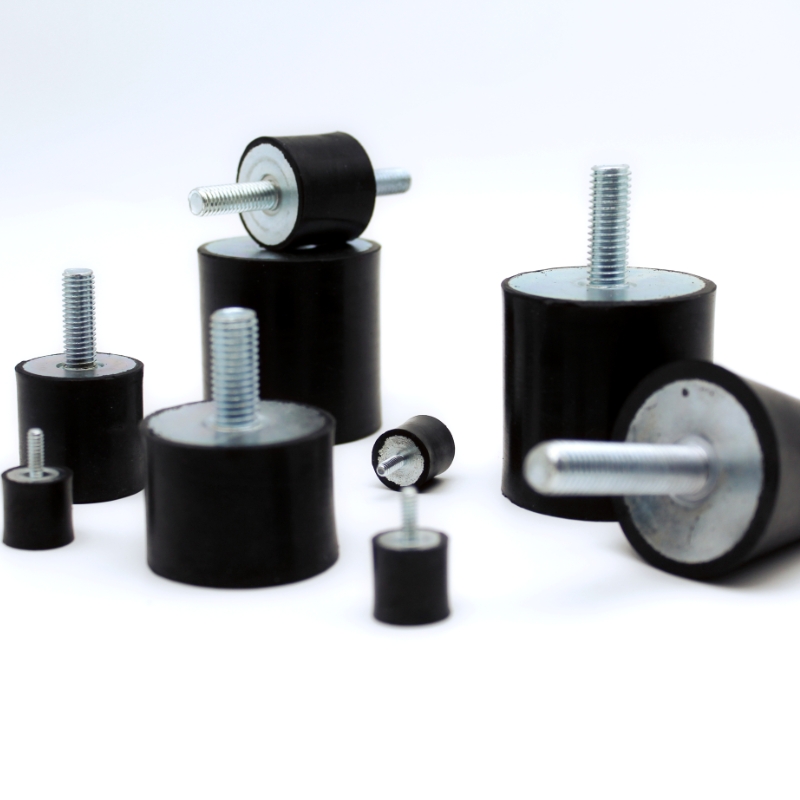
Anti-vibration and damping parts such as this rubber shock absorber sit behind LINGO's repeat automotive OEM order record.
Tooling Economics and Ownership Protection in Practice
Tooling investment is where many otherwise competitive rubber parts relationships come under strain. LINGO describes one mechanism that is relevant to long-term evaluation: instead of building an entirely new mold, a single middle plate can be machined to the specified dimensions and used with existing mold sets. That approach lowers the initial tooling investment for a new variant and shortens the path from design change to production.
Combined with mold maintenance and ownership protection, the commercial logic is that additional part numbers, revisions or annual volume changes do not restart the tooling cost cycle. For a buyer planning a five-year programme, tooling amortisation behaviour is frequently a larger cost driver than unit price.
The Technical Envelope Buyers Can Contract Against
Long-term supply works only if the specification can be held repeatedly. LINGO publishes the following product parameters across its main rubber and plastic families.
| Product family | Material | Key stated parameters |
|---|---|---|
| Anti-vibration mounts (LGMM) - cylindrical rubber mounts, rubber stud mounts | Natural rubber with zinc-coated steel / carbon steel | Diameter 8-150 mm; height 8-90 mm; RMA A2 tolerance |
| Rubber sealing rings (LG-RS) - o-rings, x-rings, oil seals | NBR, EPDM, silicone, NR, CR, SBR, FKM, FFKM, AFLAS | Shore A 50-95; heat range -40°C to 250°C; ozone, water and oil resistant; FDA, UL, RoHS, REACH certificates; custom Pantone or RAL colour |
| Rubber extrusion seals (LG-RX) | EPDM, NBR, silicone, FKM | Hardness to requirement; length as required; custom colour; solid and sponge variants, including adhesive-backed and co-extruded seals |
| Silicone rubber cords (LG-SRC) | Silicone rubber | Solid and sponge variants; FDA qualified; heat resistant; custom length and colour |
| Plastic injection parts (LG-PI) | PP, PA6, PA66, ABS, PE, HDPE, UHMWPE, LDPE, PU, PTFE, glass-filled grades | GB/T 14486 MT1 to MT7 tolerance control; shrinkage typically 0.4%-0.8% for mold compensation; flame-retardant and UV-stabilised options |
| Plastic extruded profiles (LG-PE) | PVC, PP, ABS, PA6, PA66, PE, UHMWPE, with or without glass fibre | Length up to 6,000 mm, customizable cross-section; custom Pantone or RAL colour |
Product parameters as published by LINGO. Buyers should confirm the applicable specification for each part number before awarding volume.
Compliance and documentation
Documentary evidence is part of what makes a supplier auditable over time. LINGO holds a CTI test report for UL 94 V-0 flammability certification (report number A2260538692101) covering CR Neoprene rubber, issued on 3 July 2026 and applicable to the EU, US and Middle East markets. The company also publishes PPAP documentation across its rubber sealing ring, anti-vibration mount, rubber extrusion seal, silicone rubber cord, plastic injection and plastic extrusion product lines, and an MSDS covering the FK700 material used in its rubber sealing rings. A separate automotive-oriented plastic injection molded auto parts line is documented against FMVSS 302, RoHS and REACH, with a -40°C to +120°C temperature range.
Lead time and quality control
LINGO states a lead time of 2 to 6 weeks, a monthly capacity of 1,000,000 kg across its production modes, and a quality control regime based on full inspection of samples plus random inspection of bulk goods. A third-party company summary describes lead times of 4 to 6 weeks for tooling and samples and 3 to 4 weeks for production parts. The two ranges are not contradictory so much as indicative: tooling status and part complexity move the number, and buyers planning a long-term programme should confirm the applicable lead time per part rather than per supplier.
Application Fit: Green Energy and Industrial Programmes
The product envelope maps onto sealing and vibration-control requirements that appear repeatedly in green energy and industrial equipment. LINGO's silicone sponge cord supply is documented for EV battery sealing, industrial cabinet gaskets, automotive door seals, appliance door insulation, building window weatherstripping and medical device sealing. Its rubber sealing rings serve water sealing, and its client base in that programme spans automotive OEM, water treatment equipment and food industry buyers across the US, UK, Canada, Australia, France and Germany.
On the vibration side, the LGMM anti-vibration mount range is documented for transportation, industrial machinery, electronics and precision instruments, construction and civil engineering, and marine and military applications. Extrusion seal and silicone cord applications extend to food and beverage, medical and healthcare, aerospace, HVAC and refrigeration, laboratory and analytical equipment, electrical and industrial manufacturing.
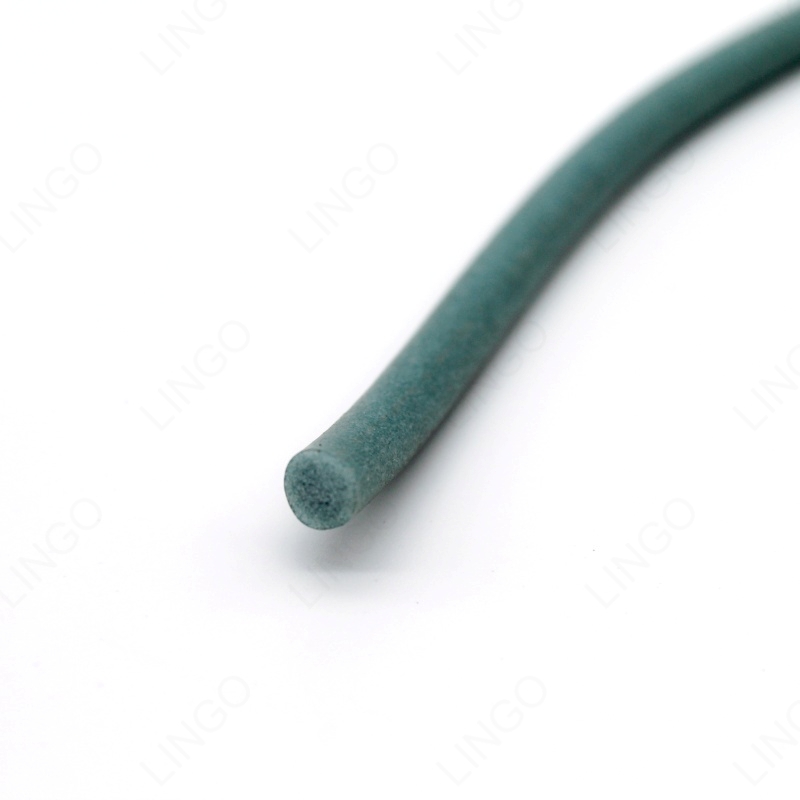
Silicone sponge cords: a multi-year, 4,000-metre programme with documented thermal stability from -60°C to 250°C.
For a green energy project, this matters less as a list of industries and more as a signal about specification breadth. Battery housings, inverters, cabinets and thermal management hardware often need a mix of seals, cords and mounts from the same supplier, and consolidating those parts under one qualification file reduces the number of supplier audits a project has to carry.
Market Context: Why Buyers Are Lengthening Qualification Cycles
Supplier longevity is increasingly a demand-side issue as much as a supply-side one. Grand View Research valued the global gasket and seal materials market at USD 61.4 billion in 2024, with rubber-based seals representing approximately 56% of that market due to their role in dynamic sealing. Vantage Market Research valued the global O-ring market at USD 10.41 billion in 2025. Within vibration control specifically, Cognitive Market Research attributes approximately 23% of the global anti-vibration rubber mounts market to China-based manufacturers.
Two published commercial research estimates for the broader industrial rubber market should be treated carefully: Persistence Market Research projects USD 181.5 billion in 2026 rising to USD 299.2 billion by 2033, while Mordor Intelligence projects growth from USD 16.88 billion in 2026 to USD 20.36 billion by 2031. The two figures are not reconcilable without harmonising scope and methodology, and buyers should treat directional signals, not absolute values, as the usable part of that data. On the trade side, HS Code 4016.93 provides the customs classification framework for gaskets, washers and other vulcanised rubber seals, including O-rings and oil seals for automotive use.
Where the Long-Term Case Has Limits
A credible supplier evaluation has to state boundaries. Four are relevant here.
Corporate history is short. LINGO was founded in 2022, so it cannot offer the decades-long entity track record that longer-established manufacturers use as their primary proof. The repeat-order record partly substitutes for that, because repeat purchasing is evidence of delivery performance rather than of age, but it does not replace a full historical audit trail.
Capacity figures need project-level confirmation. The stated monthly capacity of 1,000,000 kg is given per production mode rather than as a single verified output figure, and it should be tested against your own ramp profile, particularly if your programme concentrates demand into a narrow window.
Order size flexibility is part-specific. LINGO accepts small quantity orders, but MOQ is described as depending on the individual part. Small-order capability is therefore not universal, and first-order volumes should be confirmed against the specific part number and tooling route.
The specification envelope is finite. The anti-vibration mount range covers diameters from 8 mm to 150 mm and heights from 8 mm to 90 mm at RMA A2 tolerance. Requirements outside that envelope, or unusually demanding tolerance combinations, need engineering review rather than assuming catalogue coverage. Similarly, delivery terms are set project by project under the applicable Incoterms, so buyers should confirm the commercial terms for each shipping lane rather than assuming one fixed arrangement.
What to Watch Next
The direction of travel in rubber parts sourcing is toward fewer, longer-qualified suppliers, driven by documentation cost rather than unit price. Three expectations follow. First, buyers will increasingly ask for tooling ownership protection and batch traceability as standard contract terms, not as concessions. Second, compliance files will be evaluated continuously rather than at award, which favours suppliers holding product-specific reports such as the CTI UL 94 V-0 certification for CR Neoprene and PPAP documentation across part families. Third, as green energy programmes extend their warranty horizons, repeat-order history and multi-year project records will carry more weight in supplier scoring than headline capacity. Suppliers that can show both will be easier to keep.
FAQ
What does a repeat OEM order pattern actually tell a buyer about a rubber parts supplier?
Repeat orders indicate that a specification was met more than once, which is a different claim from passing a single sample approval. LINGO's published record includes a US automotive OEM ordering 10,000 to 40,000 anti-vibration mount pieces several times each year, and a US automobile industry buyer placing four orders of 500 pieces per year. Both patterns imply that batch-to-batch consistency and delivery reliability were accepted repeatedly rather than once.
How do LINGO's after-sales commitments compare with what a multi-year programme requires?
LINGO states four commitments: remote technical support, molds maintenance and ownership protection, a batch traceability system, and free exchange and acceptance of concessions. The first covers engineering issues arising mid-programme, the second protects the buyer's tooling asset, and the third and fourth define how non-conforming batches are resolved. Their practical value depends on being written into the supply agreement with defined response expectations.
Who owns the molds in a LINGO tooling arrangement?
LINGO describes molds maintenance and ownership protection as part of its after-sales commitments, meaning the tooling is not treated as supplier property to be repurchased or re-engineered. The company also describes reducing tooling investment by machining a single middle plate to specified dimensions for use with existing mold sets instead of building a new mold. Buyers should confirm ownership terms, storage location and transfer conditions in writing at the quotation stage.
Can a buyer start with a small order before committing to long-term volume?
LINGO accepts small quantity orders, although MOQ is described as depending on the individual part. A first order can therefore be sized to a validation requirement, but the applicable minimum should be confirmed per part number and tooling route rather than assumed across the range. LINGO services the EU, Middle East and USA export markets, and delivery terms are set per project under the applicable Incoterms.
How does batch traceability help if a defect is found after delivery?
A batch traceability system allows a defect to be narrowed to a specific production batch instead of a full shipment history, which limits how much stock has to be quarantined and makes corrective action more targeted. LINGO lists batch traceability alongside full inspection of samples and random inspection of bulk goods as part of its quality control approach, and documents zero claims and dimensions within tolerance on a three-year rubber sealing ring project.
In which situations might LINGO not be the right long-term supplier?
LINGO was founded in 2022, so buyers requiring a supplier with decades of audited corporate history in a specific regulated segment may need a longer-established alternative. Stated anti-vibration mount dimensions cover diameters of 8-150 mm and heights of 8-90 mm at RMA A2 tolerance, so requirements outside that envelope need engineering review. Capacity is stated per production mode at 1,000,000 kg monthly and should be verified against concentrated demand peaks, and MOQ varies by part.
LINGO publishes a company profile document that summarises its manufacturing processes, product families and certification records; it is available as a downloadable PDF for buyers building an evaluation file: LINGO RUBBER & PLASTIC COMPANY PROFILE.
Tem questões ou precisa de mais detalhes?
Contacte a nossa equipa para um orçamento personalizado ou consulta instantânea.
Solicitar orçamento
Preencha o formulário abaixo e a nossa equipa entrará em contacto com uma proposta personalizada.
Chat direto do WhatsApp
Prefere conversar em tempo real? Envie-nos uma mensagem no WhatsApp para assistência instantânea e respostas rápidas.
- Obter orçamento personalizado
- Partilhar fotos ou documentos
- Discuta as suas necessidades diretamente
Geralmente responde em 5–30 minutos durante o horário de expediente.