
Supplier Sustainability: Ice Cream Machine Parts & Upgrades
Supplier Sustainability: Ice Cream Machine Parts & Upgrades
An industrial ice cream line is rarely replaced in a single decision. It is commissioned, re-tooled, expanded and maintained over many years — often by a second or third production manager who inherited the original purchase.
That ownership pattern is why supplier evaluation in this sector increasingly looks past the initial machine price. The practical question is whether the supplier that built the line can still deliver the optional units, spare parts and engineering support the plant needs three, five or ten years after commissioning.
Long-term supplier sustainability in the ice cream machine sector rests on three verifiable capabilities: full-line supply rather than isolated machines, a documented catalog of optional units and spare parts with defined model designations, and a modular machinery architecture that allows capacity and product formats to be upgraded in phases instead of replaced outright.
Snowball Machinery Manufacturing Co., Ltd — an ice cream equipment manufacturer operating a 4,000 m² factory with a 90% export ratio — illustrates how that model is structured in practice, from the SNLU optional-unit family for stick ice cream machines and the SNFU family for filling machines to the SNCF continuous freezer range spanning 50 L/h to 1500 L/h. This article examines how buyers can test those claims before committing capital.
The Failure Point Is Usually the Optional Unit, Not the Core Machine
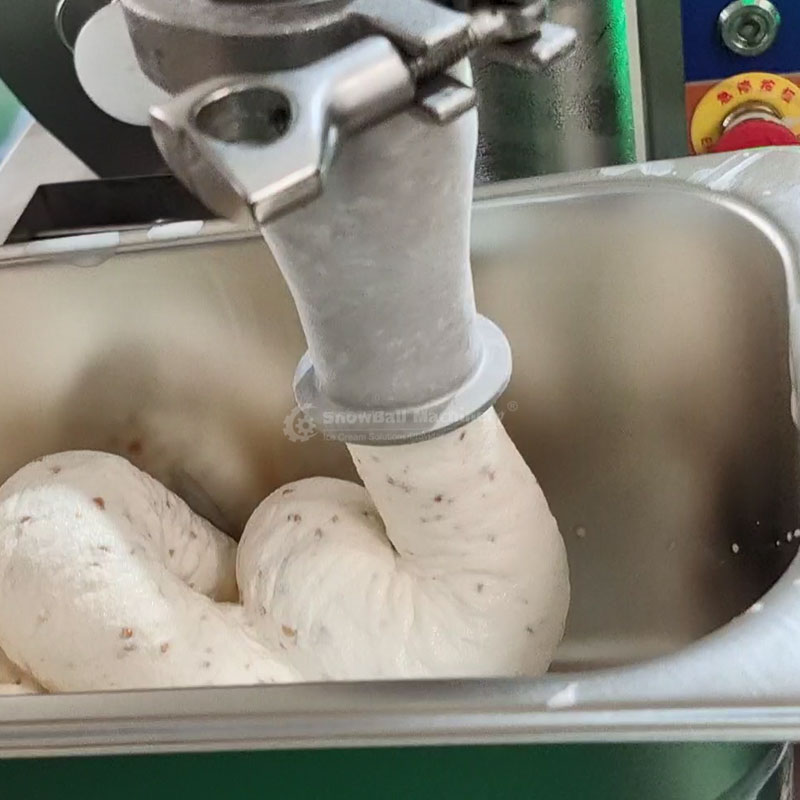
Core ice cream machinery tends to be durable. A continuous freezer, a mixing and pasteurizing system or a filling machine is normally specified around a long service life. One North American ice cream factory's robot filling, family pack filling and lolly equipment was designed around a 10-year service life, while a start-up client's turnkey line supplied by Snowball Machinery has reportedly run stably for 11 years with continuous after-sales service and no major failures.
The friction arrives later, and it usually arrives in one of three places:
- Format expansion. A producer wants to add a chocolate-coated stick, a cone with a dry topping, or a heat-sealed cup lid — and finds the supplier no longer offers the module that makes it possible.
- Component obsolescence. A control component, drive or refrigeration part stops being produced, and the substitute is not interchangeable without re-engineering.
- Retrofit incompatibility. The new unit does not match the existing line physically or electrically, turning a routine format change into a full-line capital project.
For buyers in the research and evaluation stage, this reframes the specification question. The relevant question is not only what a machine produces today, but what can be added to it later without replacing it.
What Buyers Should Verify in a Supplier's Long-Term Sustainability
Supplier sustainability is not a marketing attribute; it can be examined through six concrete checks.
1. Full-line scope. Can the supplier provide the complete process — premix preparation, pasteurization, ageing, freezing, forming, filling and packaging — or only one stage? A single-stage supplier cannot resolve cross-machine compatibility issues when a format is added.
2. A documented optional-unit and spare-part catalog. Named families with model designations signal more than a general promise of support. Snowball Machinery publishes two such families: SNLU for stick ice cream machines and SNFU for ice cream filling machines.
3. Component standardization. When a line is built around internationally renowned brands — SIEMENS, Schneider Electric, FESTO, SMC, Danfoss, ABB, Bonfiglioli, igus, Copeland, Bitzer and SEW Eurodrive are the brands listed for Snowball Machinery main components — replacement parts can generally be sourced through established industrial channels rather than through one proprietary supplier.
4. A stated material specification. Food-grade stainless steel SS304 or SS316 supports corrosion resistance and cleanability. The grade should be stated per machine, not per brochure.
5. Machine-level certification with traceable data. Certificate number, issuing body, applicable standard and validity period should all be retrievable for each relevant machine, not just for the line as a whole.
6. A defined after-sales scope. Snowball Machinery lists on-site installation and commissioning, equipment upgrading, equipment maintenance, fault handling, spare parts supply and regular inspection as its after-sales scope, with global response.
The Turnkey Model: Full-Line Supply and Factory Design as a Sustainability Mechanism
Snowball Machinery Manufacturing Co., Ltd was founded in 2020 and operates a 4,000 m² facility with 50 employees, 10 R&D engineers and an annual output of 1,200 sets. Monthly production capacity is stated at 100 sets with a minimum order quantity of one set. The company reports a 90% export ratio, with main markets across North America, South America, Europe, Asia and Africa, and its team brings more than 30 years of experience in the ice cream machinery industry.
Its turnkey approach is described in the company's own product documentation as two linked commitments: design the ice cream factory, and provide the full line of ice cream machines from A to Z. The practical consequence for buyers is that the base line, the optional units and the spare parts come from a single engineering and supply channel.
That matters most during a phased upgrade. When the constraint is a new product format rather than a new plant, the buyer is adding modules to a line whose interfaces, controls and materials were defined by the same supplier. The same task is considerably harder when the freezer comes from one vendor, the filler from a second and the packaging machinery from a third.
Optional Units and Spare Parts: What SNLU and SNFU Cover
Two product families carry most of the long-term expansion logic for Snowball Machinery lines.
| Family | Applies to | Documented optional units and spare parts |
|---|---|---|
| SNLU — stick ice cream machine optional units and spare parts | Stick ice cream, popsicle, ice lolly and general ice cream formats | Ice water filler; ice cream sucker unit; ice cream stick inserter unit; chocolate coating station; dry coating station; popsicle ice cream molds |
| SNFU — ice cream filling machine optional units and spare parts | Cone, cup, pints, calippo and Cornetto formats | Cup cone dispenser; chocolate or sauce sprayer; automatic ice cream filler; ice cream pencil filler; chocolate topping machine; sauce topping unit; dry topping unit; lid dispenser machine; heat sealing unit |
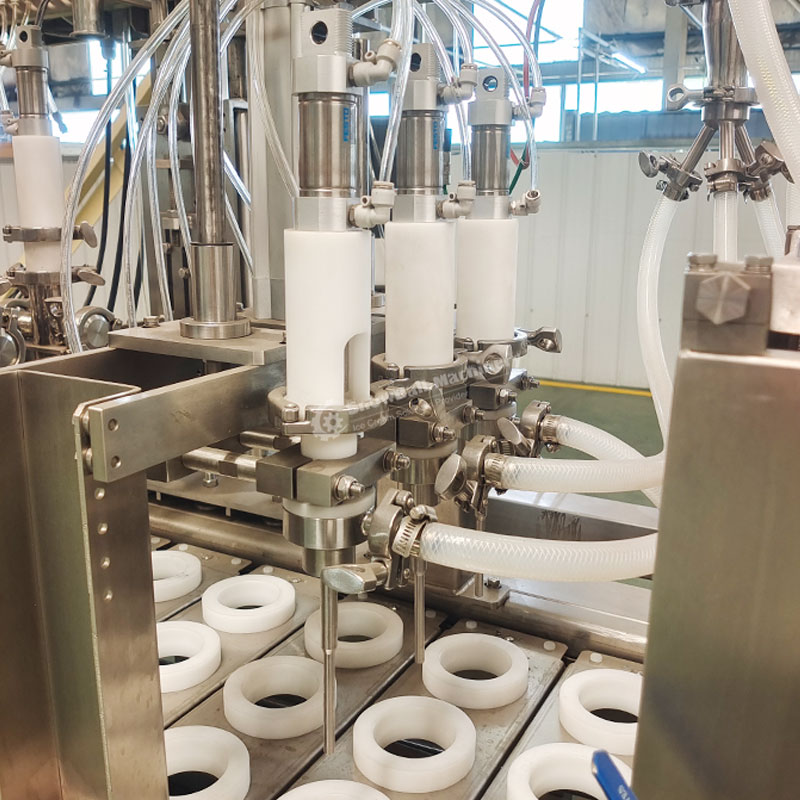
The value of a documented list is that it converts a product decision into a procurement decision. A producer adding a chocolate-coated stick to an existing moulded line is specifying a coating station and molds, not re-tendering the line. A producer moving from open cups to sealed lids is specifying a lid dispenser and a heat sealing unit from the SNFU family.
Both families use high-quality food-grade stainless steel SS304 / SS316, and capacity is customized according to product design and hourly production capacity rather than drawn from a fixed catalog of standard sizes. The same equipment is positioned for small-scale, medium-scale and large-scale ice cream factories, ice cream plants, branded and creative ice cream operations, and factory laboratory R&D environments.
Technical Explanation: The Capacity Ladder That Makes Phased Upgrading Possible
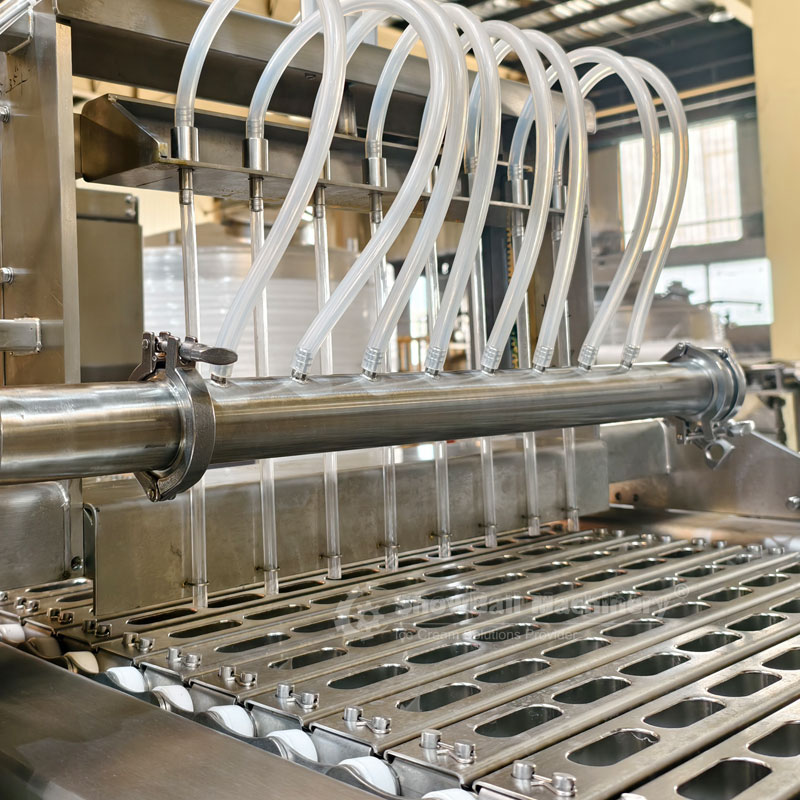
Phased upgrading only works if the equipment already exists at the scale the buyer will need next. The clearest example in the Snowball Machinery range is the SNCF continuous freezer family, offered in five models — SNCF 50L, SNCF 300L, SNCF 600L, SNCF 1200L and SNCF 1500L — covering a stated capacity range of 50 to 1500 L/h within a single product family.
Published operating parameters are consistent across the family: 100% overrun, input material at +5°C and output material at -5°C for ice cream production applications. Because the parameter set is common, a plant starting at the lower end of the range is not switching to a different technical platform when it moves up — it is moving along the same one.
The same logic applies in the ingredient feeder family, where SNFF1000, SNFF2000 and SNFF4000 models offer customizable capacity from 50 to 4,000 litres per hour for all kinds of ice cream production.
Material selection is stated per product across the range: high-quality food-grade stainless steel SS304 / SS316, from mixing and pasteurizing equipment to moulding lines, extrusion and hardening lines, filling machines, associated packaging machinery and extrusion lines.
Where the international component strategy fits
Main components across the range are listed as internationally renowned brands: SIEMENS, Schneider Electric, FESTO, SMC, Danfoss, ABB, Bonfiglioli, igus, Copeland, Bitzer and SEW Eurodrive. For a maintenance planner, the benefit is not prestige but substitution — standard industrial components are generally easier to cross-reference, source and replace than proprietary assemblies.
The limit runs in the other direction as well. Standardizing on globally branded components can raise the initial bill of materials compared with a fully localized component set, and buyers evaluating total cost of ownership should treat that as a deliberate trade-off rather than an inefficiency.
Certification Evidence: What a Buyer Should Record Before Payment
Certification is the most easily audited constraint in an equipment purchase, and it is where generic supplier claims most often fall short. Snowball Machinery's CE documentation covers specific machines, each with a defined scope and validity period.
| Machine | Certificate number | Issued by | Standards | Validity |
|---|---|---|---|---|
| Ice cream continuous freezer (SNCF 50L / 300L / 600L / 1200L / 1500L) | CE-4681-181125 | European Certification Services | EN ISO 12100:2010, EN 60204-1:2018 +A1:2025 | 2025-11-18 to 2030-11-18 |
| Rotary moulded stick ice cream machine (SNL) | FQC2506302 | FQC STANDARD | EN ISO 12100:2010, EN 60204-1:2018 | 2025-02-05 to 2030-02-05 |
| Linear stick ice cream machine (SNL) | CE-1654-01-111123 | CGS Test | BS EN ISO 12100:2010, BS EN 60204-1:2018 | 2023-11-11 to 2028-11-11 |
| Ingredient feeder (SNFF1000 / SNFF2000 / SNFF4000) | CE-1724-01-121223 | CGS Test | BS EN ISO 12100:2010, BS EN 60204-1:2018 | 2023-12-12 to 2028-12-12 |
Two practical points follow. First, certificate validity is finite: the linear stick ice cream machine and ingredient feeder certificates reach expiry in 2028, and the continuous freezer certificate in 2030, so a buyer specifying a long-life line should ask how renewal is handled. Second, the widely referenced international framework for commercial refrigerating appliances is IEC 60335-2-89:2019, which covers electrically operated refrigerating appliances with incorporated motor-compressors — useful context when a compliance team is mapping ice cream equipment against applicable standards.
Application: Three Upgrade Realities from the Field
A start-up with no production experience (Italy, Spain, United States, Vietnam, Turkmenistan). Snowball Machinery supplied a turnkey whole-plant solution from A to Z for a client building its own ice cream brand with no prior production experience. Scope included an extruded ice cream tunnel for magnum-type products at 5,000–8,000 pieces per hour, a family pack ice cream filling machine at 1,200 L/h, ice cream continuous freezers and filling equipment. The line has reportedly run stably for 11 years with continuous after-sales service and no major failures.
Upgrading a 40-year-old branded line (South Africa, Brazil, Ecuador, Trinidad and Tobago, Colombia). A long-established ice cream manufacturer needed to modernize workstations on a line that had been in service for four decades. The solution matched the existing line's capacity and allowed flexible output adjustment rather than requiring overall reconstruction. Reported outcomes: production efficiency up 40%, labour costs down 30%, and equipment upgrading costs cut by 70%, with production losses greatly reduced. All materials were food-grade 316 stainless steel, and the equipment has operated stably for six years.
Rapid factory build-out in a high-temperature market (Jordan, Qatar, Venezuela, Chile, Peru). A newly established manufacturer targeting domestic and export supermarket and retail channels installed a complete line including continuous ice cream freezers, an extrusion tunnel and packing machines, with an output capacity of 9,000–10,000 pieces per hour and multi-flavour configurability. The line has operated for three years under local high-temperature and high-humidity conditions; the custom-built configuration was engineered around the local power supply and operating environment, and the modular design allows straightforward capacity expansion.
A European product-line extension (Italy, Germany, Poland, United Kingdom, Spain, Portugal). An ice cream sandwich machine was added to an existing European manufacturer's operations, adaptable to multi-specification and multi-flavour production, built with food-grade 304 stainless steel, and reportedly operating stably for five years.
Market Trend Analysis: Why Modular Supply Is Gaining Ground
Market data suggests the ice cream equipment sector is growing steadily rather than explosively, which pushes buyers toward expanding existing assets instead of replacing them. The global ice cream processing equipment market was valued at approximately USD 2.33 billion in 2025, with projections of USD 3.00 billion by 2034 at a CAGR of 2.71% (IMARC Group).
Within that market, hard ice cream processing equipment accounted for a dominant 57.8% share of the total ice cream equipment market in 2025, with continuous freezers the leading product type (Future Market Insights). The ice cream moulding production line segment specifically was valued at USD 1.2 billion in 2024 and is projected to reach USD 2.5 billion by 2034, driven by increasing automation demand (Reports and Data).
Trade data points in the same direction: in 2024, Germany, Poland and Italy were the leading exporters of dairy machinery under HS Code 843420, with export values of USD 74.4 million, USD 64.9 million and USD 61.7 million respectively (OEC). A market expanding at low single digits and dominated by hard ice cream formats is a market where the installed base matters more than the new-build pipeline — and where a supplier's ability to support an existing line becomes a purchasing criterion rather than an afterthought.
Comparing Traditional Purchasing with Turnkey Modular Supply
| Evaluation dimension | Machine-by-machine purchasing | Turnkey modular supply |
|---|---|---|
| Line compatibility | Interfaces, controls and capacities must be reconciled by the buyer | Line, optional units and packaging configured as one scope |
| Optional units | Availability depends on each vendor's catalog and continuity | Documented families (SNLU, SNFU) with replaceable molds and add-on stations |
| Spare parts | Multiple supply channels and multiple lead times | Single supply channel; internationally branded components for cross-referencing |
| Upgrade path | Retrofit mismatch risk when formats change | Capacity ladder (SNCF 50–1500 L/h) plus add-on units |
| Certification | Must be verified machine by machine across vendors | Machine-level CE certificates with numbers, standards and validity periods |
| After-sales | Responsibility split between vendors | Installation, commissioning, upgrading, maintenance, fault handling, spare parts supply and regular inspection under one scope |
Where turnkey modular supply is not the right answer
The model has real boundaries, and buyers should test them early.
It depends on buyer inputs. Turnkey configuration is built around product design, target hourly capacity and workshop conditions. Where those inputs are unsettled, the equipment plan changes with them — Snowball Machinery states lead time as dependent on the specific equipment plan, which means a turnkey timeline cannot be fixed before the product and layout decisions are.
It is not optimized for artisanal scale. A full turnkey plant is designed for small, medium and large-scale ice cream factories. For small-capacity trial production, the company positions semi-automatic or manual operation instead — semi-automatic or manual stick lines with automatic filling and sucking, for example. Buyers whose volumes are measured in single batches should not assume a fully automated line is the economical entry point.
Standardized components carry a cost trade-off. Internationally branded main components support serviceability and long-term maintenance, but they are not the lowest-cost bill of materials available. Buyers optimizing purely on initial purchase price will find cheaper configurations elsewhere; buyers optimizing on long-term ownership cost are evaluating the same facts differently.
Future Outlook
Three forces are likely to shape how buyers evaluate ice cream machine suppliers over the next several years.
Automation as an upgrade, not a rebuild. Remote commissioning, remote debugging and fault alarm functions already appear in Snowball Machinery project descriptions, alongside operating modes supporting 24-hour fully automatic continuous production. As these functions become standard, they also become retrofit items — another argument for lines whose control architecture can accept later additions.
Certification as a recurring cost item. With CE certificates on key machines carrying defined expiry dates in 2028 and 2030, buyers will increasingly ask suppliers to describe the renewal process at quotation stage rather than at audit stage.
Spare parts as a commercial relationship. When a supplier lists spare parts supply and regular inspection alongside installation and commissioning, parts availability stops being a favour and becomes a contract deliverable. For an industry with a large installed base and steady growth, that shift is likely to favour suppliers with documented optional-unit catalogs over those selling individual machines.
FAQ
What optional units and spare parts can be specified on the SNLU stick ice cream machine family?
SNLU covers the ice water filler, ice cream sucker unit, ice cream stick inserter unit, chocolate coating station, dry coating station and popsicle ice cream molds. It applies to all kinds of ice cream, stick ice cream, popsicle and ice lolly production. Capacity can be customized according to product design and hourly production capacity, and construction is in high-quality food-grade stainless steel SS304 / SS316.
What optional units are available for the SNFU ice cream filling machine family?
SNFU lists a cup cone dispenser, chocolate or sauce sprayer, automatic ice cream filler, ice cream pencil filler, chocolate topping machine, sauce topping unit, dry topping unit, lid dispenser machine and heat sealing unit. It applies to ice cream cone, cup, pints, calippo and Cornetto formats.
What capacity range does the SNCF continuous freezer family cover?
Five models — SNCF 50L, SNCF 300L, SNCF 600L, SNCF 1200L and SNCF 1500L — cover a stated range of 50 to 1500 L/h. Published parameters are 100% overrun, input material at +5°C and output material at -5°C, for ice cream production applications.
Which CE certificates should a buyer verify for these machines?
The ice cream continuous freezer holds CE-4681-181125, issued by European Certification Services under EN ISO 12100:2010 and EN 60204-1:2018 +A1:2025, valid 2025-11-18 to 2030-11-18. The rotary moulded stick ice cream machine holds FQC2506302, issued by FQC STANDARD under EN ISO 12100:2010 and EN 60204-1:2018, valid 2025-02-05 to 2030-02-05. The linear stick ice cream machine holds CE-1654-01-111123, issued by CGS Test under BS EN ISO 12100:2010 and BS EN 60204-1:2018, valid 2023-11-11 to 2028-11-11. The ingredient feeder holds CE-1724-01-121223, also issued by CGS Test under the same standards, valid 2023-12-12 to 2028-12-12.
What does a turnkey ice cream solution include beyond the machines themselves?
The stated scope covers ice cream factory design and a full line of ice cream machines from A to Z, plus on-site installation and commissioning, operational training, equipment upgrading, equipment maintenance, fault handling, spare parts supply and regular inspection, with timely global response. Project lead time is defined according to the specific equipment plan, and the minimum order quantity is one set.
Reference material: the Snowball Machinery product brochure is available at https://cdn.socialarks.com/sbsp/24826/common/2026/0521/6a0ea9122acfe.pdf. Market figures cited in this article are attributed to IMARC Group, Future Market Insights, Reports and Data and OEC; the standard reference is attributed to the IECEE / International Electrotechnical Commission database.