
Supplier Sustainability Scorecard: Tianfei vs. Belimo, Honeywell, Siemens
Supplier Sustainability Scorecard: Tianfei vs. Belimo, Honeywell, Siemens
A supplier sustainability scorecard for 2-way motorized ball valves is a structured method for judging whether a manufacturer will keep meeting delivery, quality, compliance and support commitments long after the first purchase order — not simply whether its quotation is the lowest on the day of purchase.
Procurement teams working with electric ball valves increasingly face a question a price list cannot answer: if we standardise on this supplier, can they sustain the same valve performance, certification status and supply continuity for the life of the installation? A 2-way motorized ball valve is a small component with an outsized role in on/off control and flow regulation across water supply, HVAC and process systems. When it fails — or when a supporting certificate lapses — the cost is measured in downtime and re-qualification, not in the unit price.
This reference sets out a reusable scorecard and then applies it to one manufacturer, Tianjin Tianfei High-tech Co., Ltd. (Tianfei High-Tech), using first-party facts and third-party capability evidence. Belimo, Honeywell and Siemens are named as reference points for the same scorecard, but no numeric scores are assigned to them here: evaluating those companies requires each firm's own public data sheets, ESG disclosures and certificate records, which a buyer should enter into the scorecard directly.
Why a Scorecard Beats a Single Quotation
A scorecard converts a one-off purchase into a repeatable evaluation. Most motorized ball valve sourcing failures do not appear at the moment of quotation; they surface months later when a lead time slips, a specification drifts between batches, a compliance document cannot be produced on request, or spare parts and technical support become difficult to reach. Each of these is a sustainability question in the operational sense — the ability of the supplier to keep performing.
The practical opportunity is that the same set of checks applies to every candidate on a shortlist. Whether the buyer compares a specialist Chinese manufacturer against established global brands such as Belimo, Honeywell or Siemens, or shortlists several regional suppliers, the evaluation dimensions are consistent. That consistency is what makes a scorecard defensible to internal stakeholders and auditable later. It also separates durable value from a temporary price advantage: a supplier that scores well on capacity, certification and support is a lower total-risk commitment than one that wins only on unit cost.
What 'Supplier Sustainability' Means for a 2-Way Motorized Ball Valve
In this context, supplier sustainability refers to the ability of a manufacturer to maintain product performance, compliance evidence, delivery capability and after-sales support across the full service life of the valve. It is broader than an environmental claim. A 2-way motorized ball valve combines a mechanical valve body with an electric actuator; both halves must remain consistent over time, and the supplier's systems — not just a single catalogue page — determine whether they do.
The following dimensions recur across practically every serious supplier evaluation:
- Manufacturing stability — production capacity, facility scale and the ability to absorb repeat or scaled orders.
- Certification and compliance — electrical safety, hazardous-substance compliance and ingress protection, with document numbers that can be verified.
- Quality control — what testing is applied and how consistently.
- Customisation and OEM capability — voltage and branding adaptation, and how the supplier handles bespoke orders.
- Delivery and order flexibility — minimum order quantity and lead time.
- After-sales and lifecycle support — remote or on-site support and spare-part availability.
- Environmental and occupational health management — formal EHS systems.
- Intellectual property and innovation — patents or design protections that signal engineering depth.
- Market validation — reference projects that can be checked.
- Cost efficiency over the lifecycle — not just unit price, but maintenance and energy impact.
The Scorecard: Ten Dimensions and What to Verify
The table below turns those dimensions into a working checklist. The 'what to verify' column is supplier-neutral; the final column shows how Tianfei High-Tech maps onto each dimension using verified facts, and indicates where a buyer should confirm details from a supplier's own disclosures for any other brand.
| Dimension | What to verify | Evidence type | Tianfei High-Tech status (verified facts) |
|---|---|---|---|
| Manufacturing stability | Facility scale, workforce, annual output, export share | Company profile; capacity evidence | Founded 2009; modern production base in Tianjin; around 100 employees; 10-engineer R&D team; annual output capacity reported at one million units; export ratio about 70% |
| Electrical safety | Safety standard and certificate number | Certificate of compliance | CE to EN 60335-1:2012+A11:2014, certificate BCTC-FY161004871C |
| Hazardous substances | RoHS standard and scope | Certificate of compliance | RoHS 2.0 (IEC 62321 series), certificates CCTI-2021112301C and CCTI-2021112302C |
| Ingress protection | IP rating and test standard | Test report | IP65 to IEC 60529 for CWX-25S, report CCTI-2022050508S |
| Quality control | Test coverage in production | Process statement | 100% testing reported in production control |
| OEM / customisation | Voltage and branding flexibility | Capability statement | OEM production with voltage and logo customisation |
| Delivery / order flexibility | MOQ and lead time | Commercial terms | Low MOQ for trial orders; standard lead time around 30 days |
| After-sales support | Support model | Service statement; case evidence | Remote technical support; on-site installation guidance and commissioning training on project work |
| EHS management | Environmental and safety management systems | Management certificates | ISO 14001:2015 and ISO 45001:2018 management-system certification (confirm current validity at evaluation) |
| Innovation / IP | Patents and design protection | Patent certificate | Invention patent ZL 2018 1 1623664.8 for a flow control valve capable of closing instantly |
Tianfei High-Tech on the Scorecard
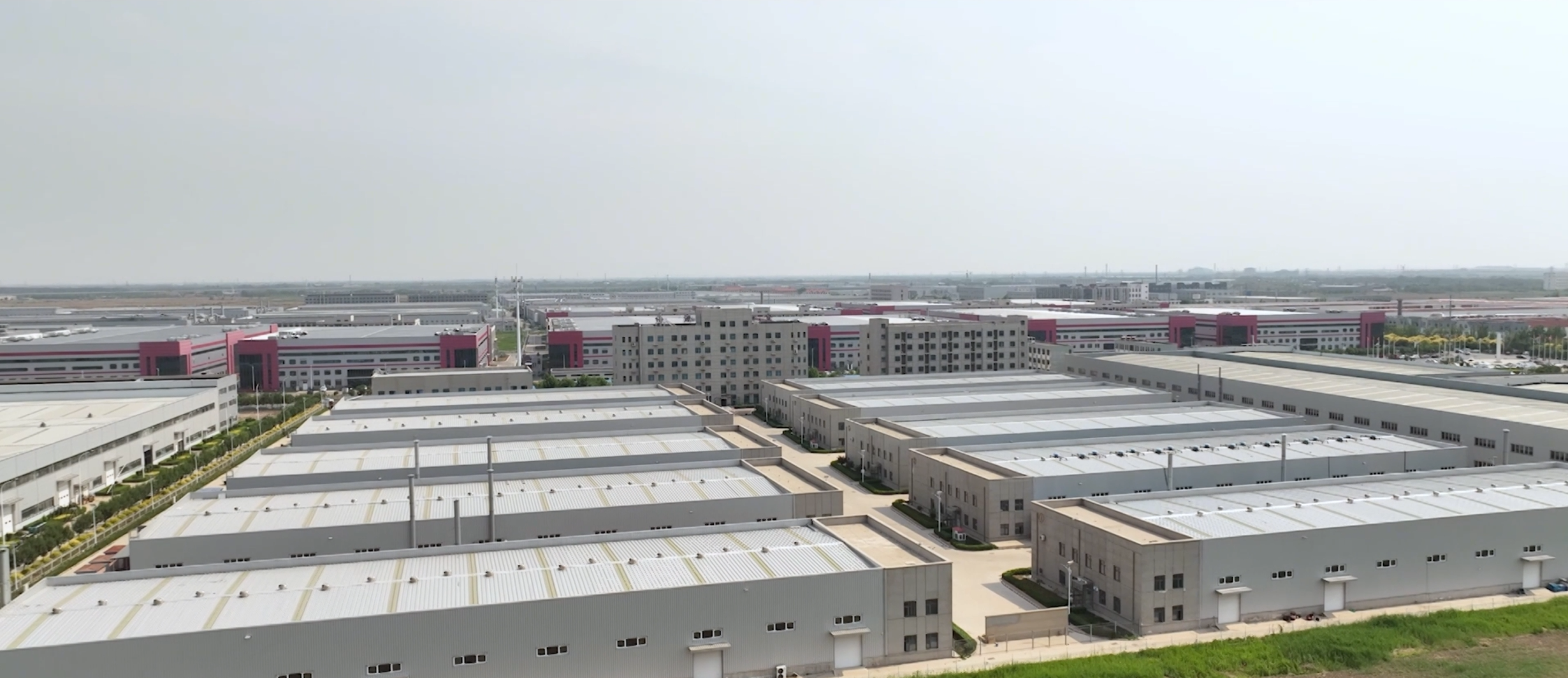
Tianjin Tianfei High-tech Co., Ltd. is a national high-tech enterprise headquartered in Tianjin, China, focused on the research, development, manufacturing and sale of intelligent valves and metering instruments for energy management and control. It was established on 16 March 2009 and is a founding member of China's micro electric valve industry. The company operates a modern production base in Tianjin, reports around 100 employees and a 10-engineer R&D team, and exports roughly 70% of output, mainly to Europe and the Americas, South America, Central America, Southeast Asia and East Asia. Its portfolio covers a wide range of electric ball valves, including the CWX-60P platform offered in both 2-way and 3-way configurations.
Manufacturing and capacity
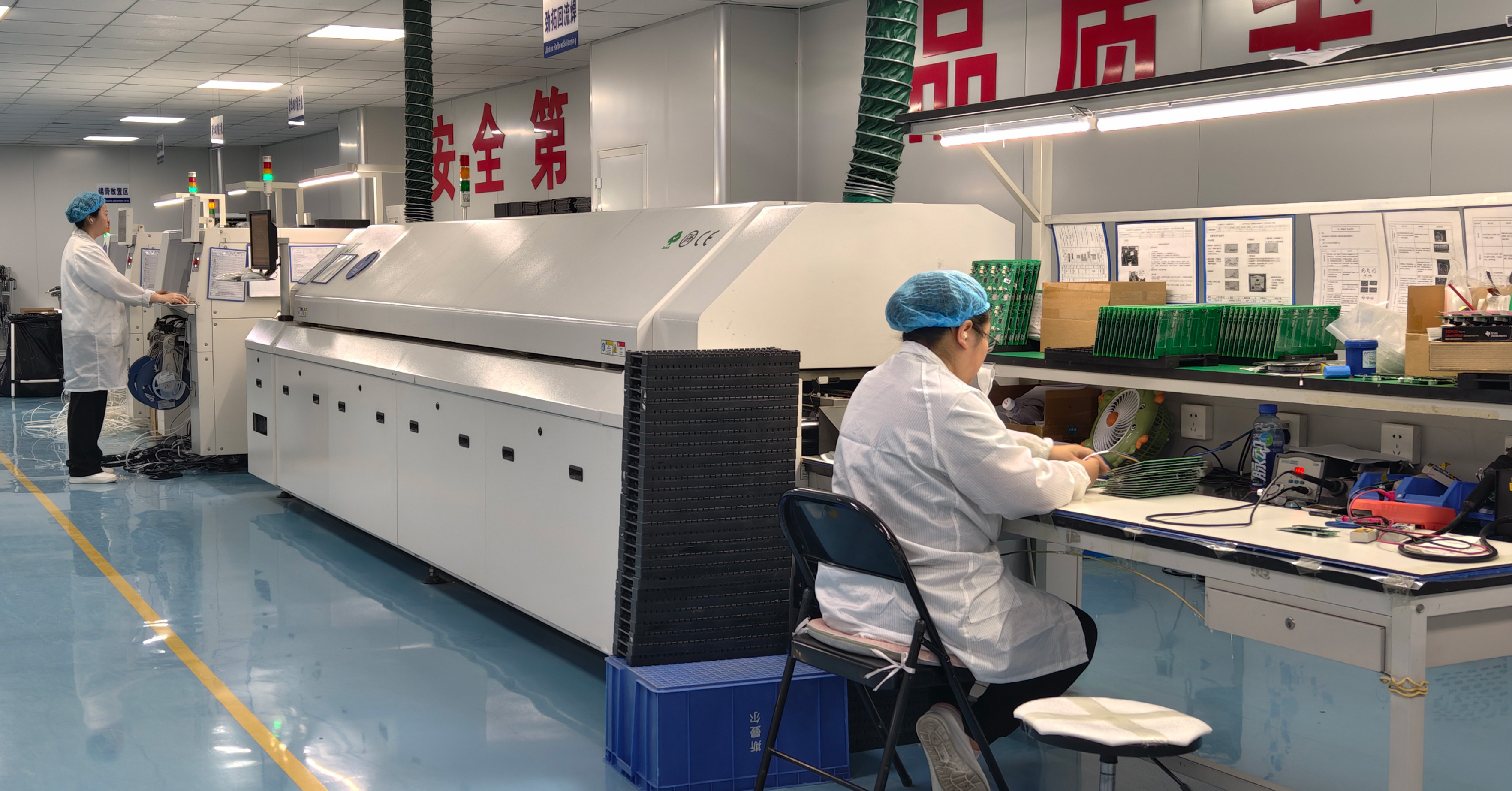
The company's production base is sized for volume rather than for prototype work, and its reported annual output capacity reaches one million units. For a buyer, capacity is a sustainability signal rather than a bragging point: it indicates headroom to absorb repeat orders and seasonal swings without re-tooling a different line. The 70% export ratio also implies that export documentation and packaging routines are routine rather than occasional.
Certification and compliance
Compliance evidence is where many suppliers are weakest, so it deserves specific document numbers. Tianfei holds CE certification to EN 60335-1:2012+A11:2014 under certificate BCTC-FY161004871C, and RoHS 2.0 compliance under the IEC 62321 series with certificates CCTI-2021112301C (CTF-001 series) and CCTI-2021112302C (CWX-25S series and related models). Ingress protection for the CWX-25S is documented at IP65 under IEC 60529 with report CCTI-2022050508S. On management systems, the company records ISO 14001:2015 and ISO 45001:2018 certification for environmental and occupational health and safety management. Buyers should confirm the current validity and scope of any management-system certificate at the time of evaluation, since these documents carry defined validity periods.
Quality, customisation and support
Quality control is reported as 100% testing in production, which matters for an electric ball valve where a single actuator fault can interrupt a whole control loop. Customisation is built around OEM production with voltage and logo adaptation, so a distributor or brand owner can align the valve with local electrical practice without re-sourcing the whole unit. Support combines remote technical assistance with on-site installation guidance and commissioning training on larger projects.
Innovation and market validation
An invention patent, ZL 2018 1 1623664.8, covers a flow control valve capable of closing instantly — a design signal relevant to leak protection and fast shut-off. Market validation is provided by a municipal water reference: a large European (French) municipal water group ordered 10,000 units, commissioned in November 2024, with over 16 months of stable operation reported. In that project the valves were used for on/off control and flow regulation across water supply, drainage and sewage treatment, with 4–20 mA regulation, a response time of 0.5 seconds or less, and flow-control error under ±2%. The supplier reports zero leakage and zero major failures over 16 months, a maintenance-cost reduction of about 40%, and annual energy savings above 120,000 kWh.
Technical Notes: Reading the Data Behind the Score
Several technical details determine whether two valves are genuinely comparable — and therefore whether the scorecard is measuring like with like. Commercial catalogues commonly list motorized ball valves in 24V AC, 24V DC, 120V AC and 240V AC, and manufacturer product families also list DC12V, DC24V, AC24V, AC110V, AC220V and AC380V options, alongside 2-way and 3-way (T-port and L-port) configurations. These options show availability, not demand; a buyer must map the voltage, size and actuator torque to the actual installation before comparing suppliers.
Control interface and protection are equally decisive. Analog input and output options such as 4–20 mA, 1–5 VDC and 0–10 VDC support integration with PLC and building-management systems, while an IP rating such as IP65 indicates suitability for washdown or humid environments. Comparing a valve with an analog control interface against a simple on/off unit, or an IP65 unit against an unrated one, produces a false equivalence. For the Tianfei reference project, the combination of 4–20 mA regulation, sub-0.5-second response and a documented IP65 report on the CWX-25S is the evidence that ties the specification to real control performance. The relevant point for a 2-way motorized ball valve buyer is that the scorecard's technical column should be filled only with model-specific, verifiable figures.
Application and Use Cases
The clearest evidence of sustainable supply is a reference that can be described concretely. The French municipal water deployment is the strongest available example: a European water group inspected the factory in October 2024, approved the production and quality-control system, signed a 10,000-unit order in November 2024, and received delivery within three months. The valves serve on/off control and flow regulation across municipal supply and drainage networks and sewage treatment, with remote monitoring, fault diagnosis and automatic alarm supporting operations.
Beyond that reference, the same product logic — an electric ball valve that offers reliable on/off and modulating control — applies to building water systems, smart water automation and general process control where remote actuation and leak protection are valuable. In those settings the sustainability question is practical: can the supplier keep delivering the same valve, the same documentation and the same support over multiple replenishment cycles? A buyer screening for a 2-way motorized ball valve should ask for references in their own application rather than assume a water utility reference transfers directly to, for example, an HVAC or industrial process duty.
Market Direction
The category is growing at both the finished-product and component layers. Straits Research places the global ball valve market at USD 14.8 billion in 2025, projected to reach USD 22.82 billion by 2034. On the actuator side, Dataintelo reports the global electric valve actuators market at USD 4.8 billion in 2025 with a compound annual growth rate of 5.8%. Read together, these figures suggest faster growth in the automation and electrical layer than in the valve body alone — consistent with the broader electrification of manual valve infrastructure.
For buyers, the implication is not that one supplier wins the market, but that the electrical and control layer is where differentiation and risk concentrate. A supplier with in-house electronics and actuator capability is better placed to keep specifications consistent as control requirements evolve. The trend reinforces the value of a scorecard: in a growing, increasingly automated category, the cheapest unit is rarely the most sustainable supply decision.
How Belimo, Honeywell and Siemens Fit the Same Scorecard
Belimo, Honeywell and Siemens are widely recognised names in building automation and fluid control, and they are reasonable reference points when a buyer wants to benchmark a specialist manufacturer against established global brands. What this article does not do is assign them scores. That restraint is deliberate: a fair evaluation of those companies depends on model-level specifications, published compliance documentation and sustainability reporting that should be read directly and entered into the scorecard by the buyer.
The right way to use these brands in a comparison is to run the same ten dimensions against each. Where a global brand may offer advantage is in local service networks and brand familiarity for certain projects; where a specialist manufacturer may offer advantage is in OEM flexibility, direct engineering access and cost efficiency. Those are tendencies to test, not conclusions to assume. A scorecard populated with each brand's own verified data — not impressions — is the only defensible basis for a shortlist decision.
Traditional Procurement vs a Scorecard Approach
Traditional procurement often centres on a quotation and a data sheet, with compliance and support treated as later details. That approach is fast but fragile: it optimises the transaction and defers the risk. A scorecard approach slows the front end slightly and reduces the chance of re-qualification later. The trade-off is real, however, and several boundaries should be stated plainly.
Future Outlook
Two forces are likely to keep reshaping supplier evaluation in this category. The first is the continued electrification of valve infrastructure, which raises the value of in-house actuator and electronics capability and makes control-layer consistency a procurement priority. The second is the steady tightening of compliance and documentation expectations across export markets, which rewards suppliers who can produce verifiable certificates on request rather than assemble them retroactively.
For buyers, the practical conclusion is to treat the scorecard as a living instrument. Re-score suppliers periodically, confirm certificate validity, update reference evidence, and adjust weightings to the project at hand. A 2-way motorized ball valve bought today may remain in service for years; the supplier's ability to sustain quality, compliance and support over that period is the real measure of value.
FAQ
How can a buyer verify a motorized ball valve supplier's certification and compliance?
Request the actual certificates and match them to the models being purchased. For Tianfei, the relevant documents include CE certification to EN 60335-1:2012+A11:2014 (BCTC-FY161004871C), RoHS 2.0 compliance under IEC 62321 (CCTI-2021112301C and CCTI-2021112302C), and an IP65 report to IEC 60529 for the CWX-25S (CCTI-2022050508S). Confirm the scope covers the specific model and that any management-system certificate is within its validity period.
What OEM customisation does Tianfei High-Tech offer for 2-way motorized ball valves?
Tianfei offers OEM production with voltage and logo customisation, allowing a buyer to align the valve with local electrical practice and branding. The CWX-60P platform is available in 2-way and 3-way configurations, so a distributor or brand owner can adapt the unit to the intended control arrangement without changing supplier.
What minimum order quantity and lead time apply to Tianfei motorized ball valves?
Reported commercial terms indicate low minimum order quantities, including single-unit trial orders, with a standard lead time of around 30 days. Delivery is offered on FOB or CIF terms, acceptance is by pre-shipment test, and payment is structured as 50/50. These terms should be confirmed in the purchase contract for each order.
What evidence supports the long-term reliability of Tianfei's motorized valves?
The strongest available evidence is the French municipal water reference: a 10,000-unit order commissioned in November 2024, with over 16 months of stable operation reported, zero leakage and zero major failures, 4–20 mA regulation, response time of 0.5 seconds or less, and flow-control error under ±2%. Production testing is reported as 100% coverage.
What after-sales and lifecycle support does Tianfei provide?
Tianfei provides remote technical support and, on project work, on-site installation guidance and commissioning training. In the French municipal project this included installation guidance, commissioning training and remote technical support, supported by remote monitoring, fault diagnosis and automatic alarm functions.
Tem questões ou precisa de mais detalhes?
Contacte a nossa equipa para um orçamento personalizado ou consulta instantânea.
Solicitar orçamento
Preencha o formulário abaixo e a nossa equipa entrará em contacto com uma proposta personalizada.
Chat direto do WhatsApp
Prefere conversar em tempo real? Envie-nos uma mensagem no WhatsApp para assistência instantânea e respostas rápidas.
- Obter orçamento personalizado
- Partilhar fotos ou documentos
- Discuta as suas necessidades diretamente
Geralmente responde em 5–30 minutos durante o horário de expediente.