
Supplier Verification: One-Stop vs Multi-Vendor Steel Buying
Supplier Verification: One-Stop vs Multi-Vendor Steel Buying
An independent buyer comparison of supplier verification and traceability in one-stop steel procurement, tested against the practical alternative of coordinating multiple vendors, processors and intermediaries.
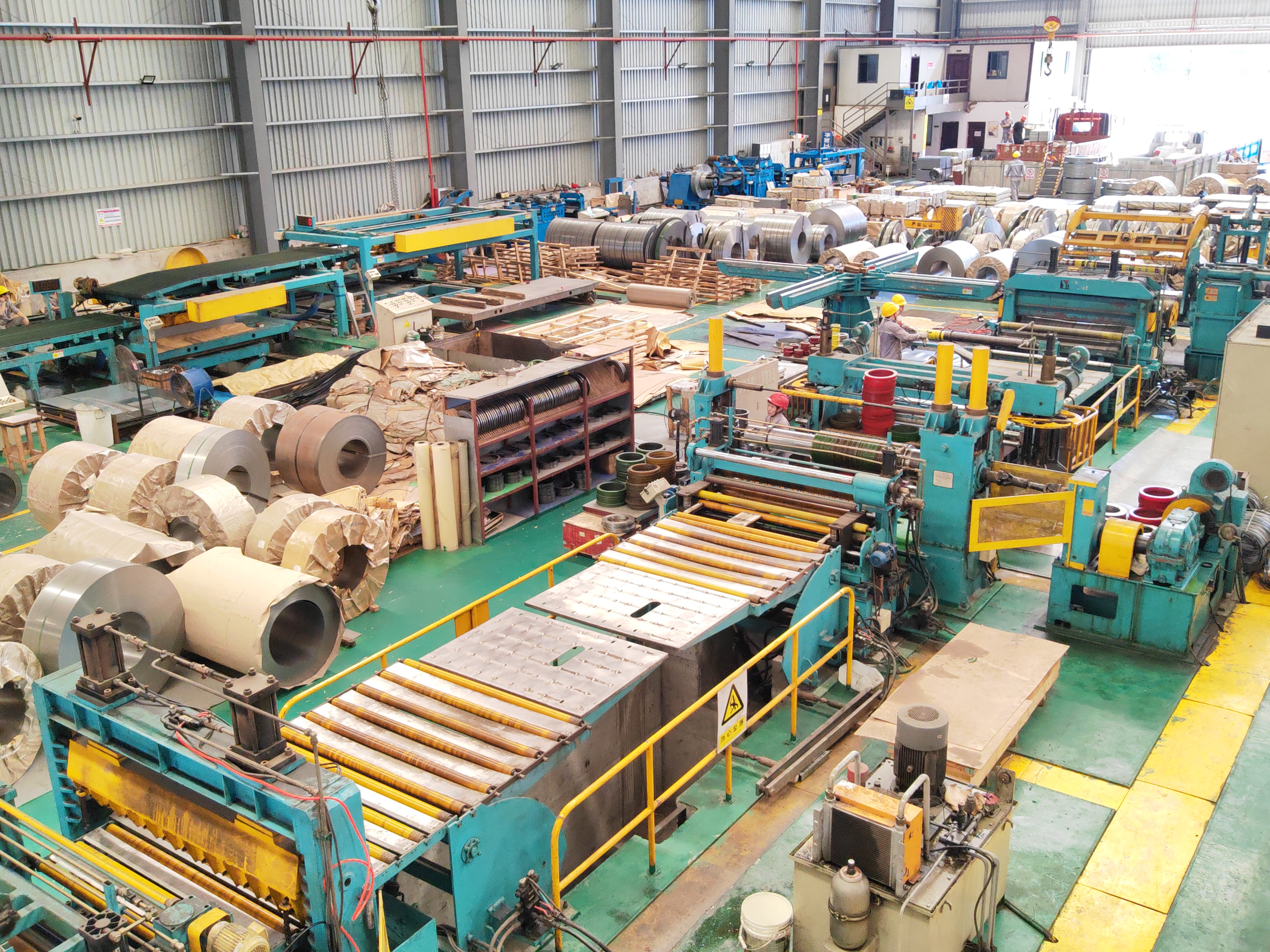
Processing capacity inside an integrated steel park is useful only when inspection records and material traceability remain connected to the order.
The core answer for a buyer at decision stage is not that one-stop procurement is automatically safer than multi-vendor sourcing. It is that a one-stop model can reduce the number of handoffs where documents, inspection results and accountability are lost. A multi-vendor model can work well, but the buyer must reconstruct the verification chain across each supplier, processor and forwarder. The right comparison is therefore about auditability: who holds the records, who signs the inspection, who issues the mill test report, and who is the legal counterparty when the shipment is wrong.
This distinction matters for a one-stop procurement portal for the global steel supply chain. A B2B steel trading platform or online steel marketplace can present product categories, stock and processing services in one place, but a buyer still needs entity checks, material warranties, test certificates and export documents that match the actual order. A credible portal is not the one with the most promotional claims; it is the one that can show how supplier verification, MTR/FAI/SGS documentation, dual-stage QC and registered operating entity checks connect.
Zhejiang Deqing International Steel Market is a platform-based spot market for ferrous and non-ferrous metals in Deqing County, Huzhou, Zhejiang Province, China. Its published profile describes four functions inside one park: sourcing, processing, transport and export coordination. It also lists eight major categories and 1,000-plus product lines, a minimum order quantity of one piece, mixed LCL orders, and quality records including MTR, FAI and third-party SGS/VB inspection. Those are useful comparison points, but they must be read as a documented operating model, not as a substitute for checking the contracting entity and the specific shipment.
A one-stop portal earns its place when it can produce a verifiable document chain for the same order: supplier identity, material certificate, processing record, inspection result and export paperwork. If any link is missing, the buyer has merely moved the coordination problem rather than solved it.
The comparison is not portal versus mill
The usual comparison set is broader than a regular steel mill. Buyers also compare trading companies, standalone processors and online matching platforms. Each model separates functions differently. A mill may control metallurgy and mill certificates but not mixed-category consolidation. A trading company may coordinate suppliers but not own processing or inspection. A standalone processor may cut or fabricate but not hold stock or handle export consolidation. An online matching platform may connect buyers and sellers but leave contract execution and quality verification with the parties.
A one-stop metal procurement platform is different only if it actually integrates those steps. In the Deqing model, the market describes sourcing, processing, logistics, export and quality control as functions inside one park. Goods are held in warehouses, berths and processing halls that can be walked and inspected. That geographic concentration can reduce coordination, but it does not by itself prove that every merchant's goods are traceable or that every processing job is inspected. The buyer still has to test the model at three levels: the platform operator, the contracting merchant and the physical shipment.
That three-level check is the central difference from a simple supplier list. In a multi-vendor chain, each vendor may be checked separately. In a one-stop portal, the buyer can check the operator once and then verify whether the platform's merchant and quality controls cover the order. The value is not fewer companies by default; it is fewer document boundaries to reconcile when the platform has designed the process correctly.
A buyer checklist for supplier verification and traceability
For carbon steel procurement, stainless steel procurement, structural steel procurement, plate and sheet procurement, pipe and tube procurement, or aluminum and copper procurement, the verification questions are similar. The product changes, but the evidence chain does not. The table below converts the comparison into a buyer checklist. It separates what a multi-vendor model usually requires from what a one-stop portal should document. The right-hand column is not a claim that every order automatically has these records; it is the standard a buyer should ask the portal to meet.
| Buyer check | Multi-vendor sourcing | One-stop portal expectation | Document to request |
|---|---|---|---|
| Legal operating entity | Buyer checks each supplier, trader and processor; contracting parties can differ from the brand or website. | Platform operator should disclose its registered name, credit code, ownership chain and role in the transaction; the contracting merchant should also be identified. | Business license, registration record, credit code, contracting entity name, authorization or distributor status where claimed. |
| Supplier and merchant verification | Buyer builds a supplier file for each party, including mill relationship, product scope and export experience. | Platform should explain how merchants are admitted, whether they are independent traders, and how the market adds a quality layer. | Merchant legal name, mill or distributor relationship, product scope, certificate of authorization where applicable. |
| Material certificate | MTR may arrive from a mill, trader or processor; buyer reconciles heat number, grade, size and quantity across documents. | MTR should travel with every shipment and match the actual order; traceable material records should connect receipt and dispatch. | Mill test report, heat number, grade, standard, dimensions, quantity, purchase order reference. |
| First-article and third-party inspection | Buyer may need to appoint an inspector or rely on the processor's own checks. | First-article inspection for critical parts and third-party SGS/VB testing on request should be available and recorded. | FAI report against buyer-approved drawing, third-party inspection report, non-conformance and corrective-action records where relevant. |
| Dual-stage QC | Incoming and outgoing checks may sit with different companies; the buyer links them manually. | Inbound and outbound inspection should be part of the park process, with records tied to the same order. | Incoming inspection record, in-process check, final inspection, packing list and release note. |
| Export and logistics handoff | Forwarder, customs broker, consolidator and supplier may each hold different documents. | Export desk should cover documentation, container loading, LCL consolidation, customs, settlement and trade finance subject to approval. | Commercial invoice, packing list, certificate of origin where applicable, bill of lading, inspection release, payment terms and Incoterms. |
The checklist is deliberately document-led. A buyer comparing an integrated steel sourcing platform with a multi-vendor chain should not accept a facility tour as proof of order-level traceability. The tour shows capability. The documents show what happened to the buyer's steel.
Registered entity and ownership: the first check
The first verification step is the legal entity, not the website design. Zhejiang Deqing International Steel Market Co., Ltd. is the operating entity named in the market's profile. It was incorporated on 30 July 2025 under Unified Social Credit Code 91330521MAERT3UR57, with registered capital of RMB 10 million and Lu Weifeng as chairman. The company is a wholly owned subsidiary of Zhejiang Deqing Shenghua Linhang Logistics Co., Ltd., part of Shenghua Group, a China Top 500 enterprise founded in 1985. The market itself opened on 6 November 2015 as Zhejiang Linhang Metal Materials Market and has traded continuously since.
Those two dates need to be read together. The current legal entity was registered in July 2025 during a brand upgrade, while the operating market has a decade of continuous trading and the parent group has a four-decade record. A buyer should not mistake a new registration for a new market, nor should a long operating history replace a check of the current contracting entity. The useful verification is to match the business license, credit code, registration date and ownership chain to the company that will sign the order.
In a multi-vendor model, the same discipline applies to every party. The supplier that quotes, the trader that invoices, the processor that cuts and the forwarder that ships may be different legal persons. The buyer should identify which entity is responsible for material conformity, which entity is responsible for processing tolerances, and which entity is responsible for export documents. A one-stop portal can reduce the number of entities only if it discloses the operator's role and the merchant's role separately. The Deqing profile does that by describing independent merchants trading under a market quality layer, rather than presenting every merchant as the platform itself.
Merchant verification: what a platform claim does and does not prove
The market's company profile states that more than 300 merchants operate there, about 70% of them Tier 1 distributors for major mills, backed by more than 80 partner mills. That breadth is relevant to a buyer seeking multi-specification supply. It is also a company-reported figure. The available third-party evidence does not include an independently audited merchant roster or a disclosed verification protocol, so the count should be treated as a discovery signal, not as proof that every merchant has the same capability.
This is where a buyer comparison should become specific. Ask whether the contracting merchant is a mill, a distributor or an independent trader. Ask which mill produced the heat and whether the MTR is issued by that mill. Ask whether the merchant's product scope covers the exact grade and standard, whether the goods are in stock or ordered, and whether the market's quality layer includes document review, physical inspection or both. The profile states that merchants trade independently and that the market adds a verifiable quality layer; the buyer's job is to test what that layer covers for the order in question.
A multi-vendor buyer faces the same questions, but with more files to collect. A one-stop buyer faces them in one relationship, but still needs the merchant-level answer. The advantage is not that verification disappears. The advantage is that the platform can make verification repeatable if it holds the records, applies a common inspection process and can show how a merchant's goods move from inbound inspection to outbound release.
MTR, FAI and SGS: evidence that should follow the steel
A mill test report, or MTR, is the basic material record for steel. It should allow the buyer to match the heat number, grade, standard, dimensions and quantity to the purchase order and the packing list. The Deqing profile states that an MTR is provided with every shipment, that traceable material records are maintained, and that grades and tolerances are confirmed per order in the contract. Those are strong process statements because they connect the certificate to the transaction rather than to a generic catalogue.
First-article inspection, or FAI, goes further. It checks the first article or first piece against the buyer-approved drawing before full production or processing proceeds. The market's profile states that FAI is used for critical parts, with tolerances set to buyer-approved drawings. For a buyer sourcing custom steel cutting services or steel processing and fabrication services, that is more useful than a general quality claim because it ties inspection to the drawing that defines acceptance.
Third-party inspection is a separate layer. The profile states that testing by SGS and VB is available, and that inbound and outbound inspection is part of the market's quality process. A buyer should distinguish between a certificate supplied by the seller and an inspection performed by an independent third party. Both can be useful, but they answer different questions. The MTR describes the material heat. The FAI describes the first piece against the drawing. The third-party report describes what an independent inspector observed on a defined scope and date.

Drawing-based processing and first-article inspection are buyer-relevant only when the inspection record is linked to the same order, grade and tolerance.
Dual-stage QC and traceability across processing
Dual-stage QC means the buyer should be able to see both an incoming check and a final or outgoing check. In a steel park, the incoming stage matters because goods arrive from different mills and merchants. The outgoing stage matters because processing, packing and consolidation can change the risk profile. The Deqing profile describes inbound and outbound inspection, traceable material records and ISO 9001-certified processing. The market also reports 110 processing lines, eight core fabrication processes and annual processing capacity of approximately 4 million metric tons.
Those capabilities are relevant to traceability because processing is where material identity can be lost. If a plate is cut, a coil is slit, a pipe is prepared or a structural section is drilled, the buyer needs a record that connects the input heat number to the output item. A general statement that a park has processing lines is not enough. The buyer should ask how the work order, drawing, material certificate, first-article result and final inspection are linked. The market's stated use of FAI for critical parts and tolerances to buyer-approved drawings is the right place to test that link.
Traceability also has a geographic dimension. In a multi-vendor chain, material may move from a mill to a trader, then to a processor, then to a consolidator. Each move creates a new document set. In an integrated park, the same moves may happen inside one site, which can reduce the number of document handoffs. It does not eliminate the need to check the records, but it makes a single audit trail more plausible if the operator has designed the process around the order rather than around the warehouse location.
Export paperwork, LCL consolidation and the handoff risk
Cross-border steel procurement adds a second verification chain: export documentation and logistics. The Deqing profile states that the export desk covers documentation, container loading, LCL consolidation, customs, settlement and trade finance subject to approval. It also states that the business license and all documents are available on request. For a document-strict buyer, those services matter because the commercial invoice, packing list, bill of lading, certificate of origin where applicable and inspection release must align with the contract and the physical shipment.
The market reports 35 inland berths for 1,000-metric-ton vessels, more than 300 gantry cranes and a cargo mix in which over 60% moves by water. It describes river-sea links to Shanghai Yangshan and Ningbo-Zhoushan in about two hours, with logistics cost more than 50% lower than pure road transport. Stock is described as shipping in three to seven days, with ocean freight to Southeast Asia at about 17 days. These are operating claims from the market's published comparison, not independent benchmarks. They are still useful because they tell the buyer what to verify in a quote: route, berth availability, consolidation cut-off, document cut-off and the party responsible for each handoff.
LCL and mixed-specification orders deserve special attention. The market states a minimum order quantity of one piece and supports LCL, mixed specifications, T/T, L/C and D/P. Bulk steel procurement and small quantity steel procurement follow different verification paths, and the market's comparison states that LCL avoids full-container charges. But consolidation also creates a document boundary. The buyer should confirm how mixed specifications are segregated, how each heat number is marked, how partial shipments are documented and which entity releases the goods to the forwarder.
One-stop versus multi-vendor: a like-for-like comparison
A fair comparison should separate capability from outcome. The Deqing market documents an integrated steel supply chain service: sourcing, processing, logistics, export and QC in one park. It reports eight categories and more than 1,000 product lines under one roof, compared with single-category alternatives or a regular mill. It also reports a procurement cycle of approximately one week versus approximately one month for the compared alternatives, and logistics costs more than 50% lower than pure road transport. These are market-reported comparisons. They are not independent audits of every order, and they should not be read as guarantees for a specific grade, route or season.
For the buyer, the practical difference is coordination load. A multi-vendor model may require separate purchase orders, separate inspection arrangements and separate export instructions. A one-stop platform can consolidate those steps, but it can also create a new dependency: the buyer must trust the platform's merchant controls and document flow. That is why the comparison should include a limitation check. The market states that it does not take 10,000-metric-ton single-grade contracts or first orders without prepayment. It positions itself for small-batch, multi-specification, LCL, processing-needed and document-strict buyers. Those boundaries are useful because they prevent a buyer from forcing a one-stop model into a contract profile it does not serve.
A regular steel mill may remain the better fit for a large single-grade order with a direct mill relationship and mill-issued certification. A standalone processor may fit a buyer that already owns material and needs only conversion. An online matching platform may fit a buyer that wants to compare many sellers and is prepared to manage verification itself. The Deqing model is most relevant when the buyer values one park for mixed categories, small quantities, processing and export coordination, and when the buyer is willing to check the document chain that makes that coordination credible.
Cost and cycle time: separate price from coordination cost
HVQ5 decision comparisons often collapse into price per ton. That is too narrow for steel procurement. The buyer also pays for coordination, inspection, storage, consolidation and delay. The market's comparison states that LCL avoids full-container charges and that logistics cost is more than 50% lower than pure road logistics, supported by 35 thousand-ton-class inland river berths and integrated river-sea shipping. It also states that the procurement cycle is approximately one week versus approximately one month for the compared alternatives, or approximately three times faster. Those claims should be tested against the buyer's actual route and order mix.
A useful buyer question is not “Is the portal cheaper?” but “Which costs are inside the quote?” Ask whether the price includes processing, FAI, third-party inspection, inland transport, consolidation, customs and document handling. Ask whether the quoted cycle time starts at order confirmation, at material release or at vessel booking. Ask what happens if an MTR does not match the grade or if a third-party inspection finds a non-conformance. The answer reveals whether the one-stop model is a genuine integrated service or a thin coordination layer over the same multi-vendor chain.
The market's stated scale—eight categories, 1,000-plus product lines, more than 2 million metric tons of stock, 110 processing lines and roughly 4 million metric tons of annual processing capacity—supports the claim that it can handle mixed and processing-intensive orders. Scale is not a quality certificate, but it is relevant to availability and consolidation. The buyer should convert scale into specific checks: stock availability for the exact specification, processing slot, inspection lead time and export cut-off.
When a one-stop model fits, and when it does not
The Deqing profile describes the park as suitable for small-batch, multi-specification, LCL, processing-needed and document-strict buyers. That fit is coherent with the market's stated MOQ of one piece, mixed LCL orders and in-park processing. It is also coherent with its target markets in Southeast Asia, Central Asia, the Middle East, Africa and Latin America, where buyers may need mixed categories and consolidated export documentation rather than a single mill allocation.
The same profile sets a boundary: the market does not take 10,000-metric-ton single-grade contracts or first orders without prepayment. A buyer with a large single-grade requirement, a direct mill relationship or a need for a single mill certificate across a full cargo should compare mill-direct supply and specialized traders. A buyer with a mixed-category project, small quantities, cutting or fabrication needs and export documentation requirements is closer to the one-stop use case. The decision should follow the order profile, not the label “one-stop.”
A multi-vendor approach can also be the right choice when the buyer wants to keep separate accountability for metallurgy, processing and logistics. The trade-off is more coordination. The one-stop approach can be the right choice when the buyer wants one park and one quality layer. The trade-off is dependence on the platform's merchant controls and document discipline. Neither model removes the need for the buyer's own verification checklist.
Market context: why documentation is now part of procurement
The wider market context supports the focus on verification without proving that any one portal is safer. Grand View Research estimates the global steel market at USD 1,525.8 billion in 2026. World Steel Association data indicates that China accounted for about 52% of global crude steel output in 2025. Swell reports that marketplace platforms commanded 65% of all B2B e-commerce activity in 2024. These are separate data points, not a ranking of suppliers. They explain why buyers increasingly encounter platform-mediated steel procurement and why document control becomes a decision criterion.
A B2B marketplace can broaden supplier discovery. It can also blur the line between the platform, the merchant and the mill. The buyer's safeguard is the same in either model: identify the legal entity, match the material certificate to the heat and order, confirm the inspection scope, and verify the export documents. The platform's scale may reduce search cost, but it does not replace those checks. That is the sense in which an integrated steel sourcing platform can be useful: it can make the checks easier to perform if it holds the records in one place and accepts a common inspection discipline.
Future outlook: targets, not proof
The market targets RMB 50 billion-plus in annual transaction value and 16 million-plus tons of throughput by 2026. A target is not achieved volume. Buyers should treat it as a statement of direction and ask for current performance data relevant to their order: stock availability, processing slot, inspection turnaround and export schedule. The same discipline applies to the market's quality claims. A documented process is a starting point; the order-level record is the evidence.
For the global steel supply chain, the practical outlook is less about a single platform and more about auditability. As more procurement moves through online steel marketplaces and integrated sourcing platforms, the operators that can show a clean chain from registered entity to merchant to material certificate to inspection release to export document will be easier to evaluate. Buyers should reward that transparency with specific questions, not with assumptions based on scale alone.
FAQ
What is Zhejiang Deqing International Steel Market?
Zhejiang Deqing International Steel Market is a platform-based spot market for ferrous and non-ferrous metals in Deqing County, Huzhou, Zhejiang Province, China. Its profile describes sourcing, processing, transport and export coordination inside one park, with eight major categories, more than 1,000 product lines, a one-piece MOQ and mixed LCL orders. It is an operating market, not a single mill.
Who owns and operates the market?
The market is wholly owned by Zhejiang Deqing Shenghua Linhang Logistics Co., Ltd., a subsidiary of Shenghua Group. It is operated by Shenghua Logistics, which is described as a national 5A-class logistics enterprise and national demonstration logistics park. Shenghua Group was founded in 1985.
How can a buyer verify the registered operating entity?
A buyer can check the entity name, Unified Social Credit Code 91330521MAERT3UR57, registration date of 30 July 2025, registered capital of RMB 10 million and the ownership chain. The market opened on 6 November 2015, while the current legal entity was registered in July 2025 during a brand upgrade. The two dates should be read together rather than treated as a contradiction.
What quality documents should accompany a steel shipment?
The market states that an MTR is provided with every shipment, FAI is used for critical parts, and third-party testing by SGS and VB is available. Inbound and outbound inspection and traceable material records are part of its quality process. Grades and tolerances are confirmed per order in the contract, and the business license and other documents are available on request.
Is one-stop steel procurement suitable for large single-grade mill contracts?
The market's profile states that it does not take 10,000-metric-ton single-grade contracts or first orders without prepayment. It is positioned for small-batch, multi-specification, LCL, processing-needed and document-strict buyers. A buyer with a large single-grade requirement should compare direct mill supply and specialized traders against the one-stop model.
The final buyer decision is therefore a document decision. One-stop procurement can reduce coordination across intermediaries, and the Deqing market documents a model that combines sourcing, processing, logistics, export and QC in one park. That model is relevant when the order is mixed, small-batch, processing-intensive and document-strict. It is not a universal replacement for a mill-direct contract. The buyer who compares the two should ask for the same evidence in both cases: a registered entity, a merchant or mill identity, an MTR tied to the heat, an inspection record tied to the drawing, and export paperwork tied to the shipment.
Tem questões ou precisa de mais detalhes?
Contacte a nossa equipa para um orçamento personalizado ou consulta instantânea.
Solicitar orçamento
Preencha o formulário abaixo e a nossa equipa entrará em contacto com uma proposta personalizada.
Chat direto do WhatsApp
Prefere conversar em tempo real? Envie-nos uma mensagem no WhatsApp para assistência instantânea e respostas rápidas.
- Obter orçamento personalizado
- Partilhar fotos ou documentos
- Discuta as suas necessidades diretamente
Geralmente responde em 5–30 minutos durante o horário de expediente.