
Surface Pump Fit Guide: Municipal Water vs Industrial Circulation
An independent industry reference on matching surface pump design characteristics to municipal water supply, industrial circulation, building supply, pool circulation and sewage duty.
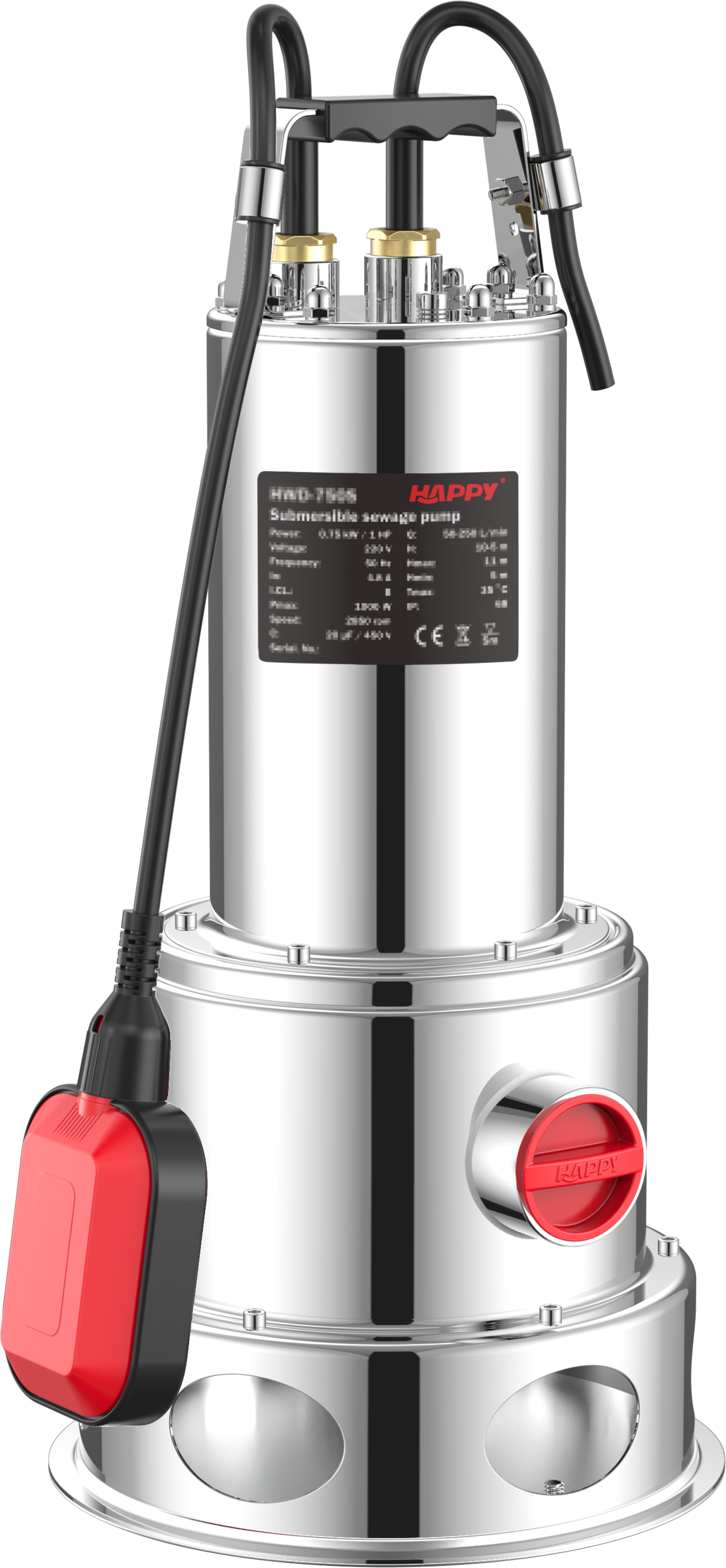
Representative pump unit from a product line that also includes submersible, deep well and solar categories.
The global pumps market was estimated at USD 61.32 billion in 2024 and is projected to reach USD 79.01 billion by 2029, according to MarketsandMarkets. Within that market, surface pumps accounted for a 57.63% share of the total global pump market in 2025, based on Mordor Intelligence's industry reporting. Those figures frame a practical reality for procurement teams: the surface pump category carries the majority of pump demand, and most specification errors in that category happen before the quotation stage — at the point where one product family is assumed to fit every duty.
Municipal water supply and industrial circulation are frequently written into the same tender document. Both move water, both often use equipment installed above ground, and both are typically described with the same two variables: flow rate and head. The design characteristics behind a pump serving a municipal network and one serving an industrial circulation loop are nevertheless different. The differences surface in duty cycle, water condition, material selection, control arrangement and installation layout — and they determine whether a unit performs for years or is replaced within one budget cycle.
This guide matches the surface pump category, and the technical range surrounding it, to specific applications including municipal water, industrial circulation, residential building supply, swimming pool circulation and sewage duty. It also marks where the surface category stops and where submersible or solar equipment takes over.
Why a One-Size-Fits-All Surface Pump Specification Fails
A pump does not operate at a label, it operates at a duty point — the intersection of a required flow rate and a required head at a specific moment in the system. Two projects can both state "60 m head" and still require different hardware, because the surrounding conditions differ: how long the unit runs each day, whether the water is clean or particle-bearing, whether the installation can maintain suction, and how the discharge pressure is controlled.
In municipal water duty, the dominant design question is usually volume and network stability. Water has to reach a distribution point, a tank, or an elevated reservoir, and the pump may cycle on and off as demand fluctuates. Pressure control units, pressure tanks and level-based controllers therefore carry as much weight in the specification as the pump itself. In industrial circulation duty, the dominant question is continuity. A cooling or process loop usually runs for extended periods, and an interruption is not a service inconvenience but a thermal or process risk. That shifts attention toward continuous-cycle capability, stable operating behaviour over long runs, and material choices that tolerate the fluid and the environment.
A single specification that ignores this distinction typically over-specifies flow for the circulation loop and under-specifies duty endurance, or the reverse. Neither failure appears in the first week. Both appear in service records.
Municipal Water and Industrial Circulation Side by Side
The comparison below is a decision aid rather than a product specification. It is intended to help buyers identify which characteristics to interrogate first when a project spans both duty types.
| Duty characteristic | Municipal water | Industrial circulation |
|---|---|---|
| Primary function | Water delivery and boosting across a network or to storage | Circulation and cooling inside a repeated loop |
| Flow profile | Variable, sometimes large-volume transfer at network scale | Stable and matched to a heat-exchanger or process load |
| Duty cycle | Intermittent to continuous, driven by demand | Typically continuous or long-cycle operation |
| Water condition | Clean water in most supplied applications | Clean water; process fluids need material confirmation |
| Material focus | Cast iron, stainless steel or engineering plastics depending on exposure | Corrosion-resistant and stainless selections where the loop demands it |
| Control emphasis | Pressure tanks, pressure control units, level logic | Controllers, matched equipment, junction boxes, filtration |
| Consequence of interruption | Service loss for a community or building | Process slowdown or thermal risk |
Reading the table in procurement terms: a municipal buyer should confirm the control and storage arrangement early, while an industrial buyer should confirm duty endurance and material compatibility early. Both should confirm installation position, because that single decision determines whether the surface category is even applicable.
Where the Surface Pump Category Sits in a Full Pump Line
A surface pump is a pump installed above the water level rather than submerged in it. That single installation characteristic defines the category, its strengths and its boundaries. Because the unit sits above the source, water is drawn in through a suction arrangement, which makes the surface category a natural fit for tanks, sumps, mains-fed systems, pools, buildings and process loops where the water can be reached from above ground.
ZHEJIANG HAPPY PUMP INDUSTRY CO.,LTD, established in 1990 and located in Daxi Town, Wenling, Zhejiang, is a manufacturer specializing in water pumps and motors. Its product range includes 11 major series covering more than 500 specifications, with main products covering surface pumps, submersible pumps, deep well pumps, solar pumps, motors, pressure control tanks and spare parts. Within the pump line specifically, the subcategories include surface pumps, submersible pumps, deep well pumps, solar pumps, centrifugal pumps, self-priming pumps, pressure tanks, swimming pool pumps, multistage pumps and sewage pumps.
That structure matters to buyers because the surface category is not a standalone product but one option inside a broader family. When a project's conditions exceed what a surface installation can serve — deep boreholes, fully submerged duty, off-grid solar water supply — the correct response is usually a different category within the same line, not a larger surface pump.
Reading the Technical Range: Flow, Head, Power and Protection
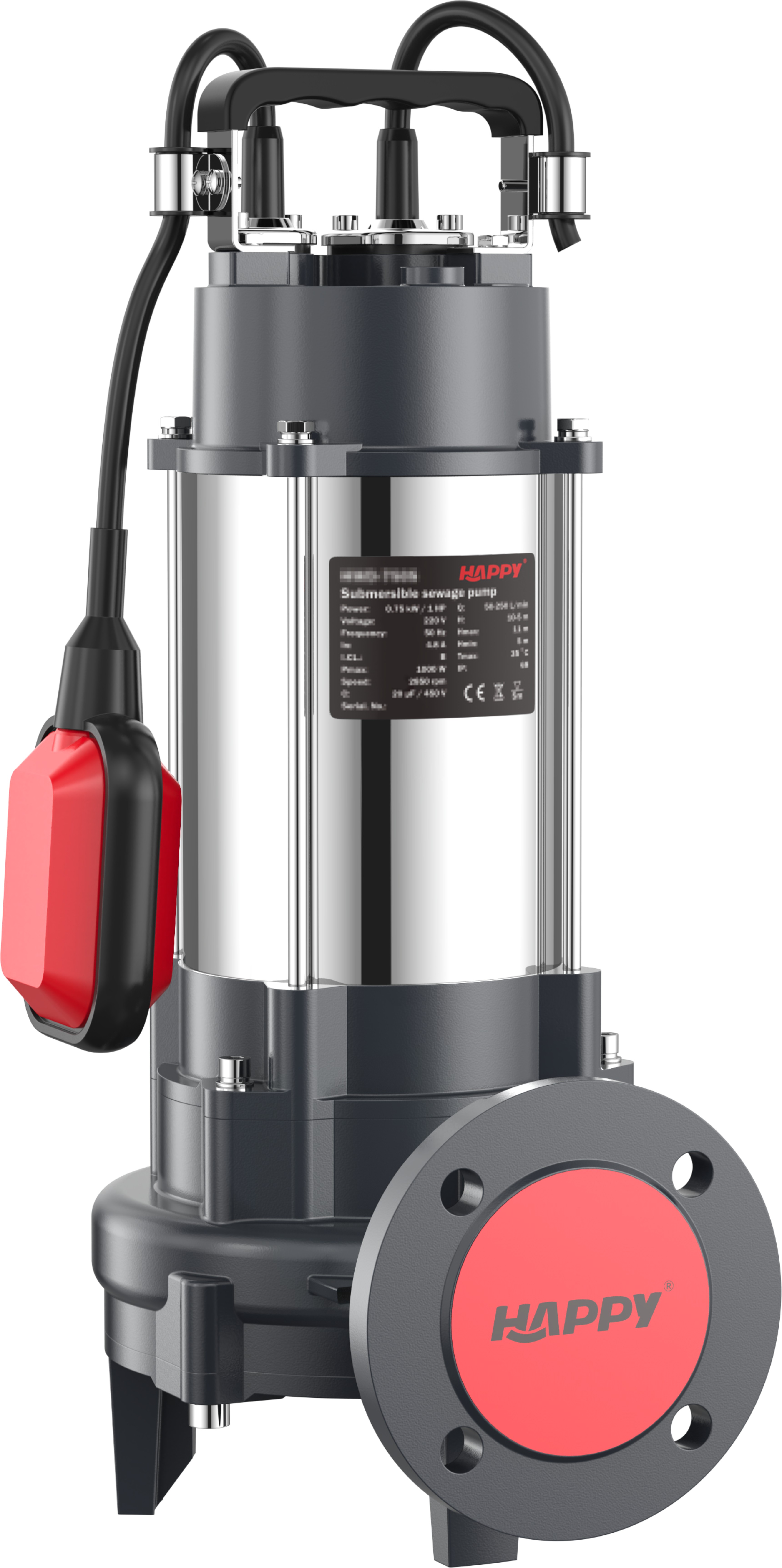
Internal construction reference: pump selection depends on the duty point, not on the product label.
The stated technical range across the Happy Pump pump line is a power range of 0.25–550 kW, a head range of 20–100 m and a flow range of 1.5–5500 m³/h, with protection ratings of IP44 and IP68 depending on model and installation type. Main materials include cast iron, stainless steel and engineering plastics.
Those numbers describe a range, not a single product. The lower end of the flow range — 1.5 m³/h — aligns with household and small domestic duties. The upper end — 5500 m³/h — aligns with municipal and large industrial scale. The head range of 20–100 m is the more instructive boundary for this guide: it covers boosting, building supply, circulation and many network duties, but projects requiring head beyond that band, or requiring draw from a deep borehole, belong to multistage, deep well or submersible categories rather than to a standard surface installation.
Motors used across the range are designated 90S-6 and 90L-6, are available in IE2, IE3 and IE4 efficiency categories under the MS classification, cover a power range of 1–430 HP with speeds of 934–2980 rpm, and are manufactured in cast iron or aluminum. Power supply characteristics matter here: the range spans single-phase and three-phase duty as well as AC configurations, so the available electrical supply at the project site is a selection input, not an afterthought.
Protection class is also a selection input rather than a marketing detail. IP44 corresponds to equipment protected against solid objects and water spray in an above-ground installation. IP68 corresponds to equipment built for sustained submersion, which is characteristic of the submersible category rather than of a surface unit. Mixing the two expectations is one of the most common mismatches in early-stage specifications.
Application Matching: From Municipal Networks to Pool Circulation
The applications stated across the Happy Pump pump range include agriculture irrigation, residential and building water supply and drainage, municipal drainage and water supply, industrial circulation and cooling, solar water pumping, and swimming pool and sewage treatment. Project types include household water supply, garden irrigation, agricultural irrigation, solar off-grid water supply, municipal and engineering projects, and pool circulation and sewage discharge projects. Matched equipment across these duties includes motors, pressure tanks and pressure control units, controllers, junction boxes and filters.
| Application | Role of the surface pump category | What the buyer should confirm first |
|---|---|---|
| Municipal water supply and drainage | Water delivery and boosting within a network or to storage | Flow demand profile, control method, protection class |
| Industrial circulation and cooling | Circulation inside a repeated loop over long duty cycles | Continuous-duty requirement and material compatibility |
| Residential and building water supply and drainage | Building-scale boosting, transfer and drainage support | Available supply phase, pressure tank or controller pairing |
| Household water supply and garden irrigation | Low-flow domestic transfer and pressure support | Suction conditions and single-phase availability |
| Swimming pool circulation | Recirculation through filtration over extended periods | Continuous operation, filter and junction box matching |
| Sewage and sewage discharge projects | Particle-bearing and wastewater duty within the wider line | Whether the model is rated for particle-containing water |
| Agricultural irrigation and solar off-grid supply | Delivery where the source is reachable above ground | Solar controller compatibility where off-grid power is used |
A recurring point across these applications is that working conditions vary by model. Clean water, sewage or particle-containing water, high-head pumping and submersible conditions are not interchangeable, and the model determines which one applies. Selecting by application name alone leaves that distinction unresolved.
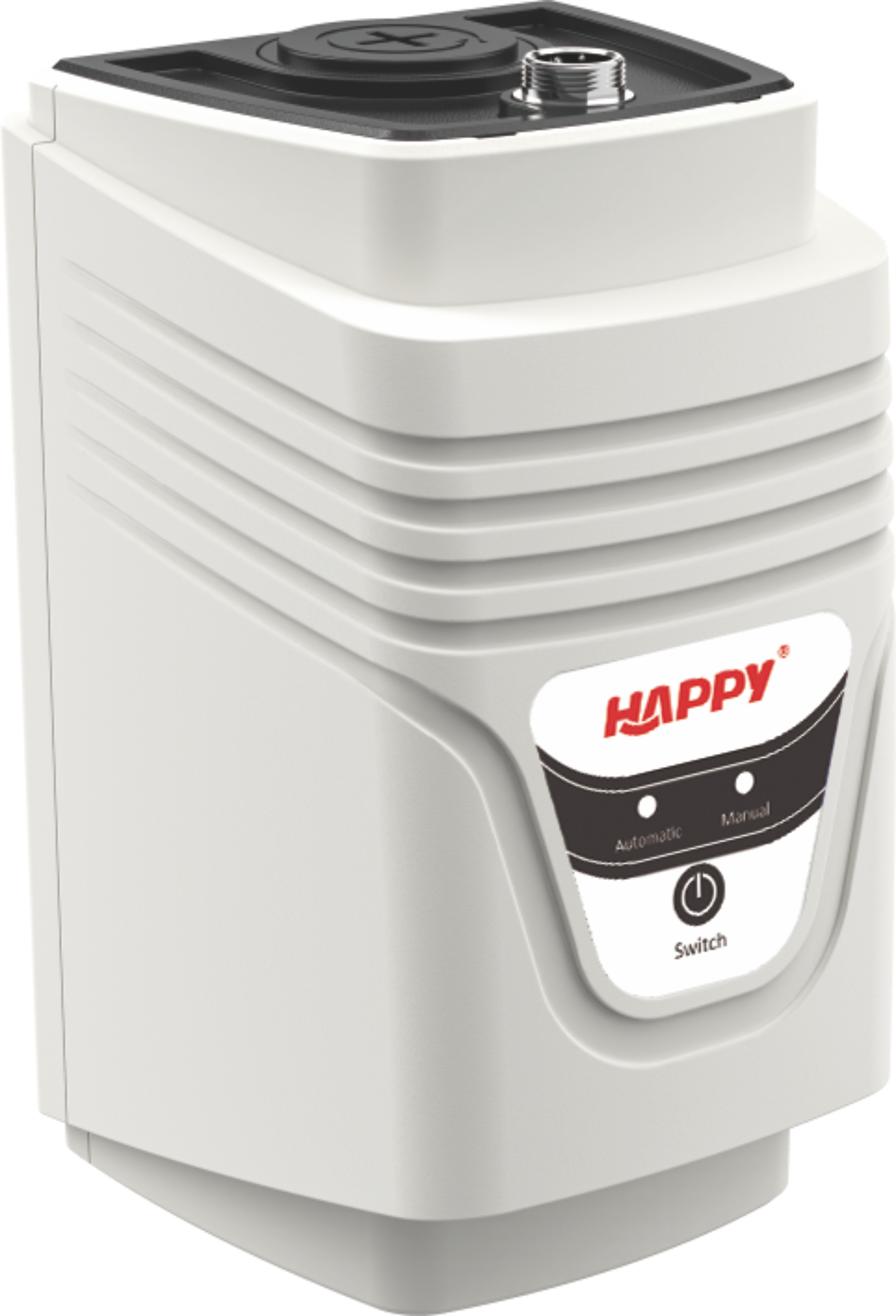
The same product family spans household, building and project-scale duties — which is exactly why duty profiles must be separated before selection.
Market Context Behind the Fit Decision
Three published market signals are relevant to how buyers approach this category.
First, the overall market is expanding at a measured pace. MarketsandMarkets estimates the global pumps market at USD 61.32 billion in 2024, projected to reach USD 79.01 billion by 2029. Growth of this kind usually translates into more suppliers and more overlapping product claims, which raises the value of duty-based selection over price-only comparison.
Second, surface equipment dominates the installed base. Mordor Intelligence reports that surface pumps held a 57.63% share of the total global pump market in 2025. A share of that magnitude means most procurement conversations begin in this category, and most specification mistakes are therefore concentrated here as well.
Third, adjacent duty categories are growing on their own trajectories. Market Research Future values the global agricultural pump market at USD 14.59 billion in 2024, with a projected CAGR of 4.98% through 2035, while Market Data Forecast values the solar pump market at USD 2.90 billion in 2024, driven by falling PV module prices and government subsidies in Asia-Pacific. It is worth noting that solar market valuations diverge between research houses — Expert Market Research places the figure at USD 1.60 billion for the same period — largely because agencies differ on whether solar-ready kits or only fully integrated systems are counted. Buyers comparing category-level figures should therefore check the definition behind the number before using it in a business case.
The practical implication is straightforward. The surface category remains the default starting point for water delivery and circulation duties, while irrigation and solar supply are increasingly treated as distinct duty families with their own equipment logic. Projects that blur the two tend to over-specify one side and under-specify the other.
Surface, Submersible, Deep Well and Solar: Comparing the Options
Surface pumps are not the only solution available for moving water, and treating them as the default for every duty is a common early-stage error. The comparison below positions the surface category against the alternatives that sit in the same product line.
| Category | Installation position | Typical fit |
|---|---|---|
| Surface pump | Above water level, drawing through a suction arrangement | Municipal boosting, industrial circulation, building supply, pool circulation, household transfer |
| Submersible pump | Submerged in the water source | Duties where the source is below reachable suction conditions |
| Deep well pump | Inside the borehole | High-head extraction from depth, outside the standard head band of a surface unit |
| Solar pump | Varies with system design, often off-grid | Off-grid water supply where power availability, not hydraulics, is the constraint |
Compared with fixed-speed, single-function pumping arrangements, the wider product line also includes permanent magnet variable frequency constant-pressure pumps and intelligent pumps, which address the pressure-stability problem that conventional on/off control leaves unresolved. For circulation loops and building supply systems, that difference is often more valuable than a marginal gain in rated efficiency at a single point.
Limits and Boundaries to Confirm Before Ordering
The most consequential limit of the surface category is installation geometry. A surface pump requires the water to be reachable from above; it is not the correct category for deep boreholes or for duty in which the unit itself must be submerged. Those conditions belong to the submersible and deep well categories, where protection up to IP68 applies. Attempting to extend a surface pump into that territory is not a sizing exercise — it is a category error.
A second boundary concerns the fluid. Working conditions across the product line include clean water as well as sewage and particle-containing water, and models differ in which condition they are built for. A unit specified for clean water in a municipal boosting line is not automatically suitable for sewage discharge duty, even if the flow and head figures appear to match.
A third boundary concerns customization. Corrosion-resistant and stainless steel materials, high-head or large-flow configurations, solar power compatibility, and special input or output voltage and frequency all require customization confirmation rather than assumption. Buyers working with unusual supply conditions or aggressive water chemistry should treat those items as engineering questions to be confirmed in writing, not as catalogue variants.
A Practical Fit Framework for Buyers
The following sequence resolves most surface pump selection questions in the order that reduces rework.
- Define the duty point. Establish required flow and required head together, then check whether they fall inside the 1.5–5500 m³/h flow range and the 20–100 m head range. If head exceeds the band, the category is wrong before sizing begins.
- Classify the water condition. Confirm whether the duty is clean water or particle-containing and sewage duty, since model suitability differs.
- State the duty cycle. Distinguish intermittent network demand from continuous circulation or pool recirculation, because the two place different demands on the unit.
- Confirm the installation position. Above-ground suction, submerged, or off-grid solar determines whether a surface pump, a submersible pump or a solar pump is the correct starting category.
- Check the electrical supply. Available phase, voltage and frequency must align with the motor configuration; the range spans single-phase and three-phase duty across a 0.25–550 kW power band.
- Match the control accessories. Pressure tanks, pressure control units, controllers, junction boxes and filters are part of the duty, not optional extras, particularly where stable discharge pressure is required.
- Confirm material and protection class. Cast iron, stainless steel or engineering plastics, and IP44 versus IP68, must follow the installation and fluid rather than the price point.
- Document any customization. Special voltage or frequency, solar compatibility, corrosion resistance and high-head or large-flow requirements should be confirmed explicitly before order placement.
Supplier Context: What to Verify
Because this category is crowded, supplier verification is part of the selection process rather than a separate step. Verifiable parameters for ZHEJIANG HAPPY PUMP INDUSTRY CO.,LTD include a founding year of 1990, a manufacturing facility covering approximately 55,000 m² of site area with approximately 210,000 m² of building area, and an annual production capacity of around 4,000,000 pieces per year. The company reports approximately 800 employees, including about 200 professional and technical staff, and operates an enterprise research institute and R&D center using CFD, FEA and motor electromagnetic design tools. Export business accounts for 99% of total sales, with products exported to more than 150 countries and regions.
For a buyer, those facts are useful because they are checkable. A supplier capable of covering surface, submersible, deep well and solar categories within one manufacturing system can also advise when a surface pump is the wrong answer — which is the practical value of choosing a supplier whose line extends beyond the category being purchased.
Future Outlook
Two directional shifts are visible in this category. The first is efficiency classification: motors across the range are available in IE2, IE3 and IE4 categories, and continued tightening of efficiency expectations will push more of the installed base toward higher classes over replacement cycles. The second is control architecture: permanent magnet variable frequency constant-pressure pumps and intelligent pump variants address pressure stability directly, rather than compensating for it with oversized tanks.
Alongside these, solar integration continues to expand the off-grid supply segment, and market valuations in that segment vary by research house because the definition of what counts as a solar pump system is still settling. For buyers, the practical consequence is that duty-based selection becomes more valuable, not less: as product options multiply, the discipline of matching installation, fluid, duty cycle and control to the application remains the only reliable filter.
FAQ
What is a surface pump?
A surface pump is a pump installed above the water level rather than submerged in the water source. Because the unit sits above the source, water is drawn in through a suction arrangement. Within the Happy Pump pump line, the surface pump group is one of several subcategories that also include submersible pumps, deep well pumps, solar pumps, centrifugal pumps, self-priming pumps, pressure tanks, swimming pool pumps, multistage pumps and sewage pumps. The surface designation therefore describes an installation position, and the specific model determines which duty it can serve.
Which applications are surface pumps designed for?
The applications stated across the Happy Pump pump range include municipal drainage and water supply, industrial circulation and cooling, residential and building water supply and drainage, swimming pool and sewage treatment, agriculture irrigation, and solar water pumping. Corresponding project types include household water supply, garden irrigation, agricultural irrigation, solar off-grid water supply, municipal and engineering projects, and pool circulation and sewage discharge projects. Surface installation is generally the natural fit where the water source is accessible from above ground and the duty is delivery, boosting or circulation.
What flow, head and power range should a buyer expect from a surface pump line?
The stated parameters across the Happy Pump pump line are a power range of 0.25–550 kW, a head range of 20–100 m and a flow range of 1.5–5500 m³/h, with protection ratings of IP44 and IP68 depending on model and installation type, and main materials including cast iron, stainless steel and engineering plastics. Motors in the range are designated 90S-6 and 90L-6, are available in IE2, IE3 and IE4 categories under the MS classification, cover 1–430 HP with speeds of 934–2980 rpm, and are made of cast iron or aluminum. Because these figures describe a full line rather than one model, buyers should confirm which portion of the range applies to the specific unit being quoted.
How does a buyer choose between a surface pump, a submersible pump and a solar pump?
Installation condition is the first filter, not price or brand. If the water source can be reached from above ground and the duty is delivery, boosting or circulation, the surface category applies. If the unit must operate submerged, or the water must be drawn from significant depth, the submersible or deep well categories apply instead, where protection up to IP68 is relevant. If the constraint is power availability rather than hydraulics, as in off-grid locations, a solar pump configuration becomes the relevant category. The remaining variables — flow, head, duty cycle, material and control accessories — are then used to refine the choice within the selected category.
What are the main limitations of surface pumps?
The clearest limitation is installation geometry: a surface pump draws water from above and is not suited to deep boreholes or to duty in which the unit itself must be submerged — those conditions require submersible or deep well equipment with higher protection ratings. A second limitation concerns the fluid: working conditions across the product line include clean water as well as sewage and particle-containing water, and models differ in which condition they are built for, so a clean-water unit is not automatically suitable for sewage duty. A third concerns customization: corrosion-resistant or stainless materials, high-head or large-flow configurations, solar compatibility, and special input or output voltage and frequency all require confirmation rather than assumption.
What standards or documentation should be reviewed?
For household and similar electrical pumps, IEC 60335-2-41:2024 defines safety requirements covering temperature limits and connection requirements, as published by the International Electrotechnical Commission. Buyers specifying project-scale municipal or industrial equipment should additionally confirm the model-specific documentation for the duty in question, since pump standards are typically scoped to equipment class and application rather than to a single universal specification. Reviewing standards alongside the duty point prevents a compliant but unsuitable unit from passing a documentation check.
Summary
The surface pump category covers the majority of the global pump market, but that breadth is exactly why duty-based selection matters. Municipal water duty prioritizes volume, network stability and control arrangement; industrial circulation prioritizes continuous operation, stable pressure and material compatibility. Both can use surface equipment, but only when the installation geometry, fluid condition, duty cycle and electrical supply have been confirmed first. Where those conditions point elsewhere, the correct decision is a different category — submersible, deep well or solar — within the same pump line.
For a full overview of the pump and motor range, the company product brochure is available here: Happy Pump product brochure (PDF).