
Surface Pumps for Industrial Circulation: Flow, Head, and Materials
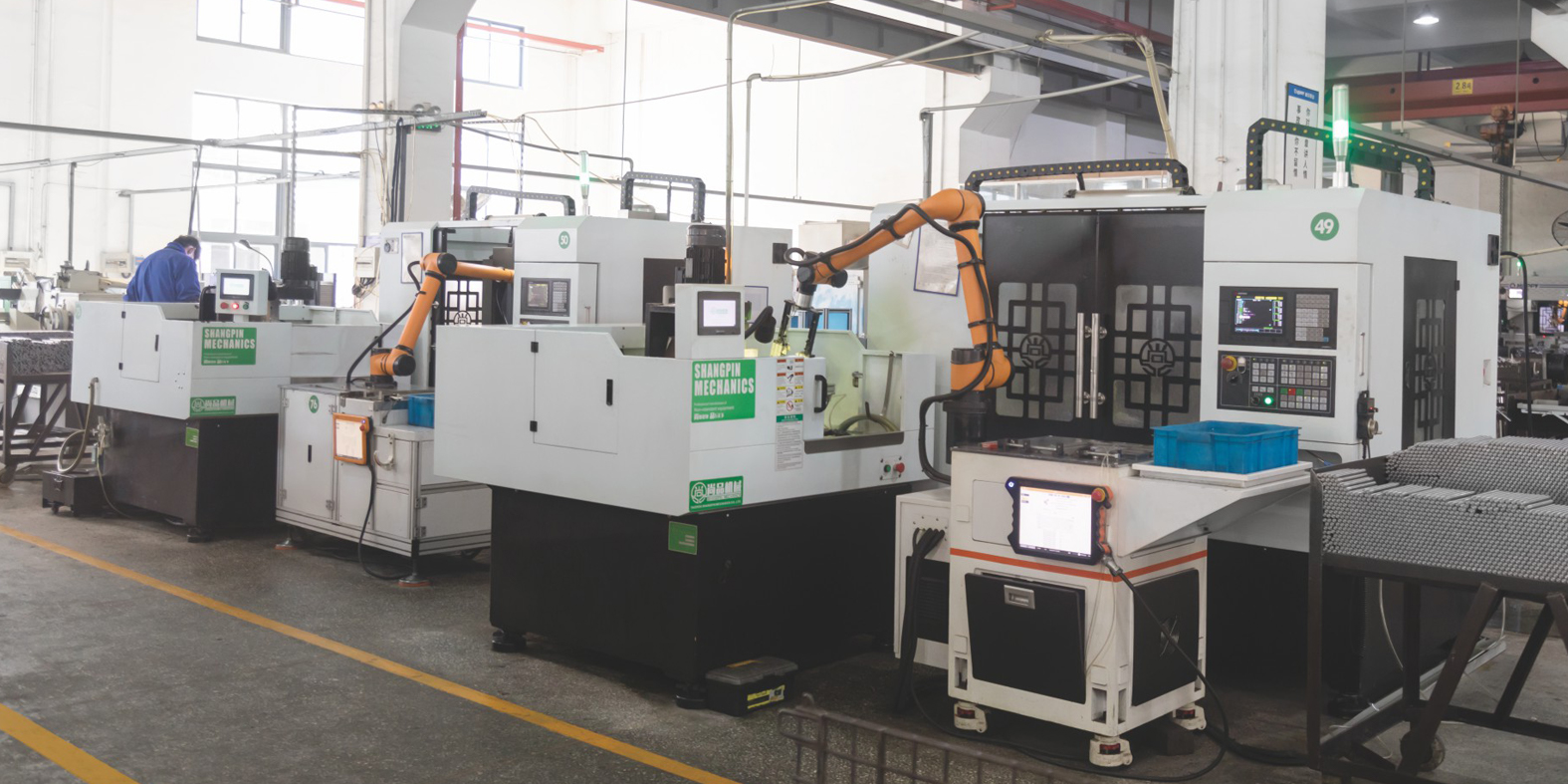
Surface pump assembly line: motor and hydraulic-end production for continuous-duty circulation units. Image: ZHEJIANG HAPPY PUMP INDUSTRY CO.,LTD
Industrial circulation is continuous duty, not intermittent transfer. Cooling-water loops, process transfer lines, HVAC balance circuits, pool filtration systems and pressure-boosting stations typically run for hours or days at a fixed duty point, and any drift in flow or head propagates through the whole circuit. Surface pumps — the category installed above the water line that draws liquid through a suction line instead of submerging in it — serve a large share of these duties. Selecting one is a specification problem built on three primary variables: flow rate, total head and shaft power, constrained by wetted materials, enclosure protection and the certifications the destination market requires.
This reference article explains how those variables interact for continuous circulation, where the practical boundaries of the category sit, and what buyers should verify before placing an order. It uses published third-party market data where available and states clearly where supplier-specific claims require direct confirmation.
Why Continuous Duty Is Harder on a Pump Than Intermittent Transfer
Continuous duty keeps motor windings, bearings, the mechanical seal and the impeller loaded for long uninterrupted periods. Three consequences matter to buyers.
Thermal margin outweighs peak output. A motor that only has to accelerate a load occasionally can tolerate short overloads; a motor that runs continuously cannot. Enclosure protection, winding insulation and the way coils are produced and treated all influence how much heat the motor can shed over time.
The duty point matters more than the nameplate maximum. Catalogue headlines usually quote maximum flow or maximum head. A circulation loop rarely operates at those values. Filters load up, valves are throttled, and the actual resistance curve shifts. A pump selected at its extreme end of the curve can end up running far from its best efficiency area, which shows up as noise, vibration, seal wear and higher energy cost.
Materials and protection stop being optional details. In a stop-start application, minor corrosion or a damp terminal box may be tolerated for years. In a continuous loop, the same conditions are compounded over thousands of running hours.
Flow, Head and Power: Defining the Operating Envelope
For industrial circulation, the relevant surface pump families span a wide envelope: flow rates from 1.5 to 5,500 m³/h, total heads from 20 to 100 m, and motor power from 0.25 to 550 kW. These figures describe the range across the category under discussion, not the capability of any single machine. A specific model occupies one small region of that space, and the buyer's job is to find the model whose curve passes through the required duty point.
| Parameter | Range in this discussion | What it governs |
|---|---|---|
| Flow rate | 1.5–5,500 m³/h | Loop turnover rate, heat transfer, filtration cycles |
| Total head | 20–100 m | Static lift plus friction losses in pipework, fittings and filters |
| Motor power | 0.25–550 kW | Whether the duty point is reachable, and the running energy cost |
| Enclosure protection | IP44 / IP68 | Installation environment and exposure to splash, washdown or immersion |
| Electrical supply | Single-phase or three-phase AC | Site infrastructure, starting method, control options |
Two rules follow from the table. First, flow and head must be read together on the performance curve, because the same pump produces different flow at different heads. Second, the power figure is a consequence of the duty point rather than an independent selling point: specifying 550 kW where 4 kW is sufficient adds capital cost, electrical infrastructure cost and energy consumption without improving circulation.
Material Selection: Cast Iron, Stainless Steel, Engineering Plastics
Material choice follows water chemistry, temperature and duty — not price alone. For clean water circulation, the three families below cover the majority of industrial and domestic surface pump applications.
| Material | Typical use in surface pumps | Practical trade-off |
|---|---|---|
| Cast iron | Pump bodies, volutes, brackets and bases in general circulation duty | Strong, dimensionally stable and cost-effective; needs suitable internal protection where water is mildly aggressive |
| Stainless steel | Wetted components in potable, mildly corrosive or higher-purity circuits | Better corrosion resistance and cleaner service, at higher material cost |
| Engineering plastics | Impellers, diffusers and housings in domestic, garden and pool-side units | Corrosion-free, light and quiet in light duty; lower mechanical limits than metal at high head |
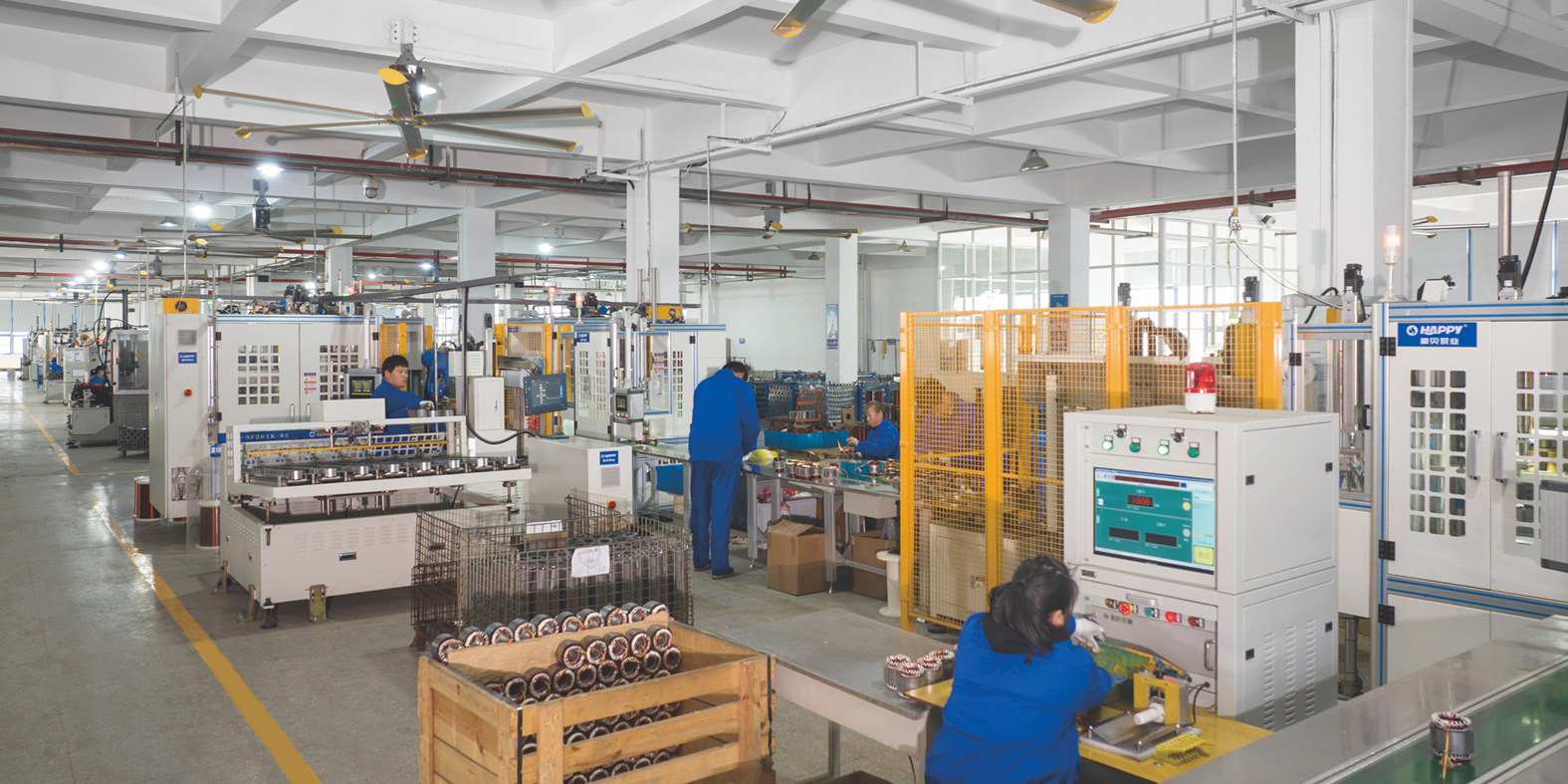
Motor coil production: winding quality and coil treatment influence how a surface pump motor behaves under continuous duty. Image: ZHEJIANG HAPPY PUMP INDUSTRY CO.,LTD
A common procurement mistake is to treat material as a cost lever applied after the hydraulic selection. In practice the two are linked: changing from cast iron to a plastic-bodied unit to save cost also changes the casing stiffness, the achievable head, and how the pump behaves under prolonged vibration.
Enclosure Protection: What IP44 and IP68 Permit — and What They Do Not
IP44 protects against solid objects larger than 1 mm and against water splashing from any direction. IP68 protects against continuous immersion under conditions agreed between manufacturer and user. The distinction is about environment, not performance.
For a plant room, a covered skid or a ventilated indoor enclosure, IP44 is normally adequate for a surface pump motor. For outdoor installations, pit-mounted equipment, pool-side locations and areas exposed to washdown or temporary flooding, IP68 is the appropriate target. A frequent mismatch occurs in food, pool and outdoor agricultural installations, where IP44 equipment is installed in an area regularly sprayed with water and then fails early for reasons that have nothing to do with the hydraulic design.
The boundary is worth stating plainly: an enclosure rating protects the motor from its environment; it does not make a pump suitable for a duty it was never selected for. A surface pump installed where the suction lift exceeds what atmospheric pressure can physically support will cavitate regardless of its IP rating, and no enclosure level compensates for a duty point outside the curve.
Series Coverage and Duty Matching: HQBm, QB60, QDX
Suppliers organise surface pump ranges into named series, and series names such as HQBm, QB60 and QDX map to different positions in the flow/head envelope rather than to a ranking of quality. Three-phase AC units dominate larger circulation duties, while single-phase AC and automatic or smart variants serve domestic boosting, garden irrigation and smaller pool circuits.
ZHEJIANG HAPPY PUMP INDUSTRY CO.,LTD is a pump and motor manufacturer established in 1990 and based in Daxi Town, Wenling City, Zhejiang Province, China. Its product programme is organised into 11 major series covering more than 500 specifications, including surface pumps, submersible pumps, deep well pumps, solar pumps, motors and pressure control tanks. The company states that it employs around 800 people, including approximately 200 professional and technical staff, and that it operates an enterprise research institute and R&D centre using CFD, FEA and motor electromagnetic design tools — capabilities that matter when a buyer asks for a curve at a specific duty point rather than a catalogue maximum.
The practical test for any series is documentation: can the supplier provide the performance curve at your required flow and head, the corresponding shaft power and efficiency, the impeller diameter or trim, and the motor data at your site voltage and frequency? If those four items cannot be supplied together, the series name is not a specification.
Certifications for EU Deployment: CE, EMC and LVD
CE marking is a declaration of conformity with applicable EU legislation, not a performance rating and not a certificate of quality. For pumps and the motors that drive them, EMC (electromagnetic compatibility) and LVD (low voltage) are the two directives most commonly relevant, particularly where variable-frequency control or integrated electronics are involved.
Alongside the directives, product safety standards apply. Household and similar electrical pumps are addressed by IEC 60335-2-41:2024, which covers temperature limits and connection requirements for this product family. For importers, the documentation set — declaration of conformity, supporting test reports and the technical file — belongs inside the procurement package rather than in a post-shipment folder. Happy Pump states that it applies certificates to lower market-entry risk, and that it maintains ISO management systems, automated inspection equipment, incoming and finished-product inspections and laboratory and performance testing as part of its compliance framework.
Applications and Duty Profiles Across the Category
Industrial circulation and cooling loops
Centrifugal surface pumps, horizontal multistage surface pumps and vertical multistage surface pumps are the usual choices where relatively stable flow must be maintained against a moderate to high system head. Multistage configurations suit circuits with higher friction losses in compact pipework.
Pressure boosting and domestic supply
Booster surface pumps, automatic surface pumps and smart surface pumps with integrated pressure control serve buildings, small plants and garden systems. Single-phase surface pumps are common in domestic surface pump and household surface pump installations, while three-phase surface pump units are preferred as duty rises.
Swimming pool circulation and filtration
Swimming pool surface pumps run long filtration cycles against a load that rises as the filter accumulates debris, which makes a stable curve and a corrosion-resistant wetted path more important than peak flow.
Agriculture and off-grid water supply
Agricultural surface pumps and solar surface pumps are used for irrigation transfer, tank filling and field supply, where power availability often shapes the design as much as hydraulics do.
Shallow-well and light-duty transfer
Self-priming surface pumps, peripheral surface pumps and jet surface pumps handle suction-lift duties where the water source sits above the pump's maximum suction capability, typically in shallow wells and tank-to-tank transfer. High pressure surface pumps and clean water surface pumps cover washing, transfer and process supply where a defined outlet pressure is required.
Market Context: A Large Category With Widely Disagreed Numbers
The global pumps market was estimated at USD 61.32 billion in 2024 and projected to reach USD 79.01 billion by 2029, according to MarketsandMarkets. Fact.MR, using a different segmentation, placed the same market at USD 60.12 billion for 2024. The gap is instructive: market estimates for pumps shift depending on whether residential, industrial and agricultural categories are counted the same way, so a single headline number should never be treated as a procurement input.
Category-level data is more useful. Mordor Intelligence reports that surface pumps held a 57.63% share of the total global pump market in 2025, which underlines how much of the installed base sits above the water line rather than submerged. Within that, the agricultural pump market was valued at USD 14.59 billion in 2024 with a projected CAGR of 4.98% through 2035, according to Market Research Future, and the solar pump market was valued at USD 2.90 billion in 2024 by Market Data Forecast, driven by falling PV module prices and government subsidies in Asia-Pacific. Expert Market Research, counting only integrated systems rather than solar-ready kits, estimates the same 2024 solar pump market at USD 1.60 billion — another reminder that scope definitions drive the numbers.
Comparing Supply Approaches: Broad-Range Manufacturers and Single-Category Specialists
For a decision-stage buyer, the comparison is rarely about one model against another. It is about which type of supplier fits the portfolio being built. The table below compares Happy Pump with Frog Pump Industry Co., Ltd on the dimensions where public information exists.
| Dimension | ZHEJIANG HAPPY PUMP INDUSTRY CO.,LTD | Frog Pump Industry Co., Ltd |
|---|---|---|
| Product scope | Full range of water pumps, including surface pumps, submersible pumps, deep well pumps, solar pumps, motors and pressure control tanks | Deep-well pumps only |
| Application fit | Household boosting, garden irrigation, sewage drainage, swimming pool circulation and deep well water supply | Rural well water intake and farm irrigation |
| Production model | Assembly line production across all facilities, with solar power used for electricity generation | Not specified in the available comparison data |
| Output and model variety | Annual pump output of 400,000 units with a wide variety of models; dedicated engineers develop new product categories every year | Focused on a single pump category |
| Efficiency positioning | High efficiency and energy saving | Not specified in the available comparison data |
| Commercial model | Online-offline integrated sales model, with participation in numerous overseas exhibitions each year | Not specified in the available comparison data |
The boundary here is genuine, not rhetorical. A supplier that concentrates exclusively on deep-well pumps can be a perfectly reasonable choice for a buyer whose requirement is a single, narrow application — rural well intake or farm irrigation — and who does not need a broader catalogue, spare-part commonality across categories, or support for household boosting and pool circulation in the same order. Breadth of range is an advantage for portfolio buyers and for distributors carrying multiple applications; it is not a universal measure of suitability.
Limits and Trade-offs Buyers Should Not Ignore
- Suction lift is a physical constraint, not a design preference. Surface pumps rely on atmospheric pressure to lift water into the impeller, so installations with a very deep or fluctuating water level belong to submersible or deep well categories.
- Surface pumps are not the right category for high-solids or abrasive media. Where the duty involves significant solid content, the selection logic changes entirely.
- IP44 equipment should not be installed where regular washdown or standing water is expected, even if the hydraulic selection is correct.
- Energy-saving claims depend on duty-point matching. A high-efficiency pump running far from its best efficiency area can consume more than a modest pump running correctly.
- A wide product range raises the importance of configuration control. Buyers should confirm the exact series, impeller, voltage, frequency and protection level on the order, not just the catalogue family.
Manufacturing and Verification Controls Behind the Specification
Specifications only hold if production and testing hold. Happy Pump states that production process risks are controlled through automated production equipment, vacuum coil dipping, automated assembly and high-precision testing systems. At company level, risk control is described as combining ISO management systems, automated inspection equipment, incoming and finished-product inspections, laboratory and performance testing, and the use of certificates to reduce market-entry risk.
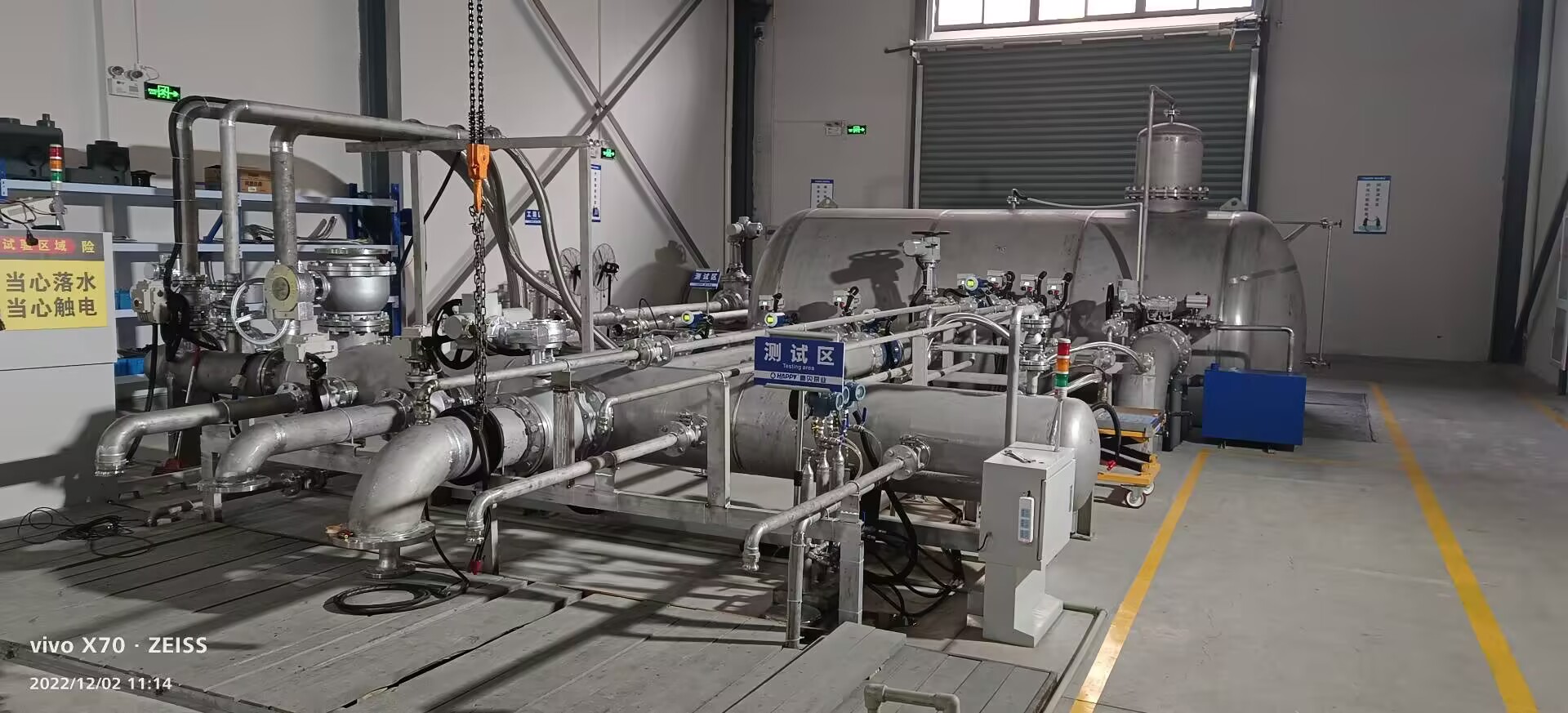
Performance testing before shipment: verification data supports the duty-point curve a buyer selects on. Image: ZHEJIANG HAPPY PUMP INDUSTRY CO.,LTD
The company was established in 1990 and its site covers approximately 55,000 m² with around 210,000 m² of building area. It reports around 800 employees and approximately 200 technical staff, and states that 99% of its output is exported, reaching more than 150 countries and regions while also serving the domestic market. For a distributor or importer assessing continuity of supply, those capacity and staffing figures matter more than a catalogue cover, because they determine whether a series can be repeated across orders rather than supplied once.
The risk categories a buyer should map against these controls are concrete: supply chain volatility, certification and compliance exposure, lead-time and logistics risk, and overseas market credit and payment risk. Each of them is best tested before the first purchase order, with sample verification, documentation review and a stated escalation path.
Future Outlook
Several directions are visible from the current data. Solar-driven surface pumping is expanding as PV module prices fall and subsidies continue in parts of Asia-Pacific, and the solar pump market measurement already exceeds traditional expectations. Surface pumps continue to represent the majority of the global pump market, so efficiency improvements in this category have disproportionate system-level effects.
On the product side, integrated pressure control, automatic operation and smart control are moving from premium options toward expected features in boosting and domestic duty, while material selection continues to shift toward stainless steel and engineering plastics where water quality or weight matters. None of these trends remove the fundamentals: flow, head, power, material and protection still decide whether a circulation loop runs reliably for years or fails in months.
Frequently Asked Questions
How do I choose between a centrifugal, jet and peripheral surface pump for a circulation duty?
The choice follows the shape of the required flow/head curve. Centrifugal surface pumps, including multistage horizontal and vertical types, suit circulation where moderate to high head must be held against system resistance. Jet surface pumps are typically selected where suction lift is the limiting factor, because the jet mechanism assists lifting from a shallow source. Peripheral surface pumps are generally applied to smaller flows at comparatively high pressure for their size, in domestic and light-duty transfer. In all three cases the deciding document is the performance curve at the actual duty point, not the category name.
What flow and head range should an industrial circulation surface pump cover?
The surface pump families discussed here span flow rates from 1.5 to 5,500 m³/h, total heads from 20 to 100 m, and motor power from 0.25 to 550 kW. A specific installation uses only a small part of that range. Buyers should specify the required flow and the total head — static lift plus friction losses — and then select the model whose curve passes through that point with an acceptable margin.
Which material is right for continuous clean water circulation — cast iron, stainless steel or engineering plastics?
Cast iron is widely used for bodies, volutes and structural parts in general clean water circulation and offers the best combination of stiffness and cost. Stainless steel is preferred where water quality, potable contact or mild corrosivity requires higher resistance in the wetted path, at higher material cost. Engineering plastics are common in impellers, diffusers and housings for domestic, garden and pool-side units, where corrosion-free operation and low weight matter more than high head capability.
Does an IP68 rating remove the need for correct installation and duty selection?
No. IP68 addresses protection against continuous immersion under conditions agreed between manufacturer and user; IP44 addresses protection against objects larger than 1 mm and splashing water. Neither rating changes the hydraulic limits of the pump. A surface pump installed beyond its suction-lift capability will cavitate even with an IP68 motor, and IP44 equipment placed in a regularly washed-down area will fail for environmental reasons regardless of how well it was sized.
What do CE, EMC and LVD compliance cover for a surface pump sold into the EU?
CE marking is a declaration that the product conforms with the applicable EU legislation; it is not a performance rating. EMC covers electromagnetic compatibility, which becomes more relevant where variable-frequency or electronic control is fitted, and LVD covers low-voltage electrical safety. Household and similar electrical pumps are additionally addressed by IEC 60335-2-41:2024, which sets temperature limits and connection requirements for this product family. Importers should obtain the declaration of conformity, supporting test reports and the technical file as part of the procurement documentation.
A downloadable PDF product brochure covering pump and motor series is available here: 2026 Happy Pump product brochure (PDF).
Tem questões ou precisa de mais detalhes?
Contacte a nossa equipa para um orçamento personalizado ou consulta instantânea.
Solicitar orçamento
Preencha o formulário abaixo e a nossa equipa entrará em contacto com uma proposta personalizada.
Chat direto do WhatsApp
Prefere conversar em tempo real? Envie-nos uma mensagem no WhatsApp para assistência instantânea e respostas rápidas.
- Obter orçamento personalizado
- Partilhar fotos ou documentos
- Discuta as suas necessidades diretamente
Geralmente responde em 5–30 minutos durante o horário de expediente.