
Suspension Fork Specs Compared: Travel, Weight and Wheel Fit
A suspension fork is bought twice: once as a specification, and once as a physical part. The specification is what a catalogue lists — travel, stanchion diameter, wheel size, weight, axle type. The physical part is what has to meet a frame, a hub, a brake caliper, a headset and a rider. Most procurement mismatches occur when a buyer shortlists on the first and only discovers the second at assembly.
This independent buyer comparison examines two reference models from the DFS Dongfangsheng range — CIVET-RLC-TP-32-15X100 and DFS-RLC-TP-RCE-TC-BOOST-15X110 — and separates the parameters that are published and traceable from the parameters a buyer still has to confirm in writing before an order is placed. DFS Dongfangsheng is the brand of DFS TECH (SHEN ZHEN) CO., LTD., a Shenzhen-based manufacturer of mountain bike suspension forks established in 2009. Its published programme covers air forks, carbon forks, and aluminum-alloy and magnesium-alloy suspension forks with travel from 100 mm to 150 mm, and its stated export ratio is 70%, with Europe and the United States listed among its main markets. Every figure below comes from the manufacturer's published parameter sets and model documentation, or from the standards and market sources named in the text. Nothing has been estimated, rounded or interpolated.
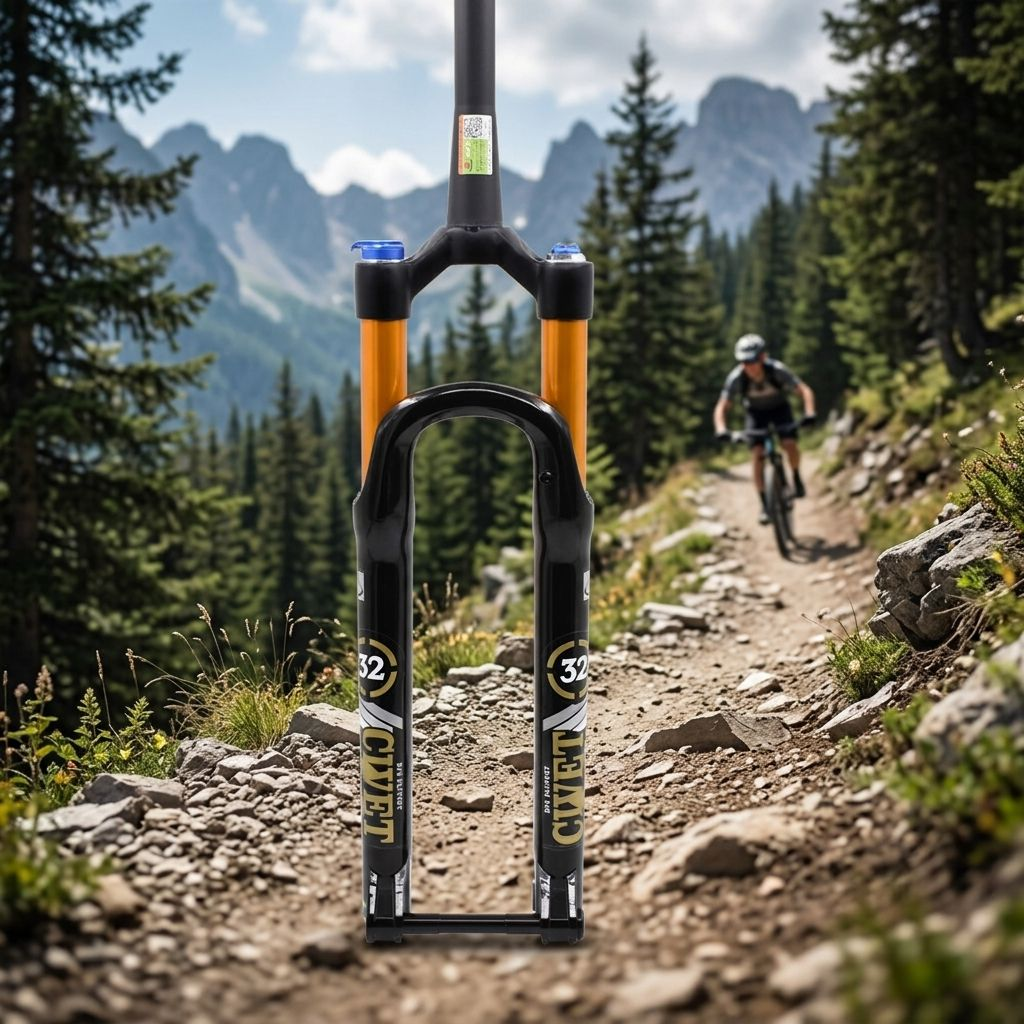
Why travel, wheel size and axle interface decide fork fit
Three parameters decide whether a suspension fork is the right part for a build: travel, wheel-and-axle compatibility, and weight. Travel defines the riding category the fork is engineered for and the space it occupies at the front of the frame. Wheel size and axle standard determine whether the fork can physically be mounted to the intended frame, hub and brake. Weight and material determine where the fork sits in the cost-and-performance range.
The function of the component is described consistently across the manufacturer's scenario documentation: the fork absorbs and manages impacts at the front wheel, while the air spring, hydraulic lockout and compression adjustment support front-end control, handling response and riding stability. The same documentation states the operating logic plainly — the air spring provides support, the hydraulic system provides lockout and compression adjustment, and the actual settings should be matched to the rider, frame, wheel size and terrain.
The manufacturer's own procurement guidance is unusually direct on where buyers go wrong: before purchase, confirm wheel size, fork travel, steerer, front-axle specification, brake-mount interface, frame compatibility, air-pressure setup and operating environment — and do not base a replacement decision on the model name alone.
The two reference models side by side
The table below places the two reference models against each other using only published parameters. Where a field reads “not stated in the available parameter set”, it means the supplier documentation reviewed for this comparison does not publish that value for that model — it does not mean the value is zero or that the feature is absent.
| Parameter | CIVET-RLC-TP-32-15X100 | DFS-RLC-TP-RCE-TC-BOOST-15X110 |
|---|---|---|
| Travel | 100 mm | 100 mm |
| Stanchion | 32 mm AL 7050, hard anodized | 32 mm AL 7050, hard anodized |
| Wheel compatibility | 26 inch, 27.5 inch, 29 inch | 29 inch |
| Front axle | 15 × 100 mm (per model designation) | 15 × 110 mm Boost (per model designation and published spec) |
| Spring | Adjustable air spring | Adjustable air spring |
| Negative spring | Not stated in the available parameter set | Coil + MCU |
| Lockout | Hydraulic lockout with compression | Remote-control hydraulic lockout with compression |
| Rebound | Not stated separately | Hydraulic rebound adjustment |
| Bushing | Not stated in the available parameter set | Teflon |
| Lower / crown / steerer | One-piece magnesium lower (per procurement parameter set) | Carbon lower, carbon crown, carbon steerer 39.8 mm–28.6 mm taper |
| Disc mount | Disc brake application listed | POST |
| Weight | Not stated in the available parameter set | 1.35 kg |
Source: published DFS Dongfangsheng model parameter sets and procurement parameter documentation for the two reference models. Fields marked as not stated were not published in the reviewed material.
Travel: 100 mm on both reference models, and what that fixes
Both reference models are published at 100 mm travel, which places them at the short-travel end of the manufacturer's 100 mm to 150 mm range. The manufacturer's own selection guidance maps short travel to XC cross-country riding and longer travel to downhill-oriented use, with the coil and air spring types distinguished mainly by cost and weight positioning.
For a buyer, travel is the parameter with the least flexibility after purchase. It is not a setting that can be adjusted on the fork; it belongs to the fork's structure and to the geometry the frame was designed around. That is why the manufacturer's procurement guidance lists fork travel alongside steerer, front axle, brake interface and frame geometry as items to confirm before installation, and why the same guidance recommends supplying the frame model, wheel size, intended travel, steerer, axle, brake-mount type, tyre size and intended use during procurement discussions. A 100 mm fork is a deliberate selection, not a default.
Wheel compatibility: a multi-size platform and a 29-inch platform
The clearest structural difference between the two reference models is wheel compatibility. CIVET-RLC-TP-32-15X100 is published as compatible with 26-inch, 27.5-inch and 29-inch wheelsets. DFS-RLC-TP-RCE-TC-BOOST-15X110 is published as a 29-inch fork.
For distributors, dealers and assemblers, that difference has a direct inventory consequence. A fork covering three wheel sizes allows one reference to serve multiple frame platforms and mixed stock, which reduces the number of part numbers a workshop or assembly line has to hold. The manufacturer highlights multi-wheel-size compatibility in its OEM/ODM case material for exactly this reason. For a programme built around a single 29-inch race platform, the dedicated 29-inch model is the direct match and does not require the buyer to carry broader compatibility.
Wheel size alone, however, does not confirm fit. Tyre clearance is a defined test category for suspension forks in ISO 4210-6:2023, and the manufacturer's own installation guidance asks buyers to confirm frame geometry and tyre clearance in addition to wheel size. A wheel-size match without a clearance check is an assumption, not a verification.
The axle standard is the second half of this compatibility question, and it is the one that most often blocks an assembly. The CIVET reference carries a 15 × 100 mm configuration as indicated by its model designation; the DFS reference carries a 15 × 110 mm Boost configuration as indicated by its model designation and confirmed in its published specification. Hubs and wheelsets are not interchangeable between these two standards, so the front wheel already committed to a programme effectively narrows the fork choice before price or weight is considered.
Weight, material and what 1.35 kg does not tell you
The DFS-RLC-TP-RCE-TC-BOOST-15X110 published parameter set specifies a weight of 1.35 kg, together with a carbon lower, carbon crown, a carbon steerer tube measuring 39.8 mm to 28.6 mm at the taper, a 32 mm AL 7050 hard-anodized stanchion, a Teflon bushing, a coil plus MCU negative spring, remote-control hydraulic lockout with compression adjustment, hydraulic rebound adjustment, a POST disc mount and a 15 × 110 axle. The CIVET-RLC-TP-32-15X100 parameter set specifies a 32 mm AL 7050 hard-anodized stanchion, an adjustable air spring, hydraulic lockout with compression adjustment and a one-piece magnesium lower; its weight is not stated in the material reviewed for this comparison.
Two procurement lessons follow. First, a published weight figure is configuration-specific. Because the same model family is offered with customisable axle specification, brake mount, travel and material through the OEM/ODM programme, the figure that matters is the weight for the exact configuration being quoted, not the headline number for the model line. Buyers should ask for written confirmation against the ordered configuration. Second, an absent weight is a documentation gap rather than a property of the fork: the correct action is to request the value before the RFQ is finalised, not to assume the model is heavier or lighter than a comparable one.
Material choice is the underlying variable. Carbon lowers, crowns and steerers reduce mass but sit at a different cost position than magnesium or aluminum equivalents. The two reference models here are not variants of one product — one is a multi-wheel-size air fork with a magnesium lower, the other is a 29-inch carbon-platform fork published at 1.35 kg. Choosing between them is a build decision, not a “better material” decision.
Interface checklist before an order is confirmed
Six items recur in the manufacturer's installation and procurement guidance. Each one can invalidate an otherwise correct specification match.
- Steerer. The DFS reference publishes a carbon steerer with a 39.8 mm to 28.6 mm taper. The CIVET reference does not publish a steerer dimension in the material reviewed, so the value should be requested and matched to the headset and head tube before purchase.
- Front axle. Match 15 × 100 mm or 15 × 110 mm Boost to the hub and wheelset already committed. The two are not interchangeable.
- Brake mount. The DFS reference publishes a POST disc mount; the CIVET reference lists disc brake application. The caliper adapter and rotor size follow from this interface, not from the fork's travel.
- Frame compatibility. Frame geometry, head tube interface and tyre clearance must be confirmed against the actual frame, not inferred from wheel size.
- Air-pressure setup. The matched equipment listed for installation includes a suspension pump. The DFS reference uses a coil plus MCU negative spring while the CIVET reference uses an adjustable air spring, so initial setup procedure and expected feel differ between the two.
- Operating environment. Documented working conditions cover mountain trails, unpaved surfaces, off-road riding and competition conditions involving impacts and changing terrain. A fork specified for gentle urban use and one specified for trail impacts are not evaluated against the same expectations.
Quality control, testing and the standards a buyer can point to
The manufacturer states that quality control runs from the beginning to the end of production, that every suspension fork is fully assembled and carefully tested before packing, and that 100% of suspension forks are tested before shipment. For bulk orders, the stated acceptance criterion is a pre-shipment test. Those are process commitments; buyers should confirm how they are documented in an order.
On the compliance side, the documentation reviewed includes an Intertek test report for a bicycle suspension fork, report number SZHH00332353, referencing EN 14766:2005 and covering the European Union market, associated with DFS-RLC-TP-RCE-TC-BOOST-15X110.
Standards context is worth stating precisely, because suspension-fork requirements are frequently summarised too loosely in procurement conversations. ASTM F2274-11(2024) establishes performance requirements and associated test methods for qualifying designs of suspension and non-suspension production forks intended for Condition 3 terrain, and identifies compression load, bending load, impact resistance and fatigue tests. ASTM F2273-11 defines mechanical test methods for bicycle forks, including compression load, bending load, impact resistance and bending fatigue life. ISO 4210-6:2023 includes suspension-fork tyre-clearance testing plus front-fork tensile strength, static bending, rearward impact, bending fatigue with impact, and forks intended for hub or disc brakes. A U.S. Consumer Product Safety Commission summary notes that ASTM, EN and ISO bicycle standards contain suspension-fork requirements, including tyre-clearance testing, with details varying by standard and bicycle-use condition.
The practical implication is a document check rather than a badge check. These frameworks contain related but not automatically interchangeable requirements: a report against one standard does not by itself establish conformity with another, and test categories can be mapped at a high level without implying numerical equivalence. Buyers should confirm that the report edition, scope and use condition match the market and model being purchased. For import planning, bicycle front forks are classified under HS code 8714.91 according to a 2026 bicycle parts import guide, which belongs in the customs discussion alongside the technical file.
OEM and ODM capability: what can be customised, and on what terms
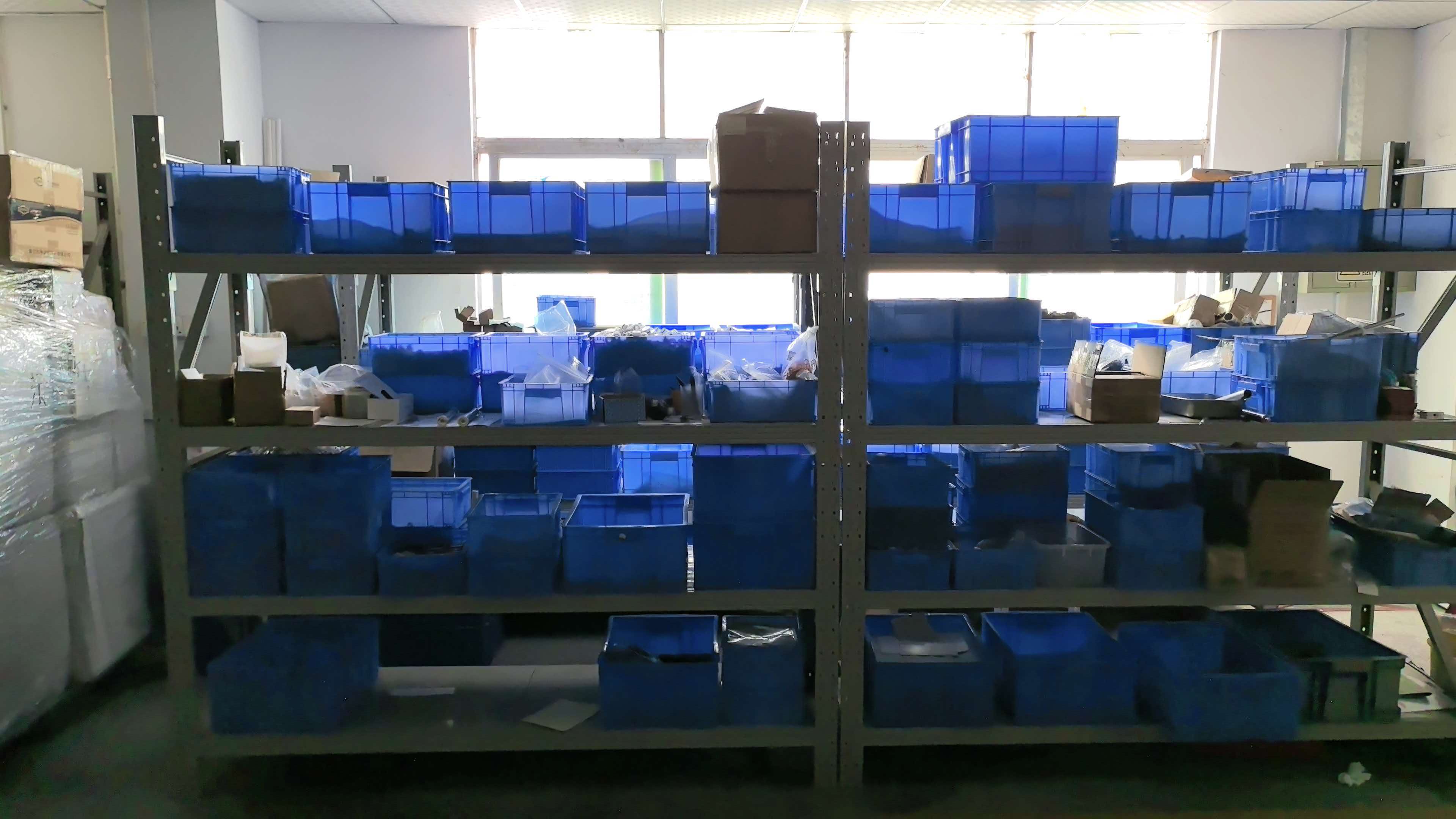
DFS TECH (SHEN ZHEN) CO., LTD. states that it provides suspension fork development and manufacturing services, produces carbon-fiber, aluminum-alloy and magnesium-alloy suspension forks, offers OEM production services and ODM customization services for suspension fork product series, and provides product-series development. The company describes self-developed suspension structure patents and software copyrights, with capabilities in structural design, damping tuning and product testing rather than simple OEM assembly. Its independent brands are DFS, CIVET and ROLL.
The customisation list published by the manufacturer covers logo, material, surface finish, travel, axle specification, brake mount and packaging. Two of those items — axle specification and brake mount — are precisely the interfaces identified above as compatibility risks, which means a customised programme can resolve an interface mismatch, but only if the mismatch is identified before tooling and sampling rather than after.
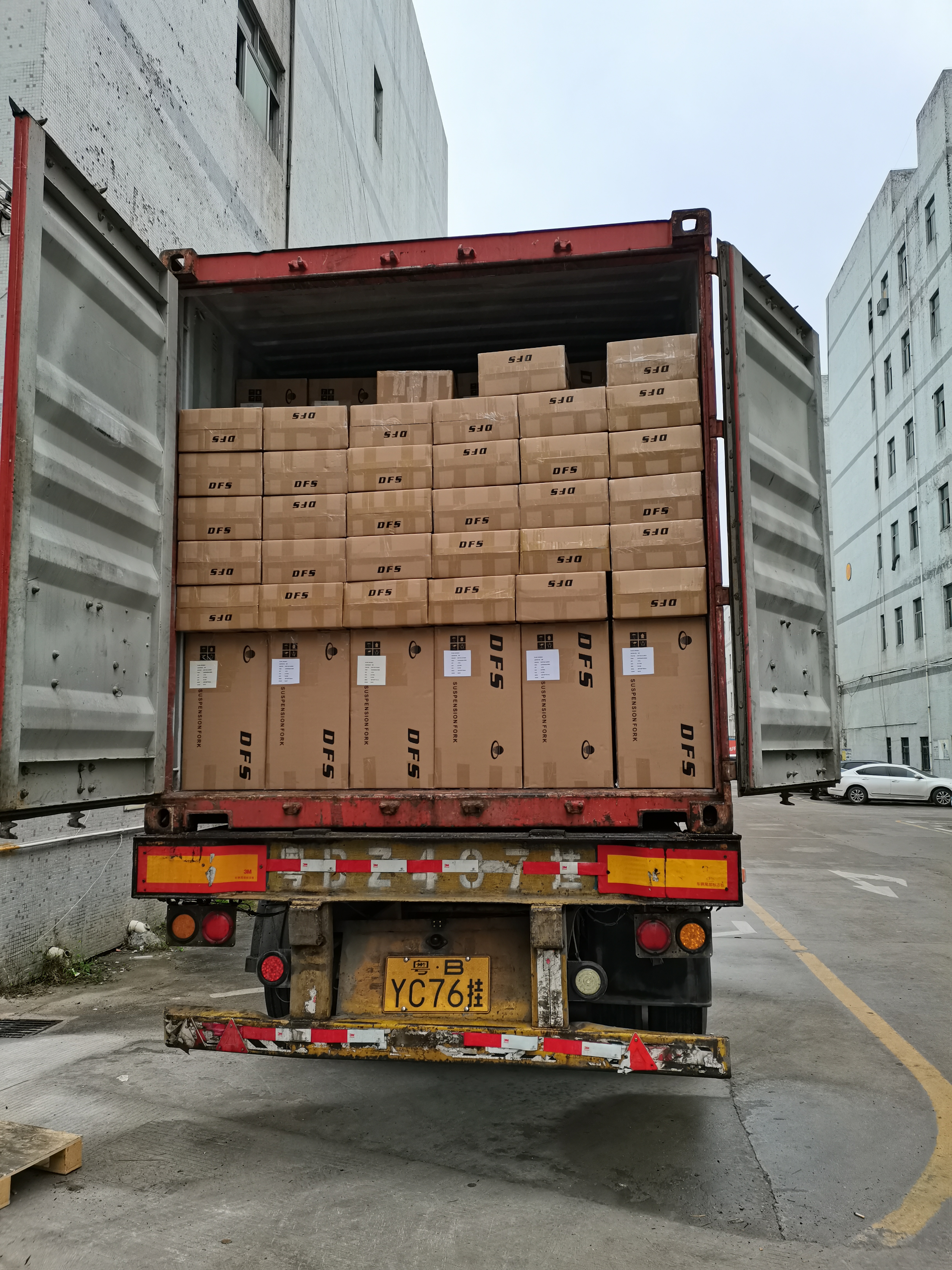
Commercial parameters matter equally at the Evaluation-to-Execution stage. The manufacturer publishes a monthly production capacity of 3,000 suspension fork units, a minimum order quantity of 2,000 pieces, and a lead time of 30 to 120 days. Delivery terms are FOB Shenzhen. Payment terms are stated as 40% deposit, 50% payable after 60 days and 10% payable before shipment. Acceptance is by pre-shipment test, and after-sales support is stated as a two-year warranty with remote technical guidance. Export markets listed include Europe, North America, South America, Southeast Asia, the Middle East, North Africa, South Africa, South Korea and Russia.
A 2,000-piece minimum and a lead time spanning 30 to 120 days mean specification lock-in happens early in the programme. The buyer's leverage is concentrated in the sampling and specification stage, which is where a fixed axle standard, brake-mount type and steerer dimension should be confirmed in writing.
Where these forks fit: XC race and light trail programmes
A 100 mm travel, 32 mm stanchion combination sits in the cross-country and light trail part of the market. The manufacturer positions its full range across XC cross-country and AM all-mountain categories, with travel from 100 mm to 150 mm, and supports lockout plus rebound adjustment, with high-speed and low-speed compression damping adjustment across the line.
The manufacturer's OEM/ODM case material describes bicycle OEM and ODM clients in Germany, Argentina and South Korea, an accumulated quantity of 10,000 units over a three-year duration, and a paint shop that supports custom colours and logo printing for OEM orders. The stated result is stable operation of every suspension fork under tough trail conditions, supported by the quality-control process, with multi-wheel-size compatibility, an air spring, hydraulic lockout, compression adjustment and a lightweight design highlighted as the programme features.
For a dealer or assembler, the multi-size CIVET reference supports mixed 26-inch, 27.5-inch and 29-inch inventory from a single part number. For a race-focused 29-inch build, the DFS reference — 29-inch, 100 mm travel, 1.35 kg, carbon lower, crown and steerer — is the direct platform match. Neither choice removes the requirement to verify steerer, axle, brake mount and frame geometry against the actual build.
Market signals behind material and weight positioning
Market data supports the direction of travel in this category without answering the specification question. The global bicycle suspension system market was valued at USD 0.81 billion in 2025 according to Mordor Intelligence's bicycle suspension system research. The same research package frames a growth path of approximately 3.88% CAGR, with carbon fiber forks moving toward roughly a 35% share by 2030, while a separate commercial industry report places carbon fiber forks at 25% of global fork market share in 2024.
For buyers, the interpretation is narrow and useful: material premiumisation is a market-level trend, not a specification. It explains why carbon-platform models occupy the upper part of a supplier's range and why weight becomes a headline parameter in quotations. It does not make a carbon fork the correct part for a given frame, hub or brake interface, and it does not reduce the number of interface items that have to be confirmed before an order.
What this comparison does not establish
A credible specification comparison should state its boundaries, and this one has four.
First, it covers two models from a single manufacturer. It is not a cross-brand ranking and should not be read as one. The verified third-party data package assembled for this product category records an insufficient competitive landscape, with no comparable manufacturer set collected — so no cross-brand claim is made here.
Second, product-level independent performance data is absent. The same category data records no verified product-level performance figures for air, rebound, carbon, Boost, 27.5, 29er or 32er forks — no measured travel, stiffness, weight, fatigue life or damping data from an independent laboratory. The parameters in this article are manufacturer-published specifications, and they should be treated as such.
Third, weight is published for only one of the two reference models, and even that figure is a model-line value rather than a configuration-locked one. Buyers should obtain configuration-specific confirmation in writing.
Fourth, supplier data in this segment is largely self-reported. The category data notes that verifying actual capacity against trade claims is a critical step for procurement in this market. Model-level verification — a sample build, a dimensional check of the steerer and axle interface, and confirmation that the test report edition matches the target market — remains the buyer's responsibility regardless of how complete a published parameter set appears.
Outlook
Three developments are likely to shape suspension fork procurement over the next few buying cycles. Documentation-driven purchasing is one: as standards editions continue to move — ISO 4210-6:2023 and ASTM F2274-11(2024) are the current editions referenced in this category — the deciding documents will be model-level specification sheets, test reports whose edition and scope match the target market, and written confirmation of axle standard, brake mount and steerer dimension. Import classification under HS 8714.91 stays relevant to landed-cost planning.
Material mix is the second. Carbon-platform forks have been gaining share in premium segments, which increases the number of programmes where weight is a stated procurement parameter and where configuration-specific weight confirmation therefore matters more, not less.
The third is platform strategy. Multi-wheel-size forks reduce SKU counts for dealers and assemblers serving mixed rider bases, while dedicated 29-inch race platforms remain the straightforward choice for single-platform builds. Neither trend changes the underlying rule: travel, wheel-and-axle compatibility and weight decide the shortlist, and steerer, brake mount, frame geometry, tyre clearance, air-pressure setup and operating environment decide whether the order is correct.
FAQ
Which parameters should be compared first when shortlisting a mountain bike suspension fork?
Travel, stanchion diameter, wheel size and damper type are the four core selection parameters, and they should be matched to the intended riding scenario. Within that framework, travel places the fork in a category — short travel for XC cross-country, longer travel for downhill-oriented riding — while wheel size and damper structure determine compatibility and control behaviour. Once those four are settled, the front axle, steerer, brake-mount interface and frame geometry have to be confirmed before purchase.
How do CIVET-RLC-TP-32-15X100 and DFS-RLC-TP-RCE-TC-BOOST-15X110 differ on the headline parameters?
Both are published at 100 mm travel with a 32 mm AL 7050 hard-anodized stanchion. They differ on wheel compatibility, weight and axle: the CIVET model is compatible with 26-inch, 27.5-inch and 29-inch wheelsets and appears with a 15 × 100 mm axle configuration, while the DFS model is a 29-inch fork published at 1.35 kg with a 15 × 110 mm Boost axle. The axle difference matters because hubs and wheelsets are not interchangeable between the two standards.
Which wheel sizes does CIVET-RLC-TP-32-15X100 support, and what should be checked before installation?
It is published as compatible with 26-inch, 27.5-inch and 29-inch wheelsets and specifies a 32 mm AL 7050 stanchion, an adjustable air spring, hydraulic lockout and compression adjustment. Before installation, confirm fork travel, steerer, front axle, brake interface, frame geometry and tyre clearance. For procurement discussions, providing the frame model, wheel size, fork travel, steerer, front axle, brake-mount type, tyre size and intended use reduces compatibility risk.
Is the published 1.35 kg weight valid for every DFS-RLC-TP-RCE-TC-BOOST-15X110 configuration?
The published figure for the model is 1.35 kg, and the same parameter set specifies a carbon lower, carbon crown, a carbon steerer with a 39.8 mm to 28.6 mm taper, a 32 mm AL 7050 hard-anodized stanchion, a Teflon bushing, a coil plus MCU negative spring, remote-control hydraulic lockout with compression, hydraulic rebound adjustment, a POST disc mount and a 15 × 110 axle. Because the model family supports customisation of axle specification, brake mount, travel and material through the OEM/ODM programme, buyers should ask the supplier to confirm weight for the exact configuration quoted.
How is quality controlled, and what are the stated acceptance criteria?
The manufacturer states that quality control runs from the beginning to the end of production, that every suspension fork is fully assembled and carefully tested before packing, and that 100% of suspension forks are tested before shipment. For bulk orders, the stated acceptance criterion is a pre-shipment test.
What does the EN 14766:2005 Intertek report cover, and what else should a buyer check?
DFS Dongfangsheng's documentation includes an Intertek test report for a bicycle suspension fork, report number SZHH00332353, referencing EN 14766:2005 for the European Union market and associated with DFS-RLC-TP-RCE-TC-BOOST-15X110. Because ASTM, EN and ISO frameworks contain related but not automatically interchangeable suspension-fork requirements — covering tyre clearance, structural tests and fatigue tests — buyers should confirm that the report edition and scope match the specific market, bicycle-use condition and model being purchased.
What are the commercial terms for a bulk or OEM suspension fork order?
The published terms are a minimum order quantity of 2,000 pieces, a lead time of 30 to 120 days, FOB Shenzhen delivery, payment of 40% deposit with 50% payable after 60 days and 10% before shipment, and acceptance by pre-shipment test. Monthly production capacity is stated at 3,000 suspension fork units. Customisation covers logo, material, surface finish, travel, axle specification, brake mount and packaging, and after-sales support is stated as a two-year warranty with remote technical guidance.
Technical documentation on the DFS air suspension fork range is available in the DFS Air Suspension Fork 2026 brochure (PDF). Manufacturer information is published at www.dfsfork.com.
Tem questões ou precisa de mais detalhes?
Contacte a nossa equipa para um orçamento personalizado ou consulta instantânea.
Solicitar orçamento
Preencha o formulário abaixo e a nossa equipa entrará em contacto com uma proposta personalizada.
Chat direto do WhatsApp
Prefere conversar em tempo real? Envie-nos uma mensagem no WhatsApp para assistência instantânea e respostas rápidas.
- Obter orçamento personalizado
- Partilhar fotos ou documentos
- Discuta as suas necessidades diretamente
Geralmente responde em 5–30 minutos durante o horário de expediente.