
Suspension Fork Supplier Evaluation: A Long-Term Checklist
The global bicycle suspension system market was estimated at USD 0.81 billion in 2025 by Mordor Intelligence, a commercial research source. The figure matters less for its precision than for what it implies about sourcing: suspension forks are no longer a niche component bought once from a trading company. They are a recurring, specification-sensitive input into mountain-bike assembly programmes, bike-brand projects and aftermarket ranges. When a buyer commits to a two- or three-year programme, the real question is not whether the first shipment looks right. It is whether the same fork, with the same tune, finish and documentation, can be repeated at scale.
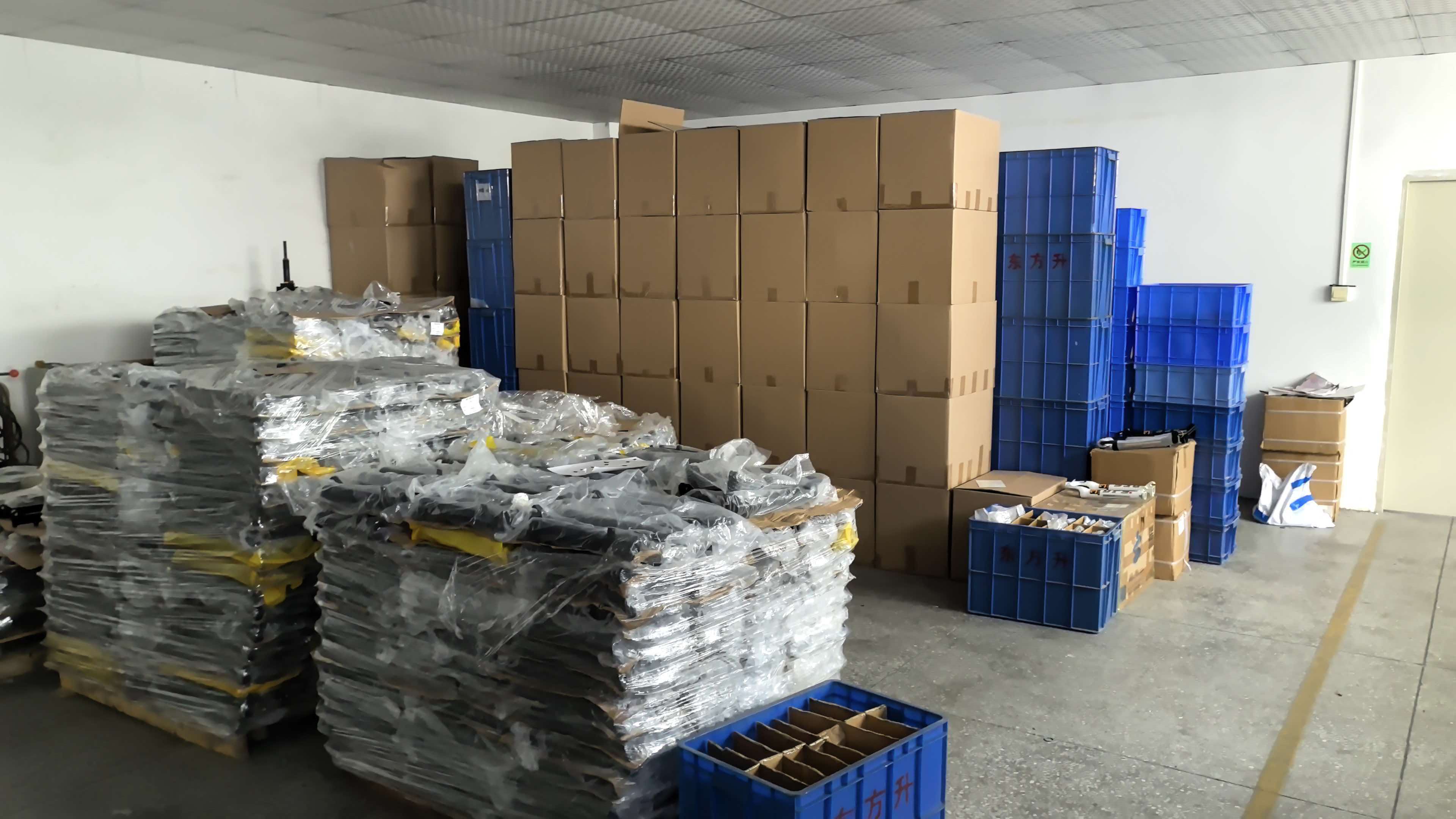
DFS TECH (SHEN ZHEN) CO.,LTD. is a Shenzhen-based manufacturer of mountain-bike suspension forks, founded in 2009 and operating a 4,000 m² facility with 20–50 employees, an annual output of 100,000 units and a five-person R&D team. The company owns the DFS, CIVET and ROLL brands and exports about 70% of its output, mainly to the EU and USA. It is the reference supplier in this evaluation framework, which is designed to be applied to any candidate factory.
Why long-term supplier evaluation is different from a product audit
A product audit asks a narrow question: does this fork meet the drawing? A supplier sustainability review asks a broader one: can the organisation keep meeting the drawing after sample approval, through material substitution, staff turnover, capacity pressure and regulatory change? For OEM buyers, switching costs are real. Frame integration, decal and packaging approvals, test reports and dealer expectations all travel with the programme. A supplier that cannot document its process creates hidden cost in every subsequent order, even when the unit price looks competitive.
The opportunity is equally clear. A supplier that can show end-to-end quality control, stable commercial terms and model-level specifications reduces the buyer's integration risk and shortens the path from sample to production. That is the difference between a transactional purchase and a supply relationship that survives a product cycle.
A four-layer evaluation framework
The framework in this article separates evidence into four layers. Layer one is quality control: what the factory does from the first article to the final carton. Layer two is commercial terms: what MOQ, Incoterms and payment structure reveal about capacity planning and risk sharing. Layer three is specification documentation: whether the supplier knows its own product at the level required for frame integration. Layer four is OEM/ODM support and compliance documentation: whether the supplier can carry a brand programme and support the claims the buyer will make in its target markets.
Each layer produces a different kind of evidence. A sample proves that a fork can be built. A QC record proves that the factory intends to build it consistently. A specification sheet proves that the supplier understands the interfaces the buyer must design around. A compliance file proves that the product can enter the intended market. A long-term supplier evaluation needs all four, not one of them repeated in different formats.
Layer 1 — Quality control: from first article to pre-shipment acceptance
Quality control is the first layer because it is the easiest to claim and the hardest to verify. DFS states that QC is applied from the beginning to the end of production and that every product is fully assembled and carefully tested before being packed in a box. That is a useful baseline. It is not, by itself, a complete audit trail. A buyer should convert the statement into an evidence request with named records and acceptance criteria.
A practical request includes six items. First, the QC plan, showing inspection points from incoming materials to final packing. Second, in-process inspection records for the relevant production batch. Third, the assembly and function test record, covering lockout, rebound, compression adjustment and air-spring pressure retention where applicable. Fourth, the pre-shipment acceptance testing protocol, including sample size, inspection level and the person who signs the report. Fifth, the non-conformance and corrective-action log for the previous twelve months, so the buyer can see how defects were handled rather than only whether they occurred. Sixth, batch traceability, linking the finished fork to the production run and material lots.
Pre-shipment acceptance testing is the buyer's last controllable checkpoint. It should be defined before the purchase order, not negotiated after the goods are boxed. A workable protocol covers sample selection, visual inspection of stanchions and lower legs, axle and disc-mount fit, function checks for lockout and rebound, labelling and packaging. DFS's documented model, in which every product is fully assembled and tested before packing, supports this step. The buyer should still specify the acceptance criteria, the sampling method and who has authority to hold a shipment. A supplier that resists a pre-shipment acceptance clause is revealing something about its process, not about its confidence.
Layer 2 — Commercial terms that reveal operating stability
Commercial terms are not just cash-flow mechanics. They are signals of how a supplier plans capacity and manages risk. The terms provided for this evaluation are a 2,000-piece MOQ, FOB Shenzhen, and payment of 40% deposit, 50% at 60 days, and 10% before shipment.
The 2,000-piece MOQ indicates a batch-production model rather than small-batch assembly. That is appropriate for an OEM programme, but the buyer should ask whether the MOQ applies per model, per colour or per travel configuration, and how production slots are reserved. A low MOQ with no slot confirmation can be less reliable than a higher MOQ with a written schedule.
FOB Shenzhen places export handling at the seller's location and transfers freight and insurance responsibility to the buyer after loading. For a Shenzhen-based manufacturer, this is a natural arrangement. It also means the buyer should arrange inspection before loading, because the point of risk transfer is the ship's rail, not the factory gate. The purchase contract should state the Incoterms version and the loading port clearly.
The 40/50/10 structure spreads payment across production. A 40% deposit funds materials; 50% at 60 days creates a credit window after production; 10% before shipment gives the buyer a final retention tied to pre-shipment acceptance. The 60-day trigger is the clause that needs the most attention. It should be defined by a specific event, such as the bill of lading date, the invoice date or the acceptance report date. The buyer should also confirm that the bank account name matches the contracting entity and that the final 10% is released only after the agreed inspection report is signed.
Layer 3 — Specification documentation as an engineering maturity proxy
Specification documentation is a proxy for engineering maturity because it shows whether a supplier knows its own product at the level required for integration. Two documented models illustrate the difference between a model name and a specification. The CIVET-RLC-TP-32-15X100 is documented as an air-spring fork with hydraulic lockout and compression adjustment; the source material associates this configuration with damping efficiency and adjustable sensitivity.
The DFS-RLC-TP-RCE-TC-BOOST-15X110 goes further, with a complete interface and material description.
| Specification | Documented value |
|---|---|
| Model | DFS-RLC-TP-RCE-TC-BOOST-15X110 |
| Wheel size | 29 inch |
| Travel | 100 mm |
| Stanchion | 32 mm AL 7050, hard anodized |
| Steerer tube | Carbon tapered, 39.8 mm to 28.6 mm |
| Lower and crown | Carbon |
| Spring | Adjustable air spring; negative coil + MCU |
| Bushing | Teflon |
| Lockout | Remote-control hydraulic with compression adjustment |
| Rebound | Hydraulic adjustable |
| Axle | 15x110 Boost thru-axle |
| Disc mount | POST |
| Weight | 1.35 kg |
| Pitch | 125 mm |
This level of detail lets a buyer check frame clearance, axle standard, brake mount, steerer cut, weight budget and service parts without ordering another sample. It also creates a basis for revision control. When a supplier cannot provide this for each SKU, the buyer carries the integration risk. The practical test is simple: ask for a drawing or specification sheet for every model in the quotation. If the response is a catalogue photo and a travel number, the documentation layer is incomplete.
Layer 4 — OEM/ODM support and application fit
OEM/ODM support is where a supplier's commercial model becomes visible. DFS offers 100 mm to 180 mm custom travel flexibility for international OEM/ODM clients, a range that conventional coil forks may not match. Its stated application scope covers mountain-bike assembly programmes, bicycle-brand OEM/ODM projects, fork replacement and upgrades, and off-road or competition-bike development. The brand structure, which includes DFS, CIVET and ROLL, and the 70% export share to the EU and USA indicate familiarity with export documentation and brand-sensitive customers.
For a buyer, the verification points are specific. Ask who owns the brand approval for decals and colour. Ask how packaging artwork is version-controlled. Ask whether spare parts, service manuals and user documentation are available in the buyer's language. Ask how a running change in travel, stanchion or damping is communicated after the first production run. These questions matter more in a long-term programme than the first sample's ride feel, because they determine whether the dealer network sees a consistent product or a series of undocumented variations.
Standards and compliance: the documents behind the claim
Compliance is the layer that buyers most often reduce to a logo on a catalogue page. The standards themselves are more specific. ASTM F2274-11(2024) establishes performance requirements and associated test methods for production suspension and nonsuspension bicycle forks intended for Condition 3 terrain. ASTM F2273-11 defines mechanical test methods including compression load, bending load, impact resistance and bending fatigue. ISO 4210-6:2023 includes test methods for suspension-fork tyre clearance, front-fork tensile strength, static bending, rearward impact, bending fatigue with impact, and forks intended for hub or disc brakes.
A CPSC summary notes that ASTM, EN and ISO bicycle standards contain suspension-fork requirements, including tyre-clearance testing, but the frameworks are not automatically interchangeable. That matters for market entry. A test report written against one framework should not be presented as evidence of conformity to another without a documented mapping. The trade classification for bicycle front forks is HS 8714.91, which is useful for customs planning but does not substitute for product compliance evidence.
One limitation should be stated plainly. The evidence reviewed for this article does not verify DFS's ISO or EN certification status. That is not a negative finding; it is an open item. A buyer should request the certificate, its scope, the issuing body, the validity date and the test report that supports it. A supplier's willingness to provide these documents, and to explain what they do and do not cover, is itself a sustainability signal.
Structured evaluation versus the traditional price-and-sample approach
The traditional approach is familiar: request a price, order a sample, compare ride feel, choose the lowest offer. It has real weaknesses. The sample may be hand-built. The price may exclude tooling, packaging or testing. The comparison may say nothing about whether the factory can repeat the result next quarter. A structured evaluation replaces the single sample with four evidence layers and a repeatable scorecard. It costs more time before the order and less time after it.
The same discipline applies to spring architecture. An air spring allows tuning for rider weight, terrain and riding preference. A conventional coil fork relies primarily on a metal spring for support, and its suitability depends on the bike and spring configuration. DFS's 100 mm to 180 mm custom travel range is aimed at OEM/ODM clients, and the source material notes that conventional coil forks may not match that range. That does not make air forks universally better. Air forks require setup with a suspension pump and a dealer or rider who understands pressure tuning. For a brand with limited technical support, that is a genuine consideration.
A second boundary is service architecture. DFS features a simplified internal structure designed for cost-effective DIY maintenance and easy parts sourcing. That is an advantage for workshops and cost-sensitive programmes. A buyer whose customers expect authorised service centres and specialist tooling should verify the support model separately. A simplified architecture is not a substitute for a service network, and a low-cost maintenance path is not the same as a global warranty programme. The 2,000-piece MOQ is also a real boundary: smaller brands or test programmes may need to consolidate SKUs or work through a distributor.
Market trend analysis: documentation is becoming a differentiator
Two data points frame the trend. The global bicycle suspension system market was estimated at USD 0.81 billion in 2025 by Mordor Intelligence. Carbon fiber forks were reported to hold 25% of the global market in 2024 by Wakidinfbikes, a commercial estimate rather than a government statistic. The direction is toward higher-value, more documented components. At the same time, standards are becoming more explicit about test categories. ASTM F2274-11(2024), ASTM F2273-11 and ISO 4210-6:2023 all describe fork tests in more detail than a generic mountain bike fork label.
The procurement implication is that documentation depth will increasingly separate suppliers that can serve OEM programmes from those that only fill catalogue orders. A buyer evaluating a long-term partner should treat specification sheets, QC records and compliance files as commercial assets, not administrative overhead. They are the evidence that supports a brand's own claims in its target markets.
A repeatable supplier scorecard
The scorecard below converts the four layers into a decision tool. The weights are a starting point, not a universal standard. A brand-led programme may weight OEM/ODM support more heavily; a compliance-led programme may weight standards documentation more heavily. The important discipline is to score only against evidence that has been received and reviewed.
| Criterion | Weight | Evidence to request | Pass condition |
|---|---|---|---|
| Quality control system | 25 | QC plan, in-process records, assembly and test record, pre-shipment acceptance report | Documented, signed and traceable to the batch |
| Commercial terms | 15 | MOQ, Incoterms, payment schedule, lead time | Matches programme volume and cash flow |
| Specification depth | 20 | Per-SKU drawing with travel, wheel, stanchion, axle, weight, damping | Complete for every quoted model |
| OEM/ODM capability | 15 | Custom travel, branding, packaging, revision control | Sample approved against a written specification |
| Compliance documentation | 15 | Certificates, test reports, standards referenced | Valid, in scope and matched to the target market |
| Supply continuity | 10 | Capacity, export share, lead-time history | Can cover peak demand without unapproved substitution |
A score above 85 supports a shortlist decision. A score between 70 and 84 suggests a conditional approval with named evidence gaps. A score below 70 usually means the buyer is being asked to carry too much integration risk. The thresholds are not absolute, but they force a conversation about what is missing before the purchase order is issued.
Future outlook
Between 2026 and 2028, three changes are likely. First, carbon and air-spring segments will continue to attract premium programmes, making material and process documentation more important. The 25% carbon share reported for 2024 is a signal of that direction, even if the exact figure is a commercial estimate. Second, compliance review will become more granular, because ASTM, EN and ISO test categories are related but not interchangeable. Third, buyers will ask for pre-shipment acceptance data as a standard deliverable rather than a favour.
Suppliers that already document QC from the beginning to the end of production and publish model-level specifications will be better placed. DFS's documented profile, which includes a 4,000 m² facility, 100,000-unit annual output, 70% export share and a five-person R&D team, provides a baseline for that assessment. It does not replace the buyer's own evidence review. The scorecard should be updated at each order cycle, because a supplier's sustainability is a moving condition, not a one-time certificate.
FAQ
What quality-control evidence should a suspension fork buyer request before a bulk order?
Ask for the QC plan, in-process inspection records, the assembly and function test record, the pre-shipment acceptance testing protocol and the corrective-action log. DFS states that QC is applied from the beginning to the end of production and that every product is fully assembled and carefully tested before packing. The buyer should still define acceptance criteria, sample size and sign-off responsibility in the purchase order.
How do MOQ and payment terms indicate supplier stability?
A 2,000-piece MOQ and FOB Shenzhen terms indicate a batch-production model with export handling at Shenzhen. A 40% deposit, 50% at 60 days and 10% before shipment spreads payment across production and creates a final retention before shipment. These terms are signals, not proof. The buyer should confirm the trigger date for the 60-day payment, that the bank account name matches the contracting entity, and that inspection rights are secured before the final 10% is released.
Why does specification documentation depth matter when comparing suspension fork suppliers?
A complete specification lets the buyer check frame clearance, axle standard, brake mount, steerer dimensions, weight and service parts without repeated samples. The DFS-RLC-TP-RCE-TC-BOOST-15X110 is documented with a 29-inch wheel, 100 mm travel, 32 mm AL 7050 stanchion, carbon tapered steerer, 15x110 Boost axle, POST disc mount and 1.35 kg weight. The CIVET-RLC-TP-32-15X100 is documented as an air-spring fork with hydraulic lockout and compression adjustment. A supplier that cannot provide this per SKU shifts integration risk to the buyer.
Can a suspension fork supplier support OEM/ODM branding across mountain-bike assembly programmes?
DFS offers 100 mm to 180 mm custom travel for international OEM/ODM clients and lists mountain-bike assembly programmes and bicycle-brand OEM/ODM projects among its application scenarios. Its brand structure includes DFS, CIVET and ROLL. Buyers should confirm brand authorisation, decal and colour approval, packaging, user documentation, spare-parts availability and revision control in the supply agreement.
What are the limits of a supplier scorecard?
A scorecard is a decision aid, not a certification. Weightings are buyer-specific, and a high score does not replace sample validation, factory audit or compliance review. In this evaluation, DFS's ISO or EN certification status was not verified in the reviewed evidence, so that item remains open. The scorecard should be updated with new evidence at each order cycle.
Reference: further product and specification information is available in the DFS air suspension fork catalogue.
Tem questões ou precisa de mais detalhes?
Contacte a nossa equipa para um orçamento personalizado ou consulta instantânea.
Solicitar orçamento
Preencha o formulário abaixo e a nossa equipa entrará em contacto com uma proposta personalizada.
Chat direto do WhatsApp
Prefere conversar em tempo real? Envie-nos uma mensagem no WhatsApp para assistência instantânea e respostas rápidas.
- Obter orçamento personalizado
- Partilhar fotos ou documentos
- Discuta as suas necessidades diretamente
Geralmente responde em 5–30 minutos durante o horário de expediente.