
Suspension Glass Insulator Shortlist: Terms Before RFQ
Suspension Glass Insulator Shortlist: Terms Before RFQ
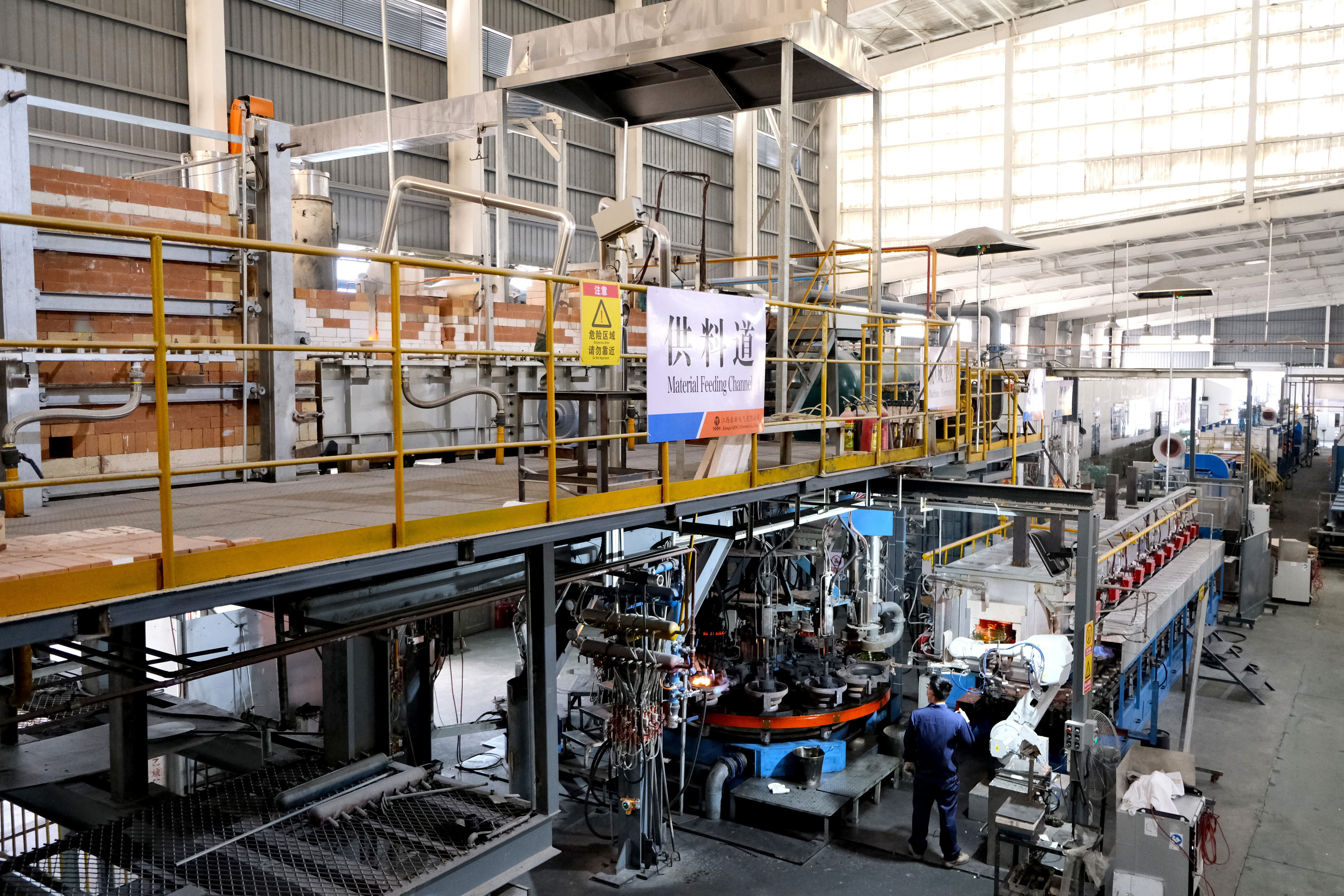
A suspension glass insulator shortlist is only as good as the terms behind it. At the evaluation stage, most long lists look interchangeable: 70 kN to 420 kN disc units, cap-pin and ball-socket couplings, standard and anti-pollution profiles, and similar reference standards. The differences that decide an award usually sit one level lower, in how each supplier writes minimum order quantity, lead time, test scope, documentation, packing and replacement into the offer.
This guide sets out a workable sequence for building that shortlist before an RFQ leaves the desk. First, screen the product range against the line and the tender specification. Second, normalize the order terms so the offers are genuinely comparable. Third, fix the acceptance checkpoints and the documents that must accompany them. Each step produces a record that can be defended later, to a procurement committee or an auditor.
Why Shortlists Fail at the Terms Layer
Two suppliers can both quote a 160 kN anti-pollution unit and the shortlist can still be wrong. One quote may be priced ex-works with routine tests only; the other delivered, with third-party inspection, a batch certificate package and a written replacement policy. Once those conditions sit inside different offer templates, the comparison becomes arithmetic on non-equivalent numbers, and the cheaper-looking line often wins on a technicality rather than on capability.
The second failure is documentation drift. Acceptance criteria written after the award tend to describe what arrived rather than what was ordered. When creepage distance, coupling dimensions, marking, packing and test scope are agreed before the RFQ, acceptance becomes a check against a shared reference. When they are agreed afterwards, every nonconformity turns into a negotiation, and the buyer's leverage is at its weakest point.
Both problems are fixable on paper, at negligible cost, before any commercial commitment is made. That is what makes the pre-RFQ stage the highest-value part of the procurement cycle for this product family.
The Three Layers of a Defensible Shortlist
A defensible shortlist records three separate judgements rather than one combined impression. Keeping them apart matters because each layer fails in a different way and at a different moment.
- Range fit. Can the supplier deliver the exact designation, coupling style and profile the line requires, for the voltage class and environment in the specification?
- Term equivalence. Are the commercial conditions written in a form that allows a like-for-like comparison, or does each offer carry its own assumptions?
- Acceptance traceability. Is there a named document, held by a named party, that closes each acceptance checkpoint before payment and before energization?
A range-fit failure is technical and usually visible early. A term-equivalence failure is commercial and often invisible until delivery. An acceptance failure surfaces at the worst possible moment, after the containers are loaded and the string schedule is already set.
Layer One: Screen on Range Fit, Not Catalogue Size
The screening question is narrow: can this supplier deliver the exact item, with documents that match the item? Four attributes do most of the work, and a fifth is usually where buyers get caught.
- Mechanical load class. Suspension disc ranges are designated by electromechanical failing load, commonly 70, 100, 120, 160, 210, 240, 300 and 420 kN in the U-series naming used across Chinese supply. The designation identifies a rating class; it is not a test result for the batch you will receive, and it does not by itself establish any dimensional or pollution performance.
- Coupling type. Cap-pin and ball-socket units are not interchangeable at string assembly level. A utility technical specification reviewed for this article states that ball-and-socket coupling dimensions of string insulator units are to follow IEC 60120. The same requirement should appear in your own specification before models are compared. A standard reference inside a specification does not prove that a particular supplier's model conforms to it; the conformity document has to name the model.
- Profile variant. Standard, anti-pollution, aerodynamic, multi-umbrella, ground-wire, line-post and pin insulators are commonly listed as separate categories within the same glass family. The variant, not the load class, is usually what the pollution or wind-driven-dust condition actually calls for.
- Regional naming. U-series, PS-series, PSV-series, PSD-series and ANSI 52-series designations coexist in the same catalogues and are not synonyms. PS-type units follow the Russian convention; one 2026 verification review reports the PS-70E 70 kN unit as compliant with GOST 6490-93 / GOST 6490-2017, at 255 mm diameter with 127 mm / 146 mm spacing. Designation similarity is not conformance, so the certificate must name the exact model.
The detail buyers miss: coupling is not reliably encoded in the suffix
Product lists routinely assign cap-pin to one model and ball-socket to the next within the same load class and the same base designation. A suffix such as P for anti-pollution, D for double-shed or two-wing profiles, or A for aerodynamic profiles describes the shed and pollution family; the coupling is a separate line item attribute. The practical consequence is simple: build the shortlist from a line-item table that states model, load class, coupling, creepage distance, nominal dimensions and referenced standard, and confirm each row against the supplier's drawing. Do not infer coupling from the model name.
A worked example shows why. Published supplier data for the U160BP 160 kN pollution-resistant suspension insulator gives a 280 mm diameter, 170 mm height and 450 mm creepage distance against a 160 kN mechanical failing load. Three of those four figures are acceptance criteria that must appear in the purchase order; only the load class appears in the designation. Confirm the values against the signed drawing before the RFQ, because a 450 mm creepage figure on a datasheet and a 450 mm creepage on a drawing are different levels of evidence.
| Designation element | What it establishes | What must be confirmed separately |
|---|---|---|
| U-series load number (70–420 kN) | The rated mechanical failing load class | Batch test report; sample and routine test scope |
| P suffix (anti-pollution family) | Profile family intended for polluted environments | Creepage distance on the drawing; the pollution class your specification actually requires |
| D suffix (double-shed / two-wing) | Shed geometry family | Creepage, spacing and coupling compatibility with neighbouring units |
| A suffix (aerodynamic family) | Shed profile family | Weight, spacing and string hardware fit |
| PS / PSV / PSD / ANSI prefixes | Regional naming convention (Russian-standard, ANSI dimensional practice) | The exact standard the certificate cites, and its edition year |
| Coupling (cap-pin vs ball-socket) | Assembly interface | Always confirm per line item; it is not reliably encoded in the suffix |
Layer Two: Normalize Order Terms So Offers Are Comparable
Six commercial terms move the comparison most, and all six are easier to fix before the RFQ than after. The point of normalizing them is not to find the lowest number; it is to make sure the numbers describe the same thing.
| Term | What to fix in the RFQ | Why it changes comparability |
|---|---|---|
| Minimum order quantity | State the tender quantity and the smallest shippable lot you will accept | A high MOQ on a trial order forces buyers into excess stock or a split award |
| Lead time and delivery basis | Request lead time counted from drawing approval and from purchase-order date; name the Incoterm and the port | Lead time quoted from different starting points cannot be ranked |
| Customization scope | Define what is genuinely custom — voltage class, logo, marking, packing — and what is standard catalogue | Custom scope drives tooling, drawing approval time and non-recurring cost |
| Test and inspection scope | Separate routine tests, sample tests, type-test evidence and any third-party inspection, each with its charge basis | Test scope is the most common hidden line between two apparently identical quotes |
| Packing and marking | Specify crate type, unit protection, marking format and shipping marks | Breakage and mis-marking claims usually trace back to an unspecified packing clause |
| After-sales and replacement | State what counts as a defective unit, who decides, and what remedy applies | An undefined defect definition leaves acceptance entirely to the supplier's judgement |
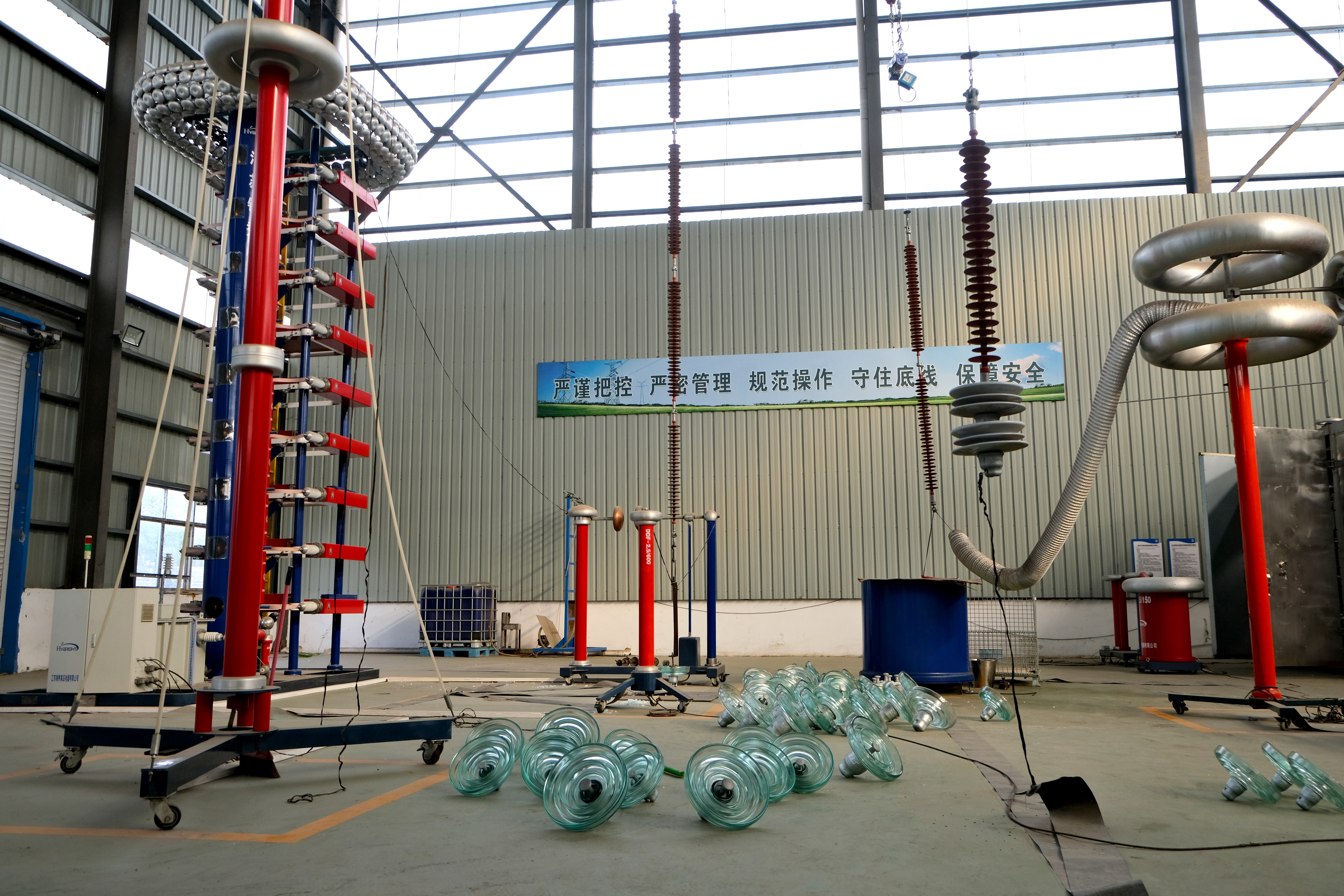
As a concrete benchmark for calibration, Jiangxi QOCI Electric Co., Ltd. publishes a stated MOQ of 50 units, a lead time of 15–35 days, OEM and ODM production with voltage and logo customization, monthly capacity of 750,000 units, 100% pre-shipment testing with third-party inspection such as SGS available, and after-sales support covering online technical assistance and replacement of defective products. Two of those terms deserve a follow-up question rather than acceptance at face value: a 15–35 day range is a band, so ask what determines position within it, and confirm whether third-party inspection is included in the base offer or priced separately.
Layer Three: Acceptance Checkpoints and the Documents Behind Them
Acceptance criteria work best when written as checkpoints, each with a document, a holder and a moment. A criterion without an assigned document is an intention, not a control.
| Checkpoint | Evidence to require | Verify when |
|---|---|---|
| Design and type qualification | Type-test reports for the exact model, or a documented route to qualification | Before shortlist confirmation |
| Routine and sample testing | Test records for the production lot, with scope and results per test | Before shipment release |
| Dimensional and creepage verification | Measured values against the signed drawing — diameter, spacing, creepage | Pre-shipment, with sampling plan stated |
| Integrity of the glass body | Visual inspection record covering the full lot | Pre-shipment and at site receipt |
| Metal hardware finish | Galvanizing and coating records for caps, pins and locking components | Pre-shipment |
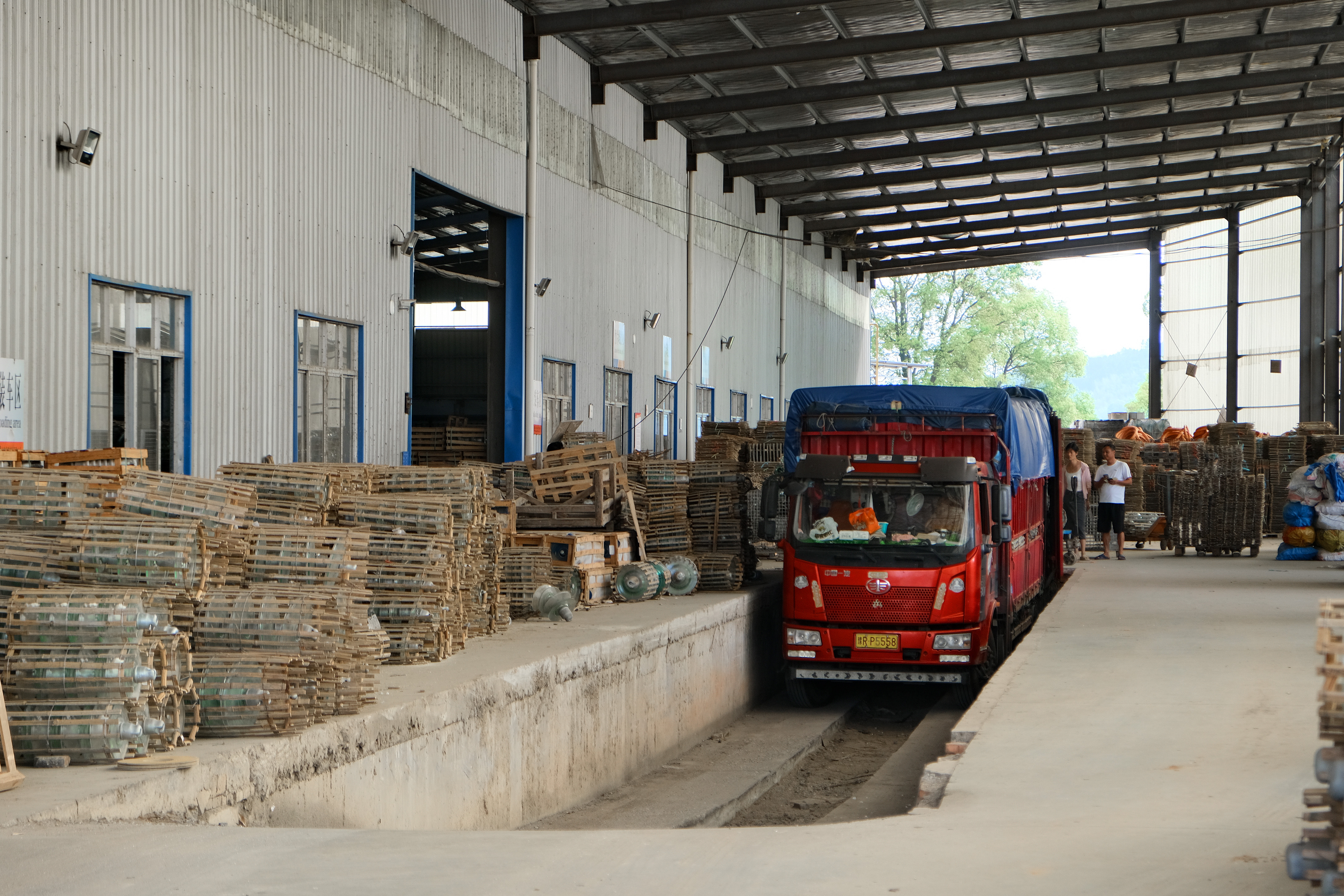
| Marking and packing | Photographic record of unit marking, crate type and shipping marks | Before container loading |
| Batch certificate package | Certificate of conformity plus inspection release, held as one package | With documents against payment |
Toughened glass has one practical advantage that belongs in the acceptance plan. A damaged unit typically shatters into small fragments instead of holding an invisible crack, which allows defects to be detected visually rather than through live-line testing. In a supplier case record covering deliveries to Uzbekistan, Ukraine and Iraq, the reported result is 100% visual defect detection with no live-line testing required. That is a company-reported project outcome rather than an independent field study, but it explains why visual inspection belongs in the acceptance checklist as a defined checkpoint with a sampling rule, not as an informal glance at the crate.
What the certificates do and do not cover
Jiangxi QOCI Electric Co., Ltd. holds a Quality Management System certificate to ISO 9001:2015 (certificate 00124Q33852R3M/3600, China Quality Certification Centre, issued 19 November 2025, valid to 14 May 2027), an Environmental Management System certificate to ISO 14001:2015 (00125E30701R3M/3600, issued 7 March 2025, valid to 24 March 2028) and an Occupational Health and Safety Management System certificate to ISO 45001:2018 (00125S30581R3M/3600, issued 7 March 2025, valid to 24 March 2028). All three are issued by the China Quality Certification Centre, and the scope covers research, development, production and sales of electrical equipment.
Two cautions belong beside that paragraph. Management-system certification evidences process governance: how nonconformity, calibration, traceability and corrective action are controlled. It does not evidence that a specific insulator model has passed type testing to a specific standard. Buyers should ask separately for the product-level evidence, and should check certificate validity dates against the delivery schedule so that a certificate does not expire between award and shipment.
Putting the Matrix Together Without Averaging Away a Failed Gate
Most shortlist matrices fail because they score everything. A better design separates gates from scored criteria. Gates are pass/fail and must not be averaged: availability of the exact designation, a coupling conformity document that names the model, valid certification for the destination market, an acceptance test scope that satisfies the specification, and an MOQ that fits the tender quantity. A supplier that fails a gate is out of the shortlist regardless of how well it scores elsewhere.
Scored criteria then cover the areas where reasonable buyers may legitimately differ: depth of test documentation, position within the lead-time band, packing specification, responsiveness on drawing approval, and the clarity of the replacement clause. Publish the weighting before offers arrive, keep the evidence for each score in the file, and write the reason for each score in one sentence. A shortlist that can be explained in a page is more defensible than a matrix with twelve decimal places and no rationale.
Where Jiangxi QOCI Electric Sits in This Framework
Jiangxi QOCI Electric Co., Ltd. is a Chinese insulator manufacturer established in December 2002 and based in Luxi Industrial Park, Pingxiang City, Jiangxi Province. The company produces AC and DC insulators across porcelain and glass lines, describes itself as a national high-tech enterprise and a participating unit of the Insulator Standard Committee, reports annual output of 9,000,000 units, and states an export ratio of 20% with main markets in the USA, Asia, the EU, Africa and South America.
Mapped onto layer one, the published range is broad enough to cover most transmission and distribution tenders encountered at evaluation stage: U-series units from U70B through U420B, anti-pollution variants such as U210BP and U420BP, PS-series entries such as PS70E 212W, PS160D 112V and PS300V 112V, the PSD70E double-shed designation, and ANSI 52-3, 52-5 and 52-8 units. That breadth is a screening convenience, not a qualification. Each row still needs the drawing, the coupling confirmation and the referenced standard before it enters the shortlist.
Mapped onto layer two, the published commercial terms — 50-unit MOQ, 15–35 day lead time, OEM and ODM production, 750,000-unit monthly capacity, pre-shipment testing with third-party inspection, and replacement of defective products — give a buyer enough to construct a normalised quote request. Mapped onto layer three, the case record for 200,000 pieces delivered across Uzbekistan (80,000), Ukraine (70,000) and Iraq (50,000) for UHV and EHV overhead lines in desert and industrial pollution zones describes zero line-tripping incidents, maintenance cost reduced by 70%, pollution flashover incidents reduced by 85% against a porcelain baseline, verified operation from −40 °C to +55 °C in Uzbekistan and Iraq, and a 30-year-plus design lifespan. Those are supplier-reported project results and should be read as such: they support a shortlist position, and they do not replace per-model test evidence on your own line.
Fit Boundaries: What the Evidence Does Not Yet Cover
An evaluation-stage shortlist should state its own evidence limits, because the gaps are where post-award disputes begin.
- Per-model drawings and accredited test reports for the full range must be requested from the supplier; public product listings and storefront category descriptions do not attribute verified specifications to every model.
- Case outcomes are reported by the supplier. They are useful reference material but not an independent field study, and they should not be extrapolated to a different line, climate or string configuration.
- No comparable public quotation data exists for this product family, so any cost comparison depends entirely on how carefully the RFQ normalises Incoterm, test scope, packing and payment.
- Certificate validity is time-bound. Dates must be checked against the delivery schedule at the point of award, not at the point of shortlisting.
Supply Context for the Next Tender Cycle
Two externally sourced data points frame the procurement environment. Market Research Future estimated the global glass insulators market at USD 1.14 billion in 2024 and projected USD 1.97 billion by 2035; that is a commercial-research forecast and should be treated as a planning assumption rather than a measured outcome. Separately, a 2026 verification review reports that China accounted for 31.4% of total global exports of electrical insulators in 2024, valued at USD 898 million.
The reasonable interpretation for a buyer is not that capacity is scarce. It is that a concentrated supply base produces many similar-looking offers, so the discriminating work shifts from finding suppliers to documenting terms and acceptance. That is precisely the layer this shortlist framework is built to control, and it is the layer most exposed when an RFQ is issued without a fixed comparison basis.
Frequently Asked Questions
Which purchasing terms should be fixed before a suspension glass insulator RFQ is issued?
Six terms should be fixed: minimum order quantity, lead time with its starting point and the named Incoterm, the scope of any customization such as voltage class, logo and marking, the split between routine, sample and type-test evidence plus any third-party inspection, packing and marking specification, and the definition of a defective unit together with the remedy. Fixing them before the RFQ converts each offer into a comparable document instead of a supplier-specific format.
What documents should accompany a glass insulator shipment?
A shipment should carry a certificate of conformity for the exact model, lot-level routine and sample test records, dimensional and creepage measurements against the signed drawing, a full-lot visual inspection record, galvanizing or coating records for caps, pins and locking components, and a photographic record of unit marking and packing. These documents should be held as one package and released against payment, so that acceptance is a check against agreed criteria rather than a later negotiation.
Does a model designation such as U160BP define the coupling type?
No. In this product family the designation typically encodes the load class and the profile family — U160BP indicates a 160 kN anti-pollution unit — while the coupling is a separate line-item attribute that determines whether the string assembles. Buyers should confirm cap-pin or ball-socket for every line item against the supplier drawing, and should reference the applicable coupling standard, such as IEC 60120 for ball-and-socket dimensions, in the specification itself.
Is an ISO 9001 certificate sufficient product qualification?
No. An ISO 9001 certificate evidences how a quality management system is governed — nonconformity control, calibration, traceability, corrective action — and its scope typically covers research, development, production and sales of electrical equipment. It does not demonstrate that a particular insulator model has passed type testing to a specific product standard. Product qualification requires model-specific type-test reports and drawings in addition to the management-system certificate, and the certificate's validity dates should be checked against the delivery schedule.
How should anti-pollution and standard variants be compared on equal terms?
Compare them on the same basis: identical load class, identical coupling, identical referenced standard and edition, and measured creepage distance taken from the signed drawing rather than from a catalogue summary. For example, published supplier data for the U160BP 160 kN pollution-resistant unit gives 280 mm diameter, 170 mm height and 450 mm creepage distance, which allows a direct dimensional check against the specification. If the standard variant and the anti-pollution variant are quoted under different test scopes or delivery bases, the comparison is not equal even when the load classes match.
For buyers who want the full product range, dimensions and configuration context in one document, the manufacturer's catalogue is available for download: QOCI Glass Insulator Catalogue (PDF). Company information is published at Jiangxi QOCI Electric Co., Ltd.
Tem questões ou precisa de mais detalhes?
Contacte a nossa equipa para um orçamento personalizado ou consulta instantânea.
Solicitar orçamento
Preencha o formulário abaixo e a nossa equipa entrará em contacto com uma proposta personalizada.
Chat direto do WhatsApp
Prefere conversar em tempo real? Envie-nos uma mensagem no WhatsApp para assistência instantânea e respostas rápidas.
- Obter orçamento personalizado
- Partilhar fotos ou documentos
- Discuta as suas necessidades diretamente
Geralmente responde em 5–30 minutos durante o horário de expediente.