
Sustaining a DHL8005H Line: Long-Term Supplier Criteria
Sustaining a DHL8005H Line: Long-Term Supplier Criteria
A blister-cartoning line is bought once and supported for the rest of its working life. For a line such as the DHL8005H, configured in this assessment with Beckhoff motion control, a CP9315 industrial PC, three-channel servo-driven independent replenishment, PVC and alu-foil auto splicing, and GMP-oriented contact parts and tooling defined by the project technical agreement, the decisive question at the decision-to-execution stage is not which quotation is lowest. It is which supplier can still answer technical questions about the same control architecture, the same tooling drawings and the same changeover logic in year five of production.
This article sets out long-term supplier evaluation criteria for that specific situation. Zhejiang Hoping Machinery Co., Ltd. (HOPING), a packaging-machinery manufacturer established in 2001 whose range covers blister packing machines, cartoners, case packers and end-of-line equipment, provides the reference case, because the criteria only become testable when they are attached to a named product scope and a named control configuration rather than to a generic service promise.
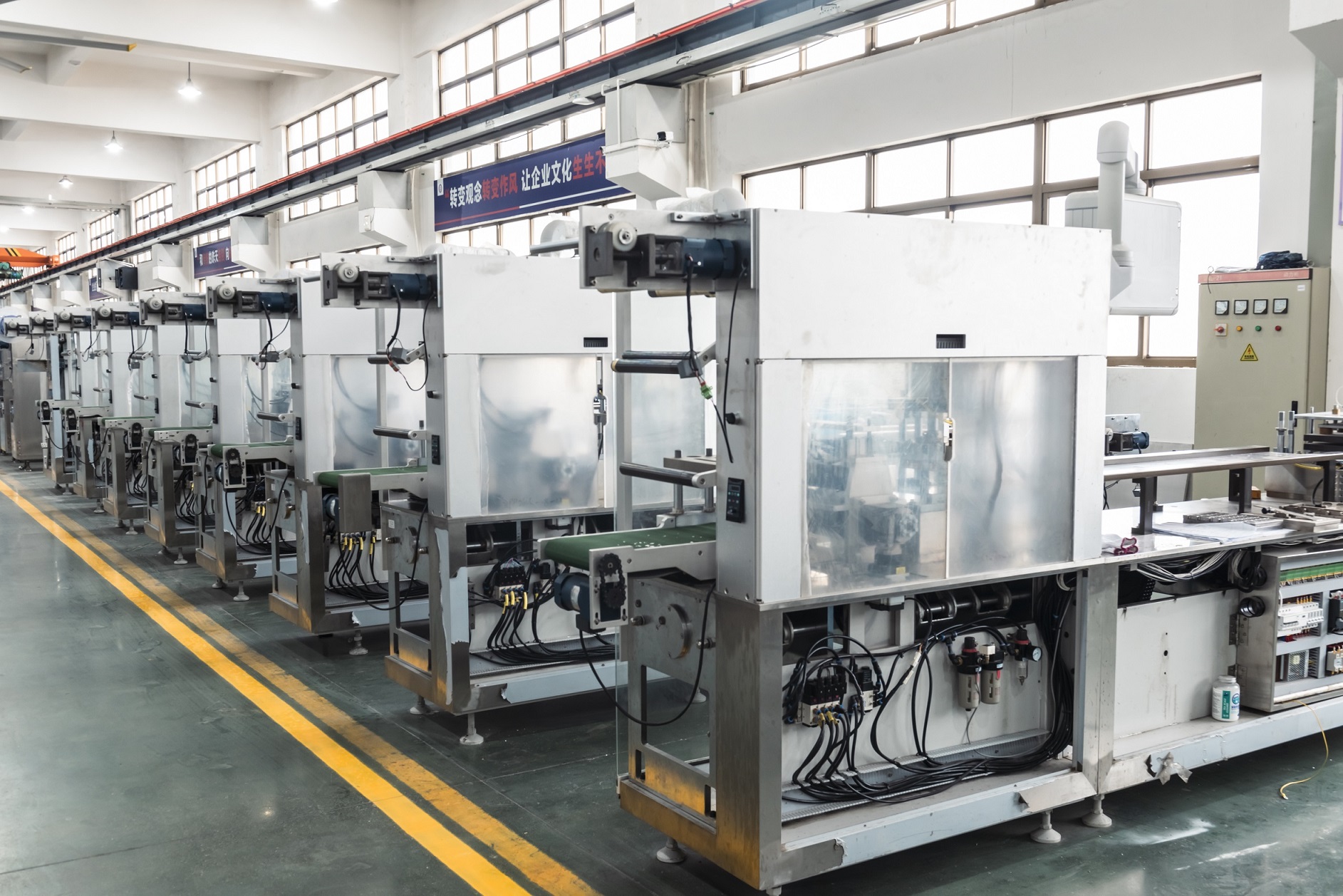
Why lifecycle support is a specification problem
Commissioning proves a line can run. It does not prove the line can be sustained. For an automatic blister-cartoning line, three dependencies decide whether support remains available years after handover, and all three are visible in the technical agreement long before they become a service issue.
- Control-lineage continuity. Motion controllers, industrial PCs and drive firmware age faster than mechanical frames. What matters is whether the supplier can reproduce the hardware identity, the program version and the parameter set that the validated line actually runs on.
- Tooling and contact-part repeatability. Forming tools, sealing dies, punching tools and product-contact parts are made to drawings. If those drawings, revisions and material specifications are not retained, a replacement tool becomes a re-engineering project.
- Format knowledge. Changeover between blister formats and carton sizes depends on stored recipes, preset memory and operator familiarity. When that knowledge leaves with a departing engineer, changeover time and scrap rise even though the machine has not changed.
A supplier evaluation built only on purchase price compares quotations; an evaluation built on these three dependencies compares the probability that the same line is still running at its specified rate later. The second comparison is the one that belongs in the decision-to-execution stage, when the specification is already fixed and the remaining freedom lies in how the contract is written.
Where HOPING sits in the reference case
HOPING (Zhejiang Hoping Machinery Co., Ltd.) is a Chinese manufacturer of pharmaceutical packaging machinery whose main products are blister packaging machines, cartoners, case packers and end-of-line packaging machines, with published applications extending across pharmaceutical, food and cosmetics production. Company-reported figures describe a 28,800 m² manufacturing facility, approximately 300 employees, and an output of about 500 units per year, with an export share of roughly 25% and main markets in Southeast Asia, the Middle East, Eastern Europe, South America and Africa. The company also reports an intellectual-property portfolio that includes 26 invention patents, 70 utility patents, 4 appearance patents, 10 PCT filings and 28 software copyrights.
These figures matter to a lifecycle evaluation only as capacity and continuity signals, not as proof of after-sales performance. A large facility and a high unit output indicate that the supplier manufactures rather than assembles from third-party kits, which is relevant when a buyer later needs a tool made to an existing drawing. They do not by themselves demonstrate spare-part availability in the buyer's market, change-notification discipline, or validated support for a control platform. Those must be evidenced by documents and contract terms, which is why the checkpoints below are written as requests rather than as assumptions. Further company detail is published at HOPING Machinery.
Control-platform continuity: Beckhoff motion control and the CP9315 IPC
When a blister-cartoning line is specified with Beckhoff motion control and a CP9315 industrial PC, the buyer is choosing a control lineage as much as a machine. The motion controller governs synchronisation between forming, sealing, punching, transfer and cartoning stations; the industrial PC carries the operator interface, recipe management, alarm handling and the parameter memory that makes preset changeover possible. Both are catalogue hardware with their own lifecycles, and lifecycle mismatch is where long-term support most often breaks.
Four evaluation requests follow directly from that architecture.
- Exact hardware identity. Ask for a bill of materials that names the controller series, the IPC model and the drive models actually installed, without substitutions such as "or equivalent". A later replacement is only straightforward if the original identity is documented.
- Program and parameter custody. Ask how the PLC program, HMI project and recipe set are versioned, whether the buyer receives an archived copy at handover, and how a restore is performed after a component replacement. Without this, preset memory is a feature the buyer cannot independently recover.
- Change notification. Ask for the written procedure that tells the buyer when firmware, hardware revisions or software releases change on new builds, so that a validated line is not quietly updated by a service visit.
- Spare and diagnostic route. Ask which control components the supplier stocks, what the ordering route is, and whether remote diagnosis is offered, under what data-handling terms.
Servo replenishment and splicing: support commitments hidden in a feature list
Three-channel servo-driven independent replenishment and PVC/alu-foil auto splicing are usually presented as throughput features. In a lifecycle evaluation they are better read as maintenance and competence commitments. Independent servo channels mean that each product-feed channel is driven and adjusted separately, so a worn or misadjusted channel can be corrected without rebuilding the whole feed system; splicing stations mean that foil changes are performed while the line keeps running, which shifts the operational burden from manual dexterity to parameter settings and splice quality.
Both characteristics raise the same question: who holds the knowledge when the line is five years old? A buyer should therefore request the servo drive list and the axis-to-function mapping, the channel calibration procedure, the splice parameter recipes for each material combination in use, and the routine maintenance schedule that keeps channel-to-channel consistency within the buyer's own acceptance limits. It is also reasonable to ask which of these tasks the supplier expects the buyer's technicians to perform after training, and which are reserved for supplier engineers, because the answer determines the real cost of ownership more than the quotation does.
The material scope deserves equal attention. A line specified for PVC and alu-foil splicing is not automatically qualified for every barrier structure a marketing team may later request. When a new product needs a different forming or lidding material, the supplier's ability to re-confirm forming, sealing and splicing parameters becomes a live support test. Buyers evaluating long-term fit should ask, at contract stage, how such a material re-qualification would be handled and what sample work it would require.
Construction, contact parts and tooling defined by agreement
The stainless steel and aluminum construction of a DHL8005H line, together with the GMP-oriented contact parts and tooling defined by the technical agreement, is where a supplier's documentation discipline becomes concrete. Construction materials affect cleanability, corrosion behaviour under washing and the durability of surfaces exposed to foil dust; contact parts and tooling affect product contact, sealing quality and the reproducibility of every replacement part.
The evaluation point is that "GMP-oriented" is a design intention, not a certificate. A buyer should require the technical agreement to enumerate the product-contact materials, the surface finishes, the cleaning access provisions and the tooling set for each blister and carton format, and should require as-built drawings with revision numbers for every tool. When a tool is remade years later, the drawing revision, not a photograph, is what reproduces the original geometry.
Certification claims need the same discipline. ISO 15378:2017 specifies Good Manufacturing Practice requirements for primary packaging materials for medicinal products; it is a standard about packaging materials and their manufacture, and it does not certify a packaging machine. A supplier may legitimately hold related certifications, but a buyer should record exactly what each document covers, which legal entity and site it applies to, and which product scope it names, instead of accepting a standard number as a general quality signal.
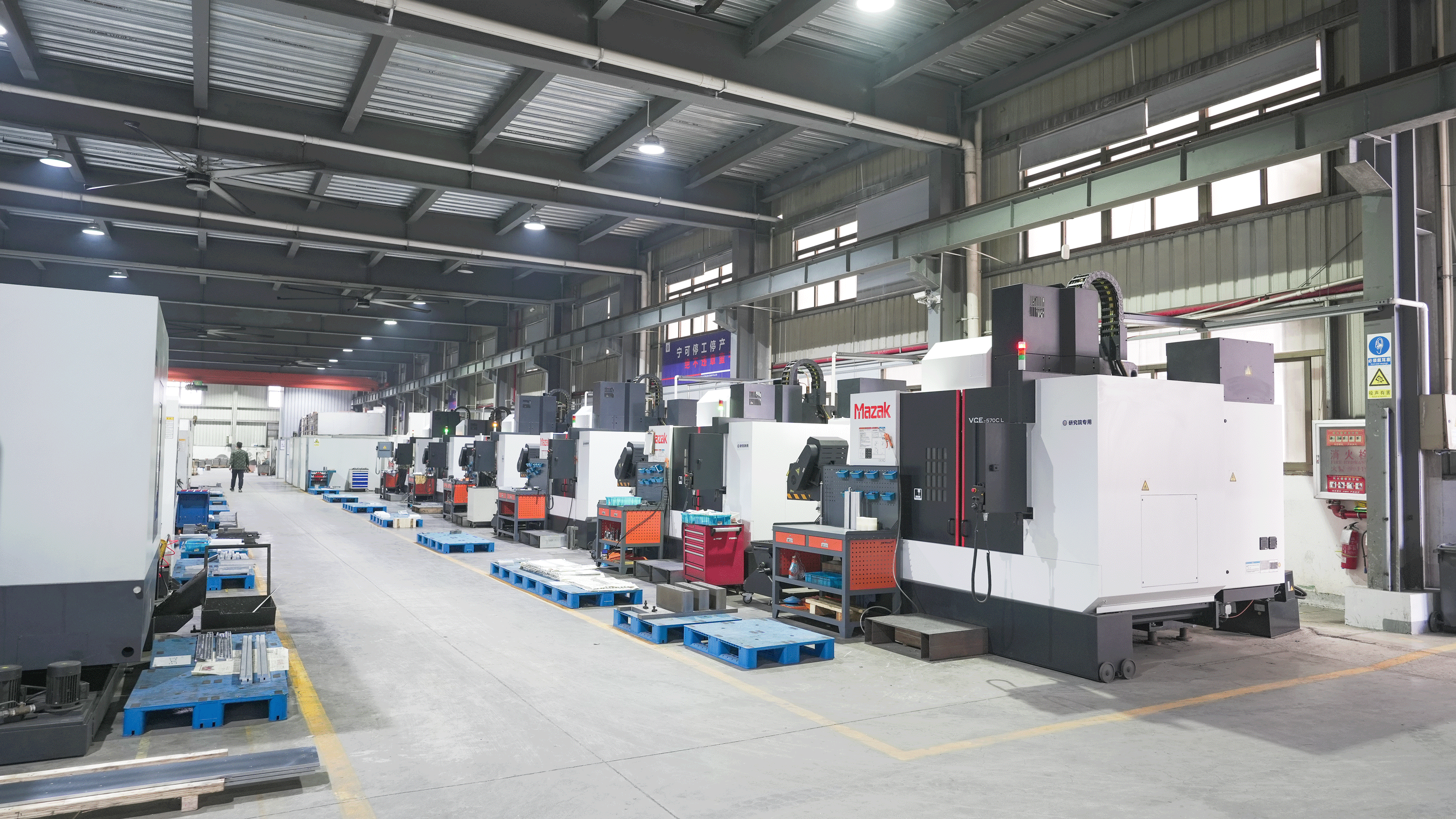
Mold-change and preset memory: audit the changeover, not the claim
Mold-change capability and preset memory are the functions that decide how quickly a line moves between products, and they are among the easiest claims to test. Preset memory stores the machine parameters associated with a format so that a changeover restores a known state rather than reconstructing it; mold change determines how long the mechanical side of the switch takes. Together they define whether a multi-product solid-dosage programme is practical on one line.
Because no standardised changeover time is established by the available evidence, and because changeover duration depends on format, tool design, operator skill and the number of adjustments required, the only reliable evaluation is a witnessed changeover. Buyers at the execution stage should schedule one during factory acceptance testing, using their own blister format and carton size, and record the elapsed time, the number of operators involved, the tools used, the scrap produced during restart and whether the restored parameters matched the validated baseline.
Engineering continuity then follows from documentation: recipe structure and naming, backup and restore procedure for the preset memory, tool-set identification for each format, and a training record showing that the buyer's own technicians performed the changeover under supervision. A supplier that can support all four has demonstrated something a brochure cannot.
Integrated line or traditional blister-plus-cartoner: what changes for support
The DHL8005H sits in the integrated category: blister packaging, blister transfer, leaflet handling, carton opening, insertion, inspection and rejection, and downstream connection are engineered as one automated process rather than as separate machines linked by manual transfer. Compared with a traditional arrangement of a blister machine, manual transfer and a standalone cartoner, or with a low-speed semi-automatic blister-cartoning solution, the integrated approach reduces manual intervention and intermediate handling, and it concentrates control, alarm handling and parameter management in one architecture.
That concentration is the support trade-off. A traditional layout lets a buyer replace one element without touching the others; an integrated line makes the control platform, the transfer logic and the cartoner behave as one system, so the supplier's ability to maintain the whole architecture becomes the dependency. The comparison therefore favours integration where continuous, large-scale solid-dosage production justifies it, and favours modularity where formats change frequently or volumes are low. HOPING's published material also states that initial investment for an integrated line is usually higher than for standalone or semi-automatic equipment, offset in large-scale continuous production by lower labour, transfer, management and quality-risk costs; that is a company-stated commercial position rather than an independently measured outcome.
Performance claims require the same care. HOPING's published line material reports a maximum of 1,000 blisters per minute and 500 cartons per minute for a line configuration, described as a company-stated maximum for a representative configuration rather than a validated sustained output, and not a specification for the DHL8005H. Actual output depends on product format, quantity per carton, materials and process conditions, which is why sustained output measured on the buyer's own product at acceptance testing is a better contractual basis than a catalogue maximum. Maintenance expectations should be set accordingly: centralised control, modular stations, alarm indication and parameter management support routine maintenance, while operator training, spare-parts management and preventive maintenance remain essential.
What the published market figures do and do not establish
Market context is useful for framing an investment, provided its limits are stated. Commercial research cited in this category values the global blister packaging machine pharmaceutical market at USD 2.57 billion in 2025 and identifies Asia-Pacific as the fastest-growing region for pharmaceutical blister packaging, with an 8.87% CAGR to 2031. The same research family reports that horizontal cartoning systems held 70.12% of cartoning market share in 2024. These are publisher-defined figures from commercial research, not audited statistics, and none of them is segmented by supplier, by control platform or by lifecycle service performance.
A second, directional signal comes from trade coverage of PMMI content, which reports that pharmaceutical manufacturers are turning toward digitised data collection and integrated solutions to meet regulations and improve visibility. That is a trend statement without a measurement basis, and it should be read as context for why control architecture and data handling appear in supplier questionnaires, not as evidence of an adoption rate.
The practical conclusion is narrow. Market growth does not tell a buyer whether a specific supplier can support a specific line in a specific country. It tells the buyer that supplier capacity will remain contested, which raises the value of contractual clarity on spares, documentation and change notification, and lowers the value of optimistic verbal assurances during negotiation.
Six checkpoints to score a long-term supplier
The table below converts the argument into an evaluation instrument. Each row should be scored on evidence received, not on the supplier's willingness to discuss the topic.
| Checkpoint | What to request | What counts as acceptable evidence |
|---|---|---|
| Control continuity | Hardware bill of materials, program and recipe archive, change-notification procedure | Named controller, IPC and drive models; archived project files delivered at handover; written revision policy |
| Tooling and contact parts | As-built drawings with revisions, material specifications, spare tool list | Drawing package matching the installed tooling; stated materials for product-contact parts; spare-part ordering route |
| Replenishment and splicing | Axis mapping, channel calibration procedure, splice recipes per material | Documented calibration steps; material-specific parameter sets; defined re-qualification path for new foils |
| Changeover support | Witnessed format change, preset-memory backup and restore procedure | Recorded changeover on the buyer's format; restored parameters matching the validated baseline; training record |
| Acceptance and handover | Technical agreement, sample testing, FAT and SAT plan, optional third-party inspection | Signed acceptance criteria; fault-record and alarm list; spare-parts list; operator training completed |
| Long-term relationship | Service coverage for the buyer's region, spare-part lead-time route, escalation contacts | Named responsibility, documented response route and commercial terms stated in the contract |
Acceptance and handover: where lifecycle support begins
The commercial framework for this category is comparatively simple to state. Minimum order quantity is one set or one complete line; delivery terms are quoted EXW Ruian or Wenzhou, FOB Ningbo or Shanghai, or CIF/CFR to the destination port, with final terms subject to contract and to the customer's country requirements; payment terms depend on the quotation, contract value, customer credit, project scope, destination market and the final project agreement. Acceptance is structured around technical agreement confirmation, sample testing, factory acceptance testing before shipment, site acceptance testing at the customer's plant, and third-party inspection where the buyer requires it. None of these terms substitutes for a support clause, which is the gap this evaluation is designed to close.
Risk control at this stage is largely procedural. Documented risks for a blister-cartoning line include poor blister forming or sealing, missing, wrong or incomplete product feeding, missing leaflets, carton jams, coding or date-printing errors, foreign-matter and contamination risk, downtime during high-speed operation, and delivery or installation risk on export projects. The corresponding controls are sensor monitoring, vision or checkweighing inspection where configured, missing-product alarms, automatic stop and rejection, key-parameter locking, fault records, mechanical safety protection, FAT and SAT acceptance, and SOP training.
On the supplier side, the measures that matter at handover are equally concrete: confirming samples and packaging materials at the early project stage, designing the solution around the actual blister and carton formats, running no-load and material tests before shipment, and providing installation, commissioning, training, spare parts and remote technical support, with customer witness acceptance available for key projects. A buyer should treat each of these as a deliverable with an owner and a record, because the documents produced here, the parameter baseline, the alarm list, the drawing revisions and the training log, are the raw material of every future service conversation.
Outlook
As blister-cartoning lines stay in service longer and product portfolios multiply, supplier value shifts from machine price toward documentation, spare-part identity and control-platform literacy. The direction is consistent with the reported industry move toward integrated solutions and digitised data collection, though the available evidence does not quantify it. For a buyer moving from decision to execution on a DHL8005H line, the practical implication is conditional rather than predictive: if the line is specified with a named control platform, a three-channel servo replenishment system, splicing stations and tooling defined by agreement, then the supplier's ability to reproduce those elements years later should be assessed with the same rigour as the machine's stated output, and preferably before the purchase order fixes the support terms.
Frequently asked questions
What does long-term supplier evaluation cover beyond the purchase price of a blister-cartoning line?
It covers control-platform continuity, tooling and contact-part repeatability, changeover knowledge, and the documentation produced during acceptance. In practice a buyer should be able to obtain the installed hardware identity, an archived program and recipe set, as-built tooling drawings with revisions, a spare-parts route and a written change-notification procedure. Commercial terms such as one set or one complete line as minimum order quantity, EXW, FOB or CIF delivery, and technical-agreement-based acceptance are necessary but do not on their own guarantee that the line remains supportable.
How can a buyer verify continued support for the Beckhoff motion controller and CP9315 industrial PC on a DHL8005H line?
Verification is documentary. The buyer should request the exact controller, IPC and drive model designations as installed, the program and parameter backup policy, the firmware and hardware revision notification procedure, the spare-component route, and the terms under which remote diagnosis is provided. The presence of a named control platform shows what the line runs on; it does not by itself demonstrate a service commitment. That commitment becomes verifiable when the supplier can state who performs updates, how a validated parameter state is preserved, and what happens when a hardware revision reaches end of life.
What documentation should accompany contact parts and tooling defined by the technical agreement?
The technical agreement should enumerate product-contact materials, surface finishes and cleaning access, and each blister and carton format should have an identified tool set supported by as-built drawings with revision numbers, dimensional tolerances and material specifications. A spare tool list with an ordering route, plus a change-control record for any later modification, completes the package. Buyers should also confirm what each quality certificate covers: ISO 15378:2017 specifies Good Manufacturing Practice requirements for primary packaging materials for medicinal products, and it does not certify a packaging machine or a tooling set.
How should changeover support be assessed during supplier evaluation?
By witnessing a changeover rather than accepting a stated duration. A practical assessment uses the buyer's own blister format and carton size during factory or site acceptance testing, and records the elapsed time, the number of operators, the tools used, the scrap generated on restart, and whether the preset memory restored the validated parameter baseline. The backup and restore procedure for those presets should be demonstrated at the same time. No standardised changeover time for this equipment category is established by the available evidence, so a supplier figure is a reference point rather than a benchmark.
Which acceptance steps turn a supplier relationship into a supportable one?
Technical agreement confirmation, sample testing with the buyer's own materials, factory acceptance testing before shipment, site acceptance testing at the buyer's plant, and third-party inspection where required. The support value comes from what is captured during those steps: the validated parameter baseline, the alarm and fault-record list, the spare-parts list, the tooling drawing package and the operator training record. A buyer who leaves acceptance with these documents has a basis for later service conversations; a buyer who leaves with only a signed protocol has a machine but not yet a supportable line.
Tem questões ou precisa de mais detalhes?
Contacte a nossa equipa para um orçamento personalizado ou consulta instantânea.
Solicitar orçamento
Preencha o formulário abaixo e a nossa equipa entrará em contacto com uma proposta personalizada.
Chat direto do WhatsApp
Prefere conversar em tempo real? Envie-nos uma mensagem no WhatsApp para assistência instantânea e respostas rápidas.
- Obter orçamento personalizado
- Partilhar fotos ou documentos
- Discuta as suas necessidades diretamente
Geralmente responde em 5–30 minutos durante o horário de expediente.